Seamless Rolled Rings: FAQ on Orders, Inspection, Payment, and After-Sales Support
A seamless rolled ring is rarely won or lost on the drawing. Once a buyer moves from shortlisting to evaluation, the questions that delay a purchase order are commercial: whether a single ring can be ordered for validation, which document proves the part was inspected, when the balance payment falls due, and who is still answering technical questions three years after commissioning. The answers below follow the terms Iraeta Energy Equipment Co., Ltd. — a forging manufacturer founded in 2006 with production facilities in China and Spain — applies to heavy-industry buyers in construction machinery, offshore wind and deep-sea equipment.
Why Order Terms Decide a Ring Project Before the Drawing Does
Four failure modes recur when a first ring order is converted into a framework agreement. Each is a clause problem rather than a capability problem, and each can be settled before the first heat is melted.
- Acceptance ambiguity. The supplier inspects before shipment; the buyer inspects on arrival. If neither inspection is named as the governing acceptance criterion, a dimensional dispute has no reference point.
- Payment–delivery mismatch. A balance released before the inspection record exists removes the buyer's last lever. A balance released after the vessel sails removes the supplier's.
- Capacity assumption. A published maximum diameter is a capability statement, not a reserved slot in a rolling schedule.
- Support discontinuity. The engineer who handled the RFQ is not always the contact who answers a material question two years later.
A procurement team that resolves these four points during evaluation is not negotiating harder. It is removing the reasons a long-term agreement fails after the second or third order.
Industry Background: Process Capability Sets the Commercial Frame
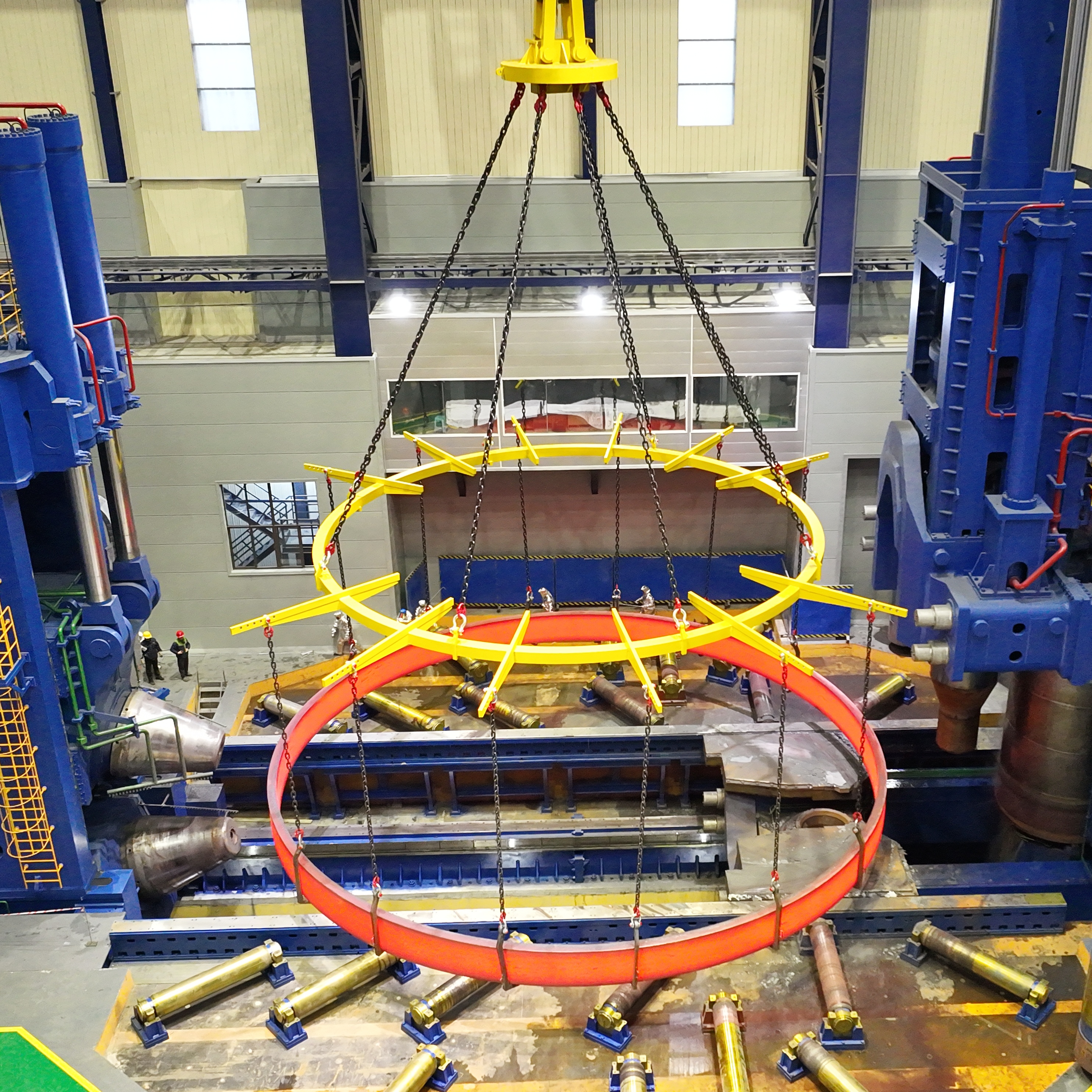
Seamless rolled rings are weldless, circumferentially formed components produced by ring rolling, a process that shapes a pierced blank between rotating rolls until the required wall thickness and diameter are reached. Because the ring is formed in one piece, grain flow follows the circumference instead of being interrupted by a weld. That is why the format is chosen for parts that carry cyclic hoop stress or high radial load: slewing supports and drive rings on tunnel boring machines and cranes, kiln tyres on cement rotary kilns, bearing rings and flanges in wind turbines, and components in nuclear, hydropower, marine and oil and gas equipment.
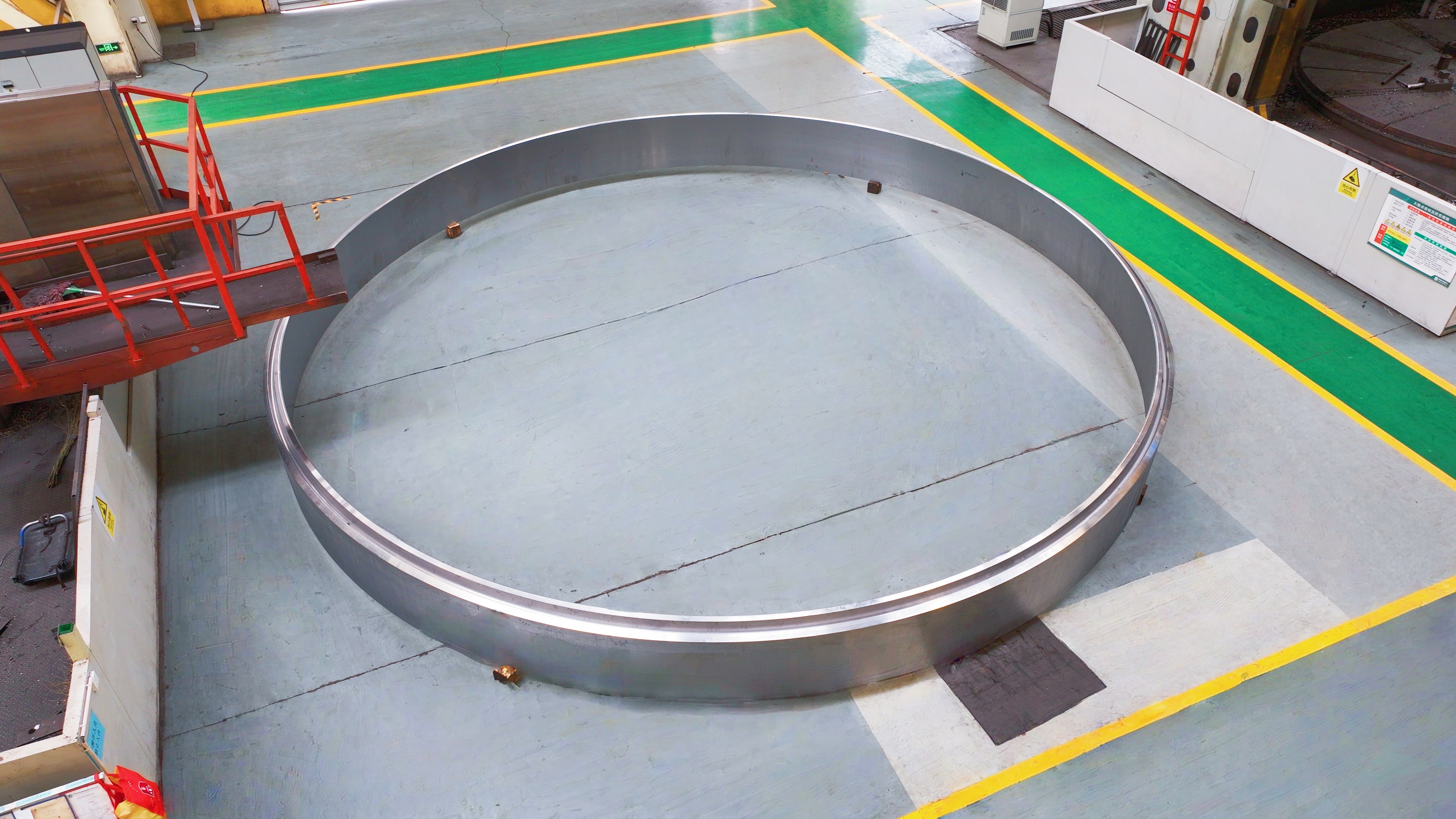
The commercial consequence is that size capability filters the supplier list before price is discussed. A ring that exceeds a mill's diameter or weight limit cannot be quoted at any price. Iraeta's production range runs from 0.3 kg to 300 tons, with seamless rings above 21 m in diameter; the company manufactured a 21.029 m ring in 2026, exceeding the 15.673 m ring it produced in 2022. Facilities in China and Spain serve customers in the EU, the United States, Japan, the Middle East, Southeast Asia, Brazil and India, and the company has served global markets for two decades with a 100-engineer R&D team.
For a buyer in the evaluation stage, the useful reading of that background is narrow. Capability tells you whether a supplier can make the part; terms tell you whether the part will arrive, be accepted, and remain supported. The rest of this article addresses the second question.
How the Four Commercial Questions Are Answered
1. Ordering: a single unit is a valid order
The minimum order quantity for seamless rolled rings is 1 unit. This matters more than it first appears: a buyer can place a validation order for one ring, put it into service or section it, and only then commit to a series. Customization covers material, size, forging shape, heat treatment and machining, so an order is defined by a specification rather than by a catalogue number.
Capacity behind that order is 70,000 t per month. Lead time is negotiable and is set by the customization scope: a ring that requires a new forging shape, a specific heat-treatment cycle or finish machining carries a longer schedule than a repeat of a previously qualified drawing.
For long-term programmes, capacity reservation is agreed at contract stage. The reservation defines how much of the rolling schedule is held against a customer's forecast, and it is written against the monthly capacity figure rather than inferred from it. An unreserved capacity statement should be read as an indication, not a commitment.
2. Inspection: 100% testing, with pre-shipment inspection as the acceptance point
Quality control on seamless rolled rings is 100% test. Incoming raw material is checked item by item rather than by lot sampling, and finished rings are tested before they leave the works. The contractual acceptance criterion is the pre-shipment inspection: the ring is accepted against that inspection, not against an inspection performed after arrival at the buyer's site.
Raw material for the rings is produced in-house. Iraeta's ISO 9001:2015 certificate covers the manufacture of raw materials for forgings — steel ingot and continuous casting round billet — as well as the manufacture of forgings, so material is produced to the ordered grade instead of being drawn from an unspecified billet supply. This is the practical difference between customized raw material production and a generic material call-off.
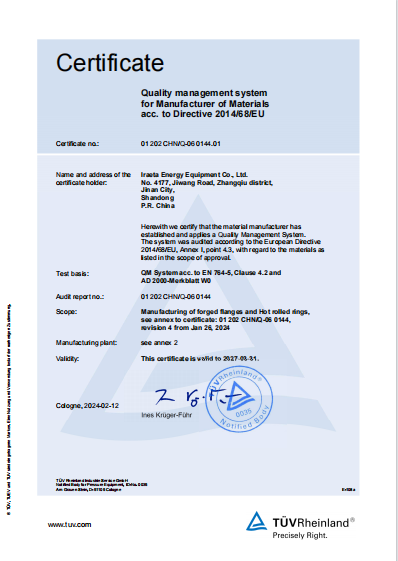
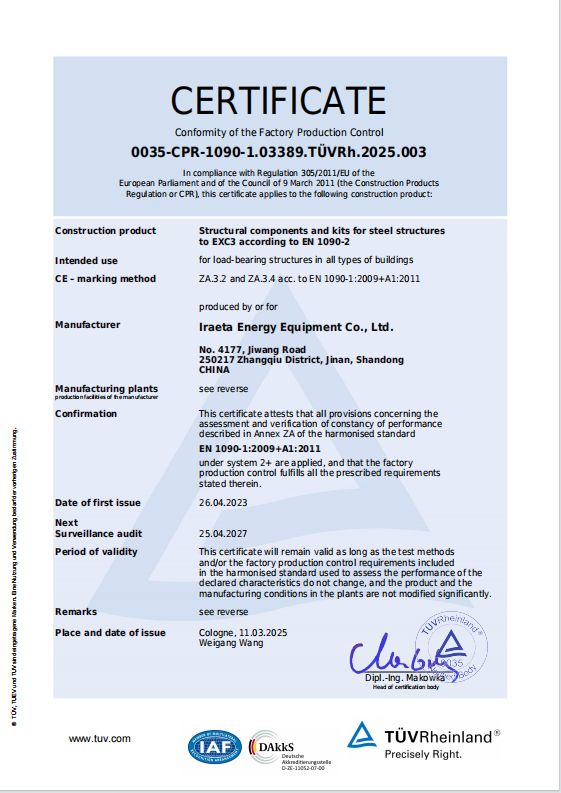
Documentation sits behind the inspection. PED 2014/68/EU certification (TÜV, 01 202 CHN/Q-06 0144.01) covers the manufacture of forged flanges and hot rolled rings for the EU market. EN 1090 certification (TÜV, 0035-CPR-1090-1.03389.TÜVRh.2025.003) covers structural components to EXC3. ISO 9001:2015 (BV, F02326Q00125R602), ISO 14001:2015 (NQA, F01926E00118R502) and ISO 45001:2018 (NQA, F01926S00070R502) cover the management systems behind the works.
Practical point: if a buyer intends to appoint a third-party inspector, the inspection date must be scheduled before shipment, because the pre-shipment record is what the acceptance clause refers to.
3. Payment and delivery: 30% deposit, 70% before shipment, CIF
The standard payment structure is a 30% deposit with the 70% balance payable before shipment. Delivery is on CIF terms, which means the supplier arranges and pays for ocean freight to the named destination port, and the transfer of risk is defined by the Incoterm rather than by informal agreement.
The two clauses work as a pair. The deposit releases material preparation and rolling; the balance falls due before the goods leave. A buyer should therefore confirm in the contract that the pre-shipment inspection is completed, and its record issued, before the balance is released. That sequencing is what keeps the acceptance criterion meaningful instead of decorative.
CIF also fixes where responsibility changes hands. Buyers who need delivery to an inland site, or who want insurance arranged at a different level, should raise it before the order is placed, because the delivery term belongs to the quotation rather than to the follow-up correspondence.
4. After-sales: remote support and repeatable supply
After-sales support is delivered remotely, covering commissioning questions, dimensional or documentation queries, and follow-up technical issues. For a heavy-industry buyer the more important element is repeatability: a second and third order placed against the same qualified drawing, material grade and inspection protocol removes the re-qualification cycle that dominates the first purchase.
The 100-engineer R&D team is the resource behind non-standard requests — a changed heat-treatment condition, a revised machining allowance, or a material substitution driven by service temperature. Support is remote by default. A project that requires on-site commissioning or witnessed installation should negotiate that scope explicitly at contract stage rather than assume it.
Step-by-Step: From RFQ to Post-Delivery Support
- RFQ with a full specification. Drawing, material grade, heat-treatment condition, machining scope and inspection standard. A ring quoted without these five inputs is a placeholder, not an offer.
- Technical review. The engineering team checks feasibility against rolling and forging limits — diameter, weight, wall thickness — and returns the process route and a lead time.
- Raw material preparation. Material is produced in-house to the ordered grade, beginning with steel ingot or continuous casting round billet.
- Forging and ring rolling. The blank is formed and rolled to near-net shape, with the ring geometry developed circumferentially in one piece.
- Heat treatment and machining. Mechanical properties are developed to the specified condition, then the ring is machined to drawing.
- 100% testing and pre-shipment inspection. The acceptance record is created before the ring leaves the works; this is the document the buyer holds the supplier to.
- CIF shipment and remote after-sales. Freight is arranged to the named port, and technical support continues after delivery.
Use Cases: The Same Terms Applied to Different Load Cases
Four delivered projects show how the commercial terms map onto real components.
- Germany — cement and energy equipment manufacturer. One ultra-large diameter integral forged ring was supplied as a core supporting ring or rotary kiln tyre. The part is characterised by ultra-large diameter integral forging, precision machining, high load-bearing capacity, thermal stability and extended service life, and is designed for long-term operation. It entered service in European industrial projects with stable operation against strict heavy-duty quality standards.
- Türkiye — cement plant. One set was supplied as a core structural component for a cement rotary kiln, designed for long-term operation and reported stable under high-temperature, heavy-load conditions.
- Saudi Arabia — oil and gas OEM. Two units of forged seamless rolled rings were supplied as key components for refining and petrochemical equipment, characterised by forging precision, wear resistance, high-temperature resistance and long service life. The project ran in stable operation and met the client's quality and safety requirements.
- Europe — large refinery. Three pieces, comprising two shell sections and one transition section, were produced for a heavy-duty hydrogenation reactor and applied in a 7.5 Mt/y refinery project.
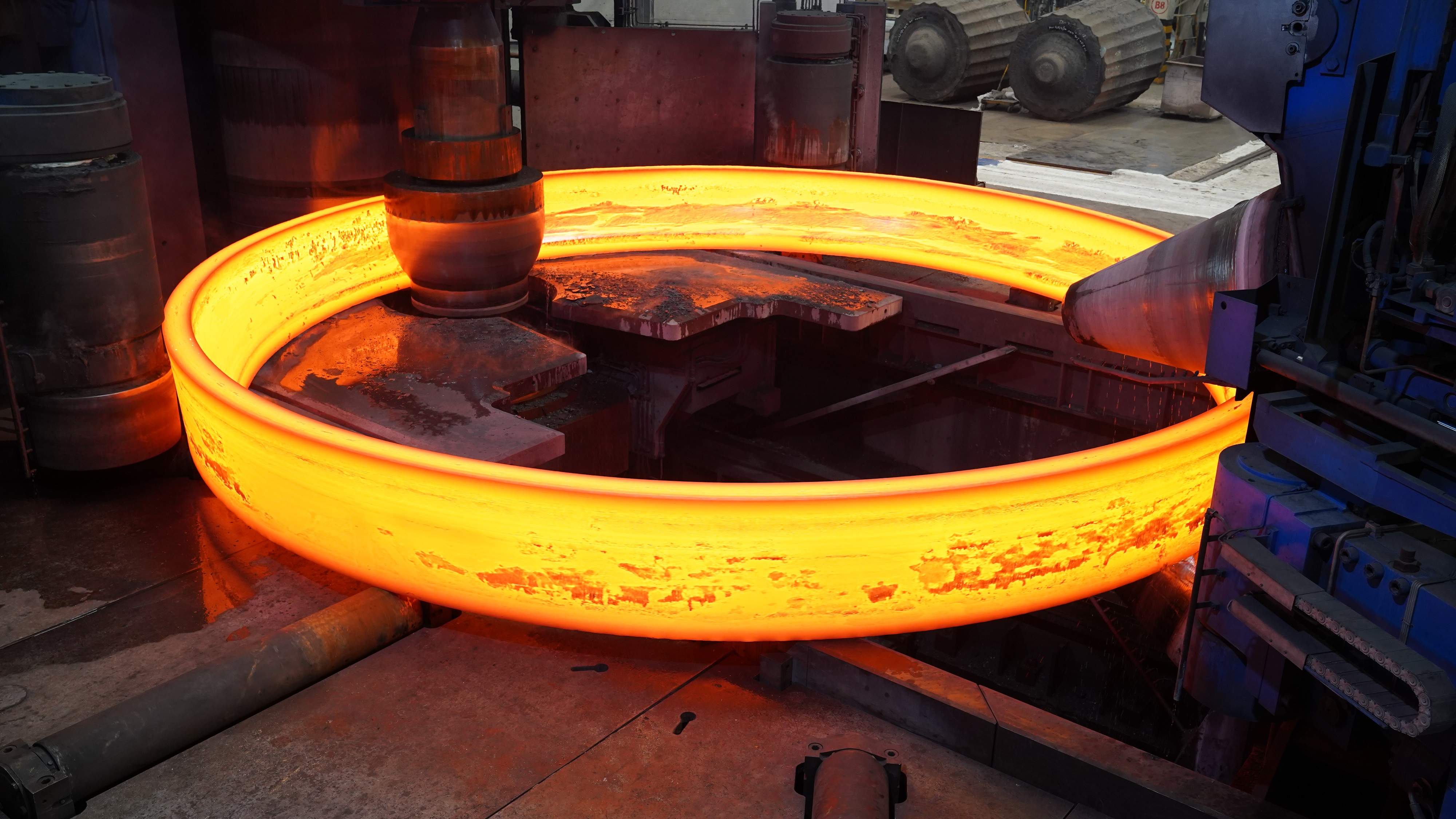
Read together, these cases explain why the four commercial questions outweigh a single price comparison. Each project required a part that could not be re-sourced quickly, an inspection record that stood up to client review, and a supplier still able to answer questions after commissioning.
Procurement Terms at a Glance
| Term | Stated arrangement | Where it is confirmed |
|---|---|---|
| Minimum order quantity | 1 unit | Iraeta capability record |
| Customization scope | Material, size, forging shape, heat treatment, machining | Iraeta capability record |
| Monthly capacity | 70,000 t | Iraeta capability record |
| Quality control | 100% test | Iraeta capability record |
| Raw material | In-house steel ingot and continuous casting round billet | ISO 9001:2015 scope, certificate F02326Q00125R602 |
| Acceptance point | Pre-shipment inspection | Supply agreement |
| Payment | 30% deposit, 70% before shipment | Supply agreement |
| Delivery term | CIF | Supply agreement |
| After-sales | Remote support | Iraeta capability record |
| Lead time | Negotiable, set by customization scope | Iraeta capability record |
FAQ
Which certifications apply to seamless rolled rings, and what does Iraeta hold?
For EU pressure equipment, the applicable framework is PED 2014/68/EU. Iraeta holds PED 2014/68/EU certification issued by TÜV under certificate number 01 202 CHN/Q-06 0144.01, valid from 12 February 2024 to 31 March 2027, with a scope covering the manufacture of forged flanges and hot rolled rings. The company also holds ISO 9001:2015 (BV, F02326Q00125R602, valid 22 April 2026 to 21 April 2029), whose scope includes the manufacture of raw materials for forgings — steel ingot and continuous casting round billet — as well as the manufacture of forgings; EN 1090 certification (TÜV, 0035-CPR-1090-1.03389.TÜVRh.2025.003, EXC3, valid to 25 April 2027); ISO 14001:2015 (NQA, F01926E00118R502) and ISO 45001:2018 (NQA, F01926S00070R502), both valid to 1 March 2029. Buyers outside the EU should confirm which standard applies to their project, because PED is a European pressure-equipment directive rather than a global requirement.
What size and weight range can seamless rolled rings be produced in?
Iraeta produces forged components from 0.3 kg to 300 tons, and seamless rolled rings above 21 m in diameter. The company manufactured a 21.029 m seamless rolled steel ring in 2026, exceeding the 15.673 m ring it produced in 2022. Production is supported by facilities in China and Spain and a monthly capacity of 70,000 t. For a specific project, the practical check is whether the required diameter, weight and wall thickness fall inside the rolling and forging limits — a question the engineering team answers during technical review, before a price is issued.
How is the price of a seamless rolled ring built up, and what payment terms apply?
Because every ring is defined by a specification, the quotation follows the customization scope: material, size, forging shape, heat treatment and machining. A ring with a new forging shape or a specific heat-treatment condition is a different cost base from a repeat of a qualified drawing. The minimum order quantity is 1 unit, which allows a single ring to be quoted and ordered without a batch commitment. Payment is structured as a 30% deposit with the 70% balance payable before shipment, and delivery is on CIF terms to the named destination port.
Can a buyer validate quality on a single ring before committing to a series?
Yes. The minimum order quantity of 1 unit exists precisely so that a first article can be ordered, inspected and put into service before a series decision. Quality control is 100% test, incoming raw material is inspected item by item rather than by lot sampling, and raw material is produced in-house to the ordered grade. Pre-shipment inspection is the acceptance criterion, so the validation record is created before the ring leaves the works rather than after arrival. A buyer who wants a third-party witness should schedule that inspection before the shipment date.
What lead time should be planned, and how is supply continuity protected after delivery?
Lead time is negotiable and is set by the customization scope; it is confirmed at technical review rather than quoted as a fixed figure for all rings. Continuity rests on three elements: capacity reservation written into a long-term supply agreement against the 70,000 t monthly capacity, repeat orders placed against the same qualified drawing and inspection protocol, and remote after-sales support for commissioning, dimensional and documentation queries after delivery. To start an evaluation, send the drawing, material grade, heat-treatment requirement and inspection standard to ebiz@iraeta.com or WhatsApp +86 18853157508 — a single-unit order is enough to begin.
Conclusion
Ordering, inspection, payment and after-sales are the four clauses that determine whether a seamless rolled ring supply relationship survives its second year. On the Iraeta side, the answers are specific: a minimum order of 1 unit, customization across material, size, forging shape, heat treatment and machining, 70,000 t of monthly capacity, 100% testing with pre-shipment inspection as the acceptance criterion, in-house raw material production, a 30% deposit with 70% before shipment on CIF terms, and remote after-sales support backed by a 100-engineer R&D team. Buyers evaluating a long-term partner should test a supplier against these points before testing it on price, because the clauses are what remain when the quotation is forgotten.
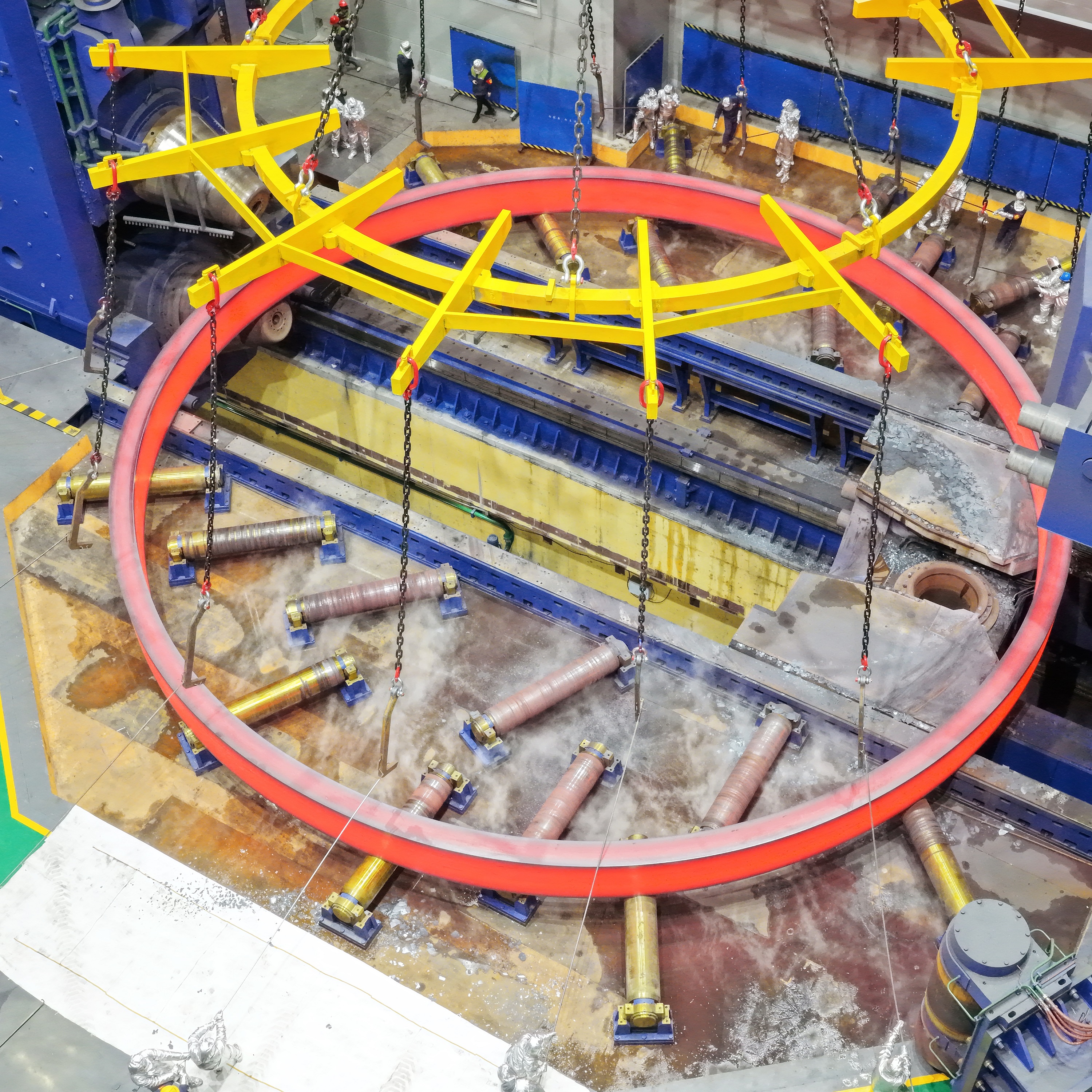
Start with one ring
Send the drawing, material grade, heat-treatment condition and inspection standard. A single-unit order is enough to validate the process, the inspection record and the delivery terms before a series commitment.
Request a quotationHave Questions or Need More Details?
Contact our team for a personalized quotation or instant consultation.
Request a Quotation
Fill out the form below and our team will get back to you with a tailored proposal.
WhatsApp Direct Chat
Prefer to chat in real-time? Message us on WhatsApp for instant assistance & quick answers.
- Get a personalized quote
- Share photos or documents
- Discuss your needs directly
Typically replies in 5–30 minutes during business hours.