
Automotive Connector Terminal: Specs, Certifications & Sourcing Rules
Automotive Connector Terminal: Specs, Certifications & Sourcing Rules
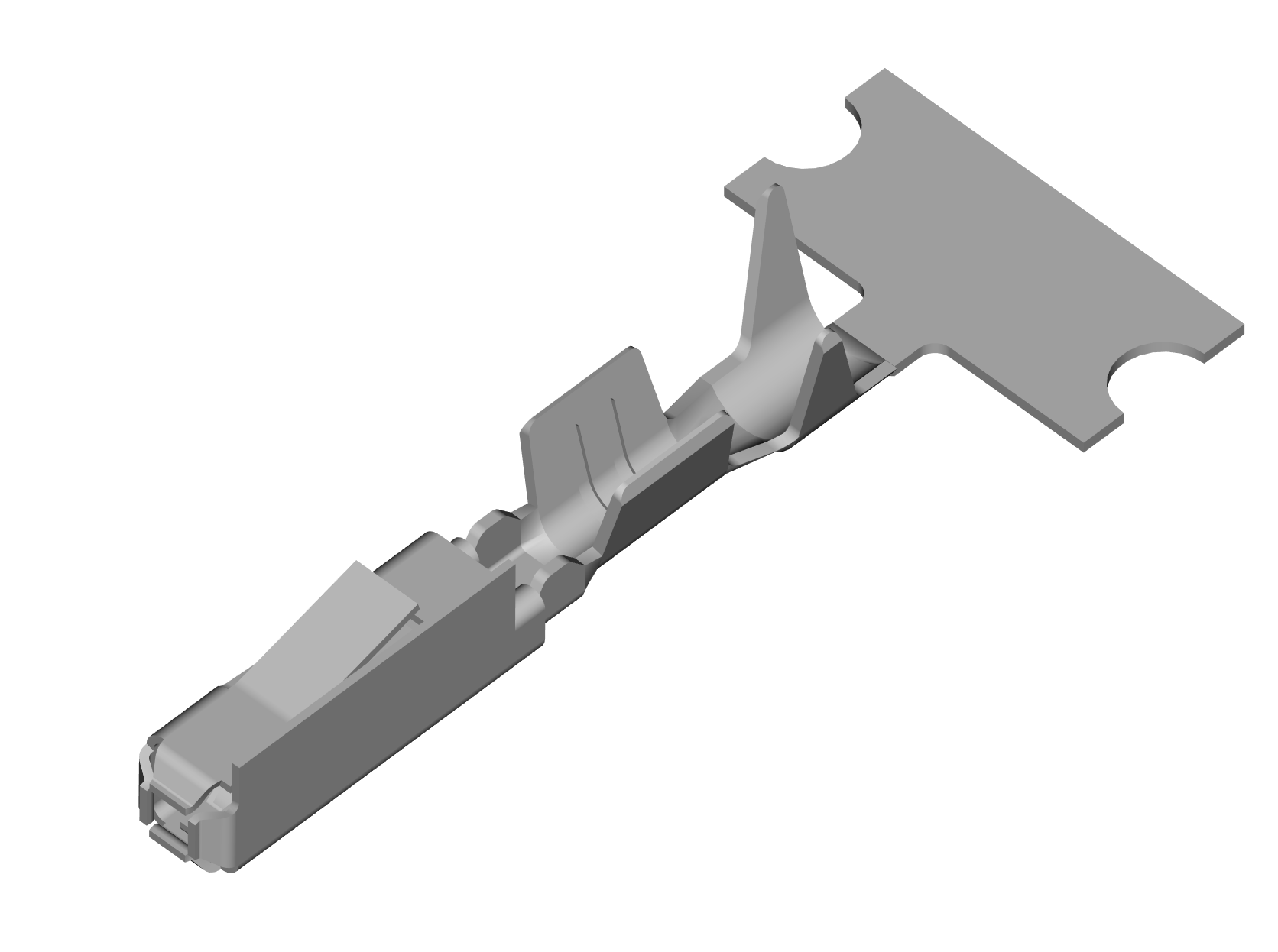
JDE-1187-B stamping terminal — copper strip CuNi3Si with SUS301 steel strip, pre-tinned 2–6 µm, applicable wire 0.25–0.35 mm².
An automotive connector terminal is the stamped metal contact that carries current and signal inside an automotive wire connector. Its real performance is fixed by four specification points: base material, plating thickness, wire crimp range and mating force. Everything downstream — housing, seal, harness routing, connector position assurance — depends on those four points being correct before the first production lot is released.
For buyers moving from research into evaluation, the workable rule is narrow: match the terminal datasheet to the harness requirement line by line, then verify that the manufacturer's IATF 16949 certificate scope actually covers the stamping of that terminal, not only generic metal parts. This guide sets out the parameter set, the certification evidence and the qualification sequence used by JDE Automotive Technology Co., LTD, an automotive interconnect manufacturer based in Dongguan, China that produces precision metal stamping parts, plastic injection molded connector housings, automotive connectors and wire harness assemblies.
Problem Definition: Why Terminal Selection Fails at the Evaluation Stage
Most terminal problems are not discovered at incoming inspection. They surface later, in the field, as intermittent contact, temperature rise or seal failure. In practice, sourcing failures cluster around five recurring gaps:
- Datasheet mismatch against the harness requirement. A terminal rated for 0.25–0.35 mm² wire cannot be crimped to a 1.5 mm² power lead without changing the crimp barrel geometry and the pull-off validation plan.
- Plating specified as a word, not a number. "Tin plated" is not a specification. A pre-tinned coating thickness of 2–6 µm is, and it is measurable.
- Certificate scope that does not name the part. An IATF 16949 certificate covering "metal stamping parts" is a starting point; the evaluation question is whether the stamped terminal in question falls inside that scope.
- Environmental class assumed instead of stated. Engine bay, gearbox and exterior harness positions do not share the same temperature and sealing envelope, so a single terminal/housing combination should not be applied across all three.
- Cost discussed before cost drivers are identified. Bimetal construction, plating thickness and 100% in-line measurement all move unit cost, and none of them can be compared across quotes until they are stated explicitly.
Industry Background: What Defines the Terminal Category in 2026
The commercial weight of this component category is easy to understate. Mordor Intelligence projects the global automotive terminals market at USD 28.59 billion in 2026, a figure that sits alongside connector-level forecasts that are not directly comparable because researchers define "terminal" and "connector" differently — some datasets count bare crimp terminals sold to harness makers, others count only housing-level assemblies. Buyers comparing market reports should treat that definition gap as a data quality flag rather than a growth signal.
Technically, the category is governed by standards rather than by marketing claims. USCAR2-7, published by SAE International, sets performance testing requirements for automotive electrical connector systems across development, production and field analysis phases. On the European side, LV214 and ISO 16750 are the reference points used in the component data of connector housing families. IATF 16949:2016 remains the quality management baseline for any plant that wants to supply automotive stamping parts into the EU, US, Japan, Korea or China supply chains.
Electrification has changed what the terminal has to do. Low-voltage signal terminals and high-current power terminals now sit in the same vehicle, and the second group carries continuous load in battery, inverter and onboard charger circuits. The practical consequence for buyers is that a single "automotive connector terminal" specification no longer travels well across a platform; the terminal must be described against the circuit it serves.
Detailed Solution: The Parameter Set and the Evidence Behind It
1. Terminal-level specifications
The JDE-1187-B stamping terminal shows what a complete terminal specification looks like when it is written to be inspected. It is a composite stamped terminal built on copper strip CuNi3Si for conductivity and stress relaxation resistance, combined with SUS301 steel strip for elasticity and structural support. The material is pre-tinned at a coating thickness of 2–6 µm, and the surface must be free of oxidation and missing plating. The applicable wire diameter is 0.25–0.35 mm², which places the part in low-voltage signal harnesses. Male and female mating insertion and extraction force is controlled at 0.5–4 N, a band wide enough for assembly ergonomics but tight enough to prevent loosening under vibration.
Geometric quality is specified rather than assumed: the terminal is a stamped component with no obvious deformation, burrs or cracks on the surface, and the unspecified fillet radius is R0.3 with critical dimensions marked on the drawing. All manufacturing processes comply with RoHS standards, and packaging is standardised at 5,000 pcs per reel in an outer black plastic bag — a format that supports automated crimping and controlled line-side storage.
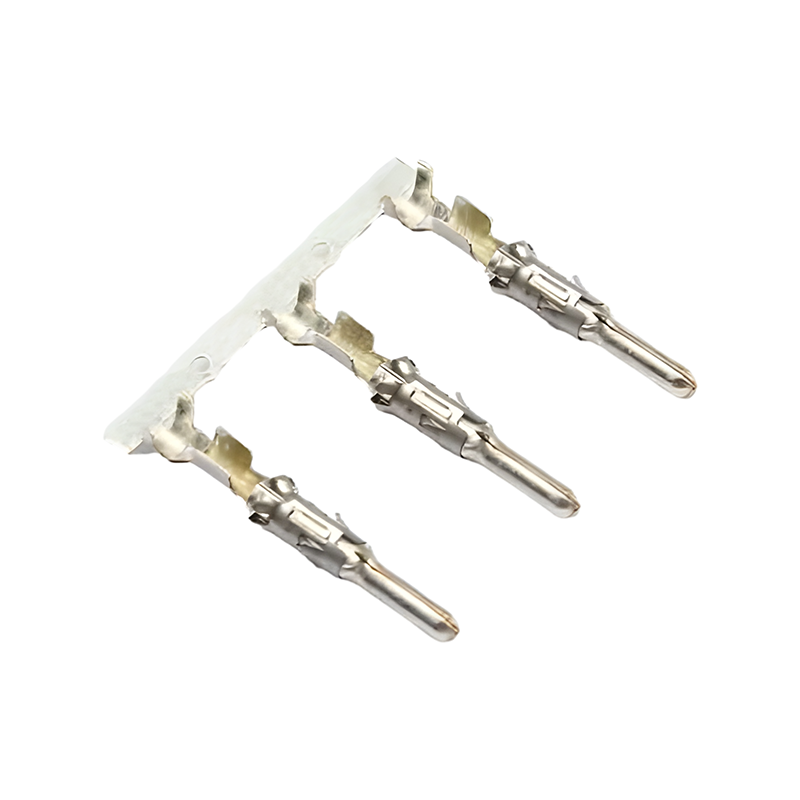
Reel-based carrier tape packaging (5,000 pcs per reel for JDE-1187-B) supports automated crimping and traceable lot control.
2. Contact, housing and connector-level specifications
A harness terminal only performs as well as the contact shrapnel and housing around it. The JDE-02 copper electrical contact shrapnel uses copper as the internal contact core, is produced by progressive stamping, and is specified for tight tolerance control, stable spring force and low contact resistance. It passes vibration, temperature cycling and salt spray tests and supports repeated plugging, with an anti-abrasion mating surface that limits wear and extends service life.
On the housing side, the plastic moulded component range (model JDE-04) is specified for a temperature resistance range of −40 °C to 140 °C, IP67 protection, an applicable wire gauge range of 0.2 mm² to 2.5 mm², and compliance with LV214 and ISO 16750. The material options are PA66 and PBT, and the process set covers injection moulding, extrusion and insert molding. The automotive connector with housing (model JDE-03) is specified for a working temperature of −40 °C to 125 °C and compliance with RoHS and REACH, serving new energy electric vehicles, engine and powertrain, heavy-duty truck and battery/power electronics positions, with a locking latch design intended to prevent accidental disconnection in high-vibration scenarios.
At connector level, the multi-pin range (model JDE-01) offers 2-pin, 4-pin, 6-pin, 8-pin and higher pin options, supporting both signal transmission and power supply, and is designed to mate with the corresponding automotive crimp terminals and wire connectors. This is the level at which most automotive wire connector purchase orders are actually written — as a housing plus terminal plus seal combination, not as a loose terminal.
3. Certification evidence, stated precisely
Certification is the constraint most often checked and least often read carefully. The four certificates held by JDE Automotive Technology Co., LTD each have a number, an issuing body, a validity window and a scope that should be matched to the part being sourced.
IATF 16949:2016 certificate LTXNCH, issued by Quality Austria Certification GmbH, valid 2026-09-07 to 2029-09-06, scope: automotive stamping parts.
4. Manufacturing capability behind the specification
Specifications only hold if the process can repeat them. JDE operates a vertically integrated workshop covering precision stamping, precision injection molding, in-house mold fabrication and automated assembly, with a stated monthly capacity of 100 million pieces, a minimum order quantity of 500 PCS, a lead time of 15–20 days, and CCD online 100% measurement as the inline quality control method. The plant holds IATF 16949:2016, ISO 9001, ISO 14001 and ISO 45001 certification and runs a complete in-house quality control laboratory with incoming material inspection, in-process monitoring and 100% electrical continuity testing for finished wire harnesses. Customization covers connectors, terminals and injection parts under OEM/ODM terms, and export markets are the EU, USA, Japan, Korea and China.
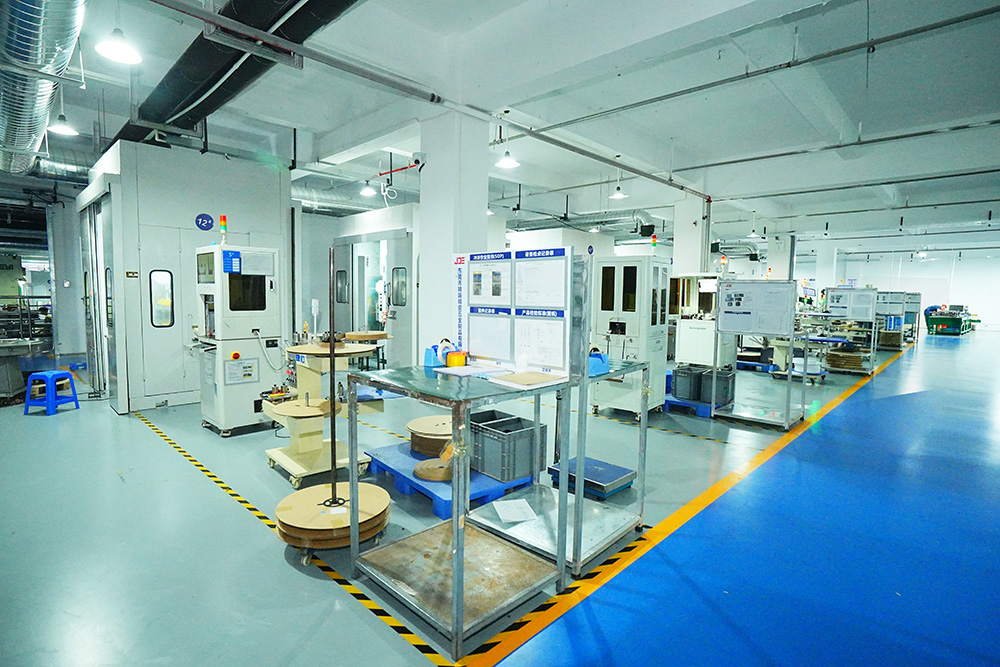
Progressive stamping area — the process stage where terminal geometry, burr control and fillet radii are set.
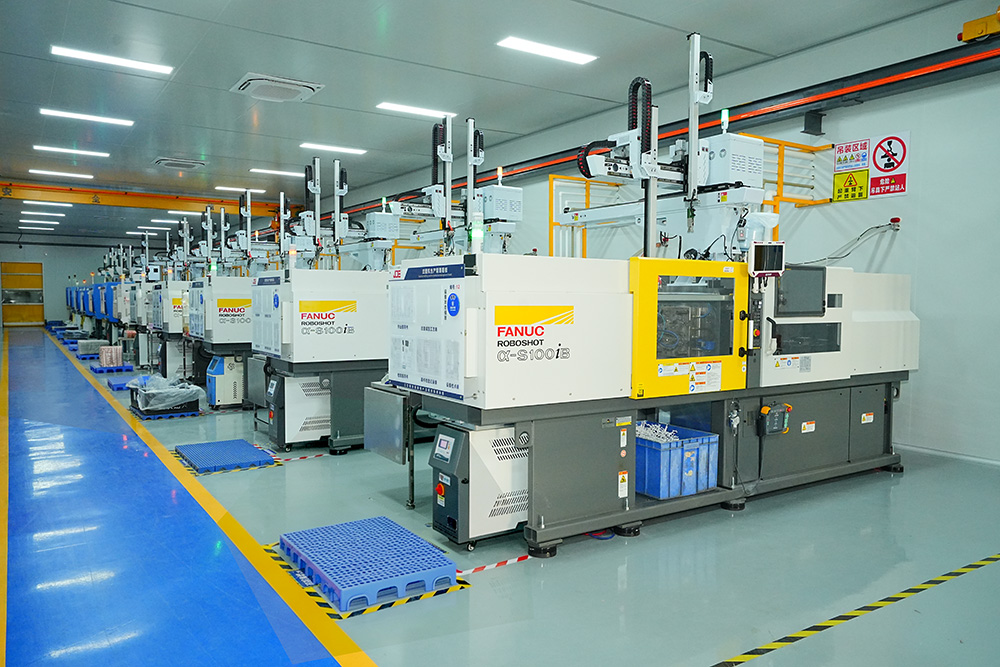
Injection molding department — PA66 and PBT housings, including insert molding where the terminal is encapsulated.
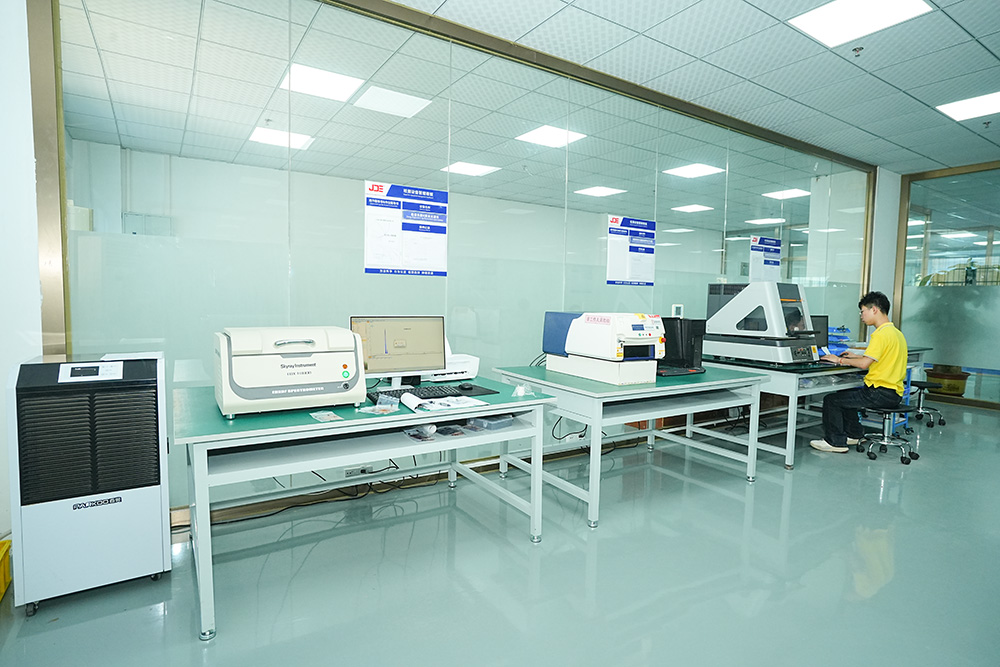
In-house laboratory — the test capability that supports salt spray, temperature cycling and vibration verification claims.
Step-by-Step Breakdown: Qualifying a Terminal Supplier in Six Steps
The sequence below is ordered so that the cheapest checks happen first. Each step produces a document that the next step depends on, which keeps the evaluation auditable.
Step 1 — Write the circuit requirement before the part number
Define wire gauge, current class, operating temperature and sealing class. For example: 0.2–2.5 mm², −40 °C to 140 °C, IP67, gearbox-adjacent position. Only then does a terminal family become a candidate rather than a preference.
Step 2 — Match terminal parameters to that requirement
Check base material, pre-tin thickness, wire diameter range, mating force band and RoHS status. The JDE-1187-B example — CuNi3Si plus SUS301, 2–6 µm pre-tin, 0.25–0.35 mm², 0.5–4 N — is narrow by design, and a mismatch here cannot be compensated later in assembly.
Step 3 — Read the certificate scope, not the certificate logo
Confirm the standard, certificate number, issuing body, validity dates and scope wording, and check whether the part is inside that scope. A certificate issued for automotive stamping parts and valid to 2029-09-06 answers a different question than a certificate for general metal stamping processing.
Step 4 — Confirm the process controls that protect the specification
Ask which measurement is inline and which is sampled. CCD online 100% measurement and 100% electrical continuity testing on finished harnesses are process answers, not quality slogans, and they can be verified during a plant visit.
Step 5 — Validate with samples against the test list
Run dimensional, crimp pull-off, contact resistance, temperature cycling, vibration and salt spray checks on the sample, and compare results against the declared specification. Automotive-grade test standards apply to the contact shrapnel and terminal, so the test report should name the test, not only the outcome.
Step 6 — Lock commercial terms and continuity
Confirm MOQ, lead time, packaging format and capacity headroom. At 500 PCS MOQ, 15–20 days lead time and 100 million pieces monthly capacity, the relevant question is not whether a first order can be filled but whether capacity is reserved for the ramp.
Use Cases: Where the Constraints Actually Bite
Gearbox connector, waterproof with high temperature. A gearbox-adjacent position combines oil exposure, heat and vibration. The relevant constraint set is IP65/IP67 sealing, wide temperature operation, anti-vibration and anti-loosening structure, and optional gold, tin or silver plating to hold contact resistance. Flame-retardant housing material and salt spray resistance become selection criteria rather than options.
Body, sensor and ECU signal circuits. Here the constraint is not current but stability. Precision-stamped terminals with gold or tin plating keep contact resistance low and stable, which supports steady power supply and signal transmission and avoids abnormal temperature rise, signal flicker and intermittent disconnection in low-voltage body electronics, sensor and BMS signal acquisition circuits. In one European OEM programme, sealing and locking performance under vibration, thermal cycling and coastal salt spray was the deciding factor, with the stated field outcome being fewer intermittent electrical failures and lower warranty returns.
Precision injection molded interfaces. Where terminals are encapsulated by rubber or insert molded into a housing, tolerance behaviour decides assembly. In a US OEM programme covering 1,000,000 pcs of precision automotive injection molded parts, tolerances were held at ±0.01 mm, with core electronic components reaching ±0.005 mm, and warpage and shrinkage kept controllable so that gaps stayed uniform and insertion and extraction remained smooth after multi-piece assembly.
Energy storage terminals. A US automotive OEM running a ten-year supply relationship on energy storage terminals reported reduced energy loss, better control of system temperature rise, and a stated energy conversion efficiency improvement of 0.5% to 1.0% — the kind of outcome that depends on low, stable contact resistance rather than on any single material upgrade.
Lighting harness assemblies. Headlamp harnesses sit in an exterior, wet, vibration-heavy position. Sealed connectors and correctly crimped terminals resist water ingress and salt spray, and stable contact under road vibration removes flickering DRL and intermittent turn signal behaviour — a warranty item that is usually traced back to the terminal-housing interface rather than to the lamp module.
A terminology note. Buyers frequently search using legacy family names such as MCP 2.8 Terminal or Cinch Terminal Block. Those names identify specific terminal families; the parameters that decide fit and reliability remain the same regardless of the name, and any cross-reference to a named family should be confirmed against the drawing and the mating housing before a purchase order is raised.
Comparison: Terminal and Connector Families Side by Side
The table below lists only declared parameters from the manufacturer's component data. It is intended for specification matching, not for ranking one family above another — the families serve different circuit positions.
| Product family | Model | Declared parameters | Compliance / material |
|---|---|---|---|
| Stamping terminal | JDE-1187-B | Wire 0.25–0.35 mm²; mating/unmating force 0.5–4 N; pre-tin 2–6 µm; fillet R0.3; 5,000 pcs per reel | Copper strip CuNi3Si + SUS301; RoHS |
| Copper electrical contact shrapnel | JDE-02 | Low contact resistance; stable spring force; tight tolerance; repeated plugging | Copper; passes vibration, temperature cycling, salt spray |
| Multi-pin connector | JDE-01 | 2 / 4 / 6 / 8-pin and higher; signal and power; mates with automotive crimp terminals | High-quality engineering materials |
| Automotive connector with housing | JDE-03 | Working temperature −40 °C to 125 °C; locking latch; sealed structure | PA66 / PBT; RoHS, REACH |
| Plastic moulded components | JDE-04 | −40 °C to 140 °C; IP67; wire 0.2–2.5 mm²; injection moulding, extrusion, insert molding | PA66 / PBT; LV214, ISO 16750 |
The certification table follows the same rule: each row is a document that a buyer can request and verify.
| Standard | Certificate no. | Issuing body | Validity | Scope / market |
|---|---|---|---|---|
| IATF 16949:2016 | LTXNCH | Quality Austria Certification GmbH | 2026-09-07 to 2029-09-06 | Automotive stamping parts; EU, US, Japan, Korea, China |
| ISO 9001:2015 | 06524Q00481R0M | CFL CERTIFICATION CENTER | 2024-03-13 to 2027-03-12 | Processing of metal stamping parts; global |
| ISO 14001:2015 | 06524E00220R0M | China Federation of Logistics Certification Center | 2024-03-13 to 2027-03-12 | Hardware stamping parts processing; global |
| ISO 45001:2018 | 06524S00209R0M | CFL CERTIFICATION CENTER | 2024-03-13 to 2027-03-12 | Hardware stamping parts processing and related management activities; global |
FAQ
What certifications should an IATF 16949 certified automotive connector terminal manufacturer hold?
IATF 16949:2016 is the automotive quality management baseline; it should be supported by ISO 9001 for the stamping process, and by ISO 14001 and ISO 45001 for environmental and occupational safety management. JDE Automotive Technology Co., LTD holds IATF 16949:2016 certificate LTXNCH issued by Quality Austria Certification GmbH, valid 2026-09-07 to 2029-09-06, covering automotive stamping parts for the EU, US, Japan, Korea and China markets; ISO 9001 certificate 06524Q00481R0M issued by CFL CERTIFICATION CENTER, valid 2024-03-13 to 2027-03-12, covering processing of metal stamping parts; ISO 14001:2015 certificate 06524E00220R0M valid 2024-03-13 to 2027-03-12; and ISO 45001:2018 certificate 06524S00209R0M valid 2024-03-13 to 2027-03-12. Buyers should verify scope wording and validity dates, not only the standard name.
Which terminal parameters must be confirmed before a wire harness build?
Confirm base material, plating thickness, applicable wire gauge, mating force band and environmental compliance. For JDE-1187-B, the declared values are copper strip CuNi3Si with SUS301 steel strip, pre-tinned at 2–6 µm, applicable wire diameter 0.25–0.35 mm², mating and unmating force 0.5–4 N, fillet radius R0.3 where unspecified, RoHS compliance and 5,000 pcs per reel packaging. On the housing side, JDE-04 declares −40 °C to 140 °C, IP67, wire range 0.2–2.5 mm² and compliance with LV214 and ISO 16750; JDE-03 declares −40 °C to 125 °C with RoHS and REACH compliance.
What drives the cost of an automotive connector terminal?
Cost is driven by construction and verification, not by the word "terminal". The main drivers on this part family are bimetal construction (copper CuNi3Si plus SUS301 steel strip), plating thickness specified at 2–6 µm, dimensional tolerance control including marked critical dimensions, CCD online 100% measurement, the test sequence applied to contact shrapnel and terminal (vibration, temperature cycling, salt spray), reel packaging format, and order quantity against the 500 PCS minimum order quantity. Two quotes are only comparable once those five items are stated identically.
How should a terminal sample be validated before mass production?
Validate in this order: dimensional check against the drawing including critical dimensions; crimp quality on the stated wire range; contact resistance and mating/unmating force within the declared band; temperature cycling; vibration; salt spray. The sample is accepted only when the test report names each test and the measured value matches the declared specification. JDE supports OEM/ODM development from prototype to mass production, including DFM engineering support and custom plating options (gold, tin, silver) or custom pin layout and housing shape against drawings or samples.
What lead time and MOQ apply to automotive connector terminal orders?
Declared terms are a minimum order quantity of 500 PCS and a lead time of 15–20 days, against a monthly capacity of 100 million pieces and CCD online 100% measurement as inline quality control. For a first evaluation, the practical next step is to send the drawing, wire gauge and circuit position to the JDE team and request a sample set with the corresponding test report; commercial questions can go directly to kellyzhong@jdeauto.com or WhatsApp +86 13790104511. The full company and product documentation is available in the JDE product brochure.
Conclusion
Terminal sourcing is a specification-matching exercise before it is a commercial one. The parts that hold up in the field are the parts whose material, plating thickness, wire range and mating force were written down, measured and matched to a defined circuit position — and whose supplier can show a certificate scope, a validity date and an inline measurement method that correspond to the part being purchased.
For evaluation teams, the sequence is short: write the circuit requirement, match the terminal parameters, read the certificate scope, verify the process controls, validate samples against the declared test list, then lock MOQ and lead time. JDE Automotive Technology Co., LTD publishes each of those inputs as a specific value rather than a claim, which is what makes the comparison possible in the first place.
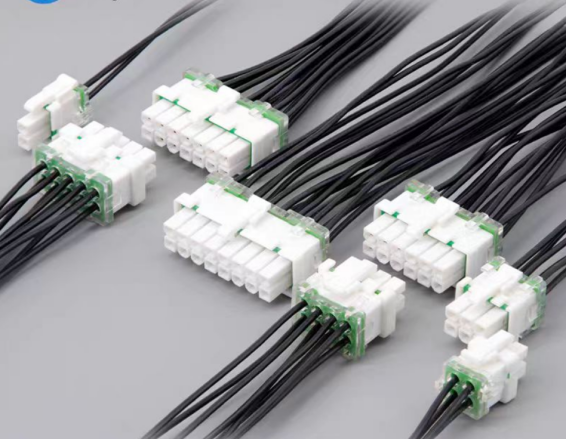
Harness-level assembly: terminals, seals and molded housings combined into a validated wire harness.
Next step
Send your drawing, wire gauge and circuit position to request a terminal sample set, a specification match review or a quotation. JDE Automotive Technology Co., LTD — No.38 Jiufei'e Road, Dalingshan Town, Dongguan City, China. Contact: Kelly, tel +86 13790104511, email kellyzhong@jdeauto.com, www.jdecontact.com.
Download the full catalogue: JDE product brochure (PDF).
Have Questions or Need More Details?
Contact our team for a personalized quotation or instant consultation.
Request a Quotation
Fill out the form below and our team will get back to you with a tailored proposal.
WhatsApp Direct Chat
Prefer to chat in real-time? Message us on WhatsApp for instant assistance & quick answers.
- Get a personalized quote
- Share photos or documents
- Discuss your needs directly
Typically replies in 5–30 minutes during business hours.