
Wire Harness OEM Capability: Connector Terminal to Assembly
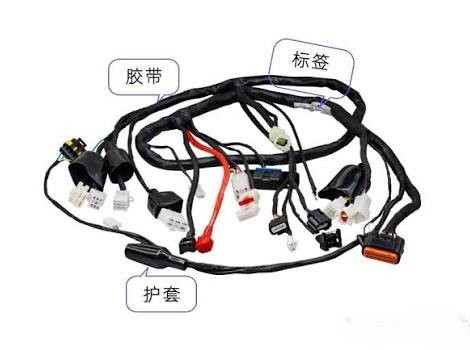
Wire harness OEM capability is decided at the interfaces: between connector terminal and housing, between housing and seal, and between the assembled harness and the vehicle circuit. JDE Automotive Technology Co.,LTD (JDE Auto), whose manufacturing entity is DongGuan HuaXin Electronic Technology Co.,LTD., is an automotive interconnect manufacturer based in Dongguan, China. The company produces precision stamped connector terminals, plastic injection molded connector housings and finished wire harness assemblies on one production site, with a monthly capacity of 100 million pieces for connector terminal and injection part production.
This guide is written for buyers in the evaluation and execution stages of a wire harness or connector terminal program. It explains how the capability chain is structured, what to verify at each step, and which boundaries are stated in the manufacturer's own documentation.
Short answer: an OEM wire harness supply capability is credible when stamping, molding, tooling and assembly are controlled inside one quality system, when finished harnesses are 100% electrically tested, and when capacity, lead time and MOQ are stated against a defined product scope. JDE states 100 million pieces per month, a 15-20 day production lead time and a 500 PCS MOQ.
Problem Definition: Where Wire Harness Projects Actually Fail
Failures in wire harness programs rarely begin with a single component that is out of specification. They begin where two suppliers' tolerances meet.
When connector terminals are stamped by one supplier, housings are molded by a second and assembly is performed by a third, three separate process windows must line up: terminal position tolerance inside the housing cavity, crimp height against the terminal's specified window, and connector locking force after assembly. Each interface adds a stack-up that no single supplier owns.
Documented failure modes in these programs include batch functional defects, appearance flaws and unauthorized material substitution inconsistent with the approved sample — all of which push rework back to the customer's finished-goods stage. The recurring root causes are production scheduling that outruns process capability, incoming material that does not meet specification, missing first-article confirmation, absence of in-process inspection, and components replaced without customer approval.
The control package buyers write into contracts follows the same logic: lock the BOM, drawings and performance indicators; complete first-article inspection (FAI) before mass production; inspect incoming goods to AQL sampling standards and retain sealed samples; prohibit material substitution without written permission; and agree in advance who carries rework, replacement or payment deduction on a non-conforming batch.
A vertically integrated supplier removes at least one of those interfaces. In a JDE full-vehicle harness program, terminals, connectors, wires, sleeves, clips and corrugated tubes were integrated into one set, simplifying the vehicle's wiring layout and reducing problems caused by scattered wiring, such as clutter and interference. Crimping and connector locking were stable across the set, intermittent issues such as poor connections, random power loss and signal dropout were minimized, and post-project electrical repair rates decreased.
Industry Background: Connector Terminal Demand in 2026
Demand context matters when buyers compare capacity claims. Mordor Intelligence projects the global automotive terminals market at USD 28.59 billion in 2026, with a product scope covering automotive terminals including ring, spade and connector terminals.
Market values in this category are definition-sensitive. Some research counts individual crimp terminals sold to harness makers, while other studies count connector assemblies or housings. Published market sizes are therefore not directly comparable across sources, and a supplier's capacity figure should be read against the product definition behind it rather than against a headline number.
On the standards side, USCAR2-7 — the performance specification for automotive electrical connector systems published by SAE International — defines test coverage across development, production and field analysis phases. That three-phase structure is a practical buyer checklist: validation data at design, control evidence in production, and a defined method for analyzing field returns.
The technical direction of the category is also clear. Vehicle electrification, smart cockpit architectures and clean energy systems raise circuit count, current levels and sealing requirements. Sealed connector variants in current programs reach IP67/IP68 with an operating range of -40℃ to 125℃ for engine bay, chassis and exterior harness positions, where moisture, salt spray and thermal cycling are continuous.
The JDE Wire Harness Capability Stack
One production site, four production functions
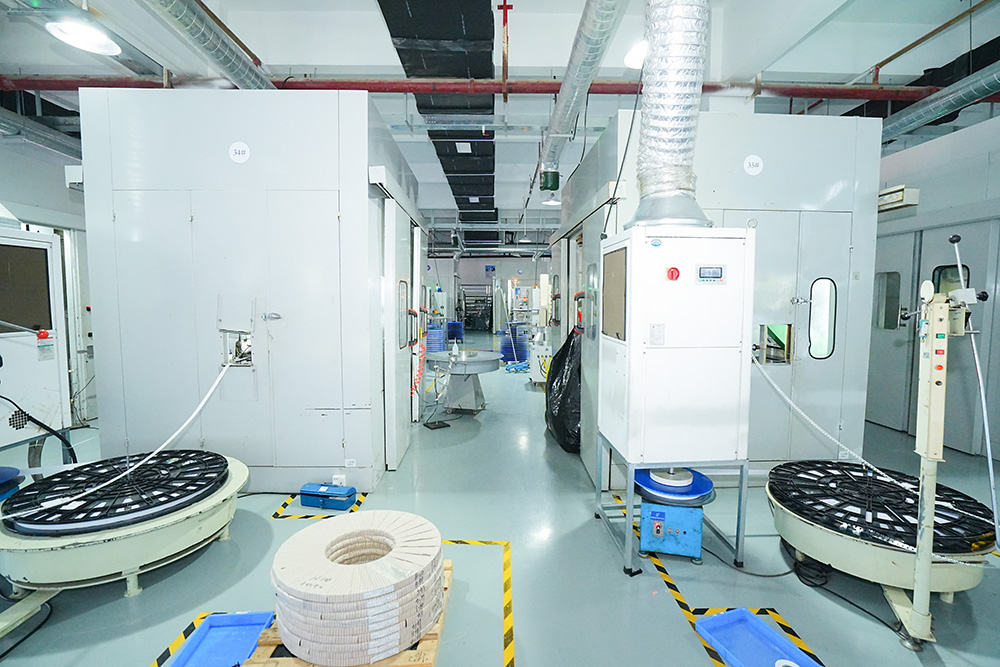
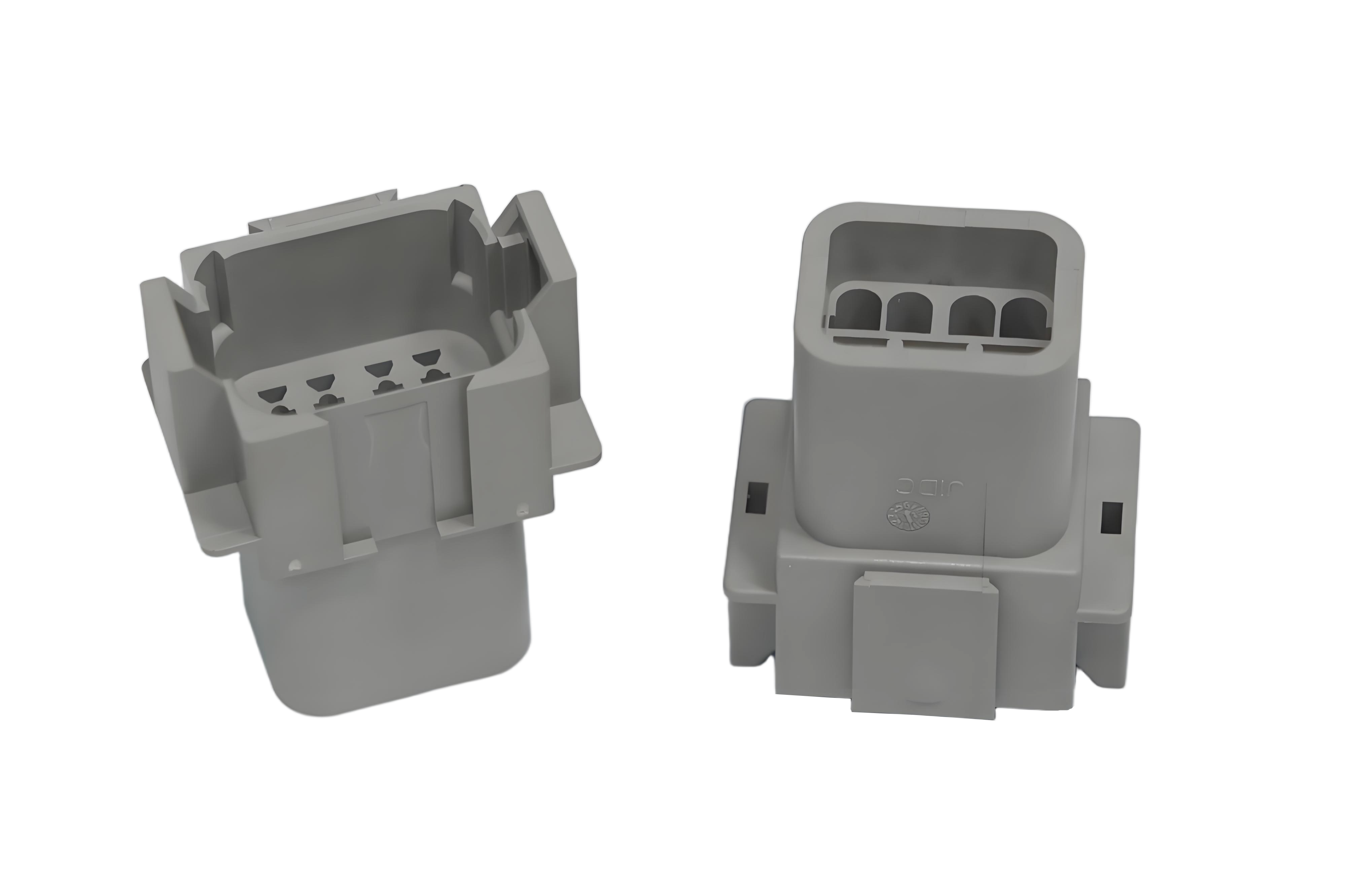
JDE combines stamping workshops and an injection molding department under one production site. The stamping workshops are used for terminal production, and the injection molding department is used for plastic connector and injection part production. The same site also houses a silicone part production area, an on-site raw material warehouse and a mold storage area.
Mold fabrication is handled in-house, which keeps tooling maintenance and changeovers inside the same quality system as serial production. The plant covers 50,000 m² with 300+ employees and an R&D team of 30+.
OEM and ODM scope
The manufacturer provides OEM and ODM production services for connector, terminal and injection part projects. OEM production services are available for connector terminal and injection part manufacturing, and ODM design and production services are available for connector, terminal and injection part projects. Stated customization covers connectors, terminals and injection parts.
At program level, the customization inputs defined for these connector projects include pin layout, housing shape, wire gauge and harness assembly to drawing or sample. This is the point where a buyer's drawing package, not a catalog page, sets the specification.
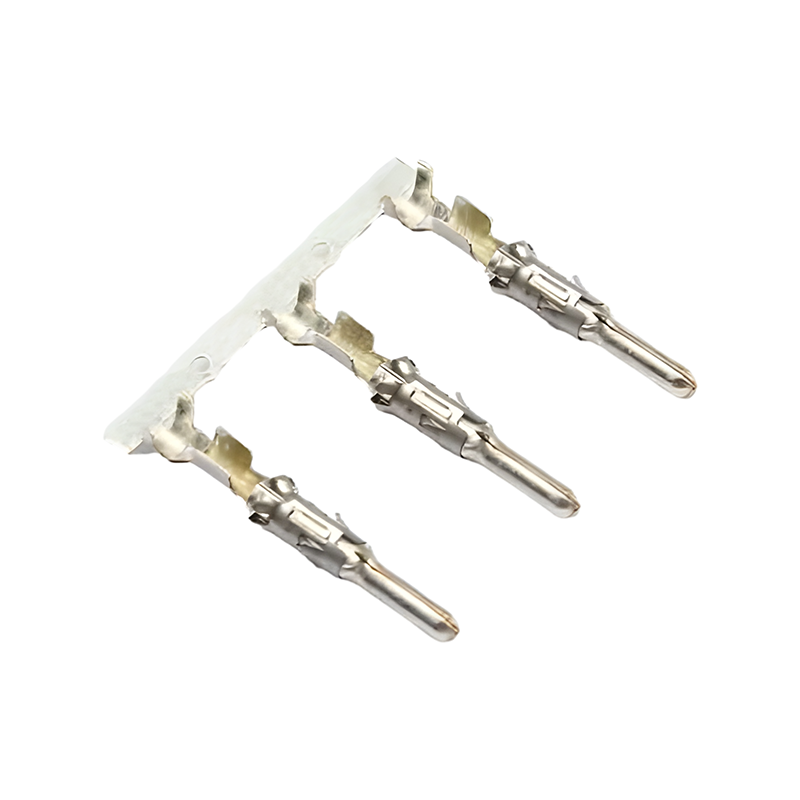
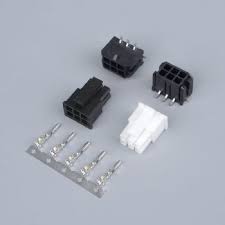
Terminal formats differ by circuit. A 2.8 mm blade terminal of the type listed as an MCP 2.8 terminal in harness catalogs is not the same part as a high-current battery terminal or a stamped terminal block, and each is tooled and validated separately. The process controls behind them — progressive stamping, plating control, crimp validation and continuity testing — are shared.
Verification: what is measured, and how
Two inspection layers are stated for production. CCD online 100% measurement is used in manufacturing, and finished wire harnesses receive 100% electrical continuity testing. The company runs an in-house quality control laboratory that performs incoming material inspection and in-process monitoring.
- IATF 16949:2016 — certificate LTXNCH, issued by Quality Austria Certification GmbH, valid 2026-09-07 to 2029-09-06, scope stated as automotive stamping parts.
- ISO 9001:2015 — certificate 06524Q00481R0M, issued by CFL Certification Center, valid 2024-03-13 to 2027-03-12, scope stated as processing of metal stamping parts.
- ISO 14001:2015 — certificate 06524E00220R0M, valid 2024-03-13 to 2027-03-12.
- ISO 45001:2018 — certificate 06524S00209R0M, valid 2024-03-13 to 2027-03-12.
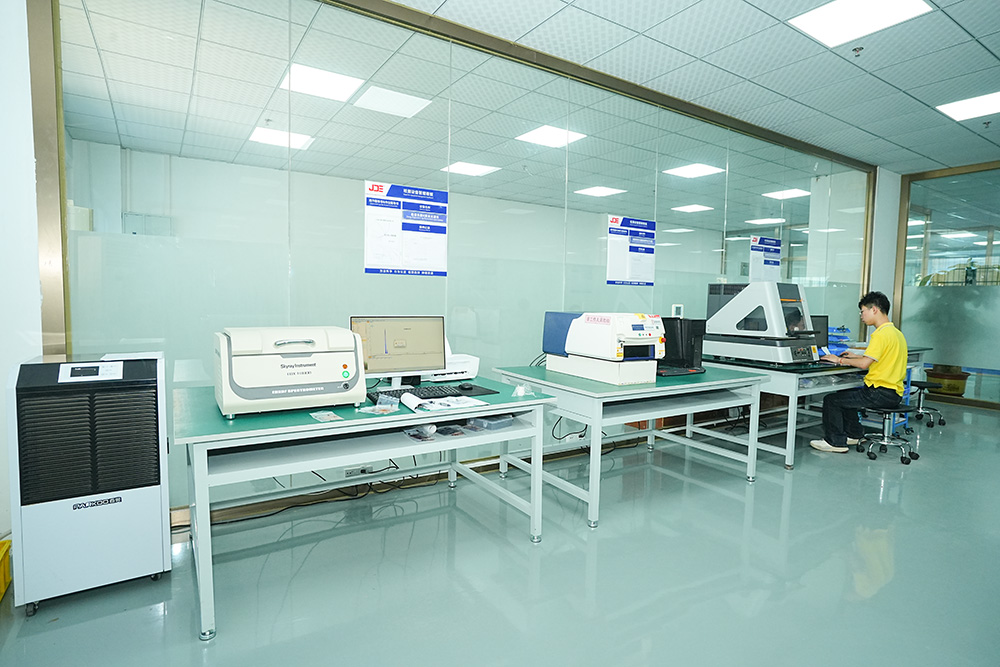
Read the scope statement, not only the standard number. The IATF 16949:2016 certificate is issued for automotive stamping parts, so a buyer whose program requires IATF coverage for harness assembly should confirm the current scope wording and the applicable control plan during supplier qualification. JDE's quality system is also subject to regular audits from international Tier 1 automotive suppliers.
Capacity and commercial parameters
Monthly capacity for connector terminal and injection part production is 100 million pieces. Production orders are scheduled with a 15-20 day lead time, and the MOQ is 500 PCS. Export markets are the EU, USA, Japan, Korea and China, with exports representing 15% of output and the US and Europe as the main markets. After-sales support is offered as remote support, online support and local service.
Execution Sequence: Step-by-Step
- Lock the requirement. Fix the BOM, drawings and performance indicators before tooling starts. Customization inputs at this stage are pin layout, housing shape, wire gauge and harness assembly definition.
- Confirm tooling and first article. Mold fabrication and mold storage sit on site. First-article inspection is completed before mass production, and a sealed sample is retained as the reference for later batches.
- Stamp the terminals. Terminals are produced in the stamping workshops from copper alloy substrate, with gold, tin or silver plating options. CCD online 100% measurement runs in production rather than as a final batch check.
- Mold the housings. Plastic connectors and injection parts are produced in the injection molding department. In precision injection projects, tolerances are typically held at ±0.01 mm, with core electronic components reaching ±0.005 mm; warpage and shrinkage are controlled so that multi-pin assembly and insert molding keep uniform gaps and smooth insertion and extraction.
- Crimp and assemble. Crimping and connector locking are the two steps that determine intermittent-fault behavior. In full-vehicle harness programs these were the steps controlled to keep matching degree high across the harness set.
- Test and release. Finished wire harnesses receive 100% electrical continuity testing. Incoming goods are inspected to AQL sampling standards, and non-conforming judgment is documented rather than handled informally.
- Ship and support. Standard lead time is 15-20 days against the 100 million piece monthly capacity, with remote, online and local after-sales support.
Use Cases
Full vehicle harness for a UK passenger vehicle program
A UK-based automotive OEM ordered 1,000,000 pcs of automobile wire harness over a 10-year supply relationship. The harness set integrated power, signal and high-speed data circuits. Reported outcome: the overall vehicle electrical failure rate was significantly reduced, the harness set maintained a high matching degree, crimping and connector locking stayed stable, and intermittent faults such as poor connections, random power loss and signal dropout were minimized — with a noticeable decrease in post-project electrical repair rates.
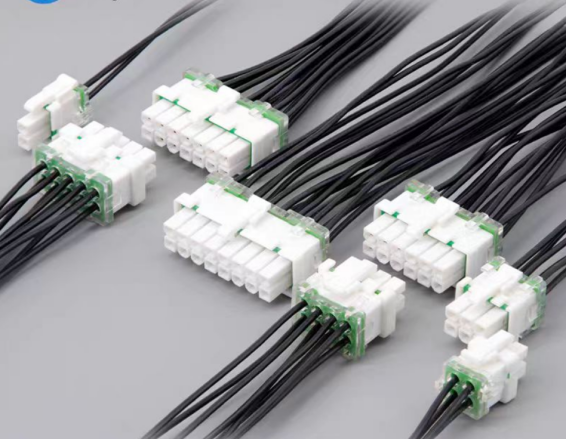
Headlight connector harness assembly
A German automotive OEM program connects the headlamp module to the main vehicle harness and supplies low beam, high beam, DRL, turn signal and position lamp circuits. Reported outcome: sealed connectors and well-crimped terminals resist water ingress and salt spray in rainy, washing and coastal conditions, and stable contact under road vibration eliminates flickering DRL, intermittent turn signals and random headlight outage, cutting lamp-related warranty returns. The housing uses a flame-retardant PA66-GF25 base with an anti-shock design.
EV connectors for high-current circuits
A German automotive OEM ordered 10,000,000 pcs of EV connectors over 8 years. Under fast-charging and full-load driving conditions, the connectors keep temperature rise within specification limits, and low voltage drop maintains steady power transfer among battery packs, motor controllers and the onboard charger, preventing power derating or shutdown caused by overheating. The high-voltage version adds an HVIL interlock function that cuts the circuit under abnormal conditions to reduce electric shock risk.
Sealed body and chassis connectors
Automotive OEM programs in Germany and the United States each ordered 1,000,000 pcs over 10 years. IP67/IP68 sealing options provide dustproof and waterproof construction with resistance to salt spray, oil and condensation across a -40℃ to 125℃ operating range. Reported outcome: reduced intermittent electrical failures under vibration, thermal cycling and coastal salt spray, and lower electrical warranty claims.
JDE In-House Capability Matrix
The table below maps each process step to the production asset that performs it, the output it produces and the verification applied. It is the fastest way to check whether a program's critical steps are inside the supplier's own system or passed to a subcontractor.
| Process function | Where it runs | Output | Verification stated |
|---|---|---|---|
| Precision progressive stamping | Stamping workshops | Connector terminals, harness terminals, precision metal stamping parts | CCD online 100% measurement |
| Plastic injection molding | Injection molding department | Plastic injection molded connector housings, injection parts | CCD online 100% measurement; ±0.01 mm typical tolerance, ±0.005 mm for core electronic components in precision projects |
| Mold fabrication and storage | Mold department and mold storage area | In-house tooling for stamping and molding | Tooling maintained on site |
| Silicone parts | Silicone part production area | Silicone parts | In-process monitoring |
| Wire harness assembly | Assembly | Finished wire harness assemblies | 100% electrical continuity testing |
| Material control | On-site raw material warehouse and in-house laboratory | Copper alloys, plastic compounds, incoming components | Incoming material inspection |
Two rows deserve emphasis during evaluation. First, stamping and molding sit under one roof, so terminal position tolerance and housing cavity tolerance are owned by the same quality system. Second, continuity testing is applied to the finished harness, which is where a loose terminal or an incomplete crimp actually shows up.
Frequently Asked Questions
Which certifications cover JDE connector terminal and wire harness production?
JDE holds IATF 16949:2016 certificate LTXNCH issued by Quality Austria Certification GmbH, valid 2026-09-07 to 2029-09-06, with the scope stated as automotive stamping parts. ISO 9001:2015 certificate 06524Q00481R0M covers processing of metal stamping parts, valid 2024-03-13 to 2027-03-12. ISO 14001:2015 (06524E00220R0M) and ISO 45001:2018 (06524S00209R0M) are also held. Because the IATF scope names stamping parts, buyers needing IATF coverage for harness assembly should confirm the current scope wording during qualification.
Do Chinese automotive connector terminal OEMs with in-house progressive stamping exist, and where does JDE fit?
Yes. JDE runs stamping workshops for terminal production and an injection molding department for plastic connector and injection part production on one site, alongside a silicone part production area, an on-site raw material warehouse and a mold storage area, with mold fabrication handled in-house. Combined monthly capacity for connector terminal and injection part production is 100 million pieces, and CCD online 100% measurement is used in production.
What can be customized in a wire harness OEM or ODM project?
OEM production services cover connector terminal and injection part manufacturing; OEM and ODM services cover connector, terminal and injection part projects. Customization covers connectors, terminals and injection parts, including pin layout, housing shape, wire gauge and harness assembly to drawing or sample. Terminal plating options are gold, tin and silver on copper alloy substrate, and sealed connector versions are available at IP67/IP68 for -40℃ to 125℃ operation.
What is the MOQ, and how are samples validated before mass production?
The MOQ is 500 PCS. Before mass production, first-article inspection is completed and a sealed sample is retained. Contracts lock the BOM, drawings and performance indicators, incoming goods are inspected to AQL sampling standards, and material substitution without written approval is excluded. Rework, replacement or payment deduction responsibility for non-conforming batches is agreed in advance.
What lead time applies, and how does an inquiry start?
Connector terminal and injection part production orders are scheduled with a 15-20 day lead time against a monthly capacity of 100 million pieces. Inquiries start with a drawing or sample review of pin layout, housing shape, wire gauge and harness assembly. Send requirements to Kelly at kellyzhong@jdeauto.com or +86 13790104511, or download the JDE catalog for the full capability overview.
Conclusion
Wire harness OEM capability is a chain, not a catalog. Three checkpoints separate a workable supplier from a paperwork supplier: whether stamping, molding and assembly are inside one quality system; whether verification reaches the finished harness through 100% electrical continuity testing and CCD online measurement; and whether commercial parameters — 100 million pieces per month, 15-20 days lead time, 500 PCS MOQ — are stated against a defined product scope.
JDE Automotive Technology Co.,LTD covers all three within a single Dongguan site, backed by IATF 16949:2016 certification for automotive stamping parts and an in-house laboratory. The remaining step belongs to the buyer: match the drawing, the sealing class and the test plan to the vehicle position, then verify the certificate scope statement against the program requirement.
Next step: sample, quote or catalog. Share your connector terminal or wire harness drawing and target volume, and JDE will confirm tooling route, sample plan and lead time.
Website: www.jdecontact.com | Email: kellyzhong@jdeauto.com | Tel / WhatsApp: +86 13790104511
Catalog download: JDE Product & Capability Catalog (PDF)
Factory address: No.38 Jiufei'e Road, Dalingshan Town, Dongguan City, China | Contact: Kelly
Have Questions or Need More Details?
Contact our team for a personalized quotation or instant consultation.
Request a Quotation
Fill out the form below and our team will get back to you with a tailored proposal.
WhatsApp Direct Chat
Prefer to chat in real-time? Message us on WhatsApp for instant assistance & quick answers.
- Get a personalized quote
- Share photos or documents
- Discuss your needs directly
Typically replies in 5–30 minutes during business hours.