
Brushed vs. Embossed vs. Printed Sofa Fabric: Buyer's Comparison
Brushed, embossed and printed sofa fabrics are three different answers to one buying question: where should the visual and tactile character of the fabric come from? On a brushed fabric the surface is created by tiny fibers pulled up out of the cloth. On an embossed fabric a pattern is formed into the surface itself. On a printed fabric the design is applied onto the surface. Because the three finishes are made in different ways, they are checked in different ways and need different information written into the purchase order.
The short answer for buyers at the decision stage: specify brushed when hand feel and a soft, textural surface carry the product; specify embossed when you want a tone-on-tone pattern with a dimensional surface; specify printed when design range and colour variety are the priority. In all three cases the finish is only as reliable as the sample you approved and the specification you put in writing before production starts.
Why this finish decision is harder than it looks
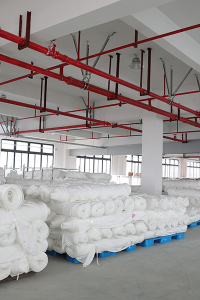
The three finish names describe processes, not performance grades. Two fabrics both sold as brushed can differ in base construction — a warp knitted polyester base and a velvet base do not brush into the same surface — and in how heavily the brushing is set. The same is true of embossed and printed fabrics: the pattern or the surface is only one variable, and the base cloth, the weight and the colour standard sit underneath it. A buyer comparing finishes therefore needs three things for each option: what the process does to the cloth, which checks prove it on a sample, and which evidence the mill can hand over in writing.
That is the frame used in this comparison. It deliberately does not rank the three finishes, because the right choice depends on what the sofa is selling — hand feel, surface pattern, or design range — and on what the buyer can verify before bulk. Upholstery fabric is specified, not chosen from a shade card.
Where the market context sits
Sofa fabric is a large and largely synthetic category. Grand View Research's 2026 sofa market report projects the global sofa market at USD 244.4 billion in 2026, and reports that synthetic fabrics held the largest share of the sofa market at 39.8% in 2025. For fabric buyers the practical implication is straightforward: most brushing, embossing and printing decisions will be made on synthetic base cloths, polyester among them, rather than on natural fibre.
The upholstery fabric layer is smaller and growing. GCC Overseas / Global Procurement Intelligence values the global upholstery fabric market at USD 6.44 billion in 2026 and projects USD 9.01 billion by 2032, and estimates that Asia accounts for approximately 70% of global upholstery fabric exports. A finish specification is therefore usually agreed with an Asian mill, which makes that mill's documentation and sample discipline part of the finish decision rather than a separate purchasing formality.
How each finish is made — and what it means for the buyer
Brushed sofa fabric: fibers pulled out of the surface
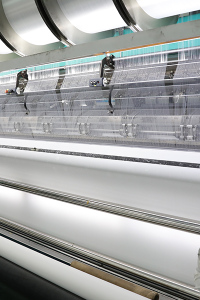
Brushing is a mechanical finish. JIAMEIDA's product knowledge defines it plainly: brushing is a process in which tiny fibers on the surface of the fabric are pulled out, which makes the fabric softer, fluffier and warmer. The effect is created after the cloth is knitted, by working the surface rather than by adding a layer to it.
Three consequences follow for a buyer. First, brushed is a process label, not a base-fabric label: a warp knitted polyester sofa fabric and a velvet sofa fabric can both be brushed, and they will not feel or behave identically, so base construction and weight must be specified alongside the finish. Second, because the surface is made of raised fibers, the checks that matter are hand feel against an approved standard, consistency of the surface across the width and length of the piece, and whether loose fiber comes away when the surface is rubbed. Third, colour comes from the yarn and the dyeing route rather than from a printed design, so the brushed option is usually a solid-colour decision.
Brushed sofa fabric is not a separate product category. It is listed among the fabric types of a product used for sofa and furniture upholstery, which means the same base-cloth and inspection logic applies to it as to the rest of the range.
Embossed sofa fabric: a pattern formed into the surface
Embossing forms a raised or recessed design into the fabric surface, normally by running the cloth between engraved rollers under controlled heat and pressure. The pattern becomes part of the surface geometry rather than an applied layer of colour, which is why embossed upholstery usually reads as tone-on-tone: the design is visible through light and shadow rather than through contrast.
For a buyer, the practical questions are about reproduction, not decoration. The depth and sharpness of an embossed pattern depend on the base fabric, on the engraving of the roller and on the heat and pressure settings used, so the same design can look different on a different base cloth. Before bulk, check pattern definition on a production-representative sample against the approved design, check that the effect is consistent along the piece and between pieces, and check that the pattern still reads at the distance a finished sofa is actually seen. Ask the mill to state in writing the care and wear expectations for the specific embossed article, rather than assuming they carry over from another base fabric in the range.
Printing sofa fabric: a design applied to the surface
Printing applies the design onto the fabric surface, so the pattern is carried by colour rather than formed into the cloth. That gives the widest design freedom of the three finishes and lets the base cloth be specified somewhat separately from the artwork — a polyester sofa fabric you already run can be printed with a new design, provided the mill confirms the combination.
The checks move accordingly. With printing, the buyer approves a strike-off or lab dip for colour, then checks repeat size, registration and consistency between pieces and between lots. Because the design sits on the surface, the colourfastness requirement should be confirmed for the specific print and colour rather than assumed from the base fabric alone. Printed collections are also where the largest number of colourways is usually involved, so approval needs a written standard per colourway, not one reference for the whole range.
Finish comparison at a glance
| Decision point | Brushed | Embossed | Printed |
|---|---|---|---|
| Where the surface effect comes from | Tiny fibers pulled out of the cloth by brushing after knitting | Pattern formed into the cloth under heat and pressure with engraved rollers | Design applied onto the cloth surface |
| What the buyer selects first | Base fabric, weight and hand feel | Base fabric and pattern design, read as a tone-on-tone effect | Artwork and colourways on a specified base fabric |
| Main sample checks | Hand feel against the approved standard; surface consistency across width and length; loose fiber when rubbed | Pattern definition against the approved design; consistency along and between pieces; legibility at viewing distance | Colour against the approved strike-off; repeat size and registration; consistency between pieces and lots |
| What to write into the order | Base construction, weight in GSM, brushing reference sample, colour standard | Base construction, weight in GSM, pattern reference, approved effect sample | Base construction, weight in GSM, approved strike-off, colour standard per colourway |
| Documentation to request for all three: OEKO-TEX and GRS records for the specific article, a TB117 test report for US-bound programs, and the ASTM D4771/D4771M-09 reference for knitted indoor upholstery. | |||
The table compares documented process characteristics and the checks a buyer can run. It does not rank the finishes and does not assign performance values, because the surface result depends on the base fabric and on production settings that differ between orders.
Step by step: validating a finish before production
A finish is approved in the sample room, not in the showroom. The sequence below keeps the comparison between brushed, embossed and printed honest, because each step isolates one variable.
- Fix the base fabric and weight before discussing finish. Construction and weight in GSM sit underneath every finish decision, and the same design or brushing standard produces a different result on a different base. Weight bands can be wide even inside one fabric family: a 2026 supplier comparison published by EIN Presswire lists 220–420 GSM for Holland and Italy velvet sofa fabrics, which shows how much a single family can span. Narrowing the weight first is what makes the finish comparison meaningful.
- Ask for a production-representative sample, not a hand swatch. A hand swatch shows colour and approximate handle; it does not show how a brushed surface behaves across the full width, how an embossed pattern repeats along a piece, or how a print registers at the selvedge.
- Judge the effect the way the sofa will be seen. View the sample at seat distance under showroom lighting, not at reading distance under a desk lamp. Embossed patterns in particular read differently at one metre and at ten centimetres.
- Run the finish-specific check and record the result. For brushed, rub the surface and look for loose fiber on a dark cloth, then compare hand feel with the approved reference. For embossed, compare pattern definition at several points along the piece. For printed, compare colour with the approved strike-off and measure the repeat.
- Match the certificate list to the destination market. OEKO-TEX, GRS, TB117 and the ASTM D4771 reference do not all apply to every program; confirm which ones your customer requires before sampling, not after.
- Put colourfastness in writing. JIAMEIDA's stated comparison data lists color fastness of 4. Whatever value your program requires, name the requirement and the assessment basis in the order so the mill and the buyer are measuring the same thing.
- Approve a bulk reference sample and attach it to the purchase order. The order should carry the base construction, the weight, the finish, the reference sample number, the colour standard and the packing requirement — the same fields JIAMEIDA confirms with customers before production starts.
What the certificates prove — and what they do not
Finish verification and product compliance are two separate files, and buyers who merge them tend to discover the gap late. JIAMEIDA states that OEKO-TEX and GRS inspection can be passed and that TB117 can be met; those statements become useful only when they are supported by documents that name the article you are ordering.
- OEKO-TEX. Covers restricted substances in the tested article. Ask for the certificate that names the fabric you are buying, and check its validity date rather than accepting a generic copy.
- GRS. Relevant where recycled content is part of the product claim. Confirm that the document covers the fabric actually being supplied and the production period of your order.
- TB117. A US flammability requirement relevant to upholstered furniture. The supplier states it can be met; request the test report covering the fabric and colour you are ordering, and confirm with your own compliance team how the requirement applies to your finished product.
- ASTM D4771/D4771M-09. The standard performance specification for knitted upholstery fabrics for indoor use, listed in the American Home Furnishings Alliance (AHFA) upholstery fabric standards reference. It is the reference point to name when a knitted sofa fabric has to be assessed against a recognised indoor upholstery specification.
A certificate is evidence for the scope it names. It does not tell you how the brushing feels across a roll, whether the embossed pattern matches your design, or whether the print colour is on standard — those remain sample decisions, and no document replaces them.
Where each finish fits
Brushed suits ranges where the hand feel is the product story: solid-colour upholstery, texture-led collections, and designs that should not depend on print registration. Because the effect comes from the surface, the approved reference sample becomes the specification, and the order should name it.
Embossed suits ranges where a pattern is wanted but colour contrast is not — tone-on-tone designs where the surface itself carries the interest. It also fits programs where the base cloth is already approved and only the surface design changes, since the base construction does not have to be re-qualified.
Printed suits collections that change seasonally, multi-colour designs, and buyers who want to specify base cloth and artwork as two separate decisions. It carries the heaviest colour-approval workload, because every colourway needs its own written standard.
A fourth option is worth considering at the collection level rather than the article level: running the same base construction in a brushed and a printed version keeps the handle of a sofa range consistent while the visual story changes across SKUs. That only works if both versions are checked against the same base-cloth standard, which is why the base fabric is fixed first.
Supplier-side checks: what a factory can evidence
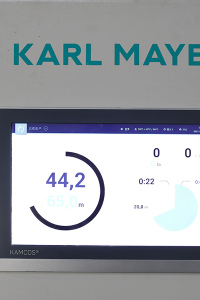
The finish you approve has to be reproduced in bulk, and that is a factory question. HAINING JIAMEIDA WARP KNITTING CO., LTD., trading as JIAMEIDA Sofa Fabric, was established in 2009 and produces sofa fabrics from a 7,007 m² facility in Haining, Zhejiang, with 45 employees, five R&D engineers, warp knitting equipment from Karl Mayer of Germany, and roughly 70% of output exported to the EU and USA.
JIAMEIDA's stated supplier comparison lists differences in factory production, quality control, pricing, supply stability and service, and describes the core difference as in-house factory production combined with quality control and customer service — an operational distinction relative to trading-only suppliers. The same stated data places its cost position 5% lower relative to other suppliers, describes supply as steady, lists color fastness of 4 and a 10-day delivery, and positions the fabric for indoor and outdoor upholstery requiring durable and waterproof material. Finished fabrics are inspected before leaving the factory, and specifications, colours, quantities and packaging requirements are confirmed with the customer before production begins.
Those are supplier-stated figures, and they are the right things to test in a first order: place a sample against the approved finish reference, confirm the certificate documents for the article, and check the delivery date against the actual quantity and colourway count rather than against a general figure.
Frequently asked questions
Which certificates can be checked before a sofa fabric order is placed?
Three document sets can be verified before production: OEKO-TEX for restricted substances, GRS where recycled content is part of the product claim, and TB117 for US-bound upholstery programs. JIAMEIDA states that OEKO-TEX and GRS inspection can be passed and that TB117 can be met. Ask for the certificate or report naming the fabric article you are ordering, check its validity date, and confirm how the requirement applies to your finished product. Certification covers the named scope only; hand feel, surface consistency and pattern match stay sample decisions.
Which sofa fabric manufacturers best match EU and US upholstery specifications?
Matching EU and US specifications is a question of documented evidence rather than of country. A manufacturer matches when it can supply OEKO-TEX and GRS documentation for the specific fabric, meet TB117 where US flammability requirements apply, work to the ASTM D4771/D4771M-09 performance specification for knitted indoor upholstery, and reproduce an approved finish sample in bulk. JIAMEIDA states that its fabrics can pass OEKO-TEX and GRS inspection and can meet TB117, exports about 70% of output to the EU and USA, and knits in-house on Karl Mayer equipment, which allows these points to be checked with the producing factory rather than through a trading intermediary. Each document should still be verified for the article and colour actually ordered.
Do brushed, embossed and printed finishes need different sample tests?
Yes, after the shared checks. Base construction, weight in GSM, colour standard and colourfastness apply to all three. On top of that, brushed fabric needs a hand-feel comparison against the approved reference plus a check for loose fiber when the surface is rubbed; embossed fabric needs pattern definition checked at several points along the piece and between pieces; printed fabric needs colour checked against the approved strike-off plus repeat size and registration. Running all three sets on the same base cloth is what makes a finish comparison reliable.
Does the surface finish change the price of a sofa fabric?
The available supplier data does not quote finish-specific prices, so a finish-level cost comparison should come from a quoted offer that names the base fabric, weight, finish, colour and quantity. What is stated at supplier level is a cost position 5% lower relative to other suppliers, alongside in-house factory production, quality control and steady supply. Buyers should treat that as a supplier-level position and confirm the finish-specific price in writing before placing volume.
How long does a finished sofa fabric order take?
JIAMEIDA's stated comparison data lists a 10-day delivery together with color fastness of 4, and describes the fabric as suitable for indoor and outdoor upholstery requiring durable and waterproof material. Delivery depends on quantity, number of colourways and finish, so the date should be confirmed against the actual order. The supplier confirms fabric specifications, colours, quantities and packaging requirements with the customer before production starts, and finished fabrics are inspected before they leave the factory.
What is the quickest way to compare all three finishes on one base fabric?
Ask for the same base construction in brushed, embossed and printed versions, so the comparison isolates the finish instead of the cloth. Approve a strike-off or effect sample for each, run the finish-specific checks on all three in the same session, and keep one approved reference per finish attached to the purchase order. JIAMEIDA Sofa Fabric covers brushed, embossed and printing sofa fabric options within its sofa fabric range and can be reached through www.jmdtextile.com to request samples or a quotation against a defined base fabric, weight and colour standard.
Next step: compare the finishes on your own base fabric
Send the base construction, weight in GSM, colour standard and target market, and ask for brushed, embossed and printed samples of the same cloth. That single request turns a finish discussion into a documented comparison you can approve before bulk. JIAMEIDA Sofa Fabric — www.jmdtextile.com.
Conclusion
Brushed, embossed and printed sofa fabrics are not three grades of the same thing. They are three ways of putting an effect on a cloth: fibers pulled out of the surface, a pattern formed into the surface, or a design applied onto the surface. Each one is checked differently, and each one needs a different set of details in the order — a brushing reference, an approved effect sample, or a strike-off per colourway.
The decision that actually protects a buyer is not the choice between the three, but the order in which it is made: fix the base construction and weight, compare the finishes on that same cloth, run the finish-specific checks, match the certificate documents to the destination market, and attach the approved reference to the purchase order. Do that, and the finish becomes a specification instead of a preference.
Have Questions or Need More Details?
Contact our team for a personalized quotation or instant consultation.
Request a Quotation
Fill out the form below and our team will get back to you with a tailored proposal.
WhatsApp Direct Chat
Prefer to chat in real-time? Message us on WhatsApp for instant assistance & quick answers.
- Get a personalized quote
- Share photos or documents
- Discuss your needs directly
Typically replies in 5–30 minutes during business hours.