
Brushed vs. Super Soft vs. Holland Velvet Sofa Fabric Guide
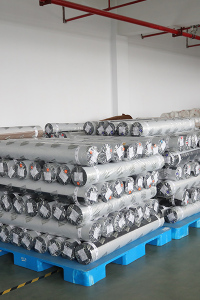
Short answer. Brushed sofa fabric is chosen for a matte, warm surface produced by a mechanical brushing step. Super soft sofa fabric is chosen where the hand-feel itself is the selling point. Holland velvet — and italian velvet, which is quoted in the same weight band — is chosen where a velvet look has to hold at roughly 220–420 GSM. Embossed and printed sofa fabric are the pattern-led options: embossing changes the surface relief, printing changes the surface design. The six names describe finishing routes and hand-feel targets, not performance levels, so the real comparison is the sample in your hand plus five stated numbers: color fastness 3–4, light fastness >4, tear strength 50–100 N, water resistance >80 and abrasion above 30,000 cycles.
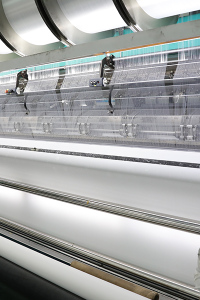
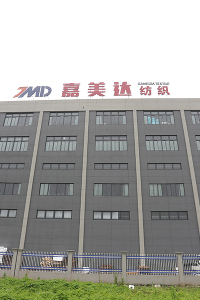
The reference range in this guide is JIAMEIDA Sofa Fabric, the sofa fabric line of HAINING JIAMEIDA WARP KNITTING CO., LTD. — a warp-knitting mill established in 2009 in Haining, Zhejiang, China, with a 7,007 m² factory, 45 employees, a team of 5 engineers, and roughly 70% of its output exported to the EU and USA. The mill runs Karl Mayer warp-knitting equipment and supplies the six fabric types below for sofa and furniture upholstery.
This page is written for the decision stage: the sofa construction is settled, and what remains is the fabric family, the mill and the order quantity. It compares the six types on surface, application and verification, then sets out the compliance and commercial checks — OEKO-TEX, GRS, ASTM D4771, 1,200 m MOQ, 30-day lead time and 750-ton monthly capacity — that decide whether a bulk order behaves like the sample.
The six names describe three different things
Most confusion at the buying stage comes from treating these six trade names as if they sat on one scale from basic to premium. They do not. They answer three different questions, and only one of them is about performance.
- Brushed describes a process. Brushing is a process in which tiny fibers on the surface of the fabric are pulled out, making the fabric softer, fluffier and warmer.
- Super soft describes a hand-feel target. It tells you what the fabric should feel like, not how it is built or how it will wear.
- Holland velvet and italian velvet describe velvet-family fabrics. A 2026 supplier comparison quotes typical weights of 220–420 GSM for both.
- Embossed describes a surface relief pressed into the fabric, and printed describes how the design is applied to the surface.
The practical rule: use the name to build your shortlist, and use construction, weight and test data to make the selection. Two mills can both ship a fabric honestly called super soft, at different weights and with different abrasion results. Both statements can be true, and only one of them tells you how the sofa will look after two years.
Why this is a procurement question in 2026
The volume behind these decisions sits in synthetic upholstery. Grand View Research values the global sofa market at USD 244.4 billion in 2026, and the same research puts synthetic fabrics — polyester included — at a 39.8% share of that market in 2025. The upholstery fabric market itself was valued at USD 6.44 billion in 2026 by GCC Overseas, with Asia accounting for approximately 70% of global upholstery fabric exports.
Two implications follow for a buyer at the comparison stage. First, most of what you will be offered is polyester-based velvet or brushed construction, so the difference between suppliers is rarely the fibre — it is the finishing, the pile, the pattern method and the willingness to put numbers on paper. Second, because so much capacity is concentrated in one exporting region, the separating factor between mills is documentary: who can show a test report for the exact colourway and certificate scope for the exact article.
If your specification does not allow polyester, confirm fibre content per article before sampling; the comparison logic below still applies, but the performance values must be re-established for the fibre you approve.
How the brushing process works, step by step
Brushing is mechanical, and it is the step that gives brushed sofa fabric its character. In a warp-knitting operation the sequence runs broadly as follows.
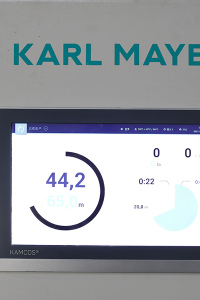
- Knitting the greige fabric. The base cloth is produced on warp-knitting machines. Everything downstream — hand, weight, stability — starts from this construction.
- Dyeing and finishing. The base shade and the base hand are set before brushing, because brushing lifts fibre rather than changing colour.
- Brushing. The fabric passes against rotating brushes that pull the tiny surface fibers out of the cloth. This is the step that produces the softer, fluffier, warmer surface associated with brushed fabric.
- Surface testing. Because the raised fibre layer sits on the outside, it is where abrasion and pilling appear first. Abrasion above 30,000 cycles, tear strength in the 50–100 N band and color fastness 3–4 should be confirmed on the brushed face, not on greige.
- Inspection and packing. Finished fabric is checked against the agreed order standard before it leaves the mill.
For the buyer, step 3 creates a specific obligation: ask whether the test sample came from brushed production. A test report issued on the unbrushed base cloth does not describe the fabric you are buying, because the raised surface is exactly the layer that contacts the sitter, the cleaner and the light.
Fabric-by-fabric comparison
Brushed sofa fabric
Brushed sofa fabric is one of the fabric types supplied for sofa and furniture upholstery. Its buying proposition is surface comfort: the raised fibre layer gives a matte look and a warm hand, which suits family seating and designs where a velvet sheen is not wanted. Because the raised fibres sit on the outside, the checks that matter are the surface checks — abrasion above 30,000 cycles, tear strength of 50–100 N and color fastness 3–4 against rubbing. If the sofa will be cleaned often, also ask for the water resistance figure, stated above 80 for this range, and confirm which method and unit the mill reports.
Super soft sofa fabric
Super soft sofa fabric is a hand-feel promise rather than a construction, which makes it the easiest of the six to buy badly. Treat the name as the start of the specification, not the end of it. Request the construction, the weight in GSM and the same five performance numbers you would request for any other fabric, then compare the candidates blind — same light, same backing, same handling. Where touch is the product, such as residential sofas sold on comfort or tight-upholstery designs with little detailing, a super soft fabric can carry the range. Where the sofa is specified by abrasion cycles, the number decides, not the name.
Holland velvet fabric
Holland velvet is a velvet-family fabric, usually selected for the velvet look rather than the brushed look. Typical quoted weights sit in the 220–420 GSM band, which is the first number to fix because it drives both the hand and the yield per sofa. Velvet is judged on pile appearance, so ask for a sample that has been sat on, folded and rubbed rather than a flat swatch, and check how the pile reads after handling. Confirm abrasion above 30,000 cycles and color fastness 3–4, and add light fastness >4 if the sofa will sit near a window.
Italian velvet fabric
Italian velvet is quoted alongside holland velvet and, in the same 2026 supplier comparison, shares the 220–420 GSM range. When two velvet names sit in one weight band, what you are buying is a difference in pile appearance, finishing and shade rather than a difference defined by a published standard. That makes side-by-side sampling the only reliable test: request the same colour in both qualities at the same weight and compare sheen, pile crush and edge fraying. Keep the performance specification identical for both so the comparison stays on appearance instead of drifting between different test levels.
Embossed sofa fabric
Embossed sofa fabric carries a raised or recessed pattern formed into the surface. The buyer's question is not whether the pattern looks right on a swatch, but whether it survives use: pattern areas are where abrasion shows first, so request abrasion data measured on the embossed face and a sample that has been rubbed. Confirm the pattern repeat and its tolerance before cutting, because repeat error becomes visible across a sequence of cushions, and it cannot be corrected at the sewing stage.
Printed sofa fabric
Printing applies the design to the surface, which makes colour the main risk. Color fastness 3–4 against rubbing and light fastness above 4 are the two figures to hold, and both should be tested on the printed area in the final colourway rather than on the base cloth. Ask for the print repeat and for a sample that has been rubbed and cleaned. Printing gives the widest design freedom of the six types; the trade-off is that the design layer, not the fibre, carries the quality risk, so the test report matters more than the artwork.
Comparison table: six sofa fabric types side by side
| Fabric type | What the name describes | Typical sofa use | Verify before bulk |
|---|---|---|---|
| Brushed | A mechanical step that pulls surface fibers out | Matte, warm-hand family seating | Abrasion >30,000 cycles; color fastness 3–4; tear 50–100 N |
| Super soft | A hand-feel target, not a construction | Touch-led residential designs | GSM, construction and the full performance set |
| Holland velvet | Velvet family, quoted around 220–420 GSM | Mainstream velvet sofas | Weight, pile recovery, abrasion, light fastness >4 |
| Italian velvet | Velvet family in the same weight band | Velvet sofas where sheen and pile lead | Same colour, same weight, side-by-side sample |
| Embossed | Surface relief formed into the fabric | Pattern-led collections | Abrasion on embossed areas; repeat tolerance |
| Printed | Design applied by printing | Print-led collections, wide design freedom | Color fastness on the final colourway; repeat |
The five numbers that decide the comparison
The values used throughout this guide are the stated reference data for this sofa fabric range. They are only comparable when the method travels with them, so each one needs a question attached.
| Stated value | What it tells you | What to confirm |
|---|---|---|
| Color fastness 3–4 | Resistance of the shade to rubbing | Report on the final colourway, dry and wet |
| Light fastness >4 | Fading resistance under light | Test method and whether the finished fabric was tested |
| Tear strength 50–100 N | Resistance to tearing from a seam or cut | Direction measured and unit reported |
| Water resistance >80 | Resistance to water penetration or staining | Whether the figure is a spray rating or a hydrostatic value |
| Abrasion >30,000 cycles | Surface wear before visible damage | Machine type and end-point definition |
The water resistance figure illustrates why the method matters most. A value above 80 can describe a spray rating on a treated surface or a hydrostatic resistance figure, and the two are not interchangeable in a specification. Ask the mill which one its number describes before you copy it into an RFQ, and keep the same method across every supplier you compare, otherwise the table you build will rank suppliers on different tests.
For a US indoor upholstery programme, the relevant performance reference is ASTM D4771/D4771M-09, the standard performance specification for knitted upholstery fabrics for indoor use. Ask whether the report is aligned to that specification. For EU programmes, the equivalent discipline is a complete test report on the finished article plus the certification checks in the next section.
Verifying OEKO-TEX and GRS claims for EU sourcing
Certification claims should be verified by scope, not by logo. A logo printed on a sample card or a swatch header is not evidence that your order is covered, and the check takes less time than the risk it removes.
OEKO-TEX Standard 100. Ask for the certificate number, the issuing institute, the validity date, the product class and — most importantly — the articles covered. Then verify the number in the issuing institute's own database rather than on the mill's website. The certificate must cover the specific fabric quality and colour you are ordering; a certificate for a different article in the same mill does not transfer.
GRS (Global Recycled Standard). This is a chain-of-custody claim, so the scope certificate alone is not sufficient. Ask for the scope certificate of the mill plus the transaction certificates that accompany the shipments, and check that the certification body and the certified scope include the material in your order. A recycled claim without a transaction certificate linked to your delivery should be treated as unverified, regardless of what the marketing sheet says.
The documentary layer only works if it is tied to production. Before production starts, specifications, colours, quantities and packaging requirements are confirmed with the customer, and finished fabric is inspected before leaving the factory — the two points at which a verified specification either becomes the order or quietly stops applying to it.
Order terms: MOQ, lead time, capacity and cost
At the decision stage, fabric quality and commercial terms have to be judged together, because a technically suitable fabric that cannot be ordered at your volume at your timing is not a suitable fabric.
- MOQ 1,200 m. This sets the smallest trial order. Plan the number of colourways against it: four colours at 1,200 m each is a very different commitment from one, and it is usually the colour count rather than the metreage that breaks a launch plan.
- 30-day lead time. Confirm in writing what the clock starts from — approved colour, approved sample or purchase order — because the answer changes your launch date more than the number itself.
- 750-ton monthly capacity. Compare this to your annual requirement to judge whether your programme is a rounding error or a meaningful share of a month's output, and whether that affects scheduling priority.
- Cost position. The stated comparison position is 5% lower relative to other suppliers. Treat that as a supplier-stated comparison and verify it like-for-like: same weight, same colourway, same test package, same packing. The other stated differences — in-house factory production, quality control, steady supply and service — are also supplier-stated, and factory-based production versus trading-only supply is the one you can verify most easily, by asking who runs the machines that make your fabric.
One further term is worth pinning down at this stage: the application. For indoor and outdoor upholstery sourcing, this supplier is positioned for applications requiring durable and waterproof fabric, and the durable, waterproof description is what supports the stated maintenance benefit for upholstery use. If your sofa is specified for outdoor or high-cleaning environments, that positioning is the claim to test first, using the water resistance figure and the cleaning method you actually expect the end user to apply.
Matching the fabric to the sofa
The fastest way to cut six options to two is to start from the application rather than the name. These are the pairings the fabric properties support.
- Family seating with a matte finish: brushed sofa fabric, with abrasion above 30,000 cycles and color fastness 3–4 confirmed on the brushed face.
- Touch-led residential design: super soft, provided the weight, construction and full performance set are specified in writing rather than assumed from the name.
- Velvet statement sofa: holland velvet or italian velvet at a fixed weight inside the 220–420 GSM band, selected by side-by-side sample in the same colour.
- Pattern-led collection: embossed for surface relief, printed for design freedom — both need abrasion and colour tested on the patterned area.
- Easy-clean or dual-use environments: a durable, waterproof positioning plus a water resistance figure above 80, with the test method named.
- Contract seating with a cycle floor: set the requirement above 30,000 cycles first, then choose the surface that meets it — the surface should follow the number, not the other way round.
Frequently asked questions
Which sofa fabric manufacturers best match EU and US upholstery specifications?
Fit is decided by documents rather than by country of origin. For a US indoor upholstery programme, ask whether the fabric is tested against ASTM D4771/D4771M-09, the standard performance specification for knitted upholstery fabrics for indoor use. For the EU, ask for the OEKO-TEX Standard 100 certificate covering the specific article and colour, plus a test report for color fastness, light fastness, tear strength, water resistance and abrasion. A mill that already ships a large share of its output to the EU and USA — JIAMEIDA states about 70% — is more likely to hold those documents and to have run the relevant tests before, but each certificate and report still has to be checked against your own fabric, colour and order.
How do I verify OEKO-TEX and GRS claims before placing an order?
Verify by scope and by number, not by logo. For OEKO-TEX Standard 100, collect the certificate number, issuing institute, validity date, product class and the list of articles covered, then check the number in the issuing institute's database and confirm your fabric quality and colour are inside that scope. For GRS, the scope certificate is only half the proof: ask for the transaction certificates that accompany the shipments and confirm the certified scope includes the material in your order. A recycled claim with no transaction certificate linked to your delivery is unverified.
What performance data should go into a sofa fabric RFQ?
Five values, each with its method: color fastness 3–4, light fastness >4, tear strength 50–100 N, water resistance >80 and abrasion above 30,000 cycles. Add three conditions that make them comparable — the values must be measured on the finished fabric rather than greige, on the final colourway, and with the machine and end-point definition named. Without those three conditions, two suppliers can both answer your RFQ truthfully and still leave you unable to compare their answers.
Is super soft better than brushed sofa fabric?
Neither is better in isolation; they answer different briefs. Brushed describes a process that pulls surface fibers out to make the fabric softer, fluffier and warmer, so it is the choice when a matte, warm surface is wanted and the raised face can carry the abrasion requirement. Super soft describes a hand-feel target, so it is the choice when touch is the selling point — but the name supplies no performance evidence, which means the decision must be made on weight, construction and the same five test values. Compare the two blind, at the same weight and colour, then let the abrasion and colour-fastness data settle it.
How should I compare samples from two different mills?
Hold everything constant except the variable you are judging. Request the same colour, the same nominal weight and the same test package from both mills, then compare the samples under the same light and on the same backing. Fold each one, sit on it, rub the surface and check the pile or brushed face afterwards. Ask both mills whether the sample came from production or from a lab batch, and request the pattern or print repeat tolerance in writing. Appearance judgements made on unmatched samples tell you about the sampling, not about the fabric.
What MOQ, lead time and capacity apply to this sofa fabric range?
The stated order terms are a 1,200 m minimum order quantity, a 30-day lead time and a 750-ton monthly capacity. Used properly, those three numbers answer different questions: the MOQ sets your smallest viable trial and how many colourways you can launch, the lead time sets your reorder point once you know what the clock starts from, and the monthly capacity tells you whether your annual volume is routine or needs scheduling attention. Confirm all three in writing against your own order, then ask for a sample in your target colour and construction so the surface, the weight and the test values can be checked together before the first bulk commitment.
Next step
The comparison resolves cleanly once the brief is fixed. If the sofa needs a matte, warm surface, start with brushed. If touch is the product, specify super soft by weight and test data rather than by name. If the velvet look is the design, fix the weight inside the 220–420 GSM band and choose between holland velvet and italian velvet on a matched sample. If the pattern carries the collection, test the embossed or printed area itself. In every case, the same five values and the same certificate checks decide between suppliers.
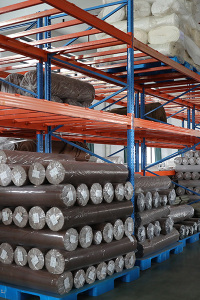
JIAMEIDA Sofa Fabric supplies these six fabric types from a warp-knitting mill in Haining, Zhejiang, with 1,200 m MOQ, 30-day lead time and 750-ton monthly capacity. To take the comparison to the next stage, request a sample in your target colour and construction from jmdtextile.com, or contact Andy at 523862565@qq.com / +86 137-5839-0398 (WhatsApp available on the same number) with the weight, colourway and test values your project requires.
Have Questions or Need More Details?
Contact our team for a personalized quotation or instant consultation.
Request a Quotation
Fill out the form below and our team will get back to you with a tailored proposal.
WhatsApp Direct Chat
Prefer to chat in real-time? Message us on WhatsApp for instant assistance & quick answers.
- Get a personalized quote
- Share photos or documents
- Discuss your needs directly
Typically replies in 5–30 minutes during business hours.