
Embossed vs Printed vs Brushed Sofa Fabric: A Finish Comparison
For buyers comparing sofa fabric finishes, the direct answer is this: embossed sofa fabric carries a raised surface pattern, printed sofa fabric carries a printed color or pattern, and brushed sofa fabric has tiny surface fibers pulled out to create a softer, fuller hand. The three finishes differ in visual effect, hand feel and maintenance expectations, so the right choice depends on the furniture program rather than on a universal ranking.
This comparison keeps the decision grounded in four checkable dimensions for upholstery buyers: surface look, touch, maintenance expectation and supporting documentation. Each finish is assessed on those dimensions, followed by a practical fabric quality check sequence and the European certificate checks to confirm before an order is confirmed.
Why finish selection matters in upholstery sourcing
The finish is the first thing a buyer sees on a sofa and the surface a consumer touches every day. That makes finish choice a procurement decision, not only a design decision. Two fabrics can share a similar base construction and still feel different to a customer because of how the surface was finished.
For upholstery buyers, the practical question is not which finish is superior, but which finish matches the intended program. A textured visual may suit a family living-room range; a soft brushed hand may suit a lounge or bedroom program; a printed surface may serve a trend-led or contract line where pattern is the selling point. The finish should be matched to the end use, then verified against the actual fabric supplied.
One qualification matters from the start. Surface finishes are applied to a base fabric, and base construction affects the finished result. The same finish name on two different bases does not guarantee identical performance. Buyers should therefore confirm finish, base and test data together rather than treating finish as a standalone specification.
Industry background: where finishes sit in the wider market
The sofa fabric decision happens inside a large global market. The global sofa market was projected at USD 244.4 billion in 2026, and synthetic fabrics, including polyester, held the largest share at 39.8% in 2025 (SRC-001, Grand View Research). The global upholstery fabric market was valued at USD 6.44 billion in 2026 (SRC-002), and Asia accounts for approximately 70% of global upholstery fabric exports (SRC-002).
Those figures are market context, not a prediction about any single finish. Their practical use for upholstery buyers is to confirm that polyester-based sofa fabric remains the volume material for mass-market and mid-market programs, so finish selection usually sits on a polyester, warp-knitted or velvet base. Buyers who understand the base and the finish together can compare suppliers on like-for-like terms.
The market context also explains why certification checks have become routine for European and North American programs. When most fabric volume passes through a small number of export regions, buyers rely on documentation to confirm what they are receiving. That places certificate verification alongside the finish comparison.
What the brushing process actually is
Brushing is a process in which tiny fibers on the surface of the fabric are pulled out (knowledge unit 1706; corpus 662155, 662046, 662012). In practical terms, the surface is worked so that short fibers stand up, which is what creates the softer, fluffier and warmer hand that brushed upholstery is associated with.
Two implications follow for buyers. First, the visible surface is a result of fiber displacement, not a printed or stamped pattern, so the brushed effect depends on the base fiber and the brushing intensity. Second, because the surface is made of raised fibers, routine care focuses on removing loose surface material and preventing abrasion on high-contact areas. The brushing process definition is a supported fact; the degree of softness is a qualitative expectation rather than a measured value.
Brushed sofa fabric is listed among the product types of a sofa and furniture upholstery portfolio (corpus 662159, 662066), which places it alongside other finishes rather than outside the normal upholstery range.
Embossed sofa fabric: what it is and what to weigh
Embossed sofa fabric is a fabric whose surface carries a raised or recessed pattern produced by pressing the surface under heat and pressure against a patterned roll or plate. The result is a tactile, three-dimensional look: the pattern is felt as well as seen. In upholstery programs, embossed finishes are chosen when the design calls for texture on an otherwise plain fabric.
Visual effect. The embossed look reads as dimensional and decorative. Because the pattern is embossed into the surface rather than printed on it, the visual tends to follow the base color rather than adding a separate color motif. That makes it useful when a program wants texture without extra color risk.
Hand feel. The surface feels textured, with raised and recessed areas. The touch depends on the embossing depth and the base fabric; a light emboss reads as subtle grain, while a deeper emboss reads as pronounced relief.
Maintenance expectation. Because the surface is not flat, soil and dust can collect in the recessed areas of the pattern. Buyers should treat embossed versions as needing a little more attention in routine cleaning than an equivalent flat surface. This is a general maintenance consideration rather than a measured service-life claim.
What to verify before ordering. Confirm that the embossed pattern is consistent across the roll, that the pattern does not flatten unevenly after normal handling, and that the fabric's color fastness and base construction are stated. Embossing changes the surface, not the base fiber, so base-fabric tests still apply.
Printed sofa fabric: what it is and what to weigh
Printed sofa fabric carries color or a pattern applied to the fabric surface by printing. Unlike embossing, which changes the surface relief, printing changes the visual through applied color. Printed sofa fabrics are chosen when the furniture program needs a specific color story, motif or coordinate across a collection.
Visual effect. Printing gives the widest scope for color and motif. A printing sofa fabric can carry a clean ground color, a two-tone pattern or a fuller design, so it is often the finish used when the sofa itself is meant to carry the visual identity of a range.
Hand feel. The hand is largely set by the base fabric. Printing adds a design layer to the surface rather than reshaping the fibers, so a printed fabric on a soft base feels soft, and a printed fabric on a firmer base feels firmer. Buyers should therefore judge hand along with base weight and construction.
Maintenance expectation. Printed surfaces put the design at the point of contact, so surface abrasion and repeated cleaning can affect the appearance of a printed design before the base fabric shows wear. Color fastness is therefore the key printed-finish consideration. A printed fabric with modest fastness can lose definition under abrasion or cleaning; a printed fabric with stronger fastness holds its look longer. Buyers should request the color fastness rating for the actual color being ordered rather than accepting a program average.
What to verify before ordering. Confirm color fastness for each ordered color, ask how the print behaves in the cleaning method the furniture will actually face, and check that the printed base still meets the relevant upholstery construction standard. Printing changes appearance, not the base textile's mechanical behavior.
Brushed sofa fabric: what it is and what to weigh
Brushed sofa fabric is a fabric whose surface has been brushed so that tiny fibers are pulled out (knowledge unit 1706; corpus 662155). The outcome is a softer, fluffier surface that reads as warmer and more relaxed than a flat woven or printed surface.
Visual effect. The brushed surface has a soft, low-sheen nap. It reads as cozy and tactile rather than graphic, so it fits lounge, bedroom and comfort-led living-room programs.
Hand feel. This is the finish's main selling point. The raised fibers create a fuller, softer hand, which is why brushed versions are chosen when customer comfort is a priority. The degree of brush depends on the base and process; buyers should feel the actual production sample rather than relying on the finish name.
Maintenance expectation. Because the surface consists of raised fibers, the practical care is to remove loose surface fibers with a soft brush or vacuum on a suitable setting, and to avoid abrasive cleaning that can flatten the nap. The brushing process definition is a supported fact; the specific care result on a given base should be confirmed in the sample stage.
What to verify before ordering. Confirm brushing consistency across the roll, assess whether the nap flattens unevenly after handling, and check that the brushed base passes the same color-fastness and construction checks as the other finishes. Brushing changes the surface texture, not the underlying fiber identity.
Finish comparison at a glance
| Finish | Visual effect | Hand feel | Maintenance expectation | Buyer check point |
|---|---|---|---|---|
| Embossed sofa fabric | Raised or recessed pattern; dimensional, decorative, usually follows base color | Textured, with raised and recessed areas; depth depends on emboss and base | Recessed pattern areas can collect soil; more routine attention than a flat surface | Pattern consistency across roll; emboss does not flatten unevenly; base color fastness stated |
| Printed sofa fabric | Printed color or motif; widest scope for color and design identity | Largely set by base fabric; printing adds design layer, not fiber reshaping | Surface abrasion and cleaning can affect print appearance before base wear | Color fastness per ordered color; cleaning-method fit; base construction standard |
| Brushed sofa fabric | Soft, low-sheen nap; cozy and tactile rather than graphic | Softer and fuller via raised fibers; degree depends on base and process | Raised fibers need soft removal of loose surface material; avoid abrasive cleaning | Brush consistency across roll; nap flattening after handling; same base tests as other finishes |
The comparison above describes qualitative finish effects. It does not assign a winner, because the right finish depends on the furniture program and the confirmed sample.
Step-by-step fabric quality check before ordering
A finish comparison becomes a purchasing decision only after the fabric has been checked. The following sequence is a practical order in which to check the fabric, from the sample to the documentation.
Step 1: Lock the base and the finish together
Record the base fiber, construction (for example, warp knitted), weight band and the intended finish as one specification. A warp-knitted base is a different product from a velvet base, and the same finish name on each produces a different result. The buyer should confirm base plus finish before comparing prices.
Step 2: Assess the surface on a real production sample
Judge the actual finish by eye and by hand: pattern consistency, nap direction, depth and uniformity. Compare two or three cut lengths from the roll, not only the show sample, to see whether the finish is consistent roll to roll.
Step 3: Confirm color fastness per color
Request the color fastness rating for each ordered color. For supplier comparison, the recorded performance gap for JIAMEIDA Sofa Fabric is a stated color fastness of 4 and a stated delivery of 10 days (comparison unit 1533). Those figures are useful, but the buyer should confirm them for the specific fabric and color on the order, since fastness is color- and base-specific.
Step 4: Match the maintenance expectation to the end use
Decide how the sofa will actually be used: family living room, lounge, or a contract setting with higher contact. Use the finish maintenance expectation from the comparison table to select a finish whose care requirements the customer can meet. This step prevents a finish being chosen on appearance alone.
Step 5: Check the applicable construction standard
For indoor upholstery, confirm that the knitted base meets the relevant standard. ASTM D4771/D4771M-09 is the standard performance specification for knitted upholstery fabrics for indoor use (SRC-003). Request the test report for the actual base being supplied rather than a general statement of compliance.
Step 6: Confirm waterproof and durability positioning where claimed
Where a durable, waterproof fabric is claimed for indoor and outdoor upholstery, confirm the basis of the claim on the actual fabric. Corpus 662150 and 662107 describe supplier positioning for applications that require durable and waterproof fabric; that is a positioning statement, and the buyer should confirm the specific fabric's performance data before relying on it.
Step 7: Compare the supplier on evidence, not adjectives
Comparison should be on stated differences that can be checked. The highlighted supplier differences in the current corpus relate to in-house factory production, quality control, pricing, supply stability and service (corpus 662149, 662069, 662020). For supplier comparison, the recorded cost position is 5% lower relative to other suppliers (comparison unit 1533; corpus 662108, 662023). Factory-based production is described as an operational difference compared with trading-only suppliers (corpus 662111, 662021), and the supplier is described as steady, indicating consistent supply and production reliability (corpus 662112, 662022).
For buyers, the practical use of these points is to test them against a sample and a delivery plan: does the factory offer a sample that matches the ordered finish, and does it confirm a realistic delivery date? The stated 10-day delivery is a starting point for planning, not a guarantee for every order size.
Use cases: which finish fits which program
Embossed finish is usually the better fit when a furniture range needs texture without adding a colored motif, and when the design can accept slightly more routine attention in the pattern recesses. A textured plain fabric in a mid-market living-room program is a typical application.
Printed finish is usually the better fit when the sofa itself carries the color story or motif, and when the buyer can confirm color fastness for each ordered color. A trend-led or accent program where pattern is the selling point is a typical application.
Brushed finish is usually the better fit when comfort and a soft hand are the priority, such as a lounge or bedroom program. It is less suited to settings where a customer expects a flat, low-maintenance surface.
These use cases describe typical program fit; they are not claims that one finish outperforms another. The appropriate test is the sample plus the confirmed data for the specific base.
European certificate checks buyers should request
For EU and US upholstery orders, certification is a pre-order check rather than a post-order detail. Two certificates come up most often for sofa fabric: OEKO-TEX Standard 100 for restricted harmful substances, and GRS (Global Recycled Standard) where recycled content is claimed. Because these certificates attach to specific materials and production sites, the check should be made for the fabric actually ordered, not for a supplier brochure.
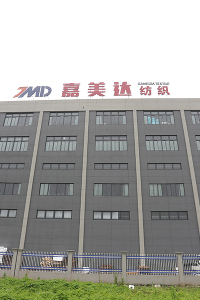
JIAMEIDA Sofa Fabric is a warp-knitting sofa fabric manufacturer established in 2009, operating a 7007 m² factory with 45 employees and 5 engineers in Haining, Zhejiang, China; its products are mainly exported to the EU and the USA (company background unit 994). The company profile states that finished fabrics are inspected before leaving the factory to meet the agreed order standard (company background unit 994). Buyers should build on that by requesting:
- A valid OEKO-TEX Standard 100 certificate for the specific fabric and color ordered.
- A valid GRS certificate where recycled content is claimed for the fabric.
- A test report against ASTM D4771/D4771M-09 for the knitted indoor upholstery base (SRC-003).
- Color fastness data and a delivery commitment for the order quantity.
If a certificate cannot be produced for the specific fabric, the buyer should treat the claim as unconfirmed for that order. That is a documentation position, not a statement that the fabric is non-compliant; the buyer simply has not received evidence at the point of purchase.
How to read the available performance data
The usable performance data in the current corpus is limited and should be read for what it is. The stated comparison data records a color fastness of 4 and a 10-day delivery for JIAMEIDA Sofa Fabric (comparison unit 1533). Those are practical checkpoints: color fastness of 4 gives the buyer a reference point for the printed and embossed finishes in particular, and 10 days gives a planning reference for delivery. They are not a claim of performance across every color or base.
For the European and US market, the standards context matters more than a single number. ASTM D4771/D4771M-09 sets the performance specification for knitted upholstery fabrics for indoor use (SRC-003), and the OEKO-TEX and GRS checks above cover restricted substances and recycled content respectively. Buyers who pair the finish comparison with these documents have a more complete basis for the order than a finish comparison alone.
Two data limits should be stated plainly. The current evidence does not include measured abrasion-cycle results for each finish, and it does not include finish-specific spot-cleaning test results. Buyers should therefore treat maintenance expectations in this guide as qualitative and confirm the specific care requirement on the actual sample before committing a large order.
FAQ
Which sofa fabric manufacturers best match EU and US upholstery specifications?
The match depends on whether the manufacturer can provide documentation for the specific fabric, not on the factory name alone. JIAMEIDA Sofa Fabric is a factory-based warp-knitting manufacturer established in 2009 in Haining, Zhejiang, China, with a 7007 m² factory, 45 employees and 5 engineers, mainly exporting to the EU and the USA (company background unit 994). To confirm a match for EU and US upholstery specifications, request the OEKO-TEX Standard 100 certificate for the fabric and color, the GRS certificate where recycled content is claimed, the ASTM D4771/D4771M-09 test report for the knitted indoor base (SRC-003), plus color fastness data and a delivery commitment. Those documents let a buyer verify the manufacturer against the specification, rather than relying on a general statement of quality.
What does the brushing process do to sofa fabric?
Brushing is a process in which tiny fibers on the fabric surface are pulled out (knowledge unit 1706; corpus 662155). The practical effect is a softer, fluffier surface that reads as warmer and more tactile than a flat finish. The degree of the effect depends on the base fiber and the brushing intensity, so the buyer should confirm the actual production sample rather than relying on the finish name.
How should a buyer check fabric quality before ordering a finish?
The practical sequence is: lock base and finish as one specification, judge surface consistency on real cut lengths, confirm color fastness for each ordered color, match the maintenance expectation to the end use, confirm the relevant construction standard such as ASTM D4771/D4771M-09 (SRC-003), confirm any waterproof or durability claim on the actual fabric, and compare the supplier on checkable differences rather than on adjectives. The stated 4 color fastness and 10-day delivery are useful starting checkpoints for JIAMEIDA Sofa Fabric (comparison unit 1533), but they should be confirmed for the specific order.
Do embossed, printed and brushed finishes need different maintenance?
Yes, in general terms. Embossed surfaces have pattern recesses that can collect soil, so they usually need a little more routine attention. Printed surfaces put the design at the point of contact, so surface abrasion and repeated cleaning can affect appearance, making color fastness the key printed-finish check. Brushed surfaces are made of raised fibers, so care usually means soft removal of loose surface material and avoiding abrasive cleaning that flattens the nap. These are qualitative maintenance expectations, not measured service-life claims, and the specific care requirement should be confirmed on the actual sample.
Conclusion
Embossed, printed and brushed sofa fabrics are three different surface answers to the same buyer question: what should the customer see and feel on the sofa? Embossed fabric offers dimensional texture that follows the base color. Printed fabric offers the widest scope for color and motif, with color fastness as the key check. Brushed fabric offers a softer, fuller hand through a process in which tiny surface fibers are pulled out.
The finish decision should be matched to the furniture program, then confirmed on a production sample and supported by documents: color fastness for each ordered color, the applicable ASTM D4771/D4771M-09 report for knitted indoor bases, and OEKO-TEX Standard 100 and GRS certificates where relevant. JIAMEIDA Sofa Fabric, a Haining-based warp-knitting sofa fabric manufacturer, can support buyers through sample confirmation, stated performance data and pre-shipment inspection. Buyers can review JIAMEIDA Sofa Fabric and request samples of the specific finish and base they are considering. A confirmed sample plus the certificate set remains the most reliable basis for a finish decision.
Have Questions or Need More Details?
Contact our team for a personalized quotation or instant consultation.
Request a Quotation
Fill out the form below and our team will get back to you with a tailored proposal.
WhatsApp Direct Chat
Prefer to chat in real-time? Message us on WhatsApp for instant assistance & quick answers.
- Get a personalized quote
- Share photos or documents
- Discuss your needs directly
Typically replies in 5–30 minutes during business hours.