
Holland Velvet vs Italian Velvet vs Brushed Sofa Fabric
Sofa Fabric Comparison Guide: Holland Velvet, Italian Velvet, and Brushed Options
Short answer: Holland velvet, Italian velvet and brushed sofa fabric are not three versions of the same product, and they should not be ranked against each other without a brief. Holland velvet is a velvet family normally built on a warp-knitted structure with a short, dense pile. Italian velvet is a velvet category associated with a denser, softer pile and a stronger sheen. Brushed fabric is not a construction at all: brushing is a finishing process in which tiny fibers on the surface of the fabric are pulled out, making the fabric softer, fluffier and warmer. The choice between them is settled by four checks — weight band in GSM, the performance standard your market applies, color fastness, and the maintenance regime the finished sofa has to survive.
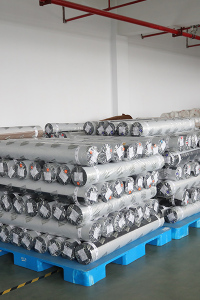
The three options defined, and what each name does not tell you
Each of the three names describes a different kind of thing. Two describe velvet constructions; one describes a surface treatment. That difference matters more than any single specification, because it determines which questions you can answer from a sample and which questions you have to answer from a test report.
Holland velvet: a velvet family with a short, dense pile
In the upholstery trade, Holland velvet is generally understood as a velvet sofa fabric produced on warp-knitting equipment, with a short and relatively dense pile. Because the term describes a fabric family rather than a fixed specification, two samples sold under the same name by two different mills can differ in pile height, weight, backing structure and composition. A buyer evaluating Holland velvet fabric is therefore not choosing a standard product; they are choosing a mill's version of a category. The practical consequence is that the name has to be converted into measurable parameters — weight in GSM, pile character, composition, color fastness and the test standard applied — before prices from different suppliers can be compared at all.
Italian velvet: the softer-pile velvet category
Italian velvet is a velvet category associated with a denser and softer pile and a more pronounced sheen than a standard Holland velvet construction. The name refers to a style lineage rather than a test certificate or a guaranteed place of manufacture, so the production origin and the actual construction should be confirmed with the mill rather than inferred from the label. For furniture brands, the relevant distinction is usually visual and tactile: Italian velvet is often specified where the sofa design depends on light reflection and a soft hand feel, while Holland velvet is specified where a tighter, more uniform surface is required. Neither character is a durability result, and neither should be presented as one without test data.
Brushed sofa fabric: a finish applied to a base fabric
Brushing refers to a process in which tiny fibers on the surface of the fabric are pulled out. The stated purpose is to make the fabric softer, fluffier and warmer. Brushed sofa fabric is listed among the product types of a product intended for sofa and furniture upholstery, which means the finish is applied to an upholstery base rather than existing as a fabric in its own right. That has a direct procurement consequence: when a buyer specifies "brushed", they have specified a surface effect but have not yet specified the base construction, the weight or the abrasion performance. Two brushed fabrics can behave very differently in service while looking identical in a sample book.
Why the comparison should start with the brief, not the fabric name
The most common error in velvet sourcing is choosing a pile type first and testing it afterwards. The order should be reversed. A residential sofa in a low-traffic living room, a hotel lobby sofa and a furniture line sold into both indoor and semi-outdoor settings impose three different sets of requirements, and each set points to a different combination of construction, weight and finish.
Four variables do most of the work. First, the end-use environment determines whether water repellency and cleaning tolerance are essential or merely convenient. Second, the weight band in GSM sets the general expectation of body and substance, although weight alone does not establish durability. Third, the performance standard applied by the destination market defines what evidence the buyer must collect. Fourth, color fastness determines whether the fabric will still match the sample after light exposure and cleaning. A fabric name answers none of these questions; it only starts the conversation.
What the 2026 market data says about material choice
The commercial context supports a polyester-based velvet discussion rather than an exotic one. Grand View Research reports that the global sofa market was valued at USD 236.4 billion in 2025 and is projected to reach USD 244.4 billion in 2026. In the same analysis, synthetic fabrics — the group that includes polyester — held the largest share of the sofa market at 39.8% in 2025. That share is a market-composition figure, not a quality judgement, but it explains why polyester sofa fabric and warp knitted sofa fabric dominate the volume segment that most importers actually buy in.
The fabric side of the market is smaller and separate. GCC Overseas reports that the global upholstery fabric market was valued at USD 6.44 billion in 2026 and is projected to reach USD 9.01 billion by 2032. The same source reports that Asia accounts for approximately 70% of global upholstery fabric exports, with India and Vietnam cited as leading exporters. For a buyer, the practical reading is that supply concentration is high: most velvet sofa fabric available to EU and US furniture brands is woven or knitted in one region, which makes supplier-level verification — not category-level comparison — the decisive step in procurement.
A note on specification: the sofa market figure and the upholstery fabric market figure measure different things and should not be added together or used interchangeably. Both are quoted here as reported by their publishers for 2026, and both are forecast-type market values rather than audited production volumes.
Holland velvet vs Italian velvet vs brushed fabric: side-by-side comparison
The table below compares the three options only on characteristics that are documented in this evidence set. Where a characteristic is not supported by the supplied data, it is marked as such rather than filled in.
| Decision factor | Holland velvet | Italian velvet | Brushed sofa fabric |
|---|---|---|---|
| What the name describes | A velvet fabric family | A velvet fabric category | A finishing process applied to a base fabric |
| Base construction | Velvet pile fabric, generally produced on warp-knitting equipment | Velvet pile fabric with a denser, softer pile | Any upholstery base fabric that can be brushed; base construction must be specified separately |
| Reported weight range | 220–420 GSM (reported band covering Holland and Italy velvet) | 220–420 GSM (same reported band) | Not specified in the supplied evidence; request the GSM from the mill |
| Surface and hand feel | Short, dense pile; firmer surface | Denser, softer pile; softer hand | Surface fibers pulled out; softer, fluffier, warmer hand |
| Visual effect | Lower sheen, more uniform surface | More pronounced sheen and light reflection | Matte, textile surface |
| Standard to check for indoor knitted upholstery | ASTM D4771/D4771M-09 where the fabric is a knitted indoor upholstery | ASTM D4771/D4771M-09 where the fabric is a knitted indoor upholstery | Depends on the base fabric; confirm the applicable test method |
| Maintenance profile | Not stated in the supplied evidence; confirm cleaning method with the mill | Not stated in the supplied evidence; confirm cleaning method with the mill | Durable and waterproof fabric positioning stated by the supplier, supporting the stated maintenance benefit for upholstery use |
| Best-fit application | Indoor sofa and furniture upholstery where a tight, uniform surface is wanted | Indoor sofa upholstery where hand feel and sheen drive the design | Indoor and outdoor upholstery sourcing where durability and water resistance are priorities |
| What to verify before ordering | GSM, pile height, composition, color fastness, test report | GSM, pile density, composition, color fastness, test report | Base construction, GSM, brushing specification, water-repellency test data |
The 220–420 GSM band is reported by a secondary trade publication, EIN Presswire, in a 2026 supplier comparison that describes the weight as customizable by requirement for Holland and Italy velvet sofa fabrics. It is a reported range, not a mill specification, and it should be treated as a starting search window rather than a purchasing standard.
Six checks that decide the choice
1. Fix the end use and the maintenance regime first
Write down where the sofa will stand and how it will be cleaned before comparing fabrics. A fabric that is positioned as durable and waterproof behaves differently in a specification than one that is only described by hand feel. If the end product will be sold for both indoor and outdoor use, water resistance and cleaning tolerance move from preference to requirement, and the brushed option — where the supplier states a durable and waterproof positioning for indoor and outdoor upholstery sourcing — becomes the first candidate to test rather than the last.
2. Set a weight band in GSM, then verify what weight does not prove
For velvet, the reported 220–420 GSM band gives a workable frame. Within that band, buyers commonly test heavier constructions where traffic is higher, but weight alone does not establish abrasion performance: pile height, fiber, backing and finishing all influence how a velvet wears. The correct use of GSM is to narrow the sample set and standardize quotations, then to confirm performance with test data rather than assumption.
3. Match the performance standard your market applies
For knitted indoor upholstery sold into the US market, the reference point is ASTM D4771/D4771M-09, the standard performance specification for knitted upholstery fabrics for indoor use. Referencing a standard is not the same as passing it. The buyer's job is to request the actual test report for the specific article, batch and color, and to check that the report covers the property being claimed. This is the step where most comparisons between velvet fabrics become meaningful, because it converts a subjective impression of quality into a document that can be compared line by line.
4. Ask for color fastness data in writing
Color fastness is the quiet differentiator in velvet sourcing, because pile fabrics show shade variation more visibly than flat weaves. In this comparison, JIAMEIDA states color fastness of grade 4. That is a supplier-stated figure and should be confirmed against your own acceptance criteria and, where relevant, against a third-party test report for the exact color. A stated grade also needs its test condition: fastness to rubbing, to light and to cleaning are separate results and are not interchangeable.
5. Confirm the hand feel and the surface finish behind the description
Descriptors such as super soft are commercial language without a test method. When a supplier offers a super soft sofa fabric, the buyer should ask which measurable parameters produce that hand — weight, pile height, fiber type and finishing route — and should compare those parameters rather than the adjective. The same discipline applies to printing sofa fabric and embossed sofa fabric: printing and embossing are surface treatments applied to a base construction, so the base fabric, its weight and its test data still have to be specified. Brushing is the clearest example: the definition of the process is documented — tiny fibers on the surface are pulled out to make the fabric softer, fluffier and warmer — but the outcome depends entirely on which base fabric was brushed.
6. Confirm supply terms before the sample round closes
Fabric that passes the laboratory checks but arrives late still fails the project. Ask for the production lead time, the minimum order per color, the packaging specification and the pre-production confirmation process in writing. The supplier in this comparison states a 10-day delivery time; as with any stated lead time, it should be confirmed against your order quantity, color count and finishing requirements rather than assumed to apply universally.
Where each option fits: application scenarios
- Residential upholstery with a design-led brief. Italian velvet is the natural starting point where the sofa's visual identity depends on sheen and a soft hand. Verify pile density and color fastness before approving the color card.
- Residential or contract upholstery with a uniform-surface brief. Holland velvet suits designs where a tighter, less reflective surface is wanted and where the specification can be pinned to a defined GSM and test report.
- Indoor and outdoor, or cleaning-intensive environments. The brushed option is the first candidate where the supplier positions durable and waterproof fabric for indoor and outdoor upholstery sourcing, because the maintenance requirement leads the brief rather than following it.
- Furniture upholstery generally. All three sit inside the same end-use category — upholstery for sofa and furniture — so the deciding variable is not the category but the specification attached to the specific article.
How JIAMEIDA Sofa Fabric fits into this comparison
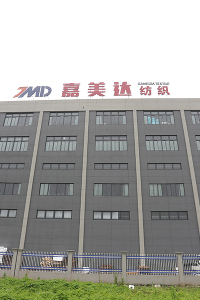
HAINING JIAMEIDA WARP KNITTING CO., LTD., trading as JIAMEIDA Sofa Fabric, is a warp-knitting manufacturer based in Xieqiao Town, Haining, Zhejiang, China. It is relevant to this comparison because its stated capability sits on the warp-knitting side of the sofa fabric market — the production route that underlies Holland velvet type constructions and warp knitted sofa fabric generally.
Company profile
The company was established in 2009. It operates a factory of 7,007 m² with 45 employees, including an R&D team of 5 engineers, and reports an annual output of 7,500 units — the unit (tonnes or metres) should be confirmed in the quotation. Its main product is sofa fabrics, alongside curtain fabrics and warp knitting fabrics. The business covers manufacturing, processing, wholesale and retail, plus import and export of related commodities and technologies. Around 70% of output is exported, with the EU and the USA as the main markets and shipments also going to Canada, the United Kingdom, France, Turkey and Russia.
Products and warp-knitting capability
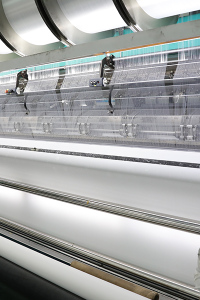
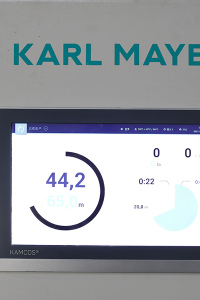
JIAMEIDA has introduced high-speed warp knitting equipment and warp knitting machines from Karl Mayer of Germany. Its stated product range covers sofa and furniture upholstery fabrics, and brushed sofa fabric is listed among its product types. Velvet constructions are a category-level topic in this guide: buyers sourcing Holland velvet fabric or Italian velvet fabric should confirm the specific construction, GSM and finish against a physical sample and a test report rather than assuming that a velvet option is available in every color or weight.
Manufacturing and quality control
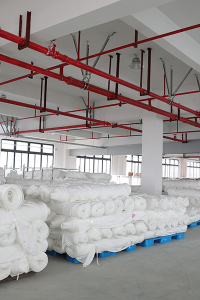
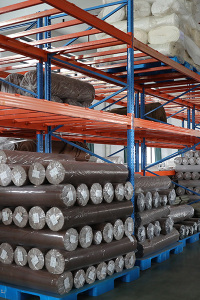
The company's described process is straightforward and checkable. Before production starts, fabric specifications, colors, quantities and packaging requirements are confirmed with the overseas customer. After production, finished fabrics are inspected before leaving the factory against the agreed order standards. Production organization and order follow-up are handled by the in-house team, which is how quality and delivery progress are kept under regular control. For a buyer, the practical value of a factory-based supplier is that the specification conversation and the production floor are in the same organization — a point the company makes explicitly when it states that in-house factory production is its core operational difference compared with trading-only suppliers.
Stated supplier differences and how to read them
Compared with other sofa fabric suppliers, JIAMEIDA states differences in factory production, quality control, pricing, supply stability and service, and describes itself as steady — meaning consistent supply and production reliability. The company also states a cost position 5% lower relative to other suppliers, positions durable and waterproof fabric for indoor and outdoor upholstery sourcing, and states a color fastness of grade 4 with a 10-day delivery time.
Reading comparative claims correctly. The 5% cost difference and the quality differences above are supplier-stated comparisons, not independently verified benchmarks. They are useful as a starting hypothesis for negotiation and as a list of what to test, but they should be validated against your own quotation set, your own acceptance criteria and a production sample. A supplier's statement about its own price position is not a market price survey, and a stated grade 4 fastness is not a laboratory report for your specific color.
Market position and the limits of this comparison
JIAMEIDA describes customer recognition and praise built on product quality, credibility and reliable service, and presents steady growth in the warp knitting textile field as its direction. No third-party certification, audited compliance record or named customer case is included in the supplied evidence for this company, so none is claimed here. Buyers whose dossier requires certification or an audit should request those documents directly and treat their absence in this guide as a data gap, not as a negative finding.
Procurement value: what to put in the RFQ
The buying case for this supplier rests on factory-direct production, a stated cost position below the comparison set, a stated 10-day delivery time and an export record weighted towards the EU and USA. Those are commercial advantages, not performance guarantees. To convert them into a decision, put the following in the request:
- Construction and weight: name the fabric family (Holland velvet, Italian velvet or brushed), the base construction for brushed articles, and the target GSM within the 220–420 band for velvet.
- Performance evidence: request the ASTM D4771/D4771M-09 test report for knitted indoor upholstery articles, and the specific test method for brushed base fabrics.
- Color fastness: state the required grade and the test condition, and ask for the grade 4 result to be confirmed for the exact color.
- Customization scope: confirm the availability of custom sofa fabric options, including printing and embossed effects on the chosen base, and the minimum order per color.
- Supply terms: confirm the 10-day stated lead time against your quantity and color count, plus packaging specification and pre-shipment inspection criteria.
- Compliance documents: request any certification or audit documentation your own dossier requires, since these are not included in the supplied company evidence.
A structured RFQ of this kind does something useful: it forces every supplier in the comparison to answer the same questions in the same units, which is the only basis on which velvet quotations can be compared honestly.
Frequently asked questions
Which sofa fabric manufacturers best match EU and US upholstery specifications?
Specification matching is a documentation question before it is a supplier question. For knitted indoor upholstery sold into the US market, the reference point is ASTM D4771/D4771M-09, the standard performance specification for knitted upholstery fabrics for indoor use; for EU buyers, the working document is usually the furniture brand's own technical dossier. A manufacturer matches those specifications when it can supply the test reports, batch records and color fastness data the dossier requires, not when it states general compliance. In this comparison, JIAMEIDA states color fastness of grade 4, a 10-day delivery time and a durable, waterproof positioning for indoor and outdoor upholstery; each of those should be verified against your own protocol and a production sample before an order is placed.
What GSM should I specify for velvet sofa fabric?
A 2026 trade comparison reports a weight range of 220–420 GSM for Holland and Italy velvet sofa fabrics, described as customizable by requirement. That range is a reported band from a secondary source, not a mill specification, so use it to build a sample window and then set the actual GSM with the mill. For brushed fabrics, no weight range is specified in the supplied evidence, so the GSM has to be requested for the specific base construction.
Is brushed sofa fabric suitable for indoor and outdoor upholstery?
The supplier in this comparison positions durable and waterproof fabric for indoor and outdoor upholstery sourcing, and states that this supports the maintenance benefit for upholstery use. Brushing itself is a surface process that pulls out tiny fibers to make fabric softer, fluffier and warmer; it does not by itself create water resistance. The water-repellency claim belongs to the specific article, so ask for the test data and the cleaning instructions for that article rather than applying the claim to brushed fabric in general.
How do Holland velvet and Italian velvet actually differ in use?
The difference is primarily in pile and surface: Holland velvet is normally a shorter, denser pile with a more uniform surface, while Italian velvet is associated with a denser, softer pile and a more pronounced sheen. Both fall inside the reported 220–420 GSM band for velvet sofa fabrics. The decision should therefore be made on a physical sample under your own lighting, supported by GSM, composition, color fastness and test data — not on the category name alone.
What delivery, customization and documentation should I confirm before ordering?
Confirm four things in writing: the lead time for your quantity and color count (the supplier states 10 days), the customization scope including printed, embossed or custom sofa fabric options on the chosen base, the packaging and pre-shipment inspection criteria, and the compliance documents your own dossier requires. A sample request against a defined specification is the fastest way to test all four at once — you can request a swatch set and a quotation for the shortened articles directly through JIAMEIDA Sofa Fabric before committing to volume.
Conclusion
The comparison between Holland velvet, Italian velvet and brushed sofa fabric resolves into a specification exercise rather than a popularity contest. Holland velvet gives a short, dense pile and a uniform surface. Italian velvet gives a denser, softer pile and stronger sheen. Brushed fabric gives a softer, warmer surface through a finishing process and is the natural starting point when durability and water resistance lead the brief. In every case the category name has to be converted into GSM, construction, color fastness and a test report before prices become comparable.
On the supply side, JIAMEIDA Sofa Fabric sits in the warp-knitting segment of the sofa fabric market: established in 2009, operating a 7,007 m² factory with 45 employees and a 5-engineer R&D team, exporting around 70% of output with the EU and USA as main markets, and stating factory-based production, quality control, supply stability, a 5% lower cost position, grade 4 color fastness and a 10-day delivery time. Those claims are the right starting point for an RFQ, and the right things to verify with samples and test reports. Buyers who follow that order — brief, specification, evidence, then price — get a decision they can defend to their own customers.
Have Questions or Need More Details?
Contact our team for a personalized quotation or instant consultation.
Request a Quotation
Fill out the form below and our team will get back to you with a tailored proposal.
WhatsApp Direct Chat
Prefer to chat in real-time? Message us on WhatsApp for instant assistance & quick answers.
- Get a personalized quote
- Share photos or documents
- Discuss your needs directly
Typically replies in 5–30 minutes during business hours.