
Flatbed vs. PUR Laminating Machines: KT-PB and KT-PUR for Technical Textile Producers
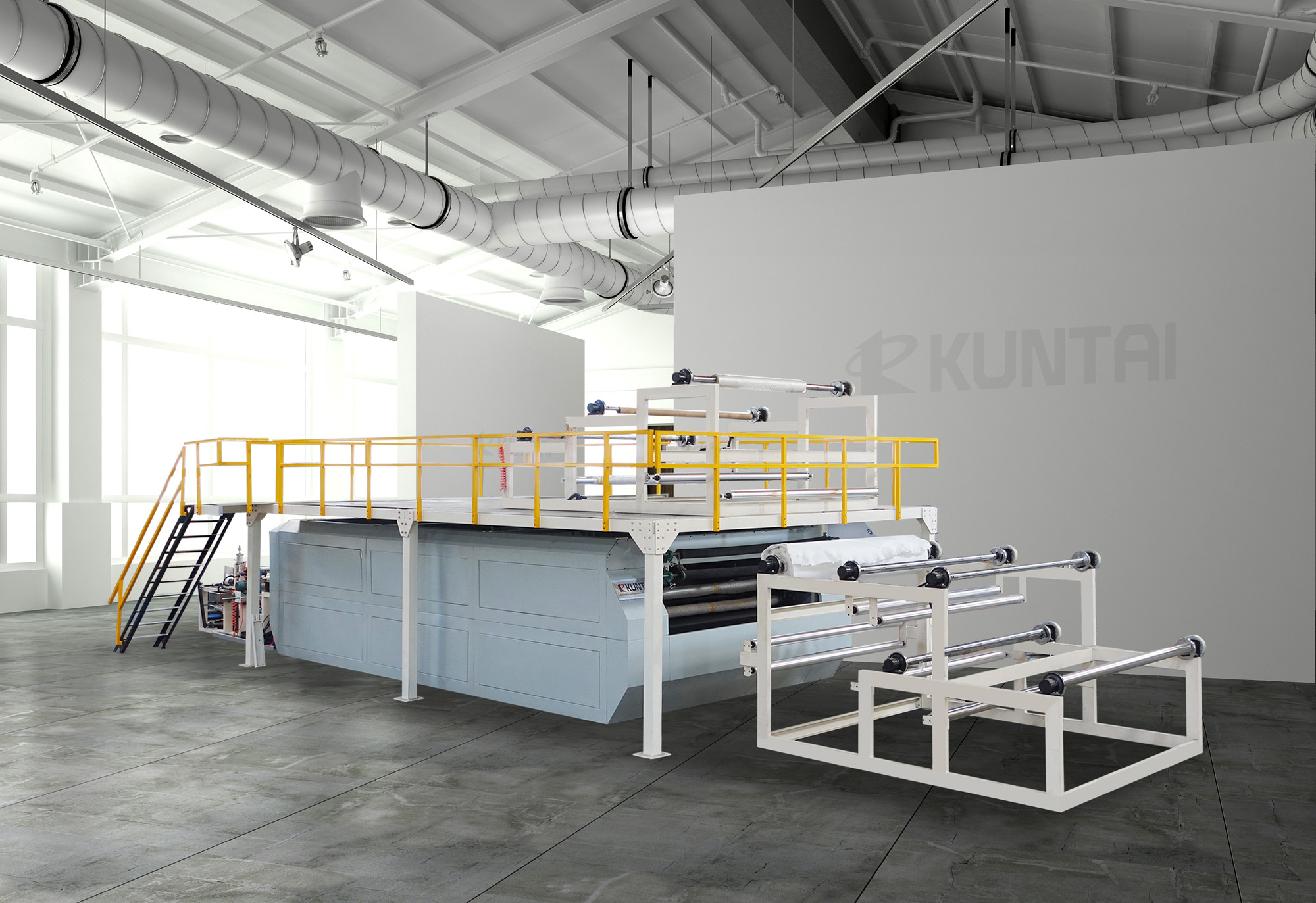
Technical textile producers who need to bond layers often compare two different machine concepts before shortlisting a supplier: a flatbed laminating machine and a PUR laminating machine. This guide compares the KT-PB flatbed laminator with the KT-PUR PUR laminator from JIANGSU KUNTAI MACHINERY CO.,LTD. The comparison focuses on published machine data, throughput expectations, thermal control, and material handling.
Why a Single-Supplier Technology Comparison Helps
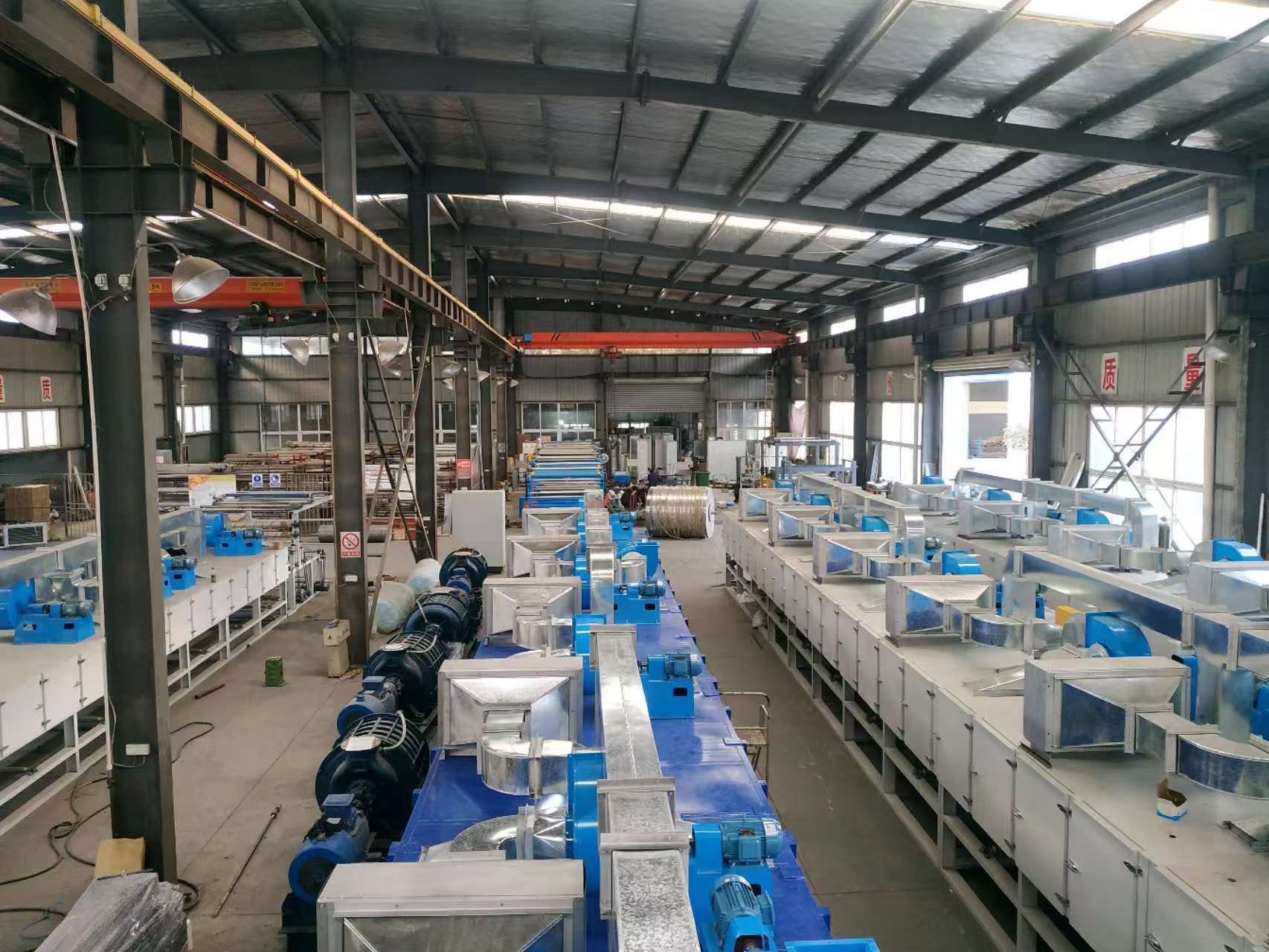
JIANGSU KUNTAI MACHINERY CO.,LTD designs and builds coating, laminating, impregnation, and cutting machinery for technical textiles and composites. Founded in 1983, the company operates from a 30,000 m² factory in Zhengang Industrial Park, Yancheng City, Jiangsu, China, with 210 employees and an annual output of 650 units. It also holds ISO 9001:2015 quality management certification for lamination and cutting machine design, manufacturing, and sales, and CE certification for lamination machine models manufactured under its quality system.
Because KUNTAI supplies both flatbed and PUR laminating lines, a buyer can compare two process technologies without introducing a second supplier. However, the two machines are not interchangeable. Each has a different speed profile, thermal system, material width limit, and auxiliary configuration. The KT-PB uses a 3 m heating zone and a 1.5 m cooling zone. The KT-PUR reaches a machine speed of 0–35 m/min. These differences change how a producer should evaluate the line.
KT-PB Flatbed Laminating Machine at a Glance
The KT-PB flatbed laminating machine has a maximum material width of 1,600 mm and a machine roller surface of 1,800 mm. Its machine speed range is 0–25 m/min. Heating is electric, and the machine has a maximum heating temperature of 230 degrees Celsius. Installed capacity is stated as 230 kW.
From a thermal architecture standpoint, the KT-PB provides a heating zone length of 3 m and a cooling zone length of 1.5 m. This long heated path followed by a cooling path is relevant when a producer needs controlled temperature exposure over a distance rather than only a short nip or roller contact. The published specification also includes a Siemens motor made in China, a Siemens PLC and touch screen, NSK bearings, and Schneider Electric components.
KT-PUR PUR Laminating Machine at a Glance
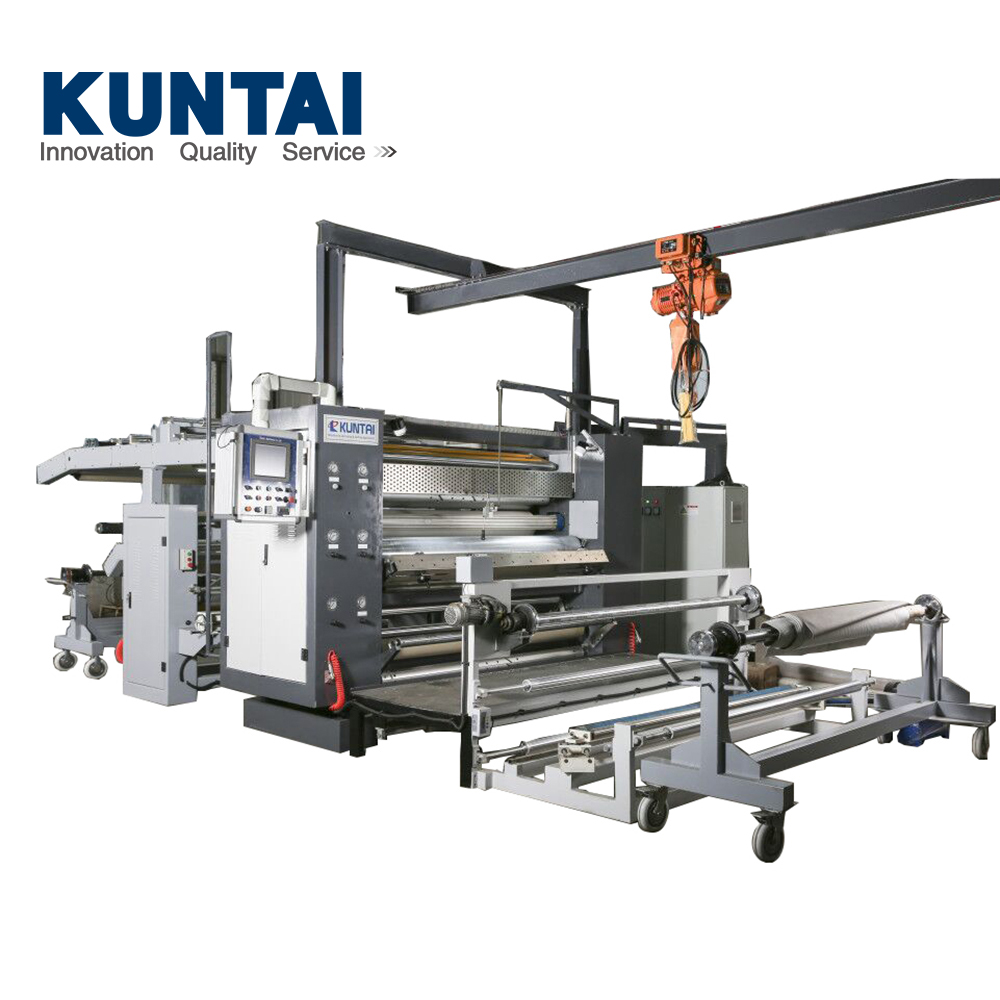
The KT-PUR PUR laminating machine is specified for a maximum material width of 2,400 mm and a machine roller surface of 2,600 mm. Its machine speed range is 0–35 m/min. Heating can use electricity and thermal oil, and installed capacity is 70 kW. The standard specification includes one gluing roller, four trolleys with air shafts, one PUR glue drum melter, one oil heater, and one humidifier. Drive components include a Siemens motor made in China, a Yaskawa inverter, and Schneider Electric components.
The KT-PUR is therefore positioned as a wider, faster adhesive laminating platform. The presence of a PUR glue drum melter and humidifier indicates that the machine is configured for PUR adhesive handling rather than for a flatbed thermal press process alone.
KT-PB vs KT-PUR: Key Specification Comparison
| Parameter | KT-PB Flatbed Laminating Machine | KT-PUR PUR Laminating Machine |
|---|---|---|
| Model type | Flatbed laminating machine | PUR laminating machine |
| Maximum material width | 1,600 mm | 2,400 mm |
| Machine roller surface | 1,800 mm | 2,600 mm |
| Machine speed | 0–25 m/min | 0–35 m/min |
| Heating method | Electricity | Electricity, thermal oil |
| Installed capacity | 230 kW | 70 kW |
| Maximum heating temperature | 230 degrees Celsius | Not listed in the provided specification |
| Heating zone length | 3 m | Not listed in the provided specification |
| Cooling zone length | 1.5 m | Not listed in the provided specification |
| Adhesive-related equipment | No PUR glue drum melter listed in the standard specification | 1 gluing roller; 1 PUR glue drum melter; 1 oil heater; 1 humidifier |
| Standard drive and control components | Siemens motor, Siemens PLC and touch screen, NSK bearings, Schneider Electric | Siemens motor, Yaskawa inverter, Schneider Electric |
| Construction material | Carbon steel / SS304 | Carbon steel / SS304 |
| Listed application | Manufacturing | Fabric bonding |
Throughput Considerations for Technical Textile Producers
When buyers compare KT-PUR at 0–35 m/min against KT-PB at 0–25 m/min, the first reaction is often to assume that the KT-PUR is always faster. In reality, throughput must be evaluated together with working width and the time needed to convert heat or adhesive into a stable bond.
The KT-PUR can be specified for a maximum material width of 2,400 mm. At higher widths, a 35 m/min line can move a significantly larger surface area per minute than a 1,600-mm machine running at 25 m/min. However, the correct question is whether the application requires 2,400-mm open-width fabric bonding. A technical textile producer making a 1,600-mm product may not benefit from the extra width if the extra floor space and auxiliary equipment are not needed.
For the KT-PB, machine speed is only part of the picture. The 3 m heating zone and 1.5 m cooling zone give the substrate a longer defined path under thermal control. If a laminate requires residence time in a heated zone and then a controlled cooling phase, the appropriate comparison is not only line speed but the amount of heat and cooling exposure the flatbed provides at a given speed.
Thermal Control and Process Differences
Thermal control is a major differentiator between the two platforms. The KT-PB is an electrically heated flatbed machine with a maximum heating temperature of 230 degrees Celsius and a long heating-cooling architecture. The KT-PUR combines electricity and thermal oil as heating methods. Its oil heater supports the thermal-oil circuit, while its PUR glue drum melter is used to supply molten PUR adhesive to the gluing roller.
KUNTAI also includes a humidifier as standard on the KT-PUR specification. Humidification is relevant to PUR application in many textile processes because PUR adhesives often need controlled moisture during curing. The exact moisture requirements depend on the adhesive formulation and factory environment. Buyers should confirm their operating conditions with the technical team during the machine evaluation stage.
Material Handling and Machine Configuration Differences
Material handling should be evaluated together with the laminating process. The KT-PUR specification includes four trolleys with air shafts. This suggests a line-oriented handling setup for fabric rolls and open-width material. The PUR drum melter also simplifies handling of adhesive supplied in drums, which is a common format for PUR hot-melt adhesives.
The KT-PB flatbed specification, by contrast, is narrower, with a maximum material width of 1,600 mm. Its published specification does not list a PUR glue drum melter or humidifier. That does not mean a buyer cannot integrate these functions, but the standard published data shows that the flatbed platform is not configured as a PUR adhesive coating line. Producers whose primary need is wide fabric-to-fabric PUR bonding should therefore look first at the KT-PUR and related fabric bonding models.
Evidence From Existing KUNTAI References
KUNTAI reference data shows long operating histories across textile processing plants. One textile-mill reference spans India, Malaysia, Turkey, and Egypt, with applications in textile fabric composite production. The reference records 120 units supplied to Turkey and 140 units supplied to India. Over a five-year period, customers reported stable operation and low maintenance.
For flatbed and press-type laminating, KUNTAI supplied an automobile interior manufacturing plant in Germany and Mexico. This plant used KT-PB flatbed machines, flame laminating machines, and double-belt press laminators. After three years, the customer reported stable operation and low maintenance. These references indicate that KT-PUR and KT-PB machines are used in separate production scenarios, which supports the idea that process choice should follow the material structure and output format.
How to Evaluate Flatbed and PUR Options Step by Step
Buyers moving from product interest to supplier decision can use the following evaluation sequence.
- Confirm the required material width and layer structure. The KT-PB supports up to 1,600 mm material width, while the KT-PUR supports up to 2,400 mm.
- Define the adhesive type. If the process requires PUR hot-melt adhesive supplied from drums, the KT-PUR configuration includes a PUR glue drum melter and humidifier in its standard published specification.
- Review the thermal path. The KT-PB offers a 3 m heating zone and 1.5 m cooling zone, making it suitable for applications that need extended heating and cooling exposure.
- Compare speed at the actual operating width. Do not compare 35 m/min and 25 m/min in isolation from width and process dwell time.
- Request a pre-shipment test. KUNTAI includes a pre-shipment test in its acceptance inspection, and the minimum order quantity is 1 unit.
OEM and Procurement Support Available
JIANGSU KUNTAI MACHINERY CO.,LTD provides OEM production services. Buyers can request customization of voltage, logo, color, and machine structure. KUNTAI’s monthly production capacity is 55 units, and standard lead time is 30–60 days. The minimum order quantity is 1 unit, which allows a producer to begin with a single line rather than a large fleet.
For international orders, KUNTAI offers EXW, FOB, CIF, and DDU delivery terms. Payment is normally 30% deposit and 70% balance before shipment. Acceptance inspection includes a pre-shipment test to verify product quality before delivery. KUNTAI’s export markets include Europe, the Middle East, South America, North America, South Africa, and Asia.
FAQ
Are you an OEM laminating machine manufacturer?
Yes. JIANGSU KUNTAI MACHINERY CO.,LTD provides OEM production services. Buyers can also customize voltage, logo, color, and machine structure. KUNTAI has a monthly production capacity of 55 units, a standard lead time of 30–60 days, and a minimum order quantity of 1 unit. Acceptance inspection includes a pre-shipment test.
Can the KT-PB and KT-PUR be customized for a technical textile line?
KUNTAI offers customization for voltage, logo, color, and machine structure. Because the minimum order quantity is 1 unit, buyers can evaluate customization on a single machine. The KT-PB and KT-PUR have different widths and heating systems, so customization should be checked against the process requirements. KUNTAI also supports OEM production services for laminating machines.
KT-PB or KT-PUR: which machine is better for textile producers?
The choice depends on width, adhesive system, and thermal profile. The KT-PUR laminating machine supports material widths up to 2,400 mm, speeds from 0–35 m/min, and includes PUR glue melting and humidification equipment. The KT-PB is an electrically heated flatbed machine with a 3 m heating zone, a 1.5 m cooling zone, a maximum temperature of 230 degrees Celsius, and a speed range of 0–25 m/min for material widths up to 1,600 mm. A producer needing wide PUR adhesive bonding should evaluate the KT-PUR; a producer needing a long flatbed heating and cooling path at a narrower width should evaluate the KT-PB. For detailed machine evaluation and a pre-shipment test arrangement, contact KUNTAI directly.
Conclusion
There is no universal winner between flatbed and PUR laminating technology. The KT-PB gives technical textile producers an electrically heated flatbed platform with a long 3 m heating zone, a 1.5 m cooling zone, and a maximum temperature of 230 degrees Celsius. The KT-PUR gives fabric bonding producers a wider, faster PUR process platform with material width up to 2,400 mm and speed up to 35 m/min. KUNTAI supplies both platforms from one factory, supports OEM customization, and includes pre-shipment testing in its acceptance process.
To evaluate the KT-PB or KT-PUR for your specific textile structure, contact JIANGSU KUNTAI MACHINERY CO.,LTD. Email: Job@cnkuntai.com; Tel/WhatsApp: +8618261228899. Download the KUNTAI profile brochure.