
How to Read a Laminating Machine Spec Sheet: Width, Roller Surface, Heating and Cooling Zones
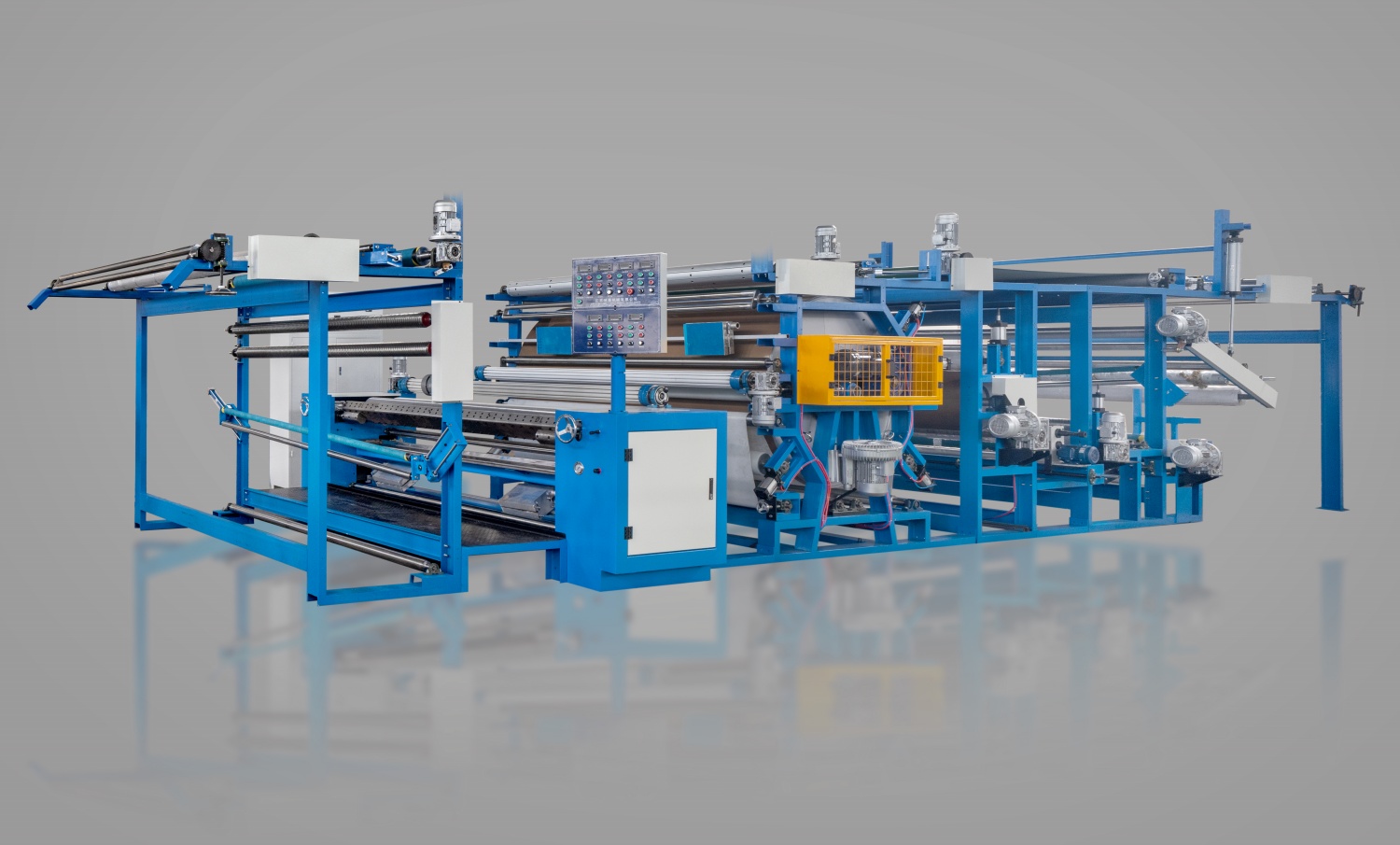
KT-FT fabric-to-fabric laminating machine, rated 2400 mm maximum material width and 2600 mm roller surface — the reference model used in this guide.
A laminating machine spec sheet is not a list of independent numbers; it is a set of constraints that must agree with each other. The four values that cause the most mis-buys are maximum material width, machine roller surface, heating and cooling zone lengths, and installed capacity. Read in isolation, a machine looks oversized. Read together, they reveal the real working envelope, the adhesive system the line supports, and the site requirements you inherit on delivery day.
This guide works through a datasheet parameter by parameter using published specification data from JIANGSU KUNTAI MACHINERY CO., LTD., a machinery manufacturer established in 1983 that designs and builds coating, laminating, impregnation and cutting equipment for technical textiles and composites. The company operates a 30,000 m² facility with approximately 210 employees and an annual production capacity of 650 units, and reports ISO 9001 and CE certification. Every figure quoted below is taken from the manufacturer's published specification data; nothing has been estimated, averaged or rounded up.
Defining the Problem: Three Numbers That Get Misread
Most sourcing errors trace back to three misunderstandings that appear on nearly every industrial laminating machine datasheet.
- Width is treated as one number. A datasheet may carry maximum material width, machine roller surface, coating width and flame burner width. On the KT-HY flame laminating machine, material width is 1600–3000 mm, while roller surface and flame burner width are both 1900–3300 mm. Those are related but not interchangeable figures.
- Speed is read as throughput. A 0–35 m/min range on the KT-FT describes a machine capability. The usable production speed is set by adhesive open time, dwell time in the heating zone and the bond quality your end product requires.
- Installed capacity is skimmed past. The KT-PB flatbed laminating machine lists 230 kW installed capacity; the KT-HY-H double belt press laminator lists 265 kW. These numbers determine transformer capacity, cabling and plant layout — not merely the electricity bill.
Industry Background: Why Parameter Literacy Now Decides Projects
Laminating and impregnation equipment sits inside markets that are growing and becoming more specification-driven. Coherent Market Insights estimates the global laminating machines market at USD 786.5 million in 2026 and projects USD 1,356.7 million by 2033. Behind the impregnation side of the same supply chain, Maximize Market Research valued the global prepreg market at USD 15.07 billion in 2024, driven by aerospace and defence demand. On the supply side, Fortune Business Insights reports that Asia-Pacific held a 72.70% share of the textile machinery market in 2025.
Two practical consequences follow for buyers. First, more machines are configured to order rather than selected from a catalogue, so the datasheet becomes a negotiation document rather than a marketing brochure. Second, safety expectations are formalised: the ISO 11111 series, published by the International Organization for Standardization, sets safety requirements for textile machinery, with Parts 2 to 7 covering different machinery types. A parameter that cannot be traced to a standard, a named component or a measured value is not a specification — it is a claim.
The Parameters, Line by Line
1. Maximum material width versus machine roller surface
These two values always appear together and always differ. Maximum material width is the widest web the machine is designed to run. Machine roller surface is the physical face length of the rollers, drums or belts that contact the web. The difference is the edge allowance that keeps the web fully supported and prevents adhesive from being transferred past the material edge.
KUNTAI's published data shows a consistent relationship. The KT-FT fabric-to-fabric laminating machine is rated 2400 mm material width against a 2600 mm roller surface — a 200 mm allowance. The KT-PB flatbed laminating machine is rated 1600 mm material width against 1800 mm roller surface — again 200 mm. The KT-PUR for fabric bonding is rated 2400 mm against 2600 mm. The KT-LH-1800 impregnation platform runs material width up to 1650 mm on an 1800 mm equipment roll surface — a 150 mm allowance, tighter because impregnated UD tapes require precise edge control.
Range-built models behave the same way. The KT-FT-XC textile laminator spans 1600–3200 mm material width with an 1800–3400 mm roller surface; the KT-DS dot coating machine spans 1600–4500 mm coating width with an 1800–4700 mm roller surface; the KT-SF glue spraying and powder scattering machine spans 1600–2600 mm material width with an 1800–2800 mm roller surface.
What it means: never size a machine to today's widest fabric. Size it to the widest web you intend to run over the machine's service life, then confirm the edge allowance figure in writing, because a 200 mm allowance on a 2600 mm roller limits you to 2400 mm of saleable material.
2. Heating method: electricity and thermal oil versus natural gas
A datasheet should name the heat source, not only the temperature. Three configurations appear in the published KUNTAI data.
- Electricity plus thermal oil: stated for the KT-FT, the KT-PUR for fabric bonding, the KT-FT-XC and the KT-PUR-1800 hot melt coating laminating machine.
- Electric heating alone: stated for the KT-PB flatbed laminating machine and the KT-HY-H double belt press laminator.
- Gas: the KT-HY flame laminating machine runs on natural gas or liquefied gas, with a 15 kW machine drive power and a flame burner width of 1900–3300 mm.
The choice is process-driven, not preference-driven. Thermal oil circulates as a medium and holds temperature evenly across a long roller face, which is why the KT-LH-1800 UD prepreg platform specifies a circulating thermal oil lamination roller, circulating thermal oil as the heating source and a 60 kW external mould oil heater for temperature control. Gas heat is a direct-flame process: the KT-HY is intended for automotive seat manufacturing, where the bond is created by flame treatment of the foam surface rather than by an applied adhesive film. If your process is film or PUR based, a gas line is the wrong family regardless of speed.
KT-HY flame laminating machine: gas heat, material width 1600–3000 mm, roller surface and burner width 1900–3300 mm, maximum speed 25 m/min.
3. Heating zone and cooling zone length
Zone geometry is the part of the sheet buyers most often skip, and it sets the achievable line speed for a given adhesive. The KT-PB flatbed laminating machine lists a 3 m heating zone, a 1.5 m cooling zone and a maximum heating temperature of 230 °C. The KT-HY-H double belt press laminator lists the same 3 m heating and 1.5 m cooling geometry, with a higher maximum heating temperature of 250 °C and 265 kW installed capacity.
A 3 m heating zone at 25 m/min is a very different thermal exposure from 3 m at 5 m/min. Before accepting a quoted speed, calculate dwell time: zone length divided by line speed. At 25 m/min the web spends roughly 7 seconds inside a KT-PB heating zone; at 5 m/min the same zone delivers roughly 36 seconds. Shorter dwell shifts the process onto roller contact pressure and adhesive reactivity instead of soak time.
4. Speed range: coating lines and impregnation lines run in different worlds
Published speeds divide clearly into two families. Coating and laminating lines run fast: the KT-PUR hot melt glue laminating machine 0–40 m/min, the KT-FT 0–35 m/min, the KT-FT-XC 0–35 m/min, the KT-PUR-1800 0–35 m/min, the KT-HY up to 25 m/min, the KT-PB and KT-HY-H 0–25 m/min, the KT-SF 5–25 m/min and the KT-DS 5–20 m/min.
Impregnation and crossply equipment runs an order of magnitude slower. The KT-LH-1800 UD prepreg impregnation machine, UD Aramid prepreg machine and UHMWPE prepreg machine, plus the KT-YJ-1800 UHMWPE impregnation machine, all list a composite speed of 5–11 m/min.
That gap is not a quality difference and should not be read as one. Impregnation requires every filament to be wetted and the water-based adhesive to be dried before the sheet is consolidated, so throughput is limited by drying capacity and by mechanical multi-roll plus profiled wire spreading — not by drive power.
5. Installed capacity and what sits behind it
Installed capacity is the total connected load of heaters, drives and control systems, and it drives your electrical design. Published KUNTAI figures include:
- KT-HY-H double belt press laminator — 265 kW
- KT-PB flatbed laminating machine — 230 kW
- KT-SF glue spraying and powder scattering machine — 155 kW
- KT-FT-XC textile laminating machine — 105 kW; KT-FT — about 105 kW
- KT-LH-1800 UD crossply machine — about 95 kW
- KT-LH-1800 prepreg range and KT-YJ-1800 UHMWPE impregnation machine — 90 kW each
- KT-PUR fabric bonding — 70 kW; KT-PUR hot melt glue laminating machine — 65 kW; KT-PUR-1800 — 60 kW; KT-HY drive power — 15 kW
6. Adhesive, dosing and glue system values
The glue system line tells you whether your adhesive chemistry fits without hardware changes. The KT-PUR-1800 specifies one gluing roller for 25 to 110 g/m², a 200 kg glue melter and an oil heater. The KT-SF accepts PUR hot melt glue or PSA hot melt glue, handles powder from 20 to 150 microns, carries six glue spraying systems and four powder scattering systems, includes an automatic powder feeding device, a 200 kg glue melter and a maximum unwinder/rewinder diameter of 1000 mm. The KT-DS operates at a working temperature of 80–100 °C with a maximum of 130 °C.
Gram-per-square-metre ranges and micron bands are process windows. If your adhesive falls outside the stated range, the limitation is in the coating head or the scattering unit, not in the operator's settings.
7. Construction material and named components
Nearly every KUNTAI sheet repeats the same construction line: carbon steel / SS304. The KT-PUR hot melt glue laminating machine adds aluminium foil as an option. SS304 matters wherever moisture, water-based adhesive or cleaning agents reach the frame and rollers, which is the case on impregnation lines using water-based adhesive.
Component naming is equally specific and worth checking line by line: Siemens motors (made in China) across the range, Yaskawa inverters on the KT-FT, KT-PUR, KT-FT-XC and KT-HY, an Inovance inverter on the KT-PUR-1800, Schneider electrical components throughout, and on the KT-PB a Siemens PLC and touch screen with NSK bearings. These names determine spare-part sourcing for the next decade, so a datasheet that omits them is not yet a specification.
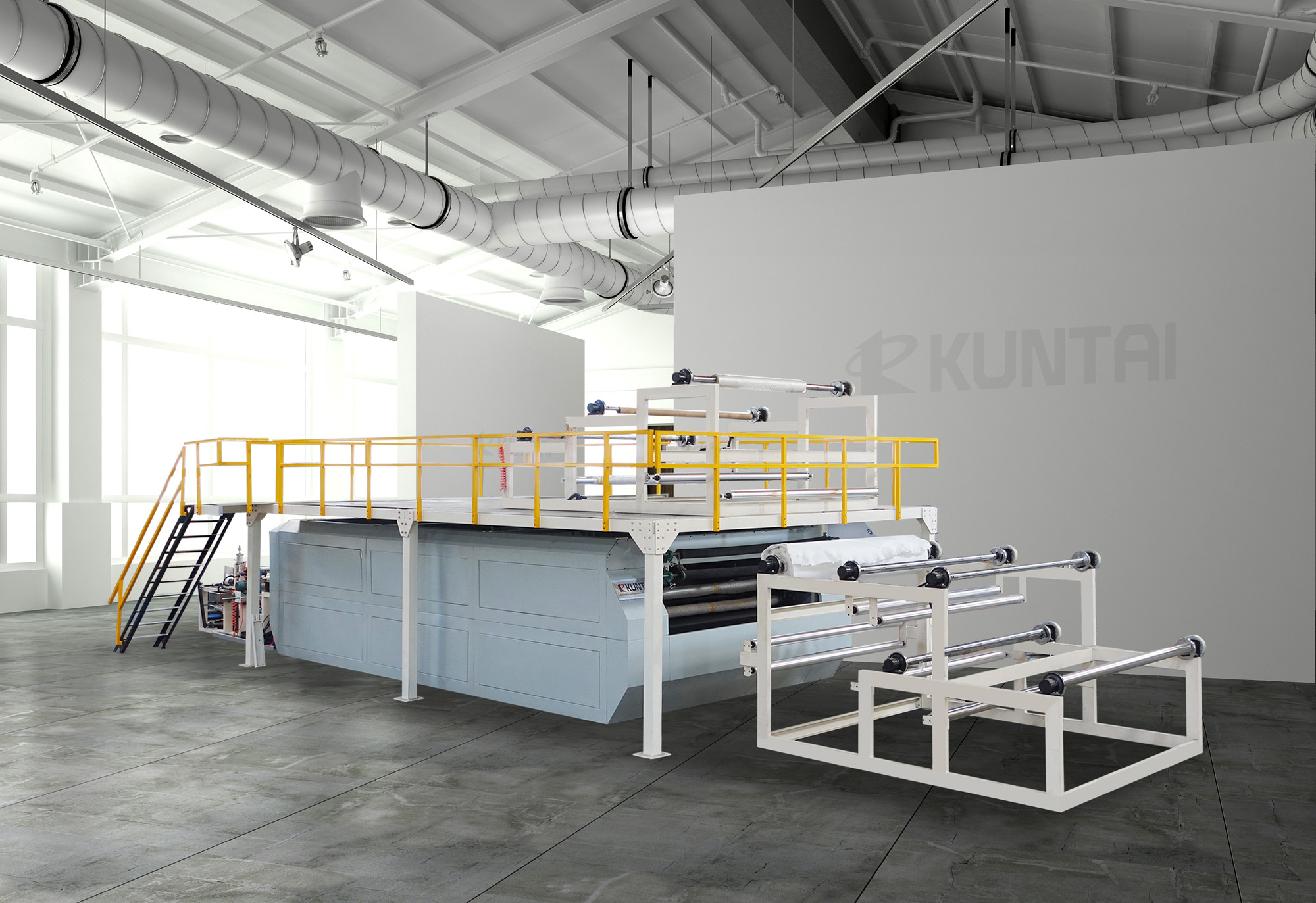
KT-PB flatbed laminating machine: 1600 mm material width, 1800 mm roller surface, 3 m heating zone, 1.5 m cooling zone, 230 °C maximum, 230 kW installed.
8. Precision parameters unique to UD impregnation lines
UD lines carry parameters with no equivalent on a coating line: roller surface treatment described as friction roller mirror level 14, dynamic balance applied to the friction mirror surface roller and heating roller, 1080 yarn bobbins, mechanical multi-roll plus profiled wire spreading, HMI + PLC control and variable frequency plus servo drive. The KT-LH-1800 UD crossply machine adds 8000 KN pressing tonnage, a 1700 × 1700 mm working table and hydraulic pressing with external oil heater circulation.
If a quotation for a UD line omits bobbin count or roller surface treatment, it is not comparable with one that states them. Those two figures describe how evenly the tape is spread before consolidation.
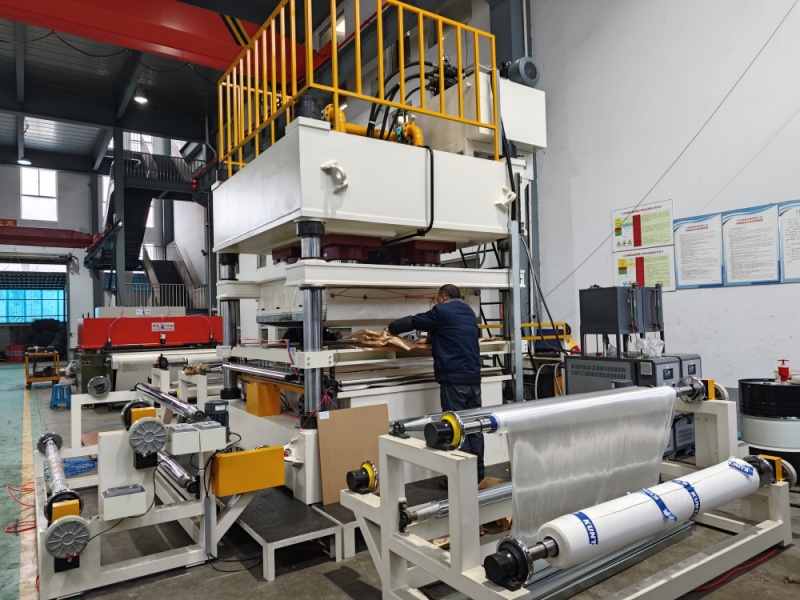
KT-LH-1800 UD crossply machine: material width ≤ 1650 mm, 8000 KN pressing tonnage, 1700 × 1700 mm working table, total power about 95 kW.
Step-by-Step: Reading a Datasheet Before You Commit
- Fix your material envelope first. Write down the widest and narrowest web you expect to run over the next three years. Compare the maximum with the machine's rated material width, and confirm the roller surface leaves the edge allowance your edge trim or sealing method requires.
- Confirm the process family before the model. Adhesive film, PUR hot melt coating, powder scattering, flame bonding or impregnation — each family has a different specification logic, and only then does the model number matter.
- Test zone geometry against your adhesive. Divide heating zone length by the line speed you actually intend to run, not the maximum. If the resulting dwell time is below your adhesive's requirement, the answer is a longer zone or a slower line, not a higher temperature alone.
- Read the speed range as a window. A 0–40 m/min range on the KT-PUR hot melt glue laminating machine includes ramp-up and low-speed settings; your saleable speed band will be narrower than the printed range.
- Add up installed capacity before plant layout. 230 kW on the KT-PB or 265 kW on the KT-HY-H needs a matching supply and cabling plan. Bring your electrical contractor into the conversation at quotation stage, not at installation.
- Verify the glue system figures. Grams per square metre, powder micron range, melter capacity (200 kg on both the KT-PUR-1800 and the KT-SF) and maximum unwinder diameter (1000 mm on the KT-SF) must match your adhesive supplier's data sheet.
- Check the construction and component line. Carbon steel / SS304 plus named motor, inverter, electrical and bearing brands. This is the line that determines serviceability years later.
- Confirm documentation and standards. KUNTAI's company profile states ISO 9001 and CE certification, and textile machinery safety requirements are addressed by the ISO 11111 series. Ask which documents ship with the machine, not which certificates exist in general.
Use Cases: Matching Spec Values to Real Applications
Textile and apparel bonding. Fabric-to-fabric bonding uses the KT-FT at 2400 mm width, 2600 mm roller surface and 0–35 m/min with electricity and thermal oil heating, or the KT-FT-XC where wider rolls are involved at 1600–3200 mm material width. Garment applications such as protective suits, windbreakers and thermal underwear are matched to the PUR laminating machine, KT-FT, KT-FT-XC, KT-PUR-1800 and the hot melt glue laminating machine, with a glue melter and oil heater as supporting equipment.
Safety shoes. The KT-PUR-1800 hot melt coating laminating machine is specified for safety shoe manufacturing: 1800 mm material width, 2000 mm roller surface, 0–35 m/min, 60 kW installed capacity, and one gluing roller covering 25 to 110 g/m². That gram range is the decisive figure for footwear, because bond strength on a curved upper depends on consistent adhesive weight.
Filtration media. The KT-SF glue spraying and powder scattering machine is intended for filter manufacturing, running 5–25 m/min in continuous operation with powder between 20 and 150 microns and 155 kW installed. The published application profile notes middle-temperature working conditions, synchronized operation, a glue melter as matched equipment and stable voltage as a special requirement.
Automotive trim. The KT-HY flame laminating machine serves automotive seat manufacturing with natural gas or liquefied gas, material width 1600–3000 mm and maximum speed 25 m/min. The matching application profile lists a gas tank and gas appliances as equipment, continuous operation as the running mode and pressure stability as a special requirement — a reminder that gas lines are infrastructure projects, not just machine purchases.
Ballistic composites. Bulletproof vest, helmet and plate manufacturing is served by the KT-LH-1800 UD prepreg impregnation machine, UD Aramid prepreg machine, UHMWPE prepreg machine and KT-YJ-1800 UHMWPE impregnation machine, all with an 1800 mm roll surface, material width up to 1650 mm, water-based adhesive, 1080 yarn bobbins and 90 kW total power at 5–11 m/min. The KT-LH-1800 UD crossply machine adds 8000 KN pressing tonnage at about 95 kW. The published application profile for this sector specifies low temperature, moderate humidity, a glue pump system and stable voltage.
Carpet, upholstery and insulation. The KT-DS dot coating laminating machine handles carpet manufacturing at 1600–4500 mm coating width and 5–20 m/min with electric heating and chain wheel transmission. Upholstery work — blackout fabric, mattress protectors and sofa fabric, with waterproofing and sun protection as the stated functions — is matched to the PUR laminating machine, KT-FT-XC, KT-PUR, KT-PUR-1800, KT-FT and KT-DS, again with a glue melter and oil heater. Aircraft sound insulation panels are matched to the KT-PB flatbed laminating machine and the KT-HY-H double belt press laminator, at high temperature with a water chiller as supporting equipment.
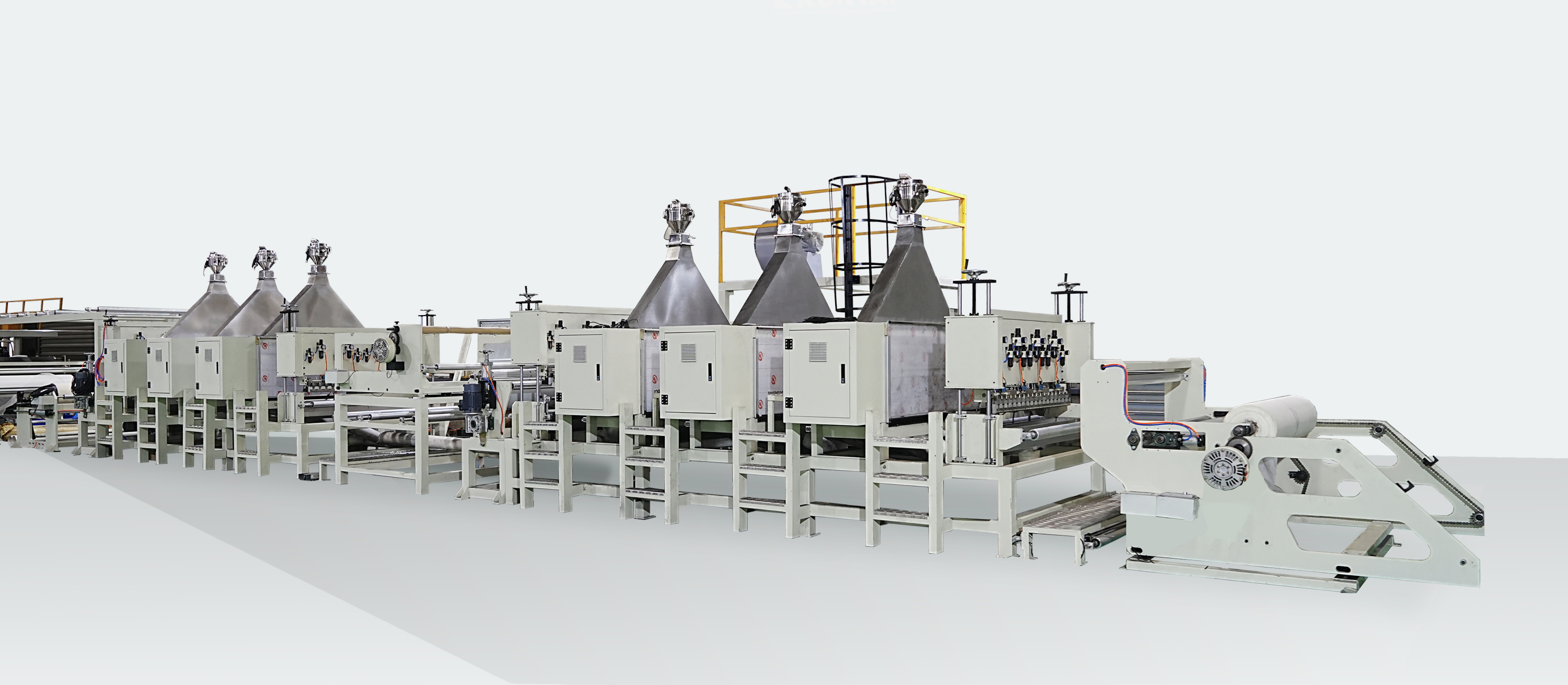
KT-SF glue spraying and powder scattering machine: material width 1600–2600 mm, powder 20–150 microns, six spraying and four scattering systems, 155 kW.
Spec Sheet Comparison Table
| Model | Max material width | Roller surface | Speed | Heating method | Installed capacity | Typical application |
|---|---|---|---|---|---|---|
| KT-FT | 2400 mm | 2600 mm | 0–35 m/min | Electricity, thermal oil | About 105 kW | Fabric-to-fabric textile bonding |
| KT-PB | 1600 mm | 1800 mm | 0–25 m/min | Electricity | 230 kW | Flatbed lamination; 3 m heating, 1.5 m cooling |
| KT-PUR (fabric bonding) | 2400 mm | 2600 mm | 0–35 m/min | Electricity, thermal oil | 70 kW | Fabric bonding with PUR glue drum melter |
| KT-PUR (hot melt glue) | 1600–3400 mm | 1800–3600 mm | 0–40 m/min | Electricity, thermal oil | 65 kW | Garment, car trim, healthcare, upholstery |
| KT-PUR-1800 | 1800 mm | 2000 mm | 0–35 m/min | Electricity, thermal oil | 60 kW | Safety shoes; gluing roller 25–110 g/m² |
| KT-FT-XC | 1600–3200 mm | 1800–3400 mm | 0–35 m/min | Electricity, thermal oil | 105 kW | Textile manufacturing |
| KT-DS | Coating width 1600–4500 mm | 1800–4700 mm | 5–20 m/min | Electric heating | Not listed | Carpet dot coating; 80–100 °C working temperature |
| KT-SF | 1600–2600 mm | 1800–2800 mm | 5–25 m/min | Not listed | 155 kW | Filter manufacturing; powder 20–150 microns |
| KT-HY | 1600–3000 mm | 1900–3300 mm | Max 25 m/min | Natural gas or liquefied gas | Drive power 15 kW | Automotive seat manufacturing |
| KT-HY-H | 1600 mm | 1800 mm | 0–25 m/min | Electricity | 265 kW | Insulation material, filter, automotive; 3 m heating, 1.5 m cooling |
| KT-LH-1800 (prepreg / impregnation) | ≤ 1650 mm | 1800 mm | 5–11 m/min | Circulating thermal oil, 60 kW oil heater | 90 kW | Bulletproof vest, helmet, plate; 1080 yarn bobbins |
| KT-YJ-1800 | ≤ 1650 mm | 1800 mm | 5–11 m/min | Circulating thermal oil | 90 kW | Bulletproof vest, helmet, plate |
| KT-LH-1800 (crossply) | ≤ 1650 mm | Working table 1700 × 1700 mm | Not listed | External oil heater circulation | About 95 kW | Bulletproof vest manufacturing; 8000 KN pressing tonnage |
All values as published in KUNTAI model specification data. "Not listed" means the value does not appear in the published specification for that model.
FAQ
Q1. What compliance and documentation should a laminating machine spec sheet reference?
A complete specification should identify the standards the machine is built against and the traceable components inside it. KUNTAI's company profile states that its products meet the requirements of ISO 9001 and hold CE certification. For textile machinery specifically, safety requirements are covered by the ISO 11111 series published by the International Organization for Standardization, with Parts 2 to 7 addressing different machinery types. On the component side, KUNTAI sheets name Siemens motors (made in China), Yaskawa or Inovance inverters, Schneider electrical components, Siemens PLC and touch screen on the KT-PB, and NSK bearings. Those names matter because they define the spare-part chain over the machine's service life.
Q2. How do heating method and zone length affect bond quality and speed?
Heating method and zone geometry together determine how long the web is under heat, and therefore which adhesives will work. Electricity with thermal oil circulates a heated medium through the roller, which is why the KT-LH-1800 UD prepreg platform uses a circulating thermal oil lamination roller with a 60 kW external mould oil heater, and why the KT-FT, KT-PUR and KT-FT-XC are specified with both electricity and thermal oil. Electric-only heating is used on the KT-PB flatbed laminating machine, which has a 3 m heating zone, a 1.5 m cooling zone and a maximum temperature of 230 °C, and on the KT-HY-H double belt press laminator, which has the same 3 m / 1.5 m geometry at a maximum of 250 °C. Gas firing on the KT-HY uses natural gas or liquefied gas and heats by flame rather than by contact. Zone length only becomes meaningful when divided by line speed: 3 m at 25 m/min is about 7 seconds of heating, while 3 m at 5 m/min is about 36 seconds.
Q3. What does installed capacity tell me about energy use and site requirements?
Installed capacity is the total connected load, so it determines your supply, cabling and switchgear rather than your running cost alone. In KUNTAI's published data the figures span a wide band: 265 kW for the KT-HY-H double belt press laminator, 230 kW for the KT-PB flatbed laminating machine, 155 kW for the KT-SF glue spraying and powder scattering machine, 105 kW for the KT-FT-XC, about 105 kW for the KT-FT, about 95 kW for the KT-LH-1800 UD crossply machine, 90 kW for the KT-LH-1800 prepreg and KT-YJ-1800 impregnation machines, 70 kW for the KT-PUR fabric bonding unit, 65 kW for the KT-PUR hot melt glue laminating machine and 60 kW for the KT-PUR-1800. The KT-HY flame laminating machine lists only a 15 kW machine drive power because its heat comes from gas. Confirm which model you are quoting: two different machines share the KT-PUR designation at 70 kW and 60 kW.
Q4. Which spec values must match my material and adhesive before I place an order?
Four groups must line up. First, width: maximum material width against machine roller surface, for example 2400 mm against 2600 mm on the KT-FT, 1600 mm against 1800 mm on the KT-PB, or 1650 mm against 1800 mm on the KT-LH-1800 impregnation range. Second, adhesive system: the KT-PUR-1800 covers 25 to 110 g/m² with one gluing roller and a 200 kg glue melter, while the KT-SF accepts PUR hot melt glue or PSA hot melt glue with powder from 20 to 150 microns, six spraying and four scattering systems, and a 1000 mm maximum unwinder/rewinder diameter. Third, thermal window: the KT-PB reaches 230 °C, the KT-HY-H reaches 250 °C, and the KT-DS works at 80–100 °C with a 130 °C maximum. Fourth, speed: coating and laminating lines run to 0–40 m/min while impregnation lines run 5–11 m/min. If any of these four does not match your process, no other parameter will compensate.
Q5. How do I turn a spec sheet into a firm machine configuration?
Take the four matched groups from the previous answer — width and roller surface, adhesive system and dosing, thermal window and zone length, and installed capacity — and put them beside the model you are considering. Where a datasheet shows a range rather than a fixed value, such as 1600–3400 mm material width on the KT-PUR hot melt glue laminating machine or 1800–4700 mm roller surface on the KT-DS, confirm in writing which point in the range will be built. KUNTAI publishes its full equipment catalogue for download at kuntai profile PDF, and the company can be reached at Job@cnkuntai.com or +8618261228899 to confirm configuration details against your material and adhesive data.
Conclusion
The value of a laminating machine datasheet lies in the relationships between its numbers, not in the numbers themselves. Maximum material width minus roller surface defines your edge allowance. Heating zone length divided by line speed defines your dwell time, and therefore the adhesives you can run. Installed capacity defines the electrical infrastructure you must build around the machine. Speed ranges tell you which process family you are actually buying into — a 0–40 m/min coating line and a 5–11 m/min impregnation line are not competitors, they are different production logics.
Read the sheet in that order, confirm every range in writing, and check that named components and standards are stated rather than implied. JIANGSU KUNTAI MACHINERY CO., LTD., established in 1983 and operating from Zhengang Industrial Park, Yancheng City, Jiangsu, China, publishes specification data for its laminating, impregnation and cutting machinery, including the KT-FT, KT-PB, KT-PUR series, KT-HY, KT-HY-H, KT-DS, KT-SF, KT-LH-1800 and KT-YJ-1800 platforms described above. Its declared certifications are ISO 9001 and CE, and its catalogue is available for download below.
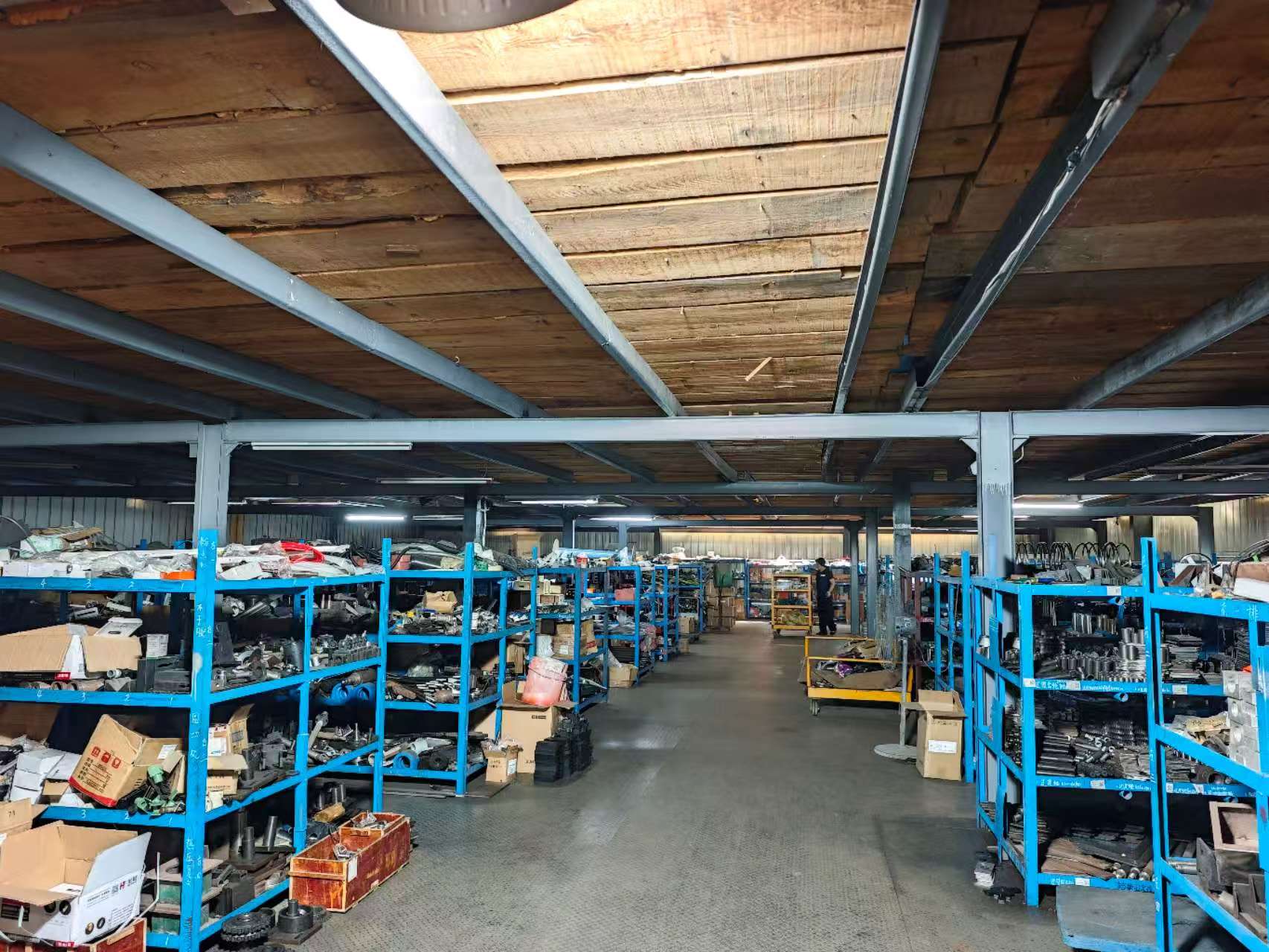
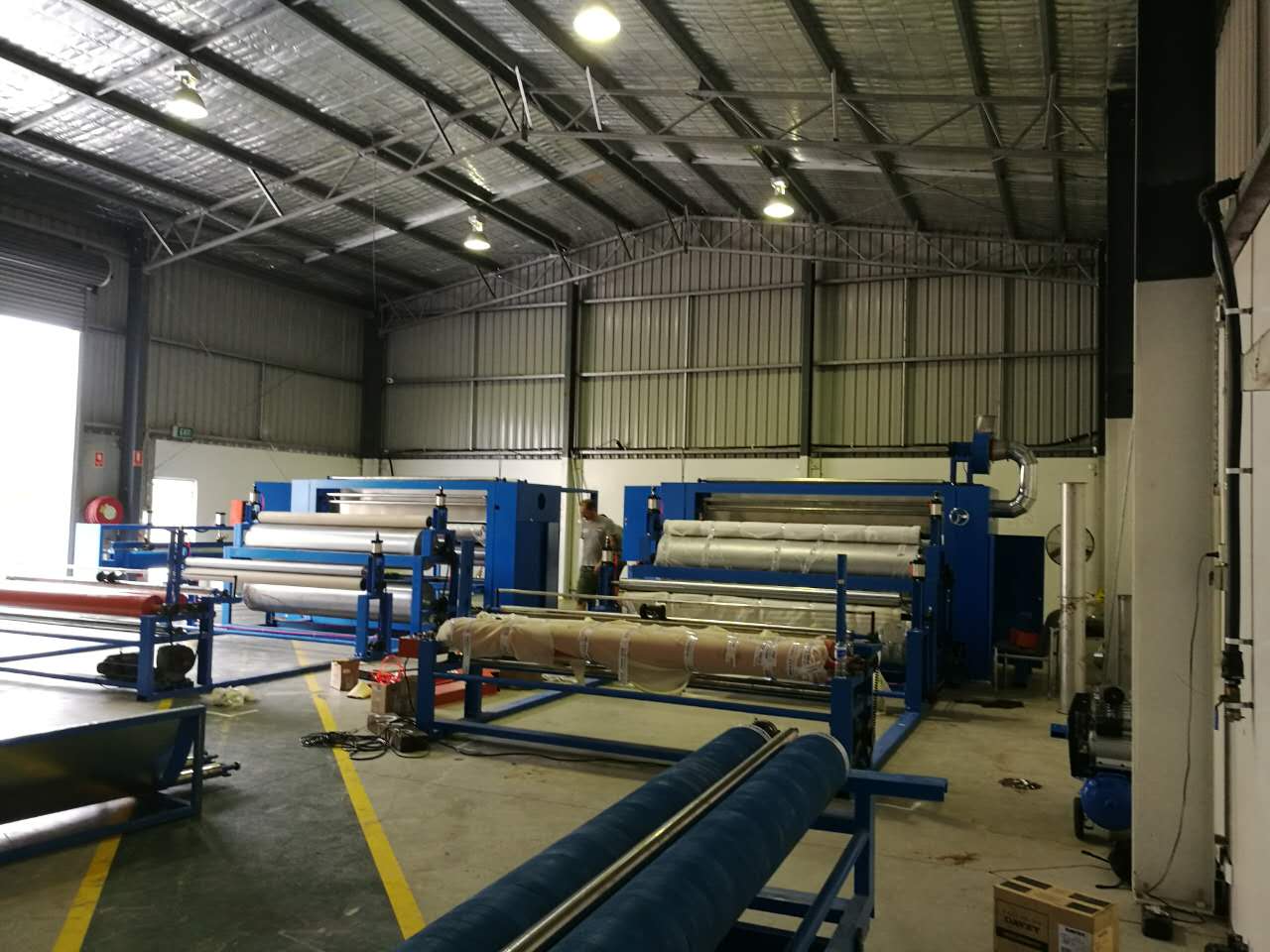
Machinery ready for dispatch at KUNTAI's 30,000 m² manufacturing facility in Yancheng City, Jiangsu, China.
Next step: send your material width, adhesive type and target line speed, and match them against the published parameters above. Download the full KUNTAI equipment catalogue here: kuntai profile PDF. For configuration questions, contact Job@cnkuntai.com, +8618261228899 (WhatsApp and WeChat: 18261228899), or visit www.kuntai-group.com.