
Laminating Machines: Process Types, Equipment Selection, and Supplier Evaluation
A laminating machine is an industrial system that joins two or more layers of material with heat, pressure, or adhesive to form a composite structure. In technical textiles and composite manufacturing, the machine type, adhesive system, and line configuration must be matched to the final product’s mechanical and environmental requirements.
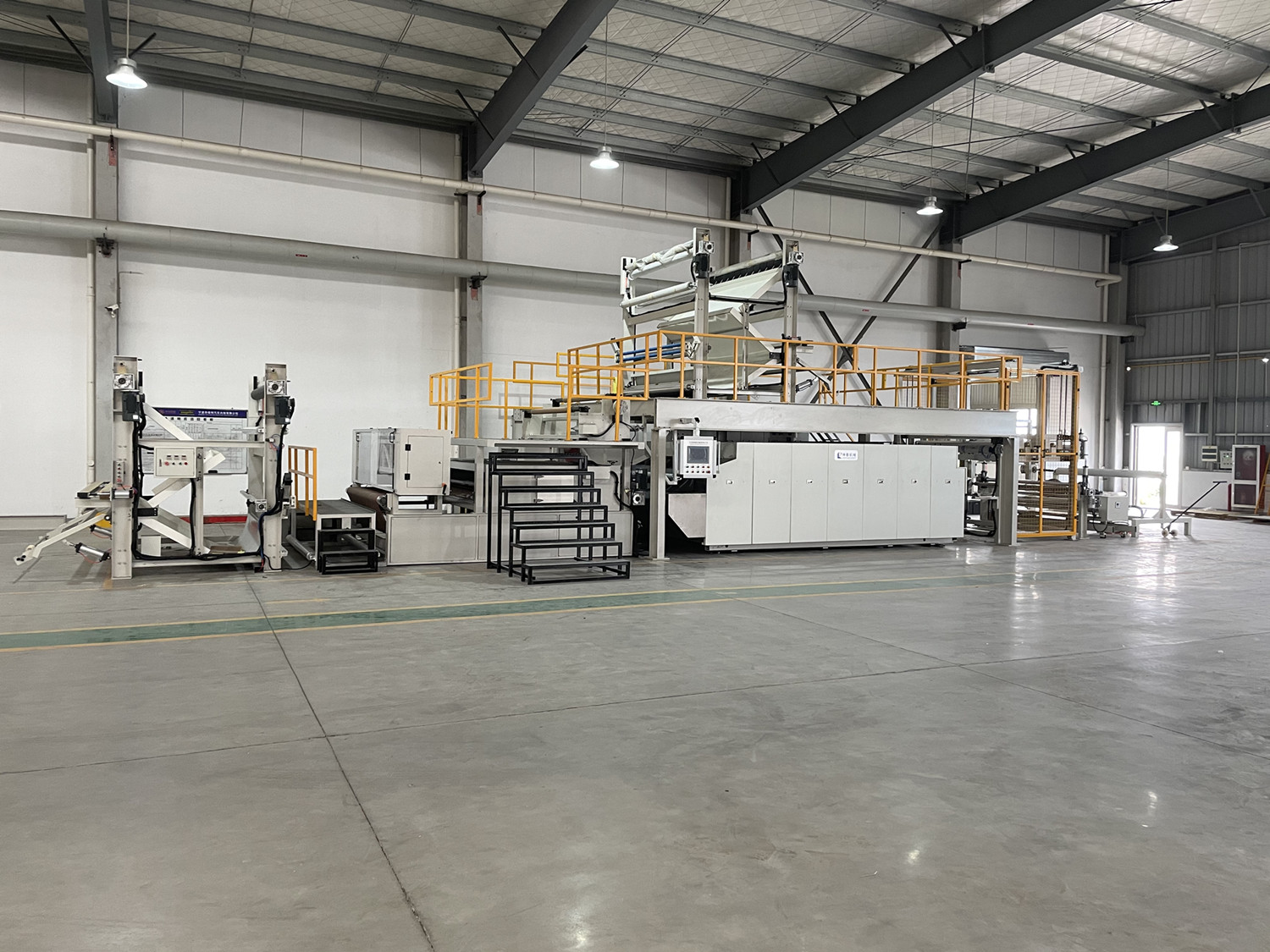
The KUNTAI KT-HY-H double belt press laminator is configured for insulation material manufacturing, filter production, and automotive applications.
Introduction
Industrial laminating machines are not a single class of equipment. The same term covers PUR hot melt glue laminating machines, flame laminating machines, flatbed laminators, double belt presses, dot coating machines, powder scattering lines, and UD prepreg impregnation machines. Buyers searching for “laminating machine suppliers” are usually evaluating a production investment rather than a simple machine purchase.
This article explains the main laminating processes, the equipment families used in textile, automotive, filter, carpet, and ballistic composite production, and the technical details that should be part of a supplier evaluation.
Problem Definition
The core problem in machine selection is that “laminating” describes different bonding mechanisms with different operating constraints:
- Hot melt lamination relies on molten adhesive applied through a roller or slot and is used for fabric-to-fabric bonding, garment textiles, upholstery, footwear, and car trim.
- Flame lamination uses a gas flame to melt a foam surface before pressing it to a fabric, primarily in automotive seat production.
- Flatbed and double belt press lamination use heated and cooled zones to consolidate thicker or structured materials for panel, filter, and insulation applications.
- Dot coating applies adhesive in a controlled dot pattern to carpet and home textile materials.
- UD prepreg and impregnation lines are dedicated to water-based adhesive impregnation of aramid, UHMWPE, and related fibers for ballistic protection.
Selecting a machine without first defining the substrate width, adhesive type, heating requirement, and end-use result can lead to mismatched line speed, poor bond quality, or excessive energy cost.
Industry Background
Demand for laminating machinery is supported by several market trends. The global laminating machines market is estimated to be valued at USD 786.5 million in 2026 and is projected to reach USD 1,356.7 million by 2033, according to Coherent Market Insights. PUR hot melt adhesives, a process-critical material for many laminators, are expected to grow at a CAGR of 7.2% through 2034, reaching USD 7.1 billion, according to Dataintelo. In the broader textile machinery market, Asia-Pacific held a 72.70% share in 2025, led by automation growth in China, based on Fortune Business Insights data.
The composite segment is also relevant for buyers evaluating UD prepreg equipment. The global prepreg market was valued at USD 15.07 billion in 2024, and the aerospace prepreg market at USD 3.5 billion in the same year, according to Maximize Market Research and MarketsandMarkets respectively. These figures explain why laminating machine suppliers increasingly need to cover both conventional textile lamination and high-performance composite impregnation.
One example of a full-line manufacturer is JIANGSU KUNTAI MACHINERY CO., LTD., established in 1983. The company has over 40 years of experience in designing and constructing coating, laminating, impregnation, and cutting machinery for technical textiles and composites. It is located in Zhengang Industrial Park, Yancheng City, Jiangsu, China, and operates a 30,000 m² facility with about 210 employees. Its annual production capacity is 650 units, and its R&D team consists of eight engineers. The main product range includes laminating machines (double-belt presses, flat-bed laminators, hot-melt film laminators, UD impregnation and crossply machines), cutting machines (travel head, beam, hydraulic, etc.), bronzing/printing machines, spray and scattering equipment, and inspection machines. The company holds ISO9001 and CE certification. Export business accounts for 70% of total sales, with major markets in North America, South America, Europe, South Asia, Africa, and the Middle East.
Detailed Solution
For buyers, a practical way to understand laminating machinery is to look at the process families rather than a single brand name.
1. Hot Melt Glue Laminating Machines
The KT-PUR is a PUR laminating machine designed for fabric bonding. It handles a maximum material width of 2400 mm, a roller surface length of 2600 mm, and a speed of 0-35 m/min. Installed capacity is 70 kW. Heating uses electricity and thermal oil. The machine includes one humidifier, one oil heater, one PUR glue drum melter, four trolleys with air shafts, and one gluing roller. Drive and control components include a Siemens motor (made in China), a Yaskawa inverter, and Schneider electric components.
For textile manufacturing, the KT-FT-XC is a hot melt coating laminating machine with an installed capacity of 105 kW. It operates at 0-35 m/min, with a maximum material width of 1600-3200 mm and a roller surface of 1800-3400 mm. It includes four trolleys with air shafts and one gluing roller, and uses the same component approach: Schneider electrics, a Yaskawa inverter, and a Siemens motor (made in China).
The KT-PUR-1800 is designed for the safety shoes manufacturing industry. It has a maximum material width of 1800 mm, a roller surface of 2000 mm, and a speed of 0-35 m/min. Installed capacity is 60 kW, and the machine includes a 200 kg glue melter, an oil heater, four trolleys with air shafts, and one gluing roller for 25 to 110 g/m².
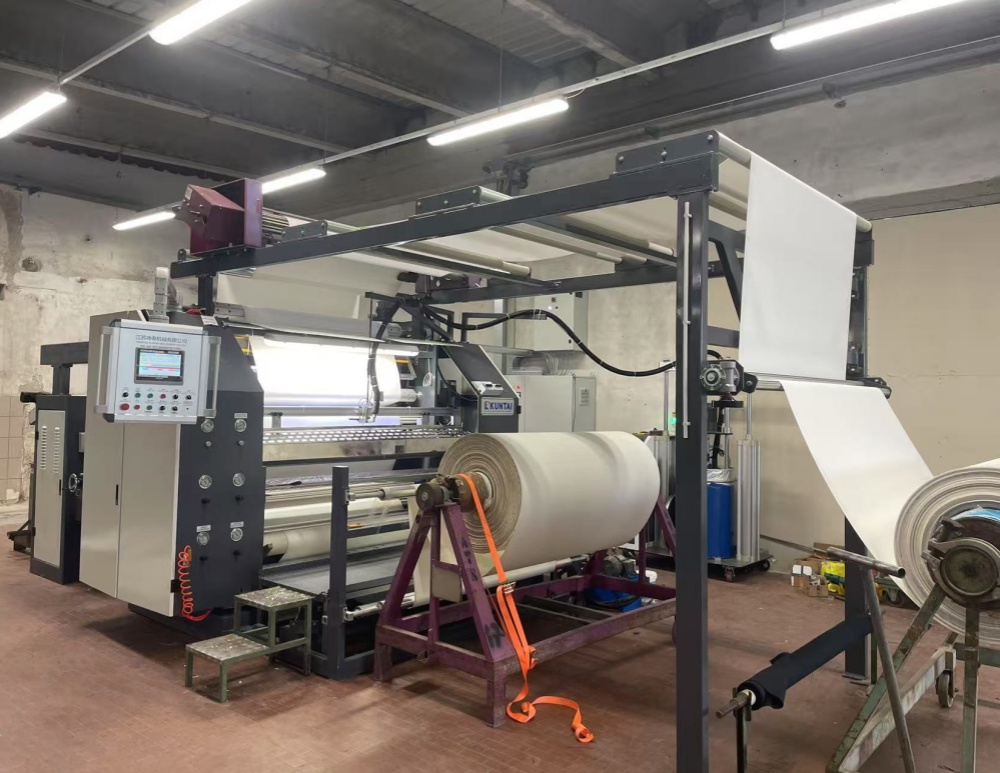
Hot melt coating and laminating machines are used in textile and safety shoe production lines.
2. Flatbed Laminating Machines and Double Belt Presses
The KT-PB is a flatbed laminating machine with a maximum material width of 1600 mm and a roller surface length of 1800 mm. Its heating zone is 3 m, cooling zone is 1.5 m, and maximum heating temperature is 230°C. Machine speed is 0-25 m/min. The machine uses PLC-based control, NSK bearings, and Schneider electric components.
The KT-HY-H is a double belt press laminator intended for insulation material manufacturing, the filter industry, and the automotive industry. It supports a maximum material width of 1600 mm, roller surface length of 1800 mm, speed range of 0-25 m/min, heating zone length of 3 m, and cooling zone length of 1.5 m. Maximum heating temperature is 250°C, installed capacity is 265 kW, and heating is electric.
3. Flame Laminating Machines
The KT-HY flame laminating machine is intended for automotive seat manufacturing. It uses natural gas or liquefied gas, with a machine drive power of 15 kW and maximum speed of 25 m/min. The material width range is 1600-3000 mm, and the flame burner and roller surface are both 1900-3300 mm.
4. Glue Spraying and Powder Scattering Machines
The KT-SF is designed for the filter manufacturing industry. It uses PUR hot melt glue or PSA hot melt glue, has a machine power of 155 kW, a speed range of 5-25 m/min, and a powder size range of 20-150 microns. The machine includes six glue spraying systems, four powder scattering systems, and an automatic powder feeding device. Glue melting capacity is 200 kg.
5. Dot Coating Laminating Machines
The KT-DS is intended for carpet manufacturing. It uses dot coating as the gluing method and electric heating. Working temperature is 80-100°C, with a maximum of 130°C. Coating width is 1600-4500 mm, roller surface is 1800-4700 mm, and machine speed is 5-20 m/min.
6. UD Prepreg, Impregnation, and Crossply Machines
For ballistic composite production, the KT-LH-1800 is used as a UD Aramid prepreg machine or UD prepreg impregnation machine. It handles material width up to 1650 mm, has an equipment roll surface of 1800 mm, and uses water-based adhesive with dipping or coating gluing. Composite speed is 5-11 m/min, total power is 90 kW, and the machine is equipped with 1080 yarn bobbins.
The KT-YJ-1800 is a UHMWPE impregnation machine used in the same industry. It also handles material width up to 1650 mm with an 1800 mm equipment roll surface, and uses water-based adhesive with dipping or coating gluing. Control is HMI plus PLC, drive control is variable frequency plus servo drive, and the lamination roller is an external circulating thermal oil roller.
The KT-LH-1800 UD crossply machine is designed for bulletproof vest manufacturing. It has a pressing tonnage of 8000 kN, a working table of 1700×1700 mm, a material width capacity up to 1650 mm, and hydraulic pressing. Total power is approximately 95 kW.
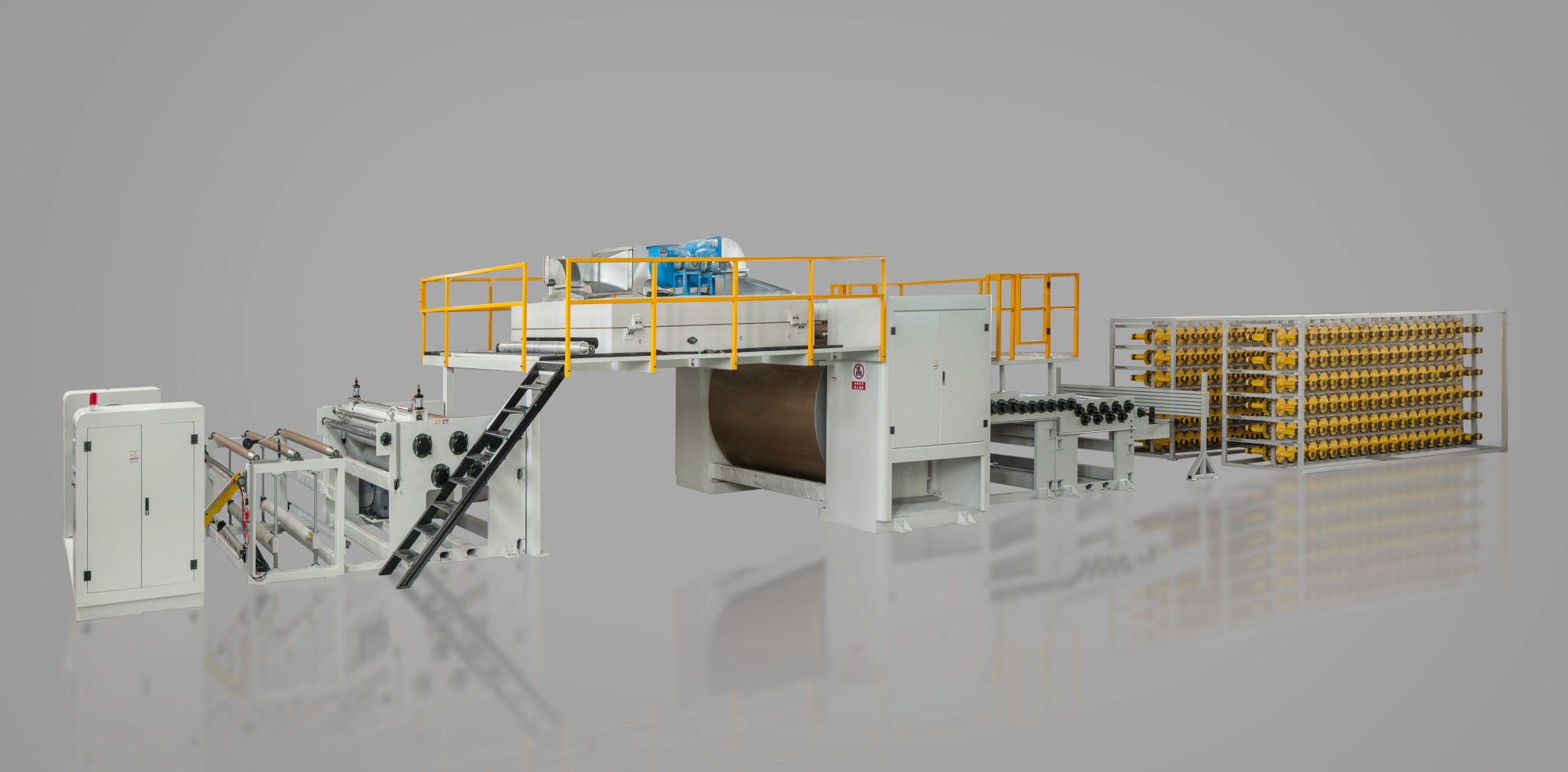
UHMWPE impregnation lines are used to consolidate ballistic-resistant composite laminates.
Step-by-Step Breakdown
- Define the substrate and end-use. Start with the physical properties of the layers to be bonded, including weave structure, thickness, coating, and the performance requirement such as waterproofing, sun protection, sound insulation, or ballistic resistance.
- Select the adhesive and gluing method. Choose between PUR hot melt glue, PSA hot melt glue, water-based adhesive, or a non-adhesive process such as flame lamination. The gluing method may be roller application, dot coating, spraying, powder scattering, or dipping and coating.
- Calculate width and speed requirements. The maximum material width and line speed must match the expected production volume. For example, the KT-PUR handles a maximum material width of 2400 mm at 0-35 m/min, while the KT-DS runs at 5-20 m/min with a coating width up to 4500 mm.
- Match heating and cooling capacity. If the product requires a long heated zone, a flatbed or double belt press such as the KT-PB or KT-HY-H is often specified. The heating method can be electric, thermal oil, or a combination, depending on temperature uniformity and energy availability.
- Review control architecture and component sourcing. Many industrial machines use a PLC and touch screen, variable frequency drives, and servo drive control. Component brands should be verified in the quotation so the maintenance and spare parts policy is predictable.
- Evaluate the supplier’s manufacturing capability. A supplier that manufactures machine parts in-house can typically control quality and delivery. KUNTAI states that its in-house capabilities include CNC machining centers, drilling machines, polishing machines, and other raw material processing machines.
Use Cases
Textile and Garment Production
Hot melt glue laminating machines and fabric-to-fabric laminating machines are used for protective suits, windbreakers, thermal underwear, and functional garments. The KT-PUR and KT-FT-XC are among the machine models capable of fabric bonding and textile lamination.
Upholstery and Home Textiles
Upholstery applications include blackout fabrics, mattress protectors, and sofa fabrics. These products typically require waterproofing, sun protection, and consistent bond lines. PUR laminating machines and textile lamination machines are commonly applied in this segment.
Automotive Seat and Car Trim Production
The flame laminating machine KT-HY is used in automotive seat manufacturing, where foam is bonded to fabric using natural gas or liquefied gas. Car trim material lamination often requires continuous operation and stable pressure.
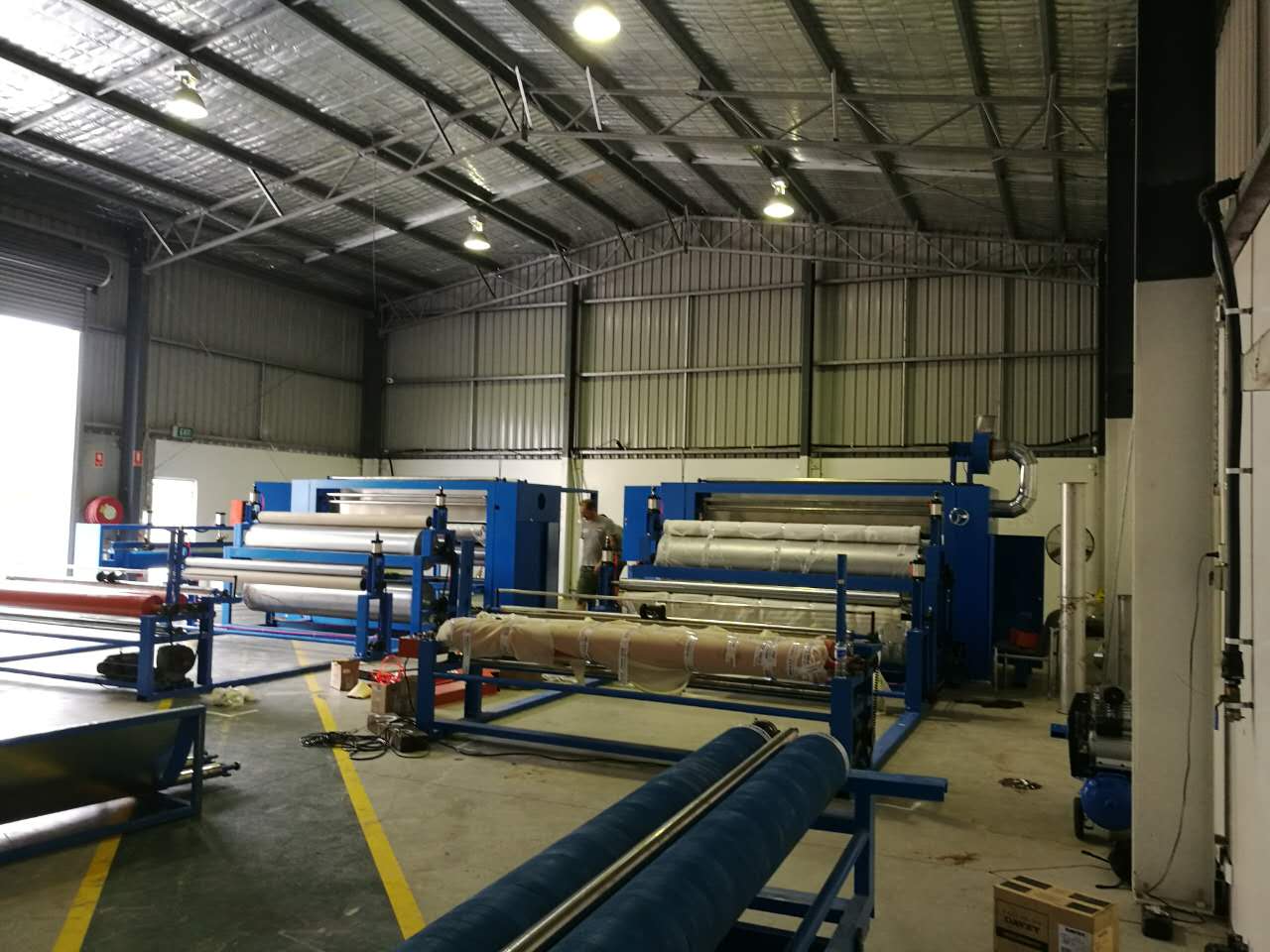
Flame lamination is applied when foam and fabric must be bonded without a separate adhesive layer.
Filter and Insulation Material Manufacturing
Filter manufacturing can require simultaneous glue spraying and powder scattering. The KT-SF includes six glue spraying systems and four powder scattering systems. Double belt press laminators such as the KT-HY-H are used in filter and insulation production because the long heating and cooling zones provide controlled consolidation.
Carpet Manufacturing
The KT-DS dot coating laminating machine applies adhesive in a dot pattern and operates at a working temperature of 80-100°C. This configuration suits carpet back-coating and similar flat materials.
Aviation Sound Insulation Panels
Flatbed and double belt press laminators have been cited as matched equipment for aircraft sound insulation panel production due to the need for flat heated zones and synchronized operation.
Ballistic and Composite Protection Products
Bulletproof vests, helmets, and plates require UD prepreg and impregnation lines. The KT-LH-1800 supports UD Aramid prepreg and UD prepreg impregnation with water-based adhesive, while the KT-YJ-1800 is configured for UHMWPE impregnation. The UD crossply machine then presses layers with a tonnage of 8000 kN.
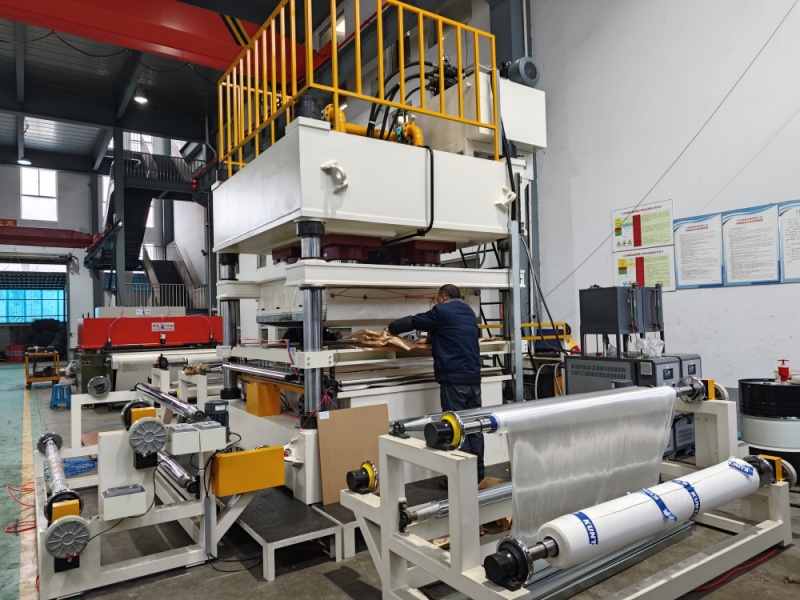
The UD crossply machine applies high pressure to build multi-angle ballistic laminates.
Comparison Table
| Machine model | Process | Intended application | Material width | Speed | Key heating / power |
|---|---|---|---|---|---|
| KT-PUR | PUR hot melt lamination | Fabric bonding | Max 2400 mm | 0-35 m/min | Electricity + thermal oil, 70 kW |
| KT-FT-XC | Hot melt coating lamination | Textile manufacturing | 1600-3200 mm | 0-35 m/min | Electricity + thermal oil, 105 kW |
| KT-PUR-1800 | Hot melt coating lamination | Safety shoes | Max 1800 mm | 0-35 m/min | Electricity + thermal oil, 60 kW |
| KT-PB | Flatbed lamination | Manufacturing | Max 1600 mm | 0-25 m/min | Electric, max 230°C, 230 kW |
| KT-HY-H | Double belt press lamination | Insulation, filter, automotive | Max 1600 mm | 0-25 m/min | Electric, max 250°C, 265 kW |
| KT-HY | Flame lamination | Automotive seats | 1600-3000 mm | Max 25 m/min | Natural gas or liquefied gas, 15 kW |
| KT-DS | Dot coating lamination | Carpet manufacturing | Coating width 1600-4500 mm | 5-20 m/min | Electric, 80-100°C working temp |
| KT-SF | Glue spraying + powder scattering | Filter manufacturing | 1600-2600 mm | 5-25 m/min | PUR / PSA hot melt glue, 155 kW |
| KT-LH-1800 | UD Aramid / UHMWPE prepreg | Vest, helmet, plate manufacturing | Up to 1650 mm | 5-11 m/min | Thermal oil, 90 kW |
| KT-YJ-1800 | UHMWPE impregnation | Vest, helmet, plate manufacturing | Up to 1650 mm | 5-11 m/min | Thermal oil, 90 kW |
| KT-LH-1800 | UD crossply pressing | Bulletproof vest manufacturing | Up to 1650 mm | Hydraulic press cycle | Thermal oil, 8000 kN, ~95 kW |
Machine parameters are based on published KUNTAI product specifications.
FAQ
1. What should I verify when evaluating a laminating machine supplier?
Check the supplier’s manufacturing background, product scope, and quality certificates. JIANGSU KUNTAI MACHINERY CO., LTD. was founded in 1983 and operates a 30,000 m² facility with about 210 employees. The company holds ISO9001 and CE certification, and its main products include laminating machines, cutting machines, bronzing and printing machines, spray and scattering equipment, and inspection machines. For textile machinery, the ISO 11111 series defines safety requirements for different machine types; buyers can ask whether the equipment is assessed against the relevant parts.
2. Which laminating machine types can a full-line supplier provide?
A full-line supplier can provide hot melt glue laminating machines, PUR laminating machines, flatbed laminating machines, double belt press laminators, flame laminating machines, glue spraying and powder scattering machines, dot coating laminating machines, UD prepreg machines, UHMWPE impregnation machines, and UD crossply machines. KUNTAI’s catalog includes these families under models such as KT-PUR, KT-FT-XC, KT-PB, KT-HY-H, KT-HY, KT-DS, KT-SF, KT-LH-1800, and KT-YJ-1800.
3. Can the same manufacturer support textile and ballistic composite lines?
Yes. KUNTAI supplies KT-PUR and KT-FT-XC for fabric bonding and textile manufacturing, respectively. For ballistic composite production, the KT-LH-1800 works as a UD Aramid prepreg machine or UD prepreg impregnation machine, while the KT-YJ-1800 is a UHMWPE impregnation machine. The same model family also includes the KT-LH-1800 UD crossply machine with a pressing tonnage of 8000 kN.
4. What should a laminating machine inquiry include?
An inquiry should include material width, substrate structure and weight, adhesive type, target line speed, heating method, and end-use industry. For example, the KT-PUR-1800 uses one gluing roller for 25 to 110 g/m² and is intended for safety shoe manufacturing. Clear specifications help the supplier match the machine configuration and prepare a more accurate quotation.
5. What is KUNTAI’s production and delivery capability?
KUNTAI’s annual production capacity is 650 units. The company states that it manufactures a number of machine parts in-house using CNC machining centers, drilling machines, polishing machines, and other raw material processing machines, which supports on-time delivery. For current lead time and sample scheduling, contact KUNTAI at Job@cnkuntai.com or +8618261228899.
Conclusion
Laminating machine selection should begin with the production process and end-use performance, not with a machine name. Textile bonding, carpet coating, filter laminating, automotive seat lamination, and ballistic composite impregnation each require a different equipment structure. Buyers who define the substrate, adhesive method, width, speed, heating profile, and quality requirements early will find it easier to compare suppliers and avoid production line mismatch.
KUNTAI is one example of a supplier that covers both textile and composite laminating lines. Its product range includes PUR hot melt laminators, flatbed and double belt presses, flame laminators, dot coating machines, powder scattering equipment, UD prepreg and impregnation lines, and crossply presses. The company’s production base in Yancheng, Jiangsu, provides a reference for buyers evaluating Chinese machinery manufacturers.
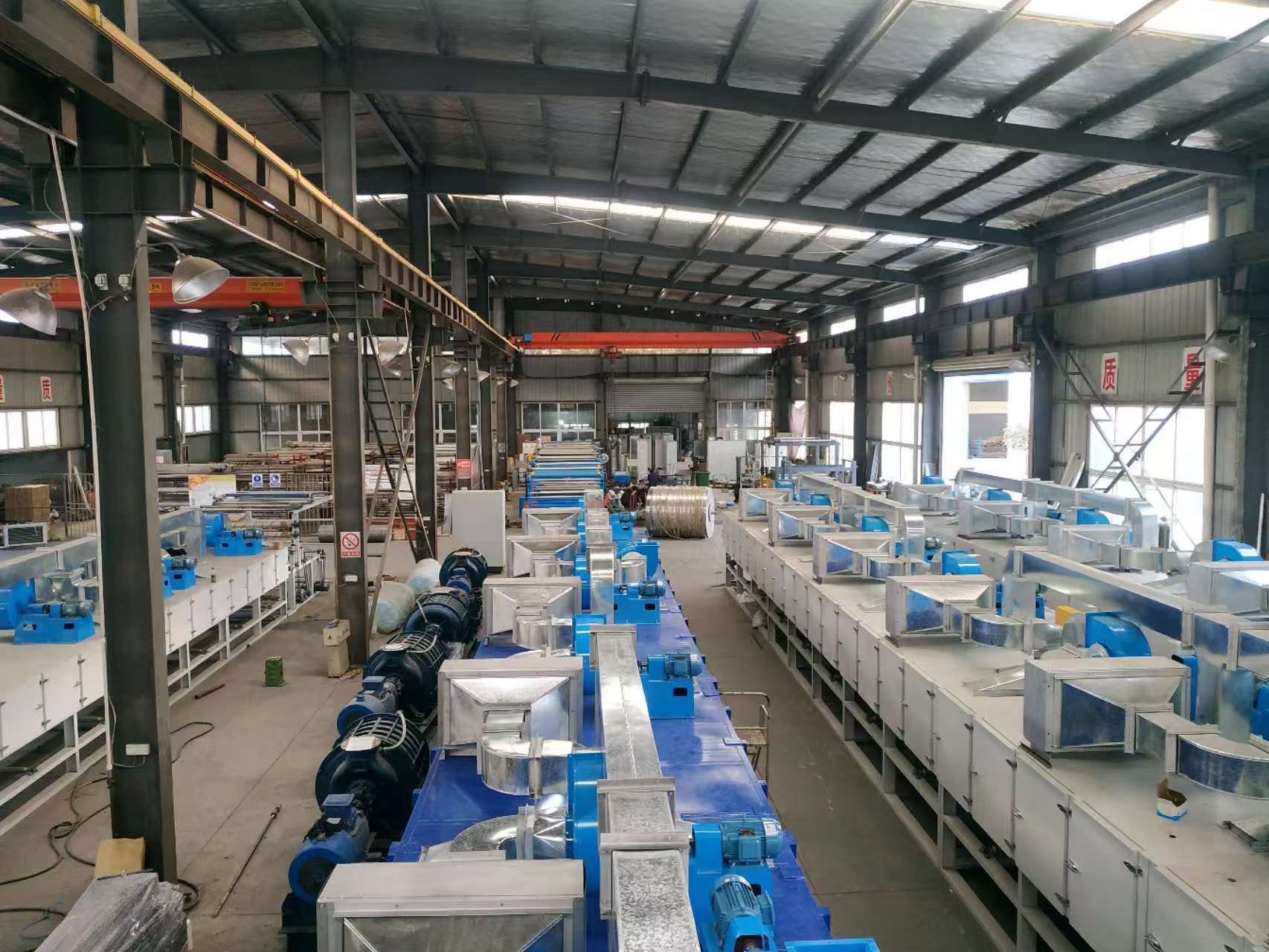
If you are evaluating a laminating machine for your product line, KUNTAI can help you compare models, review specifications, and plan a sample or quotation. Contact Job Lu at Job@cnkuntai.com, call or WhatsApp +8618261228899, or visit www.kuntai-group.com.