Construction Screws Comparison: Self-Tapping vs. Self-Drilling vs. Expansion Anchor Bolts
Self-tapping screws, self-drilling screws and expansion anchor bolts do not do the same job. A self-tapping screw forms or cuts its own thread in the material it enters. A self-drilling screw carries a drill point that bores its own hole in metal and then taps that hole. An expansion anchor bolt is set into a pre-drilled hole in concrete or masonry and holds by expanding against the wall of that hole. In a decision-stage comparison, the base material and the type of joint decide the category before price, coating or brand are discussed.
This guide compares the three categories on the criteria that actually change a purchase order: base-material fit, how holding force is created, hole preparation and installation, the standards that apply in different markets, the drivers behind cost differences, and the supplier checks to complete before ordering. Hexagon bolts and hexagon socket bolts are included as related options because they frequently appear in the same bill of materials as construction screws, even though they work differently.
Quick answer: match the category to the base material
The fastest reliable selection test is to name the material being fastened and the element the fastener must hold. If the answer is a board, panel or timber section, the choice is in the self-tapping family. If the answer is steel sheet, a steel stud or a steel-to-steel connection, the choice is a self-drilling screw. If the answer is concrete or masonry, the choice is an anchor, and among mechanical anchors the expansion anchor bolt is the common starting point.
- Gypsum board to wood or steel studs, furniture board, chipboard, general wood fastening: self-tapping screws, including the drywall, chipboard and wood screw variants used for those substrates.
- Steel studs, sheet steel, steel-to-steel connections, roofing panels fixed to purlins: self-drilling screws, where the drill point removes the separate drilling step inside the fastener's stated working range.
- Concrete or masonry anchorage such as base plates, brackets and equipment fixing: expansion anchor bolts set in a drilled hole.
- A bolted connection using a nut or a tapped hole: hexagon bolts or hexagon socket bolts — a threaded fastener family, not a thread-forming or expanding product.
A useful discipline: a self-tapping or self-drilling screw is not a substitute for an anchor in concrete, and an expansion anchor is not a substitute for a screw in a board-to-stud or steel-to-steel connection. Where the connection is load-bearing, the product must be qualified for that specific connection and base material, not merely described as "strong".
How each category creates holding force
Self-tapping screws: the thread is formed in the material
A self-tapping screw creates its own mating thread as it is driven. Holding force therefore depends on the screw thread geometry meeting a material that can accept and retain that thread — wood, particle board, chipboard, gypsum board, or thin sheet metal in self-piercing designs. Drywall screws belong to this family: ASTM C1002, the standard specification for steel self-piercing tapping screws, covers their use for applying gypsum panel products or metal plaster bases to wood studs or steel studs. Cross-recessed head tapping screws are dimensioned under ISO 7049, which gives buyers a shared reference for head and drive geometry when comparing offers.
Self-drilling screws: the screw drills its own hole in metal
A self-drilling screw has a drill point that drills, taps and fastens in one operation. That changes the installation sequence: the hole is created by the fastener rather than by a separate drill bit, so the drill-point geometry and screw length must match the steel thickness being joined. ASTM C954 specifies steel drill screws for applying gypsum panel products or metal plaster bases to steel studs from 0.033 in. (0.84 mm) to 0.112 in. (2.84 mm) in thickness — a clear example of how a self-drilling screw's usable range is bounded by the steel it enters, not by the screw's nominal diameter alone. DIN 7504 provides a widely referenced dimensional standard for self-drilling screws with tapping screw thread.
Expansion anchor bolts: the anchor expands in a drilled hole
An expansion anchor bolt transfers load through an expanding sleeve, wedge or segment that is tightened so that it presses against the wall of a drilled hole in concrete or masonry. Holding force comes from friction and mechanical interlock with the base material rather than from a thread cut into a board or sheet. The variables that matter are base-material strength and condition, hole diameter and depth, hole cleanliness, embedment depth and the setting torque specified by the anchor manufacturer. For setting torque, hole preparation and base-material limits, the anchor manufacturer's documentation is the controlling reference, not a generic product description.
Industry background: how these fasteners are classified and specified
Customs classification does not separate construction screw types
In the Harmonized System, heading 7318 covers screws, bolts, nuts, coach screws, screw hooks, rivets, cotters, cotter pins, washers and similar articles of iron or steel. Within that heading, US tariff lines separate wood screws (7318.12), self-tapping screws (7318.14) and other screws and bolts (7318.15). That structure matters to buyers doing landed-cost work: drywall, chipboard and roofing screws must be mapped to 7318.14 or 7318.15 depending on thread and point configuration, and that mapping should be confirmed through binding tariff information before it is used for duty planning. Public trade statistics also report heading 7318 as a basket, so a figure for "self-tapping screws" is not a figure for drywall screws alone.
For scale context only: the Observatory of Economic Complexity reports that global trade in self-tapping screws of iron or steel (HS 731814) reached USD 4.13 billion in 2024, a 0.72% decrease from 2023. Grand View Research valued the global structural wood screws market at USD 4.6 billion in 2024. These two figures cover different product scopes and different measurement methods — trade value versus market revenue — and should not be combined or compared directly. Neither figure substitutes for a construction-screw-only market size, which requires a narrower product boundary.
Standards differ by market and by application, not only by product name
Two parallel market-access routes are visible in the standards landscape. In the United States, ASTM C1002 and ASTM C954 address board attachment to wood or steel studs, while ASTM C1513 addresses steel tapping screws used for cold-formed steel framing connections — a structural-connection scope distinct from board attachment. In Europe, EN 14566 covers mechanical fasteners for gypsum plasterboard assemblies, and EN 14592 covers dowel-type fasteners in timber structures. Where a harmonised standard or a European Technical Assessment applies, Regulation (EU) No 305/2011 (the Construction Products Regulation) requires a Declaration of Performance and CE marking before the product is placed on the EU market. The ASTM and EN routes are separate systems with different test bases and should not be presented to a customer as interchangeable.
Specification also has three layers beyond the product name. Material and mechanical property class are referenced to ISO 898-1 for carbon and alloy steel (property classes such as 8.8 and 10.9) and to EN ISO 3506-1 for corrosion-resistant stainless steel grades such as A2 and A4. Coating and corrosion class are referenced to ISO 4042 for electroplated coating systems. Dimensional requirements sit in standards such as ISO 7049 and DIN 7504. Two offers described with the same product name can differ at any of these three layers, which is the main reason apparently identical screws are quoted at different prices.
Construction screws comparison table: self-tapping, self-drilling and expansion anchors
| Criterion | Self-tapping screws | Self-drilling screws | Expansion anchor bolts |
|---|---|---|---|
| Base material it is designed for | Wood, particle board and chipboard, gypsum board to wood or steel studs, thin sheet metal in self-piercing designs | Steel studs and sheet steel, including gypsum board to steel studs and steel-to-steel connections | Concrete and masonry, through a drilled hole |
| How holding force is created | A mating thread is formed or cut in the base material | The drill point bores its own hole; the thread then taps into the drilled metal | An expanding element is pressed against the wall of the drilled hole when tightened |
| Hole preparation | Depends on material and product; self-piercing types pierce thin sheet, other applications use a pilot hole | No separate drilling step within the fastener's stated steel-thickness range | The hole must be drilled, cleaned and sized to the anchor manufacturer's specification |
| Installation approach | Screwdriver or drill driver; driving torque controlled to avoid stripping the thread or damaging the board | Drill driver with sufficient torque to drill and seat; point type and length matched to steel thickness | Drill plus a torque-controlled setting step, following the anchor manufacturer's installation instructions |
| Typical construction use | Drywall and wall panel installation, furniture and chipboard assembly, general wood fastening | Drywall to steel studs, light-gauge steel framing connections, roofing panels to purlins | Base plates, brackets, equipment and structural anchorage into concrete or masonry |
| Standard references in the evidence used here | ASTM C1002 (gypsum panel or plaster base to wood or steel studs); ASTM C1513 (cold-formed steel framing connections); ISO 7049 (dimensional) | ASTM C954 (gypsum panel to steel studs, 0.84 mm to 2.84 mm); DIN 7504 (dimensional); product-specific evaluation reports such as ICC-ES ESR-3332 for a specific structural self-drilling screw | No anchor standard is included in the evidence used for this guide; the anchor manufacturer's documented approval for the specific base material and loading must be requested |
| Main limitation to check | Not suitable for concrete or masonry anchorage; requires a material that can retain a formed thread | Usable range is bounded by steel thickness and drill-point type; not an anchor | Not a board-to-stud or steel-to-steel fastener; capacity depends on base material, hole quality and installation torque |
The evaluation-report point deserves emphasis. ICC-ES ESR-3332 references self-drilling structural screws, installation instructions, connected-steel requirements and acceptance criteria AC118 for tapping screw fasteners used in steel-to-steel connections. It is a product-specific evaluation for that product, and it does not establish that any other manufacturer's self-drilling screw holds the same evaluation. A supplier's structural claim should be checked against its own report, its own tested product and its own installation instructions.
Related options: hexagon bolts and hexagon socket bolts
Hexagon bolts and hexagon socket bolts are threaded fasteners that are tightened against a nut or into a tapped hole. They do not form their own thread in wood or gypsum board, and they do not expand in a drilled hole, so they sit beside the three categories above rather than inside them. They are usually specified where the connection is designed as a bolted joint.
| Point of comparison | Hexagon bolts | Hexagon socket bolts |
|---|---|---|
| How it is driven | External hexagon head, turned with a spanner or socket | Internal hexagon socket in the head, turned with a hex key or socket bit |
| How it holds | Clamped against a nut or a tapped hole; no thread formed in the workpiece and no expansion | Same principle, with the driving feature recessed inside the head |
| Property class reference | ISO 898-1 property classes such as 8.8 and 10.9 for carbon and alloy steel | The same property-class system applies to carbon and alloy steel bolts and screws |
| Typical role in construction | Bolted steel connections and assemblies where a nut or tapped hole is part of the design | Applications where the drive must sit inside the head, for example restricted tool access |
| What to confirm before ordering | Property class, thread, length, coating and the connection design | The same, plus head clearance and the tooling needed to reach the socket |
Step-by-step selection: from base material to purchase order
Working through five steps in order prevents the most common comparison error, which is choosing a category by product name and then discovering the base material does not match.
- Identify the base material and its thickness or grade. Board, timber, particle board, chipboard, gypsum panel, steel sheet, steel stud, concrete or masonry. For steel, record the thickness, because self-drilling screws and the relevant specification are bounded by it. For concrete or masonry, record the strength and condition of the base material, since anchor behaviour depends on it.
- Classify the joint. Board attachment, timber-to-timber fastening, steel-to-steel connection, or anchorage into concrete or masonry. This single classification eliminates one or two categories immediately.
- Decide whether the connection is structural. A cold-formed steel framing connection falls under a different specification scope (ASTM C1513) from board attachment (ASTM C1002, ASTM C954). Where the connection carries structural load, the correct reference is a product evaluation or test documentation for that specific product and connection — not a general strength description.
- Write the three-part specification. Material and property class (ISO 898-1 for carbon and alloy steel, EN ISO 3506-1 for stainless grades such as A2 and A4), coating and corrosion class (ISO 4042 for electroplated systems, or another coating route), and dimensional and head/drive reference (ISO 7049, DIN 7504, or the drawing). A quotation without all three layers is not yet comparable with another quotation.
- Confirm the market-access route and then the commercial terms. ASTM-based documentation for the US route, EN-based documentation plus a Declaration of Performance and CE marking where the Construction Products Regulation applies for the EU route. After that: minimum order quantity, packaging, documents, payment terms and lead time.
Application use cases
Drywall screws and chipboard screws: the fine-thread and sharp-thread distinction
Within the self-tapping family, thread form is the variable that decides between two common board applications. Drywall screws use a fine thread suited to gypsum board, with less risk of board cracking and faster driving speed in gypsum board installation; they are the appropriate choice for gypsum drywall and wall panel installation, and their cost position is slightly lower for gypsum board projects. Chipboard screws use a sharp thread with better gripping force on particle board, giving higher pull-out resistance for particle board, chipboard and furniture assembly; their cost position is slightly higher for furniture board fastening. Both require no special maintenance in normal use. The practical implication is that a fine-thread drywall screw and a sharp-thread chipboard screw should not be treated as interchangeable stock, even when both are labelled construction screws.
Construction screws for steel framing and roofing
Steel applications call for a self-drilling screw whose point type, length and thread match the steel thickness, and — where the connection is a framing connection rather than board attachment — documentation appropriate to that connection scope. Roofing screws are commonly supplied as a self-drilling variant with a sealing washer; because the specific point type, washer and coating vary by product, those three attributes should be confirmed in writing on the quotation rather than assumed from the product name.
Concrete and masonry anchorage
Concrete and masonry fixing sits outside the screw categories. Expansion anchor bolts are the mechanical option, and the buying questions change accordingly: base-material strength and condition, hole diameter and depth, hole cleaning, embedment and setting torque, plus the anchor manufacturer's documented approval for the loading case. A screw selected for a board application cannot be reclassified as an anchor, and an anchor cannot replace a board fastener.
Cost and value: compare only offers that are actually comparable
Price comparison across these three categories is usually misleading at the unit-price level, because the installed cost is driven by different things in each case. For a screw, the specification layers described earlier — material grade, coating and corrosion class, dimensional standard and head or drive type — account for most of the dispersion between offers that carry the same product name. For an anchor, the addition of drilling, hole cleaning and torque-controlled setting is part of the installed cost, and a lower-priced anchor that requires more careful installation is not necessarily cheaper in place. Across all three, the cost of a wrong selection is rework: stripped threads in board, a drill point that does not match the steel, or an anchor that was never qualified for the base material.
Documentation is a cost line that buyers often discover late. Testing, evaluation and declaration requirements differ by destination market, and a single specification cannot normally be marketed identically in both the ASTM and EN systems. Fixing the destination market before quotation avoids paying for documentation that the project does not need. Within the self-tapping family, the supplied comparison data shows only relative cost positions — slightly lower for fine-thread drywall screws on gypsum board projects, slightly higher for sharp-thread chipboard screws on furniture board fastening. Those are relative statements between two product types, not published price levels, and should not be converted into absolute prices.
Supplier checks before ordering: design support, OEM and after-sales
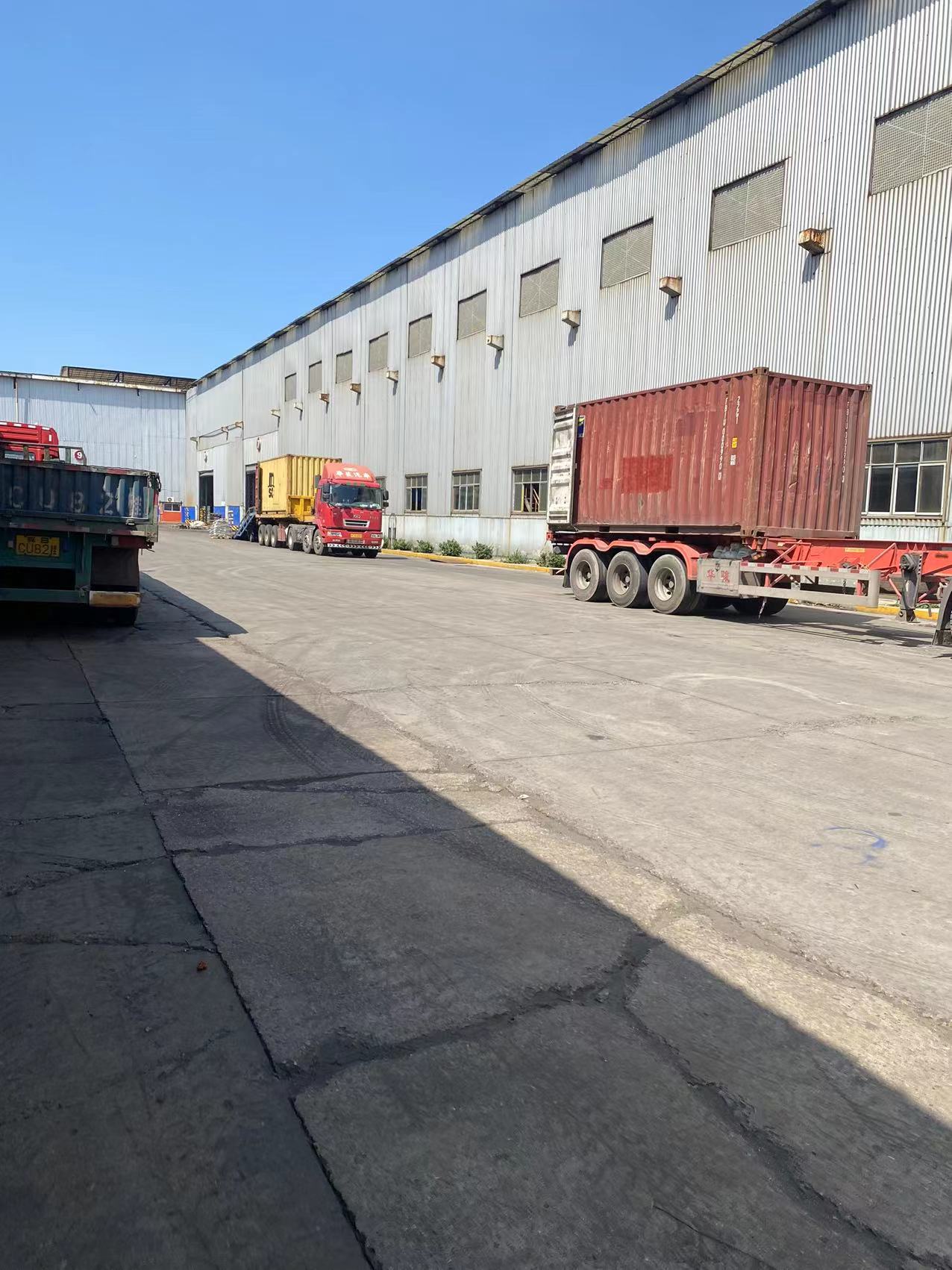
The supplier side of the decision is about whether the specification can be met repeatedly, documented, and supported after delivery. Tangshan Jiayuan Metalwork Co., Ltd. (JIAYUAN Construction Screws) is a hardware fastener manufacturer whose documented product range covers wire mesh, common nails, drywall screws, wood screws, chipboard screws, drilling screws and tapping screws. Its published company profile states a 4,000 m² factory, 50 employees, an R&D team of 15 engineers, an annual output of 50,000 tons and an export ratio of 90%, with main markets including Kuwait, Saudi Arabia, Palestine, Israel, Senegal, Mali, Gambia, Mauritius, Chile, Brazil, Ecuador, Iran, Libya, Liberia, Kenya, Tanzania and Mozambique. The company's published product description also references 45# high carbon steel for its construction screws; the property class, coating and dimensional standard should still be written into the order specification rather than inferred from the material description alone.
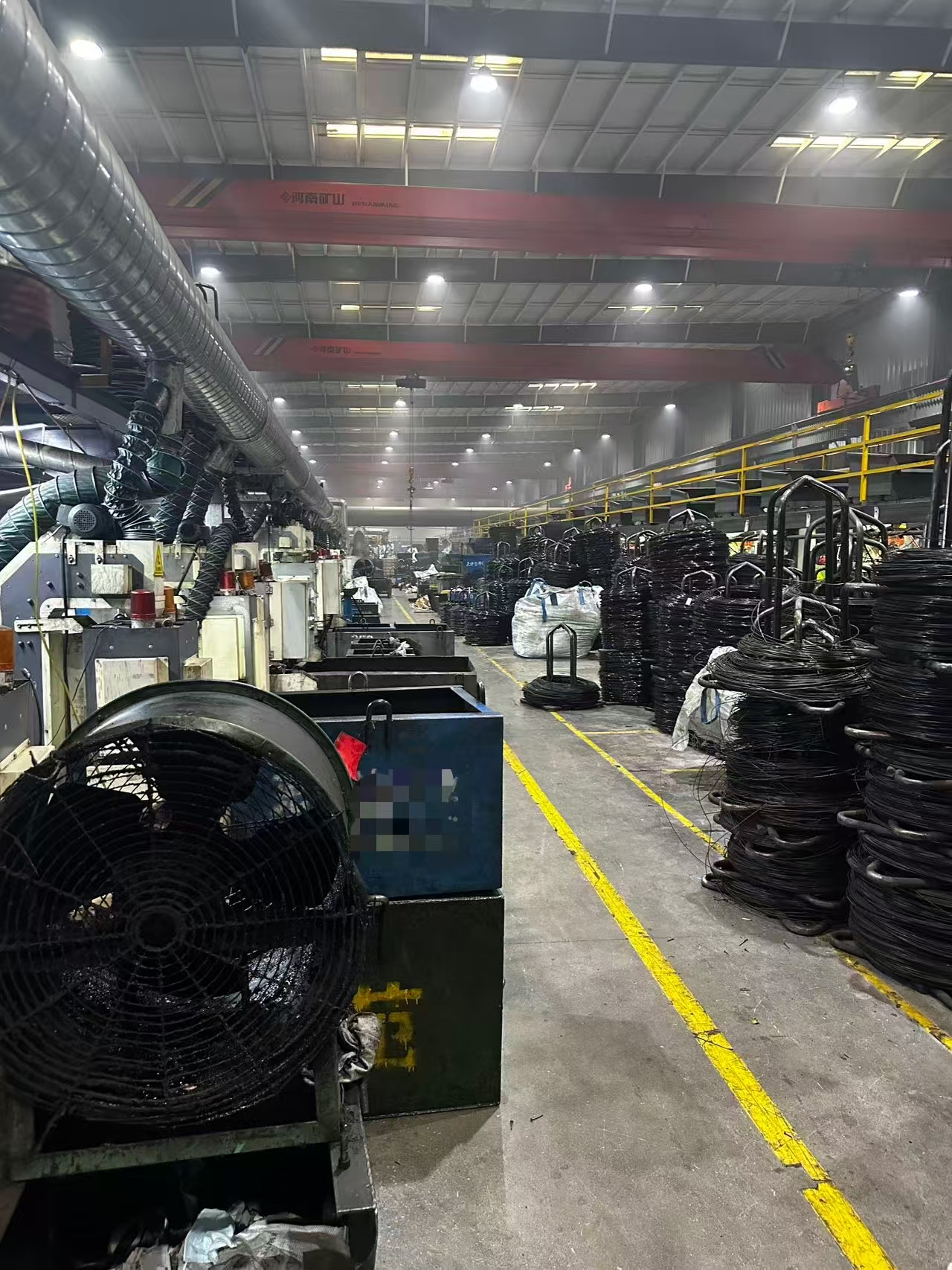
Three checks are worth completing before an order is placed. First, application-specific design support: whether the supplier can review the base material, thickness, load case and environment and return a drawing or a written recommendation for type, size and coating. Second, OEM or private-label availability: whether logo printing and private-label packaging are supported, and what the packaging route looks like — small boxes, plastic bags or bulk cartons on fumigation-free pallets, with brand or barcode labels where required. Third, after-sales service: whether technical consultation, order tracking and a defined response route for quality concerns exist after shipment, and which documents — CE, SGS, ISO9001 or material test reports — can be issued for the specific product and market.
One scope note matters for this comparison. The documented JIAYUAN product range covers drywall, wood, chipboard, drilling and tapping screws; expansion anchor bolts and hexagon bolts are not listed among those ranges. If a project bill of materials includes anchors or bolted connections, that requirement should be confirmed directly with the supplier rather than assumed from the screw range. Within the screw range, quality control is described as a full-process system from incoming raw material inspection and in-process patrol inspection to finished-product random sampling and pre-shipment recheck, with every batch tested for tensile strength, torque and surface coating thickness. Where a strength claim is material to the decision, request the test report and check that the method, the tested product and the tested size are all named — AISI S904, for example, is identified by ICC-ES as a standard test method for determining the tensile and shear strength of screws.
Frequently asked questions
Do your fasteners have certificates?
CE, SGS, ISO9001 and material test reports can be provided on request, according to the supplier. Because a certificate or report applies to a specific product, standard and market, the request should name the screw type, size, coating and destination market; a document issued for one product family does not automatically cover another.
What surface treatments are available?
Available coatings include zinc plating, black oxide, galvanized, hot-dip zinc, phosphate and color painting, selected according to the application and the required corrosion resistance. The chosen coating should be written into the purchase order with its corrosion class reference so that two quotations can be compared on the same basis.
Can you design fasteners based on our application needs?
Yes — the technical team provides engineering support and drawing services to help select the fastener type, size and coating. To make that support useful, supply the base material and thickness, the joint type, whether the connection is structural, the service environment and the expected order quantity.
Do you provide OEM or private label packaging?
Yes. OEM logo printing and private-label packaging are supported so that buyers can build their own brand in local markets, subject to the packaging specification agreed for the order.
How do you pack the goods?
Fasteners are packed in small boxes, plastic bags or bulk cartons, then stacked on fumigation-free pallets. Custom packaging with the buyer's brand or barcode label is available on request, and the packaging format should be confirmed alongside the price because it affects handling and freight.
How do you ensure the quality of your products?
Quality control covers material inspection, in-process testing and final product inspection, with every batch tested for tensile strength, torque and surface coating thickness before delivery. The company also describes a QC team of 15 inspectors and customized inspection criteria formulated for different export markets, covering incoming material inspection through pre-shipment recheck.
What is your minimum order quantity (MOQ)?
The standard MOQ is usually 100,000 pieces per size. For trial orders or mixed items, flexible solutions are offered to support new customers and distributors, so a mixed-size trial order should be raised explicitly at the enquiry stage rather than assumed.
What payment terms do you accept?
T/T with 30% deposit and 70% before shipment is the main payment method. For long-term customers, L/C at sight or OA terms can be discussed, and the agreed terms should be stated in the sales contract.
What is your delivery time?
Production generally takes 25–35 days after receipt of the deposit. For stock items, shipment can be arranged within 7 days. Lead time should be confirmed against the specific sizes and coating at the time of order, since non-standard specifications follow the tooling and production check.
Do you offer after-sales service?
Yes — after-sales support includes technical consultation, product tracking and a quick response to quality concerns. A practical next step is to send the application details (base material, screw type or anchor requirement, sizes, coating and quantity) so the specification can be matched before a quotation is issued; the downloadable JIAYUAN nails and screws catalogue lists the current product ranges for that first review.
Conclusion
The comparison resolves into a short decision path. Name the base material, classify the joint, and decide whether the connection is structural; those three answers select self-tapping screws, self-drilling screws or expansion anchor bolts, with hexagon bolts and hexagon socket bolts reserved for bolted connections. After the category is fixed, the comparison shifts to specification layers — material and property class, coating and corrosion class, dimensional and drive reference — followed by the market-access route and the supplier checks on design support, OEM or private-label packaging and after-sales service. Comparing offers on those terms is what makes a construction screw quotation genuinely comparable.
Have Questions or Need More Details?
Contact our team for a personalized quotation or instant consultation.
Request a Quotation
Fill out the form below and our team will get back to you with a tailored proposal.
WhatsApp Direct Chat
Prefer to chat in real-time? Message us on WhatsApp for instant assistance & quick answers.
- Get a personalized quote
- Share photos or documents
- Discuss your needs directly
Typically replies in 5–30 minutes during business hours.