Self-Tapping vs. Self-Drilling vs. Expansion Anchor Bolts: Buyer Guide
Self-Tapping vs. Self-Drilling vs. Expansion Anchor Bolts: A Buyer's Comparison Guide
Self-tapping screws, self-drilling screws and expansion anchor bolts are three different fixing methods, not three grades of one product. A self-tapping screw forms or cuts a thread in the material it enters. A self-drilling screw opens its own hole with a drill point, then taps and fastens in the same pass. An expansion anchor bolt is set into a drilled hole in concrete or masonry and holds by expanding against the wall of that hole. Zinc-plated self-drilling screws are not a fourth fixing method: zinc plating is a coating specification applied to a self-drilling screw.
For a buyer at decision stage, the useful question is not which family is best in general. It is which family can develop a reliable fixing in the substrate in front of you, with the coating and documentation your destination market requires, at a specification level you can compare across quotations. This guide builds that decision path, then shows where a manufacturer such as JIAYUAN Construction Screws fits into it — and which details still have to be confirmed in writing before an order.
Why screw-type comparisons usually go wrong
Most mismatches in construction fastener procurement come from four comparison errors rather than from bad products.
1. The substrate is not fixed before the product is chosen. A screw that works in gypsum board attached to a steel stud is not automatically the right screw for particle board, for a cold-formed steel framing connection, or for a concrete base. The substrate decides which family is even eligible.
2. Hole creation is treated as a product feature instead of a process cost. Whether the fastener needs a prepared hole, a pierced hole, or drills its own hole changes installation time, tooling and error rates on site. Two screws with similar dimensions can require different site processes.
3. Coating is read as part of the product name. "Zinc-plated" describes a coating system, not a thread geometry or a strength level. Comparing a zinc-plated self-drilling screw against an uncoated one is a coating comparison; comparing it against a self-tapping screw is a fixing-method comparison. Mixing the two produces meaningless price gaps.
4. Standards are quoted without their application scope. A specification such as ASTM C954 or ASTM C1002 is written for a defined substrate and assembly, not as a general performance badge. Quoting the number without the scope turns a precise document into a vague claim.
Industry background: classification and market-access layers
Construction screws sit inside a classification system that is broader than the category itself, and buyers who work with tariff or compliance data need to know where the boundaries are.
At international level, heading HS 7318 covers screws, bolts, nuts, coach screws, screw hooks, rivets, cotters, cotter pins, washers and similar articles of iron or steel. Within the US Harmonized Tariff Schedule, 7318.12 covers wood screws, 7318.14 covers self-tapping screws, and 7318.15 covers other screws and bolts. Drywall, chipboard and roofing screws have to be mapped to 7318.14 or 7318.15 depending on their thread and point configuration, and that mapping is a trade-practice interpretation that should be confirmed against binding tariff information before it is used for duty planning.
The same breadth applies to trade statistics. According to OEC data derived from UN Comtrade, global trade of screws, self-tapping, of iron or steel (HS 7318.14) reached USD 4.13 billion in 2024, a 0.72% decrease from 2023. Grand View Research valued the global structural wood screws market at USD 4.6 billion in 2024 — a narrower scope than construction screws as a whole, and not a substitute for a construction-screw-only market figure.
On the technical side, two market-access routes dominate published standards. The US route is anchored in ASTM C1002 for steel self-piercing tapping screws used to attach gypsum panel products or metal plaster bases to wood or steel studs, ASTM C954 for steel drill screws used for the same board attachment to steel studs within a stated thickness range, and ASTM C1513 for steel tapping screws used in cold-formed steel framing connections. The European route is anchored in EN 14566 for mechanical fasteners in gypsum plasterboard assemblies and EN 14592 for dowel-type fasteners in timber structures, operating alongside Regulation (EU) No 305/2011, under which construction products covered by a harmonised standard or a European Technical Assessment require a Declaration of Performance and CE marking before being placed on the EU market.
The five variables that actually decide the choice
1. Substrate and substrate thickness
The base material decides eligibility. Gypsum board over a steel stud, gypsum board over a wood stud, particle board or MDF, solid timber, light-gauge steel framing and concrete or masonry each accept a different family. Thickness matters as much as material type: ASTM C954 is written for steel studs from 0.033 in. (0.84 mm) to 0.112 in. (2.84 mm) in thickness, so the thickness range is part of the specification rather than a footnote.
2. How the hole is created
Thread-forming screws make their own thread in the material. Self-drilling screws go one step further and open the hole before tapping it. Anchors require a drilled hole of a defined size in the base material. This variable drives on-site labour, tooling and the risk of installation error, and it is often the real reason one family is chosen over another on a project.
3. Whether the joint is a connection or an attachment
A cold-formed steel framing connection carries different expectations from a board attachment or a tie-down point. ASTM C1513 addresses screws for cold-formed steel framing connections, while ASTM C1002 and C954 address board attachment. Treating a connection-grade requirement as a board-fastening requirement — or the reverse — is a specification error that price cannot correct.
4. Corrosion environment and coating class
Coating is specified separately from geometry. ISO 4042 defines electroplated coating systems for fasteners, including corrosion classes, and it is the reference a buyer should quote instead of the word "zinc". On the supply side, JIAYUAN states that it offers zinc plating, black oxide, galvanized, hot-dip zinc, phosphate and colour painting, depending on the application and corrosion-resistance need — so the coating has to be named as a value, not assumed from the screw type.
5. Material grade and dimensional standard
Two specification systems define what "high strength" or "stainless" means. ISO 898-1 sets the property-class system (for example 8.8 or 10.9) for carbon steel and alloy steel screws and bolts. EN ISO 3506-1 sets the steel grades (such as A2 and A4) and property classes used for corrosion-resistant stainless steel screws. Dimensionally, ISO 7049 standardises cross-recessed head tapping screws and DIN 7504 standardises self-drilling screws with tapping screw thread. JIAYUAN describes its construction screws as made from 45# high carbon steel, a company-stated material description that a buyer should match against the property class required in the RFQ.
The four families compared
Self-tapping screws
A self-tapping screw forms or cuts its own thread as it is driven. The family covers more than one behaviour: ASTM C1002 deals with steel self-piercing tapping screws that pierce and attach gypsum panel products or metal plaster bases to wood or steel studs, while ASTM C1513 deals with steel tapping screws for cold-formed steel framing connections. Both are self-tapping in the general sense, but they serve different assemblies. In procurement terms, self-tapping screws are the broadest category and the one most likely to be mis-specified, because "self-tapping" describes a thread behaviour rather than a single application.
Self-drilling screws
A self-drilling screw carries a drill point that opens the hole; the thread then taps and fastens in the same operation. This removes a separate drilling step, which is why the family is common where access is one-sided or where installation speed matters. The specification boundary matters more than the marketing description: ASTM C954 covers steel drill screws for attaching gypsum panel products or metal plaster bases to steel studs in the 0.84 mm to 2.84 mm range, and DIN 7504 provides a dimensional reference for self-drilling screws with tapping screw thread. Outside the stated substrate and thickness, the same screw design is not automatically covered.
Zinc-plated self-drilling screws
This is a self-drilling screw with an electroplated zinc coating. Its drilling behaviour is unchanged; what changes is corrosion protection, and therefore the environments in which it is appropriate. Because ISO 4042 expresses coating systems in corrosion classes, the buyer's job is to state the class and the service environment rather than to accept "zinc-plated" as a complete description. Where a project mixes coated and uncoated stock, the coating difference alone can explain a price gap that looks like a supplier markup.
Expansion anchor bolt and eye-loop expansion anchor bolt set
An expansion anchor develops its hold mechanically. A hole is drilled in concrete or masonry, the anchor is inserted, and as the bolt or nut is tightened a sleeve or wedge is drawn against the wall of the hole so that the load transfers into the base material through friction and bearing. The eye-loop version replaces the bolt head with a ring, so the same fixing also provides an attachment point for a cable, chain, guy line or tie-down.
This family is not interchangeable with any screw family. A screw thread needs a material it can form or cut into; an expansion anchor needs a base material it can expand against. Its selection variables — base material, drilled hole size, embedment and the load the fixing must carry — are project inputs rather than catalogue defaults, and they should be confirmed in writing with the supplier before ordering. Because an anchor set is supplied as a unit with its own accessories, comparing it with a screw on price per piece does not produce a meaningful number.
Step-by-step selection sequence
- Name the substrate and its thickness. Gypsum board, particle board or MDF, solid timber, light-gauge steel, concrete or masonry. Add the thickness of the member being fixed into, because standards such as ASTM C954 are bounded by thickness.
- Decide whether the fastener must open its own hole. If the site process allows a prepared hole and the substrate calls for a thread-forming screw, self-tapping is eligible. If one-pass installation is required through light-gauge steel, a self-drilling screw is the candidate.
- Classify the joint as a connection or an attachment. Connection-grade work points to the framing-connection standard; board attachment points to the board-attachment standards. This step protects the project from an under-specified purchase.
- Define the corrosion requirement before the coating. State the service environment, then select the coating class under ISO 4042. Only then does "zinc-plated" become a comparable value.
- Fix the specification references. Material and property class (ISO 898-1 for carbon steel, EN ISO 3506-1 for A2/A4 stainless), dimensions (ISO 7049 or DIN 7504), coating (ISO 4042), and the application standard for the destination market.
- Normalise the RFQ before comparing prices. Put type, dimensions, material grade, coating class, packaging, quantity and delivery requirement on one sheet so that each quotation describes the same product.
Buyer selection checklist
- Substrate and thickness identified, including the member being fixed into
- Hole-creation method agreed with the installation team
- Joint class stated: connection or attachment
- Corrosion environment described and coating class quoted to ISO 4042
- Material grade quoted as a property class or stainless grade, not as "high strength"
- Dimensional standard named (ISO 7049 or DIN 7504)
- Destination-market standard named with its application scope
- Packaging, quantity and delivery requirement written in the same document
- Anchor requirements issued as project inputs, not assumed from a screw catalogue
Application scenarios: which family fits which job
Gypsum board to wood or steel studs. This is the classic board-attachment case. Self-piercing tapping screws fall under ASTM C1002; steel drill screws for steel studs within the 0.84–2.84 mm range fall under ASTM C954. The substrate on the far side of the board — wood or steel — is what separates the two.
Particle board, chipboard, MDF and furniture assembly. Here the thread shape matters more than the drilling point. JIAYUAN's own product comparison notes describe the sharp-thread screw as giving better gripping force on particle board with higher pull-out resistance, best suited to particle board, chipboard and furniture assembly, and note a slightly higher cost for furniture-board fastening. That is a thread-and-application distinction, not a coating distinction.
Gypsum board in high-volume drywall work. The same comparison notes describe the fine-thread screw as ideal for gypsum board with less risk of board cracking, faster driving speed on gypsum board installation, and slightly lower cost for gypsum board projects. The cost difference between the two families, in other words, follows the application rather than the brand.
Cold-formed steel framing connections. ASTM C1513 is the reference point. This is connection work, not board attachment, and the specification should be issued accordingly.
Wood-to-wood and timber structures. Wood screws are classified under HS 7318.12 for tariff purposes, separate from self-tapping screws at 7318.14. In Europe, dowel-type fasteners used in load-bearing timber structures fall under EN 14592, and structural screws additionally follow a European Technical Assessment route.
Corrosive or exposed service. Stainless steel construction screws are specified through EN ISO 3506-1 grades such as A2 and A4. Where carbon steel is retained, the coating class under ISO 4042 carries the corrosion decision.
Concrete and masonry anchoring. An expansion anchor bolt or eye-loop set is the family here, with base material, hole size and embedment confirmed per project.
Comparison table
| Family | How the fixing is formed | Substrate it suits | Main constraint to check | Reference points |
|---|---|---|---|---|
| Self-tapping screws | Thread is formed or cut by the screw; self-piercing types pierce thin sheet and board | Gypsum panel to wood or steel studs; cold-formed steel framing connections | Application scope differs between board attachment and framing connections | ASTM C1002; ASTM C1513; ISO 7049; HS 7318.14 |
| Self-drilling screws | Drill point opens the hole; thread taps and fastens in one pass | Gypsum panel or metal plaster base to steel studs within a stated thickness range; light-gauge steel | Performance is bounded by stud thickness and by the assembly the standard covers | ASTM C954 (0.84–2.84 mm); DIN 7504; tariff line to be confirmed between 7318.14 and 7318.15 |
| Zinc-plated self-drilling screws | Same as self-drilling; an electroplated zinc coating is applied | Self-drilling applications where a corrosion class is specified | Plating is a coating class, not a drilling or strength property; the class must be stated | ISO 4042; coating options include zinc plating, black oxide, galvanized, hot-dip zinc, phosphate, colour painting |
| Expansion anchor bolt / eye-loop set | Drilled hole; sleeve or wedge expands against the hole wall when tightened | Concrete and masonry | Depends on base material, hole size, embedment and load — project inputs, confirmed with the supplier | Anchor specification and documentation to be confirmed per project |
| Axis | Reference | What the buyer states |
|---|---|---|
| Material and property class | ISO 898-1 (carbon steel); EN ISO 3506-1 (A2/A4 stainless) | Grade or property class, plus the material description |
| Coating and corrosion class | ISO 4042 | Coating system and corrosion class, not the word "zinc" |
| Dimensions | ISO 7049; DIN 7504 | Dimensional standard, diameter and length |
| Application standard | ASTM C1002, C954, C1513; EN 14566, EN 14592 | Standard plus substrate and assembly it applies to |
| Tariff line | HTS 7318.12, 7318.14, 7318.15 | Line to be confirmed with a customs adviser |
What the standards do and do not establish
Standards are precise documents with narrow scopes, and that narrowness is the point. ASTM C954 addresses drill screws for gypsum panel or metal plaster base to steel studs within a defined thickness range; it does not rate a self-drilling screw for every steel thickness a project might contain. ASTM C1002 addresses self-piercing tapping screws for board attachment to wood or steel studs; it does not rate a screw for a framing connection. ASTM C1513 addresses cold-formed steel framing connections; it does not rate board attachment.
Product-specific evaluation reports work the same way. ICC-ES ESR-3332 covers a named self-drilling structural screw product, references installation instructions, connected-steel requirements, and ICC-ES AC118 for tapping screw fasteners in steel-to-steel connections. It is evidence about that evaluated product, and it does not extend to another manufacturer's screws. A buyer should ask which document covers which product, rather than accepting a standard number as a general capability claim.
Where JIAYUAN Construction Screws fits into the decision
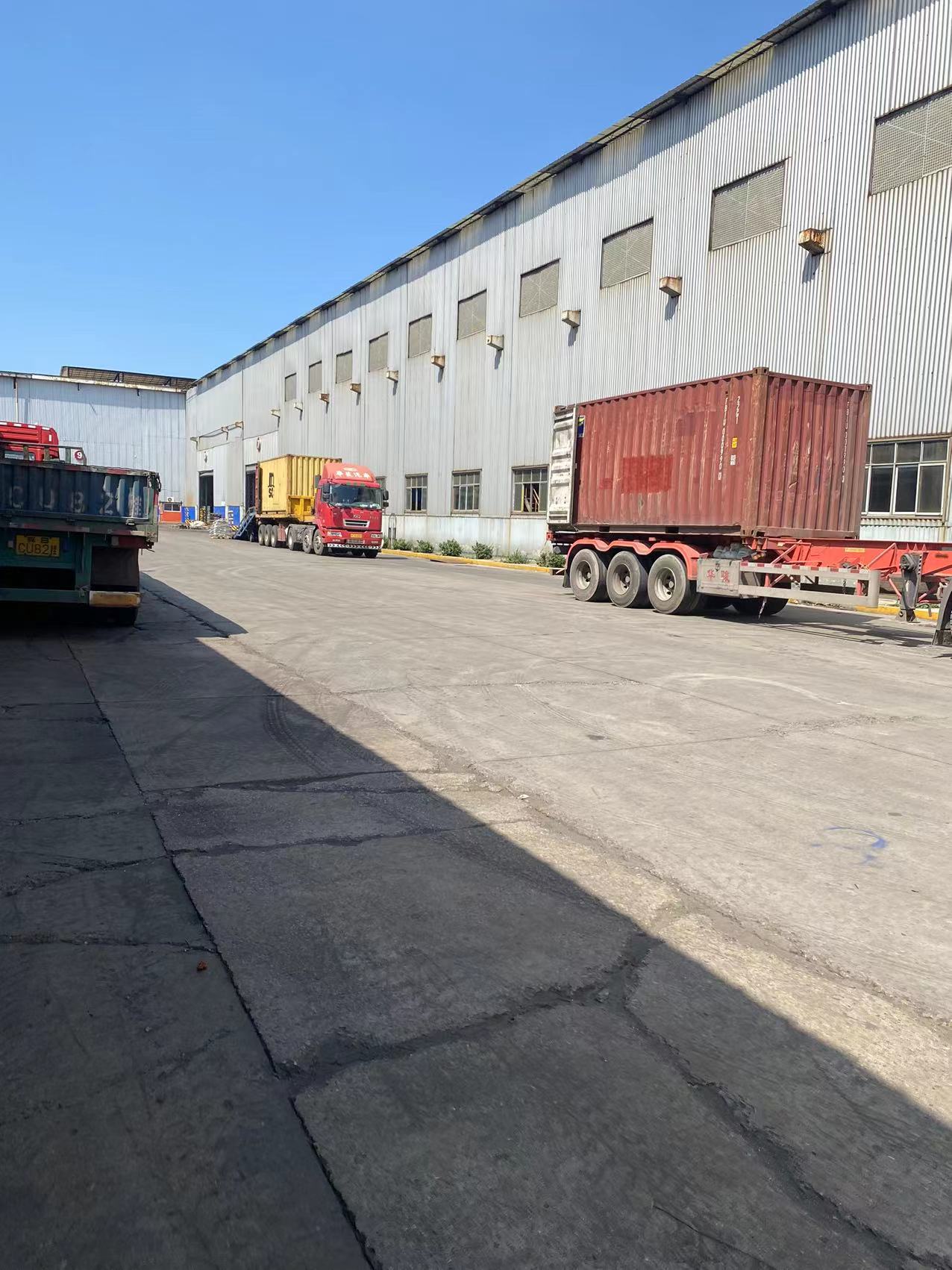
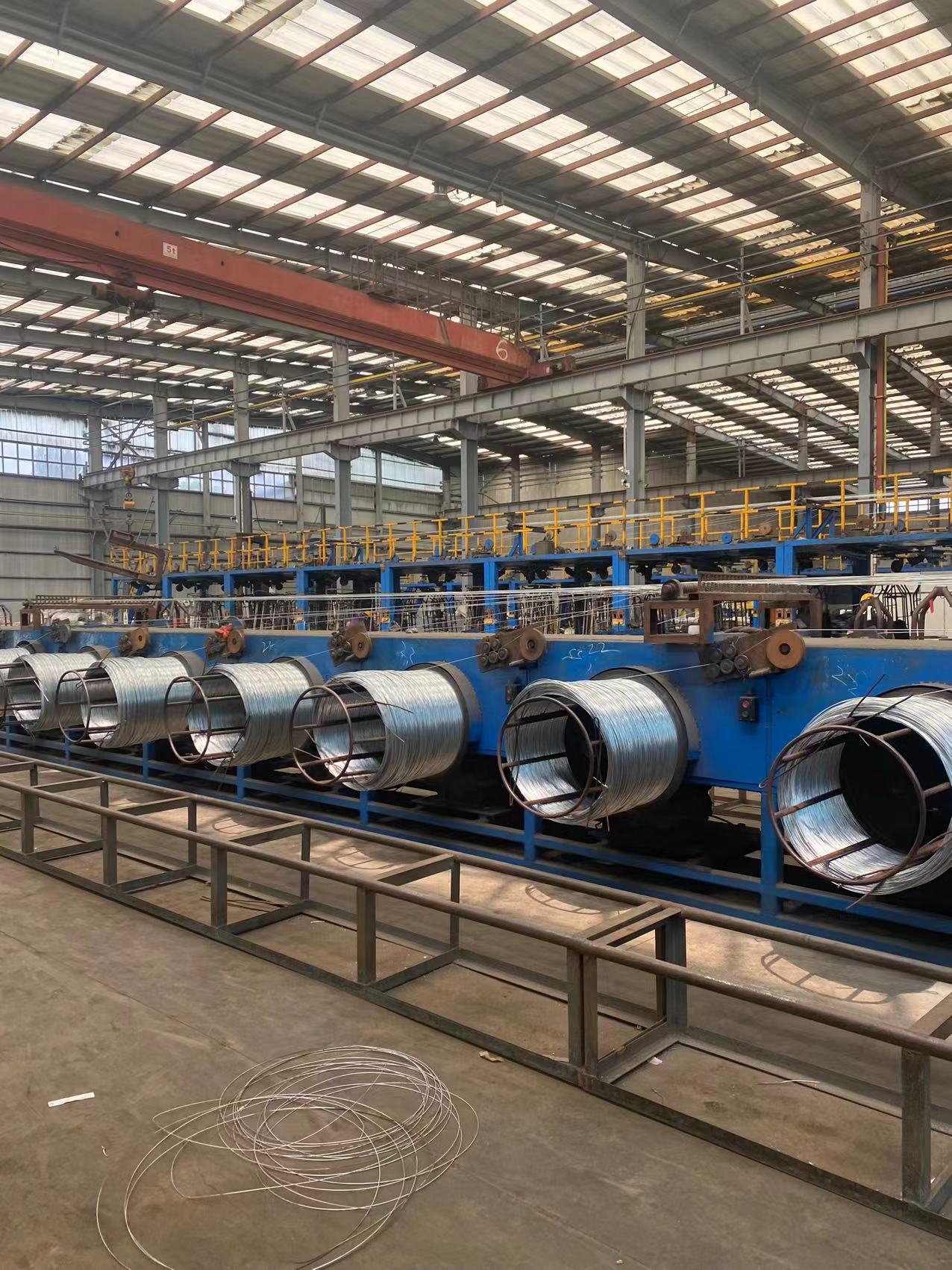
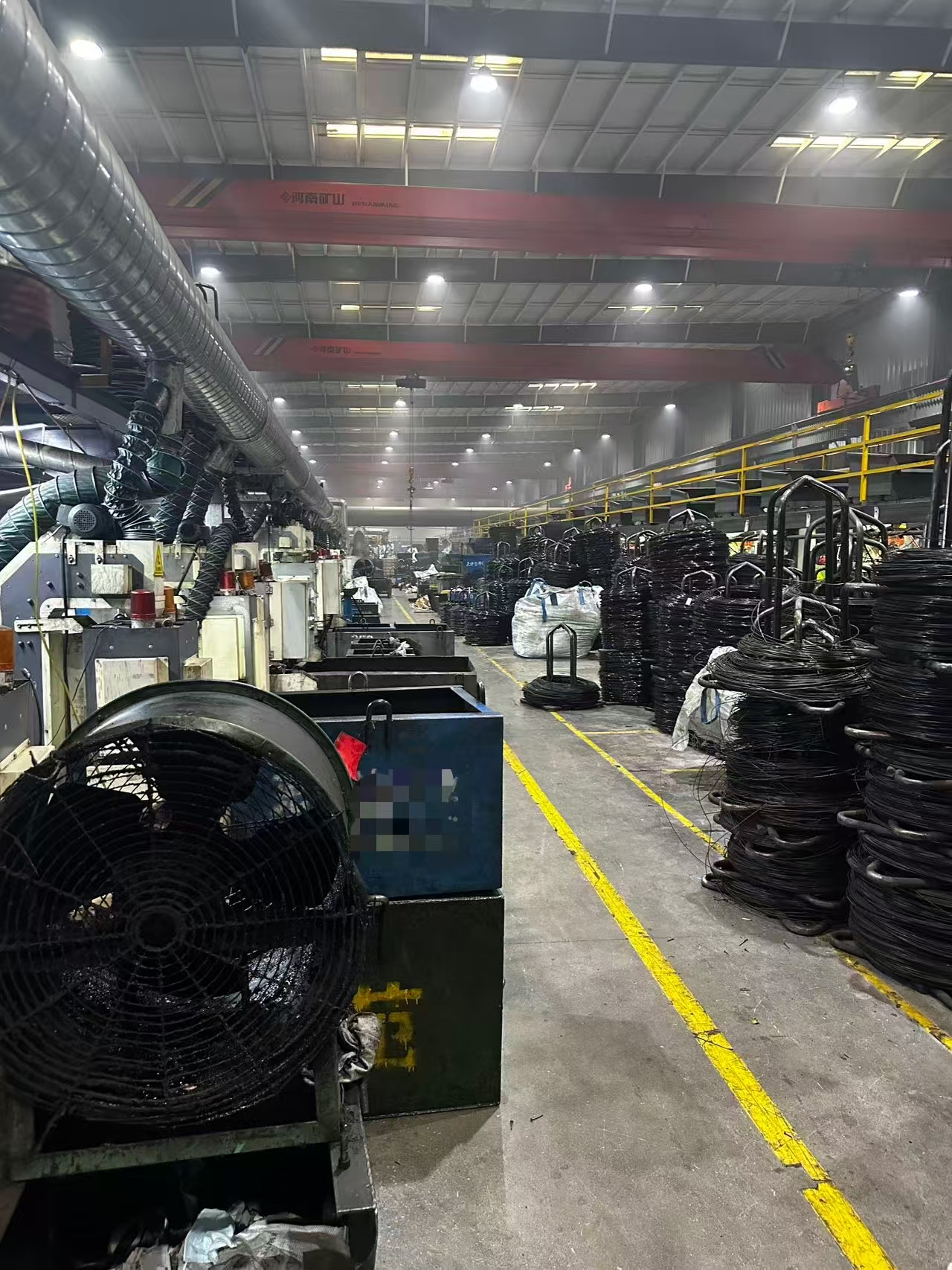
JIAYUAN Construction Screws is the construction fastener line of Tangshan Jiayuan Metalwork Co., Ltd., a hardware manufacturer based in Tangshan, Hebei, China, whose listed product range covers wire mesh, common nails, drywall screws, wood screws, chipboard screws, drilling screws and tapping screws. Its stated export ratio is 90%, with markets including Kuwait, Saudi Arabia, Palestine, Israel, Senegal, Mali, Gambia, Mauritius, Chile, Brazil, Ecuador, Iran, Libya, Liberia, Kenya, Tanzania and Mozambique, as well as the United States, Canada and other markets.
For a buyer comparing fixing families, the relevant capability facts are operational rather than promotional. The company states a 4,000 m² factory, an R&D team of 15 engineers, an annual output of 50,000 tons, and more than 100 nail and wire machines. A QC team of 15 inspectors operates a full-process control system covering incoming raw material inspection, in-process patrol inspection, finished-product random sampling and pre-shipment recheck. Each batch is stated to be tested for tensile strength, torque and surface coating thickness before delivery — which maps directly onto the three specification axes above: material, coating and dimensional behaviour.
Documentation available on request includes CE, SGS, ISO9001 and material test reports, according to the company. Those documents are the practical way to close the compliance step in the selection sequence: request the report that matches the standard named in the RFQ, and check that the product description on the report matches the product being quoted. A certificate held by the factory is not by itself evidence that a specific SKU complies with a specific application standard — that link has to be made document by document.
On the commercial side, standard MOQ is usually 100,000 pcs per size, with flexible solutions stated for trial orders or mixed items. Production is generally 25–35 days after receipt of the deposit, and stock items can ship within 7 days. Payment is mainly T/T with 30% deposit and 70% before shipment, with L/C at sight or OA terms discussed for long-term customers. Fasteners are packed in small boxes, plastic bags or bulk cartons and stacked on fumigation-free pallets, with custom packaging and barcode labels available on request.
Two points in the brief are worth stating plainly. First, OEM logo printing and private-label packaging are supported, which matters for importers and distributors building a local brand. Second, application-specific fastener design can be discussed with the supplier: the technical team states that it provides engineering support and drawing services to help select the right fastener type, size and coating for a project. That is the correct channel for anchor requirements, unusual substrates or specifications that fall outside the standard catalogue — raised at quotation stage, in writing, with the substrate and the standard named.
Frequently asked questions
What certifications and test documents can come with construction screws?
JIAYUAN states that it can provide CE, SGS, ISO9001 and material test reports upon request, to support traceability and compliance with export standards. Quality control is described as material inspection, in-process testing and final product inspection, with each batch tested for tensile strength, torque and surface coating thickness before delivery. Buyers should match the document to the standard named in their RFQ rather than accepting a general certificate list.
Which standard should be named for self-tapping and self-drilling screws?
For US board attachment, ASTM C1002 covers steel self-piercing tapping screws for gypsum panel products or metal plaster bases to wood or steel studs, and ASTM C954 covers steel drill screws for the same attachment to steel studs between 0.84 mm and 2.84 mm thick. For cold-formed steel framing connections, ASTM C1513 applies. In Europe, EN 14566 covers mechanical fasteners for gypsum plasterboard assemblies and EN 14592 covers dowel-type fasteners in timber structures. The standard should always be named together with the substrate it applies to.
Can you design fasteners based on our application needs?
Yes. The technical team states that it provides engineering support and drawing services to help select the right fastener type, size and coating for a project. This is where non-standard substrates, unusual head or drive requirements, and anchor or eye-loop requirements should be raised — ideally together with the substrate, thickness, service environment and destination-market standard, so the recommendation can be documented.
Do you provide OEM or private-label packaging?
Yes. JIAYUAN supports OEM logo printing and private-label packaging to help customers build their own brands in local markets. Packaging formats include small boxes, plastic bags and bulk cartons stacked on fumigation-free pallets, with custom packaging and barcode labels available on request.
What is the MOQ and what payment terms apply?
Standard MOQ is usually 100,000 pcs per size, with flexible solutions stated for trial orders or mixed items, which supports new customers and distributors. Payment is mainly T/T with a 30% deposit and 70% before shipment; for long-term customers, L/C at sight or OA terms can be discussed. MOQ and terms should be confirmed in the formal quotation after specifications are fixed.
Can a buyer start with a trial or a mixed order?
Flexible solutions for trial orders and mixed items are stated as available. A trial is most useful when it tests the specification that will be ordered at volume — the same material grade, coating class and dimensional standard — so that the result is comparable with the production order rather than being a different product.
What is the delivery time, and how are quality issues handled afterwards?
Production generally takes 25–35 days after receipt of the deposit, and stock items can be arranged within 7 days. After delivery, JIAYUAN states that it provides after-sales support including technical consultation, product tracking and quick response to quality concerns. The company brochure with the current product range can be downloaded here, and specifications for a specific project can be reviewed with the supplier before an order is placed.
Conclusion
The choice between self-tapping screws, self-drilling screws and expansion anchor bolts is settled by the substrate, the hole-creation method and the joint class — not by a general preference for one family. Zinc-plated self-drilling screws sit inside the self-drilling family as a coating variant, and the coating should be specified as a class under ISO 4042 rather than as part of the product name. Anchors operate on a different principle entirely and are specified per project.
A comparison that ignores these layers produces price gaps that cannot be explained and specifications that cannot be defended. Fix the substrate, fix the standard, fix the material and coating class, and normalise the RFQ before negotiating. That sequence is what makes quotations comparable — and what makes a delivered screw the one the drawing asked for.
Have Questions or Need More Details?
Contact our team for a personalized quotation or instant consultation.
Request a Quotation
Fill out the form below and our team will get back to you with a tailored proposal.
WhatsApp Direct Chat
Prefer to chat in real-time? Message us on WhatsApp for instant assistance & quick answers.
- Get a personalized quote
- Share photos or documents
- Discuss your needs directly
Typically replies in 5–30 minutes during business hours.