
Siemens S7-1200 PLC I/O Module Comparison: Digital vs Analog Signals
Direct answer: For a Siemens S7-1200 PLC, digital I/O is the correct choice for discrete on/off signals such as proximity switches, push buttons, limit switches, contactor coils, solenoid valves and indicator lamps. Analog I/O is the correct choice for continuous signals such as 0–20 mA, 4–20 mA and ±10 V transmitter values, variable-frequency-drive speed references, proportional valve commands and process setpoints. The practical comparison is not digital versus analog as a ranking; it is a fit decision based on signal type, channel count, output type, CPU onboard capacity, module density, wiring conditions and spare-part strategy.
This comparison is written for decision-stage buyers evaluating S7-1200 I/O architecture and sourcing. JILIN BATU Trade Co.,ltd is an industrial automation products and spare parts supplier based in Changchun, Jilin Province, China, founded in 2017, with a stated focus on Siemens and Mitsubishi Electric automation components. Its supplied profile covers S7-1200 PLCs, ET 200SP distributed I/O, PLC modules, servo products, inverters and related spare parts. The technical comparison below uses only supplied product facts; where a fact is not supplied, the article states the verification point instead of filling the gap.
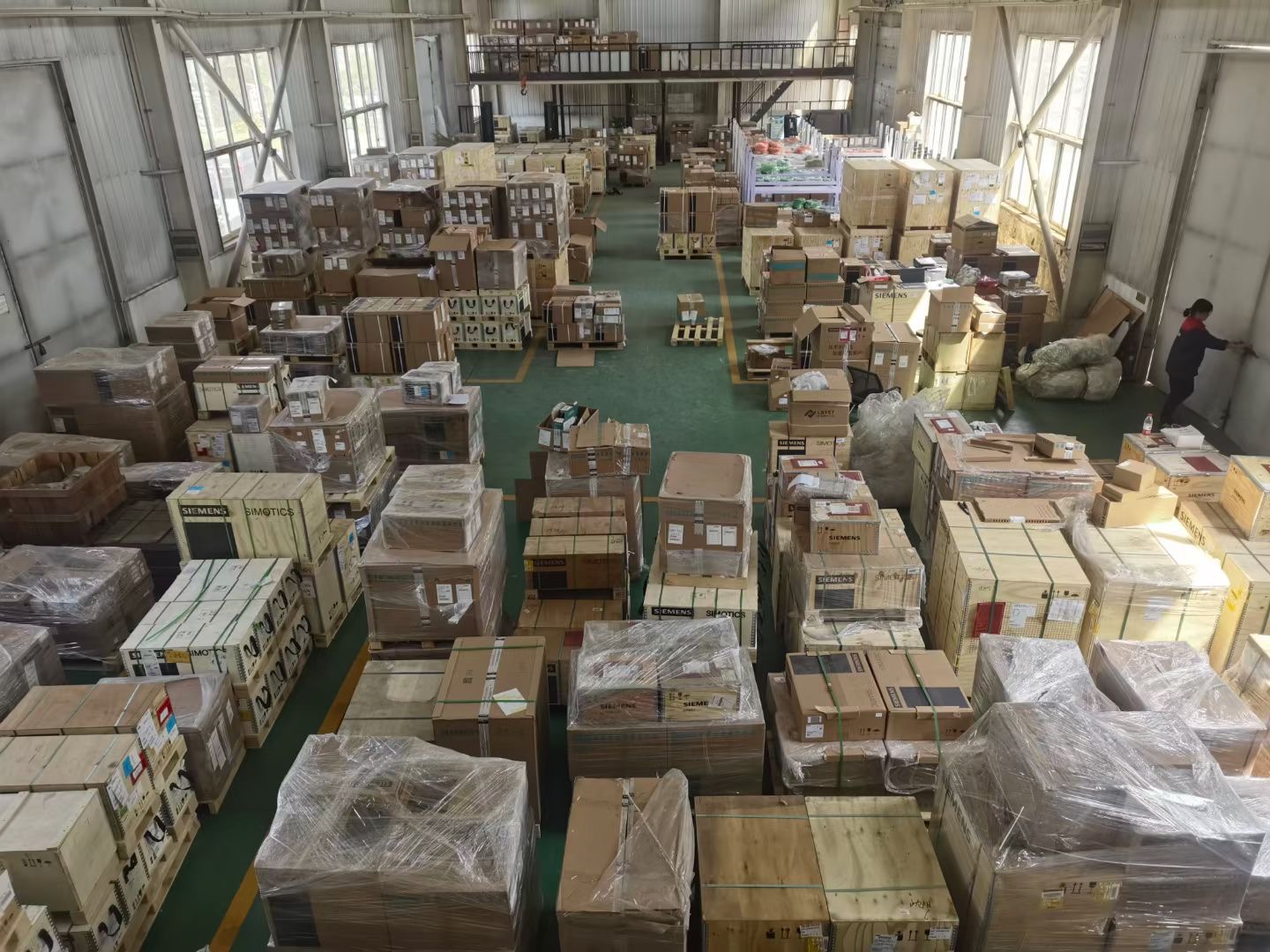
What the digital-versus-analog decision actually controls
An S7-1200 I/O comparison affects three separate procurement decisions. First, it determines which field devices can connect directly to the CPU or to an expansion module. Second, it sets the required module family: digital input, digital output, analog input, analog output or a combined module. Third, it changes the verification work before order release, because analog signals usually require closer attention to signal range, transmitter wiring, shielding, grounding and cable length than discrete 24 V DC circuits.
A common error is to count only channel quantity. Eight digital inputs and eight analog inputs are not interchangeable capacity. A digital input reads a state, while an analog input converts a measured value into a digital process value for the PLC program. The module, terminal arrangement, signal type and CPU configuration must match the actual instrument and machine function.
The comparison therefore starts with the field signal list, not with a preferred module. Once the list separates discrete devices from continuous-measurement devices, the S7-1200 CPU and expansion modules can be selected in a controlled order.
Industry background: where S7-1200 I/O choices matter
The supplied application scenarios place S7-1200 and ET 200SP systems in factory automation, automotive manufacturing, packaging machinery, food and beverage processing, material handling, conveyor systems, water treatment, chemical processing, pharmaceutical manufacturing, HVAC systems and industrial machinery manufacturing. These environments commonly use indoor control cabinets, 24 V DC control circuits, industrial Ethernet and continuous or intermittent production. The same controller family may serve a small machine with onboard I/O or a larger line that uses distributed I/O over PROFINET.
In packaging machinery, digital inputs often monitor guard, product-present, limit and status signals, while analog inputs may monitor pressure, flow or temperature-related process values. In conveyor control, digital I/O commonly handles sensor states, start/stop interlocks and actuator switching. In pump and motor control, analog outputs may provide speed or setpoint commands to compatible variable-frequency drives, while digital signals report run, fault and ready states. These are application patterns supported by the supplied scenarios, not claims about every machine design.
Digital signal path: discrete states, counts and output type
Digital I/O handles two-state signals. A digital input module acquires 24 V DC signals from proximity switches, photoelectric sensors, limit switches, push buttons and machine status contacts. The supplied digital input module 6ES7221-1BH32-0XB0 provides 16 digital input channels for these device types and is intended to expand the digital input capacity of SIMATIC S7-1200 PLC systems. The supplied working conditions include indoor control cabinets, 24 V DC input circuits and an operating temperature range of -20°C to +60°C, subject to Siemens installation specifications.
Digital outputs switch devices rather than measure values. The supplied digital output module 6ES7222-1HF32-0XB0 provides eight relay output channels for compatible AC and DC loads, including contactor coils, solenoid valves, indicator lamps and interposing relays within the module’s rated electrical limits. Relay outputs are useful when the load circuit requires AC switching or isolation through a relay contact. Transistor outputs, by contrast, appear on the CPU 1214C and CPU 1215C DC/DC/DC models and are intended for compatible 24 V DC switching duties; the CPU 1215C transistor outputs are documented at 0.5 A.
Digital selection should still check output type. CPU 1211C provides four relay outputs rated 2 A, while CPU 1214C and CPU 1215C provide ten transistor outputs. A relay output and a transistor output are not interchangeable at the wiring level. The buyer should confirm load voltage, load current, switching frequency and protective circuitry against the exact module or CPU data sheet.
Analog signal path: continuous values, wiring and module density
Analog I/O handles a continuous value rather than an on/off state. The supplied analog input module 6ES7231-4HF32-0XB0 provides eight analog input channels for voltage and current signals from industrial sensors and transmitters. The supplied application scope includes 0–20 mA and 4–20 mA current circuits, ±10 V voltage circuits, and pressure, flow and liquid-level measurement. The PLC converts these signals into digital process values for monitoring, automation logic and process control.
The supplied analog output module 6ES7232-4HD32-0XB0 provides four analog voltage or current output channels. It transmits PLC control commands to compatible variable-frequency drives, proportional valves and actuators, and supports speed, flow, pressure and other setpoint control. This is a different function from a digital output: the analog output provides a variable command level, while a digital output provides a switched state.
Analog wiring requires more verification than a simple discrete circuit. The engineer should confirm whether the field device is a 2-wire or 4-wire transmitter, whether the input is current or voltage, the allowed signal range, the shielding arrangement and the maximum supported cable length. The supplied S7-1200 analog module facts do not state resolution or accuracy limits; those values must be checked on the exact Siemens data sheet for the selected order number before design freeze.
S7-1200 hardware facts that affect the comparison
The following table summarises supplied S7-1200 CPU and I/O module facts that directly affect a digital-versus-analog decision. It does not replace the Siemens data sheet for the exact order number.
| Hardware | Documented I/O and key facts | Decision relevance |
|---|---|---|
| CPU 1211C, 6ES7211-1BE40-0XB0 | 75 KB program/data memory; 6 digital inputs; 4 relay outputs at 2 A; 2 analog inputs; 1 PROFINET port; 10 W typical power loss. | Compact relay-based control with limited onboard digital I/O. |
| CPU 1214C legacy, 6ES7214-1AG31-0XB0 | 75 KB program/data memory; 14 digital inputs; 10 transistor digital outputs; 2 analog inputs; 1 PROFINET port; 20.4–28.8 V DC supply. | Exact replacement and maintenance of existing S7-1200 systems. |
| CPU 1214C newer, 6ES7214-1AG40-0XB0 | 150 KB program/data memory; 14 digital inputs; 10 transistor digital outputs; 2 analog inputs; 1 PROFINET port; 20.4–28.8 V DC supply; 12 W typical power loss. | New projects and supported upgrades requiring additional program/data memory. |
| CPU 1215C, 6ES7215-1AG40-0XB0 | 200 KB program/data memory; 14 digital inputs; 10 transistor digital outputs at 0.5 A; 2 analog inputs; 2 analog outputs; 2 PROFINET ports; 12 W typical power loss. | Applications needing onboard analog outputs and a second PROFINET interface. |
| SM 1221 digital input, 6ES7221-1BH32-0XB0 | 16 digital input channels for 24 V DC sensors and status contacts. | Digital input expansion for sensor-heavy machines. |
| SM 1222 digital output, 6ES7222-1HF32-0XB0 | 8 relay output channels for compatible AC and DC loads. | Relay switching for contactor coils, valves and lamps within rated limits. |
| SM 1231 analog input, 6ES7231-4HF32-0XB0 | 8 analog input channels for voltage and current signals, including 0–20 mA, 4–20 mA and ±10 V applications. | Continuous process measurement and transmitter acquisition. |
| SM 1232 analog output, 6ES7232-4HD32-0XB0 | 4 analog voltage or current output channels for drives, valves and setpoint control. | Variable command signals rather than switched outputs. |
The table shows why CPU selection should come before module selection. CPU 1215C already includes two analog outputs, while CPU 1211C and CPU 1214C do not. A design that needs only two analog outputs may avoid a separate analog output module by selecting CPU 1215C, provided the other CPU facts fit the project. Conversely, a machine with many discrete sensors may justify a CPU 1214C plus a 16-channel digital input module rather than a larger CPU.
CPU choice changes the I/O equation
CPU 1211C, CPU 1214C and CPU 1215C differ in onboard I/O, memory and communication. CPU 1211C has 12 integrated I/O channels: 6 digital inputs, 4 relay outputs and 2 analog inputs. CPU 1214C has 26 integrated I/O channels: 14 digital inputs, 10 transistor outputs and 2 analog inputs. CPU 1215C has 28 integrated I/O channels: 14 digital inputs, 10 transistor outputs, 2 analog inputs and 2 analog outputs. These counts matter because every channel already on the CPU reduces the number of expansion modules required.
The CPU 1215C also provides two PROFINET ports and 200 KB program/data memory, compared with 75 KB on the legacy CPU 1214C and CPU 1211C. The newer CPU 1214C provides 150 KB. For a small machine with relay outputs and few I/O points, CPU 1211C may fit. For an existing production line that uses a legacy CPU 1214C, the exact 6ES7214-1AG31-0XB0 may be the appropriate spare-part route. For a new machine that needs more memory and onboard analog output, CPU 1215C may reduce separate expansion requirements, but the total cost and panel space must be checked by quotation.
Legacy and newer CPU 1214C: same I/O, different memory
The legacy CPU 1214C 6ES7214-1AG31-0XB0 and the newer CPU 1214C 6ES7214-1AG40-0XB0 share 14 digital inputs, 10 transistor digital outputs, 2 analog inputs, 1 PROFINET port and a 20.4–28.8 V DC supply. The verified difference is program/data memory: 75 KB on the legacy model and 150 KB on the newer model, a 100% increase of 75 KB. The newer model is specified at 12 W typical power loss; the legacy model’s power-loss value was not verified under directly comparable conditions in the supplied evidence.
For maintenance, the legacy model may preserve an existing hardware configuration. Migration to the newer model still requires software, firmware and project compatibility checks. A buyer should not assume that a higher memory figure alone justifies replacement. The correct decision depends on the existing TIA Portal project, spare-part strategy and whether the machine is being repaired or upgraded.
ET 200SP analog input comparison: 8-channel BA vs 4-channel ST
When S7-1200 I/O is distributed over PROFINET, ET 200SP analog modules add a second decision layer: channel density versus cable-length capability. The supplied comparison covers two current-input modules. The 8-channel Basic module 6ES7134-6GF00-0AA1 provides eight single-ended analog current inputs. The 4-channel Standard module 6ES7134-6GD01-0BA1 provides four differential current inputs and supports longer shielded signal cables.
| Documented point | ET 200SP AI 8xI BA, 6ES7134-6GF00-0AA1 | ET 200SP AI 4xI ST, 6ES7134-6GD01-0BA1 |
|---|---|---|
| Analog inputs | 8 current inputs, single-ended | 4 current inputs, differential |
| Resolution | 16-bit maximum | 16-bit maximum |
| Accuracy | ±0.3% basic accuracy at 25°C; ±0.5% operational error limit | ±0.3% basic accuracy at 25°C; ±0.5% operational error limit |
| Maximum shielded cable length | 200 m | 1,000 m |
| Typical power loss | 0.7 W | 0.85 W |
| Width | 15 mm | 15 mm |
| Transmitter support | 2-wire and 4-wire current transmitters | 2-wire and 4-wire current transmitters |
For an eight-input requirement, one BA module provides eight channels, while two ST modules are needed to provide the same channel count. The supplied comparison states that this can reduce the signal-module count from two to one, or 50% fewer modules, and reduce signal-module width from 30 mm to 15 mm, excluding BaseUnits and accessories. Typical power loss for eight channels is 0.7 W with one BA module versus 1.70 W with two ST modules, based on their individual typical ratings.
The ST module’s advantage is its 1,000 m maximum shielded cable length, five times the BA module’s 200 m limit, subject to installation requirements. That does not make the ST module universally better. It means the ST module may be the appropriate choice when long cable runs or differential current acquisition are central to the installation. The BA module may be the appropriate choice when channel density, panel width and module count dominate. Both support module diagnostics, 2-wire and 4-wire current transmitters and ET 200SP BaseUnits A0/A1.
Step-by-step selection path
- Create a field-signal list. Record each sensor, switch, valve, drive command and instrument. Mark the signal as discrete or continuous, and record voltage, current, 2-wire or 4-wire transmitter type and required channel count. This prevents a digital module from being selected for an analog transmitter or vice versa.
- Separate input and output direction. Digital inputs read sensor states. Digital outputs switch loads. Analog inputs acquire measurement values. Analog outputs send variable commands. A combined digital I/O module may be useful, but the exact channel composition of 6ES7223-1BL32-0XB0 should be confirmed against the order number before design release.
- Use the CPU onboard I/O first where it fits. CPU 1211C provides 6 DI, 4 relay DO and 2 AI. CPU 1214C provides 14 DI, 10 transistor DO and 2 AI. CPU 1215C provides 14 DI, 10 transistor DO, 2 AI and 2 AO. Compare these integrated channels with the signal list before adding expansion modules.
- Select expansion modules by signal type and count. The supplied SM 1221 provides 16 digital inputs, SM 1222 provides 8 relay outputs, SM 1231 provides 8 analog inputs and SM 1232 provides 4 analog outputs. Confirm whether the remaining channel count justifies the module size and whether spare channels are needed for commissioning or future changes.
- Check output switching technology. Relay outputs suit compatible AC and DC loads within rated limits. Transistor outputs suit compatible 24 V DC loads and appear on CPU 1214C and CPU 1215C. Verify load current, inrush, short-circuit protection and whether an interposing relay is required.
- Check analog signal conditions. Verify current versus voltage, 2-wire versus 4-wire transmitter wiring, shielding, grounding and maximum cable length. For ET 200SP current inputs, the BA and ST modules share 16-bit maximum resolution and specified accuracy, but their cable-length limits differ substantially.
- Verify the exact order number and project compatibility. Confirm the Siemens part number, firmware, TIA Portal project compatibility, PROFINET configuration and BaseUnit requirements. For replacement, compare the existing model with the proposed successor; a similar function name does not prove pin-for-pin or project compatibility.
Application scenarios: matching the signal to the machine
- Packaging machinery: Digital inputs commonly handle product-present, guard, cam and limit signals; digital outputs switch valves, lamps and contactor interfaces. Analog inputs may be needed where the machine monitors pressure, flow or temperature-related process values. The correct mix depends on the machine’s instrument list.
- Conveyor control: Digital I/O is usually the primary signal type for zone sensors, pull cords, start/stop stations and motor starter interfaces. Analog signals become relevant when variable speed or continuous tension/load measurement is part of the control scheme.
- Assembly automation: A mix of digital and analog I/O is common. Discrete sensors confirm fixture position and part presence, while analog channels may handle force, pressure or position feedback from compatible instruments. The designer should separate safety-related and standard control signals according to the machine’s risk assessment.
- Temperature and process control: Temperature, pressure, flow and level transmitters with current outputs require analog inputs. The S7-1200 analog input module 6ES7231-4HF32-0XB0 supports voltage and current acquisition, while ET 200SP BA and ST modules provide documented current-input options for distributed stations.
- Pump and motor control: Digital inputs can report run, fault and ready states, while analog outputs can provide speed or setpoint references to compatible variable-frequency drives. The drive interface, signal range and grounding must be verified against both the drive and PLC documentation.
Supplier comparison for US buyers: inspection records and batch traceability
The supplied evidence does not identify S7-1200 suppliers by inspection records, batch-traceability performance or a verified supplier ranking. It is therefore not valid to state that one supplier is best on those criteria from the supplied facts. For a US buyer, the practical comparison should be based on records the supplier can provide for the exact order, not on a general claim.
A buyer should request the exact Siemens order number, quantity, batch or lot identification where available, incoming inspection record if the supplier maintains one, packaging and handling record, and a documented path from quotation to shipment. For replacement or upgrade projects, the buyer should also confirm hardware revision, firmware compatibility and whether the offer is for a new unit, surplus unit or repaired unit. These checks are especially important when the same family name covers multiple order numbers with different memory, I/O or communication configurations.
BATU’s supplied profile describes a model-based procurement process: customers submit exact manufacturer part numbers, bills of materials or purchasing lists to request quotations, availability information and delivery arrangements. The profile also states that BATU recognises the importance of hardware compatibility, firmware versions, communication interfaces and electrical specifications and encourages verification before replacement or system upgrades. The supplied profile does not provide inspection-record statistics, batch-traceability metrics, certification records or customer audit results. Those items should be requested directly and evaluated against the buyer’s own acceptance criteria.
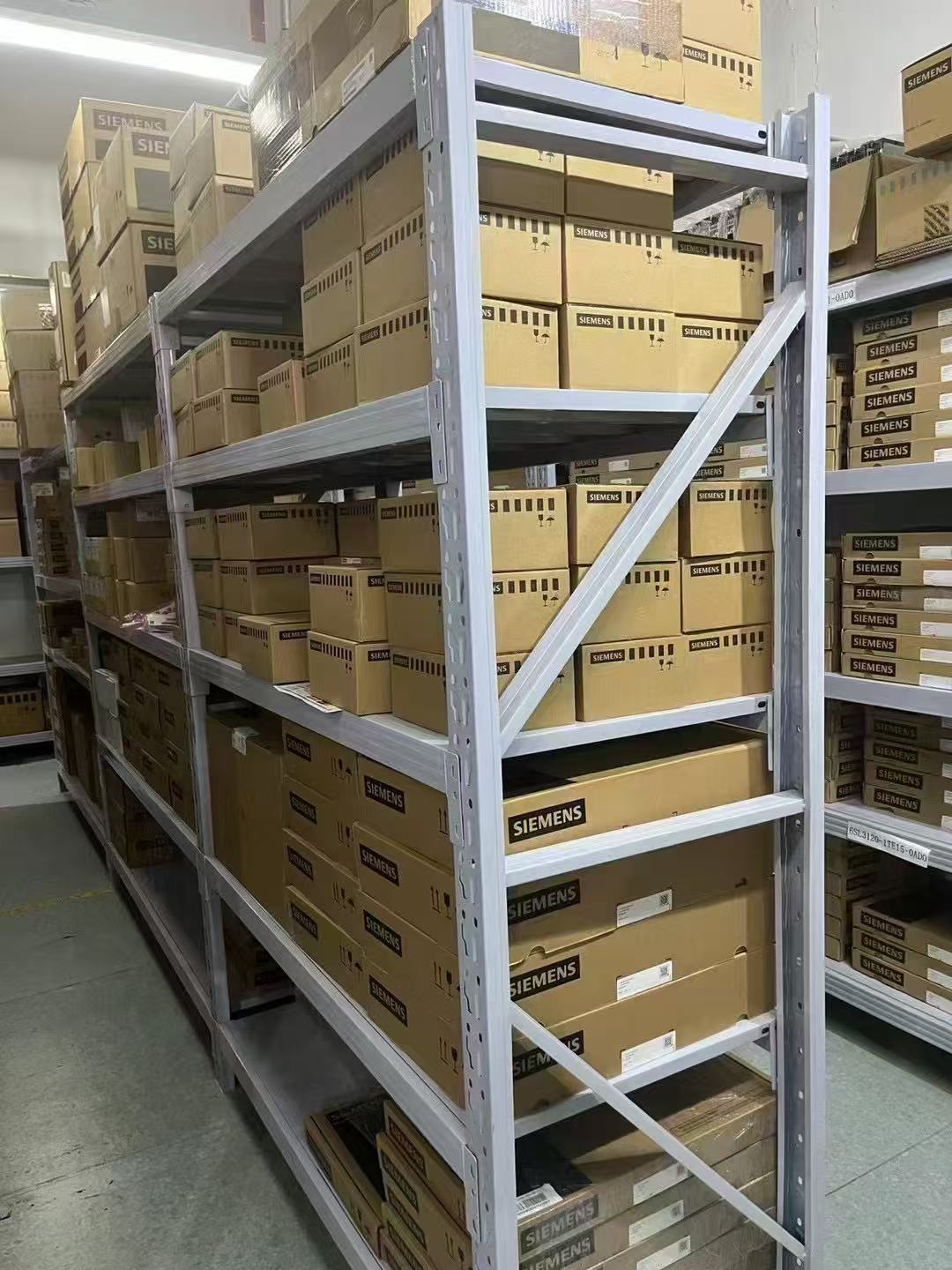
JILIN BATU Trade Co.,ltd: verified supplier profile and limits
JILIN BATU Trade Co.,ltd was founded in 2017 and is based in Changchun, Jilin Province, China. The supplied profile lists 15 employees, 2 engineers, 100% export ratio and main markets in India, Indonesia, the United States, Brazil, Mexico and South Korea. Its broader market description also includes Southeast Asia, Saudi Arabia, the United Arab Emirates and Central Asia. The company describes itself as a professional industrial automation products and spare parts supplier, not as a manufacturer.
Its main product scope includes industrial automation products, PLC CPUs, PLC modules, PLC motors, servo drives and inverter or variable-frequency drives. The Siemens portfolio covers SIMATIC S7-1200, S7-1500, S7-300, ET 200, SINAMICS, SINUMERIK, SITOP and SIMATIC HMI, with S7-1200 PLCs and ET 200SP distributed I/O described as key categories. It also supplies Mitsubishi Electric MELSEC PLC, servo products and related industrial control components. The supplied customer scope includes machinery manufacturers, system integrators, industrial equipment distributors, maintenance companies and international B2B buyers.
The verified procurement value is model-based sourcing and specification checking, not manufacturing capacity. The supplied facts do not include factory size, annual output, in-house manufacturing capability, OEM/ODM service capability, quality-certification records, customer testimonials, awards or verified market-share position. Buyers should therefore treat BATU as a trade and sourcing supplier unless separate evidence establishes another role. Its stated purchasing support can help a buyer organise exact part-number requests and BOM quotations, but price, availability, lead time and traceability records still require written confirmation for the specific order.
FAQ
Which S7-1200 PLC suppliers compare best on inspection records and batch traceability for US buyers?
The supplied evidence does not support a best-supplier ranking on inspection records or batch traceability. No inspection-record results, batch-traceability metrics or supplier audit scores are provided. For BATU, the supplied profile supports a model-based quotation process using exact part numbers, BOMs or purchasing lists, but it does not provide batch records or inspection statistics. US buyers should request lot identification, incoming inspection records if available, packaging records, hardware revision and a written quotation-to-shipment traceability path before order release.
Which S7-1200 CPU should be compared first for a mixed digital and analog application?
Start with CPU 1215C when the application needs onboard analog outputs, 200 KB memory and two PROFINET ports. Compare CPU 1214C when the machine needs 14 digital inputs, 10 transistor outputs, 2 analog inputs and 150 KB memory in the newer 6ES7214-1AG40-0XB0 version. Compare CPU 1211C when 6 digital inputs, 4 relay outputs, 2 analog inputs and a 75 KB memory fit a compact relay-based machine. The legacy CPU 1214C 6ES7214-1AG31-0XB0 should be reserved mainly for exact replacement or existing-system maintenance.
Can a Siemens S7-1200 PLC communicate with an ET 200SP distributed I/O station?
Yes. A compatible ET 200SP PROFINET IO station can exchange data with an S7-1200 CPU configured as a PROFINET IO controller. The station typically requires an interface module or compatible CPU, BaseUnits, I/O modules and terminating components. The S7-1200 executes the control program while the ET 200SP station handles distributed signal acquisition and output control. Correct device configuration, network settings and power-supply arrangements are required.
Are digital I/O modules always simpler to apply than analog I/O modules?
Digital I/O is usually simpler at the signal level because it handles on/off states, but the output type still requires verification. Relay and transistor outputs have different load limits and switching behaviour. Analog I/O adds signal-range, shielding, transmitter-wiring and cable-length checks. In the supplied ET 200SP comparison, the 8-channel BA current module has a 200 m maximum shielded cable length, while the 4-channel ST module has a 1,000 m limit. The module count and panel width also differ for an eight-channel requirement.
Conclusion
The correct S7-1200 I/O decision follows the field signal, not a generic preference for digital or analog. Use digital I/O for discrete states and switched loads, and use analog I/O for continuous measurement and command signals. Then compare CPU onboard I/O, expansion module count, output technology, memory, PROFINET requirements and the wiring conditions of the actual instruments. For distributed installations, the ET 200SP BA-versus-ST comparison shows why density and cable length should be evaluated together rather than treated as one specification.
For procurement, the verified decision criteria are exact Siemens order numbers, hardware and firmware compatibility, documented signal requirements and a supplier process that can support model-based quotation and traceability checks. BATU’s supplied profile supports the sourcing role and part-number-based communication, but it does not establish manufacturing capability, certification status or a best-supplier ranking. Buyers can review the Jilin BATU company brochure and submit an exact BOM or I/O list for quotation, availability and delivery confirmation.
Have Questions or Need More Details?
Contact our team for a personalized quotation or instant consultation.
Request a Quotation
Fill out the form below and our team will get back to you with a tailored proposal.
WhatsApp Direct Chat
Prefer to chat in real-time? Message us on WhatsApp for instant assistance & quick answers.
- Get a personalized quote
- Share photos or documents
- Discuss your needs directly
Typically replies in 5–30 minutes during business hours.