Emergency Light Supplier Selection by Project Scenario
An emergency light supplier should be selected around the needs of a specific building project, not around a generic catalog. Corridors may require exit signs; stairwells often require wall-mounted unit equipment; wet areas require fixtures with wet-location ratings; and projects in North America usually expect UL-listed products. When the project scenario changes, the product requirements and the supplier evaluation criteria change as well.
Problem Definition: Why Generic Supplier Selection Fails
Procurement mismatches often start when a buyer assumes one emergency light supplier can cover every building condition. Exit signs, twin-head unit equipment, bulkhead emergency lights, and emergency downlights are separate product families with different mounting methods, battery capacities, and compliance paths. A supplier that cannot produce a UL-listed exit sign will not support a US exit-sign project. A supplier that only offers ceiling-mounted products will not solve a wall-mount requirement.
Projects also differ in power supply. North American circuits commonly need 120/277VAC dual-voltage operation, while many international projects use 220-240V. Another common issue is environmental rating: an indoor damp-location product cannot be used where a wet-location listed fixture is required. Buyers seeking an emergency light supplier in China must verify these details before comparing pricing or lead times.
Industry Background: Emergency Lighting Demand and Compliance Trends
Demand for emergency lighting is expanding. According to Grand View Research, the global emergency lighting market was valued at USD 7.82 billion in 2025 and is projected to reach USD 12.4 billion by 2033, growing at a CAGR of 6.2%. North America dominated the market in 2025 with a 37.4% revenue share, driven by strict safety regulations.
The UL 924 standard mandates that emergency lighting and exit signs provide at least 90 minutes of illumination during a power failure. In 2022, UL 924 was updated to require active and continuous detection of normal power, moving away from passive detection devices. This matters for buyers because supplier products must align with the current standard.
For global sourcing context, China exported USD 31.4 billion in light fixtures in 2024, with major markets including the US and Germany. LED technology is expected to hold 51.28% of the global emergency lighting market by 2026, according to Fortune Business Insights. A scenario-based supplier strategy helps buyers capture these market and compliance shifts without locking into the wrong product type.
Detailed Solution: A Vertically Integrated Emergency Light Supplier
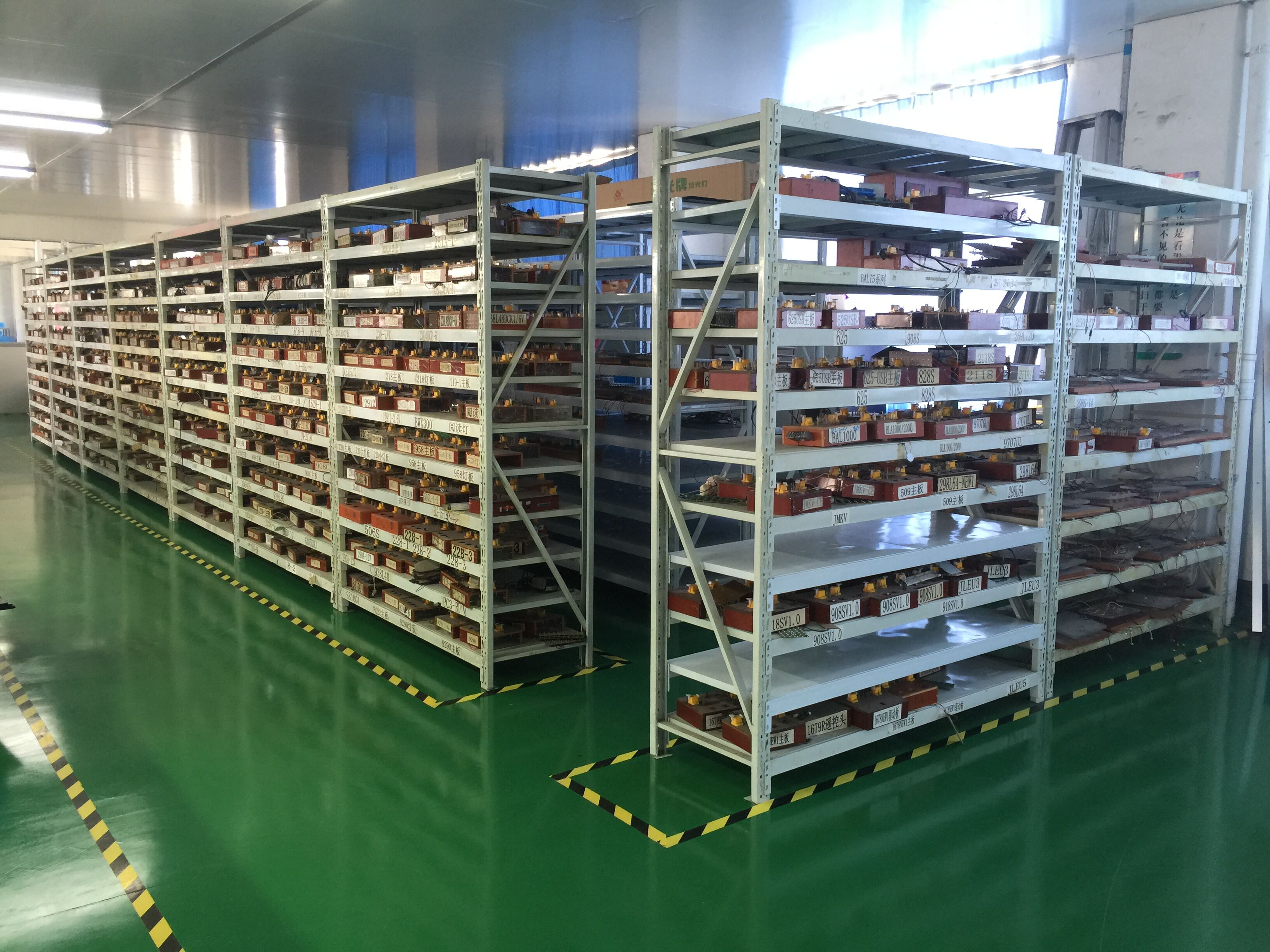
One way to reduce project risk is to work with an emergency light supplier that has deep product specialization and vertical manufacturing. Ningbo JIMING Electric Appliance Co., Ltd. (JIMING) is an example of a manufacturer focused exclusively on emergency lighting since 1967. The company operates two company-owned production facilities: one in Ningbo, China, covering 70,000 m², and one in Haiphong, Vietnam, covering 38,000 m². It employs more than 1,000 people and produces 5,000,000 sets per year, with 96% of output exported to markets including the USA, Canada, Europe, and the Middle East.
JIMING's product portfolio covers emergency lights, exit signs, bulkhead emergency lights, LED emergency drivers, and emergency ballasts. Because the company is not a general lighting supplier, its engineering, molds, and production lines are designed around emergency lighting requirements. The company operates full in-house vertical production: plastic injection molding, PCB design and assembly, automated SMT, final assembly, and testing. Its molds are engineered for over 500,000 cycles, and its engineering team includes more than 50 engineers.
For quality assurance, JIMING has been certified to ISO 9001 since 1998 and applies a test-every-unit protocol. The company lists compliance with UL, CSA, CE, NFPA, OSHA, FCC, DOE, CEC, NEC, IBC, NEMA, BSCI, SASO, REACH, and RoHS requirements. For OEM/ODM projects, JIMING supports customization of battery type, housing color, input voltage, logo, and packaging, and it maintains long-term OEM/ODM partnerships with internationally recognized brands.
Step-by-Step Breakdown: Scenario-Based Supplier Evaluation
Use this sequence when comparing emergency light suppliers for a specific project.
- Define the project's operational mode. Determine whether fixtures must be maintained or non-maintained, and whether constant-on/self-testing operation is required.
- Define mounting and environment. Identify wall, ceiling, surface, recessed, damp, or wet locations before shortlisting products.
- Define compliance. For North American projects, request UL and cUL listings where applicable, and confirm exit signs meet UL 924's 90-minute performance requirement.
- Check electrical and battery specifications. Confirm voltage range, battery chemistry, recharge time, and emergency runtime.
- Evaluate supplier manufacturing depth. Ask about in-house injection molding, SMT, PCB, assembly, and testing. A vertically integrated factory is easier to work with for custom projects.
- Review capacity and lead time. Confirm capacity, MOQ, and lead time. JIMING's monthly capacity is 400,000 sets, standard OEM lead time is 30-45 days, and MOQ is 200 pieces.
- Reduce supply-chain risk. Consider suppliers with dual production hubs to mitigate tariffs and logistics disruptions.
Use Cases: Matching Products to Project Scenarios
Project Scenario 1: Office Building Egress Lighting Retrofit (US)
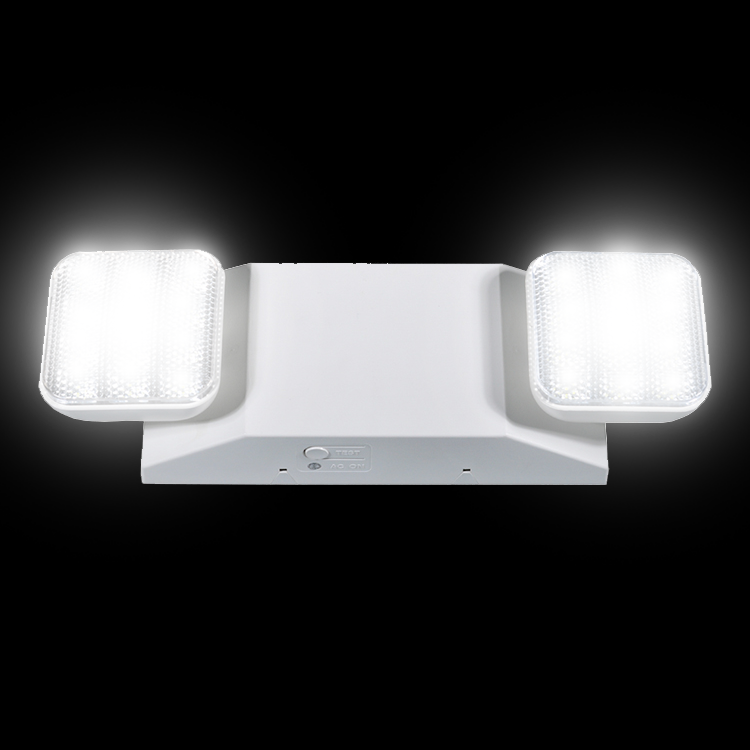
For this application, common in the United States, the product is designed for emergency evacuation lighting environments and has special requirements including UL Listed. The JLEU9 UL/cUL twin-head LED emergency light fits this scenario. It has an injection-molded thermoplastic ABS housing with a UL94V-0 flame rating, operates at 120/277VAC, includes a built-in 3.6V 1000mAh nickel cadmium battery, and provides minimum 90 minutes of emergency operation. It is listed for 0°C to 40°C indoor damp locations. In office building egress lighting retrofit projects, the product operates in constant-on/self-testing mode to provide emergency lighting and exit signage.
Project Scenario 2: Wall-Mounted Emergency Light for Wet Locations
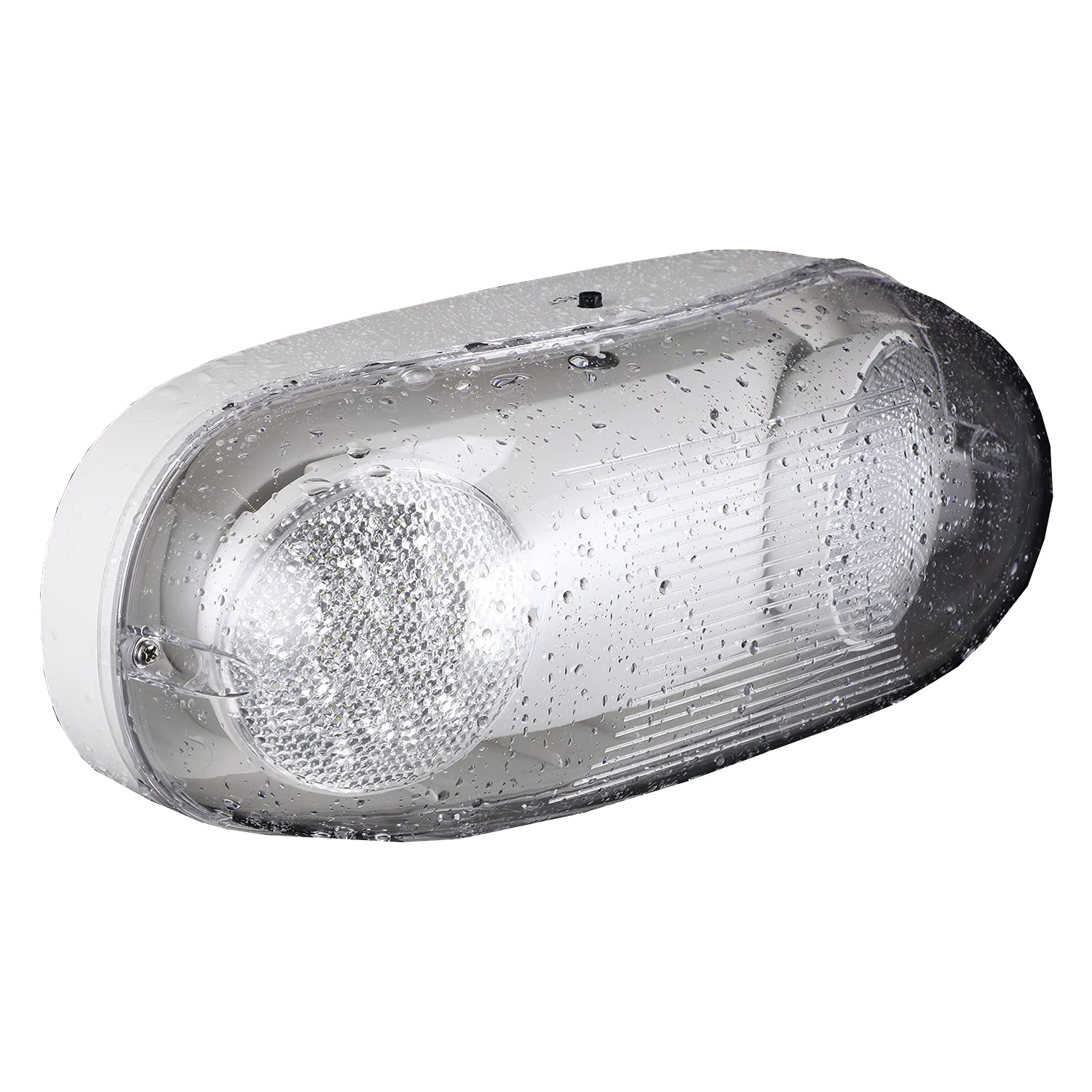
Some facilities need a wet-location rated fixture. The JLEU5WP is an emergency light wall mounted fixture with a thermoplastic ABS housing, UL94V-0 flame rating, and 120/277VAC dual voltage operation. It uses two LED heads with 12 SMD 2835 LEDs each, provides more than 400 lumens in emergency mode, and runs on a 3.6V 2000mAh nickel cadmium battery for minimum 90 minutes. The product is listed for 0°C to 40°C indoor wet locations.
Project Scenario 3: Ceiling-Mounted Exit Sign for Corridors
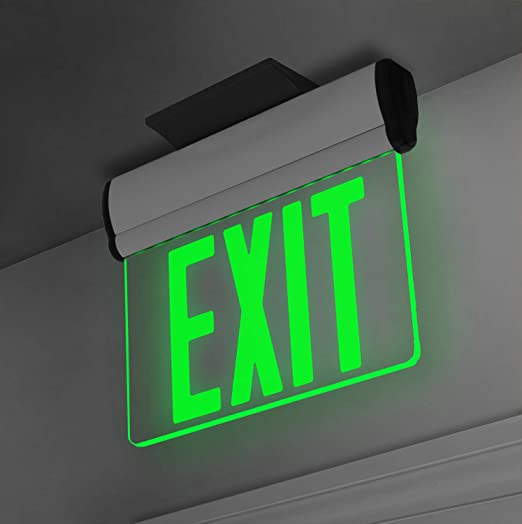
A common project requirement is a single-face, ceiling-mounted exit sign. The JELBEX exit sign uses an aluminum housing with high-grade acrylic panel, single-face printing, and a plastic mounting plate that allows top, back, or end mounting. It works at 120/277VAC and includes a 4.8V 500mAh Ni-MH battery for minimum 90 minutes of emergency operation. The product is UL and CULus listed for indoor damp locations. Buyers looking for a UL listed exit light can use this model as a benchmark.
Project Scenario 4: Bulkhead Emergency Light for Covered Outdoor and Industrial Areas
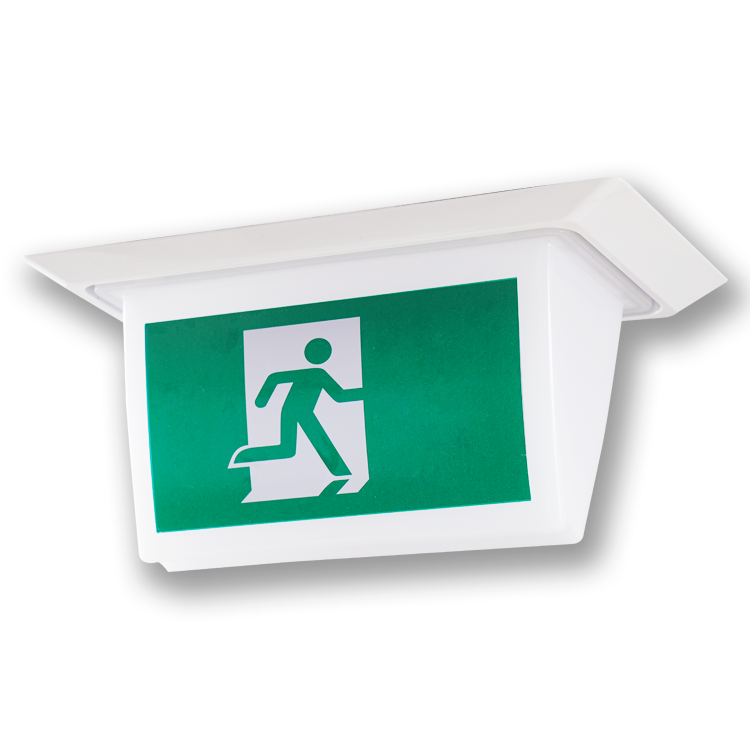
The LE518 bulkhead emergency light is designed for houses, buildings, warehouses, hotels, parking, and security applications. It uses a clear polycarbonate diffuser and ABS housing, has an IP65 rating, and provides 3 hours of maintained operation. It can be converted to edge-lit exit signs with accessories. Its 220-240V input and LiFePO4 battery make it suitable for markets using international voltages.
Project Scenario 5: Emergency Downlight for Commercial Interiors
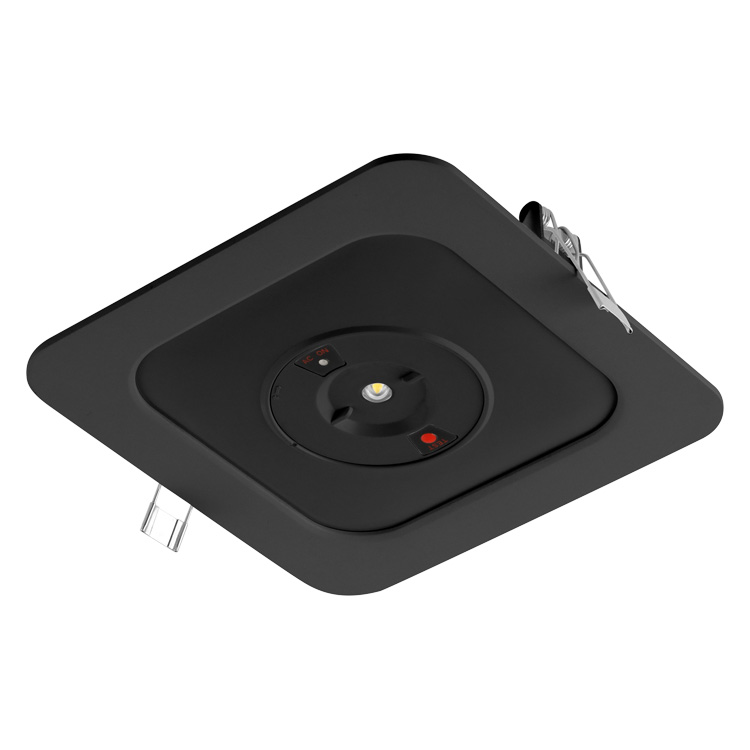
The DLB300 emergency downlight LED supports surface-mounted and embedded-mounted installation, with replaceable lenses for circular or polarized light. It operates in maintained or non-maintained mode, uses a LiFePO4 3.2V 4000mAh battery, and provides 3 hours of discharge time. This product suits projects that need an emergency lighting function without changing the appearance of the ceiling.
Comparison Table: Scenario Fit and Product Specifications
The table below summarizes representative JIMING products by project scenario.
| Product Type | Model | Mounting / Location | Compliance | Battery / Runtime | Typical Project Use |
|---|---|---|---|---|---|
| Twin-head emergency light | JLEU9 | Wall mount; indoor damp | UL/cUL listed | 3.6V 1000mAh Ni-Cd; min 90 min | Office egress lighting retrofit |
| Wet-location dual-head emergency light | JLEU5WP | Wall and ceiling; wet location | UL94V-0; 120/277VAC | 3.6V 2000mAh Ni-Cd; min 90 min; >400 lm | Wet or covered outdoor areas |
| Ceiling-mounted exit sign | JELBEX | Ceiling/wall; indoor damp | UL/CULus listed | 4.8V 500mAh Ni-MH; min 90 min | Corridors and single-face exit signage |
| Combo exit sign with LED heads | JLEC2BCW | Universal J-box; indoor damp | UL94V-0; 120/277VAC | 3.6V 1200mAh Ni-MH; min 90 min | Exit sign plus spot illumination |
| Bulkhead emergency light | LE518 | Wall/ceiling; IP65 | 220-240V; CE-market | LiFePO4 3.2V 2000mAh; 3 h | Warehouses, parking, covered outdoor |
| Emergency downlight | DLB300 | Surface or embedded mount; indoor | 220-240V; CE-market | LiFePO4 3.2V 4000mAh; 3 h | Commercial interiors needing maintained downlight |
FAQ
Conclusion
Emergency light supplier selection becomes more reliable when it is organized around project scenarios. Buyers should define the mounting location, environmental rating, compliance framework, power supply, battery runtime, and OEM capability before choosing a partner. JIMING provides one example of a vertically integrated emergency light manufacturer with dual production hubs in China and Vietnam, a test-every-unit quality protocol, and a product range that includes emergency lights, exit signs, bulkhead emergency lights, and emergency downlights.
To move from evaluation to a project plan, request product drawings, compliance documentation, and a sample quotation for the exact fixture type you need.
Need a UL-listed emergency light supplier for your project?
Email: inquiry-sgzt@ijiming.com
Phone/WhatsApp/WeChat: +86-135-6655-7272
Have Questions or Need More Details?
Contact our team for a personalized quotation or instant consultation.
Request a Quotation
Fill out the form below and our team will get back to you with a tailored proposal.
WhatsApp Direct Chat
Prefer to chat in real-time? Message us on WhatsApp for instant assistance & quick answers.
- Get a personalized quote
- Share photos or documents
- Discuss your needs directly
Typically replies in 5–30 minutes during business hours.