Mini Excavator vs Backhoe Loader vs Wheel Excavator: A Utility and Roadwork Buyer Comparison
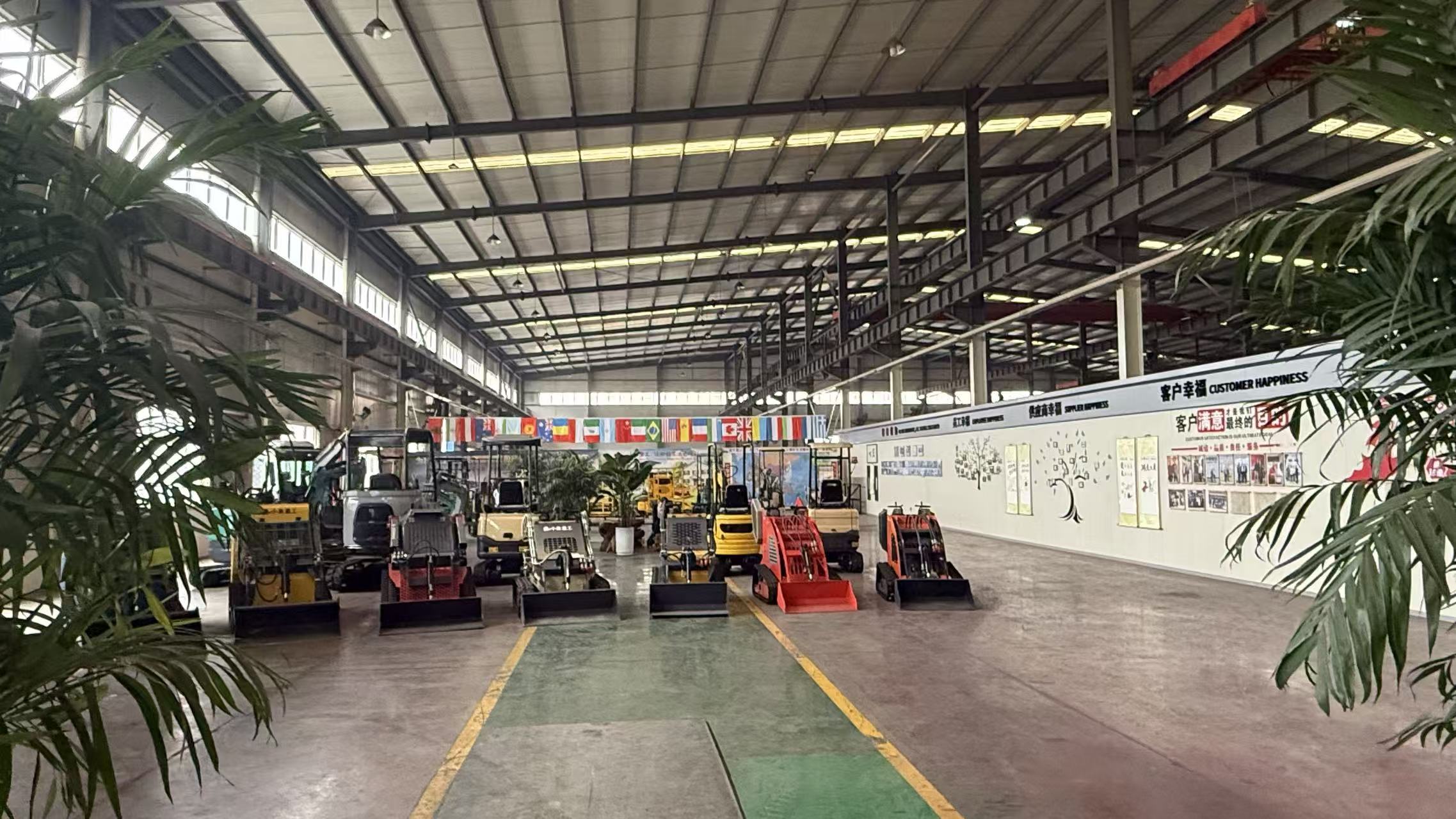
A buyer comparing a QINGONG Mini Excavator, a QINGONG Backhoe Loader and a QINGONG Wheel Excavator is not choosing between three versions of the same tool. The decision is about the work cycle: how much of the job is digging, how much is loading or backfilling, how often the machine must move between sites, and how much space the site allows. JINAN QINGONG MACHINERY CO., LTD, the manufacturer behind these QINGONG product lines, is a construction equipment manufacturer founded in 2011 with a 50,000 m² factory, 150+ employees and a 12-person R&D team. Its product range includes mini excavators, backhoe loaders and wheeled excavators, which makes the three-way comparison practical rather than abstract.
Direct answer: For utility trenching, landscaping, residential work and confined-space construction, the QINGONG Mini Excavator is usually the natural starting point. For a crew that must load spoil or aggregate at the front and excavate or backfill at the rear with one machine, the QINGONG Backhoe Loader is often the more complete tool. For roadwork, municipal maintenance, pipeline work and projects with frequent relocation, the QINGONG Wheel Excavator offers a different mobility logic. The right answer depends on the project mix, not on a universal ranking.
What is the real decision behind this comparison?
The real decision is not which machine is strongest in isolation. It is which machine keeps the whole utility or roadwork sequence productive without adding unnecessary movement, attachments or site constraints. A mini excavator may dig a utility trench efficiently but cannot replace a backhoe loader when the same crew must regularly load trucks or move bulk material at the front end. A backhoe loader may reduce the number of machines on a mixed site but needs more space than a mini excavator. A wheel excavator may shorten relocation time on road and municipal projects, but it is not automatically the right choice for a tight residential garden or an orchard row.
Buyers at decision stage should therefore compare four criteria together: task fit, mobility needs, site access and the balance between digging and loading. Price alone cannot resolve those criteria because a lower-cost machine that is wrong for the work cycle creates hidden costs in transport, idle time, attachment changes or reduced access.
Why utility and roadwork buyers face this choice
Utility and roadwork contractors often work on scattered sites. One week may involve a residential pipeline trench, the next a rural road repair or a municipal landscaping job. That variation creates a familiar problem: a dedicated digging machine is efficient on trench work but limited when material must be loaded; a loading machine is useful on bulk material but may not provide the same compact access; and a road-mobile excavator can move between sites but may be larger than a confined job allows.
QINGONG's own product structure reflects that spread. The company lists mini excavators, backhoe loaders, skid-steer loaders and wheel excavators among its main products, and its export activity reaches markets including the EU, Indonesia, Laos, Tanzania and Zambia. For a buyer, the useful question is not whether one category is generally better. It is which QINGONG configuration matches the work that will fill most of the machine's operating hours.
Compliance and documentation also belong in the decision, especially for EU-bound equipment. QINGONG follows ISO9001 quality management standards, and its core models are CE certified by EU Notified Body UDEM (NB 2696) under Machinery Directive 2006/42/EC, with upgrading underway for the new Machinery Regulation (EU) 2023/1230. For the backhoe loader, QINGONG can provide an EU Declaration of Conformity covering the Machinery Directive and the Electromagnetic Compatibility Directive, along with a technical documentation package that matches the specific machine configuration.
How the three QINGONG options differ
QINGONG Mini Excavator: compact digging and access
The QINGONG Mini Excavator is the category to examine first when access is the limiting factor. QINGONG offers mini excavators from 0.8 to 4 tons, with different models, engine options and attachments. The supplied application information places them in farm work, landscaping, trench digging, house foundations, pond excavation, pipeline installation, small-scale mining and confined-space construction. That range explains why the mini excavator is often used as a utility machine: it can be brought close to the work, and it can be configured for digging, breaking, grabbing or grading rather than only one task.
Published model examples in the supplied FAQ show how the category scales. The QG319 is listed at 700 kg operating weight, with a standard digging depth of 1.65 m, digging height of 2.5 m and maximum dumping height of 1.83 m. The QG328 is listed at 1,344 kg, with 2.11 m standard digging depth, 2.85 m digging height and 2.01 m maximum dumping height. The QG350 is listed at 2,503 kg, with 2.93 m standard digging depth and 4.3 m digging height. These figures are not a universal performance promise; they show why a buyer should match the model to trench depth, spoil placement and transport limits rather than treating all mini excavators as one size.
Attachments matter in utility work because the machine often changes roles. The supplied mini excavator configuration lists a hydraulic quick hitch, breaker hammer, auger drill, grapple, rake and grading bucket. That does not mean every attachment is included in every order. It means the buyer should list the tasks that will recur, such as trenching, breaking, root removal or grading, and confirm the matching attachment and hydraulic setup. QINGONG mini excavators also come with a 1-year warranty in the supplied comparison information.
One practical limit is spoil handling. The supplied FAQ notes that a mini excavator can work with dump trucks, but compatibility depends on the excavator's unloading height. It is generally not suitable for Sinotruk 6x4 or 8x4 dump trucks because the dumping height is insufficient, leading to inefficient loading and spillage. That is a useful decision check: if the job requires loading large road trucks, the mini excavator may be the digging tool but not the loading solution.
QINGONG Backhoe Loader: one machine for loading and digging
The QINGONG Backhoe Loader is the option to examine when the work cycle includes both front-end loading and rear-end excavation. The supplied backhoe-loader application information describes a machine with front-end loading and shoveling, rear-end excavation, backfilling, breaking, material stacking, site leveling and trenching. It lists the QG886BL among the applicable products. For buyers, the value is not simply that the machine can do two things. The value is that the same operator and carrier can move from digging to loading without a second machine entering the site.
That dual role changes site organization. On a rural road repair, drainage ditch or small building site, a backhoe loader can excavate, backfill and handle material in a more continuous sequence than a single-purpose excavator. The supplied scenario for this type of work lists four-wheel drive, ROPS and FOPS cabin, low-emission engine (Euro 5), overload protection, a rugged frame and a stable dual-function hydraulic system as requirements. Those are configuration and application requirements to confirm, not automatic proof that every unit has every option.
The backhoe loader also has a specific stability rule that buyers should understand before comparing outputs. The supplied FAQ states that the outriggers must be deployed during excavation to level the machine and provide stable support, preventing tipping. Heavy-duty excavation is strictly prohibited unless the outriggers are deployed. That makes the backhoe loader a strong mixed-task machine, but it also means the work area must allow the stabilizer legs to be set. On a very tight site, that requirement can favor the mini excavator instead.
Attachment flexibility supports the mixed-task role. The supplied information states that the loader bucket and rear excavator bucket are available in a variety of widths and capacities, and that the hydraulic output flow of the host machine can be matched to the operational requirements of the attachments. A buyer can therefore configure the backhoe loader around the actual material and trench profile rather than accepting a single bucket setup. For EU buyers, Stage V certified engine versions are offered for the backhoe loader with official engine emission certificates and DPF aftertreatment, and an optional EU-spec road light kit is available. These are options to confirm on the quotation, not assumptions about a base unit.
QINGONG Wheel Excavator: roadwork mobility and multi-site movement
The QINGONG Wheel Excavator should enter the comparison when mobility between work locations is a major part of the cost and schedule. Its defining advantage is the wheeled travel system. The supplied comparison states that QINGONG offers a wide range of wheeled excavator models and configurations, and that the wheeled travel system provides flexible mobility and convenient relocation for road construction, municipal engineering and multi-site operations. In practical terms, a wheeled excavator can be positioned for the next road or utility task without the same transport dependence as a crawler machine, provided the machine is specified for the required road use.
The wheel excavator is not only a travel solution. The supplied application information places it in municipal engineering, road maintenance, pipeline construction, urban renovation, river regulation, yard works and demolition. Its listed work functions include earth excavation, backfilling, breaking, loading, slope finishing, bulk material grabbing and roadside maintenance. That makes it a roadwork-oriented excavator: it retains an excavator's digging role while reducing the friction of moving between dispersed sites.
Mobility claims still need commercial checks. The supplied wheeled-excavator scenario lists a road-legal configuration, ROPS and FOPS cabin, low-emission engine (Euro 5), stable outriggers, anti-slip tires and good travelling speed as requirements for appropriate projects. A buyer should confirm which of these are standard, optional or market-specific for the destination country. Do not assume that every wheel excavator can legally travel on public roads without the correct configuration and documentation.
A step-by-step selection process
- Define the dominant task. If most hours are trenching, foundation digging, landscaping or confined utility work, start with the QINGONG Mini Excavator. If the cycle repeatedly includes front-end loading and rear excavation, start with the QINGONG Backhoe Loader. If roadwork and relocation dominate, start with the QINGONG Wheel Excavator.
- Check site access before checking attachments. A machine that cannot enter the work area safely cannot compensate with a larger bucket. Confirm gate widths, turning space, overhead clearance, ground conditions and the space needed for stabilizers or outriggers. The mini excavator is the category intended for confined-space construction and narrow access work; the backhoe loader needs room to deploy its stabilizer legs for excavation.
- Map the digging and loading roles. A mini excavator is primarily a digging and trenching machine and may need a separate loading solution for large dump trucks. A backhoe loader combines a front loader and rear excavator, so it can reduce machine count on mixed sites. A wheel excavator is digging-focused but road-mobile, making it useful where the excavator must move frequently rather than load at the front end.
- List recurring attachments. For mini excavators, confirm quick hitch, breaker, auger, grapple, rake or grading bucket needs. For backhoes, confirm loader and excavator bucket widths and capacities. For wheel excavators, confirm breaker, grapple, auger, tilt bucket and outrigger stabilizer requirements where relevant.
- Verify compliance and documentation for the destination market. Ask for the CE Declaration of Conformity and technical file that match the exact model and configuration. For the backhoe loader, confirm the EU DoC covering the Machinery Directive and Electromagnetic Compatibility Directive, and confirm whether Stage V engine and road light options are required. For mini excavators, confirm the applicable documentation for the selected model.
- Confirm the commercial configuration. Match the model, engine, attachment package, cabin, emission configuration and delivery scope to the actual project. The supplied company information lists T/T payment with a 30% deposit in advance and the balance before shipment; current terms should be confirmed on the model-specific quotation.
Use cases: match the machine to the job
- Residential utility trenching and landscaping: QINGONG Mini Excavator. The compact range and attachment set support trenching, root removal, grading and confined-space access.
- Farm, orchard and small-site digging: QINGONG Mini Excavator. The 0.8 to 4 t range allows the buyer to size the machine to the work rather than over-specify.
- Rural road repair with mixed loading and digging: QINGONG Backhoe Loader. The front loader and rear excavator support a more continuous sequence of excavation, backfilling and material handling.
- Municipal pipeline and drainage work with mixed tasks: QINGONG Backhoe Loader or QINGONG Wheel Excavator, depending on whether loading or relocation dominates.
- Road construction, road maintenance and multi-site municipal work: QINGONG Wheel Excavator. The wheeled travel system reduces the friction of moving between locations where the road-legal configuration is suitable.
- Confined demolition, breaking and small excavation: QINGONG Mini Excavator with the appropriate breaker or attachment, subject to the model's capacity and the site safety plan.
Comparison table: utility and roadwork fit
| Decision area | QINGONG Mini Excavator | QINGONG Backhoe Loader | QINGONG Wheel Excavator |
|---|---|---|---|
| Typical fit | Utility trenching, landscaping, residential work, confined-space construction and small-site excavation | Rural road repair, drainage, foundations and mixed sites that need loading and digging | Road construction, municipal engineering, pipeline work and multi-site projects |
| Mobility | Compact and site-focused; transport planning depends on model size | Four-wheel drive configuration is listed for the backhoe-loader work scenario; not a road-travel claim by itself | Wheeled travel system supports convenient relocation; road-legal configuration must be confirmed |
| Site access | Best suited to narrow or confined work among the three categories | Needs space for stabilizer deployment during excavation | Needs road or yard space appropriate to a wheeled excavator |
| Digging role | Primary role; model size determines depth and reach | Rear excavator provides digging and backfilling | Excavation, backfilling, breaking and slope work |
| Loading role | Limited for large dump trucks; check dumping height | Front loader and rear excavator in one machine | Material handling is listed, but verify the attachment and task |
| Configuration checks | Model, attachment set, dumping height, CE documentation and 1-year warranty terms | Bucket widths and capacities, stabilizer use, Stage V option, EU DoC and road light kit | Road-legal configuration, ROPS and FOPS cabin, emission level, outriggers and tires |
This table compares documented characteristics and intended applications. It does not rank the machines or prove that one type is universally better. Final suitability depends on the exact model, attachment package, site conditions and destination-market compliance requirements.
Limits and checks before you specify
The first limit is physical access. A mini excavator can reach work that a backhoe loader or wheel excavator cannot, but it may not provide the same loading capability. The second limit is stability. A backhoe loader is a strong mixed-task machine, but excavation requires the stabilizer legs to be deployed. The third limit is travel. A wheel excavator can reduce relocation friction, but the buyer must confirm the road-legal configuration and local registration requirements.
The fourth limit is documentation. CE certification, engine emission configuration and technical files should match the exact machine. QINGONG's core models are CE certified by EU Notified Body UDEM (NB 2696) under Machinery Directive 2006/42/EC, and the company is upgrading certification for the new Machinery Regulation (EU) 2023/1230. For the backhoe loader, the EU DoC and technical documentation package should correspond precisely to the specific configuration. For any model, the buyer should confirm that the documents received match the nameplate, engine and options.
The fifth limit is operating support. English operation and maintenance manuals are supplied, and repair drawings and hydraulic circuit diagrams can be provided electronically on request. That matters for buyers who operate in multiple markets or who need local service teams to work from clear documentation. QINGONG also states that it has overseas subsidiaries and spare-parts warehouses in Tanzania, Zambia, Indonesia and Laos, with local service teams providing commissioning, maintenance training and genuine spare-parts supply.
Frequently asked questions
Can QINGONG provide CE documentation for these machines for EU import?
QINGONG states that its core models are CE certified by EU Notified Body UDEM (NB 2696) under Machinery Directive 2006/42/EC, and that it is upgrading certification for the new Machinery Regulation (EU) 2023/1230. For the backhoe loader, QINGONG can provide an EU Declaration of Conformity covering the Machinery Directive and the Electromagnetic Compatibility Directive, together with a technical documentation package that matches the specific machine configuration. The buyer should confirm that the documents correspond to the exact model, engine and options ordered.
Which machine should I choose for utility trenching in confined residential areas?
The QINGONG Mini Excavator is the natural first choice for confined residential trenching because the range is intended for trench digging, house foundations, landscaping, pipeline installation and confined-space construction. The buyer should still match the model to the required trench depth, spoil placement and access width. The QG319, QG328 and QG350 examples show different operating weights and digging depths, so the smallest machine is not automatically the right one if the trench or dumping height demands a larger model.
When is a backhoe loader more useful than a mini excavator?
A QINGONG Backhoe Loader is more useful when the same crew must repeatedly load material at the front and excavate or backfill at the rear. Its front loader and rear excavator can reduce the need for a separate loading machine on rural road repair, drainage, foundation and small demolition work. The trade-off is that the backhoe loader needs space to deploy its stabilizer legs for excavation, and heavy-duty excavation is prohibited unless those outriggers are deployed. If the site is too tight for that setup, a mini excavator is the better starting point.
What mobility advantage does a wheel excavator provide on roadwork and multi-site projects?
The QINGONG Wheel Excavator uses a wheeled travel system that supports flexible mobility and convenient relocation for road construction, municipal engineering and multi-site operations. That can reduce the friction of moving an excavator between dispersed work locations. The advantage depends on configuration: the supplied wheeled-excavator scenario lists a road-legal configuration, ROPS and FOPS cabin, low-emission engine (Euro 5), stable outriggers and anti-slip tires as requirements for appropriate projects. Buyers should confirm which items are standard, optional or market-specific.
Can I specify different attachments or buckets for these machines?
Yes, subject to model and configuration. The supplied mini excavator information lists a hydraulic quick hitch, breaker hammer, auger drill, grapple, rake and grading bucket. The backhoe loader information states that loader and excavator buckets are available in a variety of widths and capacities and that hydraulic output can be matched to the attachment requirements. The wheeled-excavator scenario lists a hydraulic quick hitch, breaker hammer, grapple, auger drill, tilt bucket and outrigger stabilizers. Each attachment should be confirmed against the selected model rather than assumed as standard.
What should I confirm before requesting a quotation or moving to order?
Prepare a short project brief covering the dominant task, site access, required digging depth, loading or spoil-handling method, mobility between sites, attachment list, destination market and required compliance documents. Ask QINGONG to quote the exact model and configuration, including engine emission version, cabin, attachments and documentation package. Price, sample or inspection arrangements and lead time are model- and order-specific and should be confirmed on the quotation. The supplied company information lists T/T payment with a 30% deposit in advance and the balance before shipment; confirm current terms for the selected machine.
For a closer review of QINGONG construction equipment, download the QINGONG Machinery Catalog & Introduction. For company information and model selection, visit JINAN QINGONG MACHINERY CO., LTD.
Conclusion
The QINGONG Mini Excavator, QINGONG Backhoe Loader and QINGONG Wheel Excavator serve different decision problems. The mini excavator is the access-led choice for utility trenching, landscaping, residential work and confined-site digging. The backhoe loader is the mixed-task choice when front-end loading and rear excavation must happen in one work cycle. The wheel excavator is the roadwork and multi-site choice when wheeled mobility changes the cost of moving between jobs.
A sound buyer comparison therefore starts with the work sequence, not with a generic ranking. Define the dominant task, check site access, map the digging and loading roles, list attachments, and verify compliance documents for the destination market. When those criteria are clear, the choice between the three QINGONG categories becomes a project-fit decision rather than a guess.
Have Questions or Need More Details?
Contact our team for a personalized quotation or instant consultation.
Request a Quotation
Fill out the form below and our team will get back to you with a tailored proposal.
WhatsApp Direct Chat
Prefer to chat in real-time? Message us on WhatsApp for instant assistance & quick answers.
- Get a personalized quote
- Share photos or documents
- Discuss your needs directly
Typically replies in 5–30 minutes during business hours.