Mini Excavator vs QINGONG Self-Loading Concrete Mixer Truck
: A Jobsite Comparison
A mini excavator and a QINGONG self-loading concrete mixer truck are not competing versions of the same machine. The mini excavator is a digging and earthmoving tool: it excavates, trenches, breaks rock, grades, lifts and backfills. The QINGONG 4.0 m³ self-loading concrete mixer truck is a mobile concrete plant: it loads aggregate and cement, meters and mixes on board, carries the mix to the pour point and discharges it. One machine moves earth; the other makes and delivers concrete.
That distinction is the decision. Buyers who place these two products in the same quotation folder are usually not confused about machine type — they are deciding which bottleneck costs more on their current jobs: earth that has to be moved before anything else can start, or concrete that arrives late, arrives short, or cannot reach the formwork at all. Both are compact, both are single-operator machines, and both sit in the same compact-equipment catalogue, which is precisely why the task, and not the product class, has to lead the comparison.
This guide is written for the point where that choice is made: contractors, dealers, rental operators and farm or landscaping businesses that already know which work they want to win and need to know which machine to buy first. QINGONG is the construction-equipment brand of Jinan Qingong Machinery Co., Ltd, founded in 2011 and headquartered in Jinan, Shandong Province, China. The sections below cover what each machine does, how site access and material flow change the answer, how the two fit into one fleet, and which questions to put to the supplier before the order is signed.
The short answer: which machine fits which job
Choose the mini excavator when the billable work is excavation, trenching, backfilling, rock breaking, grading or material handling, especially where the machine has to work close to walls, inside yards, in orchards, along pipelines or in other confined areas. Choose the QINGONG 4.0 m³ self-loading concrete mixer truck when the billable work is concrete: rural road paving, foundations for small buildings, irrigation channels, slope protection and pours on remote or scattered sites where conventional ready-mix delivery is impractical and the same vehicle must feed itself, mix and discharge.
When both kinds of work appear in the same contract, the purchase order should follow the task that repeats. A machine that is busy every week pays for itself; a machine bought for one phase of one project becomes a capital item waiting for the next tender.
What the mini excavator is and what it does on site
A mini excavator is a compact crawler excavator operated from a joystick-controlled workstation, built to work where full-size earthmoving equipment cannot manoeuvre or cannot justify the transport cost. QINGONG builds a mini excavator line covering models from QG-N06 to QG-N40, including an EU emission-compliant E-series (QG10EH through QG35EH are listed among current models) and a range of matched attachments. The working range quoted for the line is 0.8 to 4 tonnes, which is the band in which most landscaping, residential, orchard and utility work sits.
The work is defined by the attachment and the site rather than by the badge on the boom. Documented applications for the QINGONG mini excavator include earth excavation, backfilling, rock breaking, trenching, root removal, material grabbing and site grading, with published project types running from pipeline trenching and building-foundation earthwork to garden excavation, ditch dredging, tree-pit digging, small-structure demolition and slope trimming. Three design points matter when this machine is judged against a concrete-delivery truck: a reinforced structure intended to cope with hard working conditions, a compact overall width that allows agile movement in courtyards, along walls and inside greenhouses, and an inspection layout that keeps routine service points within easy reach.
Attachments are the reason a single excavator can cover several trades. Hydraulic breakers, timber grapples, buckets and rotary drills are offered as matching attachments — but they are not universally interchangeable. Each attachment has to match the model and its hydraulic configuration, so the attachment list should be settled together with the model choice rather than after it.
| Model | Operating weight | Standard digging depth | Digging height |
|---|---|---|---|
| QG319 | 700 kg | 1.65 m | 2.5 m |
| QG328 | 1,344 kg | 2.11 m | 2.85 m |
| QG350 | 2,503 kg | 2.93 m | 4.3 m |
Those three models show how quickly the operating envelope changes: the QG319 is a 700 kg class machine with 1.65 m of standard digging depth, while the QG350 reaches 2.93 m of digging depth from a 2,503 kg platform. Choose the smallest model that still covers the deepest trench and the heaviest lift in the work you actually have, then confirm the final figures against the specification sheet for that exact model, because other models in the range carry different values.
What the QINGONG 4.0 m³ self-loading mixer truck is and what it does
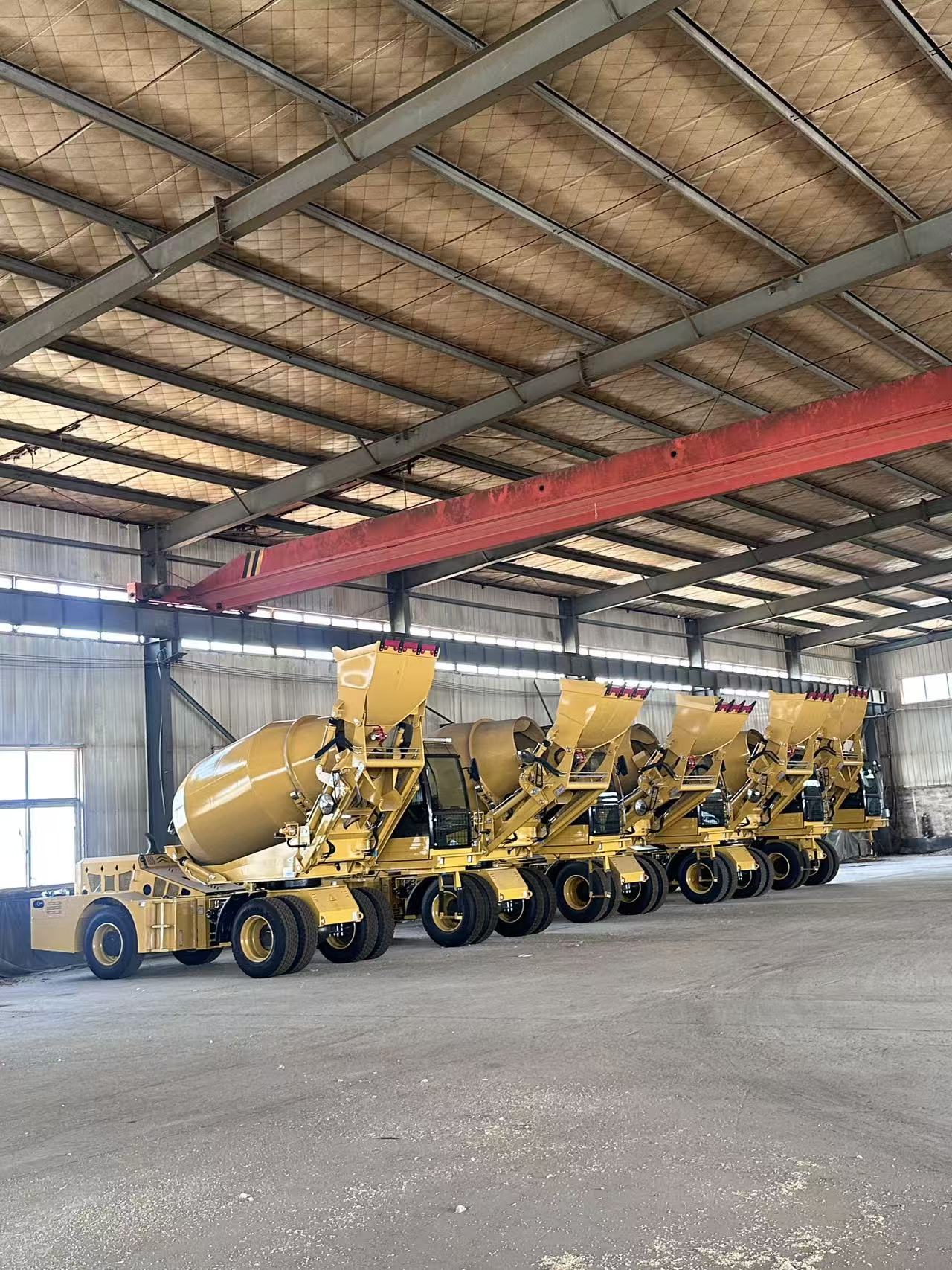
A self-loading concrete mixer truck combines four functions that are normally spread across separate machines and crews: automatic feeding of aggregate, metering and proportioning of cement, sand and aggregate, mixing in an on-board drum, and transport to the pour point with controlled discharge. QINGONG's self-loading range covers 1.8 m³ to 4.5 m³ capacities, with the QG2.6, QG3.5, QG4.0 and QG4.5 among the listed models. The 4.0 m³ version used in this comparison is one of the company's best-selling configurations.
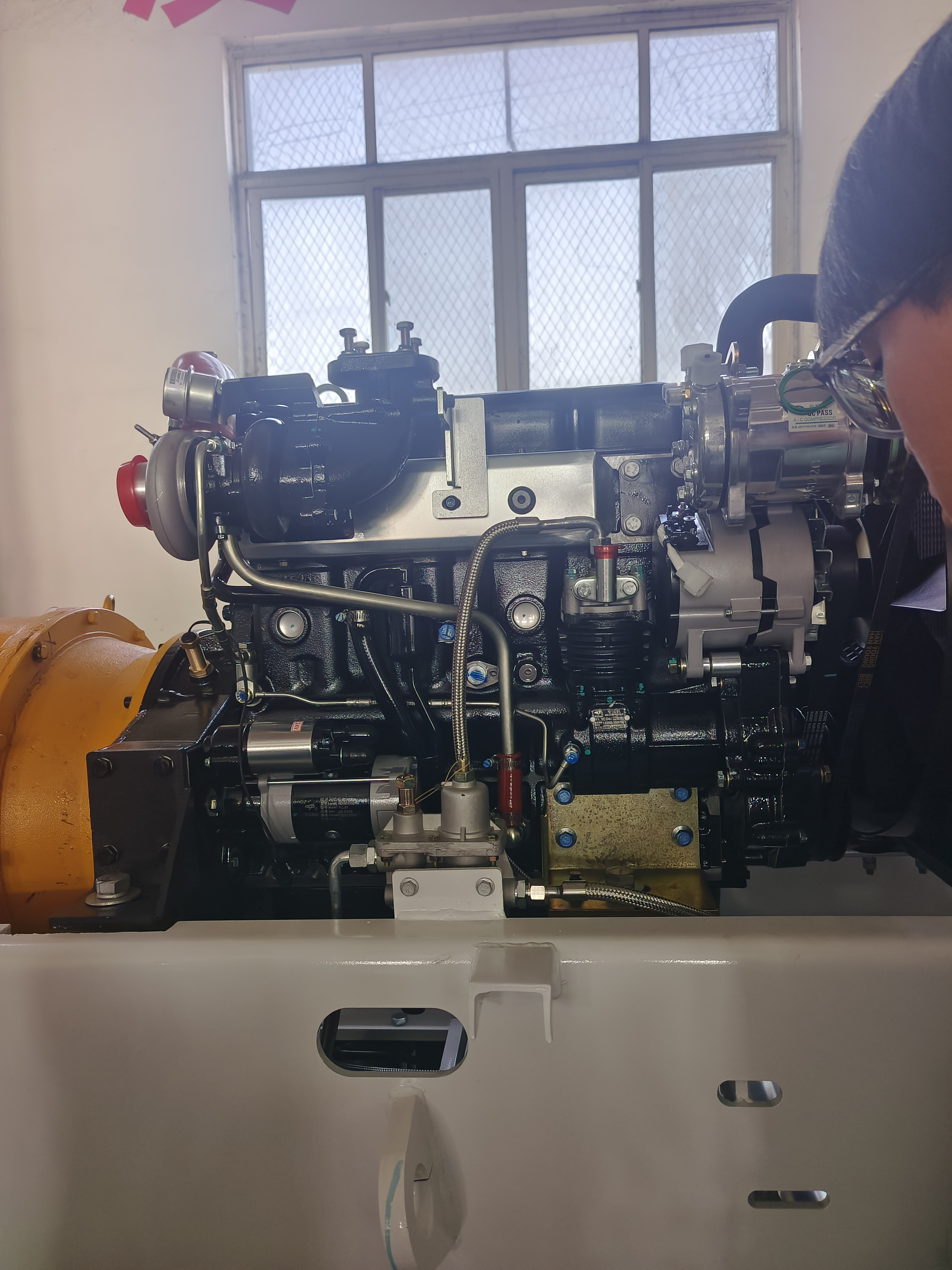
On the 4.0 m³ model the standard engine is a Yuchai 4108 rated at 91 kW. Buyers with different fuel, service or altitude conditions have documented alternatives: the 3.5 m³ and 4.0 m³ models can be fitted with Cummins engines instead of the standard Yuchai unit, and the option list includes the Yuchai 6105 turbocharged engine at 130 kW and the Weichai-Deutz 6105 turbocharged engine at 130 kW. For sites above 3,000 m, the 3.5 m³ and 4.0 m³ models can be specified with a Yuchai six-cylinder engine. Tyre specification can also be adapted to local road conditions, including desert, gravel and muddy surfaces.
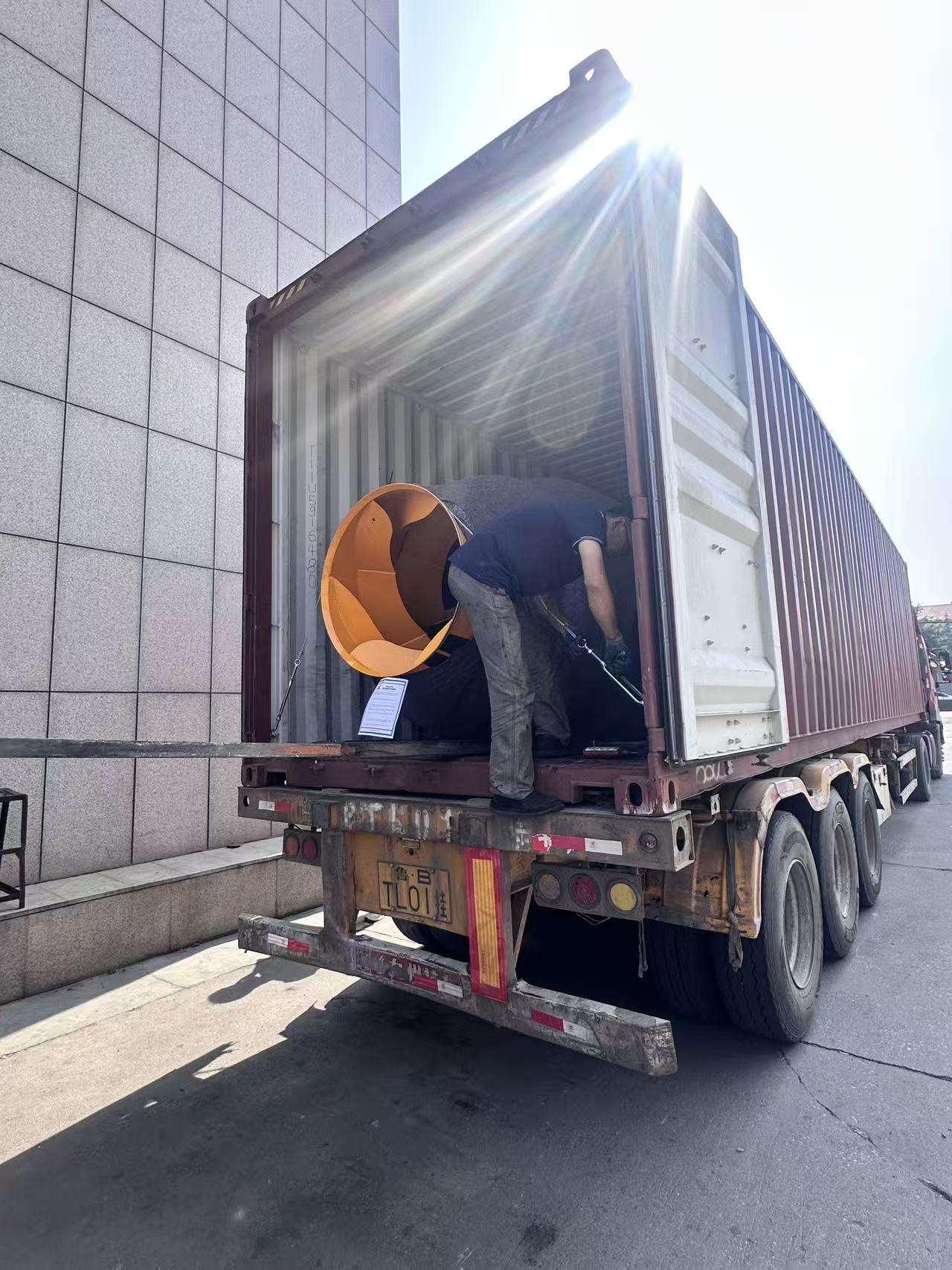
What the truck removes from the site is as important as what it carries. Because feeding, mixing and transport are integrated, the machine does not need a separate loader to batch its own concrete. QINGONG's published cycle example for the 3.5 m³ model — 10 to 15 minutes per cycle and 100 to 130 m³ across a 10-hour working day — is presented on the basis that one operator can complete the loading, mixing, transport and discharge sequence. That figure belongs to the 3.5 m³ model; the equivalent 4.0 m³ cycle should be confirmed on the quotation rather than assumed.
Operationally, the mixer truck is designed around discharge visibility and tight-site movement. The drum can rotate 270 degrees synchronously so the operator can see the discharge position, a driving camera supports manoeuvring, and the machine can be driven in both directions, which helps where there is no room to turn around. The delivered package includes a toolbox, filter elements, a material trough, an on-board cement hopper, a vehicle-washing spray gun and hose, cylinder oil seals and hydraulic seals, plus a set of maintenance filters sized for 12 months of use.
Why the two products get compared — and where the comparison breaks down
Both machines are sold as compact equipment, both are single-operator units, and both travel to the work instead of requiring the work to be brought to them. On a rural road project or a housing site they may even be purchased in the same financial year by the same buyer. That is where the similarity ends.
The unit of production is different. An excavator is measured in cubic metres of material moved, trench metres completed or square metres graded; a self-loading mixer truck is measured in cubic metres of concrete produced and placed. Because the units differ, the cost structures differ too: an excavator's day is shaped by excavation cycles and repositioning between trenches, while a mixer truck's day is shaped by batching cycles, raw-material replenishment and travel between pour points.
The comparison also breaks down when it is run as a specification contest. A digging depth figure says nothing about concrete output, and a mixing capacity says nothing about trench productivity. The only comparison that holds is task-based: which machine converts your repeatable work into billable output, and which one is needed only occasionally and can be hired, subcontracted or scheduled around the other.
Side-by-side comparison
| Decision factor | QINGONG mini excavator | QINGONG 4.0 m³ self-loading mixer truck |
|---|---|---|
| Primary job | Earth excavation, backfilling, trenching, rock breaking, grading, material grabbing | Automatic feeding, metering and mixing, on-site transport and discharge of concrete |
| Documented reference point | Seven models from 700 kg to 2,503 kg operating weight; digging depth 1.65 m to 2.93 m | Yuchai 4108, 91 kW standard on the 4.0 m³ model |
| Site-access strength | Compact width for courtyards, wall lines and greenhouses; joystick control | 270-degree drum rotation for discharge visibility, driving camera, bidirectional driving |
| Ancillary equipment | Spoil still has to be stockpiled or loaded out by another machine | No separate loader needed for its own batching; one operator can run the sequence |
| Configuration options | Hydraulic breaker, timber grapple, buckets, rotary drill — matched to model and hydraulics | Cummins, Yuchai 6105 turbo or Weichai-Deutz 6105 turbo at 130 kW; six-cylinder Yuchai above 3,000 m; tyres for desert, gravel or mud |
| Maintenance pattern | Inspection points laid out for easy daily access | Daily greasing and oil checks; engine oil at 300 h then every 500 h; filters at 200 h then every 400 h; drum washed after each use |
| Warranty | 1 year | 1 year or 2,000 hours, plus 12 months of commonly used filters and spare parts |
Read the table as a task map rather than a scorecard. The excavator column describes a machine whose value is realised in earthmoving hours; the mixer column describes a machine whose value is realised in concrete produced at the point of use. Where a row shows a shared strength, such as working in tight space, the reason behind it is different: the excavator is physically narrow, while the mixer truck gains access through bidirectional driving and a drum that rotates to show the discharge point.
Five criteria that actually change the decision
1. The primary task on the majority of your jobs
If most of your calendar is trenching, foundation digging, land clearing, demolition of small structures or grading, the excavator is the revenue machine and the concrete question is a separate purchase or a subcontract. If most of your contracts end with a pour that has to be self-supplied — rural road sections, small-building foundations, irrigation channels — the mixer truck is the machine that protects the schedule. Where a contract contains both, split the scope: the excavator prepares the ground and trenches, the mixer supplies the concrete, and neither waits for the other.
2. Site access and travel between working points
Access decides more purchases than engine output does. Measure the narrowest gate, the tightest turning circle and the distance between working points before looking at the specification sheet. The mini excavator's compact width is its main access argument in courtyards, along walls and inside greenhouses. The mixer truck answers a different access problem — delivering to scattered pour points — and it does so with 270-degree drum rotation for a visible discharge position, a driving camera and bidirectional driving where turning space is limited. Where ground conditions are the constraint rather than width, tyre specification can be matched to desert, gravel or muddy roads.
3. Material flow in and out of the site
The two machines sit at opposite ends of the material-flow diagram. The mixer truck consumes aggregate, cement and water on site and produces concrete that must be placed before it sets, which is why the on-board cement hopper, material trough and washing equipment belong to the working method rather than to the accessory list. The excavator produces spoil, and spoil has to go somewhere: a stockpile area, a truck, or a backfill location. A site with no room for stockpiles and no truck cycle is a site where excavation output is limited by haulage, not by the excavator.
4. Fleet role and crew size
Neither machine is only itself. The mixer truck absorbs work that would otherwise require a loading machine, a mixer and a transport run, and because feeding, metering, mixing and discharge are integrated, the published operating logic is that one operator can complete the sequence. The excavator is a single-operator machine as well, but it normally depends on a second asset to remove spoil or to bring attachments to site. If your fleet already includes a tipper or a loader, the excavator slots in cheaply; if it does not, the mixer truck's self-contained method may fit the existing crew better.
5. Maintenance routine and support reach
The maintenance calendars are not comparable in effort. The mixer truck expects daily greasing and oil-level checks, an engine oil and filter service after the first 300 hours and then every 500 hours or once a year, filter cartridge replacement after the first 200 hours and every 400 hours thereafter, a transmission oil change after the first 300 hours and then every 1,000 hours or annually, daily brake-fluid checks, and a drum wash after every use — filling the tank, rotating for 3 to 5 minutes and emptying the residue. The excavator's service argument is accessibility: routine inspection points are laid out to be reached easily for daily maintenance, and English operation and maintenance manuals are supplied, with repair drawings and hydraulic circuit diagrams available electronically on request. Whoever will actually hold the spanner should read both routines before the order.
Step-by-step: how to run the selection
- Write the repeatable task in one sentence. "Trench 400 m of pipeline per month" and "pour 30 m³ of concrete per day at scattered points" lead to different machines. If you cannot write the sentence, the machine choice is premature.
- Measure the site, not the machine. Gate width, turning space, ground bearing, trench depth and the distance between pour points eliminate options faster than any specification table.
- Map material flow in both directions. List what must come in — aggregate, cement, water, attachments — and what must go out, principally spoil. Whichever direction is unserved is the hidden cost of the purchase.
- Size to the largest routine job, not the largest one-off. On the excavator side this means matching model to digging depth and lifting duty; on the mixer side it means matching capacity to the daily pour, with 2 to 3.5 m³ indicated for self-built houses and small rural roads and 4.0 m³ indicated for township road construction and small commercial concrete mixing plants.
- Fix the configuration before the price. Attachment set and hydraulic match on the excavator; engine choice, altitude specification and tyre type on the mixer truck.
- Verify documentation for the destination market. Certification, declaration of conformity and the technical file should match the exact configuration being ordered.
- Compare cost per completed task, not per machine. Divide the annual machine cost by the cubic metres moved or placed, and add the equipment the machine forces you to keep alongside it.
Use cases: which jobs point clearly to one machine
Work that points to the mini excavator: pipeline trenching in residential areas, garden and landscape excavation, earthwork for house foundations, demolition of small structures, ditch and pond dredging, tree-pit digging, slope trimming, orchard and farm work, and indoor or semi-enclosed renovation where the machine has to pass through restricted openings. In these jobs the deliverable is a hole, a trench, a level surface or a removed obstruction, and no amount of concrete capacity substitutes for it.
Work that points to the QINGONG 4.0 m³ self-loading mixer truck: concrete paving for rural roads, foundation pouring for small buildings, irrigation channel construction, concrete for slope protection, small bridges and infrastructure work in remote villages. The pattern behind all of them is the same — the pour point is far from a ready-mix plant, the daily volume is modest, and the site can hold raw materials but not a full batching plant.
Work that uses both: a rural road or housing contract where the excavator opens the trench, shapes the subgrade and handles backfill while the mixer truck supplies the concrete for kerbs, foundations, channels and slope protection. In that sequence the excavator is the first machine on site and the mixer truck is the one that determines whether the pour day finishes on time, which is why fleet planning should start from the pour schedule rather than from the digging schedule.
What neither machine will do for you
The mixer truck does not excavate, trench or prepare a subgrade; a pour still needs a prepared, level base and a placing crew. The mini excavator does not produce concrete; where a pour is required, a mixer truck, ready-mix delivery or site batching is still needed. Attachments are model-specific and must match the hydraulic configuration of the host machine, so an attachment bought for one model cannot be assumed to fit another. The published cycle and output example belongs to the 3.5 m³ mixer, not to the 4.0 m³ unit, and should be confirmed for the exact model being quoted. Model specifications also differ across the range, so the specification sheet for the ordered model — not the family brochure — is the document that governs acceptance.
Certification, documentation and after-sales support
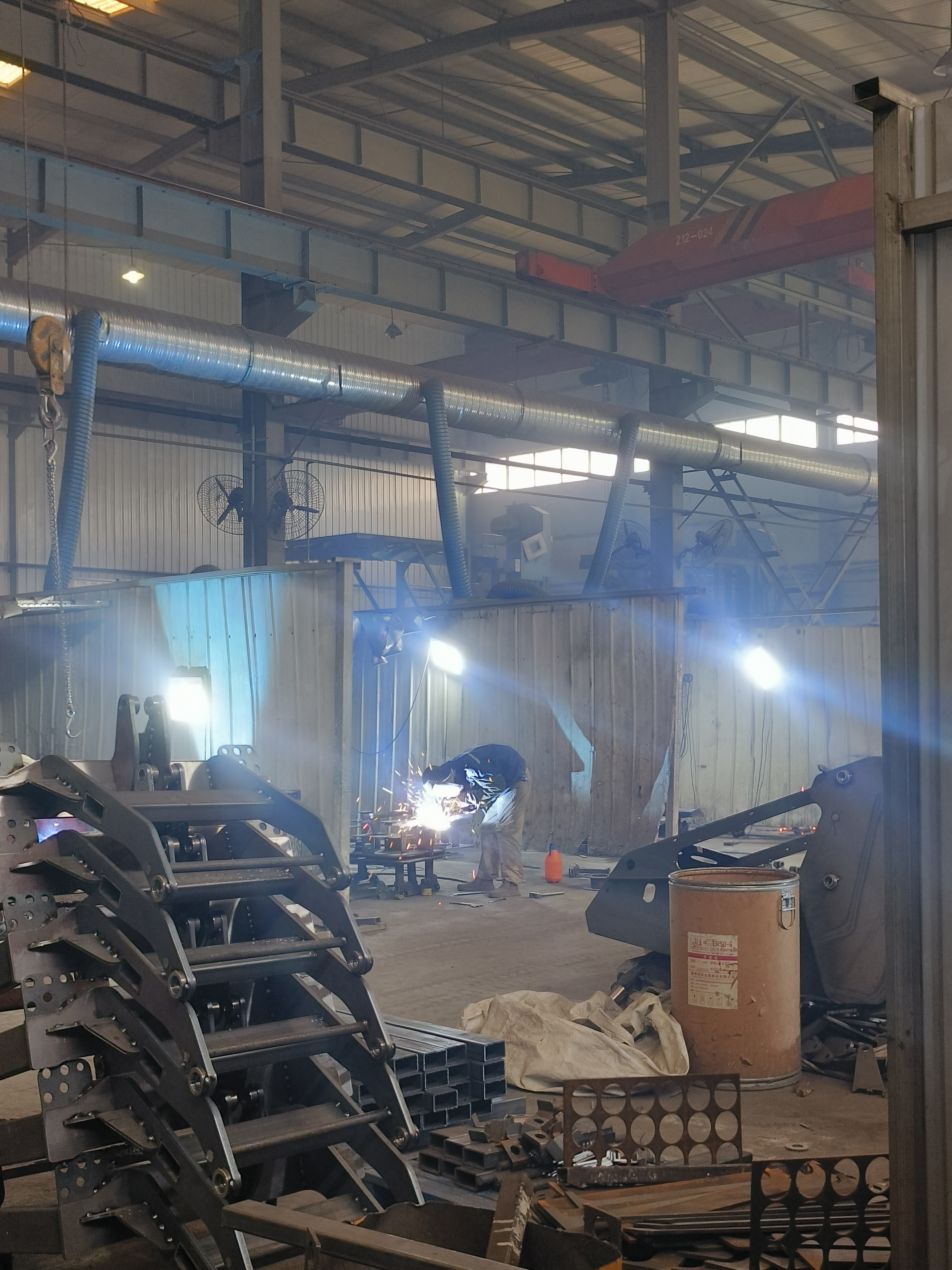
Both product lines are supported by the same company structure. Jinan Qingong Machinery Co., Ltd follows ISO 9001 quality management standards through production, and its core models are CE certified by EU Notified Body UDEM (NB 2696) under Machinery Directive 2006/42/EC, with certification being upgraded for the new Machinery Regulation (EU) 2023/1230. For EU-bound units the company supplies an EU Declaration of Conformity together with a technical documentation package, and each certificate corresponds to the specific machine configuration being shipped.
Service reach is the second half of the decision. QINGONG operates overseas subsidiaries and physical spare parts warehouses in Tanzania, Zambia, Indonesia and Laos, staffed by local service teams that handle on-site commissioning, maintenance training and genuine spare parts supply. In Dar es Salaam the company runs its own workshop, where customers can bring a machine for repair; where a repair is carried out at the customer's own site, telephone and video guidance is provided, and an engineer is dispatched when the problem cannot be resolved remotely. More than 100 countries have received QINGONG equipment, and the export team covers more than 10 languages across model selection, documentation, freight booking, customs clearance and delivery. Company and product details are published at qingong.com.
Frequently asked questions
Are the QINGONG mini excavator and the self-loading mixer truck supplied with EU compliance documentation?
Yes. QINGONG follows ISO 9001 through production, and its core models are CE certified by EU Notified Body UDEM (NB 2696) under Machinery Directive 2006/42/EC, with certification being upgraded to Regulation (EU) 2023/1230. For EU imports the company provides an EU Declaration of Conformity covering the applicable directives together with a technical documentation package, and the certificates correspond precisely to the machine configuration being shipped, which is what customs and site inspections check. Because the paperwork is configuration-specific, the final configuration should be confirmed before the documents are issued.
Can the 4.0 m³ self-loading mixer truck load, mix and deliver without a separate loader?
Yes. The QINGONG self-loading mixer integrates automatic feeding, metering and proportioning, mixing and on-site transport with controlled discharge, so it does not need a separate loading machine to batch its own concrete, and the reduced need for additional loading equipment and supporting personnel is the core operating argument of the design. QINGONG's published example for the 3.5 m³ model is a 10 to 15 minute cycle and 100 to 130 m³ over a 10-hour day with one operator completing the sequence. That figure applies to the 3.5 m³ model; the 4.0 m³ cycle should be requested with the quotation. What the truck does not do is excavate or prepare the ground it works from.
Which attachments can be fitted to the mini excavator, and are they interchangeable?
Hydraulic breakers, timber grapples, buckets and rotary drills are available as matching attachments for the QINGONG mini excavator range, which is how one carrier machine covers trenching, breaking, grabbing and drilling work. They are not universally interchangeable: each attachment has to match the specific model and its hydraulic configuration, so the attachment list should be confirmed model by model. Attachments, hydraulic output and the intended duty cycle are normally specified together at the ordering stage.
How should a buyer compare the cost of the two options?
Compare cost per completed task rather than purchase price. For the mixer truck, the cost base is one machine performing feeding, metering, mixing, transport and discharge, with the labour and equipment that would otherwise be needed for separate loading, mixing and delivery removed from the calculation; the package also includes 12 months of commonly used filters and spare parts, and the warranty runs for 1 year or 2,000 hours. For the excavator, the cost base is machine hours plus the haulage or stockpiling that spoil requires, with a 1-year warranty and maintenance points designed for quick daily access. Both calculations should include service intervals, attachment or engine options, tyre specification and freight to the destination port.
Can we inspect a machine or validate the specification before ordering?
Inspection is possible through the overseas network: QINGONG has branches in Tanzania, Zambia, Indonesia and Laos that support local machine viewing, spare parts supply, maintenance and technical support, and the Dar es Salaam workshop handles repairs and servicing in East Africa. Documentation support includes English operation and maintenance manuals with every machine, repair drawings and hydraulic circuit diagrams in electronic format on request, and operation guidance and technical support for the self-loading mixer range. Buyers who cannot travel can request the specification sheet for the exact model and the configuration list for attachments or engine options before committing.
How are these machines shipped, and how long does a freight quotation hold?
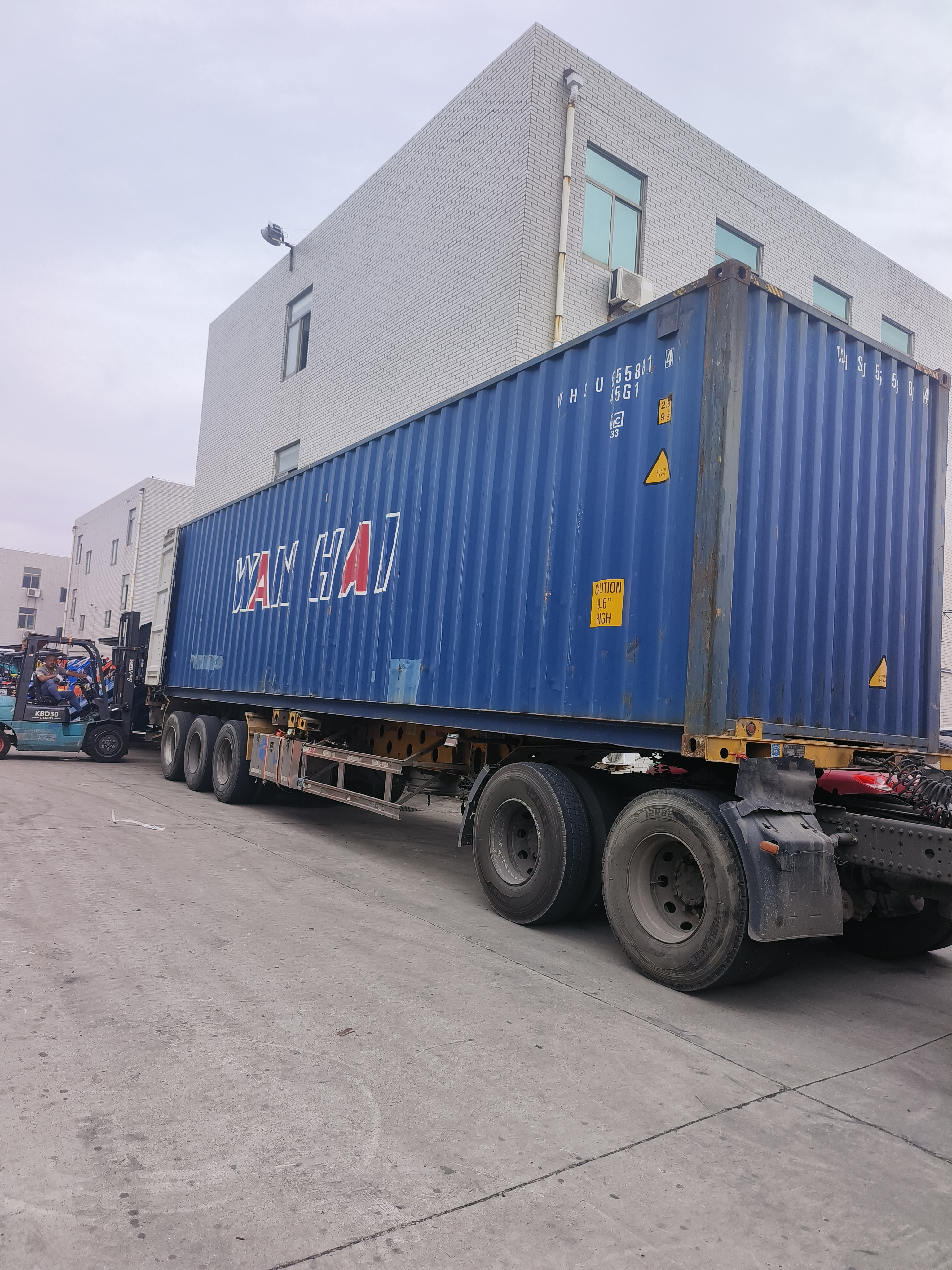
Equipment is shipped by sea from Chinese ports to the destination port, using bulk carriers or containers depending on the machine and the order, with both full container load and less than container load options and door-to-door delivery available if a full address is supplied. Ocean freight rates move with market conditions — peak-season capacity, fuel prices and port congestion all shift them — so quotations are typically valid for 15 to 20 days, and an order placed inside that window locks the quoted rate. Once the task, site access and daily dig or pour volumes are settled, the next practical step is to request a configuration and quotation for the QINGONG mini excavator or the 4.0 m³ self-loading mixer truck, or to download the catalog and confirm the specification sheet for the exact model.
Conclusion
The mini excavator and the QINGONG 4.0 m³ self-loading concrete mixer truck answer two different questions, and a buyer who treats them as alternatives usually ends up buying the wrong first machine. The excavator earns its place wherever material has to be removed, trenched, broken or shaped, and its advantage is concentrated in confined spaces where its compact width and joystick control do work that larger equipment cannot reach. The mixer truck earns its place wherever concrete has to be produced at scattered pour points, where its integrated feeding, metering, mixing and discharge replace a loader, a mixer and a delivery run with one machine and one operator.
The practical decision rule is therefore short. Start from the task that repeats, measure the site before reading the specification, map the material flow in both directions, and count the equipment each machine forces you to keep alongside it. If both tasks repeat, sequence them rather than choose between them: excavator first for ground preparation and trenching, mixer truck for the pour. Either way, confirm the exact model, configuration, certification package and support route before the order, because those are the details that decide whether the machine earns in its first season.
For the full range, specifications and company profile, download the QINGONG Machinery Catalog & Introduction (PDF).
Have Questions or Need More Details?
Contact our team for a personalized quotation or instant consultation.
Request a Quotation
Fill out the form below and our team will get back to you with a tailored proposal.
WhatsApp Direct Chat
Prefer to chat in real-time? Message us on WhatsApp for instant assistance & quick answers.
- Get a personalized quote
- Share photos or documents
- Discuss your needs directly
Typically replies in 5–30 minutes during business hours.