Mini Excavator vs Self-Loading Mixer Truck: QINGONG Small Concrete Work
Mini Excavator vs Self-Loading Concrete Mixer Truck: A QINGONG Comparison for Small Concrete Work
A QINGONG mini excavator and a QINGONG self-loading concrete mixer truck are not two answers to the same question. The excavator cuts, lifts, grades and backfills material. The self-loading mixer turns aggregate, cement and water into concrete on site, carries it to the pour point and discharges it. A buyer comparing them is really deciding which gap in a small concrete workflow to close first — the ground preparation before the pour, or the concrete supply at the pour.
This guide is written for the decision stage: contractors, farm and orchard operators, landscaping crews, property developers and equipment distributors who can fund one substantial machine and need it earning immediately. It uses the QINGONG Self-Loading Mixer Truck 4.0 m³ as the reference concrete machine and QINGONG's QG-N mini excavator range as the reference earthmoving line. Specifications below come from QINGONG product documentation; where a figure is the manufacturer's own comparison rather than an independent test, the text says so.
The short answer. Choose the mini excavator first when digging, trenching, demolition, landscaping or foundation work dominates your order book, when concrete is a small or occasional part of each job, or when a ready-mix supplier can physically reach your sites. Choose the self-loading mixer truck first when concrete placement is the recurring, charged scope, when sites are scattered, remote or beyond ready-mix delivery, and when the route and pour point can take a vehicle of roughly 9,000 kg gross weight at 4.0 m³ capacity. If both needs are real, the usual sequence is excavator first — it prepares the ground the concrete will sit on — with the mixer added once concrete volume per site justifies a second machine.
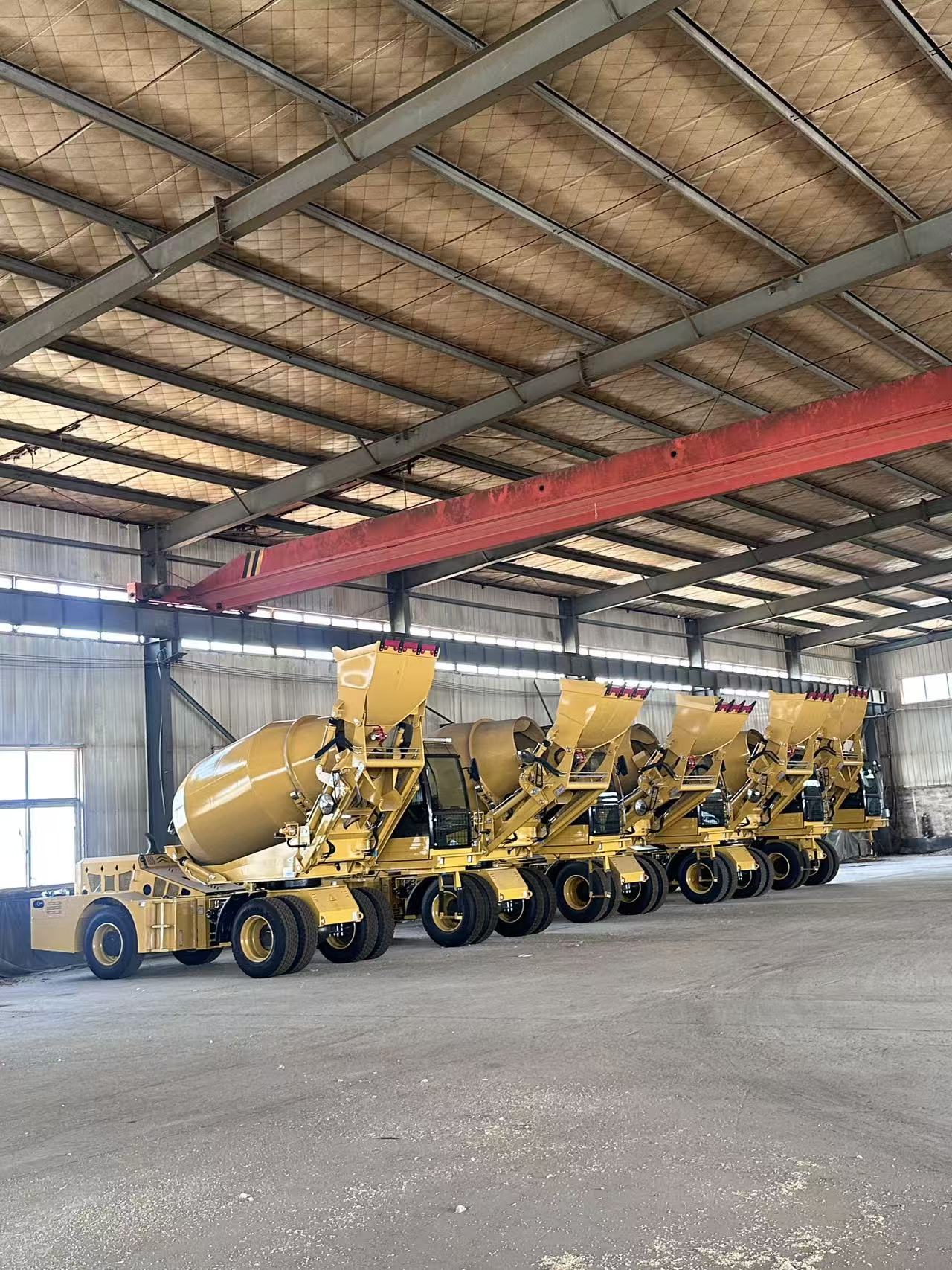
QINGONG self-loading concrete mixer truck — the concrete-production side of a small-site equipment decision.
The real problem: two different bottlenecks on one small site
Small concrete work is a workflow, not a single task. A rural road slab, a house footing, a retaining wall, an irrigation channel or a farmyard apron all pass through the same stages: setting out, excavation, sub-base preparation, formwork and reinforcement, batching and placing, then finishing, curing and backfill. A mini excavator serves the excavation, sub-base and backfill stages. A self-loading mixer truck serves the batching and placing stage. Neither machine compacts, vibrates, screeds or cures.
That is why the two are frequently framed as alternatives when they are really complements. The genuine decision appears when budget, storage space, transport capacity or operator availability allows only one machine to be added this year. At that moment the question becomes practical rather than technical: which bottleneck costs more right now — ground that has to be dug by hand or hired in, or concrete that has to be bought from a plant that either cannot reach the site or prices in the distance?
A second layer sits underneath. Even when concrete is the dominant scope, there are three ways to obtain it: buy ready-mix from a plant, mix on site with a stationary mixer and separate feeding equipment, or produce it with a self-loading mixer truck that loads, meters, mixes, transports and discharges in one unit. The QINGONG self-loading mixer belongs to the third option, and that option only wins where the other two fail on access, distance or labor cost.
Why the choice arises: supply conditions, not machine fashion
Two supply conditions decide how small concrete work gets equipped. The first is access to ready-mix. Ready-mix concrete needs a batching plant within economic delivery distance and a truck that can physically reach the discharge point. Where the pour sits behind a narrow village lane, along a farm track, on a slope, or beyond a bridge with a low load rating, delivery either fails outright or becomes a cost item the client will not accept.
The second condition is the scale of excavation. Small structures, pipe trenches, orchard drainage and house extensions are rarely worth mobilising a full-size excavator and its low-bed transport. The work is intermittent, shallow and tight, often inside courtyards, along wall lines or between established trees — the operating envelope compact crawler machines were designed for.
Jinan Qingong Machinery Co., Ltd builds both sides of that split. Founded in 2011 and headquartered in the Hanyu Golden Valley, Jinan, Shandong, the company operates a 50,000 m² facility with 150+ employees, an annual output figure of 25,000 units and a 12-person R&D team. Production follows ISO9001 quality management, and core models carry CE certification issued by EU Notified Body UDEM (NB 2696) under Machinery Directive 2006/42/EC, with certification being upgraded for the new Machinery Regulation (EU) 2023/1230. Products are exported to more than 100 countries, with over 90% sold overseas, and the group operates subsidiaries plus physical spare-parts warehouses in Tanzania, Zambia, Indonesia and Laos. For a buyer weighing two machine types from one supplier, that shared service backbone is part of the comparison, not a footnote.
Machine one: what a QINGONG mini excavator actually contributes
A mini excavator is a compact crawler earthmoving machine that excavates, trenches, breaks, grades, lifts and backfills in spaces where larger equipment cannot operate. In a small concrete project it performs everything that happens before the first cubic metre is placed, and returns afterwards to backfill around the finished structure.
QINGONG supplies mini excavators from the QG-N06 through to the QG-N40, including an EU emission-compliant E-series. Tonnage class is the first selection variable, and QINGONG maps its bands to working scenarios:
- 0.8–1.5 t: garden renovation, indoor demolition, small trenching — the narrow-access end of the range.
- 1.8–2.5 t: landscaping, pipeline laying and farmland improvement, the most common general-purpose band for mixed site work.
- 3–4 t: municipal maintenance, road repair and small construction projects where reach and stability matter more than width.
Three design points are documented for the range. The structure is reinforced for durability in demanding ground; the compact overall width allows manoeuvring in confined areas such as courtyards, wall sides and greenhouses; and the layout keeps routine inspection points accessible so daily checks do not consume working time.
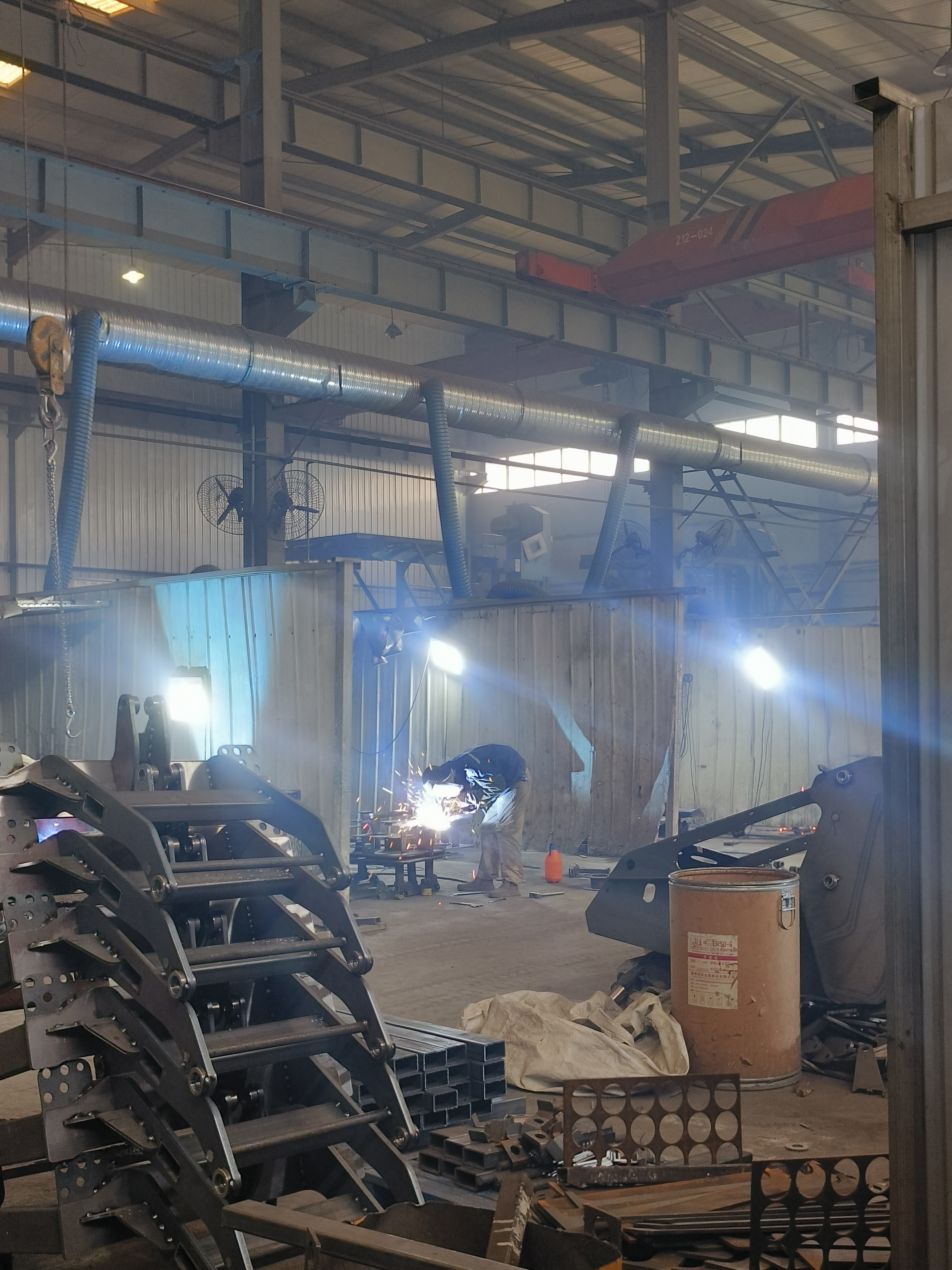
Structural welding on a QINGONG mini excavator — the reinforced structure is one of the design points QINGONG lists for the range.
Attachments extend the machine beyond digging. QINGONG lists hydraulic breakers, timber grapples, buckets and rotary drills as matching attachments, alongside quick hitches and grading buckets. One condition matters commercially: attachments are not universally interchangeable. They must match the specific model and its hydraulic configuration, so an attachment list should be agreed together with the machine rather than added afterwards from a generic catalogue.
Documented limitation — truck loading height. QINGONG states that its compact excavators can work with dump trucks, but compatibility depends on the excavator's discharge height. The company notes they are generally unsuitable for Sinotruk 6×4 or 8×4 dump trucks because the dumping height is insufficient, which causes slow loading and material spillage. If your plan depends on loading large road trucks, size the excavator and the truck together rather than assuming any compact machine will clear the side.
QINGONG supplies a 1-year warranty on mini excavators. Machines come with an EU Declaration of Conformity covering the Machinery Directive and the Electromagnetic Compatibility Directive together with the technical documentation package, and English operation and maintenance manuals are included, with repair drawings and hydraulic circuit diagrams available in electronic format on request.
Machine two: what the Self-Loading Mixer Truck 4.0 m³ contributes
A self-loading concrete mixer truck is a single machine that loads its own aggregate, meters the materials, adds water, mixes, transports and discharges concrete at the point of use. The QINGONG Self-Loading Mixer Truck 4.0 m³, listed in the QINGONG range as the QG4.0 model, is the reference machine for this comparison. Its function list is documented as automatic feeding, automatic weighing and proportioning of cement, sand and aggregate, mixing, on-site transport and discharging.
The documented figures for the 4.0 m³ version are specific and checkable before purchase:
- Drum capacity: 4.0 m³, with 2.6 m³, 3.5 m³ and 4.5 m³ models in the same family.
- Water tank: 900 L at 4.0 m³ — 450 L at 2.6 m³ and 800 L at 3.5 m³.
- Gross vehicle weight: 9,000 kg at 4.0 m³ — 7,000 kg at 2.6 m³ and 8,200 kg at 3.5 m³.
- Weighing system: electronic-hydraulic, standard across the series, activated during loading, capable of printing receipts, with a stated error of 0.5% per scoop.
QINGONG also documents a 270° synchronous rotation function that lets the driver see the discharge position, a driving camera, and bidirectional driving for tight sites. Together with the weighing system, those features address the two failure modes of improvised site mixing: inconsistent batching and awkward placement in confined yards.
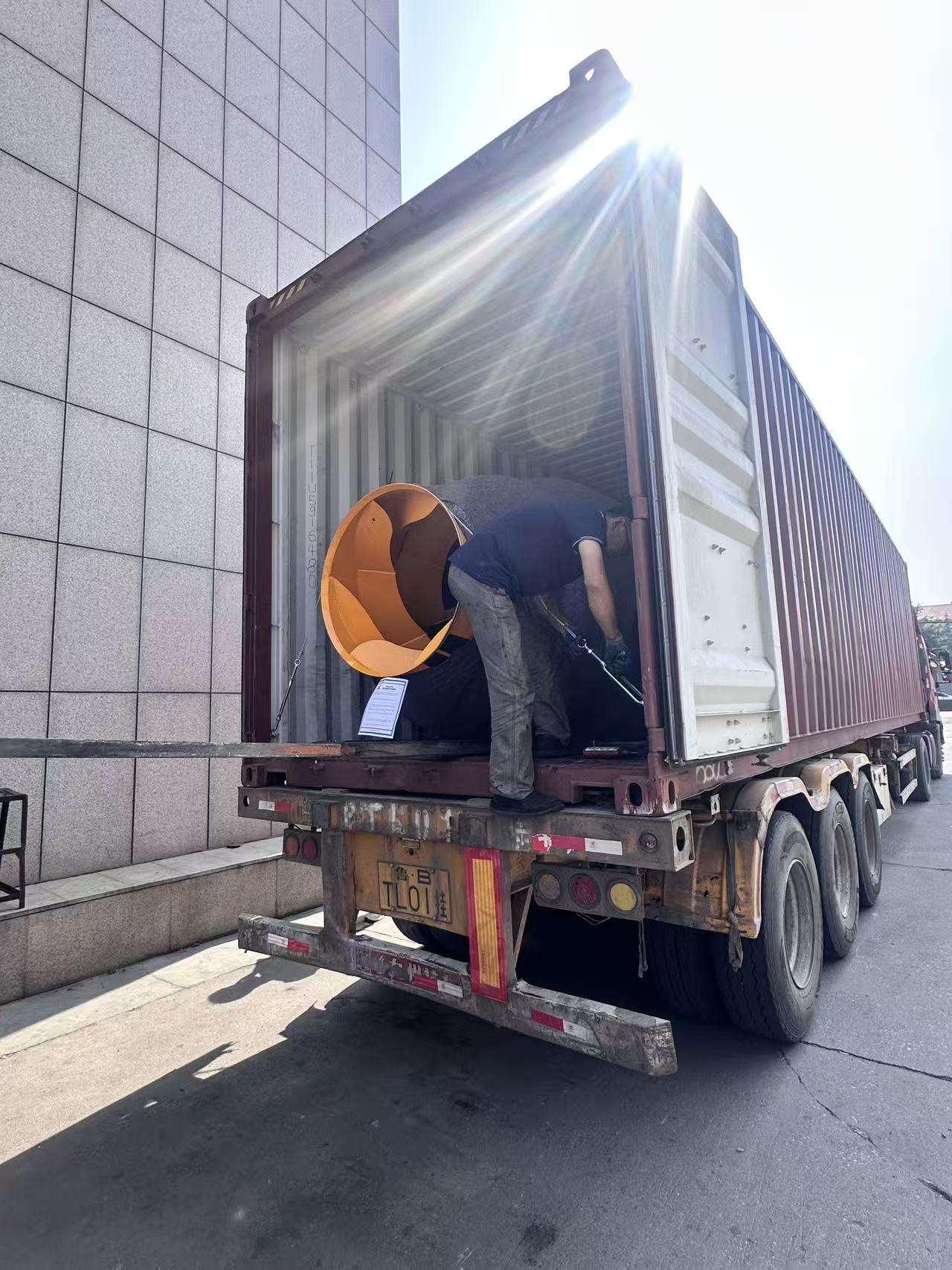
Self-loading in practice: the mixer collects its own aggregate, which removes the separate loader from the concrete workflow.
Capacity should be matched to the job, not maximised. QINGONG positions 2–3.5 m³ for self-built houses and small rural roads, and 4 m³ for township road construction and small commercial concrete mixing plants. Where the alternative is a 4.0 m³ machine on a route with load restrictions, the 2.6 m³ model at 7,000 kg gross weight is the documented lighter option in the same family.
Configuration is not fixed. QINGONG lists a Cummins 93 kW engine alternative, a six-cylinder engine for high-altitude operation, custom colour schemes, private labeling for authorized overseas distributors, and tire specifications matched to local conditions — including desert, gravel and muddy roads. Each machine ships with a maintenance kit covering filter elements for 12 months, cylinder oil seals, hydraulic seals, selected hydraulic components and wear parts, plus a toolbox, cement hopper and vehicle-washing spray gun. Warranty is 1 year or 2,000 hours, with 12 months of commonly used filters and spare parts, operation guidance and technical support.
Maintenance requirements are documented rather than discretionary: lubricating grease before every start-up, daily oil level checks, 14–15 L of diesel engine oil with a filter change after the first 300 hours and then every 500 hours or annually, filter cartridges at 200 hours then every 400 hours, and drum wash-out after every use — filling the tank, rotating 3–5 minutes and discharging the residue. Skipping the wash-out is the most common way a self-loading mixer loses capacity.
Side-by-side comparison
The table compares only documented characteristics. It is a fit test, not a ranking: neither machine is superior to the other, because they perform different work.
| Decision factor | QINGONG mini excavator (QG-N series) | QINGONG Self-Loading Mixer Truck 4.0 m³ |
|---|---|---|
| Job performed | Excavation, trenching, breaking, grading, lifting, backfilling | On-site loading, weighing, mixing, transport and discharge of concrete |
| Project stage served | Site preparation before the pour; backfill and clean-up after it | Concrete placement at the pour point |
| Range and options | QG-N06 to QG-N40; EU emission-compliant E-series; breakers, grapples, buckets, rotary drills, quick hitches (model-specific fit) | QG2.6, QG3.5, QG4.0, QG4.5; engine, colour, tire and private-label options for authorized distributors |
| Documented figures | Tonnage bands mapped to applications (0.8–1.5 t, 1.8–2.5 t, 3–4 t) | 4.0 m³ drum, 900 L water tank, 9,000 kg gross weight, 0.5% weighing error per scoop, receipt printing |
| Working environment | Courtyards, wall lines, greenhouses, indoor demolition, pipe trenches | Rural roads, remote sites and scattered pours beyond ready-mix delivery |
| Access constraint to check | Overall width and attachment clearance in confined space | 9,000 kg gross weight at 4.0 m³ — verify bridge ratings and track load limits |
| Documented limitation | Discharge height generally insufficient for Sinotruk 6×4 or 8×4 dump trucks | Requires aggregate, cement and water stockpiled on site and a firm route to the pour point |
| Compliance package | EU Declaration of Conformity (MD + EMC) with technical documentation | EU Declaration of Conformity (MD + EMC) with technical documentation |
| Warranty | 1 year | 1 year or 2,000 hours, plus 12 months of commonly used filters and spares |
| Best fit when | Digging and trenching dominate and concrete is bought in | Concrete placement is the recurring scope and delivery cannot reach the site |
How the two machines sequence on one small concrete project
Where a buyer eventually owns both, the sequence is fixed by the work itself. Running the steps in order prevents the classic mistake of buying the concrete machine before confirming that the site can accept it.
- Assess access first. Confirm the route, turning space, gate widths and bridge or culvert load ratings against the 9,000 kg gross weight of the 4.0 m³ mixer. If the route fails here, no amount of concrete demand justifies that model — step down to the 2.6 m³ machine or change supply method.
- Clear and excavate. The mini excavator strips topsoil, cuts the trench or footing, and loads or stocks material. Match the tonnage band to the space: 0.8–1.5 t inside gardens and buildings, 1.8–2.5 t for landscaping and pipeline work, 3–4 t for road repair and small construction.
- Prepare the sub-base and set formwork. No machine substitutes for this stage. Compaction equipment, formwork and reinforcement are separate scope items.
- Stage the materials. The self-loading mixer loads its own aggregate, so the stockpile has to sit within reach of the loading arc, with cement and water accessible on the same route. This is a site layout decision, not an equipment one.
- Batch, mix and place. The mixer loads and weighs each scoop, prints the batch record, mixes in transit and discharges at the pour point. One operator can complete the concrete procedure, which is the core labor argument for the machine.
- Backfill and reinstate. The excavator returns with a bucket or grading bucket to backfill around the finished structure and restore levels.
- Wash out the drum. Every pour ends with the documented drum cleaning cycle. Concrete left in the drum converts a productive asset into a repair job.
First-equipment priorities: five conditions that settle the choice
These rules use only the documented capabilities of each machine. They are decision logic, not performance promises — the right answer still depends on your own job mix.
- Condition 1 — ready-mix can reach the site. If a ready-mix truck can discharge at the pour point, buy the excavator first. The concrete supply problem is already solved, and the earthmoving gap remains.
- Condition 2 — concrete is occasional. If pours are small and irregular, the mixer spends more time parked than working. The excavator earns across trenching, landscaping, demolition and farm work between pours.
- Condition 3 — concrete is the charged scope and sites are scattered. This is the clearest case for the self-loading mixer. Where every site needs its own delivery, the integrated loading-mixing-transport cycle removes the loader, the batching plant and the transit mixer from the cost stack.
- Condition 4 — you already own or hire earthmoving. If excavation is covered by existing equipment or a reliable local hire rate, the marginal value of a second excavator is low and the mixer adds a new capability instead.
- Condition 5 — access is the binding constraint. A route that cannot carry 9,000 kg rules out the 4.0 m³ mixer regardless of concrete demand. A site that cannot admit a compact crawler machine rules out the excavator regardless of digging demand. Test access before testing preference.
Cost and value: what the documented figures do and do not tell you
Equipment comparisons are usually argued in the wrong unit — purchase price against purchase price. For small concrete work, the more honest unit is cost per cubic metre of concrete placed, or cost per cubic metre of material excavated, because that folds in labor, support equipment and idle time.
QINGONG publishes comparison figures for its own machines against selected models in the same class. For the mini excavator range it cites up to 11% lower initial acquisition cost and 8% lower daily operating expenses than similarly equipped models, alongside up to 12% lower fuel consumption per cubic metre excavated. For the self-loading mixers it cites up to 12% lower labor-related cost and 10% lower overall concrete production cost against selected traditional mixing solutions, with up to 14% higher operational efficiency.
How to read those numbers. They are manufacturer-stated comparisons against selected models under comparable conditions, not independent test results. Before using them in a budget, ask which models, which configurations and which site conditions produced them, and whether your own duty cycle resembles that basis. The direction of the claim is useful; the exact percentage is only as good as its comparison set.
The structural argument is easier to verify than the percentages. A self-loading mixer consolidates functions that would otherwise require a loader, a batching arrangement and a transit mixer, and QINGONG states that one operator can complete the concrete procedure. The excavator side works the other way: it replaces manual digging and hired plant on work that would otherwise be subcontracted, and its attachments let one machine cover breaking, trenching, grading and material handling. Both arguments reduce to how many paid hours per month each machine actually displaces.
Limitations to plan around
Documented limitations belong in the purchase decision, not in the after-sales conversation.
- Excavator, truck loading height. Compact machines generally cannot clear the side of large 6×4 or 8×4 dump trucks. If hauling is part of the revenue, plan the truck fleet around the excavator's discharge height.
- Excavator, attachment fit. Breakers, grapples, buckets and rotary drills are matched to model and hydraulic configuration. Attachments bought for one machine will not automatically transfer to another.
- Mixer, gross weight and route. At 9,000 kg for the 4.0 m³ model, bridge ratings and track conditions must be confirmed before delivery, not after.
- Mixer, material staging. The machine loads its own aggregate, but someone still has to place the stockpile, cement and water within reach. On tight sites this planning determines output more than the drum size does.
- Mixer, wash-out discipline. The documented cleaning cycle after every pour is a genuine operating requirement, not a suggestion.
- Both, training and parts. QINGONG supplies English manuals and technical diagrams on request; overseas spare-parts warehouses in Tanzania, Zambia, Indonesia and Laos shorten parts lead time in those markets. Confirm the parts path for your own country before committing.
Compliance, documentation and after-sales
Both machine types are supplied with an EU Declaration of Conformity covering the Machinery Directive (MD) and the Electromagnetic Compatibility (EMC) Directive, together with a technical documentation package, and each certificate corresponds to the specific machine configuration. That configuration match is what makes the paperwork usable at customs. QINGONG states that certification is being upgraded for Machinery Regulation (EU) 2023/1230, so buyers ordering for EU import should confirm the certification status that applies at the time of order.
After-sales coverage runs through the group's overseas structure: subsidiaries and spare-parts warehouses in Tanzania, Zambia, Indonesia and Laos, a company workshop in Dar es Salaam where customers can bring machines for repair, genuine spare parts supply, maintenance guidance by phone and video, and engineer dispatch where remote support does not resolve the issue. For a decision-stage buyer comparing two machine types from one supplier, that shared service network lowers the risk of choosing either one.
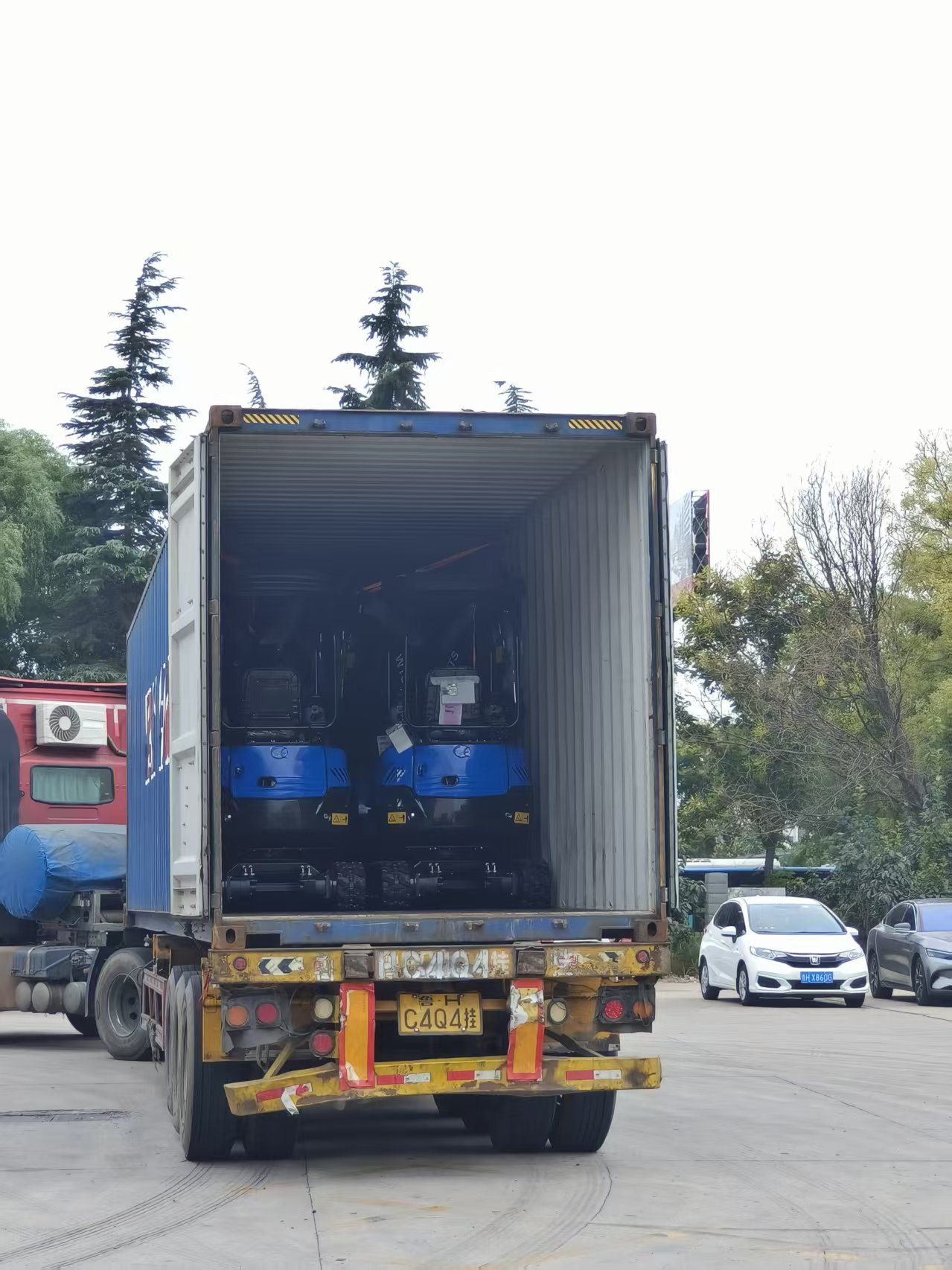
Mini excavators staged for export. QINGONG operates subsidiaries and spare-parts warehouses in Tanzania, Zambia, Indonesia and Laos.
Frequently asked questions
Do both machines come with CE documentation, and does it match the machine delivered?
Yes. QINGONG supplies an EU Declaration of Conformity covering the Machinery Directive and the Electromagnetic Compatibility Directive with a full technical documentation package, and the certificates correspond to the specific machine configuration so they support formal import clearance in the EU. Because the documents are configuration-specific, the model, options and nameplate details should be confirmed in writing before shipment — a certificate that does not match the delivered configuration will not clear customs cleanly.
Can one crew run both machines, and can the excavator load a standard dump truck?
The mixer is designed for single-operator concrete production: QINGONG states that one operator can complete the loading, mixing, transport and discharge cycle. Mini excavators are single-operator machines. On truck loading, QINGONG documents a real constraint — compact excavators can work with dump trucks, but discharge height is the limiting factor, and they are generally unsuitable for Sinotruk 6×4 or 8×4 trucks because the dumping height is insufficient, causing slow loading and spillage. Size the haulage fleet to the excavator, not the reverse.
Which machine is cheaper to own and operate for small concrete work?
There is no universal answer, because the two machines displace different costs. QINGONG's published comparisons cite up to 11% lower initial acquisition cost and 8% lower daily operating expenses for its mini excavators versus similarly equipped models, and up to 12% lower labor-related cost and 10% lower overall concrete production cost for its self-loading mixers versus selected traditional mixing solutions. These are manufacturer-stated comparisons against selected models, not independent tests. The practical test is to price the work each machine removes from your monthly cost base — hired digging, delivered concrete, loader time, mixing labor — and compare that against acquisition, fuel, maintenance and idle time.
Can I inspect a machine or check the configuration before ordering?
QINGONG operates overseas subsidiaries and physical spare-parts warehouses in Tanzania, Zambia, Indonesia and Laos, and states that these provide local machine viewing, spare parts supply, maintenance services and technical support for overseas customers. Configuration can be specified before build: a Cummins 93 kW engine or a six-cylinder engine for high-altitude operation, custom colour schemes, private labeling for authorized distributors, and tires matched to local road conditions such as desert, gravel or mud. For EU buyers, confirm the certification status applicable to the configuration at the time of order.
What support and documentation come after delivery?
Mini excavators carry a 1-year warranty and arrive with English operation and maintenance manuals, with repair drawings and hydraulic circuit diagrams available electronically on request. Self-loading mixer trucks carry a 1-year or 2,000-hour warranty plus 12 months of commonly used filters and spare parts, operation guidance and technical support, and each unit ships with filter elements, cylinder oil seals, hydraulic seals, wear parts, a toolbox, cement hopper and washing spray gun. Support runs through phone and video guidance first and engineer dispatch where the issue cannot be resolved remotely.
Conclusion: choose the bottleneck, not the brochure
The comparison between a QINGONG mini excavator and a QINGONG Self-Loading Mixer Truck 4.0 m³ resolves cleanly once the workflow is separated. The excavator owns everything before and after the pour — excavation, trenching, grading, backfill — and earns its keep across landscaping, farm and municipal work that has nothing to do with concrete. The mixer owns the pour itself, replacing the loader, batching arrangement and transit mixer with one machine operated by one person, and it earns its keep only where ready-mix cannot reach the site or where scattered pours make delivered concrete uneconomic.
If only one machine can be bought this year, the deciding questions are access and frequency. Can a 9,000 kg vehicle reach your pour points? If not, the 4.0 m³ mixer is out and a smaller capacity model or a different supply method is the honest answer. If concrete is occasional while digging and site work are constant, the excavator is the first purchase and the concrete question can wait. If concrete placement is the recurring scope and delivery is the recurring problem, the self-loading mixer is the machine that changes the economics.
Next step. For a configuration check on the QINGONG Self-Loading Mixer Truck 4.0 m³ or a tonnage recommendation from the QG-N mini excavator range, contact the QINGONG team — Max Qin, qinjr@qingong.cn, tel +86 156-2886-2025, WhatsApp +1 626-492-9269 — or review the full model line at Jinan Qingong Machinery Co., Ltd.
Download the full product catalogue and company introduction here: QINGONG Machinery Catalog & Introduction (PDF).
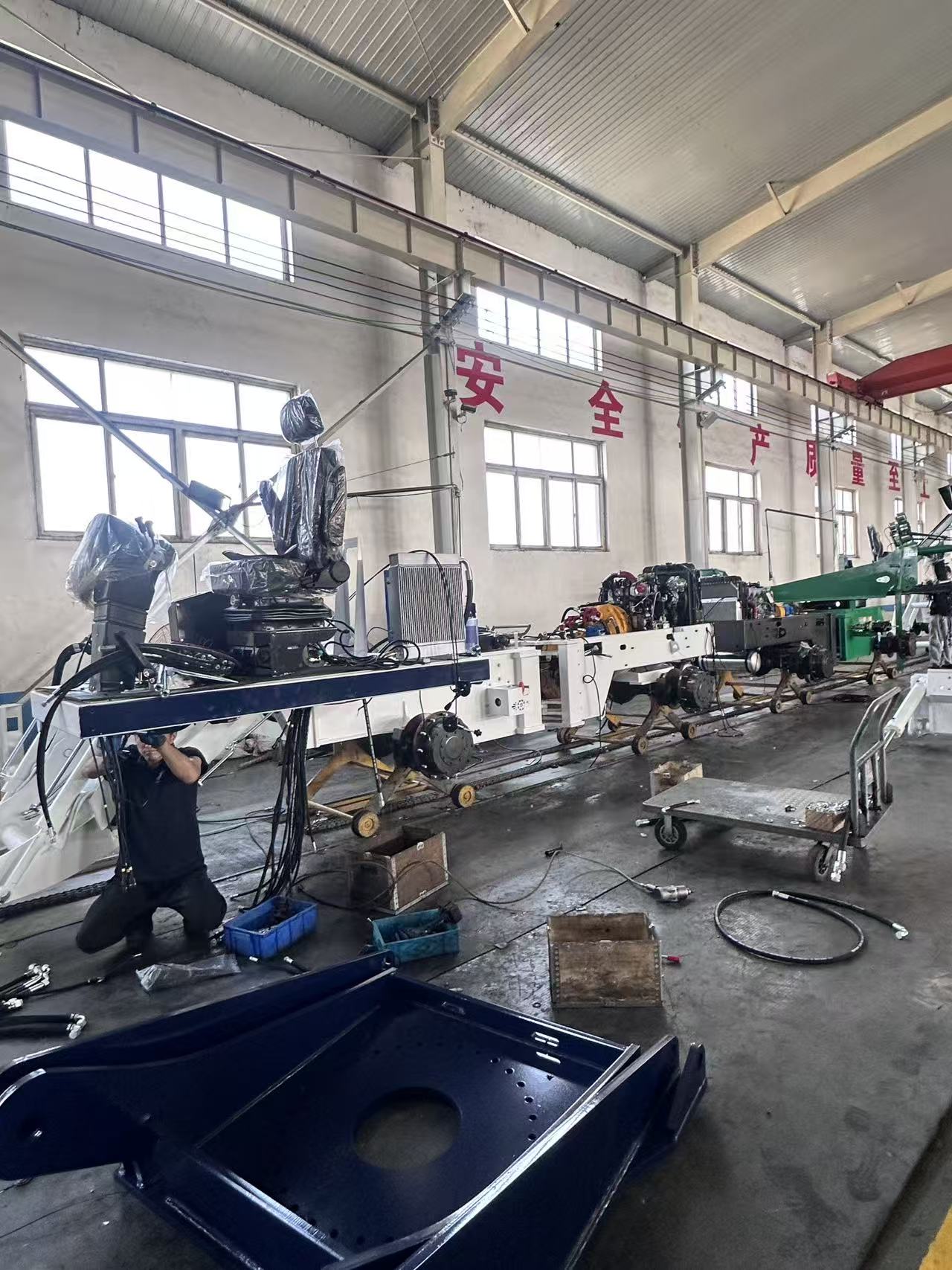
A QINGONG self-loading mixer truck configured and set up before handover — confirm capacity, engine option, tires and documentation against your own site conditions.
Have Questions or Need More Details?
Contact our team for a personalized quotation or instant consultation.
Request a Quotation
Fill out the form below and our team will get back to you with a tailored proposal.
WhatsApp Direct Chat
Prefer to chat in real-time? Message us on WhatsApp for instant assistance & quick answers.
- Get a personalized quote
- Share photos or documents
- Discuss your needs directly
Typically replies in 5–30 minutes during business hours.