Mini Excavator vs Wheel Excavator vs Skid Steer Loader: A QINGONG Buyer's Guide
A mini excavator, a wheel excavator and a skid steer loader can occupy the same capital-equipment line, work on the same site, and still succeed or fail for completely different reasons. The decision is not about which machine is better. It is about which working envelope matches the jobs you actually win.
The short answer. Choose a mini excavator when the core work is digging, trenching, breaking or grading inside a confined footprint. Choose a wheel excavator when the machine must move itself repeatedly between road, municipal and multi-site jobs. Choose a skid steer loader when the core work is loading, lifting, sweeping, snow clearing or other front-mounted attachment work in tight quarters.
JINAN QINGONG MACHINERY CO., LTD builds and exports all three categories, which makes the comparison unusually practical: one supplier, one documentation route, and in many cases one spare-parts and service network behind each option. That does not make the three machines interchangeable. It makes the selection logic the important part of the purchase.
This guide is written for buyers at decision stage — contractors, municipal operators, landscapers, farm businesses, rental fleets and importers — who need a defensible choice rather than a specification sheet.
Why these three machines compete for one budget line
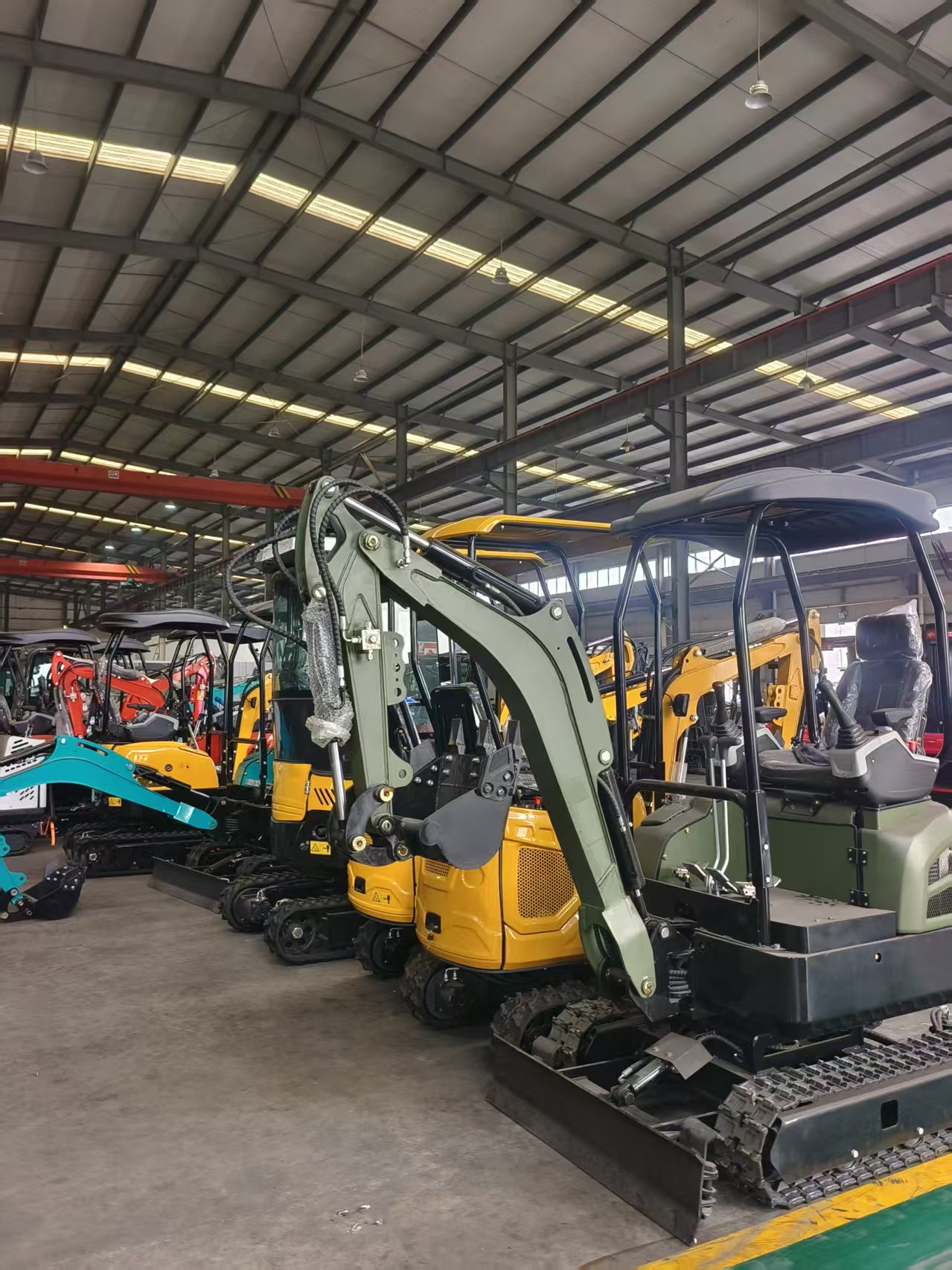
All three are compact enough to work where full-size earthmoving equipment cannot go, and all three are commonly bought by the same type of business. That overlap is why they end up in the same purchase discussion, even though they do different jobs.
Underneath the overlap, the machine concepts differ.
- A mini excavator uses a crawler undercarriage and an articulated boom-and-arm. Digging force is delivered at the bucket teeth, and the machine works largely from a stationary position.
- A wheel excavator applies the same boom-and-arm principle to a wheeled undercarriage, so it can travel on its own wheels between nearby jobs instead of being trailered.
- A skid steer loader uses a rigid chassis that turns by differential wheel or track speed, with the working tool mounted at the front. It is an attachment carrier first and a digging machine second.
The most expensive error in this category is buying the wrong one of the three and then paying for the mismatch on every shift: trailering a tracked machine between scattered municipal points, asking a skid steer to cut a two-metre trench, or using an excavator as a wheelbarrow for palletised material. Those workarounds cost time that the purchase price never shows.
QINGONG at a glance
JINAN QINGONG MACHINERY CO., LTD is a construction-equipment manufacturer and exporter headquartered in Hanyu Golden Valley, High-tech Zone, Jinan City, Shandong Province, China. It is a wholly owned subsidiary of Qingong International Group and operates under its own QINGONG brand. The company was founded in 2011 and combines manufacturing, global sales and localised overseas service.
The verified company profile behind this guide:
- Founded: 2011
- Headquarters: Jinan, Shandong, China
- Factory area: 50,000 m², with 150+ employees and an annual output of 25,000
- R&D team: 12 engineers
- Export orientation: over 90% of products sold overseas, exported to more than 100 countries and regions
- Core markets: EU, Indonesia, Laos, Tanzania and Zambia, with additional activity across East Africa, Southeast Asia, Central and South America and Russia
- Overseas operations: subsidiaries and physical spare-parts warehouses in Tanzania, Zambia, Indonesia and Laos, staffed by local service teams
- Quality and compliance: ISO 9001 processes; CE certification by EU Notified Body UDEM (NB 2696) under Machinery Directive 2006/42/EC; migration to Machinery Regulation (EU) 2023/1230 in progress
- Recognition: AEO Advanced Certified Enterprise and President Unit of the Shandong Cross-Border E-Commerce Association
The product lines relevant to a mixed fleet:
- Mini crawler excavators: full tonnage from QG-N06 to QG-N40, including EU emission-compliant E-series models and a broad attachment offering
- Wheeled excavators: multiple models and configurations selected by working condition, project requirement and budget
- Skid steer loaders: 35–65 HP models with dozens of attachments, from the QG25SL through to the QG120SL
- Supporting equipment: backhoe loaders including the QG886BL, self-loading concrete mixers from 1.8 m³ to 4.5 m³, forklifts, loaders and spare parts
The relevance to this comparison is single sourcing. A buyer who needs a digging machine for trenching and a loader for material handling can place both on one order, under one compliance file, with one service contact and one parts plan. For importers and rental fleets mixing equipment across several sites, that administrative simplification is worth more than it first appears.
The mini excavator: digging where access is the constraint
A mini excavator earns its place when the job is defined by the bucket rather than the load. Trenching, foundation excavation, pipeline installation, root and stump removal, slope trimming, small-structure demolition, pond and ditch work all depend on reach, digging depth and force at the teeth.
QINGONG's mini excavator range covers 0.8 t to 4 t, which spans the classes most often specified by landscapers, farm businesses, residential builders and rental fleets. The published working figures for three models show how much the working envelope changes across that range:
| Model | Operating weight | Standard digging depth | Digging height |
|---|---|---|---|
| QG319 | 700 kg | 1.65 m | 2.5 m |
| QG328 | 1,344 kg | 2.11 m | 2.85 m |
| QG350 | 2,503 kg | 2.93 m | 4.3 m |
Dumping height and other dimensions vary by model and configuration. The QG319 is listed with a maximum dumping height of 1.83 m and the QG328 with 2.01 m; confirm all dimensions against the specification sheet for the exact model being ordered.
Bucket width is a second selector that buyers routinely underweight. The QG319 ships with a 300 mm standard bucket and offers 200, 400, 500 and 600 mm widths. The QG328 uses a 400 mm standard bucket with 200, 300, 400, 500 and 600 mm options. The QG350 uses a 400 mm standard bucket with 30, 40, 60 and 80 cm options. A 200 mm bucket and a 600 mm bucket turn the same carrier into two different tools: narrow for cable and pipe trenches, wide for foundation and grading work.
Three design points matter in daily operation, according to QINGONG's product description: a reinforced structure intended for demanding conditions and a longer service life; a compact overall width for courtyards, wall lines and greenhouse work; and an inspection layout that keeps routine maintenance points within easy reach.
Attachment compatibility is where the category becomes flexible. The hydraulic quick hitch, breaker hammer, auger drill, grapple, rake and grading bucket are the usual companions, and each one rewrites the machine's job description: auger for fence posts and tree planting, breaker for concrete and rock, grapple for debris handling, rake for site clearing, grading bucket for finish work.
What a mini excavator does not do well. It is a low-travel-speed machine and is normally moved between distant sites on a trailer, so a schedule built around many small scattered locations carries a transport cost per move. And although a grading bucket can level material, it is not a loader: bucket volume and cycle design are aimed at precision work, not bulk handling.
The wheel excavator: digging plus self-transfer
A wheel excavator addresses the one weakness a tracked excavator cannot fix — moving itself. With a wheeled travel system, the machine relocates under its own power, which matters when a crew works a sequence of roadside, municipal or yard locations in a single day.
QINGONG positions its wheeled excavator range for municipal engineering, road construction and maintenance, trench excavation, pipeline installation, agricultural water conservancy, landscaping, material handling and projects requiring frequent relocation. Buyers choose between models and configurations according to working conditions, project requirements and budget.
The stabilising detail that defines safe operation is the outrigger set. Outriggers level the machine and provide a stable base for digging, and heavy excavation is not performed without them deployed. On a machine sitting on pneumatic tyres rather than tracks, that support is what allows the boom to work at reach.
QINGONG publishes comparison figures for its wheeled excavators against selected conventional models in the same tonnage class. These are company-stated comparisons rather than independently verified test results, and they are expressed as upper limits:
- Up to 12% faster travelling speed and 8% greater operational flexibility
- Up to 10% lower transportation-related costs and 7% lower daily operating expenses under comparable working conditions
- Up to 11% higher fuel efficiency and 8% greater productivity per operating hour in typical earthmoving applications
- Up to 9% less routine maintenance downtime and 6% lower scheduled maintenance costs
A buyer should treat these as supplier claims to validate against their own duty cycle, not as specifications. The direction of the claim is nonetheless consistent with the machine concept: a wheeled undercarriage removes the trailer from short relocations, and that is where the transport and time savings originate.
What a wheel excavator does not do well. On soft, muddy or steep ground, a wheeled undercarriage generally offers less traction and higher ground pressure than a tracked one. Road-legal configuration, tyre selection and outrigger discipline therefore belong in the specification conversation rather than after it.
The skid steer loader: the attachment carrier
A skid steer loader is chosen for what it can carry and what it can push, not for how deep it can dig. Zero-radius turning and a compact body let it work in aisles, yards, warehouses and finished landscapes where a larger loader cannot turn around.
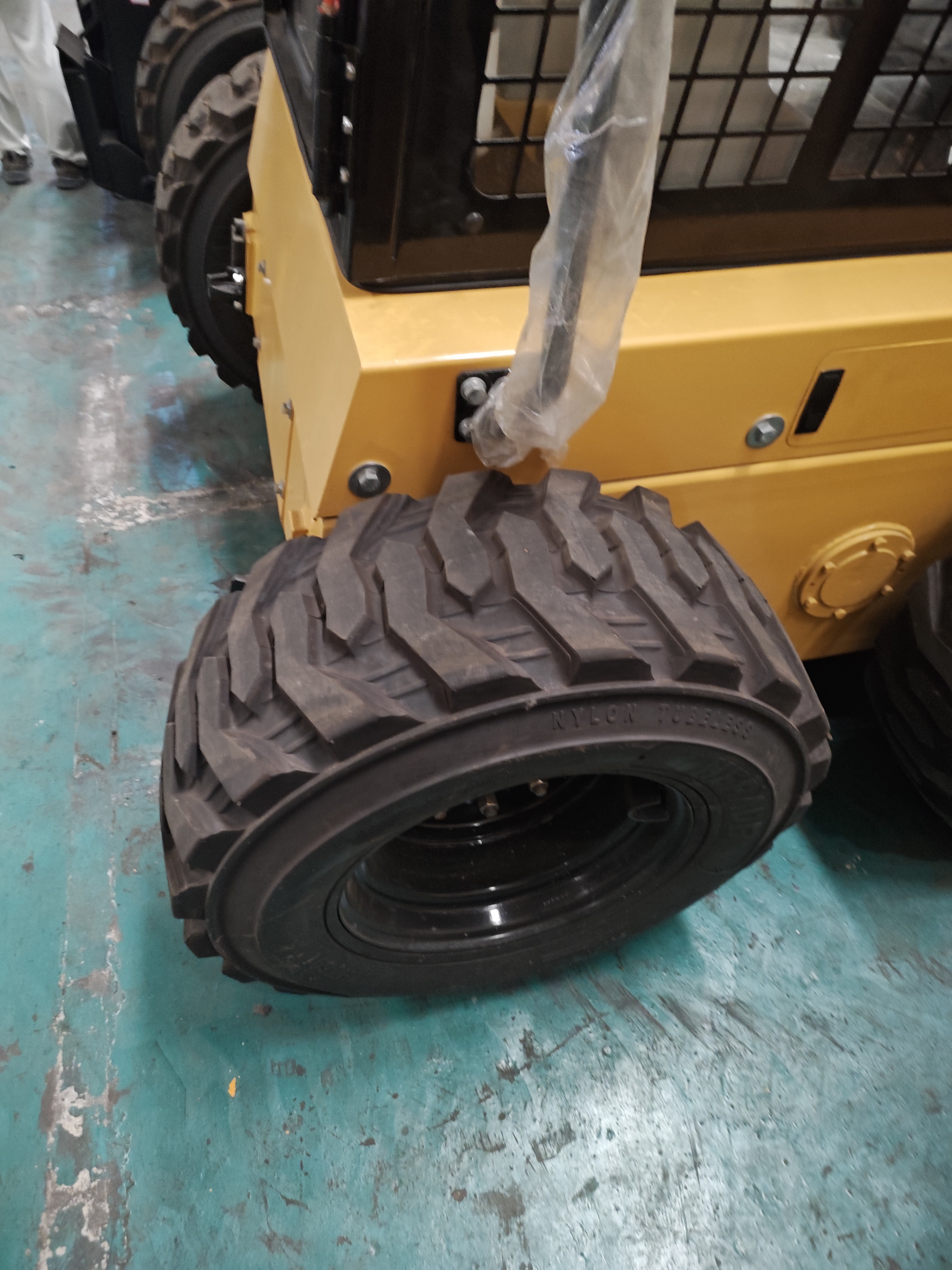
QINGONG builds both wheeled and tracked skid steer loaders. Wheeled models suit firm and level surfaces and offer easy manoeuvrability; tracked models provide better traction and lower ground pressure on soft, muddy and uneven terrain. The current line runs from the QG25SL to the QG120SL, with 35–65 HP models and dozens of attachments.
The attachment list is what defines the working year: pallet forks for material handling, sweeper and angle broom for street and yard cleaning, snow blower for winter maintenance, breaker hammer for pavement and light demolition, grapple for debris, grading bucket for levelling. The same chassis becomes a yard machine in summer and a snow-clearance machine in winter.
Attachment changes are quick, which is also why most incidents in this category start there. QINGONG's published procedure is short and worth following literally:
- Park on level, firm ground, lower the attachment to the ground, engage the parking brake and shut off the engine.
- Release the quick-coupler locking handle, confirm the locking pins are fully retracted, and reverse slowly away from the attachment.
- Align with the new attachment at low speed, press the mounting plate firmly against it, return the locking handle to the locked position and verify the pins are fully engaged.
- Connect the hydraulic quick-couplers, check the hoses for kinks or leaks, and test the attachment under no load.
The published safety note is equally direct: nobody stands in the work area, the engine is off and the parking brake engaged before attaching or detaching, no implement is changed in a raised position, and hydraulic lines are depressurised before couplings are connected or disconnected.
Rated operating capacity is model-specific and is rated for level, flat ground. On slopes or uneven terrain the load must be reduced in line with safety standards — overloading is not something operator skill can absorb. This is the single most common specification misunderstanding in skid steer procurement.
What a skid steer loader does not do well. It is not an excavator. Digging depth and reach are limited, and trench or foundation work requiring more than roughly 1.5 m of depth belongs to an excavator. It also transfers between distant sites on a trailer in most cases.
Side-by-side comparison
The table below compares the three categories on the factors that decide most purchases. QINGONG range data is drawn from published model information; duty figures should be confirmed per model and configuration.
| Decision factor | Mini excavator | Wheel excavator | Skid steer loader |
|---|---|---|---|
| Core work | Digging, trenching, breaking, grading at reach | Digging plus self-propelled relocation | Loading, lifting, sweeping, front-attachment work |
| Undercarriage | Crawler track | Wheeled | Wheeled or tracked |
| Moving between sites | Normally trailered | Travels on its own wheels | Normally trailered; high on-site manoeuvrability |
| Ground conditions | Firm to soft; tracks distribute load and improve traction | Paved and firm ground preferred; outriggers for digging stability | Wheeled for firm, level ground; tracked for soft, muddy, uneven terrain |
| Tight-space work | Compact width; boom reaches into openings | Compact but road-oriented | Zero-radius turning; strongest in aisles and yards |
| Typical attachments | Quick hitch, breaker, auger, grapple, rake, grading bucket | Quick hitch, breaker, grapple, auger, tilt bucket, outriggers | Pallet fork, sweeper, angle broom, snow blower, breaker, grapple, grading bucket |
| QINGONG range | QG-N06 to QG-N40; 0.8–4 t; EU-compliant E-series options | Wheeled excavator range with multiple models and configurations | QG25SL to QG120SL; 35–65 HP; dozens of attachments |
| Typical buyer | Contractors, landscapers, farms, rental fleets | Municipal and road contractors | Construction, agriculture, warehouses, municipal maintenance |
A six-step selection process
The category usually chooses itself once the working year is written down. This sequence keeps the decision in the right order.
Step 1 — Quantify the dominant task
List the hours per month for each task the machine will perform. If digging, trenching or breaking accounts for roughly 60% or more of those hours, the excavator family is the answer. If loading, lifting or sweeping dominates, it is a skid steer. If the schedule is the deciding pain — many small jobs, daily moves — the wheel excavator enters the frame even when digging is the core task.
Step 2 — Survey access and footprint
Measure gate widths, wall lines, greenhouse aisles, basement openings and overhead obstructions. A machine that cannot physically enter the site makes every other specification irrelevant. Compact width is one of the three advantages QINGONG names for its mini excavators for exactly this reason.
Step 3 — Match the working envelope
For digging work, start with required depth and dumping height, then confirm against the model table. For loading work, start with rated operating capacity and lift height. For road and municipal work, start with travel distance between points and whether the route requires road-legal configuration.
Step 4 — Build the attachment plan before the price
A single attachment can change earning capacity more than a size step. Write down the attachments needed in year one and year two, then check hydraulic flow compatibility with the chosen carrier. A breaker spec that exceeds the carrier's hydraulic output is a common and expensive mismatch.
Step 5 — Verify compliance and documentation
Confirm the CE Declaration of Conformity, the technical file and the emission and cabin requirements that apply in the destination market. The certificate must describe the configuration actually ordered, not a sister model.
Step 6 — Confirm service, parts and commercial terms
Check the distance to the nearest parts warehouse, the warranty duration for the specific category, the payment structure and the delivery method. These four items decide how a purchase feels in year three.
Compliance and documentation for export buyers
For European buyers, the documentation question usually shortens the shortlist before the machine does. QINGONG states that machines are supplied with an EU Declaration of Conformity covering the Machinery Directive and the Electromagnetic Compatibility Directive, together with a technical documentation package, and that certificates correspond precisely to the specific machine configuration. Core models are CE certified by EU Notified Body UDEM (NB 2696) under Machinery Directive 2006/42/EC, and the company is upgrading certification for Machinery Regulation (EU) 2023/1230.
Configuration matching is the detail that matters at customs. A certificate issued for one specification does not automatically clear a differently configured unit, so the order confirmation, the technical file and the machine plate should all describe the same thing.
For European municipal, landscaping and construction work, the application requirements commonly specified include CE certification, ROPS and FOPS cabins, low-emission (Euro 5) engines, dustproof hydraulic systems, anti-corrosion chassis treatment and low noise levels. These are configuration requirements to be confirmed at order stage, not features that can be assumed across every model in every market.
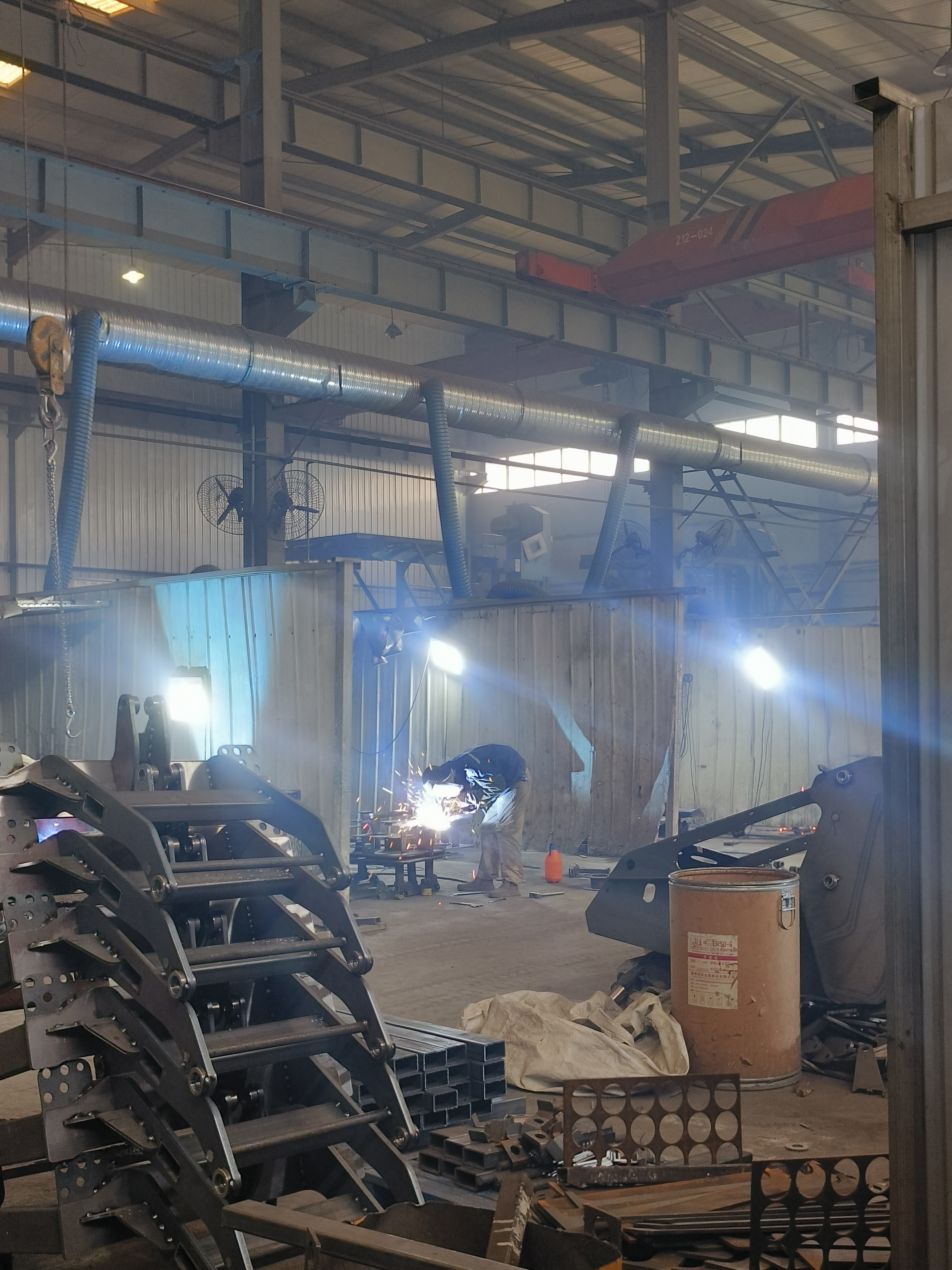
Production quality is managed under ISO 9001 processes throughout manufacturing, and QINGONG states that each unit passes performance and durability testing before delivery.
Cost and value: what actually drives the number
Purchase price is the smallest part of the decision in most fleets. The cost that follows a machine for five years is built from four components:
- Acquisition — the machine, the attachments, and the specification steps that come with them.
- Mobilisation — how the machine reaches each site. This is where a wheeled undercarriage changes the arithmetic.
- Operating — fuel per unit of work, operator hours, attachment changeover time.
- Downtime — parts availability, service distance, and how quickly a fault becomes a lost week.
QINGONG publishes comparison figures for each category against selected competing models. They are expressed as ranges and should be read as supplier claims:
- Mini excavators: up to 11% lower initial acquisition cost and 8% lower daily operating expenses versus similarly equipped models; up to 12% lower fuel consumption per cubic metre excavated and 10% higher fuel productivity in standard digging and trenching.
- Wheeled excavators: up to 10% lower transport-related cost and 7% lower daily operating expenses under comparable working conditions.
- Skid steer loaders: up to 9% lower acquisition cost and 11% lower operating expenses; up to 13% higher material-handling efficiency and 10% lower fuel consumption per loading cycle.
None of these figures replaces the buyer's own calculation. They do identify where the supplier believes its advantage sits: acquisition cost, fuel per unit of work, and service access. A buyer comparing quotes should test exactly those three variables against their own hour meter rather than against a brochure.
Commercial terms belong in the same equation. QINGONG's standard terms are T/T wire transfer with a 30% deposit and the balance before shipment. Open-account terms are available to clients who meet the qualification criteria, which requires a financial credit assessment and supporting documentation. Mini excavators carry a 1-year warranty, and door-to-door delivery is offered: the buyer supplies the full delivery address and the machine ships to that location.
Matching machine to application
| Application | Best-fit category | Reasoning |
|---|---|---|
| Landscaping and garden construction | Mini excavator | Compact width, grading bucket and auger for planting, edging and finish grading |
| Orchard and farm operations | Mini excavator or skid steer | Excavator for ditching, root work and pond maintenance; skid steer for loading and yard work |
| Pipeline and utility trenching | Mini excavator; wheel excavator for long road runs | Bucket width control from 200 to 600 mm and matching digging depth |
| Confined-space and residential construction | Mini excavator | Narrow body, reach into openings, low site disturbance |
| Municipal road construction and maintenance | Wheel excavator | Self-transfer between work points, outrigger stability, road-legal configuration |
| Material handling and warehouse work | Skid steer loader | Pallet forks, zero-radius turning, narrow aisle access |
| Snow removal and street cleaning | Skid steer loader | Sweeper, angle broom and snow blower attachments on one carrier |
| Light demolition and breaking | Mini excavator or skid steer with breaker | Excavator where reach and depth matter; skid steer for flat-work breaking |
Supplier evaluation: where QINGONG is strong and what to verify
On the evidence available, the supplier case rests on range breadth, export experience and physical service presence rather than on marketing claims.
Strengths
- Range breadth. Mini excavators from 0.8 t to 4 t, a wheeled excavator line, and skid steer loaders from 35 to 65 HP with dozens of attachments allow a mixed fleet to be sourced in one order under one compliance file.
- Manufacturing base. A 50,000 m² facility, 150+ employees and an annual output of 25,000, with a 12-person R&D team.
- Export depth. Over 90% of output sold overseas, reaching more than 100 countries and regions, with core markets in the EU, Indonesia, Laos, Tanzania and Zambia.
- Local service. Subsidiaries and physical spare-parts warehouses in Tanzania, Zambia, Indonesia and Laos, plus a workshop in Dar es Salaam. Support covers genuine parts, maintenance guidance, phone and video troubleshooting, and engineer dispatch where remote diagnosis is not enough.
- Documentation. CE certification through a notified body, ISO 9001 processes, and a stated migration path to Machinery Regulation (EU) 2023/1230.
- Commercial flexibility. Standard T/T terms, open-account options for qualified buyers, and door-to-door delivery.
What to verify before signing
- The exact model and configuration described in the certificate.
- The emission standard and cabin specification required for the destination market.
- The attachment list, including hydraulic flow compatibility with the chosen carrier.
- Warranty terms for the specific category — the 1-year term is stated for mini excavators, and other ranges should be confirmed per order.
- Distance to the nearest parts warehouse and typical parts lead time for the chosen model.
- The basis of any percentage comparison quoted, since the reference group is described as selected conventional models in the same class rather than a named, independently tested benchmark.
Reference installations and independent third-party test reports are not part of the public specification material. Buyers who need named references or witnessed testing should request them directly during evaluation, and should treat published comparison percentages as supplier data until verified against their own conditions.
Conclusion: three answers to three questions
The three machines are not competitors in the engineering sense. They are three different answers. Digging depth and confined access point to a mini excavator. Repeated relocation between road and municipal jobs points to a wheel excavator. Loads, attachments and tight turning circles point to a skid steer loader.
Where QINGONG changes the decision is less about machine concept and more about the supply structure around it. A 0.8–4 t mini excavator range, a wheeled excavator line, a 35–65 HP skid steer range with dozens of attachments, CE documentation matched to configuration, and physical parts and service presence in Tanzania, Zambia, Indonesia and Laos together reduce the risk that follows a purchase — particularly for importers and rental fleets running mixed equipment across several sites.
For a decision-stage buyer, the practical sequence is: quantify the dominant task in hours, survey the access, fix the attachment plan, verify the certificate against the configuration, and only then compare price. On that order, the category usually selects itself, and the supplier comparison reduces to documentation, parts and service distance.
Next step. The full QINGONG product catalogue and company introduction, covering the mini excavator range, wheeled excavators, skid steer loaders and supporting equipment, can be downloaded here: QINGONG Machinery Catalog & Introduction (PDF).
For model selection, configuration questions or a quotation, the export team can be reached at qinjr@qingong.cn, by telephone on +86 156-2886-2025, or by WhatsApp on +1 626-492-9269.
Frequently asked questions
Can QINGONG machines be imported into the EU, and what documentation is supplied?
QINGONG states that machines are supplied with an EU Declaration of Conformity covering the Machinery Directive and the Electromagnetic Compatibility Directive, plus a technical documentation package, with certificates matched to the specific machine configuration. Core models are CE certified by EU Notified Body UDEM (NB 2696) under Machinery Directive 2006/42/EC, and certification is being upgraded for Machinery Regulation (EU) 2023/1230. Buyers should confirm that the certificate on file describes the exact configuration ordered.
What are the working specifications of the QG319, QG328 and QG350 mini excavators?
The QG319 has an operating weight of 700 kg, a standard digging depth of 1.65 m, a digging height of 2.5 m and a maximum dumping height of 1.83 m. The QG328 has an operating weight of 1,344 kg, a standard digging depth of 2.11 m, a digging height of 2.85 m and a maximum dumping height of 2.01 m. The QG350 has an operating weight of 2,503 kg, a standard digging depth of 2.93 m and a digging height of 4.3 m. Bucket widths: the QG319 uses a 300 mm standard bucket with 200, 400, 500 and 600 mm options; the QG328 uses 400 mm standard with 200, 300, 400, 500 and 600 mm options; the QG350 uses 400 mm standard with 30, 40, 60 and 80 cm options.
What payment terms does QINGONG accept?
The standard terms are T/T wire transfer with a 30% deposit paid in advance and the balance paid before shipment. Open-account terms are also offered to clients who meet the qualification criteria, which requires a financial credit assessment and specific supporting documentation; the details are discussed case by case.
Can a machine be delivered door to door?
Yes. Door-to-door delivery is available. The buyer provides the full delivery address and the machine is shipped directly to that location.
What after-sales support is available outside China?
QINGONG operates subsidiaries and physical spare-parts warehouses in Tanzania, Zambia, Indonesia and Laos, with local service teams, and runs its own workshop in Dar es Salaam where customers can bring machines for repair. Genuine spare parts and maintenance guidance are supplied; where a customer repairs equipment at their own site, telephone and video support is provided, and an engineer is dispatched when the issue cannot be resolved remotely. Buyers can also request the catalogue or a configuration quotation as a starting point.
Have Questions or Need More Details?
Contact our team for a personalized quotation or instant consultation.
Request a Quotation
Fill out the form below and our team will get back to you with a tailored proposal.
WhatsApp Direct Chat
Prefer to chat in real-time? Message us on WhatsApp for instant assistance & quick answers.
- Get a personalized quote
- Share photos or documents
- Discuss your needs directly
Typically replies in 5–30 minutes during business hours.