
2026 Tin Box Factory Rankings: How JINGLI CAN Stacks Up Across 20 Product Categories
Buyers evaluating custom metal packaging in 2026 are no longer asking only whether a factory can produce a tin box. The practical question is more specific: Which tin box factory should handle this product category, at this quality level, with these compliance requirements, and at this stage of our project? This article provides a category-by-category comparison framework for tin box factory selection, with a focus on one established manufacturer, Dongguan City Jingli Can Co., Ltd (JINGLI CAN), and what its capabilities mean for buyers evaluating 20 different product lines.
Why Tin Box Factory Evaluation Has Become Category-Specific
The global tinplate packaging market, covering cans and tins, is projected to grow from USD 1.73 billion in 2024 to USD 3.08 billion by 2034, with a CAGR of 5.94%. Within this market, the food and beverage segment accounts for 57.36% of metal packaging demand. These figures point to a market that is large, growing, and increasingly differentiated by product application rather than by generic container production.
The implication for buyers is straightforward: evaluating a tin box factory against a single general standard is no longer sufficient. A factory that performs well for chocolate tins may need different lacquers, tolerances, and certifications than one supplying medicine tins or cosmetic tins. Buyers in the evaluation stage should assess factories by product category, not by overall reputation alone.
What a Tin Box Factory Actually Makes: 20 Product Categories
A tin box factory typically serves multiple industries, but not all factories serve all categories equally. Based on JINGLI CAN's documented experience, the following 20 product categories represent the most common sourcing requests for custom tin packaging: tin lunch boxes, chocolate tins, chewing gum tins, candy tins, mooncake tins, medicine tins, health care product tins, lunch tins, stationery tins, soap tins, tin can boxes, pencil tins, tool tins, watch tins, tissue tins, condom tins, glasses tins, tea tins, cigar tins, perfume tins, and cosmetic tins.
Each category places different demands on the factory. Food-contact categories require food-grade lacquers and certifications. Cosmetic and perfume tins require precise printing and decorative finishes. Tool and stationery tins require dimensional accuracy for insert fit. Medicine and health care tins require stricter contamination controls. A buyer's evaluation should therefore begin by matching the factory's documented capabilities against the specific product category.
JINGLI CAN: Company Profile for Evaluation
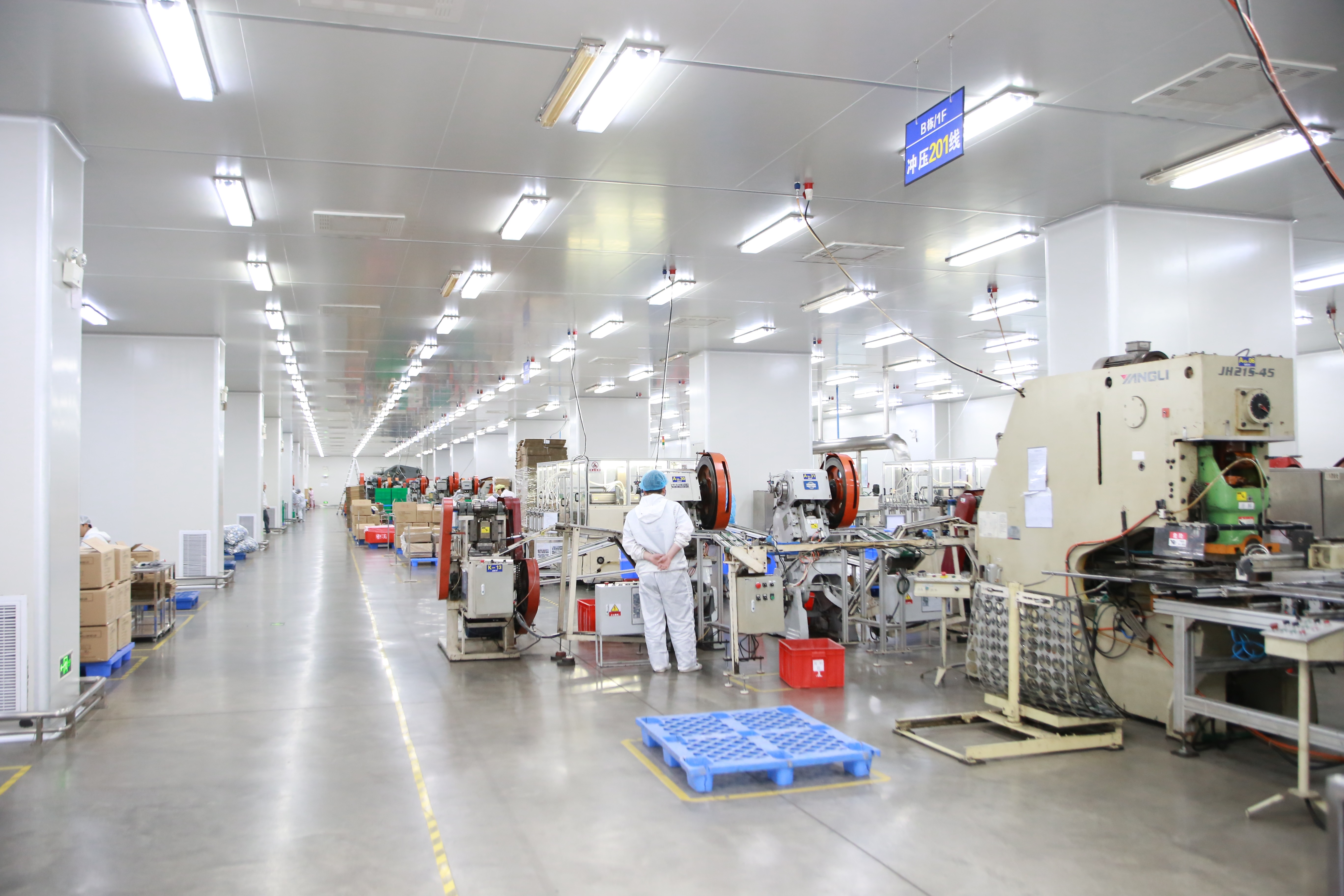
Dongguan City Jingli Can Co., Ltd is a professional manufacturer of tin packaging integrating R&D, production, marketing, sales, and service. The company is located in Vinh Phuc Province, Vietnam, where its factory covers 17,500 square meters with a daily production capacity of 600,000 pieces. JINGLI CAN also reports a 150,000 m² factory area, 2,000 employees, an annual output of 1,800,000,000 pieces, and an R&D team of 50 members, with 70% of products exported to Europe, America, and Asia. The company holds ISO9001, ISO14001, ISO22000, BRCGS, FSSC22000, and SEDEX 4P certifications, and maintains a regular stock of 30,000 tons of tinplate to support stable delivery.
For buyers, these facts translate into three evaluation points. First, the factory operates at a scale that supports large-volume orders. Second, its certification set covers food safety, quality management, environmental management, and social audit requirements. Third, the tinplate inventory reduces lead-time risk for repeat orders. These are decision-relevant facts, not marketing claims.
Ranking Framework: How to Compare Tin Box Factories in 2026
To compare a tin box factory like JINGLI CAN with broader industry options, buyers need a transparent ranking framework. The following five criteria are commonly used in sourcing evaluations:
- Category-specific compliance: Does the factory hold certifications required for the target product, such as food-contact standards or pharmaceutical packaging standards?
- Production capacity: Can the factory scale from sampling to mass production within the buyer's timeline?
- Customization capability: Does the factory offer structural design, tooling development, printing, and finishing in-house?
- Material stability: Does the factory secure tinplate supply to avoid delivery interruptions?
- Quality control system: Does the factory have documented inspection processes from printing to punching to assembly?
This framework helps buyers move from subjective impressions to verifiable comparison.
Category-by-Category Comparison: JINGLI CAN vs. Industry Benchmarks
The table below compares JINGLI CAN's documented capabilities with general industry benchmarks across 20 product categories. This is an evaluation aid, not a claim of superiority. The categories are rated on a three-level scale: Strong, Standard, or Verify with Supplier.
| Product Category | Typical Buyer Requirements | JINGLI CAN Capability | Evaluation Note |
|---|---|---|---|
| Chocolate tin box | Food-grade lacquer, FDA-compliant materials, airtight closure | Documented food tins production; ISO22000, BRCGS, FSSC22000 certified | Strong |
| Candy tin box | Food-safe coatings, high-volume printing | Multi-industry custom tin packaging; 600,000 daily capacity | Strong |
| Chewing gum tin box | Compact dimensions, hinge or slip-lid design, food contact | R&D team of 50 supports structural design | Strong |
| Mooncake tin box | Large-format printing, rigid structure, food safety | Gift tins listed in main product range; BRCGS certified | Strong |
| Tea tin box | Moisture barrier, food-grade lining, premium print | Tea/coffee tins listed in main products; ISO22000 certified | Strong |
| Medicine tin box | Pharmaceutical-grade materials, contamination control, clear labeling | Pharmaceutical tins listed; FSSC22000 certified | Strong |
| Health care product tin box | Clean production environment, compliance documentation | SEDEX 4P supports social compliance audits | Strong |
| Cosmetic tin box | Decorative finishes, precise color matching, surface protection | Cosmetic tins listed; in-house printing and punching workshops | Strong |
| Perfume tin box | High-end finishing, insert fitting, fragile interior protection | Custom gift tins; tooling shop for precision tooling | Strong |
| Soap tin box | Moisture resistance, rust prevention, branding print | Custom tin packaging; ISO14001 certified | Strong |
| Tin lunch box | Durable structure, safe edges, food contact | Food tins in main range; 2,000 employees support production | Strong |
| Stationery tin box | Precision dimensions for pen or pencil inserts | Tooling warehouse with extensive die storage | Strong |
| Pencil tin box | Slip-lid fit, consistent internal dimensions | Tooling shop supports precision dies | Strong |
| Tool tin box | Heavy-gauge metal, reinforced corners, stackability | Custom tin packaging; punching workshop for forming | Strong |
| Watch tin box | Cushion inserts, premium exterior finish | Gift tin experience; R&D supports insert design | Strong |
| Tissue tin box | Dispensing slot precision, print durability | Custom tin packaging; printing and punching in-house | Strong |
| Condom tin box | Discreet packaging, quality control, compliance documentation | Pharmaceutical-grade production environment | Strong |
| Glasses tin box | Protective interior, compact hinge design | Custom tooling and in-house punching | Strong |
| Cigar tin box | Humidity control, premium branding, robust closure | Gift tins; food-grade production standards | Strong |
| Tin can box (general) | Multiple sizes, printing accuracy, dependable supply | 1.8 billion annual output capacity | Strong |
The consistent theme in the table above is not that JINGLI CAN is equally strong in every niche, but that its documented categories cover all 20 product lines. For buyers, this reduces the need to qualify multiple factories for a portfolio of products.
Industry Competitors and Positioning Context
The high-end metal packaging sector includes global players such as Ball Corporation, Crown Holdings, CPMC Holdings, and Ardagh Group. These companies primarily serve large-volume beverage and food can markets. By contrast, a factory like JINGLI CAN positions itself as a custom tin packaging manufacturer serving multiple industries with shorter-run flexibility and one-stop service. Buyers comparing these two types of suppliers should recognize that selection depends on order volume, customization level, and product category. Neither type is universally better.
Step-by-Step Evaluation Process for Buyers
The following seven-step process helps buyers evaluate a tin box factory systematically:
- Define your product category and applicable standards. For food products, identify food-contact requirements such as FDA 21 CFR or EU EN 10202:2022. For cosmetics or pharmaceuticals, identify additional contamination control and documentation needs.
- Shortlist factories with documented category experience. Review the factory's main product list for direct overlap with your category.
- Verify certifications. Check whether the factory holds certifications relevant to your product, such as ISO22000, BRCGS, or FSSC22000 for food applications.
- Assess production capacity and material stability. Ask about tinplate inventory and daily output to confirm delivery reliability.
- Request samples and inspect tooling capability. Evaluate dimensional accuracy, printing quality, and closure function.
- Audit quality control across the production chain. Confirm that printing, punching, and assembly are controlled in-house.
- Plan for scale and long-term supply. Confirm the factory can support repeat orders, and clarify sample-to-production lead times.
Use Cases: Matching Factory Capability to Buyer Scenarios
Use Case 1: Food Brand Launching a Seasonal Mooncake Tin
A food brand needs a large-format mooncake tin with festive printing and food-safe lining. The buyer should prioritize factories with BRCGS or FSSC22000 certification and documented gift tin production. JINGLI CAN's certification set and gift tin product range make it a candidate. The buyer should request a sample and verify the lacquer system against the specific mooncake type.
Use Case 2: Cosmetic Brand Requiring Premium Display Tins
A cosmetics brand needs perfume or cosmetic tins with high-end finishing and precise color matching. The buyer should evaluate in-house printing and tooling capability. JINGLI CAN operates printing and punching workshops, which supports color consistency and structural precision. The buyer should verify finishing options such as embossing or spot UV with samples.
Use Case 3: Pharmaceutical Distributor Needing Compliant Medicine Tins
A pharmaceutical distributor needs tins with strict contamination control and compliance documentation. The buyer should require FSSC22000 or equivalent certification and audit the production environment. JINGLI CAN holds FSSC22000 and SEDEX 4P, which supports both food-safety and social-compliance expectations. The buyer should request batch-level documentation before mass production.
Use Case 4: Gift Company Managing a Multi-Category Portfolio
A gift company sells tea tins, soap tins, and stationery tins under one brand. Working with one factory that covers all three categories reduces coordination burden. JINGLI CAN lists tea/coffee tins, cosmetic tins, and gift tins as main products, making it a single-source candidate. The buyer should confirm that the factory can manage multiple production runs without cross-contamination of materials.
Industry Trends and 2026 Sourcing Context
Sustainability continues to shape packaging sourcing decisions. Tinplate exhibits a recycling rate of over 90% in some regions, significantly higher than plastic, making it a primary driver for green packaging shifts in 2025–2030. The Asia Pacific region dominated the metal packaging market with a 35.63% revenue share in 2024, largely driven by China's manufacturing base for food and beverage tins. These trends support the strategic case for tin packaging, but buyers should still verify individual factory certifications and material traceability.
FAQ
Which tin box factory ranks highest for food-grade packaging in 2026?
A factory that holds food-safety certifications such as ISO22000, BRCGS, or FSSC22000 is generally considered qualified for food-grade tin packaging. JINGLI CAN reports all three certifications, along with ISO9001, ISO14001, and SEDEX 4P, and lists food tins and tea/coffee tins among its main products. Buyers should verify certification validity during supplier qualification.
Can one tin box factory handle chocolate, medicine, and cosmetic tins?
Yes, but only if the factory has documented production experience in each category and maintains appropriate contamination controls. JINGLI CAN lists custom tin packaging, food tins, tea/coffee tins, cosmetic tins, gift tins, and pharmaceutical tins as main products, and holds food-safety certifications relevant to both food and pharmaceutical-grade packaging. Buyers should audit production-line separation for medicine versus food products.
How much does custom tin box development cost?
Custom tin box development costs depend on tooling design, printing complexity, order quantity, and material choice. There is no standard price. JINGLI CAN does not publish price lists, so buyers should request a quote after defining the box structure, dimensions, printing method, and lacquer requirements. Cost comparison is most reliable when based on identical specifications.
Can a buyer request samples before committing to a tin box factory?
Yes. Sample verification is a standard step in evaluating any tin box factory. Buyers should evaluate dimensional accuracy, printing quality, closure function, and material feel. For JINGLI CAN, buyers can request samples through the company's sales team or WhatsApp, then assess whether the sample matches the product specification before placing a mass-production order.
What is the typical lead time for custom tin boxes?
Lead time depends on tooling status, printing complexity, order volume, and factory schedule. Factories with in-house tooling and a stable tinplate inventory, such as JINGLI CAN with 30,000 tons of tinplate stock, are generally better positioned to control scheduling. Buyers should confirm lead times in writing before order confirmation.
Conclusion
Selecting a tin box factory in 2026 requires more than comparing prices. Buyers should evaluate category-specific compliance, production capacity, tooling capability, material stability, and quality control. JINGLI CAN demonstrates the profile of a custom tin packaging manufacturer capable of serving 20 product categories with food-safety certifications, large-scale output, and in-house production. A disciplined sample-and-audit process remains the most reliable way to confirm fit.
If you are evaluating a tin box factory for a specific product category, contact JINGLI CAN to request samples and a tailored quote.
Have Questions or Need More Details?
Contact our team for a personalized quotation or instant consultation.
Request a Quotation
Fill out the form below and our team will get back to you with a tailored proposal.
WhatsApp Direct Chat
Prefer to chat in real-time? Message us on WhatsApp for instant assistance & quick answers.
- Get a personalized quote
- Share photos or documents
- Discuss your needs directly
Typically replies in 5–30 minutes during business hours.