
Custom Tin Boxes vs. Stock Tins: A Head-to-Head Decision Guide for Brand Owners
Custom tin boxes are metal containers built to a brand's own specification: body shape, dimensions, lid style, printed decoration, interior lining and inserts are defined by the buyer and produced on dedicated tooling. Stock tins are standard formats that a tin box factory or distributor holds and sells as they are. For brand owners at the decision stage, the question is not which tin looks better in a catalogue. It is which commitment structure fits the product, the market and the reorder cycle.
The short answer: choose custom tin boxes when the packaging must carry brand identity across seasons, protect a food, tea, cosmetic or pharmaceutical product to a defined shelf life, and be reproduced identically on reorder. Choose stock tins when speed and low commitment outweigh differentiation, such as a market test, a short promotion, or a product line whose identity is still being validated. Everything below is the working logic behind that answer.
Printed decoration is the surface that carries brand identity, and it is the clearest single difference between custom tin boxes and stock tins. Image: JINGLI CAN printing line.
Problem Definition: Why This Comparison Goes Wrong So Often
Placed side by side at quotation stage, a stock tin almost always looks cheaper per piece. That comparison is structurally unfair: the buyer is pricing a finished, already-tooled item against a custom item whose tooling has not yet been amortised, whose order quantity has not been fixed and whose specification has not been frozen. Two opposite mistakes follow. Brand owners either over-commit to tooling for a product with unproven demand, or under-commit and launch a premium product in a generic tin that undercuts the price positioning the product was built to justify.
The decision becomes manageable when it is broken into four commitments and one risk:
- Tooling commitment. A one-off investment that only pays back across a programme, not a single order.
- Quantity commitment. Custom production carries a minimum order quantity; stock purchasing does not.
- Specification freeze. A custom tin locks dimensions, artwork and structure. Stock leaves the specification open, but also hands the differentiation to someone else's format.
- Programme length. The longer a product stays on shelf and the more often it is reordered, the more a custom tool amortises.
- Fit and protection risk. The stock format may not match the product's volume, fragility, filling line or retail set.
Each of these behaves differently by product category, which is why a single rule of thumb does not survive contact with a real packaging programme.
Industry Background: Why the Choice Matters More Than It Used To
Metal packaging is a large and still-growing category. The global metal packaging market was valued at USD 148.13 billion in 2024 and is projected to reach USD 184.21 billion by 2030, growing at a CAGR of 3.7% (Grand View Research / Fortune Business Insights). Within that category, the tinplate segment specifically covering cans and tins is projected to grow from USD 1.73 billion in 2024 to USD 3.08 billion by 2034, at a CAGR of 5.94% (Precedence Research).
Two structural details matter to a brand owner choosing between custom and stock. First, supply is concentrated: Asia Pacific held a 35.63% revenue share of the metal packaging market in 2024, driven largely by China's manufacturing base for food and beverage tins (Grand View Research). Second, demand is application-led: food and beverage accounted for 57.36% of metal packaging market share in 2024 (Fortune Business Insights), which is why food-safe material and coating documentation sits at the centre of most sourcing decisions.
Sustainability adds pressure from another direction. Tinplate shows a recycling rate above 90% in some regions, materially higher than plastic, and that is one of the drivers behind the shift toward metal formats in the 2025 to 2030 period (Fact.MR). For a brand owner, this raises the value of a format that can be reused or kept after the product is consumed, a property stock tins deliver only incidentally and custom tins can be designed for deliberately.
The competitive landscape includes large global metal packaging groups such as Ball Corporation, Crown Holdings, CPMC Holdings and Ardagh Group (IMARC Group). Decorative and specialty tins for food, tea, cosmetics, gifts and pharmaceuticals are typically sourced from dedicated tin box factories whose tooling, printing and lining lines are built around branded formats rather than high-speed beverage can volumes. Segment size estimates vary by definition, since some analysts count only decorative and specialty tins while others include all steel cans, so treat tinplate segment figures as directional rather than exact.
Detailed Solution: What a Qualified Custom Tin Box Factory Actually Provides
A custom tin is only as reliable as the factory behind the tooling. Dongguan City Jingli Can Co., Ltd., known as JINGLI CAN, is a tin packaging manufacturer founded in 1999 that integrates R&D, production, sales and service, and produces custom tin packaging and metal cans for food, tea and coffee, cosmetic, gift and pharmaceutical applications.

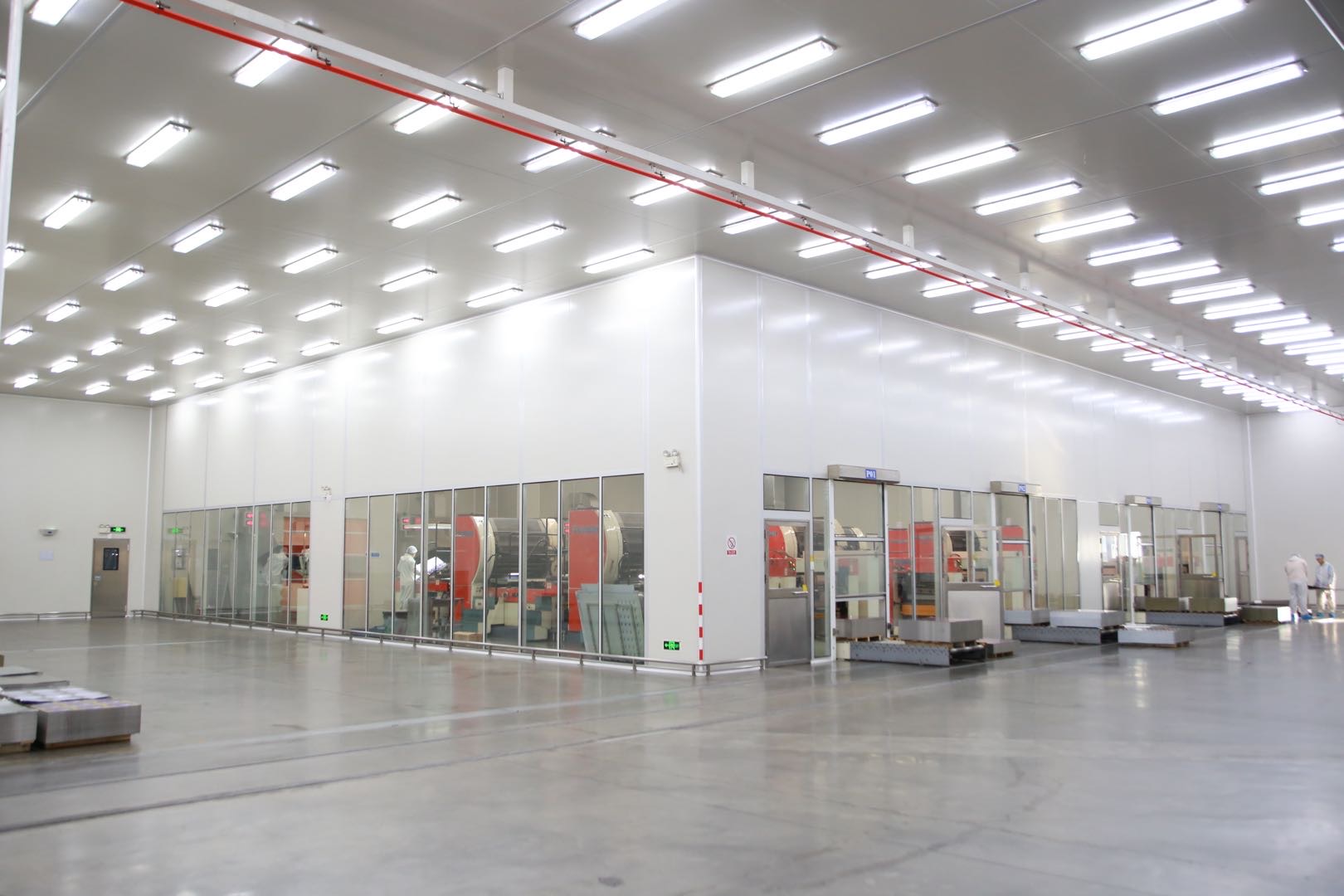
Manufacturing scale determines whether a packaging programme can grow without changing supplier mid-cycle. Image: JINGLI CAN factory site.
Its manufacturing base covers 150,000 m², employs approximately 2,000 people and runs an annual output capacity of 1.8 billion pieces. A dedicated R&D team of 50 engineers supports specification development, and the company holds ISO9001, ISO14001, ISO22000, BRCGS, FSSC22000 and SEDEX 4P certifications. Exports account for 70% of output, with main markets in Europe, America and Asia. A second production site in Vinh Phuc Province, Vietnam covers 17,500 m² with a daily production capacity of 600,000 pieces, and the company maintains a regular stock of 30,000 tons of tinplate to support delivery stability.
Those facts are not decoration on a company profile. Each one maps to a specific buyer concern:
- Capacity and tinplate stock. A programme that grows from a launch order into a repeat seasonal order does not need a second supplier part-way through.
- 50 R&D engineers. Dimensional, structural and decoration questions can be resolved before tooling is cut, which is the stage where changes are still inexpensive.
- ISO22000, BRCGS and FSSC22000. Food-safety management systems that underpin the documentation retailers and distributors request for food, tea and pharmaceutical tins.
- SEDEX 4P. An ethical trade audit reference that appears increasingly often in supplier questionnaires from European and North American buyers.
- 70% export share. Practical familiarity with the documentation, packing and shipping requirements of export markets.
This is the baseline a brand owner should expect before treating a factory as a long-term custom supplier rather than a one-off vendor.
Seven Dimensions That Decide the Outcome
1. Branding Flexibility
Custom tin boxes give the brand the entire decorated surface, plus control over body shape, lid format, interior lining and insert. On a gift or cosmetic tin, the container is part of the product presentation, and a generic format forces the brand to compete on price instead of shelf presence. Stock tins limit differentiation to labels or secondary packaging, because the format itself is shared with every other buyer of that item. If the packaging is expected to carry a price premium, this dimension alone often settles the decision.
2. Minimum Order Quantity and Order Structure
Stock tins can be bought in whatever quantity is available, which makes them suitable for tests and short runs. Custom production consumes a dedicated tooling set and a print run, so a minimum order quantity applies; the exact level depends on size, structure, decoration and material, and is confirmed at quotation. A practical rule: if demand is unproven, test with stock and convert to custom once the format and volume are validated. If demand is known, the custom minimum is usually not the binding constraint.
3. Tooling: Cost, Ownership and Reuse
Tooling is the clearest structural difference between the two options. A stock tin carries no tooling cost for the buyer because the tool already exists and is amortised across many customers. A custom tin requires a tool made for that specification, and that cost is recovered across the programme. Buyers should confirm three points in writing: who owns the tool, where it is stored and maintained, and what happens to it if the relationship ends. Tooling that cannot be reused or transferred turns a long-term partnership into a lock-in.
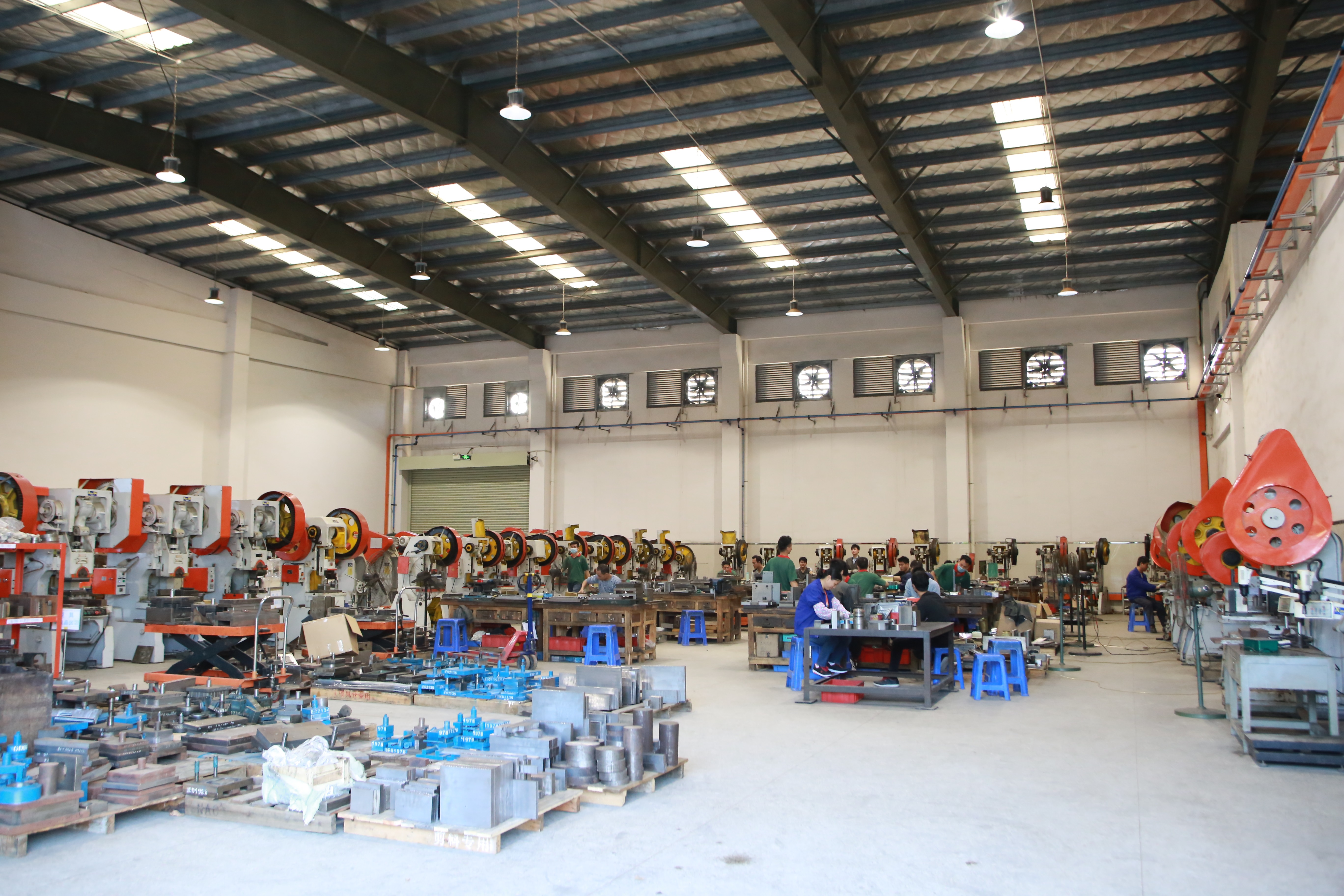
Dedicated tooling is what separates a custom tin programme from a stock purchase, and what makes tooling ownership terms worth negotiating. Image: JINGLI CAN tooling shop.
4. Lead Time and Programme Planning
Stock tins ship from existing inventory, so the timeline is dominated by freight. A custom programme adds a sequence: specification and artwork approval, tooling, sampling, production, quality control and shipping. The two stages buyers most often underestimate are tooling and sample approval, because both sit on the critical path before mass production can start. Plan backward from the retail or promotional window rather than forward from the purchase order, and keep a buffer for artwork revision, since a late artwork change after tooling is the most expensive delay in the chain.
5. Compliance and Documentation
Compliance requirements differ by destination market and by product contact. In the EU, EN 10202:2022 sets electrolytic tinplate requirements for direct food contact. In the US, the FDA requires food-grade tin boxes to use certified materials such as tin-plated steel or aluminum, and often mandates food-safe lacquers such as epoxy resins to prevent metal migration. Factory certifications support this work but do not replace it: ISO22000, BRCGS and FSSC22000 describe how a site manages food safety, while the material and coating declaration describes the specific tin. Ask for both.
6. Total Cost of Ownership
The honest comparison is programme cost, not unit price. Add tooling, unit price multiplied by quantity, freight and duties, warehousing, and the cost of packaging that does not sell. Stock tins have no tooling but a higher unit cost and a differentiation ceiling, plus the risk that a discontinued format leaves leftover inventory unusable. Custom tins carry an upfront tooling outlay that dilutes as volume and programme length increase, and they protect the brand asset the packaging was bought to support. At low volume, stock usually wins the arithmetic. Across a multi-season programme, custom usually wins it.
7. Supply Continuity and Long-Term Partnership
Reorder consistency is where custom programmes prove themselves: the second and third orders must reproduce the same dimensions, the same print colours and the same lining as the first. That depends on supplier capacity, substrate availability and disciplined change control. A factory with 1.8 billion pieces of annual capacity, a regular stock of 30,000 tons of tinplate and a second production site in Vinh Phuc Province, Vietnam is positioned to keep a programme running across seasons, which is the practical definition of a long-term tin box partnership rather than a series of transactions.
Step-by-Step Breakdown: A Five-Step Decision Process
Step 1. Define the packaging job before comparing quotes
Write down the product's weight and volume, the required shelf life, the retail channel, the decoration standard and the expected annual quantity. These five inputs determine whether a stock format can physically do the job at all. If it cannot, price comparison is meaningless.
Step 2. Model the programme cost, not the unit price
Build a multi-year cost model for each option: tooling where applicable, unit price at expected volume, freight, inventory carrying cost and the cost of unsold packaging. This is also where the amortisation curve becomes visible, meaning the point at which the custom option crosses below the stock option.
Step 3. Verify compliance documentation before design freeze
Request the material and coating declaration for the exact specification, plus the factory's management system certifications. Check destination-market requirements early: EN 10202:2022 for EU food contact, FDA requirements for the United States. Changing lining or coating after tooling approval is far more expensive than specifying it correctly at the start.
Step 4. Sample and validate
A sample should match the final material, lining, print and structure rather than approximate them. Validate filling, closure, stacking, transit and shelf appearance. An R&D team of 50 engineers, as at JINGLI CAN, exists precisely so that structural issues are resolved at this stage, before the tool is locked.
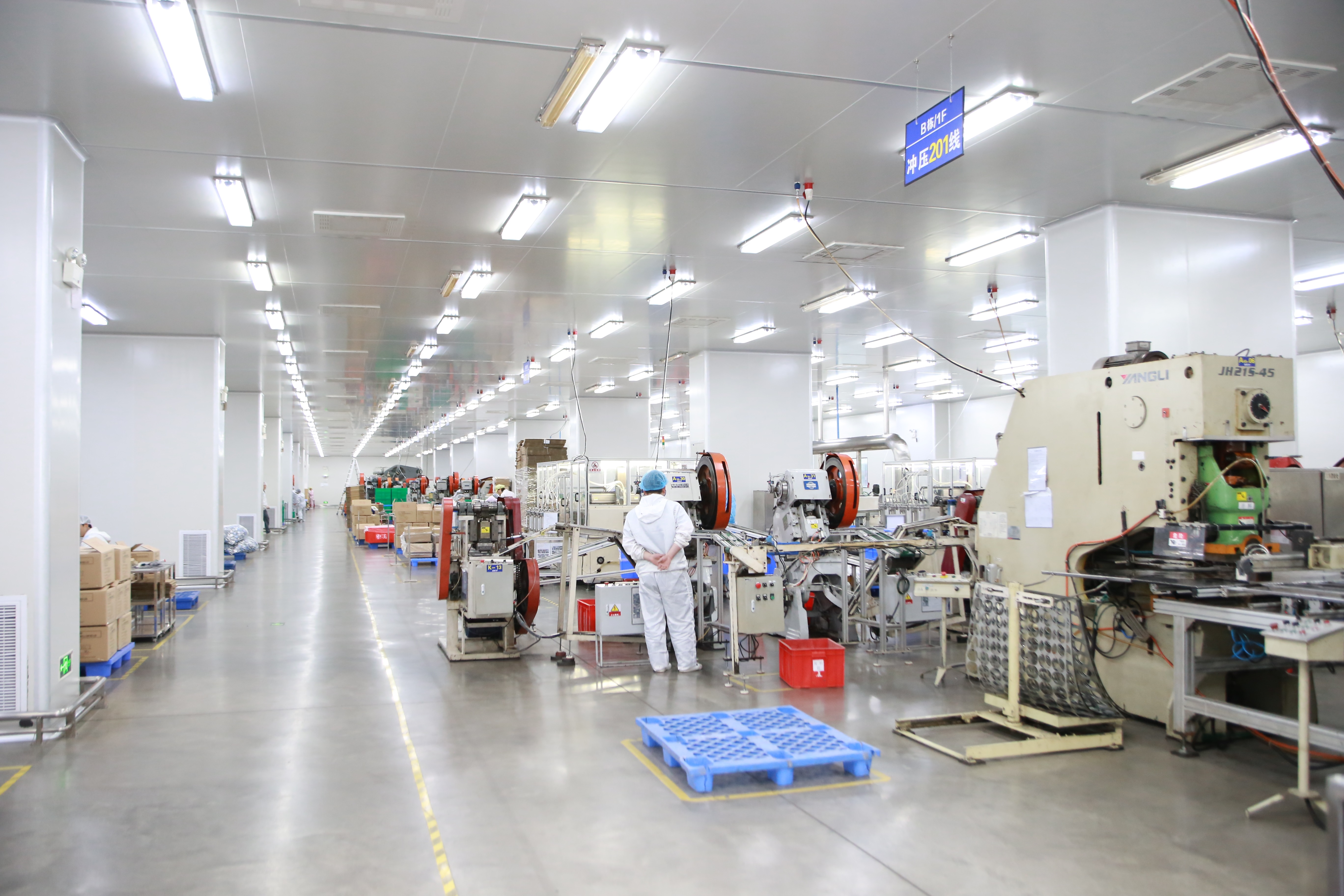
Once tooling and samples are approved, production moves to the forming line, and every change after this point carries a cost. Image: JINGLI CAN punching workshop.
Step 5. Lock the supply terms for the reorder cycle
Agree what happens on order two and order three: tooling storage and ownership, colour matching tolerance, change notification, capacity reservation and repeat-order lead time. A custom programme is a relationship, and the terms that protect it are written before the first shipment, not after the first problem.
Decision Framework by Product Type
Food tins
Direct food contact makes documentation non-negotiable. Custom food tins are the default when the product needs a defined lining, a specific opening format and retail-ready print. Stock formats remain workable for short runs and secondary packaging where the tin does not carry the brand's premium positioning.
Tea and coffee tins
Freshness, aroma retention and shelf presence all point toward custom. The tin is usually kept and reused after the product is consumed, which extends brand exposure well beyond the purchase and is a strong argument for owning the format rather than renting a stock one.
Cosmetic and perfume tins
Presentation is the product. Custom structures, decorated surfaces and fitted inserts support premium pricing, while stock formats tend to compress margin because they cannot differentiate on shelf. This is the category where custom usually justifies itself fastest.
Gift tins
Gift and seasonal programmes, including mooncake and festival sets, run on fixed calendars. Custom is normally the right choice, but only if tooling and sampling start early enough to protect the launch date. A late tooling decision is the most common cause of a rushed gift programme.
Pharmaceutical and health care tins
Regulated products prioritise documentation, consistency and change control over decoration. Custom is generally preferred because the specification can be fixed and audited, and because a supplier holding ISO22000, BRCGS, FSSC22000 and SEDEX 4P credentials can answer the questionnaires that regulated buyers issue.
Use Cases: Three Situations, Three Answers
A new brand testing two SKUs in one market. Volume is unknown and the retail format may change after the first season. Stock tins get the product to shelf without tooling, and the sales data shows whether an investment is justified. Converting to custom after validation is cheaper than writing off a tool built on assumptions.
An established brand relaunching a premium line. The packaging must express the new positioning on every unit and stay identical for several seasons. Custom tin boxes with dedicated tooling, fixed decoration and a repeatable specification are the only option that holds the positioning together across reorders.
A distributor building a private-label range. The range needs consistent formats across several products and a supplier who can scale with it. That is a long-term partnership question rather than a packaging question, and it should be evaluated on capacity, certification coverage and reorder discipline before price.
Comparison Table: Custom Tin Boxes vs. Stock Tins
| Dimension | Custom tin boxes | Stock tins |
|---|---|---|
| Brand expression | Full decorated surface plus brand-defined shape and lid | Limited to labels or secondary packaging |
| Format control | Dimensions, structure, lining and insert set by the buyer | Fixed by the supplier's existing tool |
| Tooling | One-off tooling investment per specification | No tooling cost to the buyer |
| Minimum order quantity | Applies; confirmed per project at quotation | Low or none, subject to availability |
| Sampling | Pre-production sample matching the final specification | The sample is the stock item itself |
| Lead time driver | Tooling, artwork approval and sampling before production | Inventory availability and freight |
| Compliance documentation | Material and coating declaration tied to the specification | Documentation depends on the supplier's standard item |
| Unit cost at volume | Falls as tooling amortises across the programme | Fixed by catalogue or contract pricing |
| Reorder consistency | Reproduction of the approved specification | Subject to stock availability and supplier continuity |
| Differentiation | High | Low |
| Best fit | Multi-season programmes, premium and regulated products | Market tests, short promotions, unproven demand |
FAQ
Are custom tin boxes food-safe and compliant with EU and US requirements?
Food-contact compliance depends on the material and the coating, not on whether the tin is custom or stock. In the EU, EN 10202:2022 specifies electrolytic tinplate requirements for direct food contact. In the US, the FDA requires food-grade tin boxes to use certified materials such as tin-plated steel or aluminum, and often mandates food-safe lacquers such as epoxy resins to prevent metal migration. At factory level, ISO22000, BRCGS and FSSC22000 describe how food safety is managed on site, while SEDEX 4P covers ethical trade auditing; JINGLI CAN holds ISO9001, ISO14001, ISO22000, BRCGS, FSSC22000 and SEDEX 4P. Certifications support compliance, but buyers should still obtain a material and coating declaration for the exact specification being purchased.
What can a custom tin box factory deliver that a stock tin cannot?
Custom production sets the body shape, dimensions, lid format, printed decoration, interior lining and any insert to the brand's specification, instead of accepting a format shared with other buyers. That is what allows a tin to be engineered around a product's volume, fragility and filling method rather than the reverse. Scale matters as much as flexibility: JINGLI CAN combines a 150,000 m² facility, approximately 2,000 employees, an annual output capacity of 1.8 billion pieces and a 50-engineer R&D team, and produces custom tin packaging for food, tea and coffee, cosmetic, gift and pharmaceutical applications.
How should we compare the cost of custom tins against stock tins?
Compare programme cost over the full product life, not the quoted unit price. For custom tins the total is tooling plus unit price multiplied by quantity, plus freight, plus the cost of any packaging that does not sell. For stock tins it is unit price multiplied by quantity plus freight, with no tooling but a higher per-unit cost and a differentiation ceiling. At low volumes stock usually costs less; as volume and programme length increase, the custom tooling amortises and the custom option typically becomes both cheaper and more defensible. A short market test is the cheapest way to find out which side of that line a product sits on.
Can we evaluate a custom tin before committing to tooling?
Yes. Sampling sits between specification approval and mass production, and the sample should match the final material, lining, print and structure so that filling, closure, stacking, transit and shelf appearance can all be validated before the tool is locked. This is the stage where structural changes are still economical. JINGLI CAN's R&D team of 50 engineers supports specification development and sampling; a sample or quote request can be sent to sales11@jinglitinbox.com or +86 18819080997 with the product dimensions, target quantity and destination market.
What lead time should we plan for, and how does it differ from stock?
Stock tins ship from existing inventory, so the timeline is essentially freight and availability. A custom programme adds specification and artwork approval, tooling, sampling, production, quality control and shipping, and the tooling and sample approval stages are the ones most often underestimated. Plan backward from the retail or promotional window and keep a buffer for artwork revision, because a change after tooling approval is the most expensive delay in the chain. For a seasonal gift programme, the tooling decision should be taken well ahead of the production window rather than alongside it. To size that timeline for a specific product, share the specification with JINGLI CAN and request a quotation with the production schedule attached.
Conclusion
Neither option is universally correct, and the gap between them is smaller than the price difference suggests. The deciding factors are how much of the package carries the brand, how long the product stays on shelf, how stable the specification is across seasons and what documentation the destination market requires. When the tin is the brand's primary surface, or the product is regulated or expected to be reordered for several seasons, custom tin boxes justify the tooling. When packaging is a test, a bridge or a short promotion, stock tins keep the commitment low and the learning fast.
The practical rule for brand owners: decide the programme first, then the tin. A packaging decision made one purchase order at a time will always favour stock, and a packaging decision made across a product's commercial life will often favour custom.
Next step: price the programme, not the tin
Send JINGLI CAN the product dimensions, expected annual quantity and destination market to receive a custom tin quotation or a sample for validation. The team can confirm tooling, minimum order quantity and schedule against your launch window.
Email: sales11@jinglitinbox.com | Tel / WhatsApp: +86 18819080997 | Website: www.tinbox.cn
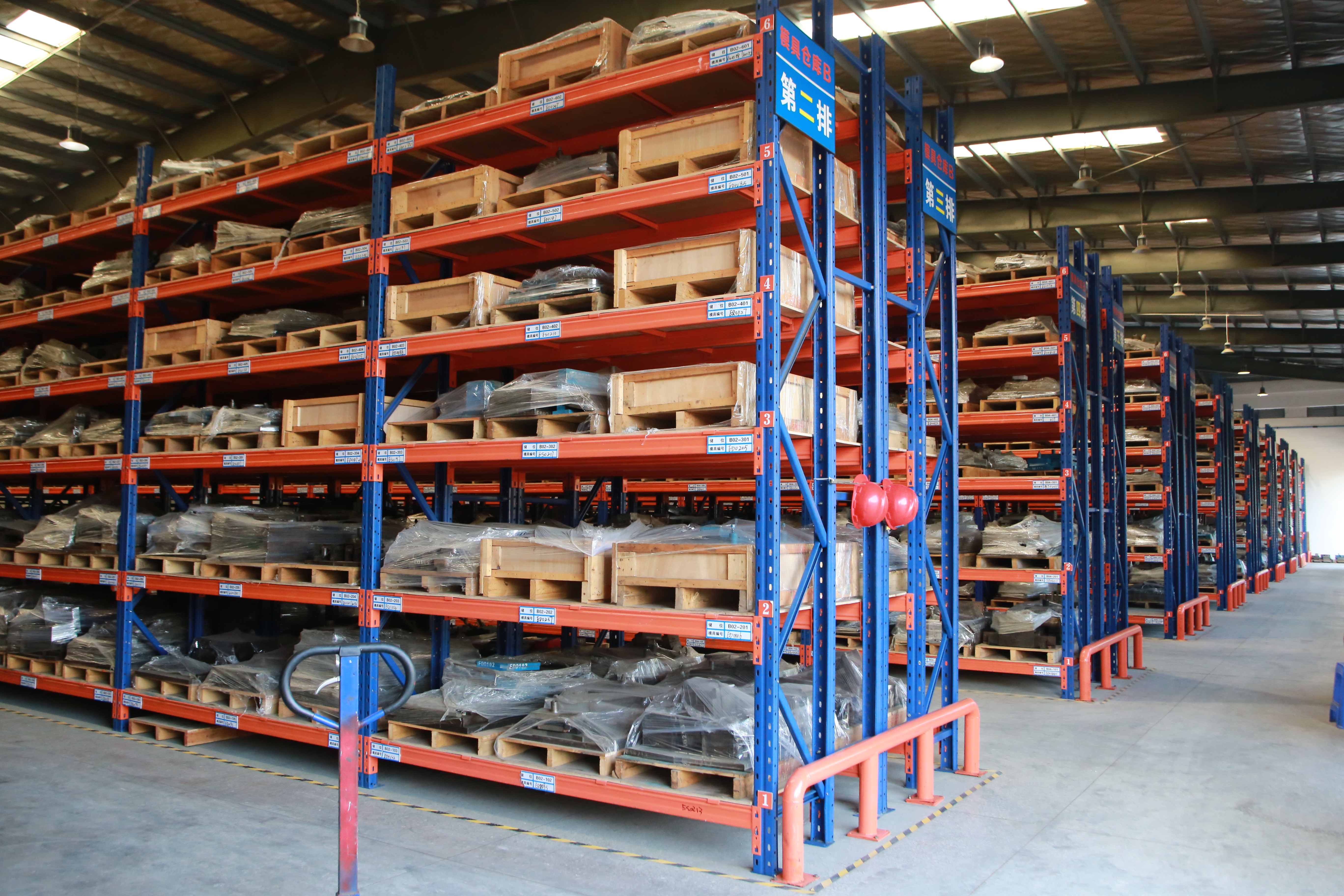
Tooling held and maintained between orders is what makes a second and third production run repeatable. Image: JINGLI CAN tooling warehouse.
Have Questions or Need More Details?
Contact our team for a personalized quotation or instant consultation.
Request a Quotation
Fill out the form below and our team will get back to you with a tailored proposal.
WhatsApp Direct Chat
Prefer to chat in real-time? Message us on WhatsApp for instant assistance & quick answers.
- Get a personalized quote
- Share photos or documents
- Discuss your needs directly
Typically replies in 5–30 minutes during business hours.