
How to Build a Health Care Tin Box Compliance Evidence Pack
A compliance evidence pack for health care tin box sourcing is a controlled, indexed document set that links one tin box specification, produced at one factory site, to the food-contact and quality obligations of each destination market. Build it in five layers — product and material specification, food-contact compliance, management-system certification, test and inspection records, and traceability and change control — and map the destination markets before you request a single document. Mapping first is what separates a pack that survives an audit from a folder of PDFs.
Most sourcing teams ask for “certificates” at the wrong moment: after the sample is approved and a few weeks before production. What arrives is a mixture of certificate copies, a logo sheet and a declaration written for a different product. None of it is necessarily wrong, but none of it answers the question an auditor, a retailer's quality team or a customs broker will actually ask — does this specific box, from this specific plant, meet the rules that apply where we sell it?
This guide sets out a repeatable way to build that answer. It stays at framework level: what to request, how to test each document before accepting it, and where the common gaps sit. It does not certify any factory and it does not replace the certificates themselves. Every certificate, declaration and test report in your final pack should be verified in its original form, with the issuing body where applicable, before it is filed.
The pack is also not a marketing document, not a single ISO certificate, and not a generic declaration covering “all products.” Each of those answers one narrow question. A pack answers the buyer's question: which obligations apply to this SKU in this market, and what evidence, tied to this site and this lot, demonstrates they are met?
Why a Certificate Alone Rarely Survives an Audit
The failure is rarely that a factory has no documents. It is that the documents do not connect to the purchase. Three patterns account for most of the rework.
Scope failure. A certificate names a legal entity, not a production site or a product family. When a group operates several plants, a certificate issued to the company may or may not cover the line that will make your box. If the certificate does not state the site and the scope of activities, the buyer cannot assume coverage.
Instrument confusion. Product standards and management-system standards do different jobs. ISO 11949 is the ISO standard for cold-reduced tinmill products — electrolytic tinplate — and ASTM A623 sets general requirements for tin mill products such as dimensions, tolerances, coating weights and finish. Neither certifies a factory's quality system. ISO 9001:2015 is the certifiable quality management system standard, and even that certificate says nothing on its own about food-contact suitability of a specific lacquer. A pack that treats these as interchangeable will look complete and prove little.
Declaration without a basis. A statement that a coating is “food grade” is only useful when it cites the regime it is claiming against, identifies the coating system, and points to supporting data or a lot reference. Without that chain, the buyer has an assertion, not evidence.
The practical cost of these three failures is predictable: a retailer's supplier onboarding stalls, a lab test is repeated because the original report cannot be matched to the SKU, or a customs query on classification arrives with no rationale in the file. The remedy is structural rather than commercial — build the pack as a mapped matrix instead of a document pile.
The Regulatory Layers You Are Actually Mapping
Health care tin boxes sit at the intersection of four document families. Knowing which family a request belongs to prevents the most common mix-up: asking a factory for a “compliance certificate” when what the destination market requires is a declaration supported by test data.
Food-contact material rules
For the European Union, Regulation (EC) No 1935/2004 is the framework regulation for materials and articles intended to come into contact with food. It requires manufacture in accordance with good manufacturing practice and prohibits transfer of constituents to food in quantities that could endanger health, cause an unacceptable change in composition, or deteriorate organoleptic characteristics. Metal-specific measures and migration limits sit in separate instruments, so the framework obligation alone is not a complete answer for a lacquered tinplate box; your supplier's declaration should identify which specific measure it is claiming against.
For the United States, 21 CFR 175.300 governs resinous and polymeric coatings used as the food-contact surface of articles that hold food — the regulatory basis relevant to the internal lacquer applied to a supplement tin. Note the structural difference: the EU regime works as a framework plus specific measures, while the US coating rule is a positive-list style provision. They are not clause-equivalent, which is exactly why a single “international compliance” letter is a weak substitute for two market-specific statements.
Supplement manufacturing rules
Where the buyer is a dietary supplement brand selling in the United States, packaging operations fall within the current good manufacturing practice framework of 21 CFR part 111. The tin box factory is not the CGMP holder — the brand is — but the brand's compliance depends on supplier documentation for the packaging it receives. That makes the evidence pack part of the brand's own quality system, not an optional procurement extra.
Packaging and waste rules
Regulation (EU) 2025/40 on packaging and packaging waste (PPWR) is the EU instrument that replaces Directive 94/62/EC as the core packaging legislation, covering sustainability, recyclability and reuse requirements for packaging placed on the EU market, including metal packaging. Treat it as a documentation watch item: any recyclability or recycled-content figure you intend to publish needs separate substantiation, and the article-level text should be confirmed on EUR-Lex before you build a claim around it.
Standards you can cite in the RFQ
ISO 9001:2015, ISO 11949 and ASTM A623 are useful anchors because they let you ask for something specific. Citing a standard in the technical annex tells the factory which specification family you expect; it does not certify the factory and it does not replace inspection. Confirm the current edition of any standard before it enters a contract document.
Tariff classification
Tinplate boxes for health care products normally fall under HS heading 7310, which covers iron or steel containers of a capacity not exceeding 300 litres. Within that heading, subheading 7310.21 covers cans closed by soldering or crimping, while 7310.29 is the residual “other” subheading — the family that typically takes slip-lid decorative tins. The tinplate substrate is a different code family altogether (7210.12 for tin-plated flat-rolled steel under 0.5 mm). This matters inside the evidence pack because the commercial file should carry a classification rationale; merging the container code and the substrate code in one line creates avoidable customs friction.

The Six Sections of a Region-Ready Evidence Pack
Structure the pack in six sections, in this order. The order follows the buyer's decision path: what the product is, what touches the contents, who made it and under what system, what was tested, how the site is controlled, and how the goods will clear customs.
Section 1 — Product and material specification
One page per SKU: dimensions, capacity, tinplate thickness and grade, closure type, interior coating system, print method, and the specification family cited (for example ISO 11949 or ASTM A623). This section is the reference that every other document is matched against. If the specification page is vague, each later document inherits the vagueness.
Section 2 — Food-contact compliance
A declaration for the interior coating and any printed surface likely to contact product, prepared per destination market. Each declaration should name the coating system, the regulation claimed against, the market it applies to, and the supporting test basis. Keep the EU and US declarations as separate documents rather than blending them into one letter.
Section 3 — Management-system certification
Certificate copies with scope, site address, issuing certification body, certificate number and expiry date. Record the verification step you performed — a check against the certification body's own registry, for example — with a date and the name of the person who checked it.
Section 4 — Test, inspection and lot records
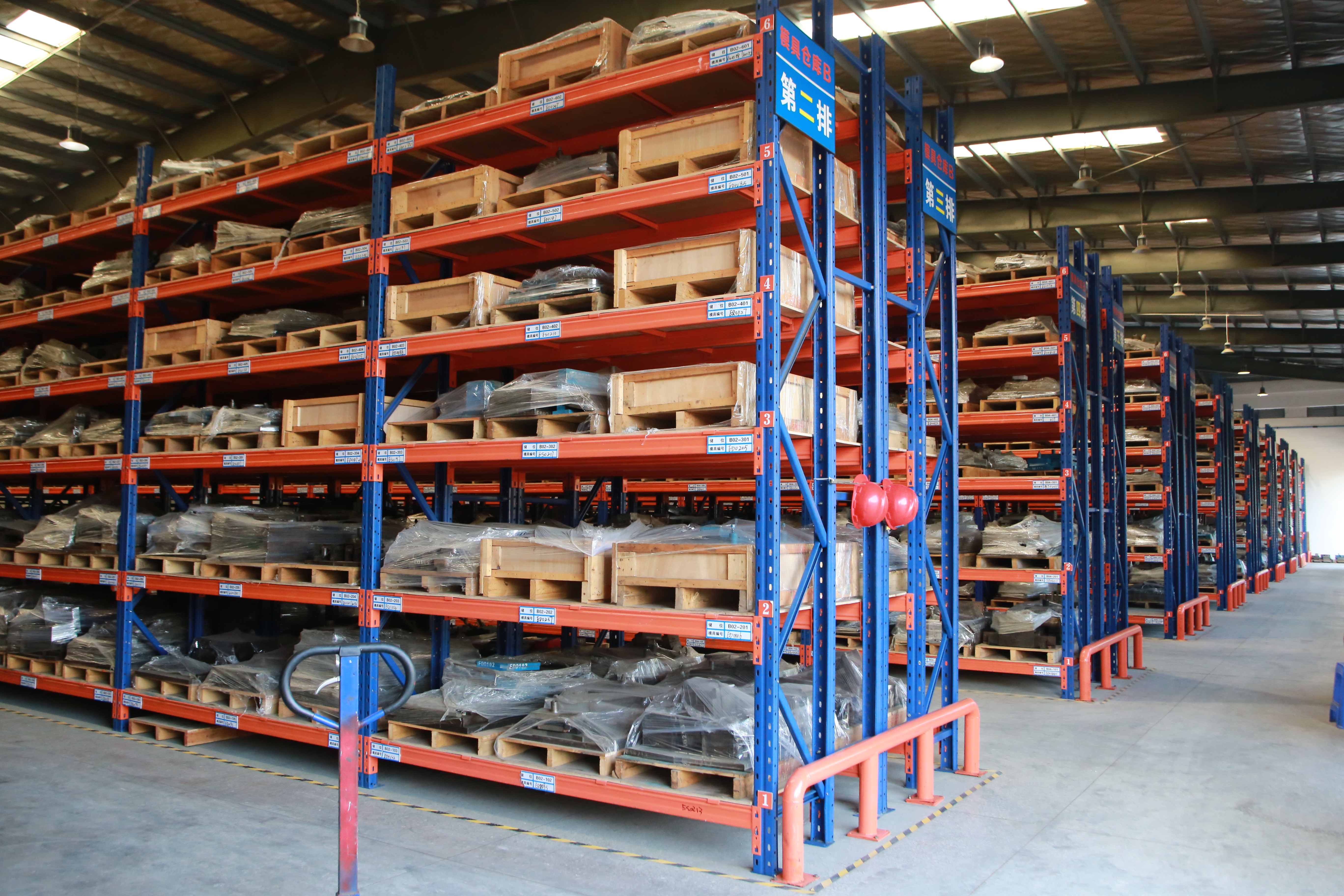
Batch-level records that connect the specification to actual output: incoming material checks, coating or lacquer records where available, dimensional checks, print checks and closure or seal checks. The test method and acceptance criterion should be stated, not implied, and each record should carry a lot or date reference.
Section 5 — Site and process evidence
Factory profile, process flow from raw material through printing, punching and packing, and any audit report or self-assessment you have accepted. This section is what turns a company-level document into a site-level claim.
Section 6 — Commercial and customs file
Classification rationale for the finished box, origin information, packing specification and the document list the forwarder will need. Keep it short, but keep it — it is the section most often forgotten and the one most often requested at the port.
Step-by-Step: Building the Pack in Eight Steps
- Lock the destination market list before anything else. Write down every country where the finished product will be sold, including markets reached through a distributor. Each market adds obligations; a pack built for one market and reused for three is the origin of most qualification delays.
- Convert obligations into a request matrix. For each market, list the obligation, the document that evidences it, who must issue it (factory, coating supplier, laboratory, certification body), and the acceptance check you will apply. A matrix with four columns replaces a long email thread.
- Specify substrate, thickness and interior coating in the RFQ. The specification drives which declarations are relevant. If the coating system is not specified, the factory can only send you a generic statement that covers whatever it usually runs.
- Request certificates with scope, site and validity, then verify them. Accept a certificate only if it names the site that will produce your order, states the scope of activities, and is currently valid. A company-reported certificate list is a starting point for the conversation, not the end of it.
- Ask for product-specific declarations and test reports tied to the SKU. The test report should be traceable to the coating system and, where possible, to the production period. A report for a different format or a different lacquer does not transfer.
- Add process evidence. Request the incoming material check, the print and colour approval record, the dimensional check and the closure or seal check for the relevant production run. This is the layer that shows the system certificate is operating in practice.
- Build the traceability and change-control layer. Record what happens if the tinplate supplier, coating supplier, tooling or print process changes. A change-notification clause plus a documented re-approval path keeps the pack valid after the first shipment.
- Set a review cadence. Diarise certificate expiry dates, market regulation changes and specification revisions. A pack with no review date silently decays into a historical document.

Document-by-Document: What Each Item Proves
Use this table as the acceptance checklist for the pack. The right-hand column is the step most buyers skip, and the step that decides whether an auditor accepts the file.
| Document | What it establishes | What it does not establish | Acceptance check before filing |
|---|---|---|---|
| Management-system certificate (for example ISO 9001:2015) | That a certified quality management system exists within a defined scope | Food-contact suitability of a specific box or coating | Site named, scope stated, expiry valid, verified with the issuing body |
| Food-contact declaration (EU framework, Regulation (EC) No 1935/2004) | That the supplier asserts compliance with the framework obligation for a named material | That metal-specific migration limits are met, unless a specific measure is cited | Regulation cited, coating system named, market identified, test basis referenced |
| Coating compliance statement (US, 21 CFR 175.300) | That the internal lacquer is claimed as suitable for the food-contact surface under the US coating rule | Compliance with EU requirements, or suitability for a different coating system | Coating identified, scope limited to the stated use, issuer identified |
| Tinplate specification sheet (ISO 11949 or ASTM A623 reference) | The substrate family, thickness and coating weight basis requested | That the factory holds certification, or that the delivered lot matches | Edition confirmed, values match the RFQ annex, lot record available |
| Batch inspection and test record | That defined checks were performed on a specific run, against stated criteria | That the method is accredited or that the result generalises to other runs | Method and acceptance criterion stated, lot or date reference present |
| Site and process evidence | That the producing site operates the documented process | Independent verification, unless the audit was third-party | Site address matches the certificate, process steps match the product |
| Commercial and customs file | The classification rationale and origin information for the shipment | Product compliance of any kind | Subheading consistent with closure type, origin evidence attached |
Region Mapping Matrix
The matrix below covers the frameworks that are documented in this guide. It is deliberately incomplete: requirements for other markets should be confirmed with your regulatory team or an accredited laboratory before they enter the pack.
| Destination regime | Instrument to reference | Evidence to request | Note |
|---|---|---|---|
| European Union — food contact | Regulation (EC) No 1935/2004 | Declaration of compliance, GMP statement, supporting data for the coating | Framework obligation; metal-specific limits sit in separate instruments |
| European Union — packaging and waste | Regulation (EU) 2025/40 (PPWR) | Statements on recyclability and reuse relevant to the format | No numeric threshold asserted here; confirm article text on EUR-Lex |
| United States — food contact | 21 CFR 175.300 | Coating compliance statement for the internal lacquer | Applies to resinous and polymeric coatings used as food-contact surface |
| United States — supplement operations | 21 CFR part 111 | Supplier documentation supporting the brand's packaging controls | The brand holds the CGMP obligation, not the tin box factory |
| Quality system | ISO 9001:2015 | Certificate with scope, site and expiry | Verify with the certification body, not from the certificate image alone |
| Substrate specification | ISO 11949 / ASTM A623 | Specification sheet and lot-level material record | Specification reference for the RFQ annex, not a factory certification |
| Customs | HS 7310, with 7310.21 or 7310.29; substrate 7210.12 | Classification rationale and origin documents | Subheading follows closure type; do not merge container and substrate codes |
Applying the Pack to Specific Product Scenarios
The framework does not change by product type, but the emphasis inside it does. Four scenarios show where buyers usually need to add depth.
Dietary supplements and vitamins
The pack centres on the interior coating declaration and on lot-level records that connect the lacquer to the production period. Because vitamins are sold on label claims, the brand's quality team will usually want the coating and closure specification documented before the first production run, not after.
Probiotics and sensitive formulations
Expect the review to concentrate on the closure system and on how the factory evidences the storage conditions it recommends. The pack should state which closure type is specified and which inspection criteria apply, so the brand can assess fit against its own stability programme. The pack itself should not assert shelf-life outcomes; those come from the brand's testing, not from a supplier document.
Herbal health products and sports nutrition
Herbal products bring organoleptic considerations into the coating conversation, which is one reason the EU framework's reference to organoleptic deterioration is worth keeping visible in the declaration. Sports nutrition formats often move in larger volumes, so the batch record section should show how inspection scales with run size rather than sampling one reference lot.
Eco-sustainable positioning and bulk production
Where sustainability is part of the brand message, keep environmental claims in a separate subsection with their own evidence. The PPWR is a live documentation item, and any recyclability figure needs substantiation independent of the certificate file. In bulk or one-stop supply arrangements, add a section-level index so a single pack can be split by SKU without reissuing the whole file.
Where Evidence Gaps Appear — and How to Close Them
Five gaps account for most incomplete packs, and each has a defined closure route.
- Scope gap. The certificate exists but does not name your product or site. Close it by requesting a scope statement from the certificate holder or the certification body; if it cannot be provided, treat the item as unverified.
- Site gap. A group-level certificate is presented for a plant it may not cover. Close it by matching the certificate's site address to the address on the quotation and the shipping documents.
- Version gap. An older standard edition or an expired certificate is filed as current. Close it by recording edition, issue date and expiry in the index, and diarising the review.
- Sample-to-production gap. Evidence is generated for the sample only. Close it by making the first production lot subject to the same record set, with a signed comparison to the approved sample.
- Language and legal gap. A declaration written for a different jurisdiction is reused. Close it by requiring one declaration per destination market, in the language your importer needs.
Record each gap and its closure in the pack itself. A visible gap with a named owner is a controlled risk; an invisible gap is the one that surfaces during an audit.

How JINGLI CAN Supports the Evidence Workflow
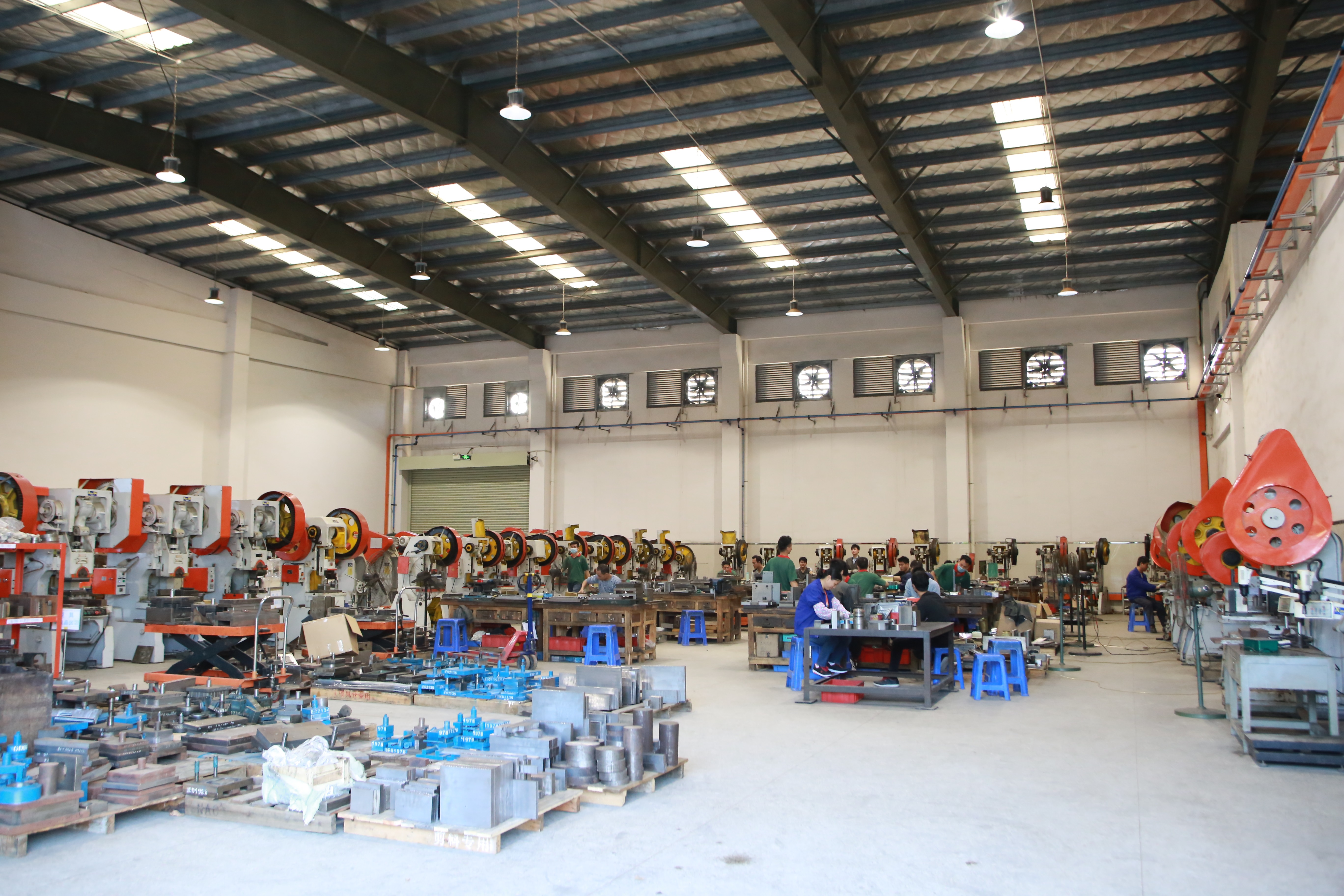
JINGLI CAN, legally Dongguan City Jingli Can Co., Ltd, is a tin packaging manufacturer founded in 1999 that integrates R&D, production, marketing, sales and service. The company reports a 150,000 m² factory area, approximately 2,000 employees, a 50-person R&D team and an annual output of 1,800,000,000 units, with roughly 70% of output exported to Europe, America and Asia. Its stated product scope covers custom tin packaging and metal cans for food, tea and coffee, cosmetics, gifts and pharmaceutical applications, produced through an integrated workflow from tooling and cutting to printing, punching and packing.
For buyers building a cross-region pack, two points in that profile are directly relevant. First, the company states that it holds ISO 9001, ISO 14001, ISO 22000, BRCGS, FSSC 22000 and SEDEX 4P certifications — a list that maps onto the management-system and food-safety layers of the pack, and that should still be verified against each certificate's scope, site and expiry before filing. Second, the company reports a 17,500 m² facility in Vinh Phuc Province, Vietnam, with a stated daily production capacity of 600,000 pieces, alongside a regular stock of 30,000 tons of tinplate. A multi-country footprint changes which site appears on which certificate, which is precisely the site-gap question this framework is designed to catch.
These are company-reported figures. They are a sound basis for a document request, not a substitute for the documents themselves, and the verification steps in this guide apply to JINGLI CAN exactly as they apply to any other candidate supplier.
Frequently Asked Questions
Which documents belong in the food-contact section of a health care tin box evidence pack?
The food-contact section should contain a product-specific declaration for the interior coating, a statement of the regulation claimed against for each destination market, and the supporting test or data basis referenced by that declaration. For the EU, the anchor is the framework obligation in Regulation (EC) No 1935/2004, with specific measures identified separately. For the US, the anchor for the internal lacquer is 21 CFR 175.300. A declaration that does not name the coating system, the market and the test basis should be returned to the supplier rather than filed.
How do I verify that a certificate actually covers my product and my site?
Check three things on the certificate itself: the legal entity and site address, the scope of activities, and the validity dates. Then verify the certificate with the issuing certification body's own registry rather than relying on the copy alone. Finally, compare the site address with the address on your quotation, the invoice and the shipping documents. If the certificate names a company but not the producing plant, request a scope statement from the certificate holder before you treat the item as evidence.
Do standards such as ISO 11949 or ASTM A623 certify the factory?
No. ISO 11949 is the standard for cold-reduced tinmill products — electrolytic tinplate — and ASTM A623 sets general requirements for tin mill products including dimensions, tolerances, coating weights and finish. They describe what the substrate should be, which makes them useful references in the RFQ technical annex. Factory certification sits in a different standard family, such as ISO 9001:2015 for quality management systems. Mixing the two is one of the most common errors in supplier documentation.
What drives the cost of assembling and maintaining a compliance evidence pack?
The cost drivers are documentation effort, not paperwork volume. The main ones are the number of destination markets, because each market needs its own declarations; the number of SKUs and coating systems, because evidence is product-specific; whether testing must be repeated for a new coating or format; and how often specifications change, since each change triggers re-approval. A pack built once and never maintained costs less up front and more later. There is no single benchmark price, because the work depends on the market and product mix you actually carry.
Should the evidence pack be complete before I approve a sample?
The core sections should be at least provisionally complete before sample approval, because the sample is what you will compare production against. At minimum, request the specification page, the food-contact declaration for the proposed coating, and the management-system certificate with scope and site. Batch-level records follow with the first production run. Approving a sample before the specification and coating are documented usually results in re-approval later, when the missing documents force a specification change.
How early should I start, and can one pack serve several markets?
Start at the specification stage, before tooling is committed, because the coating and closure specification determines which declarations are relevant. One controlled pack can serve several markets if it is indexed by market rather than merged: shared sections for specification, site evidence and inspection records, and market-specific tabs for food-contact declarations, packaging requirements and customs classification. Buyers who want to review a worked example against their own SKU list can request the current documentation set and a sample coordination slot through the JINGLI CAN contact channel, and should still verify each certificate independently before filing it.
Conclusion
A region-ready compliance evidence pack is a mapping exercise before it is a filing exercise. Fix the destination markets, translate each market's obligations into a named document and a named issuer, then test every item on arrival for scope, site, validity and test basis. The six-section structure — specification, food-contact compliance, certification, test records, site evidence and the commercial file — keeps the pack navigable and keeps each claim attached to the conditions that make it true.
The framework in this guide does not certify any supplier and does not replace laboratory testing or regulatory advice. What it does is make the buyer's questions specific enough to answer: which box, which plant, which market, which regulation, and which document proves it. Applied consistently, that discipline shortens supplier qualification, reduces re-testing, and gives the brand a documentation trail that still holds up when the certificate expires, the coating changes, or a new market is added to the label.
Have Questions or Need More Details?
Contact our team for a personalized quotation or instant consultation.
Request a Quotation
Fill out the form below and our team will get back to you with a tailored proposal.
WhatsApp Direct Chat
Prefer to chat in real-time? Message us on WhatsApp for instant assistance & quick answers.
- Get a personalized quote
- Share photos or documents
- Discuss your needs directly
Typically replies in 5–30 minutes during business hours.