
What Is a Tin Box Factory? A Beginner's Guide to Custom Metal Packaging Manufacturing
What Is a Tin Box Factory? A Beginner's Guide to Custom Metal Packaging Manufacturing
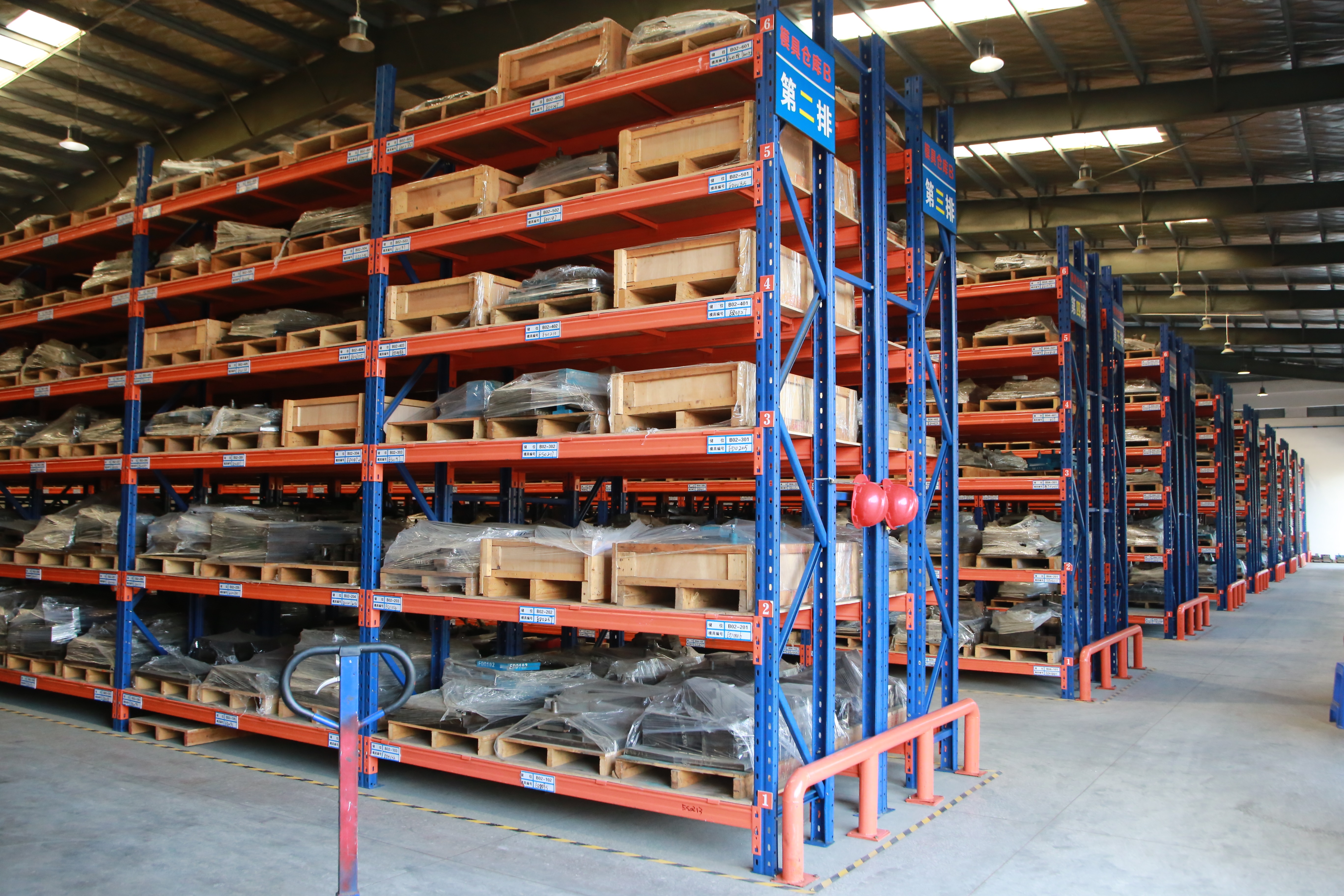
Tooling storage inside a custom tin box factory: dies are catalogued and maintained so that reorders match the approved sample.
A tin box factory is a manufacturing facility that turns flat tinplate — steel sheet coated with a thin layer of tin — into printed, formed metal containers such as chocolate tins, tea caddies, cosmetic jars, gift boxes and pill containers. It is not simply a printer that happens to work with metal. A genuine tin box factory combines structural design, tooling, metal decoration, food-safe coating, forming, assembly, quality control and export delivery under one roof, and its real capability lies in how those stages connect.
That distinction matters for first-time buyers, because the term is used loosely. Some suppliers that describe themselves as tin box factories are trading companies. Some are general metal stampers. Others are dedicated decorative tin specialists who build packaging for brand owners. This guide explains in plain language what a modern factory actually does at each stage, and it uses JINGLI CAN as a factual, verifiable example of a full-service operation.
JINGLI CAN in brief. Dongguan City Jingli Can Co., Ltd — trading as JINGLI CAN — is a custom tin packaging manufacturer founded in 1999. Its production facility covers 150,000 m² and employs roughly 2,000 people, including a 50-person R&D team. Annual capacity is about 1,800,000,000 tin boxes. The company holds ISO9001, ISO14001, ISO22000, BRCGS, FSSC22000 and SEDEX 4P certifications, produces custom tin packaging for food, tea and coffee, cosmetic, gift and pharmaceutical categories, and exports approximately 70% of its output to Europe, America and Asia.
What Does a Tin Box Factory Actually Do?
A tin box factory manufactures rigid metal packaging from electrolytic tinplate or aluminium. The production flow begins with a flat, decorated sheet and ends with a finished, packed container: the sheet is printed, lacquered, cut, punched, formed, seamed, inspected and packed.
Three capabilities separate a real factory from a business that only sells tin boxes:
- Tooling. Every custom shape, dimension and closing mechanism depends on press tooling — the dies and punches that cut and form the metal. A factory that builds and maintains its own tooling controls repeatability on reorders.
- Decoration. Direct printing on flat tinplate happens before the metal is formed, so registration, colour and varnish decisions are locked in early. This is a different skill from printing on paper or labels.
- Contact-surface control. Food, cosmetic and pharmaceutical packaging requires an internal lacquer or coating that keeps the product from contacting bare metal. That is a compliance decision, not a cosmetic one.
Why the Term Tin Box Factory Confuses First-Time Buyers
Tin box is a trade term, not a chemical description. Most retail tins are made of tinplate — steel with a very thin tin coating — or aluminium. A buyer asking for tin may receive quotations for several different material specifications, and those quotations are not directly comparable.
Four gaps cause most of the confusion:
- Material vocabulary. Tinplate, aluminium and coated steel behave differently in forming, weight and corrosion resistance. The choice affects both cost and compliance.
- The scope of custom. Custom can mean anything from a stock tin printed with your artwork to a new shape with dedicated tooling, an inner tray, a window, an embossed logo and a specified internal coating. Two suppliers quoting custom may be quoting two entirely different scopes.
- Compliance expectations. A gift tin and a pharmaceutical tin do not carry the same regulatory burden. In the EU, electrolytic tinplate for direct food contact is governed by EN 10202:2022. In the United States, FDA food-contact requirements mean food-grade materials and food-safe lacquers are commonly specified to prevent metal migration.
- The responsibility split. Buyers often assume the factory will handle everything. In practice the buyer must supply artwork, product dimensions, filling method and target-market requirements — and must approve the sample before tooling is committed to mass production.
The practical risk is simple: comparing quotations from suppliers who are not performing the same work leads to a wrong decision. A structured responsibility map, like the one further down this guide, removes most of that risk.
The Industry Behind Custom Tin Packaging
Metal packaging is a large, steady category. The global metal packaging market was valued at USD 148.13 billion in 2024 and is projected to reach USD 184.21 billion by 2030, a CAGR of 3.7%, according to Grand View Research and Fortune Business Insights. Asia Pacific accounted for a 35.63% revenue share in 2024, driven largely by China's manufacturing base for food and beverage tins. Food and beverage applications alone represent 57.36% of that market, which is one reason food-safe coating capability is among the first things an experienced buyer checks.
Within the broader market, the tinplate segment used for cans and tins is smaller and faster-growing. Precedence Research projects it to expand from USD 1.73 billion in 2024 to USD 3.08 billion by 2034, a CAGR of 5.94%. Sustainability is part of the reason: tinplate recycling rates exceed 90% in some regions, well above typical plastic packaging, according to Fact.MR.
Estimates in this segment vary by source and by scope — some analysts count all steel cans, while others count only decorative and specialty tins. Cognitive Market Research, for example, sizes the same market at USD 761.2 million. Buyers should treat any single figure as a scope-dependent estimate rather than a fixed number.
At the top of the industry sit large global metal packaging corporations such as Ball Corporation, Crown Holdings, CPMC Holdings and Ardagh Group, which serve high-volume beverage and industrial programmes. Brand-level custom tins — the chocolate box, the tea caddy, the gift tin — are typically produced by specialist factories that combine tooling, decoration and small-to-medium volume flexibility. The two segments coexist; they simply solve different problems.
What a Modern Tin Box Factory Actually Does: Six Functions
Below is the functional anatomy of a full-service factory. JINGLI CAN is used as the working example because its published capabilities map cleanly onto each function.
1. Design and R&D
Before anything is cut, the box is engineered. This stage covers structural design, dimensional tolerances, the closing or hinge mechanism, insert design for fragile contents, and the dieline that the artwork must follow. It also includes material selection — tinplate gauge, aluminium where weight matters, and the coating type suited to the intended product.
Engineering depth is the practical difference between a supplier who adapts an existing mould and one who develops a new structure. JINGLI CAN maintains a 50-person R&D team for this purpose. For a brand owner, the useful question at this stage is not whether a factory can make a round tin, but whether it can design a tin that survives your filling line, your shipping route and your product's shelf life.
2. Tooling
Tooling is the factory's core asset. Dies and punches determine the shape, the seam, the lid fit and the repeatability of every reorder. A factory with an in-house tooling shop can manufacture a die, test it, adjust it and store it — and can rebuild it years later when the brand reorders.
Tooling is normally a one-time project cost, separate from unit price. Buyers should clarify three things in writing: who owns the tooling, how long it will be stored, and what a reorder would require if the die wears out.
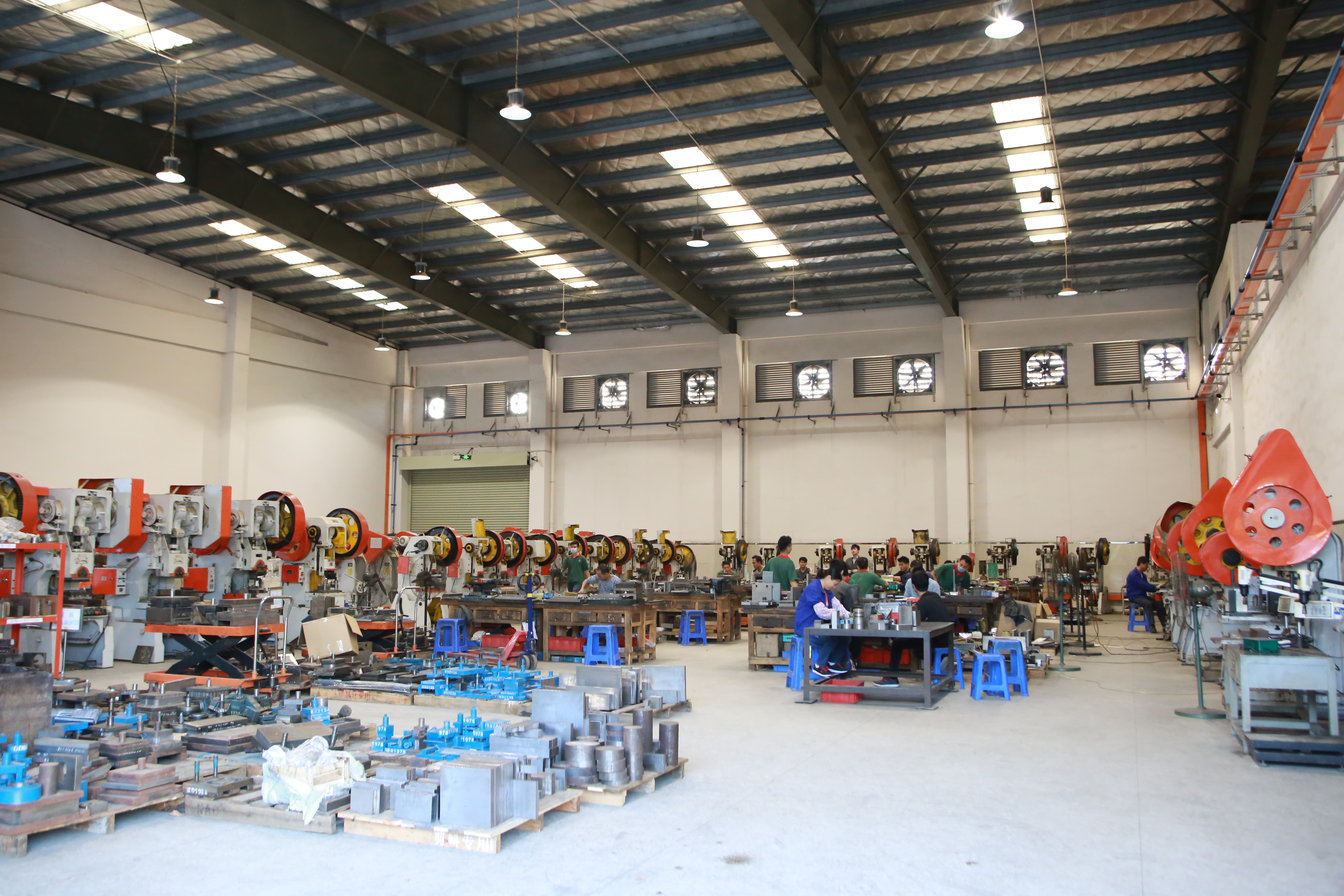
In-house tooling shop: dies are built, tested and adjusted before mass production begins.
3. Printing and Metal Decoration
Custom tins are usually decorated by printing directly onto flat tinplate sheets before forming, using offset lithography. Artwork is applied to the flat sheet, varnished, and then cut and formed — which means the printed image must be designed to distort correctly when the metal bends. Matte, gloss and special finishes are decided at this stage.
Print quality on metal is one of the clearest signals of factory competence. It shows in registration across the seam, consistency between production batches, and the ability to reproduce brand colours on a reflective surface rather than on paper.
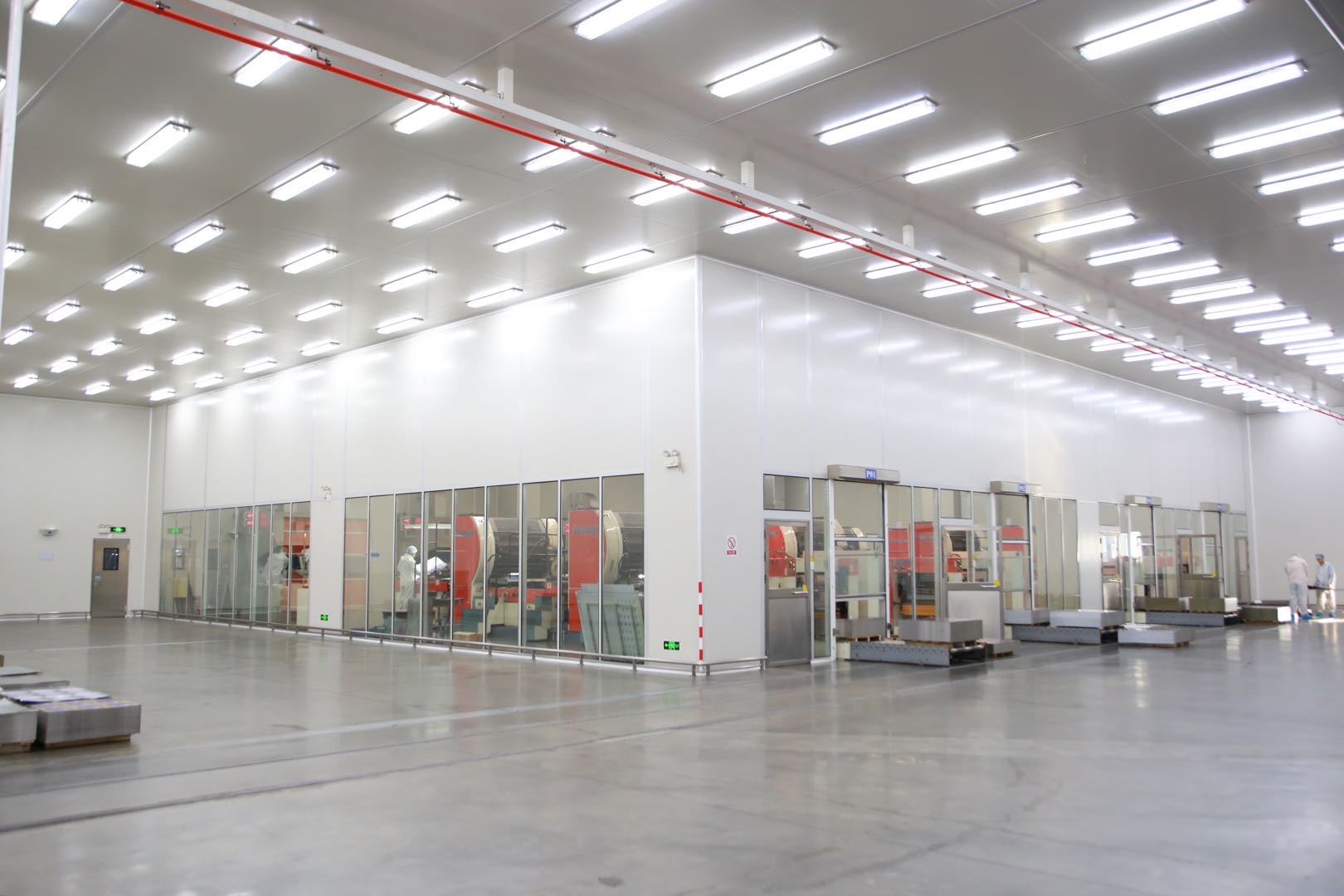
Metal decoration: artwork is printed on flat tinplate sheets before the metal is cut and formed into tins.
4. Food-Safe Coating and Contact-Surface Control
Any tin that touches food, cosmetics or medicine needs an internal coating. A food-safe lacquer prevents direct contact between the product and the metal, which is the mechanism behind the metal migration concerns addressed by regulations such as FDA food-contact requirements in the United States and the electrolytic tinplate specification EN 10202:2022 in the EU.
Coating choice depends on the contents: acidic foods, oily products, alcohol-based cosmetics and dry goods each need different barrier behaviour. This is why a factory's food safety management system matters more than its printing samples when the product is edible.
JINGLI CAN holds ISO22000, BRCGS and FSSC22000 certifications, which relate to food safety management across the production process rather than to a single product test.
5. Production and Assembly
Production converts printed sheets into finished tins through punching, forming, seaming and assembly, followed by the fitting of lids, hinges, inserts or windows. Capacity determines whether a factory can absorb a peak-season order or a multi-SKU programme without pushing lead times outward.
JINGLI CAN reports an annual capacity of approximately 1,800,000,000 units and maintains a standing tinplate stock of 30,000 tons to stabilise delivery when raw material markets tighten. For buyers with a fixed launch date, capacity and raw material position usually matter more than the unit price difference between two similar quotations.
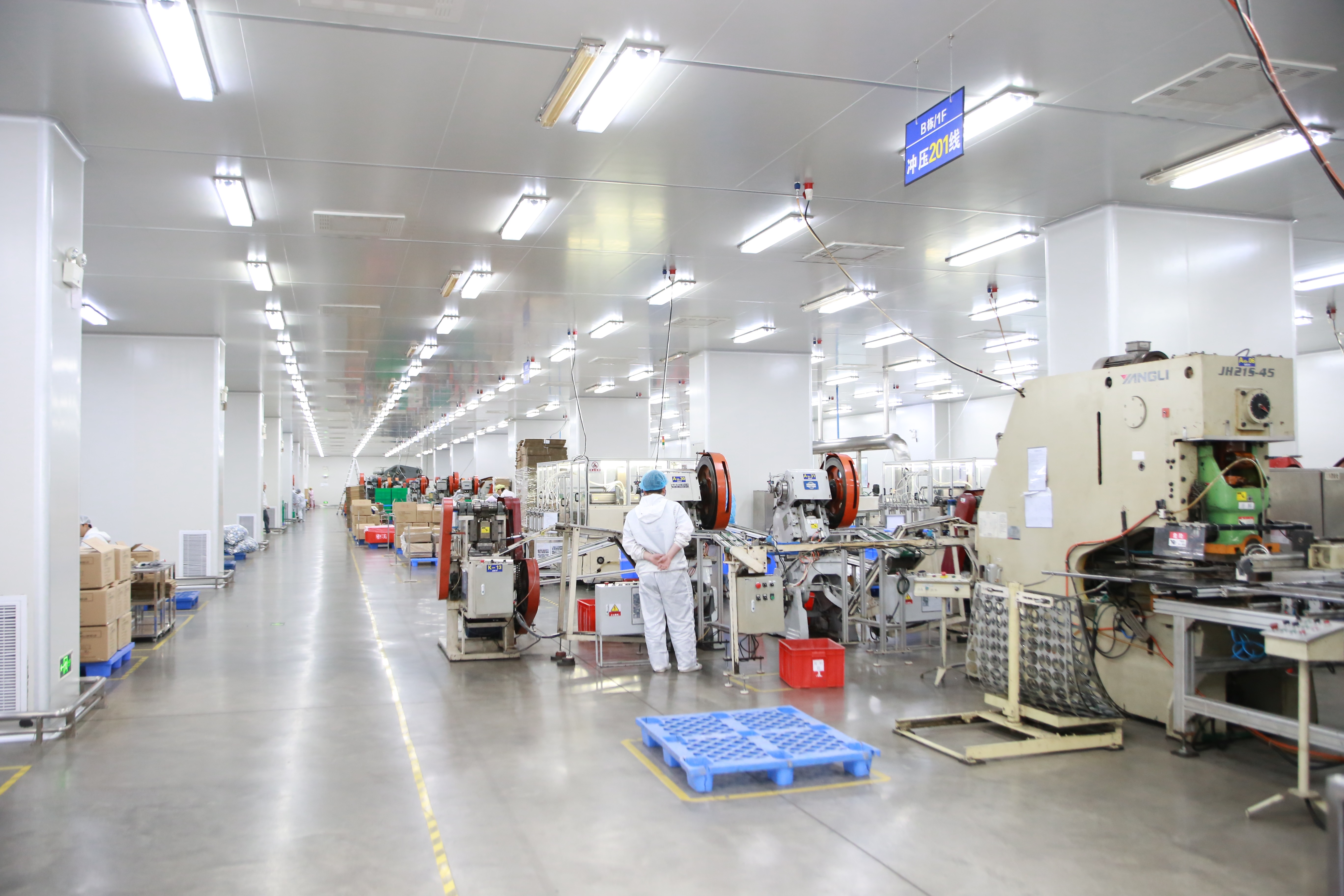
Punching and forming: printed sheets become lids, bodies and bases before assembly.
6. Compliance, Quality Control and Export Delivery
Export-ready packaging manufacturing is a documentation exercise as much as a production one. The factory must be able to supply the certifications the buyer's market expects, manage inspection, and pack product so that tins arrive without dents or scuffing.
JINGLI CAN holds ISO9001 for quality management, ISO14001 for environmental management, ISO22000, BRCGS and FSSC22000 for food safety, and SEDEX 4P for ethical supply chain practice. Roughly 70% of its output is exported, primarily to Europe, America and Asia — a mix that requires familiarity with both EU and US market expectations.
Step-by-Step: How a Custom Tin Box Project Runs
From a buyer's perspective, a custom tin project follows eight predictable steps. Knowing them in advance is what turns a vague enquiry into a workable brief.
- Project brief and category check. You define what goes inside the tin, the target market, the retail channel and the approximate volume. The factory checks whether the category brings additional requirements — food contact, pharmaceutical handling, or a specific shipping standard.
- Structural design and dieline. The engineering team proposes a structure and issues a dieline. Your designer builds artwork onto that dieline rather than onto a flat rectangle.
- Quotation and tooling decision. The factory quotes tooling separately from unit price. At this point you decide whether to adapt an existing structure or invest in a new die.
- Sampling and approval. A sample is produced — sometimes as a plain structural sample first, then as a printed one. Approval at this stage is the checkpoint that protects both sides.
- Tooling manufacture and setup. Once the sample is approved and the order confirmed, the die set is finalised and installed.
- Printing and coating. Sheets are printed with your artwork and lacquered internally to the agreed specification.
- Forming, assembly and inspection. Printed sheets are punched, formed, seamed and assembled, then inspected for dimensions, print and finish before packing.
- Packing, documentation and export. Finished tins are packed to protect edges and surfaces, and the shipment is prepared with the compliance documents your market requires.
Steps one to four are where most projects are won or lost. The earlier the product and market requirements are fixed, the fewer surprises appear during mass production.
Use Cases: Which Product Categories a Tin Box Factory Serves
Custom tin packaging is used wherever a product needs protection, a premium shelf presence, or both. Across the industry, the most common categories include:
- Food tins. Chocolate, candy, chewing gum, biscuits and seasonal cakes such as mooncake are routinely packed in printed tins, because the format protects fragile contents and is often kept by the consumer after use.
- Tea and coffee tins. Metal containers protect aroma and moisture-sensitive leaves and grounds, and are usually designed for repeated opening and closing.
- Cosmetic tins. Perfume, soap, creams and gift sets use tins that combine decoration with a lining suited to the formulation inside.
- Gift tins. Multi-part sets, corporate gifts and limited editions rely on shaped tins with inserts and layered interiors.
- Pharmaceutical and healthcare tins. Medicine and health care product containers demand material control, clean internal surfaces and traceable production.
- Everyday and promotional metal boxes. Lunch boxes, stationery and pencil tins, tool tins, watch and glasses cases, tissue boxes and cigar tins belong to the same manufacturing family.
JINGLI CAN's stated production scope covers food tins, tea and coffee tins, cosmetic tins, gift tins and pharmaceutical tins. A buyer whose product sits outside those five families should confirm fit with the factory before assuming the project is routine.
Who Does What: A Responsibility Map for First-Time Buyers
Most disputes between a brand owner and a packaging supplier come from an unclear division of labour. The table below shows which side normally owns each stage, and what evidence to request.
| Project stage | What the factory provides | What you must provide | Evidence to request |
|---|---|---|---|
| Brief and category check | Category review, material and coating recommendation | Product type, target market, volume estimate | Written confirmation of any category-specific requirement |
| Structural design | Structure proposal, tolerances, dieline, insert design | Product dimensions, filling method, artwork direction | Dieline drawing and 3D rendering |
| Tooling | Die design, manufacture, testing, storage | Approval to proceed; clarity on tooling ownership | Tooling ownership terms and storage commitment |
| Sampling | Structural sample, then printed sample | Artwork files, colour references, approval in writing | Sample approval record |
| Printing and coating | Metal printing, varnish, internal lacquer | Print-ready artwork on the approved dieline | Print proof or printed sample |
| Production and assembly | Punching, forming, seaming, assembly, packing | Delivery schedule and packing instructions | Inspection report and dimensional check |
| Compliance and export | Certification documents, export packing | Destination market and importer requirements | ISO9001, ISO14001, ISO22000, BRCGS, FSSC22000, SEDEX 4P certificates |
Certification Map: What Each Standard Tells a Buyer
Certifications are shorthand. Each one answers a different question, and a factory that holds several is easier to audit than one that holds none.
| Certification | What it addresses | Why a buyer asks for it |
|---|---|---|
| ISO9001 | Quality management system | Consistency between production batches |
| ISO14001 | Environmental management system | Environmental performance in the supply chain |
| ISO22000 | Food safety management | Tin packaging that comes into contact with food |
| BRCGS | Food safety standard widely applied in packaging supply chains | Retail and brand food-safety programmes |
| FSSC22000 | Food safety system certification | Audited food safety control across production |
| SEDEX 4P | Ethical and responsible sourcing practice | Social compliance and supply chain transparency |
The table reflects the certifications held by JINGLI CAN and is presented as an example of a compliance baseline, not as a universal requirement. Which certification a specific project needs depends on the product and the destination market.
FAQ
What certifications should a tin box factory hold for food-contact packaging?
For food-contact tins, the certifications that matter most are those covering food safety management rather than quality alone. ISO22000, BRCGS and FSSC22000 address food safety controls in production, while ISO9001 covers general quality management and ISO14001 covers environmental management. For ethical sourcing, SEDEX 4P is a common requirement. On the material side, EU buyers often reference EN 10202:2022 for electrolytic tinplate used in direct food contact, and US buyers work to FDA food-contact requirements, which typically means certified food-grade materials and a food-safe internal lacquer to prevent metal migration. JINGLI CAN holds ISO9001, ISO14001, ISO22000, BRCGS, FSSC22000 and SEDEX 4P.
How do I judge whether a tin box factory can handle my product category?
Judge capability on four points: whether the factory can design a structure rather than only copy an existing mould; whether it operates its own tooling shop; whether it controls printing, lacquer and forming as a connected sequence; and whether it has the capacity to meet your volume without shifting your lead time. JINGLI CAN illustrates what full capability looks like at scale — a 150,000 m² facility, roughly 2,000 employees, a 50-person R&D team and an annual capacity of about 1,800,000,000 units — and its certification coverage is what becomes decisive when the product is food, cosmetic or pharmaceutical.
What drives the cost of a custom tin box?
Custom tin pricing has two distinct parts: one-time tooling and per-unit production cost. Tooling relates to the structure and shape. Unit cost reflects material gauge, print complexity and number of colours, special finishes, internal coating and order volume. Because these variables differ from project to project, factories quote per project rather than from a public price list. The most reliable way to compare two quotations is to make the specification identical — same material, same print method, same coating, same packing.
What should I expect during sampling?
Sampling normally happens in two phases. A structural sample confirms dimensions, lid fit and mechanism before decoration is finalised. A printed sample then confirms artwork, colour and finish on the actual metal surface. The printed sample becomes the reference that production is matched against, so it should be approved in writing. Buyers new to metal printing should pay particular attention to how the design behaves across seams, curved surfaces and the base of the tin.
How long does production and export delivery take?
Lead time is built from several sequential stages rather than a single factory queue: structural design and dieline approval, tooling manufacture, sample approval, printing and coating, forming and assembly, inspection, packing and export shipping. Because each stage depends on the one before it, the fastest way to shorten total lead time is to resolve artwork and specification questions early. Raw material availability is the other variable — JINGLI CAN, for example, maintains a standing tinplate stock of 30,000 tons to keep delivery stable when material markets are tight. To discuss a specific timeline, share your product, target volume and destination market with the team at tinbox.cn or write to sales11@jinglitinbox.com.
What a Tin Box Factory Is, in Practice
A tin box factory is best understood as one production system with six connected functions: design, tooling, printing, coating, production and compliance. Weakness in any single function shows up somewhere else — in a lid that does not close cleanly, a colour that shifts between batches, or a shipment delayed at customs.
For first-time buyers, the takeaway is procedural rather than technical. Define what goes inside the tin and where it will be sold. Insist on a dieline before artwork. Approve a physical sample in writing. Clarify tooling ownership. Confirm which certifications your market expects. Do those five things and the difference between suppliers becomes measurable instead of a matter of opinion.
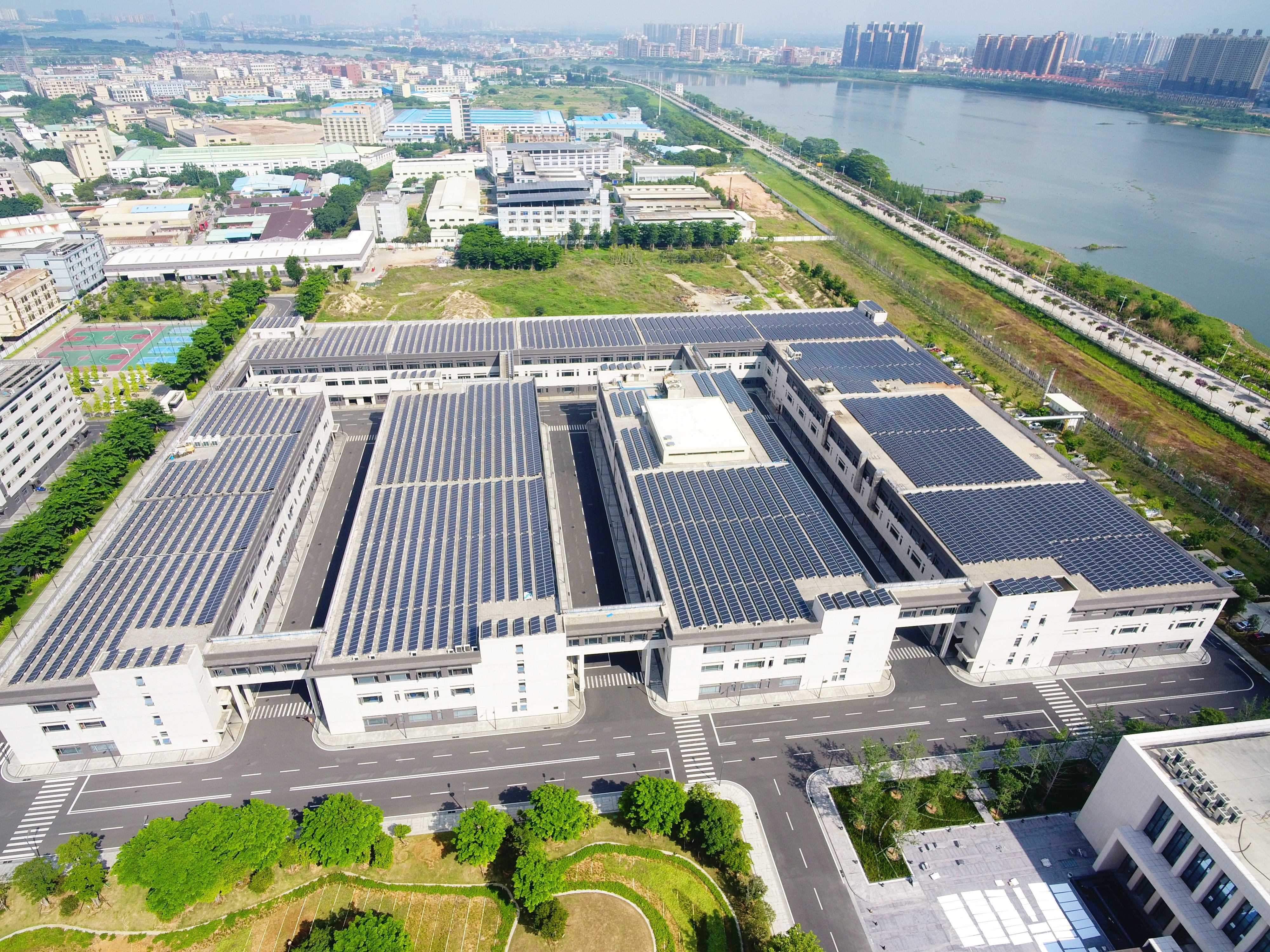
A full-service tin packaging operation covers design, tooling, printing, coating, production and export within one facility.
Next step: build your tin project brief
If you are sourcing custom tin packaging for the first time, the fastest route from idea to sample is a clear brief: product type, dimensions, target volume, destination market and artwork direction. Send those five points and a factory team can tell you whether your project needs a new structure or can be adapted to an existing one.
Explore custom tin packaging capabilities at tinbox.cn, or review application notes on the JINGLI CAN news hub.
JINGLI CAN — Dongguan City Jingli Can Co., Ltd
Email: sales11@jinglitinbox.com
Tel: +86 18819080997