Industrial Hose Fittings: Standards and Supply Constraints
Answer first: Industrial hose fittings are not one specification. Before comparing suppliers, a buyer must define the connection standard, material, sealing method, pressure class, hose compatibility, documentation, and commercial terms. JINGYE Hydraulic, the brand of Ningbo Jingye Fluid Fittings Co., Ltd., lists hydraulic fittings, hydraulic adapters, hydraulic hose fittings, industrial hose fittings, composite hose fittings, camlock couplings, quick disconnect couplings, liquid cooling quick disconnects, UQD and UQDB quick disconnect couplings, stainless steel fittings, brass fittings, pneumatic fittings, and customized fluid connection components in its verified product scope.
Problem Definition: Why Industrial Hose Fitting Selection Goes Wrong
The common sourcing error is to treat “industrial hose fitting” as a stand-alone product name. In practice, the fitting must match a connection geometry, a thread standard, a hose class, an operating environment, and a documentation requirement. A buyer who compares only size, material, and unit price will receive quotations that look similar but are not technically equivalent.
A second error is to assume that ratings from one product family apply to another. The supplied data gives working pressure of 100–420 bar for metric, BSP, JIC, and NPT hydraulic hose fitting series, and 100–630 bar for ORFS hydraulic hose fittings, depending on size and design. Those figures are for the hydraulic hose fitting ranges described in the supplied data. They should not be copied onto camlock couplings, composite hose fittings, or quick disconnect couplings without the specific series data.
A third error is to ask for “certification” as a single document. ISO 9001:2015 covers a quality management system, not a pressure rating. For EU pressure equipment, Directive 2014/68/EU may apply at the assembly level, and applicability must be assessed case by case. REACH is a separate substance declaration question and is not established by an ISO 9001 certificate.
Industry Background: A Standards-Led Category
Industrial fluid connection is a standards-led category. The same product noun can point to different reference documents in different markets. Camlock couplings, for example, may be referenced to the US federal specification A-A-59326 or to the European standard EN 14420-7. Those are different reference regimes. A catalogue photo does not tell a buyer which document the supplier builds and inspects to.
Thread standards create a similar constraint. BSP connections reference ISO 228-1, while NPT connections reference ASME B1.20.1. Hydraulic tube and hose fitting families reference SAE J514, SAE J1453, ISO 8434-1, ISO 8434-2, ISO 8434-3, and DIN 2353, depending on the connection type. For quick-action couplings, ISO 7241-1 covers dimensions and requirements, while ISO 7241-2 covers test methods.
Hose and fitting are also co-specified. The supplied hydraulic hose fitting data lists compatibility with SAE 100R1/R2, SAE 100R12/R13, EN 853 1SN/2SN, and EN 856 4SP/4SH, subject to hose and fitting compatibility. The related hose standards include SAE J517, EN 853, EN 856, and EN 857. A fitting quotation that does not name the mating hose standard is incomplete for assembly qualification.
Market context supports the need for this discipline, but it should not be confused with an industrial hose fitting forecast. Strategic Market Research estimated the global hydraulic fittings market at USD 12.7 billion in 2024 and projected USD 17.9 billion by 2030, a 5.8% CAGR. Dataintelo estimated quick disconnect couplings for liquid cooling at USD 2.8 billion in 2025, reaching USD 6.1 billion by 2034 at a 9.1% CAGR, with UQD couplings showing a 22.4% CAGR for 2024–2032. These are adjacent fluid-connection categories; they show scale and growth, not a universal price band.
Detailed Solution: The Six Constraints That Decide Fit
1. Connection standard and thread family
Define the connection family before asking for a price. Metric 24° cone fittings reference DIN 2353 / ISO 8434-1. BSP fittings reference ISO 228-1 and use BSPP parallel threads for the listed series. JIC fittings reference SAE J514 / ISO 8434-2 and use 37° flare metal sealing. ORFS fittings reference SAE J1453 / ISO 8434-3 and use flat-face O-ring sealing. NPT fittings reference ANSI/ASME B1.20.1 and use tapered thread sealing. Camlock and quick disconnect products require their own reference document. A supplier that treats these as interchangeable will create a mismatch risk.
2. Material and corrosion protection
Material choice is an operating condition decision, not a cosmetic one. The supplied data lists carbon steel, stainless steel 304, stainless steel 316, stainless steel 316L, and brass for hydraulic hose fitting families. Carbon steel fittings typically receive trivalent chromium zinc plating at 8–12 μm. Standard salt spray resistance is at least 96 hours to white rust and at least 240 hours to red rust under standard coating test conditions. Enhanced corrosion-resistant zinc plating up to 16 μm and salt spray resistance up to 1,000 hours are available upon request, subject to coating specification and testing requirements.
For an industrial hose fitting buyer, the practical rule is to state the environment, not just the material. Outdoor construction, washing, marine air, and chemical exposure can change the coating requirement. The supplier should confirm the plating thickness, test condition, and acceptance criterion in writing.
3. Pressure, temperature, and size envelope
For the hydraulic hose fitting series covered by the supplied data, hose size range is 1/4 inch to 2 inch, working pressure is 100–420 bar, and operating temperature is -40°C to +100°C, depending on fitting size, sealing design, hose materials, and assembly configuration. ORFS hydraulic hose fittings are listed at 100–630 bar and -40°C to +200°C, depending on O-ring material and operating conditions. These are series-level figures. The buyer must confirm the exact size, connection, hose, and crimp specification.
Do not assume these figures cover every industrial hose fitting in a supplier’s catalogue. Camlock couplings, composite hose fittings, liquid cooling quick disconnects, and pneumatic fittings require their own pressure, temperature, and medium compatibility data.
4. Sealing method and mating geometry
Sealing is where many “equivalent” fittings stop being equivalent. The supplied data lists metric 24° cone metal-to-metal sealing and 24° cone O-ring sealing for metric fittings; BSP male O-ring sealing, BSP 60° cone sealing, BSP female flat seat sealing, and BSP multiseal configurations; JIC 37° flare metal sealing; ORFS flat-face O-ring sealing with NBR or FKM O-rings; and NPT tapered thread sealing with compatible thread sealant where required.
The buyer should specify the mating port, the sealing face, and the O-ring material where applicable. A fitting that threads onto the port but uses the wrong sealing geometry is not a safe substitute.
5. Certification and documentation
JINGYE Hydraulic operates under an ISO 9001:2015 quality management system. The supplied certification record lists certificate number 28423010316R0S, issued by Zhejiang Shengbiao Testing Certification Co., Ltd., with a stated expiry date of 2026-11-07. The certification scope covers production of hydraulic adapters, hose fittings, ferrule and flange, except for qualification licenses. Because certification status can change, buyers should request the current certificate and verify its validity at the time of order.
For EU-bound pressure equipment, Directive 2014/68/EU regulates placing pressure equipment on the market, and pressure accessories such as fittings may fall within scope where the equipment exceeds the Directive’s pressure threshold. Product-specific applicability should be assessed for the assembly. A supplier should be able to provide material reports, dimensional inspection records, and other quality documentation according to project requirements.
6. Commercial terms and price band
There is no responsible fixed price band for industrial hose fittings without the product attributes. The quotation changes with connection family, size, material grade, sealing design, plating requirement, test documentation, order quantity, packaging, and delivery term. A low unit price for a carbon steel fitting with standard zinc plating is not comparable with a stainless steel 316L fitting with material traceability and enhanced corrosion testing.
For the hydraulic hose fitting ranges in the supplied data, most standard items have no strict minimum order quantity. In-stock items can typically be dispatched within 3–5 days, standard production orders generally require 30–45 days, and OEM or customized products generally require 45–60 days, depending on design complexity, order quantity, material availability, and production requirements. MOQ for OEM and customized products depends on design, material, process, and order requirements.
Step-by-Step Breakdown: A Buyer’s Qualification Sequence
- Define the operating envelope. State the medium, pressure, temperature, movement, indoor or outdoor exposure, and cleaning regime. Do not start with a part number alone.
- Name the connection standard. Use the reference document, not only the trade name: ISO 228-1 for BSP, ASME B1.20.1 for NPT, SAE J514 / ISO 8434-2 for JIC, SAE J1453 / ISO 8434-3 for ORFS, DIN 2353 / ISO 8434-1 for metric, A-A-59326 or EN 14420-7 for camlock, and ISO 7241-1 / ISO 7241-2 for quick-action couplings.
- Specify material and coating. Choose carbon steel, stainless steel 304, 316, 316L, or brass based on the medium and environment. State the plating thickness and salt spray requirement where corrosion is a concern.
- Define the sealing interface. Confirm the mating port, cone angle, flare angle, flat face, O-ring material, or thread sealant requirement. A thread match alone is not a sealing match.
- Join the hose and fitting specification. State the hose standard and size. The supplied data lists compatibility with SAE 100R1/R2, SAE 100R12/R13, EN 853 1SN/2SN, and EN 856 4SP/4SH for the hydraulic hose fitting ranges, subject to hose and fitting compatibility.
- Set the documentation package. Request the current ISO 9001:2015 certificate, material reports, dimensional inspection records, and any project-specific declaration. For EU pressure equipment, confirm whether Directive 2014/68/EU applies to the assembly.
- Validate the sample. Submit reference part numbers, drawings, hose specifications, or physical samples for dimensional comparison and technical evaluation. Hose and fitting compatibility, crimp dimensions, and pressure performance require verification before substitution.
- Normalize the quotation. Ask every supplier to quote the same standard, material, coating, documentation, packaging, MOQ, lead time, and delivery term. Compare only after normalization.
Use Cases: Where the Constraints Change
Construction and mobile hydraulics
Construction machinery operates with pressure fluctuations, vibration, shock loads, dust, mud, moisture, and repeated equipment movement. Excavators, wheel loaders, bulldozers, cranes, and concrete pumps use hydraulic hose assemblies and connection components. In these applications, the fitting specification should address sealing under vibration, thread compatibility, corrosion protection, and hose compatibility. JIC, BSP, NPT, ORFS, and metric connections may be required depending on the equipment design.
Industrial hose transfer and composite hose systems
Industrial hose fittings also serve transfer applications where the hose construction and medium differ from hydraulic machinery. Composite hose fittings, camlock couplings, stainless steel fittings, brass fittings, and pneumatic fittings may be involved. The buyer should not import hydraulic pressure assumptions into these systems. The correct approach is to ask for the specific series data and the reference standard for the connection.
Liquid cooling and quick disconnect systems
Liquid cooling quick disconnects, UQD and UQDB quick disconnect couplings, and general quick disconnect couplings are a separate constraint set. The relevant standards include ISO 7241-1 for dimensions and requirements and ISO 7241-2 for test methods. UQD and UQDB product claims should be checked against the specific specification and supplier documentation. JINGYE Hydraulic lists these product categories in its portfolio, but the buyer should still request the exact series, interface, and test data.
OEM and private-label supply
OEM buyers usually need more than a catalogue part. They need drawing review, sample evaluation, dimensional comparison, packaging identification, and repeat-order control. JINGYE Hydraulic supports OEM and customized manufacturing based on customer drawings, samples, and technical requirements, including special thread sizes, non-standard dimensions, integrated ferrule configurations, and application-specific materials. The company also supports customized packaging and product identification for long-term procurement programs.
Comparison Table: What Each Connection Standard Governs
| Connection family | Reference document | Sealing or interface | Buyer verification point |
|---|---|---|---|
| Metric | DIN 2353 / ISO 8434-1 | 24° cone metal-to-metal or 24° cone O-ring sealing | Confirm L or S series, cone geometry, and sealing design. |
| BSP | ISO 228-1 | BSPP parallel thread; 60° cone, flat seat, multiseal, or male O-ring | Confirm thread type, sealing geometry, and mating port. |
| JIC | SAE J514 / ISO 8434-2 | 37° flare metal-to-metal sealing | Confirm flare angle and mating cone. |
| ORFS | SAE J1453 / ISO 8434-3 | Flat-face O-ring sealing; NBR or FKM O-ring | Confirm O-ring material and flat sealing face. |
| NPT | ANSI/ASME B1.20.1 | Tapered thread sealing; compatible sealant where required | Confirm thread engagement and sealant compatibility. |
| Camlock | A-A-59326 or EN 14420-7 | Cam-locking coupling interface | Ask which reference document the supplier builds and inspects to. |
| Quick-action coupling | ISO 7241-1; ISO 7241-2 | Quick-action coupling dimensions and test methods | Confirm interchangeability basis and test method. |
The table uses standards and product-family facts from the supplied data. It does not assign pressure ratings to families for which no pressure data was supplied.
FAQ
What certifications should an industrial hose fitting supplier provide?
Start with ISO 9001:2015 and verify the certificate number, issuing body, scope, and expiry. The supplied record for JINGYE Hydraulic lists ISO 9001:2015 certificate 28423010316R0S issued by Zhejiang Shengbiao Testing Certification Co., Ltd., with a stated expiry of 2026-11-07; request the current certificate at the time of order. For EU pressure equipment, confirm whether Directive 2014/68/EU applies to the assembly. REACH is not established by ISO 9001; request a product-specific declaration.
Can one supplier cover hydraulic and industrial hose fitting families?
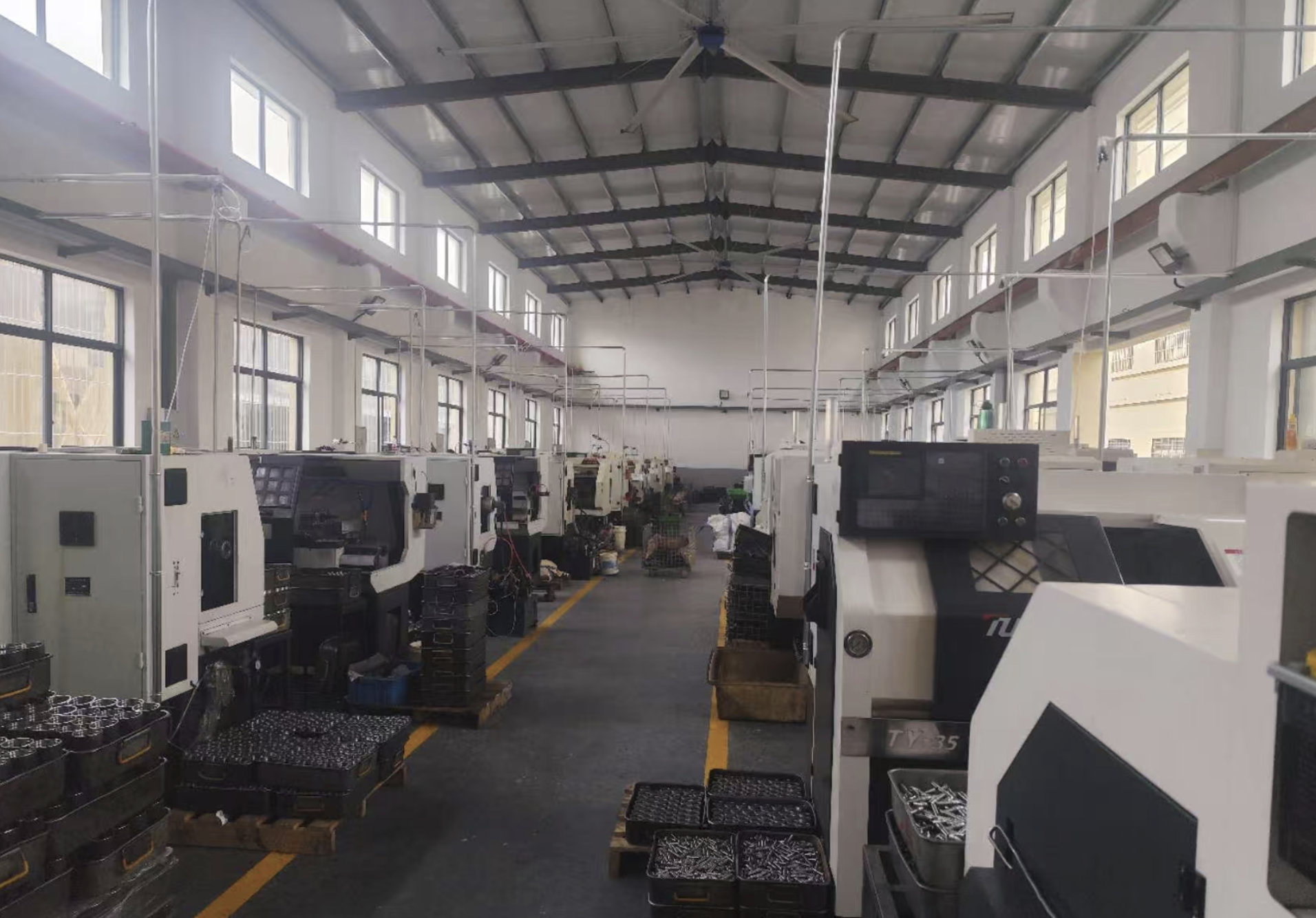
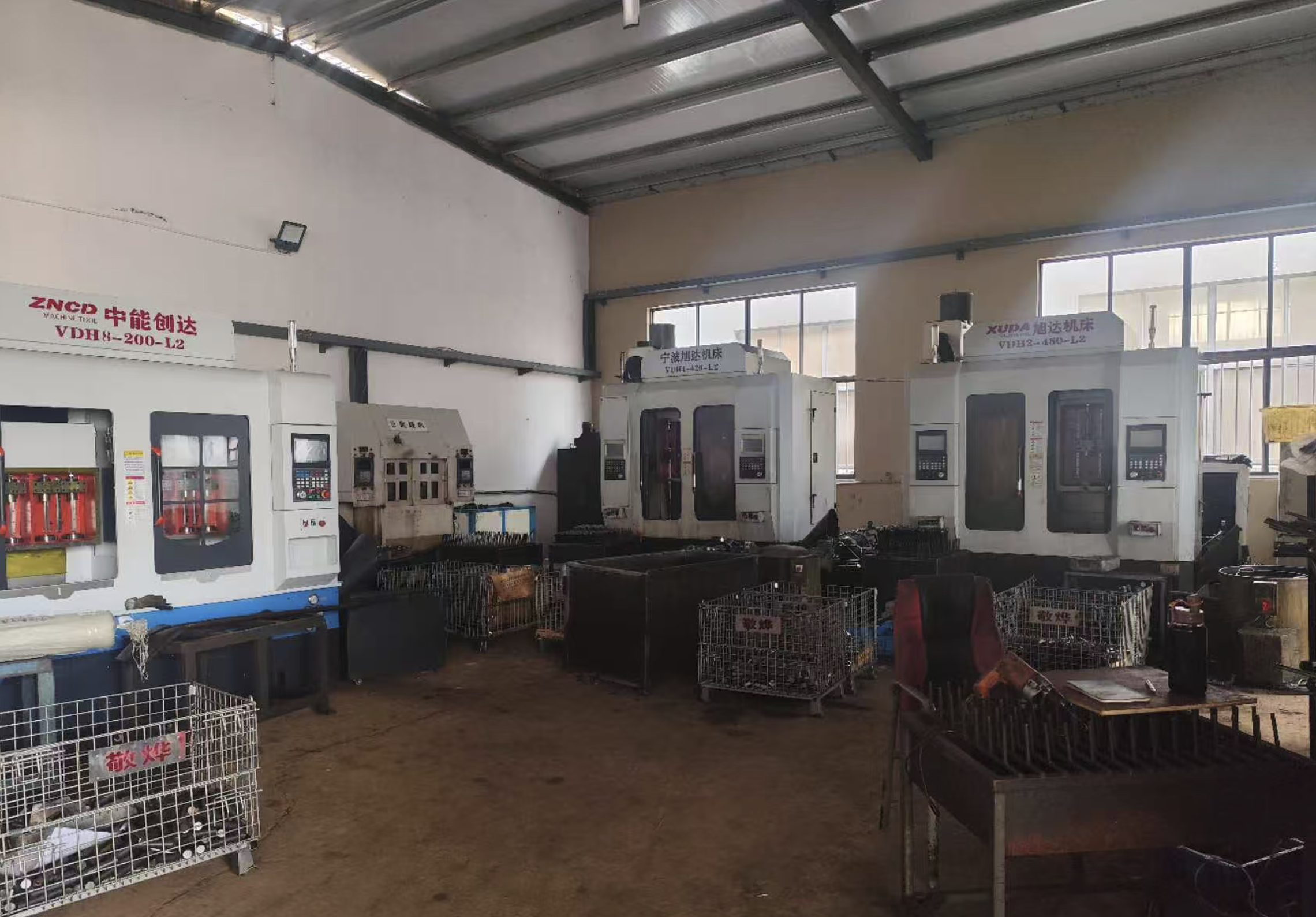
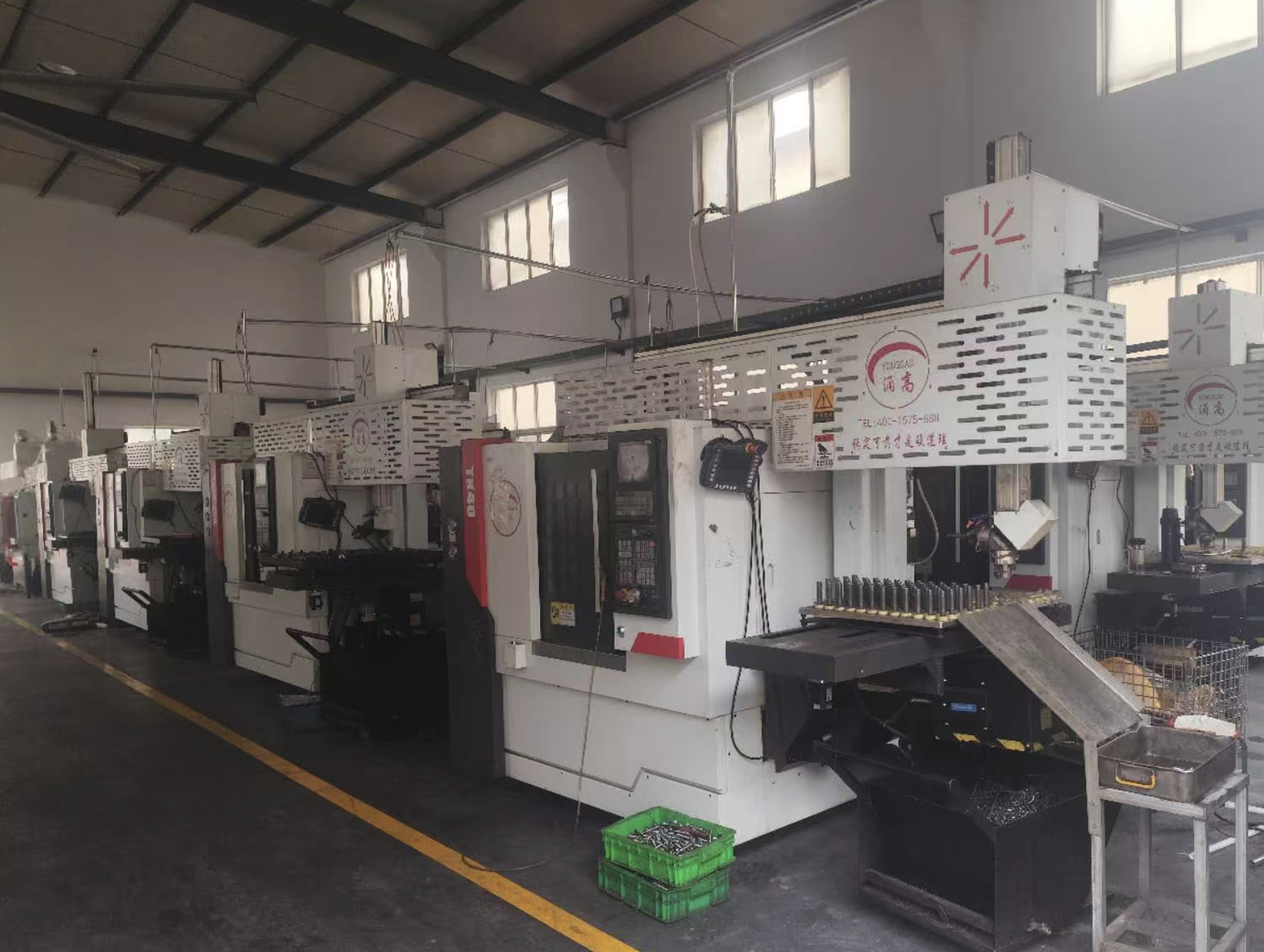
A broad portfolio can reduce supplier coordination, but each family still needs its own specification. JINGYE Hydraulic lists hydraulic fittings, hydraulic adapters, hydraulic hose fittings, industrial hose fittings, composite hose fittings, camlock couplings, quick disconnect couplings, liquid cooling quick disconnects, UQD and UQDB quick disconnect couplings, stainless steel fittings, brass fittings, pneumatic fittings, and customized fluid connection components. The company operates under ISO 9001:2015 and uses more than 100 CNC machines for machining and dimensional inspection. Buyers should still confirm the reference standard, pressure data, and test documentation for the exact series.
Why is there no fixed price band for industrial hose fittings?
Because the quotation changes with connection standard, size, material, sealing, plating, test documentation, quantity, packaging, and delivery term. A carbon steel fitting with standard zinc plating is not comparable with a stainless steel 316L fitting that requires material reports and enhanced salt spray testing. Normalize the specification before comparing prices. For the hydraulic hose fitting ranges in the supplied data, most standard items have no strict MOQ; OEM and customized MOQ depends on design, material, process, and order requirements.
How should a buyer validate a sample before a bulk order?
Submit reference part numbers, existing drawings, hose specifications, or physical samples for dimensional comparison, technical evaluation, and quotation. Hose and fitting compatibility, crimp dimensions, and pressure performance require verification before substitution. The sample review should confirm the connection standard, material, coating, sealing geometry, dimensions, and documentation package. A visual check alone is not a substitution validation.
What lead time should a buyer plan for?
For the hydraulic hose fitting ranges in the supplied data, in-stock items can typically be dispatched within 3–5 days, standard production orders generally require 30–45 days, and OEM or customized products generally require 45–60 days, depending on design complexity, order quantity, material availability, and production requirements. To start a specification review, send the drawing, hose specification, target standard, annual volume, and required delivery date to Enzo at enzo@jingyefittings.com or WhatsApp +86 15267868624. The company website is www.jingyefittings.com.
Next Step: Quote Against a Defined Specification
A useful quotation starts with a defined connection standard, material, sealing method, hose compatibility, coating requirement, documentation package, and order volume. JINGYE Hydraulic supports standard supply, OEM customization, sample evaluation, and second-source review for fluid connection components. Share your drawing or sample requirement for a dimensional and specification review.
Conclusion
Industrial hose fittings should be bought as a specified connection system, not as a generic part. The buyer’s leverage comes from naming the standard, defining the material and sealing interface, joining the hose and fitting specification, requiring current certification and inspection records, validating a sample, and normalizing commercial terms. Suppliers that can document these constraints are easier to compare and safer to qualify.
JINGYE Hydraulic’s verified position is as a Ningbo-based manufacturer established in 2008, operating under ISO 9001:2015, with a broad fluid connection portfolio, more than 100 CNC machines, and standard, OEM, and customized supply capability. The remaining work is buyer-specific: confirm the exact series data, current certificate status, test documentation, and quotation basis for the industrial hose fitting you intend to purchase.
Have Questions or Need More Details?
Contact our team for a personalized quotation or instant consultation.
Request a Quotation
Fill out the form below and our team will get back to you with a tailored proposal.
WhatsApp Direct Chat
Prefer to chat in real-time? Message us on WhatsApp for instant assistance & quick answers.
- Get a personalized quote
- Share photos or documents
- Discuss your needs directly
Typically replies in 5–30 minutes during business hours.