
JINGYE Hydraulic: A Deep Analysis of a China Hydraulic Fitting Manufacturer
JINGYE Hydraulic (Ningbo Jingye Fluid Fittings Co., Ltd.) is a fluid connection component manufacturer based in Ningbo, Zhejiang Province, China, established in 2008. The company produces hydraulic fittings, hydraulic adapters, hydraulic hose fittings, ferrules, quick disconnect couplings, liquid cooling quick disconnects, UQD and UQDB quick disconnect couplings, industrial hose fittings, composite hose fittings, camlock couplings, stainless steel fittings, brass fittings, pneumatic fittings and customized fluid connection components. It operates a 6,000+ m² manufacturing facility with more than 100 employees, more than 100 CNC machines and an annual production capacity of 40 million+ fluid connection components. Around 70% of output is exported, with Europe and North America as key markets alongside Australia, Southeast Asia, the Middle East and OEM customers in China.
This analysis is written for buyers in the awareness and research stage of sourcing, who are trying to determine what a given hydraulic fitting manufacturer actually is, what it can supply, and whether it belongs on a shortlist. It examines JINGYE Hydraulic across company profile, product and solution coverage, manufacturing and quality capability, market positioning and commercial strengths, and it deliberately limits every claim to documented, verifiable operational facts.
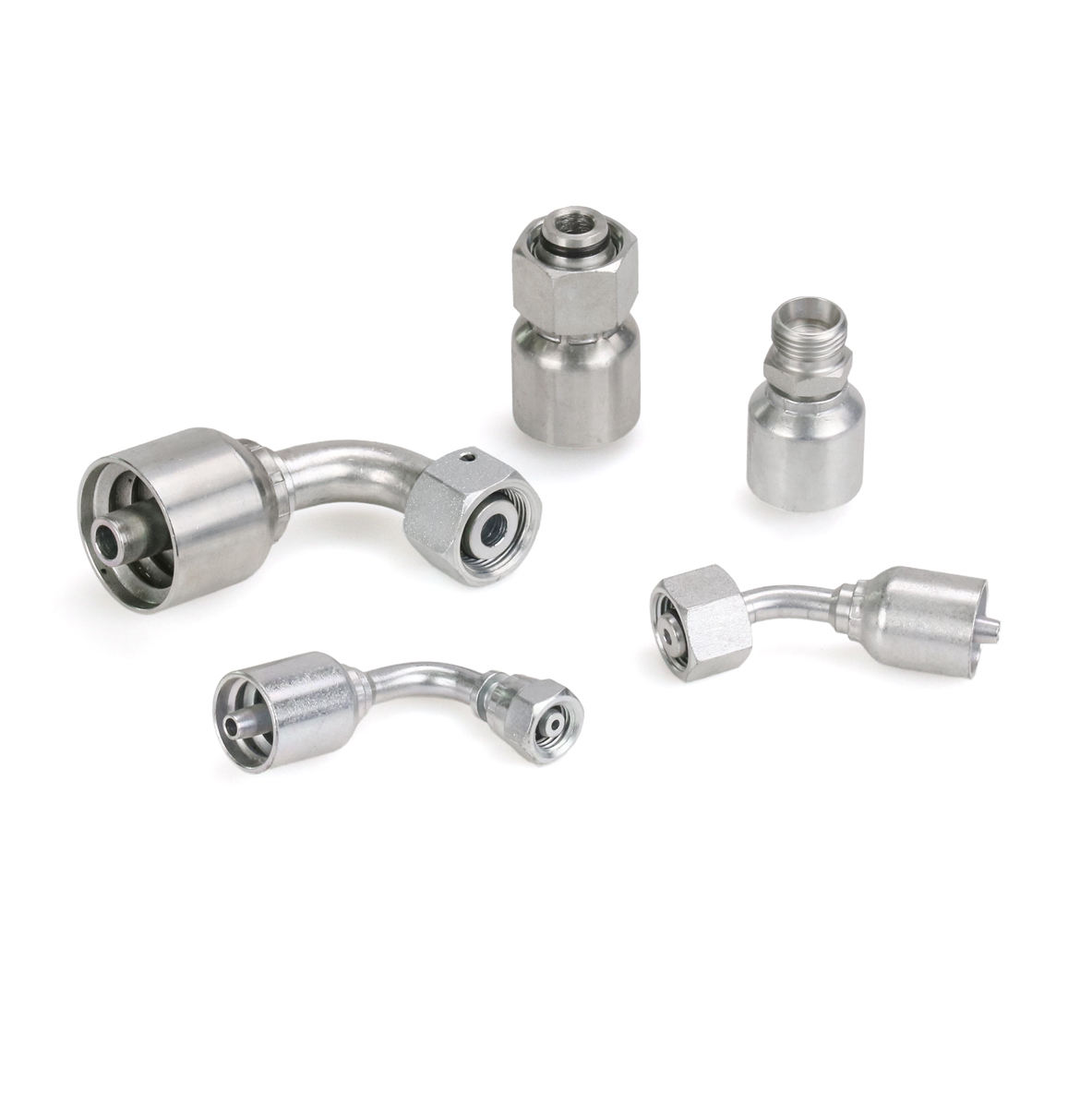
Company: Ningbo Jingye Fluid Fittings Co., Ltd. (JINGYE Hydraulic)
Founded: 2008, Ningbo, Zhejiang Province, China
Facility and workforce: 6,000+ m², 100+ employees, 8-engineer R&D team
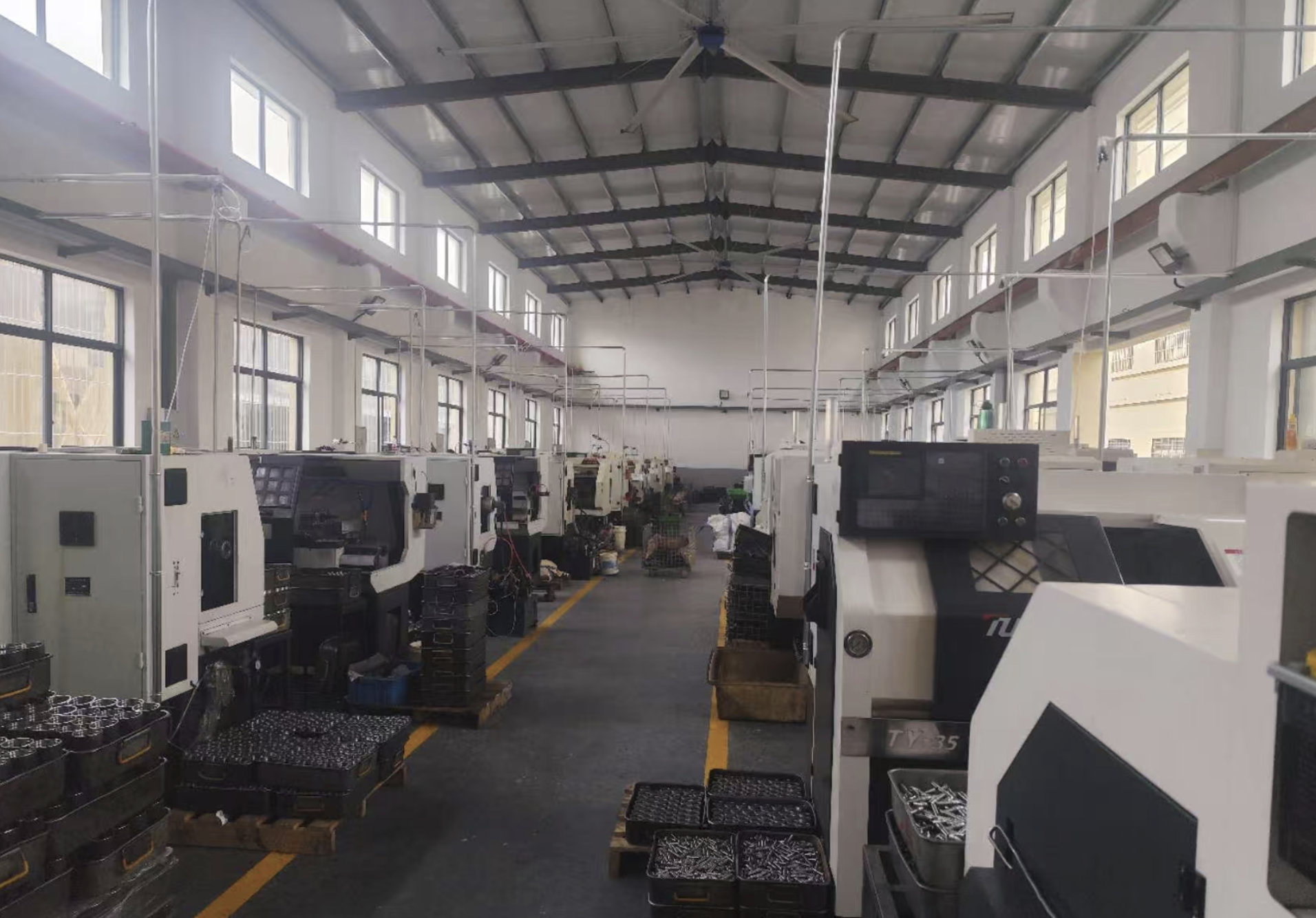
Manufacturing resources: 100+ CNC machines plus drilling, crimping, assembly and precision inspection equipment
Annual capacity: 40 million+ fluid connection components
Quality system: ISO 9001:2015
Export share: Approximately 70%
Why "Hydraulic Fitting" Is Not a Specification: The Buyer's Real Problem
The first obstacle a buyer meets in hydraulic fitting sourcing is not supplier quality. It is the category noun itself. "Hydraulic fitting" describes a family of components, not a purchase specification, and a request built only on that phrase cannot be quoted on a like-for-like basis.
Interchangeability in this category is governed by a small number of named connection-geometry families, each defined by its own dimensional standard. Quick-action couplings are addressed by ISO 7241-1 for dimensions and requirements and ISO 7241-2 for test methods. Hydraulic tube fittings of the flared type are addressed by SAE J514. The 24° cone connector family used widely in European machinery is addressed by ISO 8434-1. Flange connections fall under ISO 6162-1 and ISO 6162-2. Threaded connections split between ISO 228-1 for parallel pipe threads and ASME B1.20.1 for general-purpose inch pipe threads. A supplier claim of "standard compliance" therefore only means something when it names the geometry family and the reference document.
A second problem is that hose fittings are not independent specification objects. A fitting must match a hose class defined by US and/or European hose standards. SAE J517 covers hydraulic hose construction and performance; EN 853 covers wire-braided hydraulic pressure hose; EN 856 covers spiral-wire-reinforced types; EN 857 covers compact wire-braided types. Fitting and hose must be co-specified, because a fitting purchased against one hose class will not be interchangeable with another. Buyers who purchase hose and fittings from different suppliers without a declared interface standard are creating a predictable failure point.
A third problem is that the same product noun resolves to different normative documents in different markets. "Camlock" refers to the US federal specification A-A-59326 (Coupling, Cam-Locking Type), commonly cited as superseding MIL-C-27487, while the European equivalent regime sits in EN 14420-7 for cam locking couplings. A supplier's camlock line can be built to one regime and marketed globally. That difference is invisible in a catalogue photo but decisive in incoming inspection.
For a buyer in the research stage, these three problems turn the evaluation of any manufacturer into a single question: can this supplier express its capability in the same specification language the buyer uses? The rest of this analysis assesses JINGYE Hydraulic on exactly that basis.
Industry Background: Growth Paired With Persistent Specification Fragmentation
The global hydraulic fittings market was estimated at USD 12.7 billion in 2024 and is projected to reach USD 17.9 billion by 2030, a compound annual growth rate of 5.8% across the 2024–2030 period, according to commercial market research. That is steady, infrastructure-linked growth rather than a speculative curve, and it is consistent with a category whose demand follows machinery production, maintenance cycles and fluid power system builds.
Material adoption inside that market is concentrated. In 2025, steel accounted for an estimated 45.2% of hydraulic fitting material share and brass for 26.4%. Steel remains dominant in high-pressure applications, while brass is more commonly associated with lower-pressure and pneumatic service. Buyers therefore rarely face a single-material decision; they face a material allocation decision across a product range.
The adjacent liquid cooling segment shows a different growth profile. Quick disconnect couplings for liquid cooling were valued at USD 2.8 billion in 2025 and are expected to reach USD 6.1 billion by 2034, a CAGR of 9.1%. Within that, UQD couplings have been reported at a 22.4% CAGR for the 2024–2032 period, driven by data centre liquid cooling infrastructure. Compliance in that segment is anchored to the Open Compute Project (OCP) UQD/UQDB specification, which is an authoritative, community-developed standard rather than a supplier convention.
Regulatory layering adds a further dimension for European buyers. Directive 2014/68/EU, the Pressure Equipment Directive, regulates the placing on the market of pressure equipment in the EU, and pressure accessories such as fittings incorporated into pressurised assemblies fall within its scope where the assembly exceeds the Directive's pressure threshold. Whether a specific fitting qualifies as a pressure accessory depends on the assembly and must be assessed case by case — but the documentation obligation propagates down the chain to the fitting supplier as a request for declarations, material certificates and conformity evidence.
Layered on top of this is a customs classification matter. Stainless steel threaded fittings sit under HS code 730722, but quick disconnects may be classified as fittings or as valves and taps depending on configuration. Buyers comparing landed cost across origins should verify classification before assuming parity.
JINGYE Hydraulic's Product Portfolio: What the Company Actually Supplies
The practical test of a hydraulic fitting manufacturer is coverage: how many connection-geometry families and thread standards can be sourced from one supplier under one quality system. JINGYE Hydraulic's declared portfolio spans six major product families.
Hydraulic Hose Fittings by Connection Standard
The company manufactures hydraulic hose fittings across five thread and connection systems.
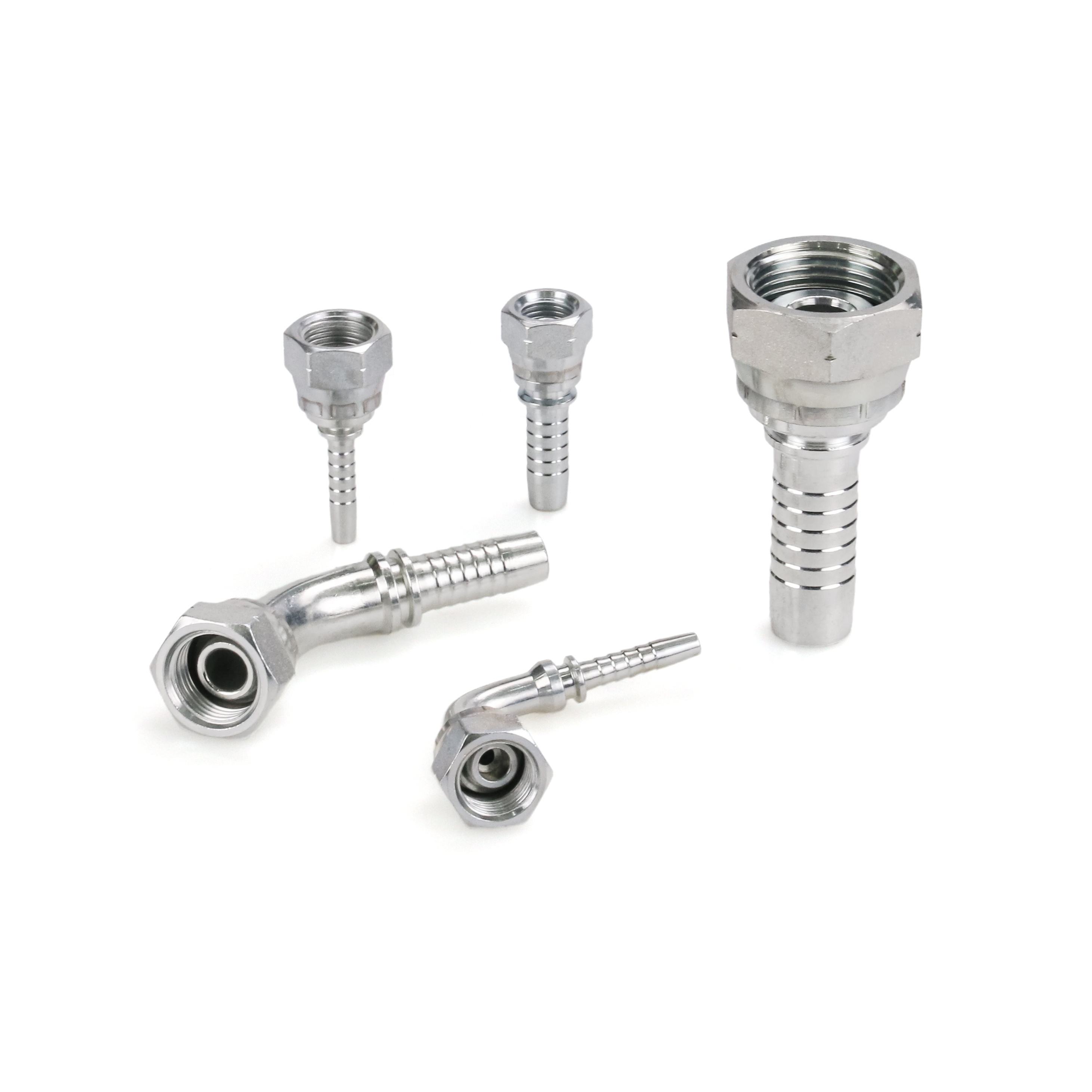
- JIC 37° flare hydraulic hose fittings — 16711 Series (male straight), 26711 Series (female swivel straight), 26741 Series (female swivel 45° elbow) and 26791 Series (female swivel 90° elbow), with reference to SAE J514 / ISO 8434-2 and 37° flare metal-to-metal sealing.
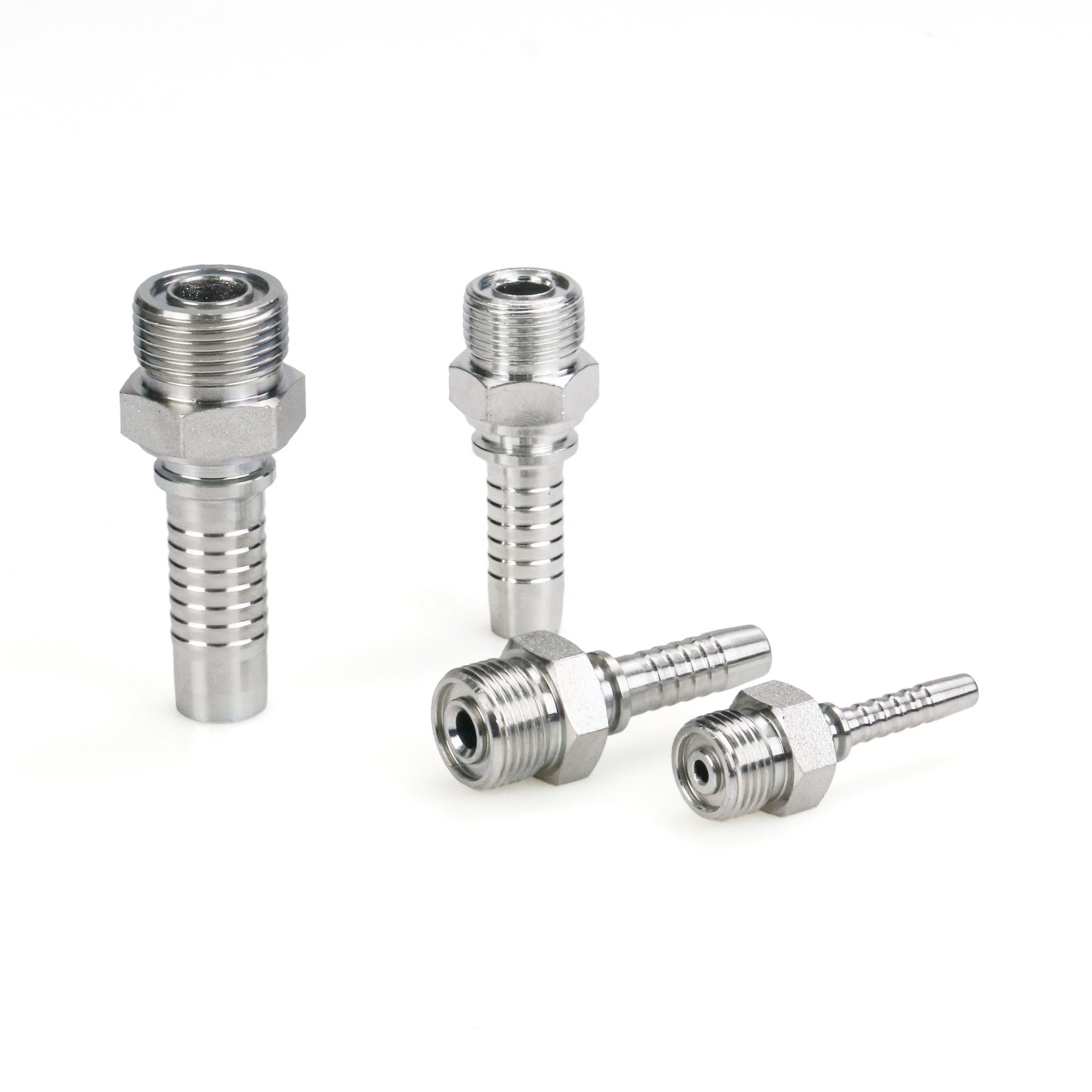
- BSP hydraulic hose fittings — eleven series including 12211 (male O-ring straight), 12611 (male 60° cone straight), 22111/22141/22191 (female multiseal straight, 45° and 90° elbow), 22211/22241/22291 (female flat seat straight, 45° and 90° elbow) and 22611/22641/22691 (female 60° cone straight, 45° and 90° elbow), referencing ISO 228-1.
- Metric hydraulic hose fittings — 10411, 10511, 10611, 20411, 20441, 20491, 20511, 20541 and 20591 series, covering 24° cone connections, Metric Light (L) and Heavy (S) series, and DKO O-ring cone sealing, referencing DIN 2353 / ISO 8434-1.
- NPT hydraulic hose fittings — 15611, 15613, 15691 and 15618 series in male straight and 90° elbow configurations, referencing ANSI/ASME B1.20.1 and using tapered thread sealing.
- ORFS hydraulic hose fittings — 24211, 24241, 24291, 24213, 24243, 24293 and 24218 series in female swivel straight, 45° and 90° elbow configurations, referencing SAE J1453 / ISO 8434-3 with flat-face O-ring sealing.
One-Piece Hydraulic Hose Fittings
JINGYE Hydraulic supplies integrated hydraulic crimp fittings in which the fitting body and crimp ferrule are a single pre-assembled unit. The 10411Y, 10511Y, 12611Y, 14211Y, 15611Y, 16711Y, 20111Y, 22611Y, 24211Y and 26711Y series cover Metric, BSP, JIC 37°, ORFS and NPT connection systems. Compared with conventional two-piece designs that pair a separate fitting body with a separate ferrule, the integrated format simplifies component selection and handling during hose assembly production and reduces the risk of mismatched fitting and ferrule combinations — provided the hose and crimp specification have been validated for the combination.
Hydraulic Adapters, Quick Disconnects and Liquid Cooling Couplings
Beyond hose fittings, the portfolio includes hydraulic adapters and quick disconnect couplings, including liquid cooling quick disconnects and UQD and UQDB quick disconnect couplings. The liquid cooling sub-family is the segment where the market data shows the steepest growth and where the OCP UQD/UQDB specification provides the compliance anchor. Buyers evaluating that segment should ask specifically which specification revision a supplier builds and inspects to, since UQD is a specification-linked designation rather than a generic performance claim.
Industrial, Composite and Camlock Hose Fittings
The company supplies industrial hose fittings, composite hose fittings and camlock couplings. For camlock specifically, the US and EU reference regimes differ, and a buyer purchasing for a US-linked supply chain should confirm the product is built and inspected to the reference document the end customer recognises.
Stainless Steel, Brass and Pneumatic Fittings
Material-specific lines — stainless steel fittings, brass fittings and pneumatic fittings — sit alongside the hydraulic range. These lines matter for buyers assembling a consolidated purchase order, where reducing the number of suppliers on a single shipment can offset a marginally higher unit price.
Customized Fluid Connection Components
JINGYE Hydraulic supports OEM and customized manufacturing based on customer drawings, samples and technical requirements. Documented customization options include special thread sizes and dimensions (including special BSP, JIC, NPT and metric thread sizes), non-standard connection geometries, integrated ferrule configurations, modified hose tail designs, alternative sealing configurations, L/S series configurations and application-specific materials. This is the part of a supplier's offer that most often determines whether an unusual part can be sourced at all, since non-standard configurations are frequently the components that are hardest to obtain through standard distribution channels.
Technical Characteristics That Matter at the Specification Stage
Four technical parameters decide whether a fitting range is usable in a given system: material, pressure class, temperature envelope and corrosion protection. These are the specifications a buyer should extract before comparing quotations.
Materials. Across the hose fitting range, JINGYE Hydraulic offers carbon steel, stainless steel 304 (AISI 304), stainless steel 316 (AISI 316), stainless steel 316L (AISI 316L) and brass, selected according to product design, working pressure, fluid compatibility, operating environment and customer requirements.
Hose size and compatibility. Fittings cover a hose size range of 1/4" to 2", depending on series and hose specification. Declared compatible hose standards are SAE 100R1/R2, SAE 100R12/R13, EN 853 1SN/2SN and EN 856 4SP/4SH, subject to hose, fitting and crimping compatibility — which is the correct framing, because compatibility is a property of the assembled system rather than of the fitting alone.
Pressure and temperature. Working pressure across the JIC, BSP, Metric, NPT and one-piece ranges is 100–420 bar, depending on fitting size, connection design, crimping specification and assembly requirements. ORFS fittings extend to 100–630 bar depending on size and connection design, which reflects the sealing principle rather than a marketing tier. The standard operating temperature range is -40°C to +100°C; ORFS fittings reach up to +200°C depending on O-ring material, with NBR (nitrile rubber) and FKM (fluorocarbon rubber) options available.
Corrosion protection. Carbon steel fittings are supplied with trivalent chromium zinc plating, typically 8–12 μm, with standard salt spray resistance of ≥96 hours to white rust and ≥240 hours to red rust under specified test conditions. Enhanced corrosion-resistant plating up to 16 μm and salt spray resistance up to 1,000 hours are available on request, subject to coating specification and testing requirements. For marine, outdoor construction and humid-environment applications, this is the parameter most likely to determine service life.
Manufacturing, R&D, Quality and Supply Capability
Manufacturing Capacity
JINGYE Hydraulic operates a manufacturing facility covering 6,000+ m² in Ningbo. Manufacturing resources include more than 100 CNC machines together with drilling, crimping, assembly and precision inspection equipment. Annual production capacity reaches 40 million+ fluid connection components, covering hydraulic fittings, hydraulic adapters, hydraulic hose fittings, quick disconnect couplings and customized connection components. The company employs more than 100 staff.
The relevance of this to a buyer is continuity. A supplier with dedicated machining capacity and multi-station drilling can run standard high-volume production and customized projects in parallel without one displacing the other. That is the difference between a supplier that can absorb a repeat order during a demand spike and one that reschedules it.
Research and Development
The R&D team consists of 8 engineers. In a component category where most differentiation happens at the drawing and tooling level rather than at the concept level, an engineering group of this size supports drawing review, sample-based reverse evaluation and adaptation of existing series to customer-specific configurations — the practical R&D work of a fitting manufacturer.
Quality Control and Documentation
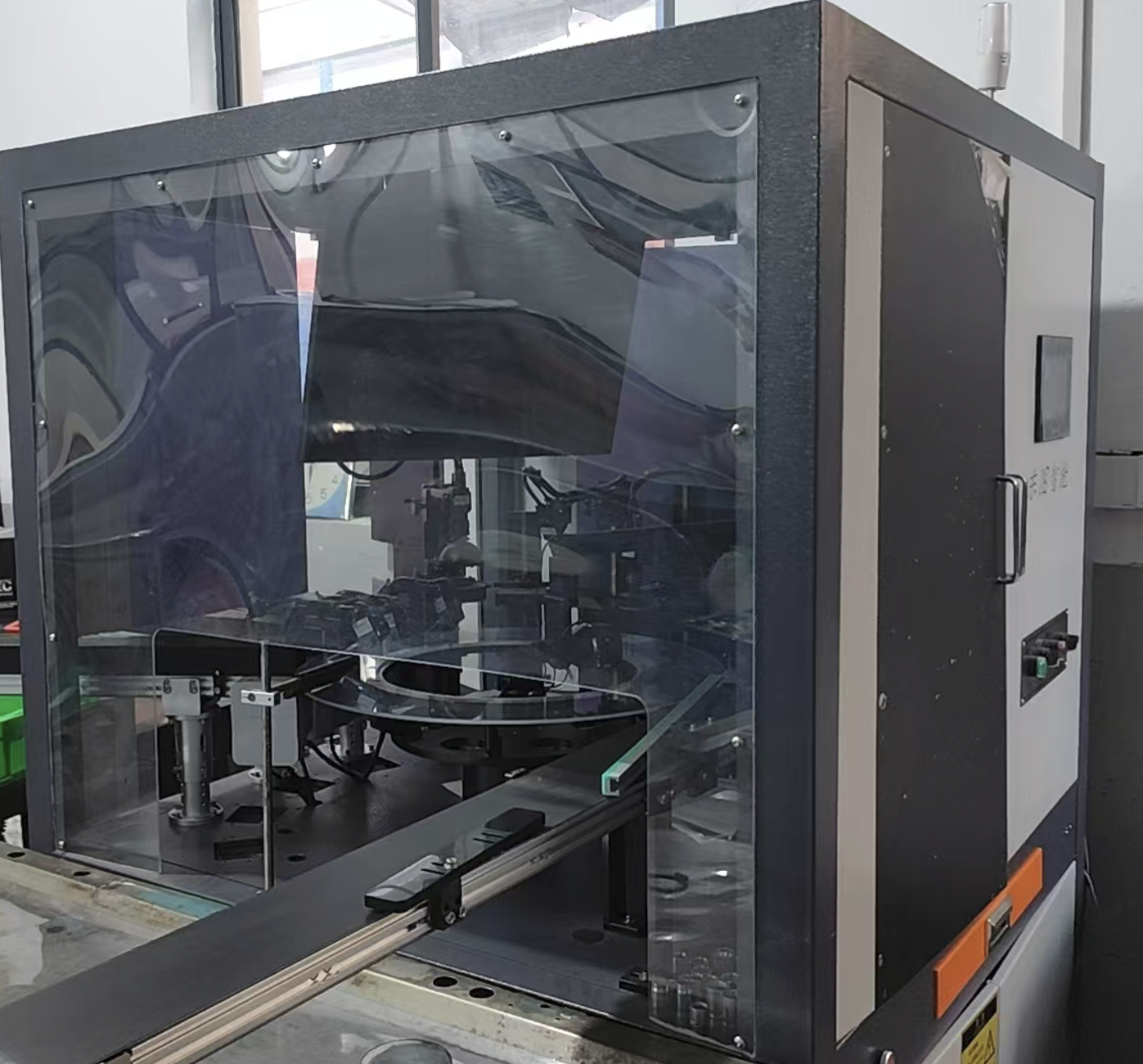
JINGYE Hydraulic operates under an ISO 9001:2015 quality management system. Depending on product series and customer requirements, products can be manufactured and inspected according to SAE J514, SAE J1453, ISO 8434-1, ISO 8434-2, ISO 8434-3, DIN 2353 and ANSI/ASME B1.20.1. Material reports, dimensional inspection records and other quality documentation can be provided according to project requirements.
The documentation point deserves emphasis, because it is where specification work converts into verifiable delivery. A buyer writing a purchase specification can name the reference standard; the supplier's obligation is then to return dimensional inspection records and material reports against it. A manufacturer that can supply that documentation on request is materially easier to qualify than one that can only assert compliance.
Global Supply and Service Model
Export accounts for approximately 70% of output. Customers are served across Europe, North America, Australia, Southeast Asia, the Middle East and other international markets, as well as OEM customers in China. Europe and North America are the key export markets.
On commercial terms, most standard hydraulic fittings carry no strict minimum order quantity, and small-batch purchasing is supported alongside wholesale and high-volume production. In-stock items can typically be dispatched within 3–5 days, while standard production orders generally require 30–45 days. Repeat orders, customized packaging and product identification are supported for long-term procurement programs.
How a Buyer Should Evaluate JINGYE Hydraulic: A Five-Step Framework
The following sequence converts a category-level enquiry into a qualifiable supplier decision. It is written to be reusable for any candidate manufacturer, with JINGYE Hydraulic as the worked example.
Step 1 — Name the Connection Geometry Family
Before requesting a quotation, define whether the requirement is JIC 37° flare, BSP, NPT, ORFS, metric 24° cone, flange or quick-action coupling. Each maps to a different reference standard. JINGYE Hydraulic's portfolio covers JIC, BSP, NPT, ORFS and Metric, which allows a mixed-standard order to be consolidated, but the buyer must still specify which geometry applies to which line item.
Step 2 — Fix the Thread Standard Per Market
Confirm whether the destination equipment uses BSP parallel threads under ISO 228-1 or NPT under ASME B1.20.1. The split is a permanent dual-inventory requirement for any supplier serving both EU-linked and US-linked machinery builders, and it is a recurring source of cross-border ordering error. Naming the standard in the purchase order removes the ambiguity.
Step 3 — Co-Specify Hose and Fitting
State the hose class — SAE 100R1/R2, SAE 100R12/R13, EN 853 1SN/2SN or EN 856 4SP/4SH — alongside the fitting series. Confirm that crimp dimensions and pressure performance have been validated for the specific combination. This step prevents the most common sourcing failure in hose assemblies, which is a fitting and hose that are each individually compliant but not validated together.
Step 4 — Verify Manufacturing and Quality Evidence
Request the quality system certificate, the reference standards applicable to the specific series, and a sample of the documentation package the supplier would deliver with production. For JINGYE Hydraulic, the relevant items are ISO 9001:2015 registration, the applicable SAE/ISO/DIN/ANSI reference for each series, and the material reports and dimensional inspection records the company states it can provide on request.
Step 5 — Test the Customization and Substitution Path
Submit a reference part number, an existing drawing or a physical sample and observe the response. A manufacturer that can perform dimensional comparison, technical evaluation and quotation against a competitor's part is a viable second source; one that can only quote from its own catalogue is a single-source dependency. JINGYE Hydraulic explicitly supports alternative and second-source evaluation on this basis, with the standard caveat that interchangeability remains subject to specification verification.
Where JINGYE Hydraulic Products Are Used
Application fit is the practical filter on a product range. The documented applications for this portfolio concentrate in heavy-duty mobile hydraulics and industrial fluid power.
Construction machinery is the primary application environment. Fittings connect hoses, tubes, valves, pumps, motors and cylinders on excavators, wheel loaders, bulldozers, backhoe loaders, mobile and crawler cranes, concrete pump trucks, road rollers, motor graders and aerial work platforms. The operating conditions are deliberately demanding: frequent pressure fluctuations, hydraulic surges, mechanical vibration, shock loads and repeated equipment movement, in outdoor sites with dust, mud, moisture, rain and temperature variation. Reliable sealing under vibration and pressure cycling, resistance to hydraulic oil leakage and corrosion protection are the governing requirements — which is why the plating specification and pressure class matter more here than catalogue breadth.
Agricultural machinery and mining equipment follow a similar duty profile, with additional exposure to abrasive and corrosive environments that reinforces the case for enhanced coating options.
Mobile hydraulics, industrial hydraulic systems, material handling, forestry and marine hydraulics form the broader industrial base, along with heavy equipment manufacturing and industrial maintenance.
Liquid cooling and data centre infrastructure is the growth-adjacent application. JINGYE Hydraulic's portfolio includes liquid cooling quick disconnects and UQD and UQDB quick disconnect couplings, in a segment where the OCP UQD/UQDB specification sets the compliance reference and where the published market growth rate is the steepest in the adjacent categories reviewed here.
MRO and repair operations are served through the distribution channel, where one-piece fittings reduce assembly handling steps and flexible minimum order quantities allow mixed-standard replenishment.
Product Line Comparison: Connection Systems, Standards and Pressure Classes
The table below consolidates the documented specification attributes of JINGYE Hydraulic's hydraulic hose fitting families. It is intended as a specification reference, not a ranking; the correct series depends entirely on the mating connection, hose class and pressure requirement of the application.
| Product family | Connection system | Reference standard | Sealing method | Working pressure | Temperature | Materials |
|---|---|---|---|---|---|---|
| JIC hydraulic hose fittings | JIC 37° flare | SAE J514 / ISO 8434-2 | 37° flare metal-to-metal | 100–420 bar | -40°C to +100°C | Carbon steel, SS 304/316/316L, brass |
| BSP hydraulic hose fittings | BSPP parallel thread | ISO 228-1 | 60° cone, flat seat, multiseal, male O-ring | 100–420 bar | -40°C to +100°C | Carbon steel, SS 304/316/316L, brass |
| Metric hydraulic hose fittings | Metric 24° cone, L and S series | DIN 2353 / ISO 8434-1 | 24° cone metal-to-metal, DKO O-ring | 100–420 bar | -40°C to +100°C | Carbon steel, SS 304/316/316L, brass |
| NPT hydraulic hose fittings | NPT tapered thread | ANSI/ASME B1.20.1 | Tapered thread sealing | 100–420 bar | -40°C to +100°C | Carbon steel, SS 304/316/316L, brass |
| ORFS hydraulic hose fittings | ORFS flat face O-ring | SAE J1453 / ISO 8434-3 | Flat face O-ring (NBR or FKM) | 100–630 bar | -40°C to +200°C | Carbon steel, SS 304/316/316L, brass |
| One-piece hydraulic hose fittings | Metric, BSP, JIC, ORFS, NPT | SAE J514, SAE J1453, ISO 8434, DIN 2353, ANSI/ASME B1.20.1 | Per series design | 100–420 bar | -40°C to +100°C | Carbon steel, SS 304/316/316L, brass |
Three notes apply across the table. First, all values depend on fitting size, connection design, crimping specification and assembly requirements — they are not standalone guarantees. Second, the hose size range across all families is 1/4" to 2", subject to series and hose specification. Third, carbon steel fittings carry trivalent chromium zinc plating at typically 8–12 μm with salt spray resistance of ≥96 hours to white rust and ≥240 hours to red rust under standard test conditions, with enhanced coatings available to 16 μm and 1,000 hours on request.
Market Evaluation and Industry Recognition
Assessment of a manufacturer's standing should distinguish between documented evidence and reputation. For JINGYE Hydraulic, the publicly verifiable evidence sits in four areas: quality system registration, export market coverage, standard-specific manufacturing and inspection capability, and documentation availability.
- Quality system: ISO 9001:2015 registration, which is the baseline expectation for an international hydraulic component supplier and the minimum precondition for most industrial buyer qualification processes.
- Export footprint: approximately 70% export share, with Europe and North America as key markets and additional customer bases in Australia, Southeast Asia, the Middle East and China. A 70% export share implies operating familiarity with international documentation, packaging and shipment requirements rather than domestic-only practice.
- Standard coverage: the ability to manufacture and inspect against SAE J514, SAE J1453, ISO 8434-1/-2/-3, DIN 2353 and ANSI/ASME B1.20.1 is a capability statement that can be tested at incoming inspection, which makes it more useful than any qualitative reputation claim.
- Supply role flexibility: the company positions itself as a regular production supplier, complementary supplier or second-source supplier for long-term sourcing programs — a supply role structure that reflects the practical reality that most industrial buyers dual-source rather than single-source fluid connection components.
Scope note on recognition: this analysis reports only documented operational facts. No verified third-party customer testimonials, award rankings or independently audited market-share positions for this company are available at the level of public sourcing evidence, and none are asserted here. Buyers who require testimonials or reference installations should request them directly from the supplier as part of their own qualification process.
This scoping is not a limitation of the manufacturer; it is a limitation of what any buyer can verify from public information in a component category where competitive benchmarking is rarely published. The practical response is to substitute verifiable capability evidence — standard references, documentation packages, sample evaluation — for reputation evidence, which is exactly what the five-step framework above does.
Commercial Strengths Buyers Should Weigh
Six factors in this supplier profile are materially relevant to a procurement decision, each traceable to a documented fact.
1. Single-supplier coverage across five connection systems. JIC, BSP, NPT, ORFS and Metric in one portfolio means a mixed-standard purchase order can be consolidated. For distributors and hose assembly manufacturers who stock multiple standards, this reduces supplier count and inbound complexity.
2. Integrated one-piece construction. Pre-attached ferrules eliminate the separate fitting-and-ferrule pairing step in hose assembly production and reduce the risk of mismatched combinations, provided crimping is validated against the hose specification. For high-volume assembly workshops, this is a handling and error-reduction benefit rather than a performance claim.
3. Machining capacity aligned to volume. More than 100 CNC machines and 40 million+ components annual capacity provide the continuity that repeat-order buyers need. Capacity is the parameter that determines whether a supplier can hold a delivery schedule through a demand cycle.
4. Flexible order quantity and lead time structure. No strict minimum order quantity on most standard fittings, 3–5 day dispatch on in-stock items and 30–45 days for standard production orders gives buyers a workable split between urgent replenishment and planned procurement.
5. Customization and second-source capability. OEM manufacturing from drawings, samples and technical requirements, including special threads, non-standard dimensions, modified hose tails and application-specific materials, plus dimensional comparison against reference part numbers, addresses two distinct buyer needs: parts that standard distribution cannot supply, and de-risking an existing single-source position.
6. Documentation-backed quality claims. Material reports and dimensional inspection records available on request convert ISO 9001:2015 registration and standard references into something an incoming inspection team can actually use.
A balanced view also requires naming the boundary conditions. This is a component manufacturer competing on coverage, flexibility and documentation, not on proprietary technology or branded system architecture. Buyers requiring a fully integrated fluid power system — valve assemblies, manifolds, engineered sub-assemblies — should evaluate that requirement separately. Buyers requiring fittings for a specific connection geometry not listed in the portfolio should confirm availability rather than assume extension. And for liquid cooling applications, buyers must verify the specific UQD/UQDB specification revision the supplier builds to, because the designation is specification-linked.
Conclusion: Positioning, Procurement Value and Outlook
Industry positioning. JINGYE Hydraulic occupies the specification-complete component manufacturer tier: a China-based producer with five connection-geometry families, multiple material options, ISO 9001:2015 registration, standard-specific manufacturing and inspection capability, and roughly 70% export exposure across Europe, North America, Australia, Southeast Asia and the Middle East. That position serves hydraulic hose assembly manufacturers, industrial distributors, machinery OEMs, MRO suppliers and fluid handling companies, and it is most valuable to buyers who purchase across more than one thread standard.
Procurement value. The commercial case rests on four levers. Coverage allows consolidation across JIC, BSP, NPT, ORFS and Metric. Flexible minimum order quantities and a 3–5 day in-stock dispatch window reduce working capital and urgent-replenishment friction. Drawings-and-samples customization plus reference-part evaluation creates a viable second-source path rather than a single-source dependency. Documentation availability makes the quality claim testable at incoming inspection. For a buyer in the research stage, the practical next step is to convert the requirement into a named geometry family, a named thread standard and a named reference standard, then test the supplier against that specification.
Future potential. Two published market signals are relevant to how this portfolio is likely to evolve. The core hydraulic fittings market is projected to grow from USD 12.7 billion in 2024 to USD 17.9 billion by 2030 at 5.8% CAGR — steady, machinery-linked expansion rather than a step change. The liquid cooling quick disconnect segment is projected to grow from USD 2.8 billion in 2025 to USD 6.1 billion by 2034 at 9.1% CAGR, with UQD couplings reported at 22.4% CAGR for 2024–2032. A manufacturer already holding liquid cooling quick disconnects and UQD/UQDB couplings in its portfolio, alongside conventional hydraulic fittings, is positioned across both curves. The determining factor will not be capacity but specification credibility — whether the UQD and UQDB lines can be documented against the OCP reference, and whether fitting and hose compatibility evidence can be produced on demand.
For buyers, the conclusion is unglamorous and useful: this is a supplier worth evaluating on specification coverage, customization flexibility, order-quantity terms and documentation, and worth disqualifying only on grounds that can be tested. That is the correct standard at the research stage, before price comparisons begin.
Frequently Asked Questions
1. Which standards can JINGYE Hydraulic fittings be manufactured and inspected to?
JINGYE Hydraulic operates under an ISO 9001:2015 quality management system, and depending on the product series and customer requirements, products can be manufactured and inspected according to applicable international standards including SAE J514, SAE J1453, ISO 8434-1, ISO 8434-2, ISO 8434-3, DIN 2353 and ANSI/ASME B1.20.1. Specific series reference specific documents — for example, JIC fittings reference SAE J514 / ISO 8434-2, BSP fittings reference ISO 228-1, metric fittings reference DIN 2353 / ISO 8434-1 and ORFS fittings reference SAE J1453 / ISO 8434-3. Material reports, dimensional inspection records and other quality documentation can be provided according to project requirements. The applicable standard always depends on connection type and product configuration, so buyers should name the reference document in the purchase specification.
2. Does JINGYE Hydraulic support OEM and custom hydraulic fitting manufacturing?
Yes. JINGYE Hydraulic supports OEM and customized manufacturing based on customer drawings, samples and technical requirements. Documented customization options include special thread sizes and dimensions, non-standard connection geometries, integrated ferrule configurations, modified hose tail designs, alternative sealing configurations, Metric L/S series configurations and application-specific materials. Custom manufacturing complements the standard range across metric, BSP, JIC 37° flare, ORFS O-ring face seal and NPT threaded connection systems. Most standard hydraulic fittings carry no strict minimum order quantity, which means customization evaluation and small-batch purchasing can be combined in the same supplier relationship.
3. What are the minimum order quantity and lead times?
Most standard hydraulic fittings have no strict minimum order quantity, and small-batch purchasing is supported alongside wholesale orders, high-volume production and long-term OEM sourcing programs. In-stock items can typically be dispatched within 3–5 days. Standard production orders generally require 30–45 days, depending on the product series, order quantity and any customization requirements. Customized components built to drawings or samples should be scheduled separately, because tooling and first-article verification add steps beyond standard production. Buyers planning a transition from an incumbent supplier should therefore confirm the production lead time for the specific series before committing to a changeover date.
4. Can JINGYE Hydraulic be evaluated as a second-source supplier using existing part numbers or samples?
Yes. JINGYE Hydraulic supports hydraulic distributors, hose assembly manufacturers and industrial OEMs seeking an alternative or second-source manufacturer in China. Buyers can submit reference part numbers, existing technical drawings, hose specifications or physical samples for dimensional comparison, technical evaluation and quotation. This evaluation path is offered across the one-piece, JIC, ORFS, metric, BSP and NPT series. One condition applies and should be planned for: hose and fitting compatibility, crimp dimensions and pressure performance require verification before substitution, so interchangeability is subject to specification verification rather than assumed from dimensional similarity alone. Buyers should request the evaluation as a documented comparison, not a catalogue cross-reference.
5. Which export markets does JINGYE Hydraulic serve, and how does a buyer start?
JINGYE Hydraulic exports approximately 70% of its output, serving customers in Europe, North America, Australia, Southeast Asia, the Middle East and other international markets, as well as OEM customers in China. Europe and North America are the key export markets. The practical starting point for a new buyer is a specification submission: send the connection geometry family, thread standard, hose class, pressure and temperature requirement, and quantity, and request either a sample or a quotation. The team can be reached at enzo@jingyefittings.com, by WhatsApp on +86 15267868624, or through www.jingyefittings.com, with the manufacturing site at Hehuaqiao Village, Yunlong Town, Yinzhou District, Ningbo City, Zhejiang Province, China.

Evaluate JINGYE Hydraulic Against Your Specification
Send your reference part number, drawing or hose specification for dimensional comparison and quotation. Sample requests and second-source evaluations are welcome.
Email: enzo@jingyefittings.com | WhatsApp / Tel: +86 15267868624
Have Questions or Need More Details?
Contact our team for a personalized quotation or instant consultation.
Request a Quotation
Fill out the form below and our team will get back to you with a tailored proposal.
WhatsApp Direct Chat
Prefer to chat in real-time? Message us on WhatsApp for instant assistance & quick answers.
- Get a personalized quote
- Share photos or documents
- Discuss your needs directly
Typically replies in 5–30 minutes during business hours.