
How to Select the Right Worm Gear Screw Jack: Load, Speed, and Stroke Parameters
Linear Actuator Engineering Guide
Short answer: Selecting a worm gear screw jack means matching four numbers to the application — dynamic load capacity, lifting speed, stroke length, and duty cycle — then confirming screw type, gear materials, self-locking behaviour, and environmental protection. In the JINYU range, the SWL series is specified for loads up to 120 t, the JWM series up to 1000 kN at 0.2–1.8 m/min for controlled motion, and the JWB series up to 500 kN at 0.5–5 m/min for fast cycling. Get that combination wrong and no control cabinet can compensate: overload, screw buckling, and self-locking failure all begin in the sizing sheet, not on site.
What a Worm Gear Screw Jack Actually Does
A worm gear screw jack is a mechanical linear actuator that converts motor rotation into linear thrust. A worm gearset drives a threaded screw — trapezoidal or ball — through a travelling nut, so the jack lifts, lowers, pushes, or holds a load along a fixed axis. Because the worm gear paired with a trapezoidal screw is self-locking, the jack can hold a raised load with the motor idle, without hydraulics and without an external brake.
That single characteristic explains the segment’s commercial weight. According to Dataintelo / Persistence Market Research, worm gear screw jacks held the largest share of the screw jack segment at 38.5% in 2025, attributed to self-locking features and heavy-load capacity. It is also why screw jacks are specified where a load must stay put after power is removed.
The Problem: Three Assumptions That Break Selections
Most specification failures trace back to three habits that appear long before anyone opens a datasheet.
- Load is treated as one number. Static holding load, dynamic lifting load, and shock load at start-stop are different values. Sizing on static load alone leaves the screw, nut, and gearset under-rated for real duty.
- Speed is treated as a preference. Speed decides whether the gearbox runs in a comfortable thermal band or overheats. A jack rated for the load but run far above its intended cycle rate will fail on temperature, not on strength.
- Stroke is treated as a dimension. A long, unsupported screw is a buckling problem before it is a geometry problem, and no amount of motor torque fixes a screw that bows under compression.
Compared with hydraulic cylinders, screw jack systems eliminate oil-leak risk and handling entirely. JINYU’s comparative engineering data records positioning accuracy of ±0.01 mm for screw jacks against ±0.5–2 mm for hydraulic actuation, together with 20%–30% lower total cost of ownership and 50%–70% lower maintenance frequency. The trade-off is equally clear: hydraulic cylinders remain the better answer for ultra-heavy impact loads and low-precision work in harsh environments, where a screw jack is not the right tool.
Industry Background: Why Parameter Discipline Matters More Now
Industrial automation is expanding the installed base of linear actuators quickly, and that scale rewards accurate sizing. The global linear actuator market was valued at USD 52.67 billion in 2023 and is projected to reach USD 94.3 billion by 2030, driven by industrial automation, according to a Vertex AI Search / Cloud Report. Within that, Market Research Future estimated the global screw jacks market at USD 14.26 billion in 2024, with a projected CAGR of 5.91% reaching USD 26.82 billion by 2035.
Scope matters when reading those figures. Dataintelo’s high-precision screw jack report places the narrower niche at roughly USD 1.82 billion — a reminder that “market size” depends entirely on which products are counted, and that buyers should check definitions before quoting a number in a business case.
Regionally, Grand View Research recorded a 42.3% revenue share for Asia-Pacific in the linear motion market in 2025, driven by manufacturing growth in China and India. Material choice is shifting too: stainless steel screw jacks are increasingly used in offshore wind and food processing (dairy) because of high corrosion-resistance requirements, according to Thomson Linear / Dataintelo. Both trends point the same way — the parameter set that matters is application-specific, not generic.
The Detailed Solution: Six Parameters That Decide the Jack
Working through these six parameters in order, before contacting a supplier, removes most of the rework from a screw jack project.
1. Dynamic Load Capacity
Capacity is the entry point, and it should be read as a range, not a ceiling. The SWL series is specified up to 120 t, the JWM series up to 1000 kN, and the JWB series up to 500 kN. Those ranges allow a load to be matched to a series without automatically jumping to the largest frame. Note that tonnes and kilonewtons are different units — convert consistently before comparing a 120 t rating with a 1000 kN rating.
2. Lifting Speed
Speed separates a jack that holds from a jack that cycles. JWB is specified at 0.5–5 m/min for fast cycles, while JWM is specified at 0.2–1.8 m/min for controlled motion. Fast cycling drives heat into the worm gearbox and demands more from the screw surface; controlled motion favours repeatability and stable positioning over throughput. If an application mixes both — a fast approach followed by a slow final position — the jack must be sized for the worst case of each, not the average.
3. Stroke Length
Stroke sets the unsupported screw length. As stroke grows, the risk of buckling under compressive load grows with it. The practical answer is often not a larger jack but better guidance: additional support, a guided load path, or two smaller units sharing the duty. Stroke also determines the usable travel envelope, so it should be specified together with the retracted and extended positions, not in isolation.
4. Screw Type: Trapezoidal or Ball
Trapezoidal and ball screws solve different problems, and the choice is structural, not cosmetic. The comparison table below sets out the difference. For a jack that must hold a load after power is removed, the self-locking behaviour of the trapezoidal configuration is usually decisive.
5. Gear and Shaft Materials
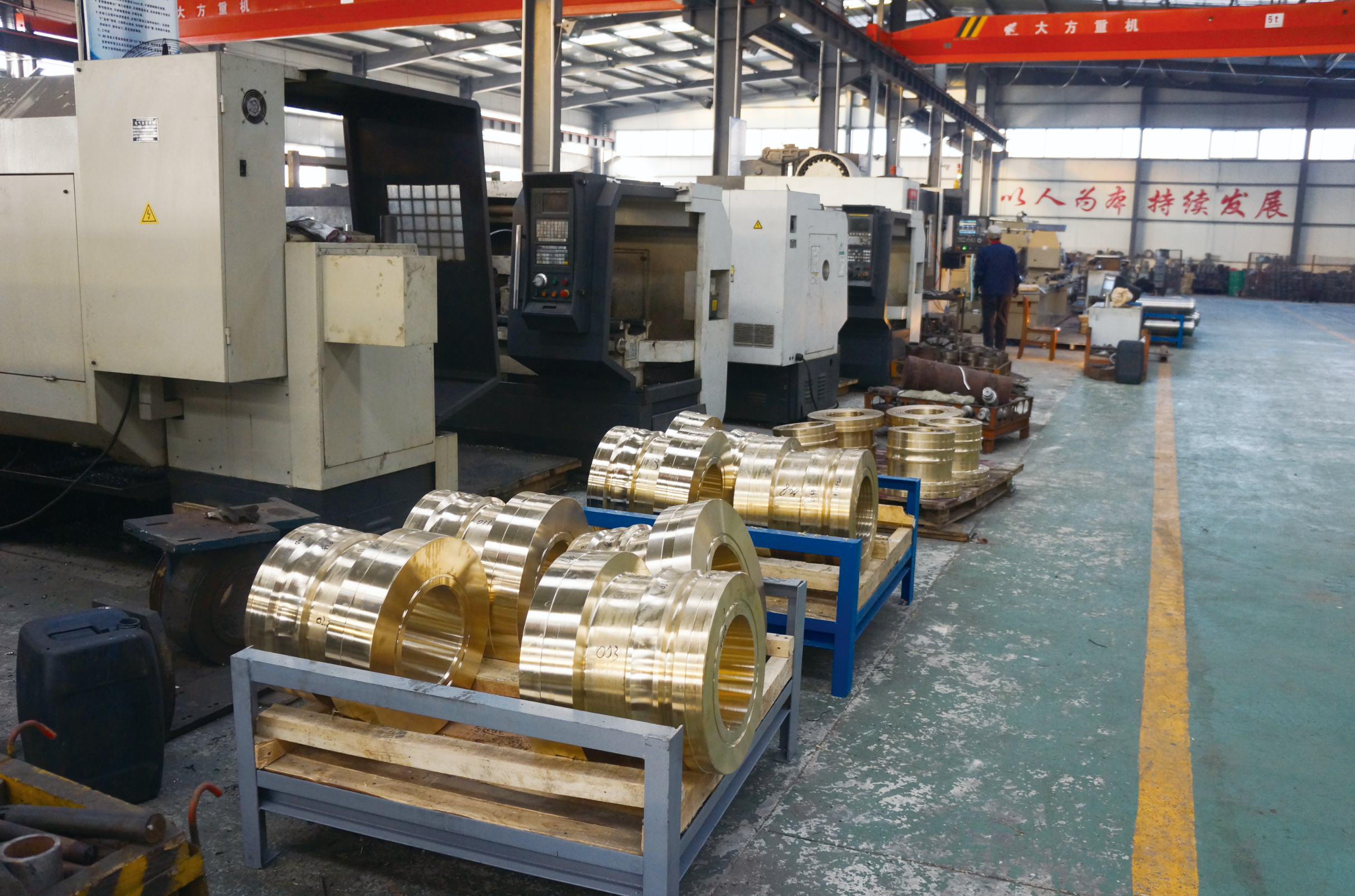
Materials determine how the rating is sustained over time. JINYU worm gear screw jacks use a 45# steel shaft and 40Cr gear material, a pairing chosen for wear resistance in the loaded contact zone and stable performance under continuous duty. Material grade is one of the few parameters that cannot be corrected later by control tuning.
6. Operating Environment
Environment closes the specification. These jacks are specified for operating temperatures from −20 °C to 100 °C, with protection ratings selectable from IP54 to IP65 depending on series and configuration. Where corrosion resistance is the dominant requirement — offshore wind structures, or dairy and food processing washdown areas — a stainless steel screw jack is the appropriate choice rather than a coated carbon steel unit.
Step-by-Step Breakdown
- Define the real load. Record static holding load, dynamic lifting load, shock load at start-stop, and how many jacks share the load. Apply a deliberate margin rather than a habitual one.
- Set speed and duty cycle. Decide whether the application needs fast cycling (JWB, 0.5–5 m/min) or controlled motion (JWM, 0.2–1.8 m/min), and state how many cycles per hour.
- Fix the stroke envelope. Specify retracted and extended positions, then check buckling for the unsupported length and add guidance if required.
- Choose the screw type. Confirm whether the load must be held without power. If yes, trapezoidal self-locking is the baseline; if not, evaluate ball screw for speed and efficiency.
- Confirm materials and gear train. Verify the shaft and gear specification — 45# steel shaft and 40Cr gear in JINYU jacks — against the duty cycle.
- Match the environment. Set temperature range and ingress protection from −20 °C to 100 °C and IP54 to IP65, and switch to stainless steel where corrosion governs.
- Specify motor, controls, and protection. Define motorised or manual drive, then add the protective layer: load sensors, limit switches, brake interlock, thermal protection, and overload alarm.
- Validate, then plan supply. Confirm the selection with a pre-shipment test and agree on repeat-order terms before the first production run, not after.
Comparison Table
Series Selection at a Glance
| Series | Specified load range | Specified lifting speed | Typical role in a system |
|---|---|---|---|
| SWL | Up to 120 t | Not specified in this guide | Highest-tonnage positioning and holding duty |
| JWM | Up to 1000 kN | 0.2–1.8 m/min | Controlled motion where stable positioning outweighs cycle rate |
| JWB | Up to 500 kN | 0.5–5 m/min | Fast cycling where the stroke repeats frequently |
Trapezoidal Screw Jack vs. Ball Screw Jack
| Parameter | Trapezoidal screw jack | Ball screw jack |
|---|---|---|
| Self-locking | Typically self-locking; can hold a load with the motor idle | Generally not self-locking; normally requires a brake or holding device |
| Mechanical efficiency | Lower, with greater sliding friction | Higher, due to rolling contact |
| Speed suitability | Better suited to lower-speed, holding duty | Better suited to faster cycles and higher duty |
| Typical application | Load holding, rigging, static positioning, safety-critical holding | High-cycle positioning where throughput matters |
Reading the tables correctly: a self-locking trapezoidal jack is not automatically “slower” in every system, and a ball screw jack is not automatically “safer”. The deciding question is whether the load must be held without power, and how often the jack has to move.
Use Cases
Stage Lifting and Rigging
Stage and rigging systems move repeatedly through a fixed stroke, often with several units working together. Fast cycling behaviour makes the JWB series at 0.5–5 m/min a natural candidate, with self-locking trapezoidal screws providing holding behaviour when power is removed.
Metallurgy and Heavy Industrial Positioning
Metallurgical environments combine heat, dust, and continuous duty. One JINYU system demonstrated reliable performance over an eight-year period in a harsh metallurgical environment, achieving stable multi-point synchronous lifting and high positioning accuracy — a useful reference point when evaluating whether a selection holds up over a decade rather than a commissioning period.
Offshore Wind and Food Processing
Where corrosion resistance dominates, stainless steel screw jacks are increasingly used in offshore wind and food processing (dairy) applications. In these settings the environment, not the load figure, usually drives the specification.
Multi-Point Synchronous Lifting
When several jacks lift one structure, the selection problem becomes a synchronisation problem. Matching speed ratings across units and adding load sensors and limit switches to each axis keeps the lifted structure level and protects individual jacks from taking an imbalanced share of the load.
Risk Controls to Specify Alongside the Parameters
Parameter matching and protection design should be agreed at the same time. The failure modes to design against are overload, screw buckling, self-locking failure, motor overheating, and mechanical jamming. The corresponding controls are load limit protection, stroke limits, brake interlock, thermal protection, and overload alarms — implemented through load sensors, limit switches, regular self-locking tests, temperature monitoring, and periodic maintenance.
Frequently Asked Questions
What operating temperature and ingress protection should I specify?
Worm gear screw jacks in the JINYU range are specified for operating temperatures from −20 °C to 100 °C, with protection ratings selectable from IP54 to IP65 depending on series and configuration. Separately, motor-operated actuator assemblies fall under IEC 62841-1:2014, the international safety standard covering general requirements for mechanical hazards. Practical guidance: specify the coldest and hottest condition the jack will actually see, then choose the protection level that matches washdown, dust, or outdoor exposure rather than defaulting to the highest rating.
Can a worm gear screw jack be customised for a specific stroke or gear ratio?
Yes — customisation is a standard service rather than an exception. Shandong Jinyu Machinery Co., Ltd., founded in 1984 and based in Dezhou, Shandong Province, China, offers ODM and customisation services covering configuration to customer drawings and requirements, supported by a production lead time of 30–45 days. Buyers with a fixed stroke, a defined mounting interface, or a specific gear ratio should raise those requirements at quotation stage, because they affect the screw, housing, and gearset together.
What are the minimum order quantity, payment, and acceptance terms?
The standard purchasing terms are a minimum order quantity of 1 unit, delivery terms of FOB or CIF, acceptance criteria based on pre-shipment test, and payment terms of 30/70. The pre-shipment test is the key clause for a first order: it defines what “accepted” means before the goods leave the factory, which is far more useful than resolving a discrepancy after arrival.
How can I judge long-term reliability before committing to repeat orders?
Look for documented service life under comparable conditions rather than generic durability claims. One JINYU screw jack system demonstrated reliable performance over a duration of eight years in a harsh metallurgical environment, with stable multi-point synchronous lifting and high positioning accuracy. On the maintenance side, reliability is sustained by regular self-locking tests, temperature monitoring, and periodic inspection, backed by load sensors and limit switches that catch abnormal conditions early.
What production capacity supports long-term or repeat supply?
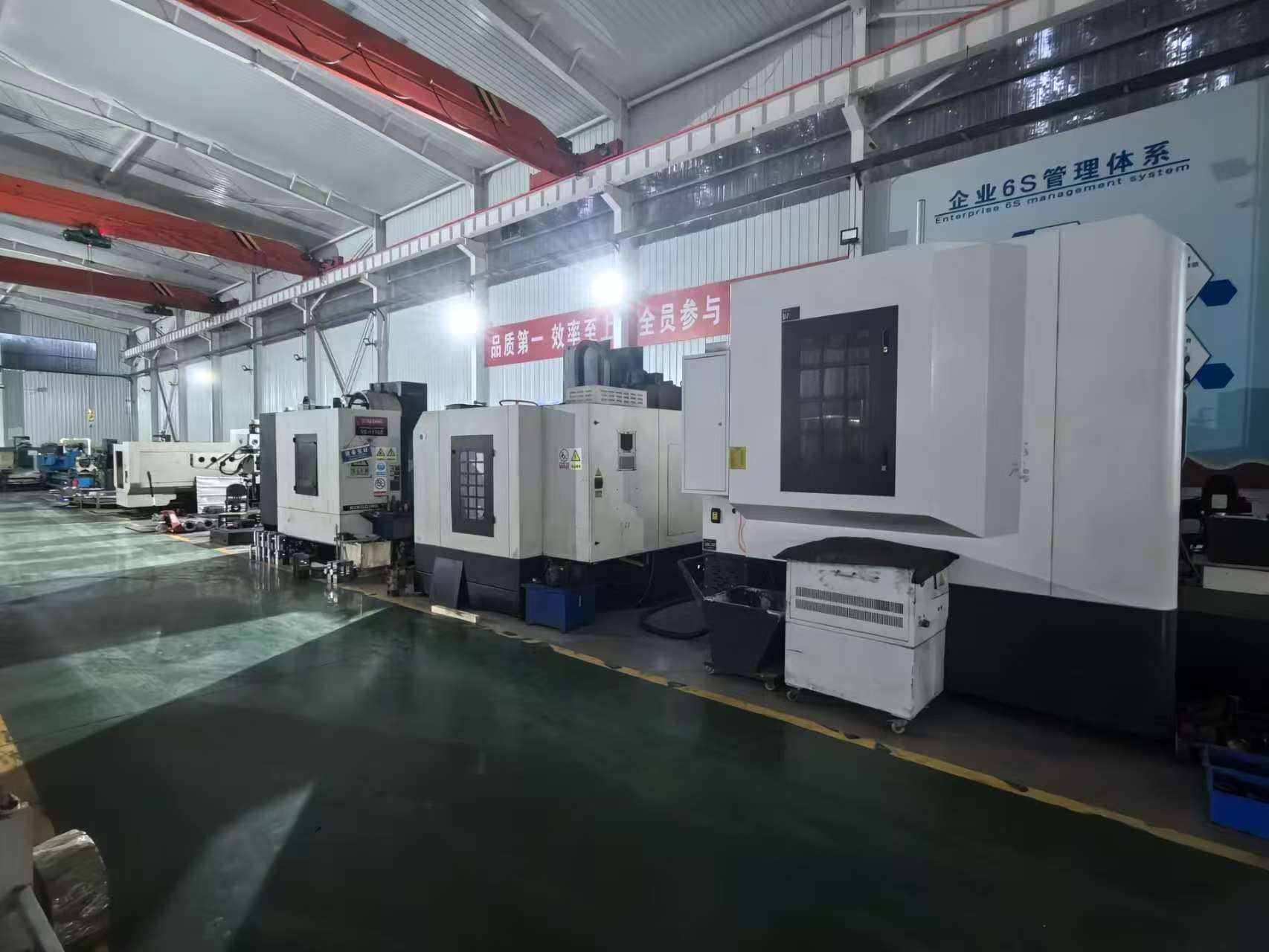
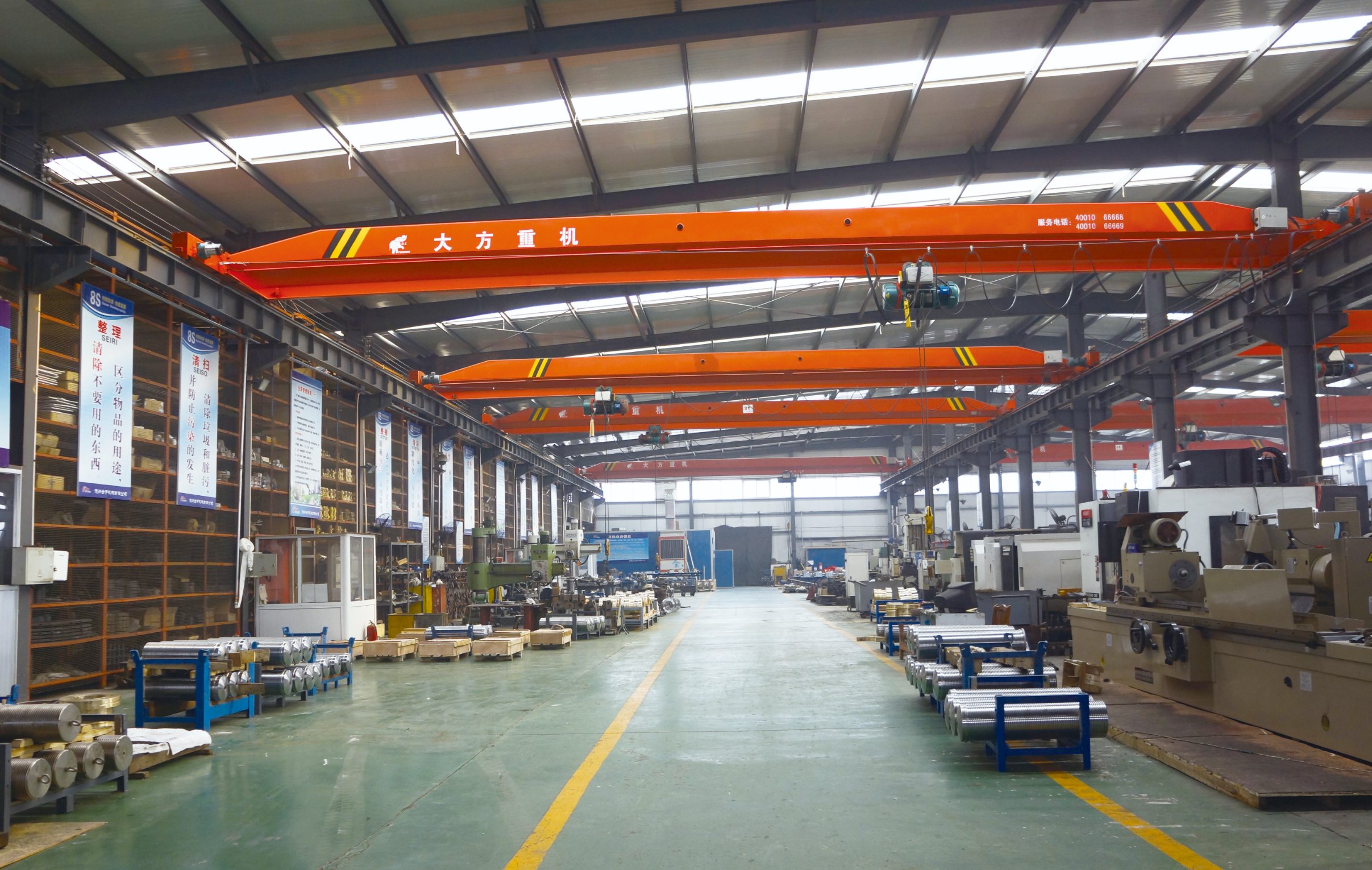
Monthly production capacity is 10,000 units, with ODM and customisation lead time of 30–45 days. Shandong Jinyu Machinery operates a 20,000 m² facility with 258 employees, a 10-person R&D team, and exports representing 30% of output to EU, USA, and Asian markets — a supply profile suited to buyers who need continuity across a multi-year project rather than a single shipment. For a full parameter list and configuration options, download the JINYU product catalogue (PDF), or send your load, speed, and stroke figures for a matching recommendation.
Conclusion
Worm gear screw jack selection is a sequencing exercise, not a lookup. Load capacity narrows the series — SWL to 120 t, JWM to 1000 kN, JWB to 500 kN. Speed narrows it further — JWM at 0.2–1.8 m/min for controlled motion, JWB at 0.5–5 m/min for fast cycles. Stroke then determines whether the screw needs additional guidance, screw type decides whether the load can be held without power, and material specifications such as the 45# steel shaft and 40Cr gear confirm the rating is built to last. Environment and protection — −20 °C to 100 °C and IP54 to IP65 — close the loop.
Buyers who work through those parameters in order, and who specify protection against overload, buckling, and self-locking failure at the same time, end up with a jack that behaves the same in year eight as it did at commissioning. That is the difference between a component purchase and a supply relationship.
Send Your Load, Speed, and Stroke Figures
JINYU engineers will match your application to the SWL, JWM, or JWB series and confirm the screw type, protection rating, and control configuration. Share your duty cycle and stroke envelope to receive a straight recommendation — MOQ starts at 1 unit, with pre-shipment testing before dispatch.
jyjack.com | Download the product catalogue (PDF)
Email: Josie@sdjymachinery.com | WhatsApp: +8618963003132

Have Questions or Need More Details?
Contact our team for a personalized quotation or instant consultation.
Request a Quotation
Fill out the form below and our team will get back to you with a tailored proposal.
WhatsApp Direct Chat
Prefer to chat in real-time? Message us on WhatsApp for instant assistance & quick answers.
- Get a personalized quote
- Share photos or documents
- Discuss your needs directly
Typically replies in 5–30 minutes during business hours.