
Evaluating a Plastic Extrusion Line Supplier: Beyond the Brochure
A brochure is written to be compared. A production line is bought to be run. At the evaluation stage, the decision is not about which supplier has the longest catalogue — it is about which claims can actually be verified before the purchase order is signed: model by model, material grade by material grade, and certificate by certificate.
This guide sets out a verification framework for buyers assessing a plastic extrusion machine supplier for a complete line. It works through five layers that can be checked from the outside — extruder model coverage, screw and barrel material grades, certification scope and validity window, frame construction and surface finish, and reference installations that are still running. The working examples are drawn from the published specifications and project records of Wuxi JKS Machinery Manufacturing Co., Ltd., a Chinese manufacturer of custom plastic extrusion machinery and turnkey production lines, founded in 2013 and based on Xixian Road, Fangqian Town, Wuxi City, Jiangsu Province, China.
Problem Definition: Why Brochures Fail at the Evaluation Stage
Catalogue content fails buyers for three specific reasons, and each one has a workaround.
First, claims are aggregated instead of specified. A supplier that states it manufactures “all kinds of plastic pipe production lines” has told you nothing you can act on. The checkable version of the same claim names models: PVC63, PVC250 and PVC630, each with a matching extruder, main motor power and output. Aggregated claims appear in almost every catalogue; specific claims appear only where the supplier can actually support them.
Second, materials are named without grades. “Alloy steel screw” could mean several different steels. “38CrMoAlA nitrided alloy steel” is a grade a buyer can compare, and it is the grade JKS lists for screw and barrel across its pipe, sheet, profile, rod and pelletizing lines.
Third, certificates are shown as pictures rather than as documents with a validity window. A certificate image proves a certificate once existed. It does not tell you whether the scope covers the model you are buying, or whether the validity period still covers your order, shipment and installation schedule. A certificate number, an issuing body, the applied standards, and an issue and expiry date are what allow a buyer to check.
All three failures share one property: the claim cannot be falsified. Evaluation-stage buyers should prefer claims that could be wrong, because those are the only ones worth verifying.
Industry Background: A Market That Rewards Verification
Market scale explains why verification has commercial consequences. The global plastic extrusion machine market was estimated at approximately USD 7.9 billion in 2025, against a projected USD 12.87 billion by 2035, according to Market Research Future’s market forecast published in September 2026. Supply is concentrated: China was the leading exporter of rubber and plastic working machinery under HS 8477 in 2024, with an export value of about USD 8.55 billion, ahead of Germany at USD 6.11 billion and Italy at USD 2.61 billion, based on UN Comtrade data published by the Observatory of Economic Complexity.
Downstream demand adds a second reason for careful evaluation. Grand View Research estimates the global stone plastic composite (SPC) flooring market at USD 6.4 billion in 2026, growing to USD 10.3 billion by 2033. When a downstream category grows faster than general construction materials, line selection decisions get made under time pressure — which is exactly when brochure-level evaluation tends to go wrong.
Regulatory expectations add a third layer. In the United States, ANSI/PLASTICS B151.7 applies to extrusion machines used in the plastics industry and requires suppliers and users to apply a documented risk assessment process. Buyers should note that the standard edition itself is worth confirming: the ANSI webstore listing references ANSI/PLASTICS B151.7-2014 (R2021), while the PLASTICS Industry Association standards page lists B151.7-2013. The procurement consequence is straightforward — specify the exact edition in the technical agreement instead of assuming the reference is unambiguous.
Detailed Solution: A Five-Layer Verification Framework
The layers below are ordered by how much procurement risk each one removes per hour of evaluation effort. All five can be completed with supplier documents plus one factory visit.
Layer 1 — Model Coverage: Check the Ladder, Not the List
The most useful thing a catalogue can show is not how many line types a supplier claims, but whether the model range inside one line type escalates in a way that matches your production plan. The PVC hollow wall panel and ceiling extrusion line is available from JKS in four configurations: SJSZ51 at 18.5 kW producing 300 mm width at 120 kg/h; SJSZ55 at 22 kW for 450 mm at 150 kg/h; SJSZ65 at 37 kW for 600 mm at 250 kg/h; and SJSZ80 at 55 kW for 1,200 mm at 400 kg/h. The same line can also produce ceiling board, door panel and furniture cabinet panel.
That ladder can be tested with one question: which of these four models is in your quotation, and what output does it give on my formulation? A supplier that cannot answer at model level has not yet done the engineering.
The same test applies to the extruder itself. The conical twin screw extruder range runs from SJSZ-45 at 15 kW and 70 kg/h, through SJSZ-51 at 18.5 kW and 120 kg/h, SJSZ-55 at 22 kW and 150 kg/h, SJSZ-65 at 37 kW and 250 kg/h, SJSZ-80 at 55 kW and 400 kg/h, and SJSZ-92 at 90 kW and 500–600 kg/h, to SJSZ-110 at 200 kW and 1,000 kg/h. This extruder type is designed for direct extrusion of PVC powder into pipes, sheets, bars and profiles.
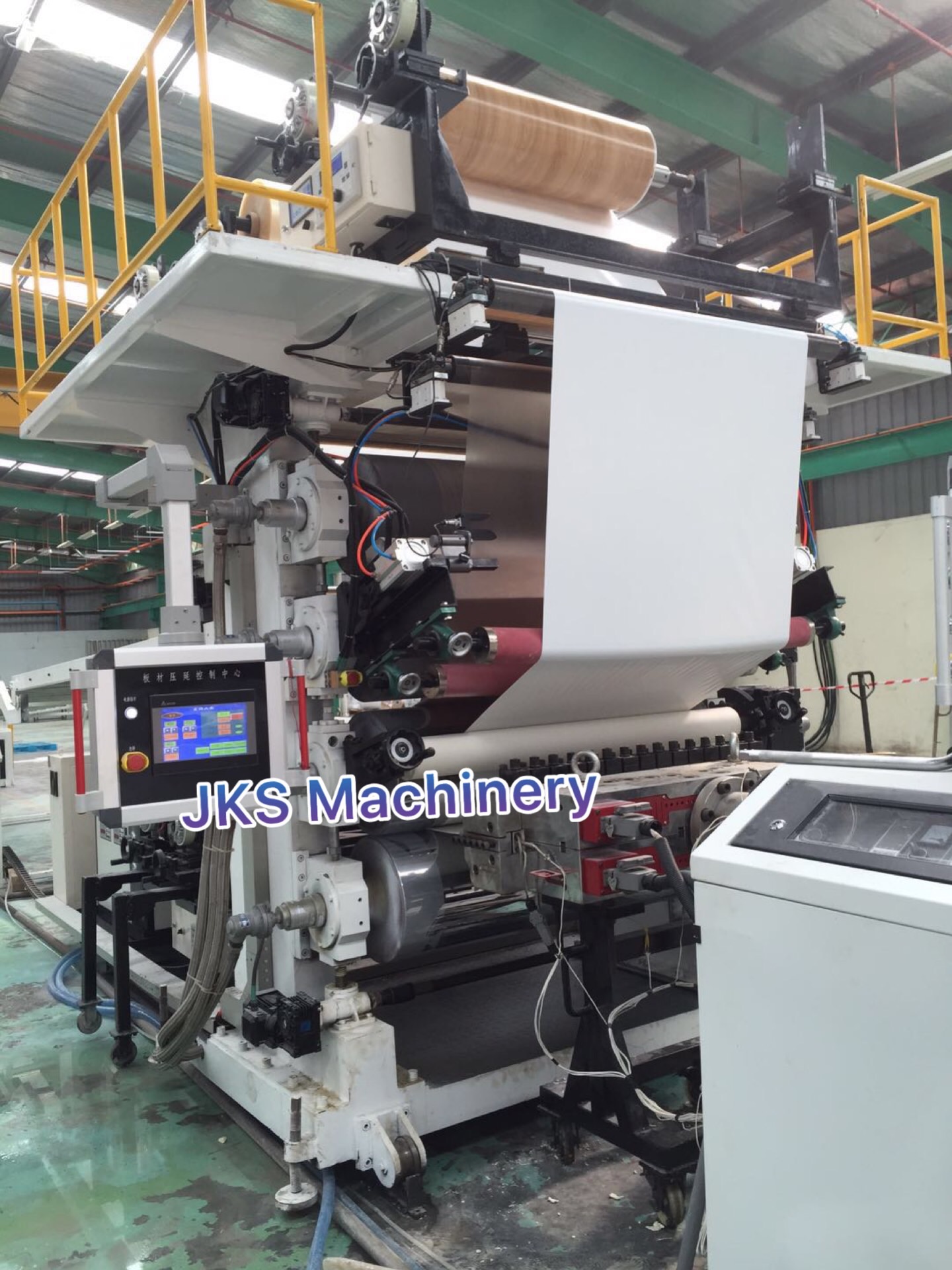
At the top of the sheet category, the SPC flooring line is offered with SJSZ92/188 at 110 kW, SJSZ110/220 at 200 kW, SJP115/30 at 90 kW or SJP135/30 at 132 kW, for 1–10 mm finished product thickness, 980 mm or 1,250 mm effective product width, and an output range of 15–40 tons per 24 hours depending on the extruder model. Where a range is internally consistent — kilowatts, width and output moving together — the numbers have usually been engineered rather than copied.
Layer 2 — Material Disclosure: Grade, Not Category
Material statements in a quotation should name grades and locations, not categories. 38CrMoAlA nitrided alloy steel is the screw and barrel specification across JKS pipe, sheet, profile, rod and pelletizing lines, and it is a specification a buyer can hold a supplier to at incoming inspection.
Look for the same precision on structural and process components. JKS machines use Q235 carbon structural steel for machine frames, forged steel with hard chrome plating for calender rollers on sheet lines, and wear-resistant alloy die steel for extrusion moulds. On the SPC flooring and PVC imitation marble sheet lines, the calender roller specification is listed as 45# forged steel with hard chrome plating.
The distinction most often missed is between construction and finish. The mixing pot of the PVC mixing and cooling unit is stainless steel while the unit frame is carbon steel — that is a stainless construction choice with a defined boundary. A bright panel on a machine frame may be only a surface finish. Ask separately: which surfaces are stainless steel, which are carbon steel with a coating, and what that coating is.
Layer 3 — Certification With a Date Window
Certification is the layer where buyers most often stop one question too early.
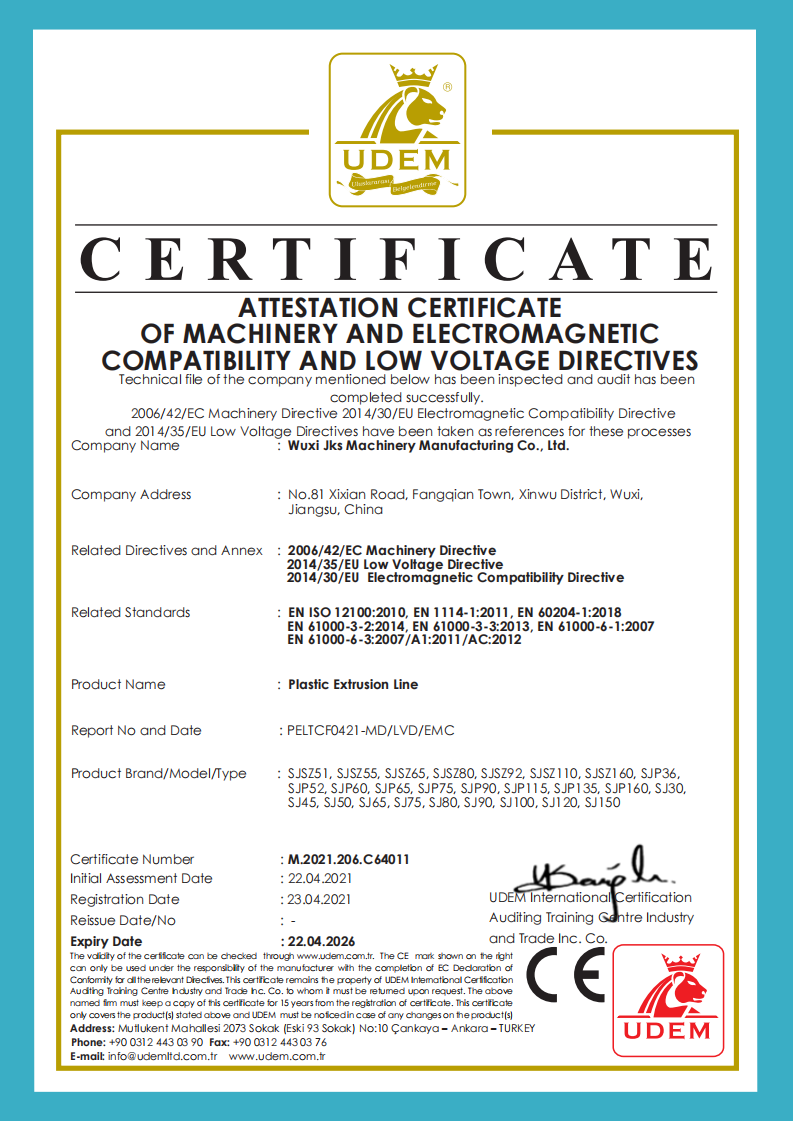
JKS holds a CE certificate covering machinery under the Low Voltage Directive and the EMC Directive, issued by UDEM International Certification Auditing Training Centre under certificate number M.2021.206.C.64011. The certificate was issued on 22 April 2021 with an expiry date of 22 April 2026. Its listed scope covers plastic extrusion lines including SJSZ series, SJ series and SJP series models, and the applied standards are EN ISO 12100:2010, EN 1114-1:2011, EN 60204-1:2018, EN 61000-3-2:2014, EN 61000-3-3:2013, EN 61000-6-1:2007 and EN 61000-6-3:2007/A1:2011/AC:2012.
Three verification questions follow directly, and they apply to any supplier, not only this one.
- Does the scope name your model series? A certificate covering SJSZ, SJ and SJP series models is relevant to a conical twin screw or single screw line; a certificate covering unrelated equipment is not.
- What is the validity window, and does it overlap your order and installation? A certificate is a dated document. Confirm in writing whether the certificate is within its validity period at the time of shipment, and how renewal is handled if it is not.
- Which standards are actually applied? Named standards such as EN ISO 12100:2010 or EN 60204-1:2018 can be cross-checked against the certificate. A generic “CE certified” statement cannot.
For North American projects, add ANSI/PLASTICS B151.7 to the compliance checklist and confirm the edition, as described above.
Layer 4 — Build and Testing Capacity: The Numbers Behind the Line
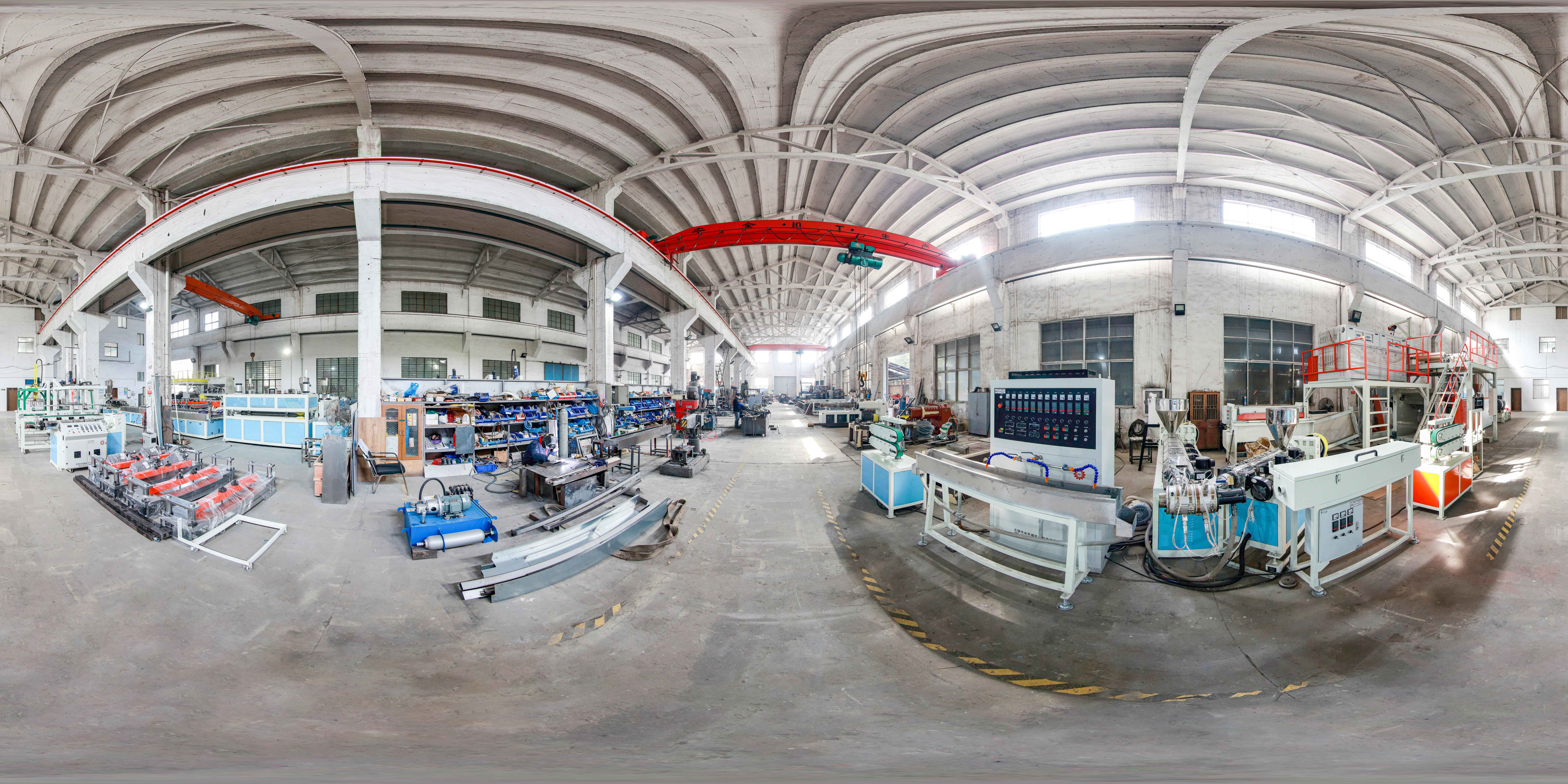
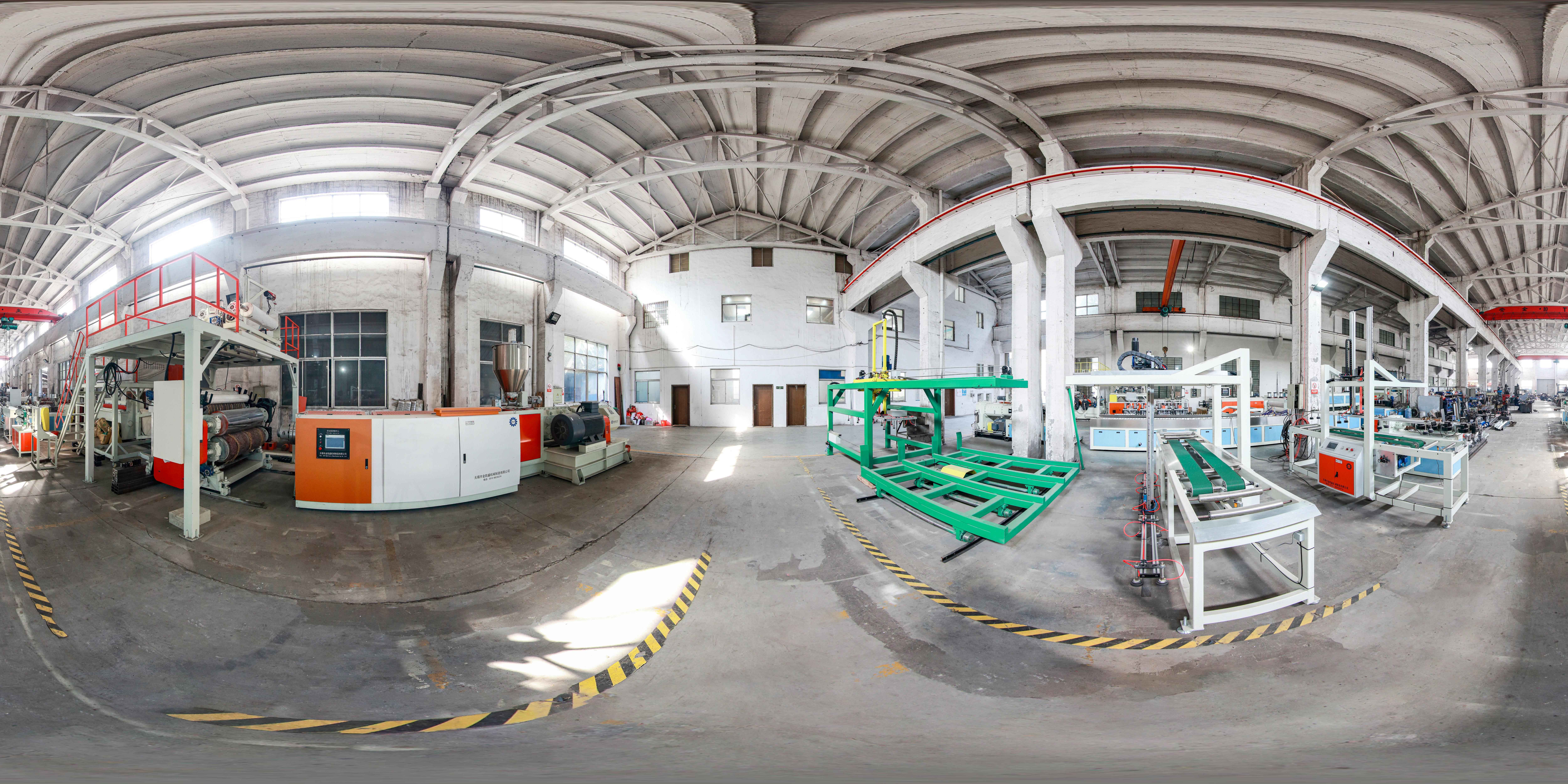
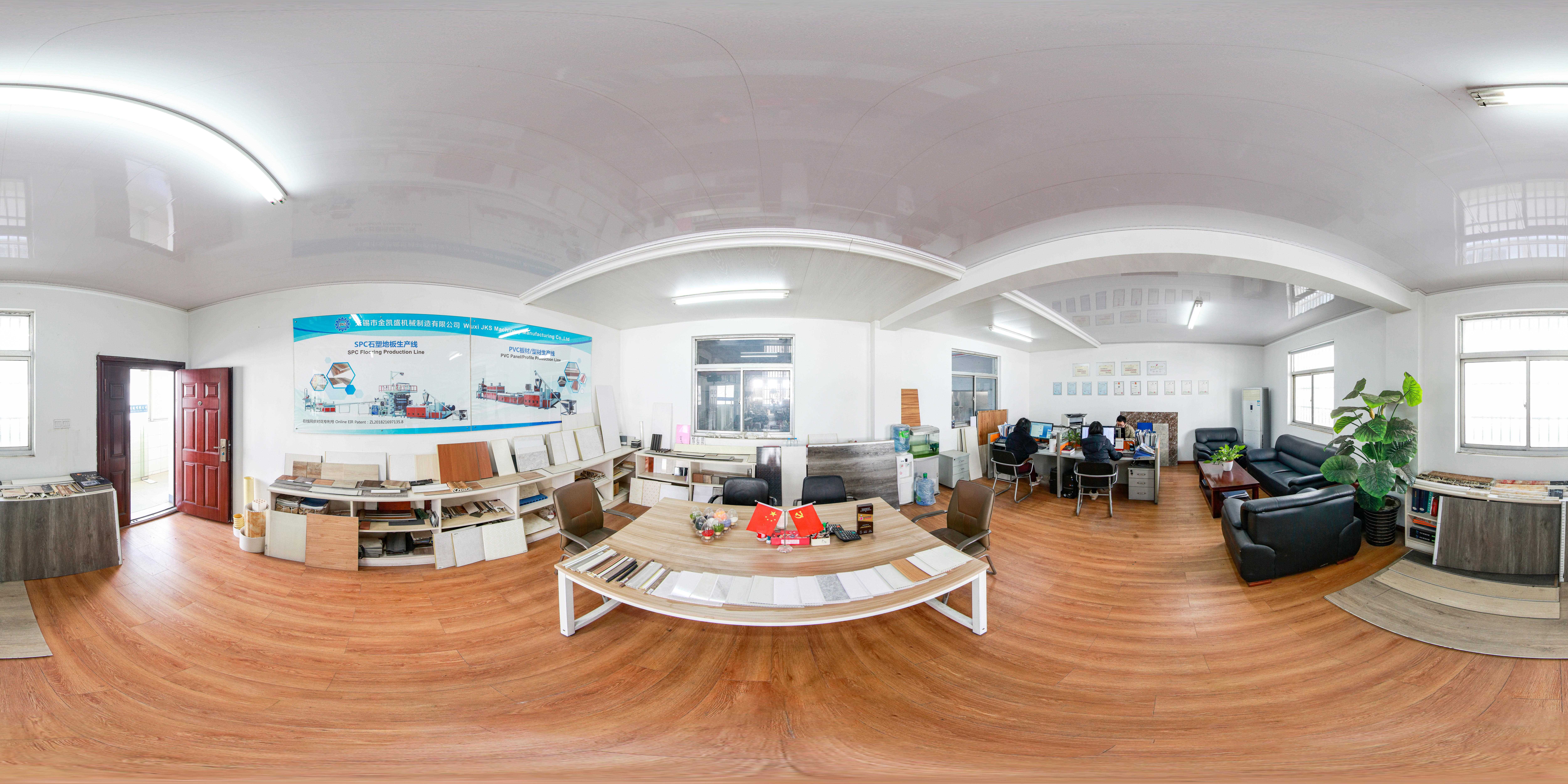
Capacity claims matter at evaluation stage because they determine whether a supplier can physically assemble, run and test your line before it is packed. JKS operates a 2,000 m² standardized production workshop with a stated annual output of 200 units and a monthly capacity of 30 units, supported by a six-engineer R&D team and 20 staff. Quality control is stated as 100% factory pre-assembly and testing before shipment, with third-party inspection available on request. Customization covers extruder model, screw configuration, production line layout, voltage and frequency, control system and capacity adjustment; OEM, ODM and custom design services are offered, with a minimum order quantity of one unit.
The single most valuable question at this layer: will the complete line be assembled and run before it is packed? A supplier that pre-assembles the full line finds integration faults in its own workshop. A supplier that ships loose modules finds them on your site.
Layer 5 — References That Are Still Running
Reference lists are only useful when the installations are still producing. The following project records illustrate the detail a buyer should ask for: country, line type, application, and years of continuous operation.
- Vietnam — PVC hollow wall panel extrusion line. A plastic building materials manufacturer has operated a complete PVC hollow wall panel line for construction and interior decoration for more than five years, with stable continuous production, consistent product quality and reliable performance. The project was delivered as a complete turnkey solution with on-site installation support and full export documentation.
- Malaysia — SPC flooring extrusion line. An SPC flooring manufacturer has run a complete line producing flooring for residential and commercial use for more than ten years, achieving high-speed production, precise thickness control and a low maintenance rate, with on-site installation and training support.
- South Korea — SPC flooring extrusion line. A plastic flooring manufacturer has run a complete SPC flooring line for more than eight years in stable 24/7 production, with consistent product quality and a low maintenance rate.
A ten-year reference and a one-year reference are different assets. Ask for the installation year rather than the delivery year, and ask what the line is producing today.
Comparison Table: Brochure Claim vs. Verifiable Evidence
The table below converts typical catalogue statements into the evidence that makes them checkable. The evidence column uses published JKS data as the working example.
| Catalogue claim | What to ask instead | Verifiable example (JKS published data) |
|---|---|---|
| “Complete plastic extrusion lines” | Which line families, and which model numbers inside each family? | Product scope includes SPC flooring sheet, PVC / WPC board, PVC & HDPE pipe, WPC / PVC profile, solid plastic rod, and waste plastic pelletizing lines; conical twin screw extruders from SJSZ-45 to SJSZ-110. |
| “High-output extrusion” | Output at which model, at what product width and thickness? | Conical twin screw SJSZ-110: 200 kW, 1,000 kg/h. SPC flooring line: 15–40 t/24h depending on extruder, at 980 mm or 1,250 mm effective width. |
| “Alloy steel screw and barrel” | Which steel grade, on which components? | 38CrMoAlA nitrided alloy steel for screw and barrel across pipe, sheet, profile, rod and pelletizing lines. |
| “Robust machine frame” | Which structural steel grade, and what surface treatment? | Q235 carbon structural steel frames; 45# forged steel calender rollers with hard chrome plating on sheet lines; wear-resistant alloy die steel moulds. |
| “CE certified” | Certificate number, issuer, applied standards, scope, issue and expiry dates? | CE certificate M.2021.206.C.64011 issued by UDEM on 22 April 2021, expiry 22 April 2026, covering SJSZ, SJ and SJP series models, under EN ISO 12100:2010 and EN 60204-1:2018 among others. |
| “Large production capacity” | Workshop area, annual unit output, monthly capacity, testing protocol? | 2,000 m² workshop; 200 units annual output; 30 units monthly capacity; 100% factory pre-assembly and testing before shipment; third-party inspection on request. |
| “Global references” | Which countries, which lines, installed when, still running? | Vietnam: PVC hollow wall panel line, 5+ years in operation. Malaysia: SPC flooring line, 10+ years. South Korea: SPC flooring line, 8+ years. |
| “Fast delivery” | Lead time in working days, and what starts the clock? | 40 working days stated lead time; minimum order quantity 1 unit. |
Step-by-Step Breakdown: Running the Evaluation
- Define output and product width before comparing suppliers. A line is sized by product, not by preference. Fix the thickness range, effective width and required output first. For an SPC flooring line, the specification to match is 1–10 mm thickness, 980 mm or 1,250 mm effective width, and 15–40 t/24h depending on extruder model.
- Map the quotation to a model number. Confirm which extruder model is quoted and which auxiliary model supports it. A PVC pipe line quoted as SJSZ80/156 at 55 kW with 450 kg/h for Φ90–250 mm is a different machine from one quoted as SJSZ65/132 at 37 kW with 270 kg/h for Φ16–63 mm.
- Request material grades in writing. Screw and barrel, mould material, calender roller and machine frame, each named by grade, so quotations can be compared like for like.
- Request the certificate as a document, not an image. Number, issuing body, applied standards, issue date, expiry date and the model series covered.
- Ask about pre-shipment testing. Full-line pre-assembly and testing, or module-level testing only? Is third-party inspection permitted before packing?
- Ask for references with operating years. Country, product, installation year and current production status.
- Confirm what happens after delivery. Installation guidance, on-site commissioning, operator training, remote technical support and warranty terms should be stated before the order is placed, not afterwards.
Use Cases: What Verified Lines Look Like in Service
The three reference projects cover the two product families that drive most evaluation work in this category.
Interior panel production (Vietnam). For a building materials manufacturer producing PVC hollow wall panels for construction and interior decoration, the decisive factors were continuous production stability and consistent panel quality over years of operation. This is a line type where the model ladder — SJSZ51 through SJSZ80 — determines how much of the panel market a manufacturer can address, because product width and output scale with the extruder model.
Rigid flooring production (Malaysia and South Korea). SPC flooring lines place a different demand on a supplier: thickness control and continuous operation. The Malaysian installation, in service for more than ten years, reports high-speed production with precise thickness control and a low maintenance rate. The South Korean line, in service for more than eight years, reports stable 24/7 production with consistent product quality and a low maintenance rate. Both projects included on-site installation and training support.
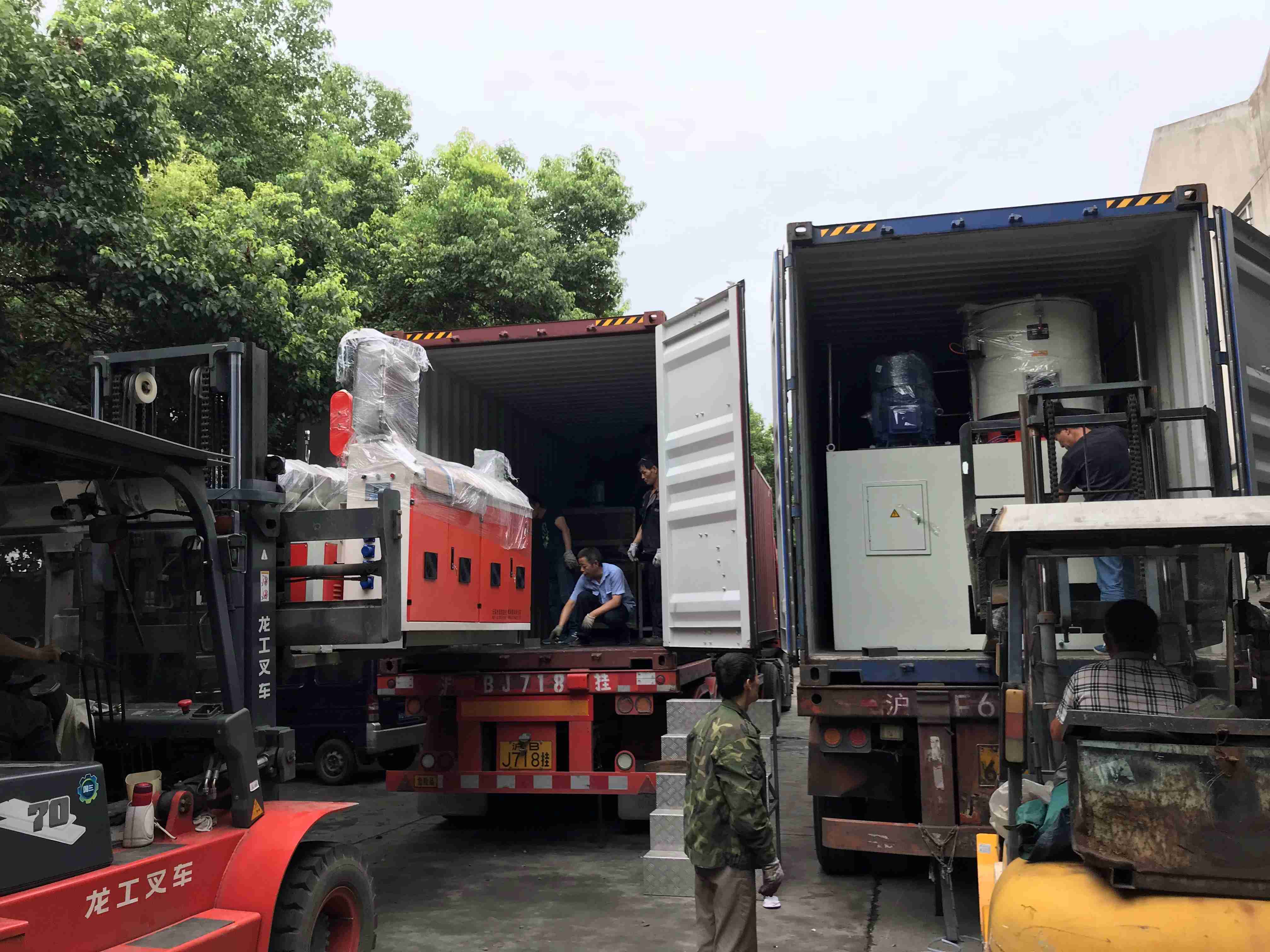
Across all three projects, the common element is documentation. Turnkey delivery includes full export documentation and on-site installation support — the parts of a purchase that brochures describe least and buyers rely on most.
Comparing Line Configurations by Capability
Once a supplier’s claims have been verified, the remaining task is comparing configurations within the verified range. The table below sets out published model data for representative line families. Screw and barrel across these lines are specified as 38CrMoAlA nitrided alloy steel, with Q235 carbon steel frames.
| Line family | Model options | Main motor power | Output |
|---|---|---|---|
| PVC hollow wall panel & ceiling extrusion line | SJSZ51 / SJSZ55 / SJSZ65 / SJSZ80 | 18.5 / 22 / 37 / 55 kW | 120 / 150 / 250 / 400 kg/h |
| SPC flooring extrusion line | SJSZ92/188, SJSZ110/220, SJP115/30, SJP135/30 | 110 / 200 / 90 / 132 kW | 15–40 t/24h (varies by extruder model) |
| PVC water supply & drainage pipe line | PVC63 / PVC250 / PVC630 | 37 / 55 / 110 kW | 270 / 450 / 800 kg/h |
| HDPE water pipe extrusion line | PE110 / PE315 / PE630 / PE1000 / PE1600 | 90 / 160 / 280 / 355 / 500 kW | 150–400 / 200–600 / 600–1,000 / 600–1,000 / 600–1,500 kg/h |
| WPC door panel extrusion line | SJSZ80 / SJSZ92 | 75 / 110 kW | 250–400 / 400–600 kg/h |
| PVC hot-cut pelletizing line | SJSZ55 / SJSZ65 / SJSZ80 / SJSZ92 | 22 / 37 / 55 / 110 kW | 100–150 / 200–250 / 350–400 / 650–800 kg/h |
| PVC mixing & cooling unit | SRL-Z200/500 / SRL-Z300/600 / SRL-Z500/1000 | 37/7.5 / 55/11 / 75/15 kW | 300–400 / 450–600 / 800–1,000 kg/h |
Frequently Asked Questions
Which certifications and standards should I verify before ordering a plastic extrusion line?
Verify the certificate as a document rather than as an image, checking four fields: number, issuing body, applied standards, and the scope. JKS holds a CE certificate for machinery covering the Low Voltage Directive and the EMC Directive, number M.2021.206.C.64011, issued by UDEM International Certification Auditing Training Centre on 22 April 2021 with an expiry date of 22 April 2026. Its scope covers plastic extrusion lines including SJSZ series, SJ series and SJP series models, and the applied standards include EN ISO 12100:2010, EN 1114-1:2011, EN 60204-1:2018, EN 61000-3-2:2014, EN 61000-3-3:2013, EN 61000-6-1:2007 and EN 61000-6-3:2007/A1:2011/AC:2012. Confirm that the scope covers the model you are buying and that the validity window covers your shipment date. For projects in the United States, ANSI/PLASTICS B151.7 applies to extrusion machines used in the plastics industry and requires a documented risk assessment process; because published references cite both B151.7-2013 and B151.7-2014 (R2021), specify the exact edition in the technical agreement.
How do I confirm that a supplier can actually build the line it has quoted?
Ask for model-level specifications and for the production capacity behind them. JKS operates a 2,000 m² standardized production workshop with a six-engineer R&D team, 20 staff, 200 units of annual output and a monthly capacity of 30 units. On the machine side, the conical twin screw extruder range runs from SJSZ-45 at 15 kW and 70 kg/h to SJSZ-110 at 200 kW and 1,000 kg/h, with defined power and output at every step in between, so a quotation can be mapped to a specific model rather than to a general capability statement. Quality control is stated as 100% factory pre-assembly and testing before shipment, with third-party inspection available on request.
What drives the cost of a complete plastic extrusion line?
Cost is driven by mechanical specification rather than by machine name. Extruder size sets the frame of the budget: within the conical twin screw range, main motor power rises from 15 kW at SJSZ-45 to 200 kW at SJSZ-110, and output rises from 70 kg/h to 1,000 kg/h. Downstream scope also changes the offer, because a line includes vacuum calibration, haul-off and cutting units for pipe, or calibration, cooling, haul-off and stacking for sheet. Material grades matter as well: 38CrMoAlA nitrided alloy steel screws and barrels, 45# forged steel calender rollers with hard chrome plating, and Q235 carbon structural steel frames are specified components, not interchangeable ones. Finally, customization scope — production line layout, voltage and frequency, control system and capacity adjustment — changes the configuration. Comparing quotations line by line on these elements is more reliable than comparing headline prices.
Can I validate a line or its materials before committing to a full purchase?
Yes, through pre-shipment testing and inspection arrangements. JKS states 100% factory pre-assembly and testing before shipment, with third-party inspection available on request, and offers OEM, ODM and custom design services with a minimum order quantity of one unit. Customization is based on the client’s raw material and production demand, and the company also provides personalized design, technical training and formulation service. Buyers evaluating a specific product, such as an SPC flooring line or a PVC hollow wall panel line, can therefore request model-specific test evidence and inspection documentation for the configuration being quoted, rather than accepting a generic capability statement.
What is the typical lead time, and what support comes after delivery?
The stated lead time for a JKS extrusion line is 40 working days from order. After delivery, support covers overseas installation guidance, on-site commissioning, operator training, remote technical support and a 12-month warranty. Reference projects show how this works in practice: the Malaysian SPC flooring line and the South Korean SPC flooring line both included on-site installation and training support, and the Vietnam PVC hollow wall panel project included on-site installation support with full export documentation. To discuss a specific configuration, budget range or installation timeline for your project, you can send your product specification and target output through the company website at www.extrudetec.com or email gordon@jksjx.com.
Conclusion: Verify First, Then Compare
Evaluating a plastic extrusion line supplier is not primarily a comparison exercise — it is a verification exercise that produces a comparison. Five layers carry most of the value: model coverage that escalates consistently, material grades named on components, a certificate with a number, scope and validity window, production capacity that includes full pre-shipment assembly and testing, and references that are still running years after installation.
Applied to JKS, that framework produces checkable answers rather than adjectives: extruders from SJSZ-45 to SJSZ-110, 38CrMoAlA nitrided screws and barrels with Q235 carbon steel frames, CE certificate M.2021.206.C.64011 issued by UDEM with defined applied standards, a 2,000 m² workshop with 200 units of annual output, a 40-working-day lead time, and installations in Vietnam, Malaysia and South Korea operating for five, ten and eight years respectively. A buyer can disagree with any of those statements — and that is the point. Claims that can be checked are the only ones worth building a production plan on.
Take the evaluation one step further.
Request the full catalogue with model specifications, or ask for a sample stage and pre-shipment testing plan for the line you are considering. Send us your product type, target width, thickness range and required output, and we will map it to a specific extruder model.
Download the JKS brochure (PDF) Visit www.extrudetec.comWuxi JKS Machinery Manufacturing Co., Ltd. · No. 81 Xixian Road, Fangqian Town, Wuxi City, Jiangsu Province, 214000, P.R. China · Email: gordon@jksjx.com · Tel: 86 18651004566 · WhatsApp: 86 18601577228 · Blog: blog.extrudetec.com