
Plastic Extrusion Machine FAQ: Purchase, Acceptance & Support
Plastic Extrusion Machine FAQ: Purchase, Acceptance & Support
Most plastic extrusion machine projects do not fail on technology. They fail on the details around the machine: what the quotation actually covers, how “ready to run” is defined on acceptance day, and who is responsible when a wear part needs replacing two years later. Buyers at the decision stage are usually comparing suppliers whose headline specifications look similar. What separates them is commercial transparency, a written acceptance basis, and an after-sales structure that survives the first year.
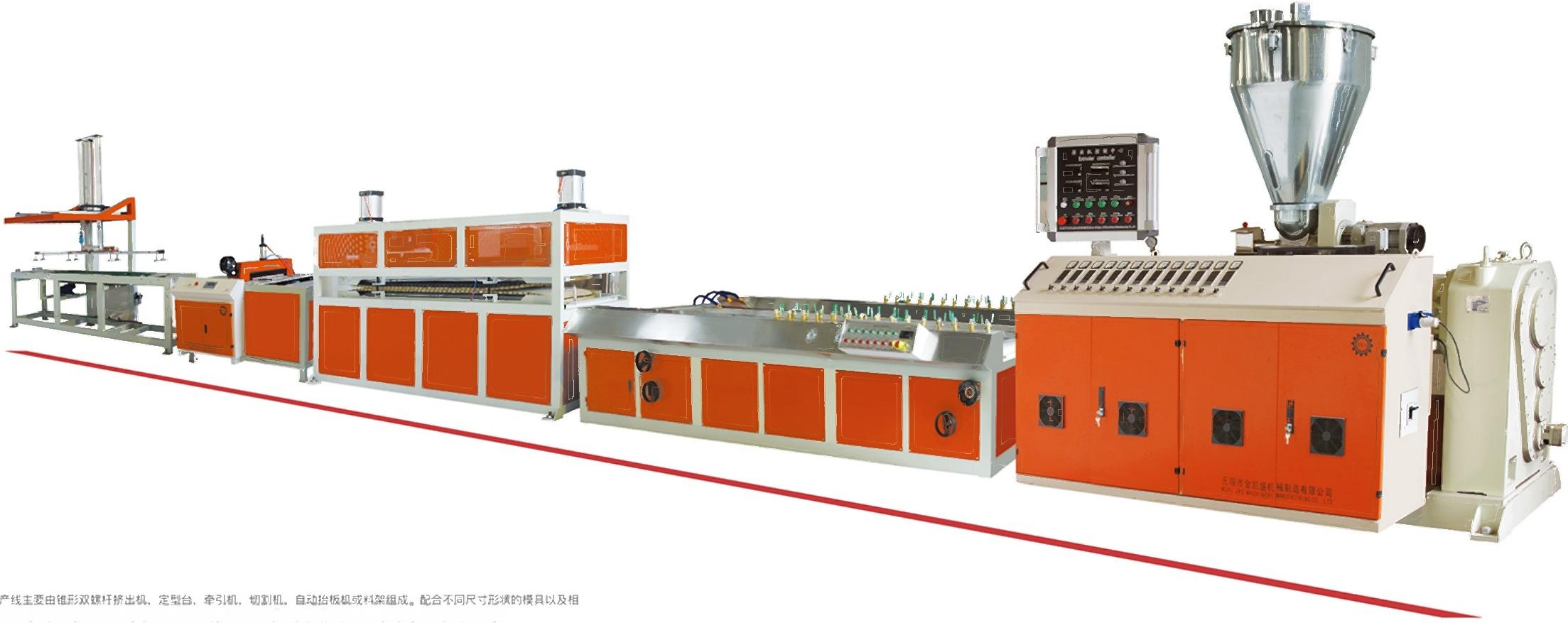
Wuxi JKS Machinery Manufacturing Co., Ltd. — the company behind JKS Plastic Extrusion Machine — is a Chinese manufacturer founded in 2013 and based in Wuxi, Jiangsu. It builds custom plastic extrusion production lines and standalone equipment: SPC flooring sheet, PVC/PP/WPC board, PVC and HDPE pipe, WPC/PVC profile and solid rod lines, waste plastic recycling pelletizing lines, SJ single-screw and SJSZ conical twin-screw extruders, plus auxiliary units such as mixers, crushers and pulverizers. The questions below are the ones buyers raise most often when they move from shortlist to purchase order, and each answer is written to be usable in a negotiation or an acceptance meeting.
Why purchasing terms, acceptance and support decide the outcome
At the decision stage the product family is usually settled. A pipe producer knows it needs a pipe line; a flooring plant knows it needs an SPC line. What remains open is the commercial and operational wrapper around the equipment, and that wrapper is what decides whether the line becomes a production asset or an ongoing cost centre.
The failure modes are predictable: equipment downtime, inconsistent product quality, material waste, electrical or mechanical failure, and delivery delay. Each one has both a technical counter-measure and a contractual one. JKS addresses the technical side with a PLC automatic control system, real-time monitoring, overload protection, an emergency stop function and pre-shipment testing. It addresses the operational side with strict quality inspection before delivery, standardized installation guidance, remote technical support, on-site troubleshooting and spare parts supply. A buyer who negotiates only the machine price and leaves those two layers implicit is accepting the risk without pricing it.
That is why the purchasing conversation should produce three separate documents rather than one: the purchase agreement (scope and configuration), the acceptance protocol (how performance is proven), and the service and spare-parts arrangement (what happens after commissioning).
The market context behind these questions
The supplier base is large and still growing, which raises the cost of a poorly specified order. Market Research Future projects the global plastic extrusion machine market growing from USD 7.9 billion in 2025 to USD 12.87 billion by 2035. Trade data published by the Observatory of Economic Complexity, based on UN Comtrade figures for HS 8477 (rubber and plastic working machinery), shows China as the leading exporter in 2024 at USD 8.55 billion, ahead of Germany at USD 6.11 billion and Italy at USD 2.61 billion.
Downstream demand is concentrated in a few segments. Grand View Research sizes the global stone plastic composite (SPC) flooring market at USD 6.4 billion in 2026, projected to reach USD 10.3 billion by 2033. For a buyer, the practical reading is that SPC, board, pipe and profile lines are served by many suppliers using similar catalogue language, so the real difference between two quotations is more often found in the terms, the acceptance basis and the support model than in the headline machine type.
Market sizing figures vary with definitions and base years across research houses; they are directional context, not a benchmark for any single purchase.
What transparent terms, acceptance criteria and support look like
Three documents carry almost all of the long-term risk. Each section below describes what the document should contain, using JKS’s product structure as a concrete example.
1. Purchasing terms: define the scope before you discuss price
A plastic extrusion machine purchase is rarely a single machine. A working line usually combines a main extruder, a die and calibration section, a haul-off, a cutter or winder, and often auxiliary units. JKS’s portfolio reflects that structure: the main extrusion lines and the mixers, crushers and pulverizers operate as one system, so the quotation should list every unit line by line.
- Main machine and model designation, including screw and barrel configuration
- Downstream equipment, die and calibration tooling, and whether tooling is custom or standard
- Auxiliary units included — mixer, crusher, pulverizer — and their capacity relative to the line
- Electrical specification, control system scope and instrumentation
- Documentation: layout drawing, electrical diagram, operation manual, spare parts list
- Installation, training and formulation support, and who bears which cost
- Exclusions, so nothing is assumed on either side
Buyers should also confirm the commercial entity and the factory behind the quotation. JKS operates a 2,000 m² production workshop in Wuxi with 20 employees, an in-house R&D team of six engineers and an annual output of around 200 units, and exports to more than 35 countries across Southeast Asia, Russia, the Middle East, Europe, Central Asia, Africa and South America. Those facts belong in the supplier qualification file, not only in the brochure.
2. Series and model selection: SJ, SJSZ, SRL-Z and SP
Most confusion at this stage comes from series designations. In JKS’s range, SJ designates single-screw extruders, SJSZ designates conical twin-screw extruders, SRL-Z designates high-speed mixing and cooling units, and SP designates crushers. The series maps to a job rather than to a quality tier: single-screw machines suit profile, rod and smaller-section work, conical twin-screw machines suit PVC pipe, profile and SPC sheet processing, SRL-Z units prepare dry blend, and SP crushers handle reclaim.
The practical rule is that the series and configuration must be written into the quotation together with the product size range and target output, because a single series designation can cover very different screw diameters and drive sizes. A listed JKS SPC floor conical twin-screw extruder, for example, is stated at 1500 kg/h — a figure that only means something once the product size, formulation and downstream configuration are specified alongside it.
If a quotation references a series designation that is not on the supplier’s published list — MF and ST are common examples in the wider market — ask the supplier to confirm the series, its scope and the exact deliverables in writing before prices are compared.
3. Acceptance criteria: define “ready to run” in writing
Acceptance is where most disputes originate, and nearly all of them come from an undefined basis. The protocol should state the material, the product specification, the output basis (kg/h at a stated product size), the dimensional tolerance, the sampling period and who witnesses the test.
JKS applies pre-shipment testing before delivery, which gives the buyer a first data point before the line is packed. The protocol should also cover the stated safety functions — PLC control, real-time monitoring, overload protection, emergency stop — plus guards, interlocks and the documentation proving they were tested. Where the destination market requires it, the applicable safety standard and its edition should be named in the protocol rather than agreed verbally.
4. Spare parts: what to stock and what to contract
Spare parts availability is the most common long-term complaint in extrusion, and it is almost entirely avoidable. Two lists matter: the wear parts you will consume, and the critical parts you cannot run without.
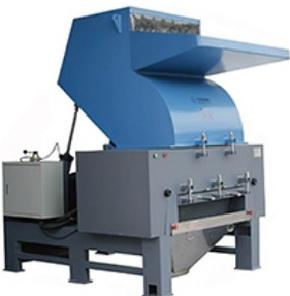
Wear concentrates in the screw and barrel, the die and calibration tooling, heaters and thermocouples, and drive and control components. JKS line design uses wear-resistant screw and barrel construction, modular components and quick mold change systems that reduce maintenance time and give easier access to key components. The company supplies spare parts as part of its after-sales measures, and the auxiliary equipment in the range is described as having a simple structure that is easy to clean and maintain, with readily available spare parts.
For a long-term partnership the commercial question is not whether parts exist but on what terms: a spare parts list priced at order stage, an agreed critical-parts holding, and a named contact for urgent orders.
5. After-sales support: turn service into an agreement
Service commitments are only useful when they are specific. JKS’s stated support package includes free factory installation, technical training and a formulation service based on the client’s raw material and production demand, backed by remote technical support, on-site troubleshooting and spare parts supply. Each item should be written into the agreement with named responsibilities: who supplies labour, who supplies consumables, how remote support escalates to an on-site visit, and what response is expected during the warranty period.
Two further clauses are worth adding for long-term relationships: a review point after the first production month, and a documented handover of settings and formulations so the plant does not depend on a single technician.
Acceptance, step by step: from pre-shipment test to sign-off
- Confirm the scope line by line. Walk the proposal item by item, including tooling and auxiliaries, before the delivery schedule is fixed.
- Agree the acceptance protocol in writing. Material, product size, output basis, tolerance, sampling period and witness.
- Run the pre-shipment test at the factory. JKS runs pre-shipment testing before delivery; the buyer should receive the test record together with the machine data.
- Check documentation with the shipment. Layout drawing, electrical diagram, operation manual and spare parts list should travel with the machine, not follow it.
- Install against the layout drawing. Standardized installation guidance is used, and utilities should be confirmed before the first start.
- Verify safety and control functions. PLC automatic control system, real-time monitoring, overload protection, emergency stop, guards and interlocks.
- Trial production on your own formulation. Where the raw material is new to the plant, use the supplier’s formulation service rather than adjusting the machine blind.
- Sign off against the protocol. Record the spare parts handover, training records and the named service contact in the same document.
The point of sequencing is that steps 3 and 7 produce evidence. A line tested twice — once at the factory and once in the plant — gives both sides a reference point if performance is questioned later.
Where these terms matter most: three line scenarios
The same three documents apply to every line type, but the emphasis shifts with the product.
Pipe producers
Pipe lines — PVC solid pipe, HDPE solid pipe, PPR water pipe, steel-wire reinforced composite pipe and PE corrugated pipe — are judged on wall thickness consistency and long-term maintenance cost. JKS’s comparative statements for pipe lines, against basic single-screw pipe extruders or simple two-stage lines, cite 10–15% higher output, ±0.05 mm wall thickness control, 5% less material waste and 30% lower long-term maintenance cost despite a slightly higher initial investment. For a buyer, those claims translate directly into acceptance criteria: wall thickness tolerance and output both have to be measured, not just quoted.

Profile and panel producers
PVC window profile, WPC door panel, PVC hollow wall panel and decoration strip producers care about dimensional consistency and changeover time. JKS’s stated comparison for profile lines is 12–18% higher output per line against conventional twin-screw profile extruders and basic calibration lines, with multi-cavity mold capability and precise calibration for complex shapes, plus lower tooling cost for custom profiles. Quick mold change and modular design reduce maintenance time, which matters most where a plant runs several profiles on one line.
Sheet and flooring producers
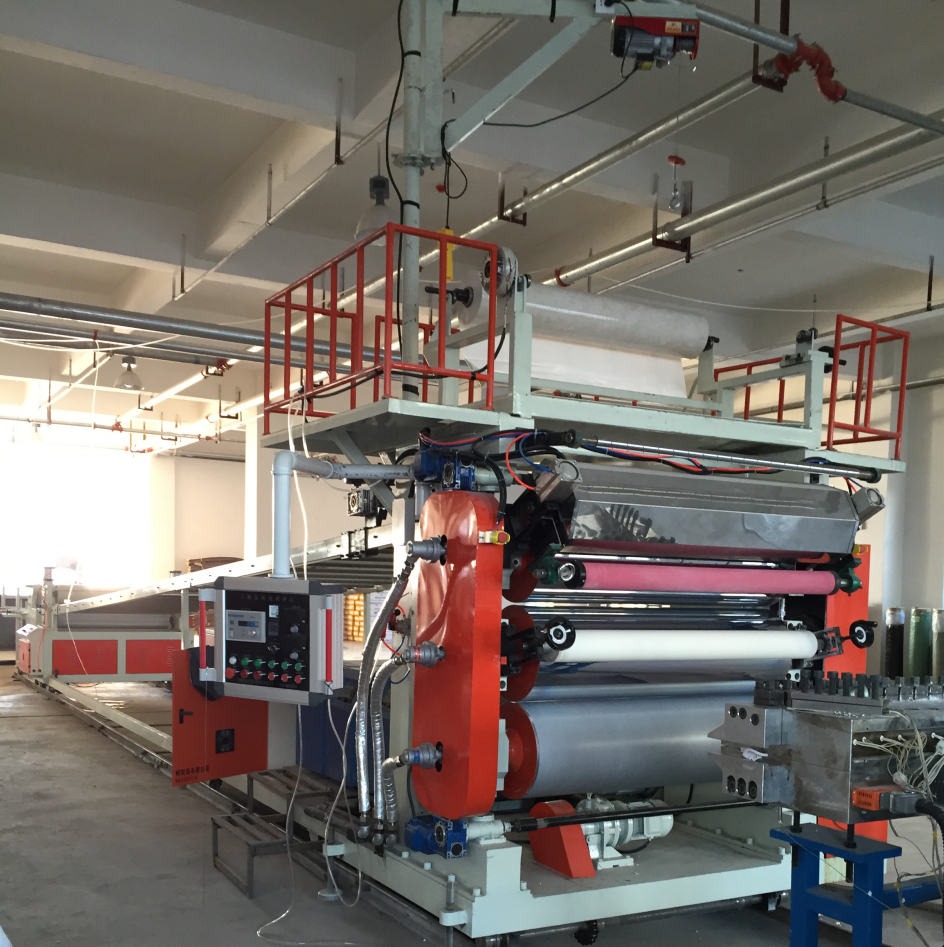
SPC flooring, PVC artificial marble sheet, WPC foam board and PP construction formwork producers are volume-driven, so output speed, thickness tolerance and waste matter more than floor space. JKS’s stated comparison for sheet lines is 15–20% higher output speed with ±0.1 mm thickness tolerance and 10% less material waste against conventional single-layer lines and low-cost generic machines, supported by an integrated control system with remote fault diagnosis support.
Comparison: how JKS line groups are stated to differ from named baselines
The table consolidates JKS’s own comparative statements by line group, keeping each comparison attached to the baseline it was made against. It is a negotiation aid, not a substitute for a test on your material.
| Line group | Baseline named in the comparison | Output or capacity effect | Dimensional or quality effect | Energy, waste or maintenance effect |
|---|---|---|---|---|
| SPC flooring and PVC sheet lines | Conventional single-layer extrusion lines and low-cost generic machines | 15–20% higher output speed | ±0.1 mm thickness tolerance | 10% less material waste; 8–10% lower power consumption; 25% lower per-unit production cost over five years |
| PVC/WPC profile and panel lines | Conventional twin-screw profile extruders and basic calibration lines | 12–18% higher output per line; lower tooling cost for custom profiles | Consistent profile dimensions and low reject rate through multi-cavity molds and precise calibration | 6–8% lower energy consumption with a high-efficiency heating system |
| Pipe lines (PVC, HDPE, PPR, composite) | Basic single-screw pipe extruders or simple two-stage lines | 10–15% higher output | ±0.05 mm wall thickness control | 5% less material waste; 7–10% lower energy use; 30% lower long-term maintenance cost |
| Auxiliary equipment: crushers, pulverizers, mixers | Generic auxiliary equipment or standard extruders from other suppliers | 10–15% higher processing capacity | Stable performance and good compatibility with the line | 5% lower energy use; similar initial cost with longer service life reducing replacement frequency |
Figures above are JKS comparative statements against the baselines named in each row. Re-confirm them against your material, product specification and line configuration during technical review.
| Document | What must be specified | Why it matters at decision stage |
|---|---|---|
| Purchase agreement | Line-by-line scope, series and configuration, tooling, auxiliaries, exclusions | Prevents scope gaps appearing after the order is placed |
| Acceptance protocol | Material, product size, output basis, tolerance, sampling period, witness | Creates evidence both sides can refer to later |
| Safety and compliance record | Applicable standard and edition, control functions, guards, test records | Public sources differ on standard editions, so the applicable one must be confirmed |
| Spare parts schedule | Wear parts list, critical parts holding, pricing basis, availability | Turns “parts are available” into a workable plan |
| Service agreement | Installation, training, formulation support, remote and on-site escalation | Defines responsibility when production stops |
FAQ: what buyers ask before signing
Which safety standard applies to a plastic extrusion machine, and how should compliance be documented?
In the United States, extrusion machines for the plastics industry fall under ANSI/PLASTICS B151.7, whose scope states that the requirements apply to extrusion machines used in the plastics industry and that suppliers and users must apply a risk assessment process in the manufacture, care and use of the machinery. Note an edition discrepancy in public sources: the ANSI webstore lists B151.7-2014 (R2021), while the PLASTICS Industry Association standards page references B151.7-2013. Because the two references are not the same edition, the edition that applies to your market should be confirmed in writing in the purchase documents rather than assumed. At machine level, JKS lines are described with a PLC automatic control system, real-time monitoring, overload protection and an emergency stop function, with pre-shipment testing before delivery.
How can a buyer verify capability claims before signing?
Verify three things in writing: the comparison baseline, the measurement basis and the test conditions. JKS comparative statements use named baselines. Against conventional single-layer extrusion lines and low-cost generic machines, SPC flooring and PVC sheet lines are stated at 15–20% higher output speed, ±0.1 mm thickness tolerance and 10% less material waste. Against conventional twin-screw profile extruders and basic calibration lines, profile lines are stated at 12–18% higher output per line. Against basic single-screw pipe extruders or simple two-stage lines, pipe lines are stated at 10–15% higher output with ±0.05 mm wall thickness control. A listed SPC floor conical twin-screw extruder is stated at 1500 kg/h. Every figure should be re-tested on your own formulation before acceptance sign-off.
What does a plastic extrusion machine really cost over five years?
The purchase price is only the first line. Energy, material waste, wear parts and downtime usually decide the total. JKS comparative data states the five-year view differently by line type: for pipe lines, a slightly higher initial investment is stated to return 30% lower long-term maintenance cost; for SPC flooring and PVC sheet lines, 25% lower per-unit production cost over five years is stated, supported by 8–10% lower power consumption and 10% less material waste; for auxiliary equipment such as crushers and mixers, initial cost is described as similar to generic alternatives while longer service life reduces replacement frequency. Request a breakdown covering energy, wear parts, expected downtime and spare parts consumption, then check it against your own utility costs.
Can we test our own formulation before acceptance?
Yes — sampling should be built into the schedule rather than treated as a favour. JKS provides a formulation service according to the client’s raw material and production demand, together with free factory installation and technical training, and applies pre-shipment testing before delivery. In practice, send the material datasheet, the target product size range and the required output before the machine is built, agree what the trial is meant to prove, and record the result. Factory trial data and in-plant trial data should be kept as one file, because the second test — on your own compound, in your own plant — is the one that defines acceptance.
How are delivery, installation and post-commissioning support handled?
Delivery should be expressed as a schedule with named milestones rather than a single number: scope freeze, pre-shipment testing, dispatch, installation, trial run and sign-off. JKS supports the later stages with standardized installation guidance, remote technical support, on-site troubleshooting and spare parts supply, and documents the handover at the end. If you are comparing two suppliers on schedule and support, send your line specification, product size range and target output to gordon@jksjx.com and ask for a written milestone plan plus a spare parts list covering the first year of operation — the two answers side by side are usually enough to show which supplier has a real support structure.
Conclusion
Purchasing terms, acceptance criteria and after-sales support are not administrative extras. They are the parts of a plastic extrusion machine purchase that determine cost per square metre of flooring, per metre of pipe or per profile over the next five years. A supplier who will put scope, test basis, spare parts and service escalation in writing is offering something that cannot be read off a specification sheet.
For a buyer comparing a shortlist, the practical next step is to ask every candidate the five questions above and to compare the written answers side by side. Similar answers with a documented basis are a stronger signal of a long-term partner than a lower headline price.
Next step
If you are preparing a purchase or acceptance document for a pipe, profile, sheet or pelletizing line, send your product size range, target output and raw material details to the JKS team. You will receive a scope list, an acceptance protocol outline and a spare parts list you can compare directly against other quotations.
Contact: Gordon · gordon@jksjx.com · Tel: 86 18651004566 · WhatsApp: 86 18601577228 · www.extrudetec.com
Download the JKS WPC door project brochure (PDF) for reference on line configuration and project scope.
Have Questions or Need More Details?
Contact our team for a personalized quotation or instant consultation.
Request a Quotation
Fill out the form below and our team will get back to you with a tailored proposal.
WhatsApp Direct Chat
Prefer to chat in real-time? Message us on WhatsApp for instant assistance & quick answers.
- Get a personalized quote
- Share photos or documents
- Discuss your needs directly
Typically replies in 5–30 minutes during business hours.