
Plastic Extrusion Machine Matching for Water, Drainage & Power Pipe Projects
Plastic Extrusion Machine Matching for Water, Drainage & Power Pipe Projects
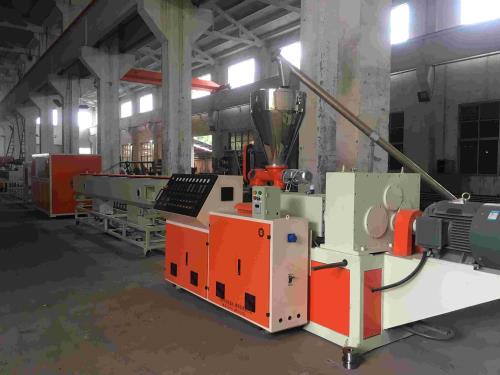
A municipal water main, an in-building riser, a buried high-voltage cable duct and a corrugated conduit for electrical wiring are all extruded plastic pipe — but they are not produced on the same plastic extrusion machine. The pressure the pipe must hold, the wall structure it needs, the polymer it is made from and the diameter band it spans each change the screw configuration, die head, cooling and downstream equipment.
This application guide maps six pipe and infrastructure scenarios to the six JKS pipe line families that serve them, and explains the point at which each line family becomes the correct choice rather than a workable one.
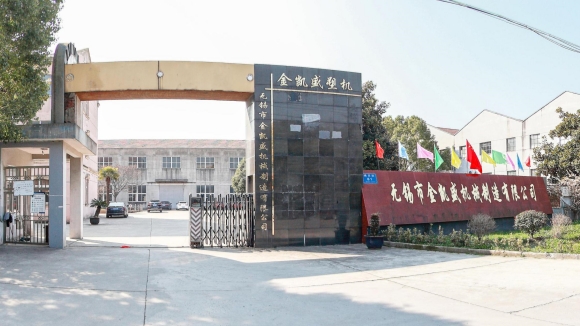
JKS Plastic Extrusion Machine is the extrusion line brand of Wuxi JKS Machinery Manufacturing Co., Ltd., a Chinese machinery manufacturer founded in 2013 and based in Wuxi, Jiangsu Province. The company builds custom plastic extrusion production lines — pipe, profile, sheet, SPC flooring, solid rod and pelletizing — together with standalone single-screw and conical twin-screw extruders and auxiliary equipment such as mixers, crushers and pulverizers, and states that its machines have been exported to more than 35 countries (www.extrudetec.com).
Scenario-to-line map
- Municipal water supply, gas pipeline, farm irrigation → HDPE Water Pipe Extrusion Line (PE110, PE315, PE630, PE1000, PE1600)
- Building water supply and drainage, solid-wall drainage networks → PVC Water Supply & Drainage Pipe Extrusion Line (PVC63, PVC250, PVC630)
- Buried high-voltage power grid → MPP & PE High Voltage Power Pipe Extrusion Line (PEG63, PG160)
- Reinforced composite pipe for heavier duty segments → Steel Wire Mesh Reinforced Composite Pipe Extrusion Line (GS/PE-160-H to GS/PE-630-H)
- In-building potable and distribution water piping → PPR Pipe Extrusion Line (PPR20-75, PPR20-110)
- Underground cable protection and wiring conduit → Corrugated Pipe Extrusion Line (KSPG-63, KSPG-32, KSPG-20, KS-160, KS-75)
Problem Definition: "Pipe Extrusion Machine" Is a Category, Not a Specification
Buyers who start from the category name tend to end up comparing machines that were never meant to do the same job. Four variables decide which line a project actually needs.
1. Service condition. A pressure pipe carrying potable water or gas underground, a non-pressure pipe handling drainage, and a conduit protecting cable are three different products. Pressure service pushes the specification toward a solid wall and tight wall-thickness consistency; conduit duty allows a corrugated, ring-stiffened wall where stiffness matters more than pressure containment.
2. Polymer family. PE, PVC, PP-R, MPP and steel-wire-reinforced composite pipe behave differently inside the barrel. This is why screw configuration is listed as a separate customization item in the JKS customization scope, alongside extruder model and capacity adjustment, rather than being treated as a fixed attribute of a line.
3. Diameter band. A line built for a small wiring conduit and a line built for a large buried main differ in die head, cooling length, haul-off and floor space. The model designation on a pipe line generally tracks the diameter band it is configured for, so the largest pipe the project must produce is the natural starting point of the specification.
4. Plant conditions. Voltage and frequency, available floor area, target capacity and the control system the operators can actually run are all part of the line definition. JKS lists voltage and frequency, control system and production line layout among the customization parameters, which means they are decided at specification stage, not corrected at installation.
The cost of getting this wrong shows up after commissioning. A line specified for conduit duty cannot be re-rated into a pressure water main by changing the die alone, and a large-diameter water line running small-diameter output is capital sitting idle. Matching the scenario first is cheaper than upgrading later.
Industry Background: Why Pipe Line Demand Keeps Moving
Pipe sits at the centre of plastics extrusion demand because it serves infrastructure rather than consumer fashion: water distribution, sewerage and drainage, gas distribution, irrigation, and the undergrounding of power and telecommunication cables. Those are long-cycle programmes, and they pull equipment demand with them.
The equipment market reflects that. The global plastic extrusion machine market was estimated at USD 7.9 billion in 2025 and is projected to reach USD 12.87 billion by 2035, according to Market Research Future's 2026 forecast (SRC-0001). On the supply side, China was the leading exporter of rubber and plastic working machinery under HS 8477 in 2024 with USD 8.55 billion, ahead of Germany at USD 6.11 billion and Italy at USD 2.61 billion, according to the Observatory of Economic Complexity using UN Comtrade data (SRC-0002). For a buyer building a shortlist, that concentration explains why Chinese line builders appear in almost every pipe project tender.
Compliance expectations have moved in parallel. In the United States, ANSI/PLASTICS B151.7 sets safety requirements for extrusion machines used in the plastics industry and requires suppliers and users to apply a documented risk assessment process in manufacture, care and use (SRC-0010). Buyers should note that edition references differ across official sources: the PLASTICS Industry Association standards page lists B151.7-2013, while the ANSI webstore lists B151.7-2014 (R2021). The edition your project accepts should be confirmed in writing during supplier qualification rather than assumed.
What this background does not do is choose a line for you. Market growth says pipe capacity is worth owning; it says nothing about whether your project needs a solid-wall HDPE main line or a corrugated conduit line. That decision comes from the application.
Detailed Solution: The Six Pipe Line Families and Where Each Belongs
HDPE Water Pipe Extrusion Line — PE110, PE315, PE630, PE1000, PE1600
This is the general-purpose family for buried pressure networks: municipal water supply, gas pipeline distribution and farm irrigation. JKS lists the line in five models from PE110 to PE1600, so the band runs from smaller distribution pipe up to large transmission pipe on a single line platform.
HDPE lines are built around single-screw extrusion, and JKS lists an SJ series single-screw plastic extruder as a standalone unit with custom models including SJ30, SJ45, SJ65 and SJ90. Screw and barrel selection can therefore be matched to the material and output instead of being fixed by the line's nominal size. The practical limit to check is physical rather than mechanical: as diameter grows, cooling, haul-off and floor space grow faster than the extruder does, so confirm the footprint before committing to the largest model in the band.
PVC Water Supply & Drainage Pipe Extrusion Line — PVC63, PVC250, PVC630
PVC remains the default material for building water supply and drainage and for gravity drainage networks where pressure is low or absent. JKS lists this line in three models: PVC63, PVC250 and PVC630.
Two things separate a PVC pipe project from an HDPE one. First, PVC is processed from dry blend, so the line is normally quoted together with mixing and cooling; JKS lists SRL-Z mixing and cooling units in four configurations (SRL-Z200/500, SRL-Z300/600, SRL-Z500/1000 and SRL-Z1000/3000) as auxiliary equipment. Second, PVC compounds are typically run on conical twin-screw extruders, and JKS lists an SJSZ conical twin-screw extruder from SJSZ-45 through SJSZ-51, 55, 65, 80, 92 and 110. The CE scope of the company's certification covers the SJSZ, SJ and SJP series, which is a useful cross-check when a project requires documented conformity.
MPP & PE High Voltage Power Pipe Extrusion Line — PEG63, PG160
This is the line family for the buried high-voltage power grid: duct banks under roads, substations and urban corridors that carry HV cable and must protect it from mechanical load, water ingress and long-term ground movement. JKS lists two models, PEG63 and PG160.
MPP and PE are the two polymer routes for this duty. The choice between them normally follows the project specification, the installation method (trenching, directional drilling or jacking) and the cable operator's standard rather than the machine, so the line decision should be made after the pipe specification is fixed, not before.
Steel Wire Mesh Reinforced Composite Pipe Extrusion Line — GS/PE-160-H to GS/PE-630-H
A steel wire mesh layer embedded between PE layers produces a composite pipe with a different structural profile from a plain PE wall. JKS lists the line in five models: GS/PE-160-H, GS/PE-250-H, GS/PE-315-H, GS/PE-500-H and GS/PE-630-H.
Reinforced composite construction is used where the pipe must combine a PE inner and outer layer with a steel mesh core — typically where higher pressure or heavier external load conditions apply than a plain wall comfortably covers. Because the reinforced structure adds process steps to a plain pipe line, the design basis should be agreed with the project engineer and confirmed with the line builder before the model is fixed.
PPR Pipe Extrusion Line — PPR20-75, PPR20-110
PP-R is the in-building material: potable water supply, risers and small-diameter distribution lines inside a building. JKS lists the line in two models, PPR20-75 and PPR20-110, which cover a narrow and a wider small-diameter band.
Small diameter changes the priorities. Raw output matters less than dimensional consistency and surface quality, because the pipe is visible in shafts and risers and is joined by fusion in the field. A plant serving only in-building sizes can specify the narrower band; a plant that also supplies larger distribution pipe specifies the wider one. Either way, the line is a different machine from a buried-main HDPE line and should not be treated as a substitute for it.
Corrugated Pipe Extrusion Line — KSPG-63, KSPG-32, KSPG-20, KS-160, KS-75
Corrugated pipe is the conduit family, and its applications run well beyond drainage. JKS lists five models — KSPG-63, KSPG-32, KSPG-20, KS-160 and KS-75 — and the application set includes electric wire threading, automobile wiring sleeve, mechanical equipment threading and construction drainage.
The ring-stiffened corrugated wall delivers stiffness at low material weight, which is why one line family serves both cable protection and lightweight conduit duties. Corrugated lines are normally specified by outer diameter and ring stiffness rather than pressure class, so the model choice follows the conduit size range the project needs rather than a pressure rating.
Step-by-Step Breakdown: From Project Brief to Commissioned Line
Step 1 — Fix the service condition. Establish whether the pipe is pressure service, non-pressure drainage or conduit. This single answer removes half the line families from the shortlist: pressure water mains point to HDPE or reinforced composite, gravity drainage to PVC, cable protection to corrugated or MPP/PE power pipe.
Step 2 — Fix the diameter band. Convert the project's pipe schedule into the smallest and largest diameter the line must produce. Line models are listed in bands (PE110 to PE1600 for HDPE, PVC63 to PVC630 for PVC), and the largest size drives the physical envelope of the machine.
Step 3 — Fix the polymer and screw configuration. PE, PVC, PP-R, MPP and reinforced composite do not run on the same screw. Screw configuration is part of the JKS customization scope, together with extruder model, so this step converts the material decision into hardware.
Step 4 — Fix capacity and plant interface. State target output, available voltage and frequency, floor layout and the control system your operators will use. All four are listed customization parameters, which means they are specification inputs rather than installation adjustments.
Step 5 — Define the auxiliary scope. PVC work normally brings mixing and cooling into the line; reclaim work may bring a crusher or pulverizer. JKS lists plastic crushers (SP400, SP660), pulverizers (MF400, MF500, MF600) and mixing and cooling units alongside the extrusion lines, so the auxiliary scope can be settled inside one order instead of being sourced separately afterwards.
Step 6 — Agree build, test and acceptance. JKS quality control is 100% factory pre-assembly and testing before shipment, with third-party inspection available on request, and the pre-shipment factory test is the stated acceptance criterion in the purchasing terms. The test protocol should be agreed with the order, not after the line is built.
Step 7 — Confirm commercial terms. Minimum order quantity is 1 unit, delivery terms are FOB, and payment is 30% T/T deposit with 70% T/T balance before shipment. Typical production lead time is 40 work days against a monthly capacity of 30 units.
Step 8 — Plan installation and ramp-up. JKS after-sales support covers overseas installation guidance, on-site commissioning, operator training, remote technical support and a 12-month warranty. For pipe projects, the commissioning window should be planned against civil works and trench readiness so the line is not commissioned into an empty yard.
Use Cases: Six Infrastructure Scenarios
Municipal water supply. Buried distribution and transmission mains are the core HDPE application, and the PE110 to PE1600 band lets a utility or a pipe plant cover service branches and main pipe on one platform. Where a segment calls for a reinforced structure, the steel wire mesh reinforced composite line takes over.
Gas pipeline distribution. Gas networks use the same buried PE logic as water, with tighter specification control. Because gas projects usually define material, wall thickness and marking in the utility's own standard, the line configuration should be confirmed against that standard before the model is fixed.
Farm irrigation. Irrigation networks mix a small number of large mains with a large number of smaller distribution lines. An HDPE line specified at the upper end of the required band can serve both, which is usually more economical than buying two narrow lines.
Building water supply and drainage. Two families work here: PVC for drainage and gravity networks (PVC63, PVC250, PVC630) and PP-R for in-building water supply (PPR20-75, PPR20-110). A plant serving a full building programme may need both, and they should be costed as two separate lines rather than one compromise.
Buried high-voltage power grid. MPP and PE power pipe (PEG63, PG160) protects HV cable in duct banks. The specification is driven by the cable operator's standard and the installation method, so the line is selected after the pipe specification is approved.
Underground cable protection and wiring. Corrugated lines (KSPG-63, KSPG-32, KSPG-20, KS-160, KS-75) serve electric wire threading, automobile wiring sleeve, mechanical equipment threading and construction drainage. This is the lowest-pressure, highest-volume end of the pipe market, and ring stiffness plus conduit diameter — not pressure class — drive the model choice.
What long-running reference projects show
JKS's published project references are concentrated in flooring and panel lines rather than pipe, and they are worth reading for what they say about delivery and support rather than about pipe output. A complete SPC flooring extrusion line in Malaysia has run for more than 10 years with high-speed production, precise thickness control and on-site installation and training support. An SPC line at a South Korean plastic flooring manufacturer has run for more than 8 years with 24/7 production, consistent quality and a low maintenance rate. A PVC hollow wall panel line at a Vietnamese plastic building materials manufacturer has run for more than 5 years, delivered as a turnkey solution with on-site installation support, full export documentation, stable continuous production and consistent product quality.
None of these three references is a pipe line. What transfers to a pipe project is the delivery model — turnkey scope, on-site installation and training, export documentation — and the fact that commissioned lines have stayed in production for multi-year periods.
Comparison Table: Six Pipe Line Families Side by Side
| Line family | Models listed | Pipe structure | Primary project fit | Choose it when |
|---|---|---|---|---|
| HDPE Water Pipe Extrusion Line | PE110, PE315, PE630, PE1000, PE1600 | Solid-wall PE | Municipal water supply, gas pipeline, farm irrigation | The project needs buried pressure pipe across a wide diameter band |
| PVC Water Supply & Drainage Pipe Extrusion Line | PVC63, PVC250, PVC630 | Solid-wall PVC | Building water supply and drainage, gravity drainage networks | Duty is low-pressure or non-pressure and dry-blend PVC is the plant's material |
| MPP & PE High Voltage Power Pipe Extrusion Line | PEG63, PG160 | Solid-wall MPP or PE power conduit | Buried high-voltage power grid | The pipe must protect HV cable in duct banks under road and urban loads |
| Steel Wire Mesh Reinforced Composite Pipe Extrusion Line | GS/PE-160-H, GS/PE-250-H, GS/PE-315-H, GS/PE-500-H, GS/PE-630-H | PE with steel wire mesh core | Reinforced composite pipe segments | The design basis calls for a reinforced structure beyond a plain PE wall |
| PPR Pipe Extrusion Line | PPR20-75, PPR20-110 | Solid-wall PP-R | In-building water supply and distribution piping | Output is small-diameter building pipe where dimensional consistency matters most |
| Corrugated Pipe Extrusion Line | KSPG-63, KSPG-32, KSPG-20, KS-160, KS-75 | Corrugated, ring-stiffened wall | Cable protection, electric wire threading, automobile wiring sleeve, mechanical equipment threading, construction drainage | The requirement is conduit stiffness and low material weight, not pressure containment |
Model designations are listed exactly as published by JKS. Diameter range, output and downstream configuration for a specific project should be confirmed in the line specification, since the customization scope covers extruder model, screw configuration, layout, voltage and frequency, control system and capacity adjustment.
FAQ
1. Which certification should I verify before a pipe extrusion line ships?
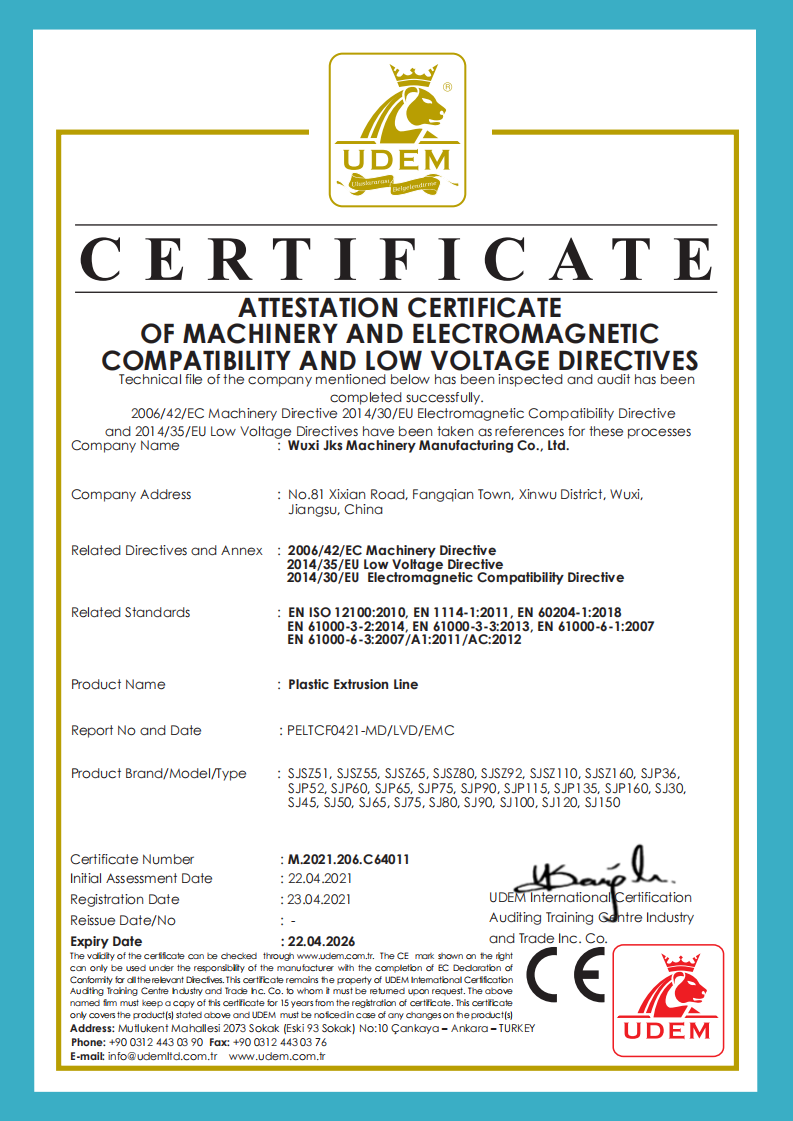
For EU-bound projects, request the CE certificate covering machinery, the Low Voltage Directive and the EMC Directive. JKS extrusion lines are covered by CE certificate M.2021.206.C.64011, issued by UDEM International Certification Auditing Training Centre on 22 April 2021, with a scope that includes the SJSZ, SJ and SJP series and standards EN ISO 12100:2010, EN 1114-1:2011, EN 60204-1:2018 and the related EMC standards. For the United States, extrusion machines fall under ANSI/PLASTICS B151.7, which requires a documented risk assessment; because official sources reference different editions (B151.7-2013 on the PLASTICS association page, B151.7-2014 R2021 on the ANSI webstore), confirm the accepted edition in writing during supplier qualification.
2. Can a pipe line be customized to my diameter series, plant voltage and layout?
Yes. JKS provides OEM, ODM and custom design production services, and the stated customization scope covers extruder model, screw configuration, production line layout, voltage and frequency, control system and capacity adjustment. The company operates a 2,000 m² workshop with 20 employees and a six-engineer R&D team, lists annual output of 200 units and a monthly capacity of 30 units, and reports that exports account for about 50% of sales across Southeast Asia, Russia, the Middle East, Europe, Central Asia, Africa and South America.
3. What are the commercial terms, and how is the budget built?
Minimum order quantity is 1 unit and delivery terms are FOB, with payment of 30% T/T deposit and 70% T/T balance before shipment. Because the customization scope includes extruder model, screw configuration, layout, voltage and frequency, control system and capacity adjustment, the commercial offer is built from the confirmed specification rather than from a single catalogue configuration. Fixing the diameter band and auxiliary scope before requesting a quotation keeps competing offers comparable.
4. Can we inspect or test the line before it leaves the factory?
Yes. JKS quality control is 100% factory pre-assembly and testing before shipment, and third-party inspection is available on request. The pre-shipment factory test is also the stated acceptance criterion in the purchasing terms, so the test protocol and acceptance record should be agreed together with the order rather than after the line is assembled.
5. How long does delivery and start-up take?
Typical production lead time is 40 work days against a monthly capacity of 30 units, with a minimum order of 1 unit. After shipment, support covers overseas installation guidance, on-site commissioning, operator training, remote technical support and a 12-month warranty. For pipe projects the commissioning window should be planned against civil works and trench readiness. Buyers who want to check the fit before committing can request a line configuration review and the company catalogue from gordon@jksjx.com.
Conclusion: Match the Scenario, Then the Model
Pipe projects fail selection in one of two directions: choosing a line that is too general to hold the pressure class, or choosing a line that is oversized and idle for the diameters the plant actually sells. The six JKS families separate along a clear logic — HDPE for buried pressure networks, PVC for supply and drainage, MPP and PE for high-voltage power duct, steel wire mesh reinforced composite for heavier-duty segments, PP-R for in-building water piping, and corrugated for cable protection and wiring conduit.
Within each family, the decision moves from the largest diameter the project requires, to the polymer and screw configuration, to the capacity and plant interface, and finally to build, test and handover. On the JKS side, that handover is supported by 100% factory pre-assembly and testing, third-party inspection on request, overseas installation guidance, on-site commissioning, operator training, remote technical support and a 12-month warranty, with a typical lead time of 40 work days.
Next step: check the line against your pipe schedule
Send the pipe diameters, polymer and target output for your water, drainage or power pipe project, and JKS will map them to the relevant line family and configuration. Full line scope and product coverage are in the company brochure.
Download the JKS product brochure (PDF)
Wuxi JKS Machinery Manufacturing Co., Ltd. · No. 81 Xixian Road, Fangqian Town, Wuxi City, Jiangsu Province, 214000, P.R. China · Email: gordon@jksjx.com · Tel: 86 18651004566 · WhatsApp: 86 18601577228 · www.extrudetec.com · blog.extrudetec.com
Have Questions or Need More Details?
Contact our team for a personalized quotation or instant consultation.
Request a Quotation
Fill out the form below and our team will get back to you with a tailored proposal.
WhatsApp Direct Chat
Prefer to chat in real-time? Message us on WhatsApp for instant assistance & quick answers.
- Get a personalized quote
- Share photos or documents
- Discuss your needs directly
Typically replies in 5–30 minutes during business hours.