
Ranked: Recommended Plastic Extrusion Machines for Pipe, Profile, Sheet & Pelletizing
Ranked: Recommended Plastic Extrusion Machines for Pipe, Profile, Sheet & Pelletizing
Finished SPC flooring and plastic profile samples in the Wuxi JKS Machinery showroom. The four machine families ranked in this article are defined by what comes out of the die, not by the extruder alone.
This article ranks plastic extrusion machines by end product — pipe, profile, sheet/board and pelletizing — using only documented model ranges, drive ratings, output figures and construction facts. It is a shortlisting tool for buyers at the discovery and research stage, not a performance test and not a price comparison.
JKS Plastic Extrusion Machine is the product brand of Wuxi JKS Machinery Manufacturing Co., Ltd., a plastic extrusion machinery manufacturer founded in 2013, based in Wuxi, Jiangsu, China, operating a 2,000 m² manufacturing facility with a team of six engineers and an annual output of approximately 200 units.
Four shortlists follow. Each entry states what the line is documented to produce, which model steps exist, which extruder is matched to it, and which structural materials are declared. The ranking order inside each category is explained by four countable criteria, so a buyer can disagree with the order and still use the underlying facts.
1. Problem Definition: Why “Plastic Extrusion Machine” Is the Wrong Starting Point
A buyer searching for a plastic extrusion machine is rarely looking for one machine. The same search phrase covers at least four unrelated production lines whose dies, downstream equipment and upstream material preparation do not overlap. A pipe line is built around a vacuum calibration tank and a haul-off; a profile line is built around a calibrating table and a fixed-length cutter; a sheet line is built around a calender; a pelletizing line is built around a die-face cutter and a cooling and grading system.
Three mismatches account for most early-stage selection errors:
- Wrong host extruder. A single screw SJ series extruder is documented for PVC, PP, PE, Nylon and ABS, and with different moulds and auxiliary equipment can produce pipes, rods, films, pellets, coated products and blow-moulded bottles. A conical twin screw SJSZ series extruder is documented for direct extrusion of PVC powder into pipes, sheets, bars and profiles. These are not interchangeable starting points.
- Wrong downstream scope. Two lines can share the same extruder model and still deliver different products, because the die, calibration, haul-off and cutting set determine the finished article.
- Wrong upstream assumption. PVC lines that run on PVC plus CaCO₃ compound need a mixing and cooling step before extrusion; recycling routes need crushing or pulverizing before pelletizing. Buying the extruder first and the feedstock preparation later usually extends the commissioning path.
The practical decision rule is therefore: classify by finished product first, then compare model ranges inside that class, then confirm the extruder and the auxiliary set. Everything below follows that order.
2. Industry Background: What the Verified Data Says
The global plastic extrusion machine market is estimated at USD 7.901 billion in 2025 and projected to reach USD 12.87 billion by 2035, according to Market Research Future (accessed 2026). The same source treats single screw and twin screw extruders as the product scope of that estimate.
Supply is concentrated. In 2024, the leading exporters of rubber and plastic working machinery under HS 8477 were China at USD 8.55 billion, Germany at USD 6.11 billion and Italy at USD 2.61 billion, based on UN Comtrade data compiled by the Observatory of Economic Complexity. For a buyer, that concentration explains why Chinese extrusion line builders appear in almost every shortlist, and why supplier screening has to go beyond country of origin.
Downstream demand is not uniform across the four categories. Grand View Research estimates the global stone plastic composite flooring market at USD 6.4 billion in 2026, rising to USD 10.3 billion by 2033. SPC flooring is a sheet/board product, so that figure is a demand signal for calender-based sheet lines rather than for pipe or profile lines.
Compliance runs on a separate track. ANSI/PLASTICS B151.7 applies to extrusion machines used in the plastics industry and requires suppliers and users to apply a risk assessment process in the manufacture, care and use of the machinery. The PLASTICS Industry Association standards page references ANSI/PLASTICS B151.7-2013, while the ANSI webstore listing references B151.7-2014 (R2021); buyers should confirm the edition that applies in their market before signing compliance documents.
JKS documents eight production line categories on its public storefront: SPC flooring, PVC foam board, PVC ceiling panel, PP/PE/PVC/PS profile, PVC/PP/PE laminate sheet, plastic rod, plastic pipe/tube/hose, and plastic pelletizing. Company data records a 50% export ratio and shipments to more than 35 countries, with main markets in Southeast Asia, Russia, the Middle East, Europe, Central Asia, Africa and South America.
3. Detailed Solution: The Four Ranked Shortlists
Ranking within each category uses four criteria that can be checked against published model data: (1) the number of documented model steps in that product family; (2) the size or format range those steps cover; (3) the completeness of the declared downstream configuration; and (4) the declared structural materials of screw, barrel, mould and frame. No ranking below implies a throughput advantage over another manufacturer, and no price is stated because none is published.
3.1 Pipe Extrusion Lines
Five pipe families are documented. They are ranked by the breadth of diameter coverage and by how completely the downstream set is specified, because those are the two variables that decide whether one line can serve a product catalogue or only a single SKU.
Rank 1 — PVC Water Supply & Drainage Pipe Extrusion Line (PVC63 / PVC250 / PVC630)
This is the widest PVC pipe range in the documented lineup: three model steps covering Φ16–Φ63 mm, Φ90–Φ250 mm and Φ315–Φ630 mm, each matched to a different conical twin screw extruder.
- PVC63: Φ16–Φ63 mm, SJSZ65/132 extruder, 37 kW main motor, 24 kW downstream, hauling speed 4–49 m/min, output 270 kg/h.
- PVC250: Φ90–Φ250 mm, SJSZ80/156 extruder, 55 kW main motor, 24 kW downstream, hauling speed 4–15 m/min, output 450 kg/h.
- PVC630: Φ315–Φ630 mm, SJSZ92/188 extruder, 110 kW main motor, 39 kW downstream, hauling speed 0–5 m/min, output 800 kg/h.
- Raw material: PVC plus CaCO₃. Downstream set: vacuum calibration, multi-claw traction, dust-free cutting.
- Construction: 38CrMoAlA nitrided alloy steel screw and barrel, precision casting die steel mould, Q235 carbon steel frame.
Ranked first because it combines three diameter steps with a fully named downstream configuration and a matching extruder for each step — the only PVC pipe family in the source data where that is true at all three sizes.
Rank 2 — HDPE Water Pipe Extrusion Line (PE110 to PE1600)
Five model steps cover Φ20–110 mm up to Φ1000–1600 mm, the largest single diameter span documented in this article.
- PE110: 90 kW main motor, GS60/38 extruder (optional GS75/33), 150–400 kg/h.
- PE315: 160 kW, GS75/38 (optional GS90/33), 200–600 kg/h.
- PE630: 280 kW, GS90/38 (optional GS120/33), 600–1000 kg/h.
- PE1000: 355 kW, GS120/38, 600–1000 kg/h.
- PE1600: 500 kW, GS150/38, 600–1500 kg/h.
- Construction: 38CrMoAlA nitrided alloy steel screw and barrel, forged alloy die steel mould, Q235 carbon steel frame. Applications include municipal water supply, gas pipeline and farm irrigation.
Ranked second because the coverage is the widest of any family here, but the article ranks PVC first on the strength of a more completely specified downstream set per model step.
Rank 3 — Steel Wire Mesh Reinforced Composite Pipe Extrusion Line (GS/PE-160-H to GS/PE-630-H)
A five-step family for urban pressurised water supply, chemical anti-corrosion pipelines and underground engineering pipe. It is the only pipe line in the data set with a declared reinforcement structure.
- GS/PE-160-H: φ50–160 mm, maximum speed 2.4 m/min, installed capacity 480 kW, actual power consumption 312 kW.
- GS/PE-250-H: φ75–250 mm, 2.4 m/min, 550 kW installed, 358 kW actual.
- GS/PE-315-H: φ90–315 mm, 2.4 m/min, 580 kW installed, 377 kW actual.
- GS/PE-500-H: φ250–500 mm, 1.4 m/min, 630 kW installed, 410 kW actual.
- GS/PE-630-H: φ315–630 mm, 1.2 m/min, 800 kW installed, 559 kW actual.
- Construction: 38CrMoAlA nitrided alloy steel screw and barrel, refined wear-resistant die steel mould, Q235 carbon steel frame.
Ranked third: it is the only family that publishes both installed capacity and actual power consumption for every model, which makes it the most usable entry for operating-cost planning even though its diameter span is narrower than HDPE.
Rank 4 — PPR Pipe Extrusion Line (PPR20-75 / PPR20-110)
A two-step family for indoor cold and hot water plumbing, with the auxiliary extruder specified alongside each main unit.
- PPR20-75: GS65/33 main extruder at 37 kW, GS50/33 auxiliary, capacity 80–160 kg/h.
- PPR20-110: GS90/30 main extruder at 75 kW, GS55/33 auxiliary, capacity 80–250 kg/h.
- Construction: 38CrMoAlA nitrided alloy steel screw and barrel, high precision die steel mould, Q235 carbon steel frame.
Ranked fourth because the family is intentionally narrow — two steps for one application — so it scores lower on coverage than the multi-step families above it.
Rank 5 — Corrugated Pipe Extrusion Line (KSPG-20 / KSPG-32 / KSPG-63 / KS-75 / KS-160)
Five steps split into a small-diameter KSPG series from φ6–63 mm and a larger-diameter KS series from φ50–160 mm, for electric wire threading, automotive wiring sleeves, mechanical threading and construction drainage.
- KSPG-20: screw Φ45 mm, L/D 30:1, 45 kW, φ6–10 mm, haul-off 20 m/min.
- KSPG-32: screw Φ50 mm, L/D 30:1, 50 kW, φ8–20 mm, 15 m/min.
- KSPG-63: screw Φ65 mm, L/D 33:1, 70 kW, φ16–63 mm, 10 m/min.
- KS-75: screw Φ65 mm, L/D 33:1, 80 kW, φ50–75 mm, 10 m/min.
- KS-160: screw Φ75 mm, L/D 33:1, 100 kW, φ90–160 mm, 5 m/min.
- Construction: wear-resistant alloy steel corrugation mould, Q235 carbon steel frame.
Ranked fifth despite having five steps, because the corrugation former — not the extruder — carries most of the product-defining work, so the line cannot be evaluated on extruder data alone.
Also documented in the pipe family: the MPP & PE High Voltage Power Pipe Extrusion Line, with PEG63 covering φ20–63 mm at 0.3–4.5 m/min and 70 kW installed power, and PG160 covering φ75–160 mm at 0.3–2 m/min and 125 kW. Both use AC frequency control, optional 2-, 3- or 4-claw traction, and a chipless cutting system.

The steel wire mesh reinforced composite pipe line, Rank 3 in the pipe shortlist. It is the only pipe family in the source data that publishes installed capacity and actual power consumption for every model.
3.2 Profile and Rod Extrusion Lines
Profile lines are ranked by format coverage — the declared product width or panel width per model step — because width is the constraint that decides which decorative or construction profile a plant can actually sell.
Rank 1 — PVC & WPC Door and Window Profile Extrusion Line (SJSZ92/188 and SJSZ65/132)
Two model steps address two different product tiers: integral WPC door slabs on the larger unit and door frames, casings and decorative surrounds on the smaller one.
- SJSZ92/188: PVC resin plus calcium powder, recycled material, wood powder and additives; 110 kW main motor; output 500–600 kg/h; finished panel width up to 1200–1600 mm; produces hollow waterproof integral WPC door slab.
- SJSZ65/132: PVC resin plus high-content calcium powder and additives; 37 kW main motor; output 150–250 kg/h; produces WPC door jamb, door casing and decorative surround profile.
- Construction: 38CrMoAlA nitrided alloy steel screw and barrel, wear-resistant alloy die steel mould, Q235 carbon steel frame.
Ranked first because it is the only profile family that documents both a finished-panel width ceiling and a separate frame/casing product on a second model, covering a full door system rather than one component.
Rank 2 — PVC Hollow Wall Panel & Ceiling Extrusion Line (SJSZ51 / SJSZ55 / SJSZ65 / SJSZ80)
Four steps step up in width and output together, which makes capacity planning straightforward: the wider the panel, the larger the matched extruder.
- SJSZ51: 18.5 kW, width 300 mm, output 120 kg/h.
- SJSZ55: 22 kW, width 450 mm, output 150 kg/h.
- SJSZ65: 37 kW, width 600 mm, output 250 kg/h.
- SJSZ80: 55 kW, width 1200 mm, output 400 kg/h.
- Raw material: PVC plus CaCO₃. Products: wall panel, ceiling board, door panel, furniture cabinet panel.
- Construction: 38CrMoAlA nitrided alloy steel screw and barrel, wear-resistant alloy die steel mould, Q235 carbon steel frame.
Ranked second on the strength of a clean four-step width ladder; it sits below the door and window family only because its widest step tops out at 1200 mm rather than 1600 mm.
Rank 3 — WPC Door Panel Extrusion Line (SJSZ80 / SJSZ92)
A two-step family dedicated to interior door panels, hotel and office furniture, and home decoration, processing a PVC plus CaCO₃ compound.
- SJSZ80: 75 kW main motor, output 250–400 kg/h.
- SJSZ92: 110 kW main motor, output 400–600 kg/h.
- Construction: nitrided alloy steel screw and barrel, hardened steel mould with chrome plating, carbon steel frame.
Ranked third because it overlaps the door and window family on application but offers only two steps and no frame or casing product.
Rank 4 — PVC Grille & Decoration Profile Extrusion Line (SJSZ51 / SJSZ55 / SJSZ65)
Three steps tied directly to product width, for window and door profiles, skirting lines, decorative mouldings and WPC deck tiles.
- SJSZ51: 18.5 kW, product width 100 mm, output 120 kg/h.
- SJSZ55: 22 kW, product width 150 mm, output 150 kg/h.
- SJSZ65: 37 kW, product width 300 mm, output 250 kg/h.
- Raw material: PVC plus CaCO₃. Construction: 38CrMoAlA nitrided alloy steel screw and barrel, wear-resistant alloy die steel mould, Q235 carbon steel frame.
Ranked fourth: the width ladder stops at 300 mm, so it serves narrow decorative profiles rather than panel-format production.
Rank 5 — Multi-material Plastic Profile Extrusion Line (SJ45 / SJ50 / SJ65)
The most material-flexible entry in the profile group, running PP, PE, PVC, PS, PC and ABS on the same single screw platform.
- Full line sequence: feeding system → single screw extruder → calibrating table → cooling tank → haul-off → fixed-length cutting.
- Custom moulds documented for imitation marble profile, ceiling panel, door and window small profile, sealing strip, edge band, PC lamp profile and PVC waterstop.
- Construction: 38CrMoAlA nitrided alloy steel screw and barrel, wear-resistant alloy steel profile mould, Q235 carbon steel frame.
Ranked fifth because its product is defined by the custom mould rather than by a standard width ladder, so it is harder to shortlist without a drawing.
Adjacent in the profile group: solid rod. The Solid Plastic Rod Extrusion Line runs PP, PE, PA and POM on two steps — SJ45 at screw Φ45 mm, L/D 28:1, 7.5 kW, rod Φ6–60 mm and 5–18 kg/h; SJ65 at screw Φ65 mm, L/D 30:1, 18.5 kW, rod Φ30–200 mm and 20–60 kg/h. The full set includes a feeding dryer, extruder, sizing mould, cooling tank, caterpillar haul-off, and fixed-length cutting and stacking device.

Finished PVC/WPC decking, window and skirting profiles. On profile lines the mould, not the extruder, decides the sellable SKU.
3.3 Sheet and Board Extrusion Lines
Sheet and board lines are ranked by declared thickness and width ranges plus calender configuration, because a sheet line without a calender cannot be compared to one with a four-roller stack.
Rank 1 — SPC Flooring Extrusion Line (SJSZ92/188, SJSZ110/220, SJP115/30, SJP135/30)
Four extruder options and the widest declared format range in the sheet group: 1–10 mm thickness, 980 mm or 1250 mm effective width, 15–40 tons per 24 hours depending on extruder model.
- Optional process: EIR in-line synchronous wood grain embossing, with vertical or inclined four-roller calender structure.
- Construction: 38CrMoAlA nitrided alloy steel screw and barrel, 45# forged steel calender roller with hard chrome plating, Q235 carbon structural steel frame.
- Raw material: PVC plus CaCO₃ compound formula. Applications: rigid SPC flooring, interior decoration panel, waterproof floor processing, commercial and residential flooring material.
Ranked first because it is the only sheet family that documents four extruder options, two working widths, an optional in-line embossing process and a named calender construction — the most complete specification set in the group.
Rank 2 — PVC & WPC Foam Board Extrusion Line (SJSZ80/156 and 80+165 co-extrusion)
A two-configuration family for furniture boards, kitchen cabinet boards, bathroom panels, construction templates and advertising billboard substrates, at a finished width of 1220 mm.
- Single extruder: SJSZ80/156 at 75 kW, output 400–500 kg/h.
- Co-extrusion: 80+165 at 75+37 kW.
- Construction: 38CrMoAlA nitrided alloy steel screw and barrel, forged steel calender roller with hard chrome plating, Q235 carbon steel frame.
Ranked second because it adds a co-extrusion option the SPC line does not document, but it publishes a single working width rather than two.
Rank 3 — PVC Imitation Marble Sheet Extrusion Line (SJSZ80/156 and SJSZ92/188)
A two-step family producing 1–12 mm sheet at 1220 mm effective width, with output of 400–700 kg/h depending on extruder model.
- Raw material: PVC plus CaCO₃ compound. Applications: floor decorative sheet, wall panel, villa wall panel, hotel and KTV decoration.
- Construction: 38CrMoAlA nitrided alloy steel screw and barrel, forged steel calender roller with hard chrome plating, Q235 carbon steel frame.
Ranked third: it declares the thickest sheet in this group at 12 mm, but its width is fixed at 1220 mm and its output band overlaps the foam board line.
Rank 4 — PP Hollow Construction Formwork Extrusion Line (SJ-130×33 and SJ-90×33)
A two-step family for reusable concrete formwork, producing 1220 mm wide, 15–20 mm thick hollow round-hole panels in an ABA three-layer structure.
- SJ-130×33: 160 kW, output 500–600 kg/h. SJ-90×33: 75 kW, output 180–250 kg/h.
- Daily output: 420–480 panels per 24 hours. Overall machine dimension 34 m × 7 m × 4.5 m. Recommended transformer 315 kVA; power supply 380 V/50 Hz, three-phase.
- Raw material: PP recycled granule with MFI below 3. Optional double-sided UV anti-aging coating; channel smoothness 0.015–0.03 μm.
- Construction: 38CrMoAlA nitrided alloy steel screw and barrel, forged refined die steel mould, Q235 carbon steel frame.
Ranked fourth because it is the only entry in the sheet group that publishes a footprint, a transformer recommendation and a daily panel count — valuable data, but for a single specialised product.

The PVC imitation marble sheet line, Rank 3 in the sheet group. Sheet and board lines are ranked separately from profile lines because the calender, not the calibrating table, sets the product format.
3.4 Pelletizing Lines
Two pelletizing routes are documented. The split is not by size but by material and cutting method: PVC powder and PVC scrap go through hot die-face cutting on a conical twin screw platform, while PE, PP, ABS, PS, HIPS and PC go through strand cutting and water cooling on a single screw platform at L/D 35:1.
Rank 1 — PVC Hot-cut Pelletizing Line (SJSZ55 / SJSZ65 / SJSZ80 / SJSZ92)
Four steps cover 100–150 kg/h up to 650–800 kg/h, with hot die-face cutting, uniform pellets, and a cooling and grading system.
- SJSZ55: 22 kW, 100–150 kg/h. SJSZ65: 37 kW, 200–250 kg/h. SJSZ80: 55 kW, 350–400 kg/h. SJSZ92: 110 kW, 650–800 kg/h.
- Raw material: PVC powder or PVC scraps. Structural configuration: conical twin screw.
- Construction: 38CrMoAlA nitrided alloy steel screw and barrel, wear-resistant alloy steel pelletizing die, Q235 carbon steel frame.
Ranked first because it is the only pelletizing family in the data set that documents four power and output steps plus a named cooling and grading system, which is what a compounding plant needs to size a line against an existing mixer.
Rank 2 — Plastic Strand Cutting Pelletizing Line (ST80 / ST100 / ST120 / ST150)
Four steps from 70–160 kg/h to 350–650 kg/h, offered as a single-stage water strand line or a two-stage waste plastic recycling line.
- ST80: 55 kW, 70–160 kg/h. ST100: 75 kW, 170–280 kg/h. ST120: 90 kW, 250–400 kg/h. ST150: 110 kW, 350–650 kg/h.
- L/D ratio 35:1. Raw material: PE, PP, ABS, PS, HIPS, PC. Features: strand cutting with water cooling, for virgin compounding or waste plastic recycling.
- Construction: 38CrMoAlA nitrided alloy steel screw and barrel, wear-resistant alloy steel pelletizing die, Q235 carbon steel frame.
Ranked second because it covers more polymer types than the PVC route but publishes no cooling and grading system, so the downstream scope is less completely specified.
Feedstock preparation tier. Three auxiliary units sit upstream of the pelletizing and PVC lines and are documented independently of any single line:
- PVC Mixing & Cooling Unit (SRL-Z200/500, SRL-Z300/600, SRL-Z500/1000, SRL-Z1000/3000): 37/7.5 kW at 300–400 kg/h up to 160/22 kW at 1600–2000 kg/h; mixing 8–10 minutes per pot and cooling 6–8 minutes per pot; stainless steel mixing pot and carbon steel frame.
- Plastic Crusher (SP400 / SP660): 15 kW at 300–400 kg/h and 22 kW at 600–700 kg/h; wear-resistant steel cutting chamber and blades, carbon steel frame.
- Plastic Pulverizer (MF400 / MF500 / MF600): 30 kW at 200 kg/h, 37 kW at 300–400 kg/h and 55 kW at 400–500 kg/h, all at 40–80 mesh fineness; wear-resistant steel grinding chamber and rotor.
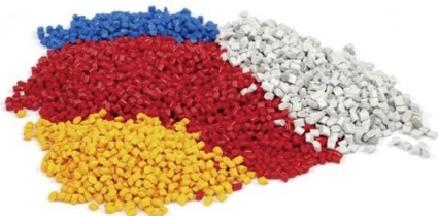
PVC compound pellets from a hot-cut pelletizing line. The PVC route uses hot die-face cutting on a conical twin screw platform; polyolefins use strand cutting with water cooling.
4. Step-by-Step Breakdown: How to Use These Shortlists
The ranking above only narrows the field. Five steps convert it into a decision, and each step maps to a fact you can verify in a supplier's documentation rather than to an impression from a brochure.
- Name the finished article and its format. Pipe needs a diameter range; profile needs a width; sheet needs thickness and width; pelletizing needs a polymer and a cutting method. PVC630 covers Φ315–Φ630 mm — if your catalogue stops at Φ250 mm, that model is out of scope and PVC250 is the correct comparison.
- Confirm the material form. PVC powder and high-fill CaCO₃ compounds point to the conical twin screw SJSZ platform, which is documented for direct PVC powder extrusion. Polyolefin pellets and engineering plastics point to the single screw SJ platform, documented for PVC, PP, PE, Nylon and ABS.
- Check that the model step exists at your size. Families here are ladders, not single machines. The SJSZ extruder range runs SJSZ-45 at 15 kW and 70 kg/h through SJSZ-110 at 200 kW and 1000 kg/h, so a line sized outside that ladder requires a custom configuration rather than a catalogue pick.
- Verify the downstream set by name. PVC pipe: vacuum calibration, multi-claw traction, dust-free cutting. Corrugated pipe: forming machine, cooling tank, haul-off, cutter. Profile: calibrating table, cooling tank, haul-off, fixed-length cutter. SPC sheet: four-roller calender, vertical or inclined. Hot-cut pelletizing: cooling and grading system. A line quoted without its downstream items is not comparable to one quoted with them.
- Verify the structural declaration. Across the documented range, screws and barrels are 38CrMoAlA nitrided alloy steel and frames are Q235 carbon steel; moulds vary by product — precision casting die steel for PVC pipe, forged alloy die steel for HDPE pipe, hardened steel with chrome plating for WPC door panels, wear-resistant alloy die steel for profiles. These declarations are checkable and should appear in the quotation, not only in the catalogue.
5. Use Cases: Which Line Fits Which Plant
Four plant profiles map cleanly onto the shortlists above. Each is described by the working condition and special requirement recorded for that line, not by a claimed result.
Municipal and building pipe plant
Runs indoors under continuous operation at medium temperature, producing PVC pipe for water supply, drainage and sewage. Documented requirements are high impact resistance, corrosion resistance and good dimensional stability; supporting equipment includes extruders, moulds, calibration tanks, cooling systems and belling machines. The PVC63 / PVC250 / PVC630 ladder is the direct fit because all three steps are specified for PVC plus CaCO₃ with vacuum calibration and dust-free cutting.
WPC door and interior panel plant
Runs indoors at medium temperature on a continuous basis, producing door slabs, frames, wall panels and ceiling boards. Documented requirements are uniform thickness, high strength and water resistance for door panels, and precise dimensional control for decorative profiles. A plant selling a full door system needs both the SJSZ92/188 door slab step and the SJSZ65/132 frame and casing step, because one model does not cover both products.
SPC flooring plant
Runs under high temperature, high pressure and continuous operation, producing rigid SPC flooring for commercial and residential use. Documented requirements are uniform foaming where applicable, low density, high strength and a smooth surface; supporting equipment includes calender rollers, cooling systems and cutting machines. The SPC line's optional EIR in-line synchronous embossing and its vertical or inclined four-roller calender decide whether the plant can sell embossed formats or only plain sheet.
PVC compounding and recycling plant
Runs indoors under continuous operation with high noise on the strand route and high temperature on the hot-cut route. Documented requirements are uniform pellet size, low energy consumption and high efficiency, with extruders, water cooling tanks, dryers and packaging machines as supporting equipment. A plant feeding its own extrusion lines should size the mixer first: SRL-Z1000/3000 at 160/22 kW and 1600–2000 kg/h sets an upper bound on how much pelletizing or pipe capacity the upstream stage can support.
6. Comparison Table: Documented Facts Side by Side
The table below contains only figures declared in the source product data. Blank cells mean the value is not published for that family — they are not estimates.
| End product | Model steps | Documented range | Matched extruder / drive | Documented output | Declared construction |
|---|---|---|---|---|---|
| PVC water supply & drainage pipe | PVC63 / PVC250 / PVC630 | Φ16–Φ630 mm | SJSZ65/132 37 kW; SJSZ80/156 55 kW; SJSZ92/188 110 kW | 270 / 450 / 800 kg/h | 38CrMoAlA screw and barrel; precision casting die steel mould; Q235 frame |
| HDPE water pipe | PE110 to PE1600 | Φ20–1600 mm | GS60/38 90 kW to GS150/38 500 kW | 150–400 to 600–1500 kg/h | 38CrMoAlA screw and barrel; forged alloy die steel mould; Q235 frame |
| Steel wire reinforced composite pipe | GS/PE-160-H to GS/PE-630-H | φ50–630 mm | Installed 480–800 kW | 2.4 down to 1.2 m/min line speed | 38CrMoAlA screw and barrel; refined wear-resistant die steel; Q235 frame |
| PPR plumbing pipe | PPR20-75 / PPR20-110 | Not published | GS65/33 37 kW; GS90/30 75 kW | 80–160 / 80–250 kg/h | 38CrMoAlA screw and barrel; high precision die steel; Q235 frame |
| Corrugated pipe | KSPG-20 to KS-160 | φ6–160 mm | Screw Φ45–Φ75 mm, 45–100 kW | Haul-off 20 down to 5 m/min | Wear-resistant alloy steel corrugation mould; Q235 frame |
| MPP / PE power conduit | PEG63 / PG160 | φ20–160 mm | 70 kW / 125 kW installed | 0.3–4.5 / 0.3–2 m/min | 38CrMoAlA screw and barrel; wear-resistant alloy die steel; Q235 frame |
| PVC / WPC door & window profile | SJSZ92/188, SJSZ65/132 | Panel width up to 1200–1600 mm | 110 kW / 37 kW | 500–600 / 150–250 kg/h | 38CrMoAlA screw and barrel; wear-resistant alloy die steel; Q235 frame |
| PVC hollow wall & ceiling panel | SJSZ51 / 55 / 65 / 80 | 300–1200 mm | 18.5 / 22 / 37 / 55 kW | 120 / 150 / 250 / 400 kg/h | 38CrMoAlA screw and barrel; wear-resistant alloy die steel; Q235 frame |
| WPC door panel | SJSZ80 / SJSZ92 | Not published | 75 kW / 110 kW | 250–400 / 400–600 kg/h | Nitrided alloy steel screw and barrel; hardened chrome-plated mould; carbon steel frame |
| SPC flooring sheet | SJSZ92/188, SJSZ110/220, SJP115/30, SJP135/30 | 1–10 mm; 980 or 1250 mm width | 90–200 kW | 15–40 t/24h | 38CrMoAlA screw and barrel; 45# forged steel roller, hard chrome; Q235 frame |
| PVC / WPC foam board | SJSZ80/156; 80+165 co-extrusion | 1220 mm width | 75 kW; 75+37 kW | 400–500 kg/h | 38CrMoAlA screw and barrel; forged steel roller, hard chrome; Q235 frame |
| PVC imitation marble sheet | SJSZ80/156, SJSZ92/188 | 1–12 mm; 1220 mm width | 75 kW / 110 kW | 400–700 kg/h | 38CrMoAlA screw and barrel; forged steel roller, hard chrome; Q235 frame |
| PP hollow construction formwork | SJ-130×33 / SJ-90×33 | 1220 mm wide, 15–20 mm thick | 160 kW / 75 kW | 500–600 / 180–250 kg/h; 420–480 panels/24h | 38CrMoAlA screw and barrel; forged refined die steel; Q235 frame |
| PVC hot-cut pellets | SJSZ55 / 65 / 80 / 92 | PVC powder or scrap | 22 / 37 / 55 / 110 kW | 100–150 to 650–800 kg/h | 38CrMoAlA screw and barrel; wear-resistant alloy steel die; Q235 frame |
| Strand-cut pellets | ST80 / ST100 / ST120 / ST150 | L/D 35:1 | 55 / 75 / 90 / 110 kW | 70–160 to 350–650 kg/h | 38CrMoAlA screw and barrel; wear-resistant alloy steel die; Q235 frame |
7. FAQ
Which safety standard applies to plastic extrusion machines, and which edition should be verified?
ANSI/PLASTICS B151.7 applies to extrusion machines used in the plastics industry and requires suppliers and users to apply a documented risk assessment process in the manufacture, care and use of the machinery. The PLASTICS Industry Association standards page references ANSI/PLASTICS B151.7-2013, while the ANSI webstore listing references B151.7-2014 (R2021). Because the two references do not name the same edition, buyers should confirm the edition that applies in their target market and request the risk assessment documentation as part of supplier qualification. Structural declarations such as a 38CrMoAlA nitrided alloy steel screw and barrel and a Q235 carbon steel frame are build information; they are not by themselves a compliance certificate.
What is the practical difference between a single screw and a conical twin screw extruder in this lineup?
The single screw SJ series is documented for PVC, PP, PE, Nylon and ABS, and with different moulds and auxiliary equipment can produce pipes, rods, films, pellets, coated products and blow-moulded bottles; custom models include SJ30, SJ45, SJ65 and SJ90. The conical twin screw SJSZ series is documented for direct extrusion of PVC powder into pipes, sheets, bars and profiles, and runs from SJSZ-45 at 15 kW and 70 kg/h to SJSZ-110 at 200 kW and 1000 kg/h. The selection driver is material form and product, not a hierarchy: powder PVC formulations point to the conical twin screw route, while polyolefin and engineering plastic pellet feeding points to the single screw route.
No price is published — which documented factors should a budget be built on?
Price is not part of the published data, so a budget has to be built from measurable configuration drivers instead. The first is installed power: the GS/PE-630-H pipe line declares 800 kW installed against 559 kW actual consumption, and the PVC250 pipe line declares a 55 kW main motor plus 24 kW downstream. The second is model step and downstream scope: a three-step PVC pipe family carries three different extruders and three downstream configurations. The third is upstream equipment: a SRL-Z1000/3000 mixing and cooling unit is rated 160/22 kW at 1600–2000 kg/h. The fourth is the calender and roller package on sheet lines, which is declared as 45# forged steel with hard chrome plating. Comparing quotations on these four lines is more reliable than comparing headline prices alone.
Can a buyer validate material and configuration before placing an order?
JKS's published service scope covers personalised design, free factory installation, technical training and formulation service based on the client's raw material and production demand. The company operates a 2,000 m² manufacturing facility with a six-engineer R&D team and an annual output of approximately 200 units, so configuration review and factory acceptance can be handled inside the same organisation that builds the line. A practical first step is to send the target product, material formulation and required format range, then review the proposed model step against the documented ladder — for example whether the requirement sits inside the SJSZ-45 to SJSZ-110 range or needs a custom configuration. The WPC door project brochure is available for download below and shows the line scope in document form.
Is a standard lead time published, and what signals are available instead?
A standard lead time is not published for any model in the source data, so it should not be assumed from the catalogue. The verifiable capacity signals are a 2,000 m² facility, approximately 20 employees, an annual output of about 200 units and a six-engineer R&D team. Lead time has to be confirmed per configuration, because the build scope differs materially across models — a SJSZ92/188 SPC flooring line with an EIR in-line embossing unit and a four-roller calender is a different build from a SJSZ51 hollow wall panel line at 18.5 kW, and a multi-step order covering pipe plus profile plus pelletizing will be scheduled differently from a single line.
Next step
Download the JKS WPC door project brochure for a documented view of a complete line scope, or send your target product, material formulation and format range for a model-step recommendation.
Brochure: JKS WPC door project brochure (PDF)
Website: www.extrudetec.com
Contact: Gordon — gordon@jksjx.com — Tel +86 18651004566 — WhatsApp +86 18601577228
Address: No. 81 Xixian Road, Fangqian Town, Wuxi City, Jiangsu Province, 214000, P.R. China
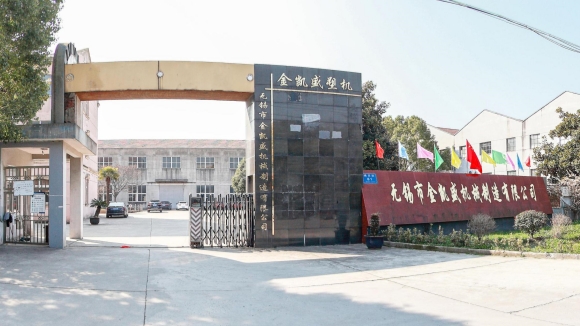
Wuxi JKS Machinery Manufacturing Co., Ltd., Wuxi, Jiangsu. Founded 2013; 2,000 m² facility; approximately 200 units per year.
8. Conclusion
The four shortlists in this article are organised around one rule: the finished product decides the line, and the extruder is only one part of it. For pipe, the PVC63 / PVC250 / PVC630 ladder ranks first because it documents three diameter steps with a full downstream set at each step, followed by the five-step HDPE family and the steel wire reinforced composite family that publishes both installed capacity and actual consumption. For profile, the PVC and WPC door and window line ranks first on panel width and product completeness. For sheet, the SPC flooring line ranks first on extruder options, working widths and calender declaration. For pelletizing, the PVC hot-cut route ranks first on specified downstream scope, with the strand cutting route covering the broader polymer list.
Two limits apply to every entry. First, the ranking is built from documented model ranges and construction facts, not from measured performance or price, so it shortlists candidates rather than certifying them. Second, published data does not replace a configuration review: the correct model step depends on your material formulation, your format range and your upstream capacity, and the comparison table above is the fastest way to see which of those three is the binding constraint in your case.
Have Questions or Need More Details?
Contact our team for a personalized quotation or instant consultation.
Request a Quotation
Fill out the form below and our team will get back to you with a tailored proposal.
WhatsApp Direct Chat
Prefer to chat in real-time? Message us on WhatsApp for instant assistance & quick answers.
- Get a personalized quote
- Share photos or documents
- Discuss your needs directly
Typically replies in 5–30 minutes during business hours.