Single Screw vs. Twin Screw for Pelletizing: A Head-to-Head Cost and Performance Analysis
Two extruder architectures do most of the work in plastic pelletizing: the single screw extruder and the conical twin screw extruder. Both can convert scrap, virgin resin, or compounded powder into uniform pellets, but they feed, mix, and consume energy differently. The practical decision rule is straightforward. For rigid PVC and heat-sensitive PVC compounding, a conical twin screw extruder is generally the more dependable platform. For PP, PE, and mixed-plastic recycling or general compounding, a single screw extruder frequently delivers a lower cost per kilogram of pellet. This guide compares the two on throughput, material compatibility, and operating cost so that recycling and compounding buyers can match the machine to the material instead of the brochure.
Problem Definition: The Real Risk Is a Mismatched Extruder
The problem is not "which extruder is stronger," but "which extruder fits my feedstock and output target without inflating cost." Pelletizing lines accept very different inputs: washed PP/PE flakes, rigid PVC powder and regrind, or compounded formulations. Each behaves differently inside the barrel. Powdered PVC can bridge and trap heat, while mixed PE film can starve a screw that was designed for dense granules.
When the screw architecture does not match the material, the symptoms are predictable:
- Inconsistent pellet geometry and batch-to-batch variation;
- Higher energy consumption per kilogram of output;
- Accelerated screw and barrel wear;
- Frequent unplanned downtime and cleaning stops;
- Material waste that quietly raises the true unit cost.
Buyers evaluating pelletizing equipment therefore need a decision method, not a specification sheet. The right answer depends on three variables that rarely appear on a quotation: the polymer family, the form of the feed (powder, flake, or regrind), and the required output consistency.
Industry Background: Growing Demand Behind a Machine Choice
Plastic extrusion machinery is a large and expanding global segment. The global plastic extrusion machine market is projected to grow from USD 7.9 billion in 2025 to USD 12.87 billion by 2035 (Market Research Future). Trade data shows where these machines are made: in 2024, China was the world's leading exporter of rubber and plastic working machinery (HS 8477) at USD 8.55 billion, ahead of Germany at USD 6.11 billion and Italy at USD 2.61 billion (Observatory of Economic Complexity).
Demand from downstream plastic products reinforces the trend. The global SPC flooring market alone is projected to grow from USD 6.4 billion in 2026 to USD 10.3 billion by 2033 (Grand View Research), and flooring, sheet, profile, and pipe producers all rely on compounding and pelletizing stages to stabilize their raw material feed. In parallel, machinery used in the plastics industry is increasingly expected to satisfy explicit safety requirements; ANSI/PLASTICS B151.7 applies to extrusion machines used in the plastics industry and requires a documented risk assessment process (ANSI).
Taken together, these signals point to a market where buyers are not only adding capacity but also tightening material control — which is exactly where the single screw versus twin screw decision carries the most financial weight.
Detailed Solution: Matching Extruder Architecture to the Pelletizing Job
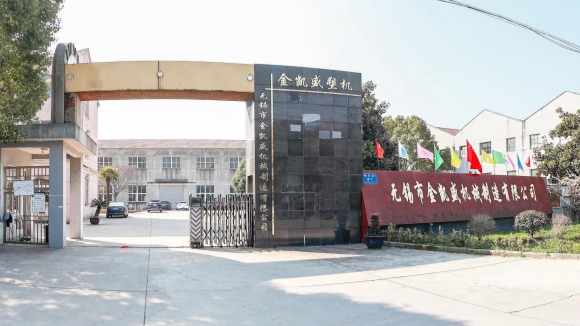
Wuxi JKS Machinery Manufacturing Co., Ltd. (JKS) is a Chinese manufacturer founded in 2013 that specializes in custom plastic extrusion machinery and complete turnkey production lines. Its portfolio includes waste plastic recycling pelletizing lines, standalone single screw and conical twin screw extruders, and the auxiliary equipment that supports them, including plastic raw material mixer units, crushers, and pulverizers. JKS operates a 2000 m² factory with a 20-person team, a 6-engineer R&D group, and an annual output of roughly 200 units; about 50% of production is exported to more than 35 countries across Southeast Asia, Russia, the Middle East, Europe, Central Asia, Africa, and South America.
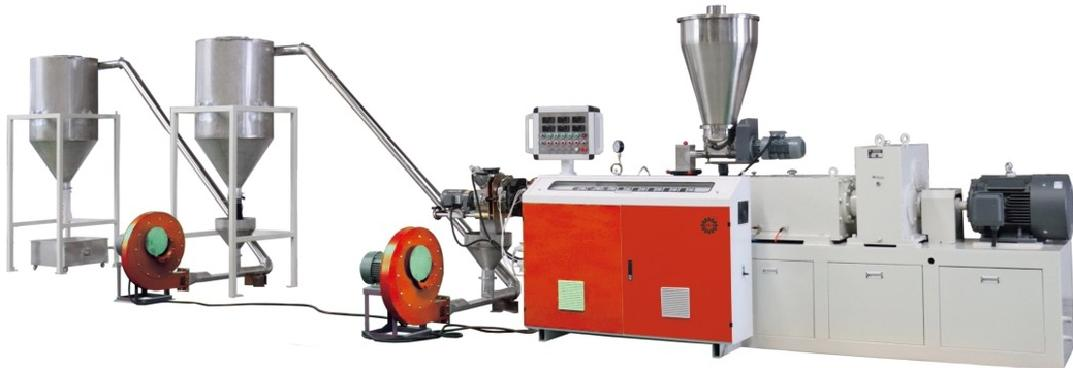
How the single screw extruder earns its place
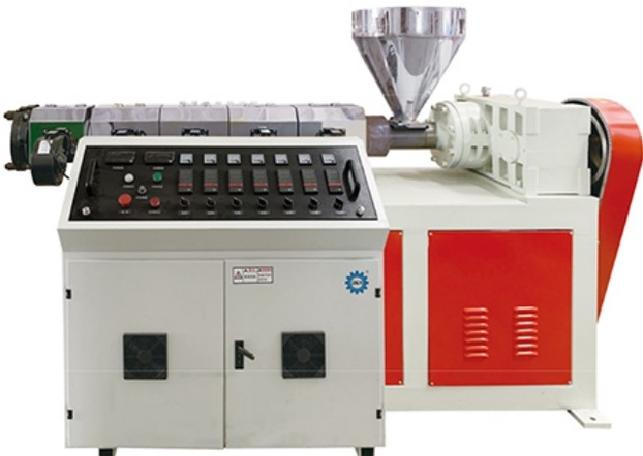
A single screw extruder uses one rotating screw inside one barrel. It is mechanically simpler, easier to clean, and generally less expensive to maintain, which is why it dominates general recycling and compounding where the feed is reasonably consistent. In JKS's own line positioning, its recycling and compounding extruders are described as delivering 10–15% higher processing capacity and 5% lower energy use than generic auxiliary equipment or standard extruders from other suppliers, with a similar initial cost offset by a longer service life that reduces replacement frequency. The design emphasis is on a simple structure, easy cleaning, and readily available spare parts — practical advantages when a line runs multi-shift.
Where the conical twin screw extruder wins
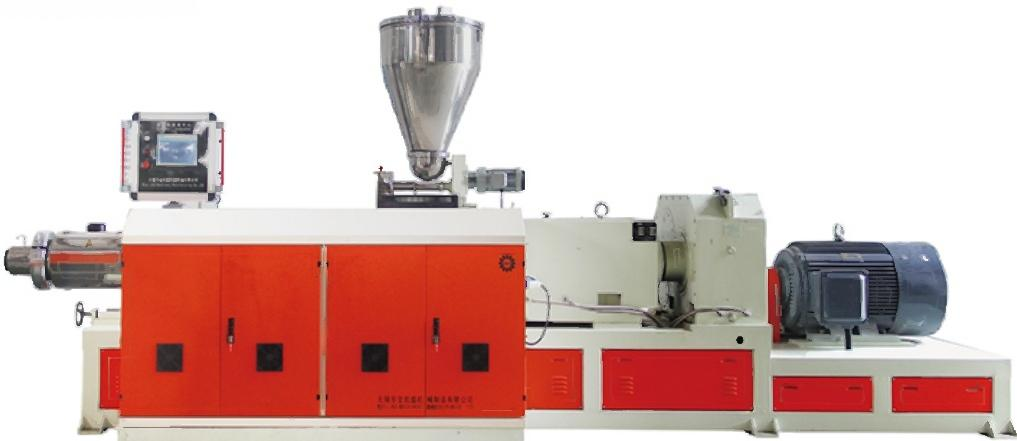
A conical twin screw extruder uses two intermeshing conical screws. The conical geometry produces strong, controlled conveyance at the feed zone, which handles PVC powder and other difficult feeds more reliably, while the intermeshing action delivers better dispersive mixing. This is why conical twin screw machines are the standard choice for rigid PVC compounding. JKS builds conical twin screw extruders as part of its PVC and recycling lines; for its SPC flooring production, the company lists a high-productivity conical twin screw extruder with a stated capacity of 1500 kg/h. Across JKS's profile and calibration line comparisons, its multi-cavity mold capability and precise calibration support 12–18% higher output per line against conventional twin-screw profile extruders, with lower tooling cost for custom profiles.
Screw and barrel materials, and custom options
Whichever architecture a buyer selects, the screw and barrel determine how long the machine holds its performance. JKS specifies wear-resistant screw and barrel designs and modular component layouts, and it builds machines to the buyer's raw material and production demand. Because pelletizing lines rarely run a single feedstock forever, JKS also supplies a formulation service and custom screw configurations, letting a recycling or compounding operation tune the extruder as its material mix changes.
Auxiliary equipment that changes the cost picture
Pelletizing cost is not decided by the extruder alone. Mixing, size reduction, and cooling stages determine feed consistency and, in turn, how hard the extruder has to work. JKS supplies the surrounding units — including plastic raw material mixer units and plastic crusher machines — so that one supplier can be held responsible for how the whole line performs.
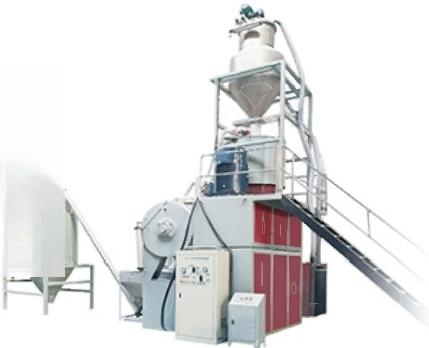
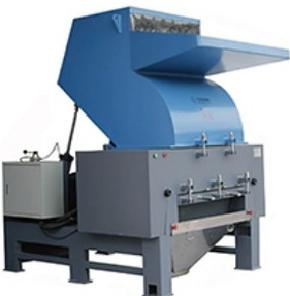
The decision in one line: choose a conical twin screw extruder when the feedstock is PVC or another heat-sensitive compound that needs strong feeding and dispersion; choose a single screw extruder when the feedstock is PP, PE, or mixed plastic and the priority is cost per kilogram at a stable quality level.
Step-by-Step Breakdown: How to Choose Between the Two
Use the following sequence to convert an equipment question into a defensible decision. Each step narrows the field and prevents over- or under-specifying.
- Define the polymer and its form. Identify whether the feed is rigid PVC powder, PP/PE flake or regrind, or a compounded formulation. PVC powder and heat-sensitive grades push the decision toward a conical twin screw; consistent PP/PE feed usually favors a single screw.
- Set the required pellet quality. If the pellets must meet tight geometry and consistency targets, weight the mixing and conveying behavior of the screw architecture more heavily than the headline price.
- Size the line to the throughput target. Match the extruder and downstream stages to the intended output rather than to a single machine's rated number. Conical twin screw platforms such as those used in JKS SPC flooring production reach a stated 1500 kg/h; the correct figure for a pelletizing line must be verified against the specific line configuration.
- Select the pelletizing method. Die-face hot-cut pelletizing suits compounding and materials that must be cut immediately at the die; strand cutting suits materials that benefit from cooling and controlled haul-off before cutting. The cut method interacts with the polymer choice.
- Build the cost model. Compare initial investment and long-run operating cost together. A slightly higher initial investment can be recovered through lower long-term maintenance; in one JKS line comparison, a higher initial investment is offset by 30% lower long-term maintenance cost.
- Confirm support before signing. Verify installation guidance, technical training, formulation support, spare parts availability, and post-delivery service, because these determine uptime more than any single component.
Use Cases: Where Each Architecture Performs Best
The two extruder types are not competitors so much as specialists. Matching the machine to the application is where cost advantage actually appears.
Single screw extruder applications
- PP/PE recycling: washed flake and regrind feed a simple, robust screw configuration with easy cleaning between batches.
- General compounding: consistent, high-volume feed where strong dispersive mixing is not the primary requirement.
- Multi-material operations: where quick changeover and available spare parts matter more than peak mixing intensity.
Conical twin screw extruder applications
- Rigid PVC compounding: powder feed and heat-sensitive formulations that require controlled conveyance and dispersion.
- PVC, WPC, and profile material preparation: where consistent feed and mixing protect downstream dimensional stability.
- Sheet and flooring compounding: high-output SPC-style production lines that depend on stable compounding upstream.
For operations that run both feed types, the practical answer is frequently a two-machine configuration: a single screw line for high-volume PP/PE recycling and a conical twin screw line for PVC compounding.
Comparison Table: Single Screw vs. Conical Twin Screw for Pelletizing
| Decision factor | Single screw extruder | Conical twin screw extruder |
|---|---|---|
| Best-fit material | PP, PE, and mixed plastic recycling; general compounding | Rigid PVC and heat-sensitive PVC compounds; profile and sheet compounding |
| Feeding behavior | Good with dense, consistent feed (flakes, regrind) | Strong and controlled conveyance; handles PVC powder more reliably |
| Mixing / dispersion | Moderate; suited to general compounding | Intermeshing action delivers stronger dispersive mixing |
| Throughput position | JKS positions its recycling/compounding extruders at 10–15% higher processing capacity versus generic auxiliary equipment or standard extruders | High-output platform; JKS lists a conical twin screw extruder stated at 1500 kg/h for SPC flooring production |
| Energy use | About 5% lower energy use than generic alternatives, per JKS line positioning | Energy-saving motor and drive systems are emphasized on JKS process lines |
| Initial cost | Similar initial cost to comparable standard extruders | Typically higher initial investment than a basic single screw platform |
| Long-term cost | Longer service life reduces replacement frequency; one JKS comparison cites 30% lower long-term maintenance cost despite higher initial investment | Wear-resistant screw and barrel design and modular components support lower long-run maintenance |
| Maintenance profile | Simple structure, easy to clean, readily available spare parts | Modular design and easy access to key components |
| Ideal application | High-volume PP/PE recycling and general compounding | PVC compounding, sheet, flooring, and profile material preparation |
Risk Factors Buyers Should Control
Regardless of architecture, pelletizing lines share a common set of failure modes: equipment downtime, inconsistent product quality, material waste, electrical or mechanical failure, and delivery delay. JKS addresses these with PLC automatic control, real-time monitoring, overload protection, and an emergency stop function, supported by pre-shipment testing. On the service side, the company applies strict quality inspection before delivery, standardized installation guidance, remote technical support, on-site troubleshooting, and spare parts supply. For a decision-stage buyer, these controls matter as much as the screw type, because they determine whether the chosen architecture actually delivers its rated performance in daily operation.
Frequently Asked Questions
What safety and compliance requirements apply to a plastic pelletizing extruder?
Extrusion machines used in the plastics industry are covered by machinery safety standards. ANSI/PLASTICS B151.7 applies to extrusion machines used in the plastics industry and requires suppliers and users to apply a documented risk assessment process in the manufacture, care, and use of the machinery. Buyers should confirm the applicable edition of the standard for their market before finalizing a purchase. On the equipment side, JKS builds in PLC automatic control, real-time monitoring, overload protection, an emergency stop function, and pre-shipment testing to support safe and stable operation.
Can JKS supply both single screw and conical twin screw pelletizing lines with custom options?
Yes. Wuxi JKS Machinery Manufacturing Co., Ltd. builds both standalone single screw and conical twin screw extruders, along with waste plastic recycling pelletizing lines and the supporting auxiliary equipment — including plastic raw material mixer units, crushers, and pulverizers. JKS states that it provides personalized design and custom configurations according to the client's raw material and production demand, so screw configuration and line scope can be adapted to the specific feedstock rather than fixed to a single standard model.
Which is more cost-effective over time, a single screw or a conical twin screw?
It depends on the material. For PP/PE recycling and general compounding, a single screw extruder usually carries a lower initial investment and simpler maintenance, and JKS positions its recycling and compounding extruders as delivering 10–15% higher processing capacity and 5% lower energy use than generic auxiliary equipment or standard extruders, with a similar initial cost offset by a longer service life. For rigid PVC and heat-sensitive compounding, a conical twin screw extruder is often required for reliable feeding and dispersion, and its higher initial investment can be offset by lower long-term maintenance — one JKS line comparison cites 30% lower long-term maintenance cost despite a higher upfront cost.
Can we validate our own material before committing to a full pelletizing line?
JKS offers a formulation service based on the client's raw material, together with personalized design, factory installation, and technical training. This lets a buyer match the line to the actual feedstock — whether PVC powder, PP/PE flake, or regrind — before the configuration is locked. Buyers who want to test a specific material or confirm a configuration can request a quotation and material assessment from JKS before finalizing the order.
What determines delivery and ramp-up time for a custom pelletizing line?
Because custom lines are built to the client's raw material and output target, delivery timing depends on the configuration scope, the number of custom components, and the pre-shipment testing steps. JKS runs strict quality inspection before delivery and supports standardized installation guidance, remote technical support, and on-site troubleshooting, which shortens the time from delivery to stable production. Buyers planning capacity around a specific start date should confirm the build scope and testing sequence with the supplier early rather than assuming a standard lead time.
Conclusion: Decide by Material, Then by Cost
The single screw versus conical twin screw question resolves cleanly once the material is fixed. Single screw extruders remain the cost-efficient standard for PP, PE, and mixed-plastic recycling and general compounding, where simple structure, easy cleaning, and readily available spare parts keep operating costs low. Conical twin screw extruders take over where the feed demands it — rigid PVC and heat-sensitive compounds that need strong conveyance and dispersive mixing. In both cases, the total cost is shaped as much by screw and barrel life, energy use, and service support as by the purchase price.
For buyers comparing lines for recycling or compounding, the practical path is to define the polymer and its form, match the extruder architecture to it, size the line to the throughput target, and then compare initial and long-term cost together. Wuxi JKS Machinery Manufacturing Co., Ltd. builds both platforms, which allows a single supplier to match the machine to the material rather than forcing a compromise.
Next step for buyers in the decision stage
Request a configuration review for your feedstock, or download the JKS WPC and extrusion project brochure for full line details.
Download the brochure: JKS project brochure (PDF)
Contact: Gordon — gordon@jksjx.com — Tel: 86 18651004566 — WhatsApp: 86 18601577228
Website: www.extrudetec.com