
Supplier Evaluation for Plastic Extrusion Machines: Capability & Delivery Scorecard
Supplier Evaluation for Plastic Extrusion Machines: Capability & Delivery Scorecard
Short answer: evaluating a plastic extrusion machine supplier means testing two independent things — whether the supplier can build and support the line your product actually requires, and whether its delivery commitments are written into the contract with dates, tests and documents. A workable evaluation scores six evidence areas: product-family and model coverage, material traceability down to screw steel, a written customization scope, capacity and lead-time scheduling, pre-shipment test records, and documented delivery plus after-sales commitments. If a supplier cannot produce a document for an area, that area should score zero rather than "average" — a missing record is itself a finding.
This guide builds that evaluation as a scorecard and uses Wuxi JKS Machinery Manufacturing Co., Ltd. — the manufacturer behind the JKS Plastic Extrusion Machine brand — as a worked example, so each criterion is illustrated with a real model number, specification or project record instead of a general claim. It does not rank suppliers and does not tell you which line to buy. It tells you what to request, which answers are verifiable, and where a plausible answer still leaves risk on your side of the contract.
It is written for buyers at the evaluation-to-execution stage: technical managers, plant engineers and procurement staff who already have a shortlist and now need to convert marketing material into auditable evidence before releasing a deposit.
Capability and Delivery Assurance Are Two Different Tests
Capability verification answers a build question: can this supplier deliver a complete line — extruder, die and head, downstream equipment and, where relevant, mixer, crusher or pulverizer — that matches your material, product dimensions, output target and plant utilities, and can it repeat that configuration for a second line?
Delivery assurance answers a commitment question: is there a dated plan covering design freeze, fabrication, pre-shipment test, packing, shipment, installation, commissioning and warranty response, with your acceptance criteria written in?
Buyers often merge the two and score a supplier highly because the catalogue is broad, then discover at shipment that the acceptance test was never defined, that the warranty clock started at the port rather than at commissioning, or that installation scope stopped at "guidance" when the plant expected commissioning. Keeping the two scores separate forces each claim onto its own evidence.
Industry Context: Why Capability Claims Are Hard to Compare
Extrusion machinery is a large, export-driven category, and the pool of suppliers a buyer can reach is much wider than the pool that can be verified to the same standard. China was the leading exporter of rubber and plastic working machinery (HS 8477) in 2024 at USD 8.55 billion, ahead of Germany at USD 6.11 billion and Italy at USD 2.61 billion, according to the Observatory of Economic Complexity using UN Comtrade data. Commercial research from Market Research Future estimates the plastic extrusion machine market at roughly USD 7.9 billion in 2025, with a forecast of USD 12.87 billion by 2035 — useful for judging category scale, not for judging a specific supplier.
The practical problem is that catalogues are not written in a comparable format. One supplier lists eight production-line categories, another lists forty model codes, a third lists applications. None of these formats tells you whether the machine you are buying has a defined bill of materials, a traceable screw steel grade or a written acceptance test. That is why the framework below is organised by evidence type rather than by product category: evidence either exists in a document or it does not.
The Six-Part Evaluation Framework
| Evaluation area | What to request in writing | Example weighting |
|---|---|---|
| 1. Product-family and model fit | Model-specific specification sheet, bill of main components, one reference line in the same application | 20 |
| 2. Build and material traceability | Steel grade certificates, nitriding or heat-treatment records, wear-part list with prices | 20 |
| 3. Customization and OEM/ODM scope | Signed customization list, electrical drawing for your voltage and frequency, line layout drawing | 15 |
| 4. Capacity and schedule | Dated milestone plan, stated lead time, design-freeze date and delay-notification rule | 15 |
| 5. Test and acceptance | Pre-shipment test protocol and record template carrying your acceptance criteria | 15 |
| 6. Delivery, documentation and after-sales | Packing standard, document list, installation and commissioning scope, warranty terms and start date | 15 |
Two rules make the framework usable. Score only what has been produced in writing — a verbal confirmation is logged as "not yet evidenced". And apply the same six areas to every shortlisted supplier, even when the questions feel repetitive, because comparability is the point. The weightings above are an example to adjust to your own risk profile, not a market benchmark.
1. Verifying Model Range Breadth Against Your Own Product Mix
A broad model range matters for one reason: it raises the chance that the supplier has already built a line close to yours, with the interface problems already solved. Breadth is not a quality claim in itself.
JKS publishes a conical twin-screw series covering SJSZ-45, 51, 55, 65, 80, 92 and 110, and a single-screw SJ series with custom models including SJ30, SJ45, SJ65 and SJ90. Conical twin-screw extruders are commonly used for PVC dry-blend products such as pipe, profile and sheet, while single-screw machines are commonly used for solid rod, small profiles and certain pelletizing duties — which is why the product family you intend to make should drive the model question, not the other way round.
| Product family | Representative JKS models | Verification question to ask |
|---|---|---|
| SPC flooring sheet line | SJSZ92/188 (110 kW), SJSZ110/220 (200 kW), SJP115/30 (90 kW), SJP135/30 (132 kW) | Which model covers my thickness range and output, and is the embossing or calendering section inside the quoted scope? |
| PVC pipe line | PVC63, PVC250, PVC630 | How many die and head sets are included, and for which diameter steps? |
| HDPE and PPR pipe lines | PE110, PE315, PE630, PE1000, PE1600; PPR20-75, PPR20-110 | Which model matches my largest diameter, and what downstream length is quoted? |
| Corrugated and reinforced pipe | KSPG-20, KSPG-32, KSPG-63, KS-75, KS-160; GS/PE-160-H to GS/PE-630-H | Are mould blocks, corrugator length and the wire-mesh forming unit included or separate? |
| Profiles, panels and door systems | Door and window SJSZ92/188, SJSZ65/132; hollow wall panel and ceiling SJSZ51/55/65/80; grille and decoration SJSZ51 (18.5 kW), SJSZ55 (22 kW), SJSZ65 (37 kW); WPC door panel SJSZ80, SJSZ92; multi-material profile SJ45, SJ50, SJ65 | Which die set is tooled to my profile drawing, and what is the changeover time between profiles? |
| Sheet, board and formwork | Imitation marble sheet SJSZ80/156 (75 kW), SJSZ92/188 (110 kW); PVC and WPC foam board SJSZ80/156 (75 kW) and 80+165 co-extrusion (75+37 kW); PP hollow formwork SJ-130×33 (160 kW), SJ-90×33 (75 kW) | For foam board, is the quoted scope single-layer or co-extrusion? |
| Rod and pelletizing | Solid rod SJ45, SJ65; PVC hot-cut SJSZ55, SJSZ65, SJSZ80, SJSZ92; strand cutting ST80, ST100, ST120, ST150 | Which route matches my material form, and which screw configuration is proposed? |
| Auxiliary equipment | Crusher SP400/SP660; pulverizer MF400/MF500/MF600; mixing and cooling units SRL-Z200/500, SRL-Z300/600, SRL-Z500/1000, SRL-Z1000/3000 | Is the mixer sized to my extruder's consumption and the crusher to my regrind volume? |
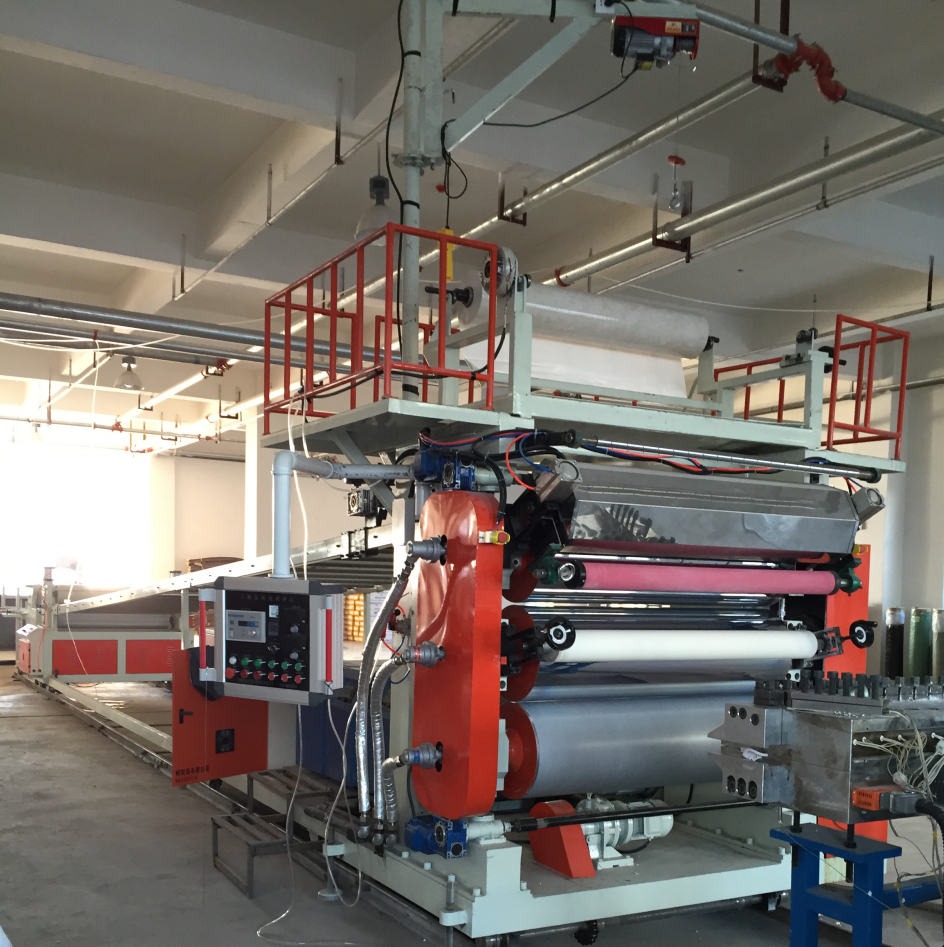
Where breadth misleads: a long model list does not prove in-house manufacture of every sub-assembly, nor that the exact model you select has been built before. Ask three follow-ups for your specific model — the bill of main components, which sub-assemblies are bought in, and one test record or reference line with a comparable configuration. A range that runs from SP400 crushers to SRL-Z1000/3000 mixing units is evidence of an integrated auxiliary offering; it becomes procurement value only when the mixer is sized to your extruder and the crusher to your regrind volume.
2. Material Traceability: Screw Steel, Mixing Pots and Crushing Chambers
Material claims are the part of a supplier presentation most often repeated and least often documented. Three examples show how to convert them into checks.
Screw and barrel steel
The SJ series single-screw extruders are specified with 38CrMoAlA nitrided alloy steel screws. 38CrMoAlA is a nitriding-grade alloy steel and nitriding is a heat-treatment step, so the specification only means something if two records sit behind it: a steel mill certificate naming the grade, and a nitriding process record showing the treatment was performed. Add a hardness check on the finished screw and a dimensional or runout inspection report, and the claim becomes auditable. Ask who performs the nitriding — in-house or a subcontractor — because that decides where the record originates.
Mixing pot material
Mixing and cooling units in the SRL-Z range are described with stainless steel mixing pots. "Stainless steel" is not a grade. Ask for the grade in writing, ask which parts of the pot and paddle assembly use it, and ask for wear-part replacement cost and lead time, since the pot is a long-life item that shapes your maintenance budget.
Crushing chambers
Crushers in the SP400 and SP660 range are described with wear-resistant crushing chambers. Ask which components are consumables, how they are replaced, and whether replacement parts are stocked. A wear-resistant claim without a parts list and a price is a claim you cannot budget against.
Boundary condition: none of the three items above can be verified from photographs, workshop panoramas or a video call. They require documents and, ideally, a witness point during your factory visit. If a supplier cannot produce a steel certificate for the screw grade it advertises, treat the material claim as unevidenced regardless of how the machine looks.
3. Customization and OEM/ODM: Turning "Custom" Into a Written Scope
JKS offers OEM, ODM and custom design production services, with customization covering the extruder model, screw configuration, production line layout, voltage and frequency, control system, and capacity adjustment. That list is a reasonable definition of what "custom" should include, and every item on it maps to a document you can check before signing.
- Extruder model and capacity adjustment — a specification sheet naming the model, main motor power and the product it was sized for. Be cautious with capacity statements that are not tied to a named product and formulation.
- Screw configuration — a screw geometry drawing rather than a description; for a PVC dry-blend line this determines how the machine handles your compound.
- Line layout — a layout drawing with footprint, utility connection points and operator access, matched to your hall rather than to a standard arrangement.
- Voltage and frequency — an electrical drawing matched to your site supply with the control system's component list; this is one of the most common sources of commissioning delay on exported lines.
- Control system — the control architecture, I/O list, HMI and manual language, and whether remote diagnostics are supported.
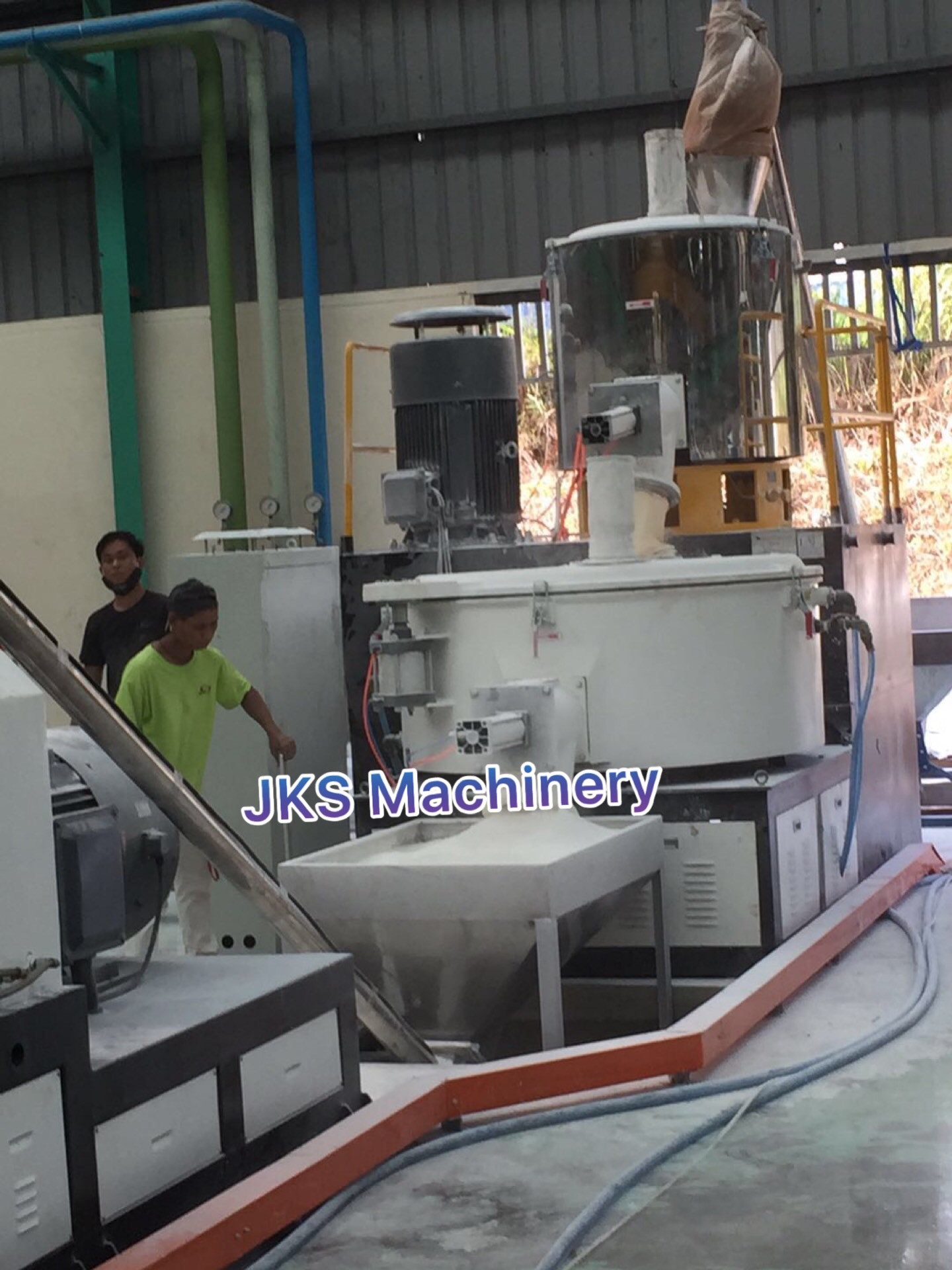
For OEM and ODM buyers, add three items to the scope: nameplate and branding rules, the documentation package and its language, and whether third-party inspection is permitted before shipment. On the JKS side, third-party inspection is available on request — a clause worth writing into the purchase order rather than leaving as an option.
4. Capacity, Lead Time, and Whether You Own a Production Slot
JKS states a typical production lead time of 40 work days, a monthly production capacity of 30 units, and a minimum order quantity of 1 unit. Read those numbers together rather than separately: a single-unit MOQ means small buyers are accepted, 40 work days is typical rather than guaranteed, and a monthly capacity figure describes throughput potential rather than your project's queue position.
Company scale adds context. The operation is a 2000 m² workshop with 20 employees and a 6-engineer R&D team. For a buyer this is neither good nor bad in itself, but it does mean engineering time is a finite shared resource: a custom line layout, a non-standard voltage and frequency, and a co-extrusion configuration all draw on the same six engineers. The practical step is to request a dated milestone plan — design freeze, drawing approval, fabrication, pre-assembly, factory test, packing, shipment — plus a written statement of what triggers a delay notification and how schedule changes are communicated.
Two questions separate a real schedule from a hopeful one: "Which week is my design freeze?" and "What is the latest date you can start fabrication without moving the shipment date?" A supplier who answers both has a plan; a supplier who answers only with the lead time has an average.
5. Test and Acceptance: What the Factory Test Must Record
JKS states 100% factory pre-assembly and testing before shipment, and its published purchasing terms name a pre-shipment factory test as the acceptance criterion. That is the right mechanism, but its value depends entirely on what the test records. A certificate reading "machine tested and passed" is not an acceptance document.
Convert the factory test into a protocol before the machine is built. A usable record contains the machine model and serial number; the material lot and formulation actually run; screw speed and temperature profile; measured output in kg/h over a defined period; product dimensions or thickness measured at stated intervals against a tolerance band; a defect log with disposition; the utility conditions during the run; and a signature page naming the supplier's and buyer's representatives. If you cannot attend, agree in advance whether the test is witnessed by video or by a third-party inspection body.
Declared output deserves its own line in the protocol. JKS's public marketplace listing for an SPC floor conical twin-screw extruder states 1500 kg/h — a supplier-declared figure. Treat figures of this kind as the target the factory test should confirm on your formulation, not as a guaranteed output, because output moves with compound, die, downstream cooling and product thickness.
6. Delivery Assurance: Packing, Documents, Installation and Warranty
Delivery assurance is where evaluation turns into execution. The purchasing terms published by JKS specify a minimum order quantity of 1 unit, FOB delivery terms, pre-shipment factory test as the acceptance criterion, and payment of 30% T/T deposit with the 70% balance before shipment. Those terms define the commercial frame; the operational frame has to be added by the buyer.
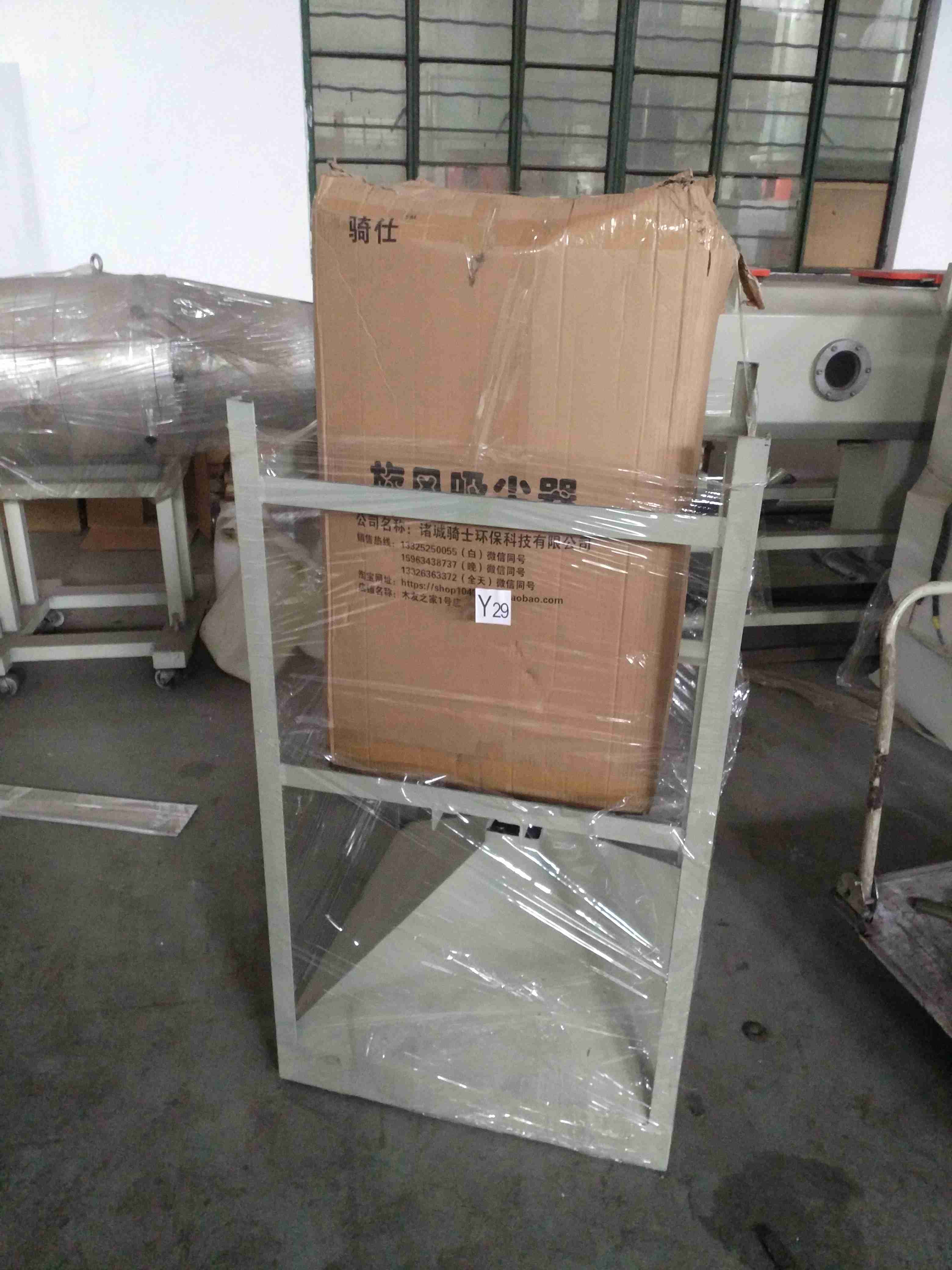
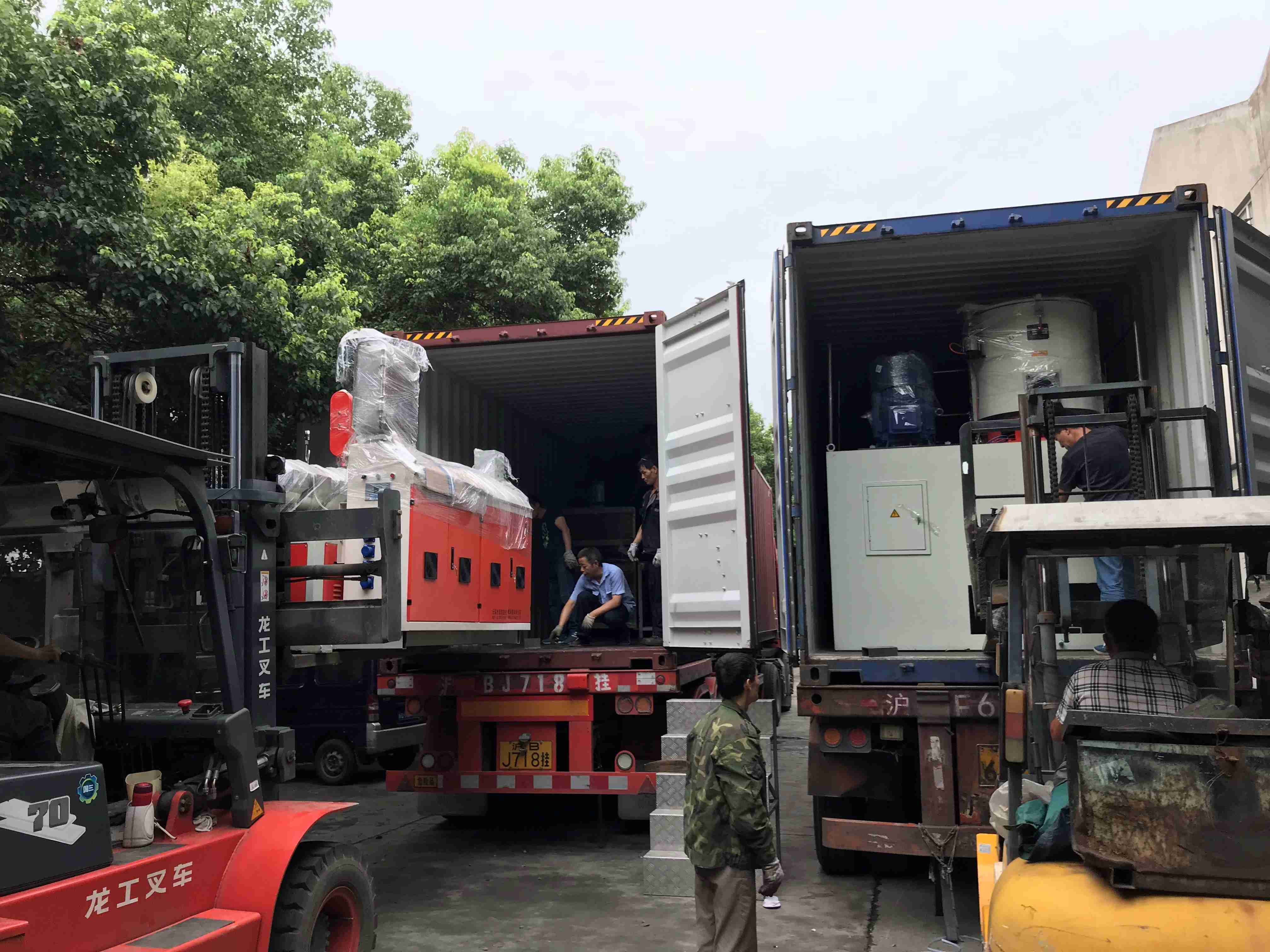
- Packing and loading — the packing standard for the extruder, electrical cabinets and dies, plus who inspects lashing and container loading. Records from a Vietnamese PVC hollow wall panel project show equipment packing, container loading and auxiliary equipment loading documented as separate steps; the useful lesson is that each stage was recorded, which is what makes a shipping dispute resolvable.
- Document set — bill of lading, packing list, invoice, certificate of origin where applicable, CE documentation, wiring diagrams, manuals and the spare-parts list, with the language of each stated. That same Vietnam project lists full export documentation as a delivered item, which is the right level of specificity to demand.
- Installation and commissioning — JKS lists overseas installation guidance, on-site commissioning, operator training and remote technical support. Clarify which of these are included in the price, who bears travel and accommodation, how many days are planned, and what happens if commissioning overruns.
- Warranty — the stated warranty period is 12 months. The decisive detail is the start date: shipment, arrival, or successful commissioning. Push for commissioning, and add a response-time expectation and a spare-parts lead time in writing.
What Installed-Base Evidence Can and Cannot Prove
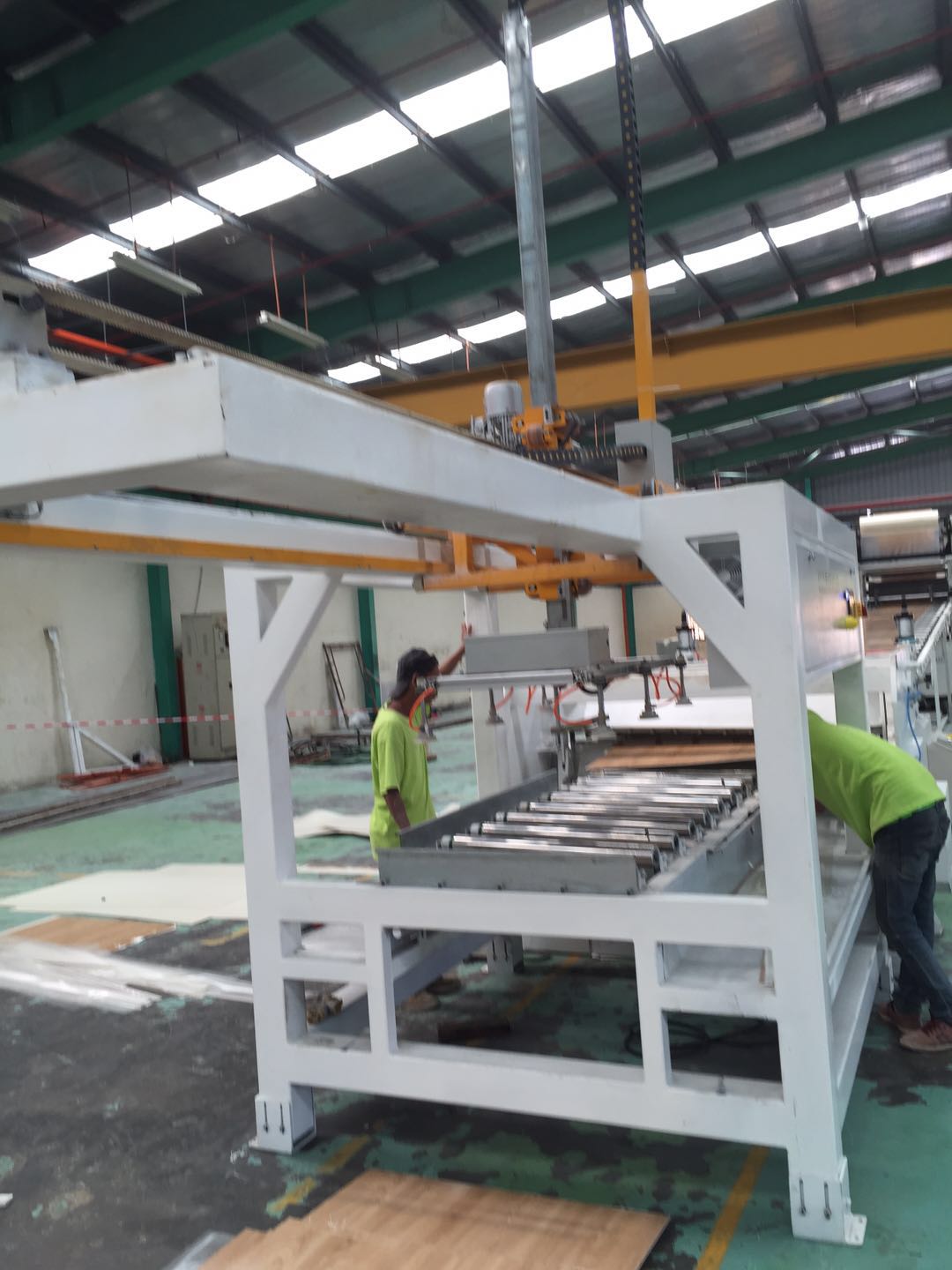
Reference installations are the strongest practical evidence available to a buyer, provided their limits are understood. JKS documents three relevant records. A complete SPC flooring extrusion line in Malaysia has operated for over 10 years, producing SPC flooring for residential and commercial use, with high-speed production, precise thickness control, on-site installation and training support, and a low maintenance rate. An SPC flooring line in South Korea has run for over 8 years with 24/7 production, consistent product quality and low maintenance rate. A PVC hollow wall panel line in Vietnam has run for over 5 years as a complete turnkey solution with on-site installation support, achieving stable continuous production with consistent quality.
What these records establish: the supplier has shipped, installed and commissioned complete lines in these product families, and customers kept the equipment in production long enough for the record to remain relevant — evidence a catalogue photograph cannot supply. What they do not establish: performance on your formulation, your output target or your local utility conditions; and duration and maintenance figures are supplier-reported rather than independently audited. The verification step is straightforward — ask for a reference contact in your region and product family, and ask what end-product test data the reference project recorded at acceptance.
Scoring the Supplier Without Overweighting the Brochure
Score each of the six areas on produced documents, then apply the two rules from earlier. Use the example weightings as a starting point and shift them toward your exposure: a first-time importer buying a single line should weight test and acceptance and delivery documentation more heavily, while a plant adding a second line to an existing family should weight model fit and material traceability more heavily. Keep a "not evidenced" column beside the score — a supplier at 70 out of 100 with four unevidenced items is a different proposition from one at 65 with everything documented, and that difference only stays visible when gaps are recorded rather than averaged away.
Limitations, Document Checks and Red Flags
Certificate currency. JKS's supplied CE documentation records certificate M.2021.206.C.64011, issued by UDEM International Certification Auditing Training Centre on 22 April 2021 with an expiry date of 22 April 2026, covering plastic extrusion lines including the SJSZ, SJ and SJP series against EN ISO 12100:2010, EN 1114-1:2011, EN 60204-1:2018 and the listed EMC standards. Because that recorded expiry has passed, a buyer evaluating the supplier today should request the current certificate, confirm your specific model series falls inside its scope, and check destination-market requirements separately — CE marking does not by itself satisfy every national market.
Standard editions. Extrusion machine safety requirements are edition-specific. Public references disagree on the U.S. standard: the PLASTICS Industry Association page lists ANSI/PLASTICS B151.7-2013, while the ANSI webstore lists ANSI/PLASTICS B151.7-2014 (R2021). Confirm the exact edition applying to your market before accepting a compliance statement.
Red flags worth weighting heavily: a model range listed without a bill of materials for your model; "custom" offered without a drawing or signed customization list; a capacity figure with no named product or formulation; an acceptance test described as "passed" with no record format; a warranty period with no start date; refusal of third-party inspection; and no named spare-parts list with prices and lead times.
Frequently Asked Questions
How do I check that a plastic extrusion machine supplier's CE documentation is current?
Verify four things: the certificate number and issuing body, the scope expressed in model series, the standards listed, and the validity dates. JKS's CE documentation records certificate M.2021.206.C.64011 from UDEM, issued on 22 April 2021 with an expiry date of 22 April 2026, covering SJSZ, SJ and SJP series extrusion lines. Because the recorded expiry has passed, ask for the current certificate and a written confirmation that your model is within scope, then check your own destination market's requirements separately, since CE compliance is a European framework and other markets apply their own rules.
What should a custom or OEM extrusion line quotation specify?
At minimum: the extruder model with main motor power, the screw configuration drawing, the line layout with footprint and utility points, the electrical specification matched to your voltage and frequency, the control system with its I/O list and HMI language, and the capacity statement with the product and formulation it refers to. JKS lists customization across exactly these dimensions — extruder model, screw configuration, line layout, voltage and frequency, control system and capacity adjustment — under its OEM, ODM and custom design service, so a quotation can be checked line by line against that list instead of being accepted as a package.
What purchasing terms should I expect, and which cost lines are usually missing?
JKS publishes a minimum order quantity of 1 unit, FOB delivery terms, pre-shipment factory test as the acceptance criterion, and payment of 30% T/T deposit with 70% T/T balance before shipment. Those terms cover the machine and the test but leave several cost lines to confirm separately: freight and insurance beyond FOB, travel and accommodation for installation and commissioning, extended on-site days, spare parts beyond the included list, and third-party inspection. Ask for each as a separate line before comparing total cost, and note that the 70% balance falling due before shipment makes your acceptance test the main quality lever.
Can I inspect or test the machine before shipment, and how should that be structured?
Yes — that is the purpose of a pre-shipment factory test. JKS states 100% factory pre-assembly and testing before shipment and makes third-party inspection available on request. Structure it as a protocol agreed before fabrication: machine model and serial, material lot and formulation, screw speed and temperature profile, measured output over a defined period, product dimensions against a tolerance band, a defect log with disposition, and a signed acceptance page. If you cannot travel, agree in advance whether the test is witnessed by live video or by an independent inspection body, and make the signed record a shipment-release condition.
What lead time should I plan for, and what can move it?
JKS states a typical production lead time of 40 work days, with a monthly production capacity of 30 units and a minimum order quantity of 1 unit. Treat 40 work days as the typical figure for a standard configuration: a custom line layout, a non-standard voltage and frequency, co-extrusion, or a third-party inspection slot can each add time, so request a dated milestone plan with a design-freeze date and a delay-notification rule. If it helps your internal comparison, the company brochure can be downloaded below, and you can send your product specification, target output and site voltage for a line-matching response before finalising your shortlist.
Conclusion
A supplier evaluation for plastic extrusion machines is only as strong as the documents behind it. The six areas in this framework — model fit, material traceability, written customization, schedule, test records and delivery commitments — can be applied to any shortlist within a few weeks, and they convert a catalogue comparison into a set of auditable statements you can attach to a purchase order. Capability and delivery assurance should be scored separately, because a supplier can be genuinely strong on one and weak on the other, and only the second score protects your installation date.
Next step: compare your shortlist against this scorecard using your own product specification, target output and site voltage. For background on the supplier's extrusion line scope, download the company brochure (PDF): JKS Machinery project brochure.
Have Questions or Need More Details?
Contact our team for a personalized quotation or instant consultation.
Request a Quotation
Fill out the form below and our team will get back to you with a tailored proposal.
WhatsApp Direct Chat
Prefer to chat in real-time? Message us on WhatsApp for instant assistance & quick answers.
- Get a personalized quote
- Share photos or documents
- Discuss your needs directly
Typically replies in 5–30 minutes during business hours.