
Technical Guide to Extruder Screw Materials: 38CrMoAlA Nitrided Alloy Steel Explained
38CrMoAlA nitriding steel is the grade most commonly specified for extruder screws and barrels when a line has to run PVC, WPC, SPC or filled polyolefin compounds for years without losing screw geometry. The reason is structural: nitriding creates a very hard, wear-resistant surface on a screw or barrel while leaving a tough, torque-absorbing core, and it does so at a process temperature low enough that a long screw does not distort. The limitation is equally structural — the nitrided case is a thin surface layer with a temperature ceiling, which is why screw material has to be matched to polymer, filler and output target rather than copied from a catalogue line.
This guide is written for two readers who usually end up in the same meeting: the process or mechanical engineer who has to approve a screw design, and the procurement team that has to sign the technical agreement and live with the maintenance budget afterwards. It explains what 38CrMoAlA actually is, how nitriding behaves in service, where it fits across the JKS SJ single-screw, SJSZ conical twin-screw and pelletizing platforms, and which facts should be verified in writing before an order is placed.
Quick Answer: What 38CrMoAlA Nitrided Steel Is and Why Extruders Use It
Quick answer: 38CrMoAlA is a nitriding-grade alloy steel that contains chromium, molybdenum and aluminium. Aluminium is the key nitride-forming element: during nitriding, nitrogen diffuses into the surface and reacts with aluminium, chromium and molybdenum to form a hard compound layer and a deeper diffusion zone, while the untreated core stays relatively soft and tough. In an extruder, that combination gives a screw or barrel that resists abrasion from filled compounds while still absorbing the torque, bending and thermal cycling of a running line.
Three practical consequences follow from that definition, and they matter more to a buyer than the metallurgy itself:
- The hard surface is thin. Wear protection sits in the outer layer, so abrasive fillers and long run hours slowly consume it. Screw condition, not calendar age, is what determines when performance drifts.
- The core carries the load. A screw is a long, slender rotating shaft under torque and pressure. A brittle, uniformly hard component would fail; a tough core with a hard skin is the compromise that works.
- Low distortion is a feature, not a detail. Nitriding runs at a far lower temperature than carburising and does not involve a quenching step, which helps preserve straightness, flight geometry and the clearance between screw and barrel — the clearance that ultimately controls output stability.
Problem Definition: Screw and Barrel Metallurgy Quietly Sets Line Economics
Extrusion lines are usually compared on price, headline output and machine dimensions. The screw and barrel rarely appear on the comparison sheet, even though they are the components that convert the machine's theoretical capability into real, repeatable product. Because of that, screw material decisions are frequently deferred to the supplier's default, and the consequences only appear in year two or three of production.
The failure pattern is well documented in equipment risk assessments and is consistent across line types. Documented equipment risks for plastic extrusion machinery include unplanned downtime, inconsistent product quality, material waste, electrical and mechanical failure, and delivery delay. Screw and barrel wear contributes to several of these at once: as the flight profile and clearances change, melt pressure and output stability shift, wall or sheet thickness tolerance widens, scrap rates rise, and the line starts needing reel-to-reel adjustments that were unnecessary when the machine was new.
The specific problem for a decision-stage buyer is that this wear is invisible on a specification sheet. Two machines can share the same screw diameter, the same L/D and the same motor rating, and still differ completely in how long they hold tolerance, because the steel grade, the pre-nitriding heat treatment, the nitriding depth and the final grinding and polishing are not visible from the outside.
For context on how JKS addresses the wider reliability question, the company specifies PLC automatic control with real-time monitoring, overload protection and emergency stop functions on its lines, and runs pre-shipment testing before dispatch. Those controls reduce the chance of catastrophic damage, but they do not change the wear rate of a nitrided case. Material selection is what sets that baseline.
Industry Background: Why Material-Level Comparison Has Become Part of Machine Selection
Extrusion capacity continues to expand, and the installed base is large enough that replacement and upgrade decisions now dominate many procurement cycles rather than first-time purchases.
- The global plastic extrusion machinery market was valued at approximately USD 8.93 billion in 2024 and is projected to reach USD 11.58 billion by 2030 (Grand View Research).
- Asia Pacific accounted for a 41.5% revenue share of that market in 2024, with China as the leading contributor in the region.
- Single-screw extrusion machines held a dominant share of roughly 62.7% of the global market in 2024, which is why the SJ single-screw family remains a standard reference point in screw discussions.
- Within pipe production specifically, the global pipe extrusion lines market was valued at USD 4.8 billion in 2025, with PVC the leading material segment at 38.6%.
- The Stone Plastic Composite (SPC) flooring market is projected to grow from USD 6.4 billion in 2026 to USD 10.3 billion by 2033, at a 7.2% CAGR.
- The waste plastic washing and pelletizing recycling line market was valued at USD 5.502 billion in 2024, supporting circular-economy production.
Market estimates vary by source scope (machinery only versus total processing systems). Public 2024–2025 figures range from USD 7.525 billion to USD 15.17 billion depending on methodology, so figures should be read as directional rather than exact.
Two implications follow for screw material selection. First, in a market this large, the cost of screw and barrel replacement across a fleet is a real line item, and buyers are increasingly asking for material documentation rather than accepting a generic “wear-resistant screw” description. Second, growth in PVC pipe, SPC flooring and recycling corresponds directly to the three compound families that stress screws differently: corrosive PVC formulations, heavily calcium-carbonate-filled SPC compounds, and mixed, contaminated recycling feedstock.
Compliance expectations reinforce the same trend. For equipment supplied into the EU, machinery such as WPC door panel extrusion lines typically requires CE marking, and ISO 9001 certification is commonly expected for quality management. Buyers who need CE-level documentation on the machine generally want material traceability on the high-wear components too, because those are the parts that generate maintenance claims.
38CrMoAlA Explained: Alloying, Nitriding and the Case-Core Structure
What the alloying elements contribute
The grade designation itself describes the recipe: chromium, molybdenum, aluminium, and “A” indicating high-grade quality control in the Chinese national standard system for nitriding steels. Each element has a defined job:
- Aluminium forms very fine, stable aluminium nitrides during nitriding and is the main reason this grade is chosen at all. Without aluminium, the same nitriding cycle would produce a shallower, less effective case.
- Chromium improves hardenability so the core can be quenched and tempered to a useful strength level before nitriding, and it also forms hard nitrides.
- Molybdenum improves hardenability and raises resistance to tempering effects, which matters because a screw that runs at elevated temperature for years is effectively being heat-treated in service.
Why nitriding rather than carburising
Carburising also produces a hard surface, and for some components it is the right answer. For long extruder screws, nitriding usually wins on three grounds:
- Lower process temperature and no quench. The screw is heat-treated after machining, and the lower temperature cycle sharply reduces distortion, cracking risk and the post-treatment straightening that a long shaft would otherwise need.
- Distortion control protects the clearances. Screw-to-barrel clearance is what determines how much the melt is sheared and how stable output is. Keeping the screw straight after hardening preserves the clearance the design intended.
- Better surface finish after finishing operations. A nitrided screw can be ground and polished to a low-friction surface, which helps material flow and facilitates cleaning — relevant for anyone running colour changes or multiple formulations.
A typical manufacturing route therefore runs: forging or bar stock selection, rough machining, quenching and tempering to establish core properties, semi-finish machining, stress relief, finish machining, nitriding, then grinding and polishing. Each step is inspectable, and each step is a place where a supplier can cut cost invisibly if the buyer does not ask for records.
The limits of a nitrided screw, stated plainly
A credible material guide has to state where the choice stops being appropriate:
- Abrasion beyond the case. Glass-fibre reinforcement, hard mineral fillers and very high calcium-carbonate loadings attack the surface layer. Nitriding is not a universal answer to abrasion; for highly aggressive compounds, bimetallic barrels, hardened liners or hardfacing are the alternatives worth evaluating on cost-per-tonne rather than on price alone.
- Temperature ceiling. The hardness of a nitrided case is a function of temperature. Running the screw hot, or running a high-shear formulation at aggressive screw speeds, shortens the life of the layer.
- Corrosion. Nitriding is a wear treatment, not a corrosion-resistant coating. PVC processing can release corrosive species that attack steel surfaces, which is one reason screw materials and surface treatments for PVC lines are discussed separately from those intended purely for polyolefins.
- Repairability. When the case is consumed, the screw is normally replaced or rebuilt rather than re-nitrided indefinitely. Spare-part planning is therefore part of the material decision, not an afterthought.
Where 38CrMoAlA Screws and Barrels Sit in the JKS Line Architecture
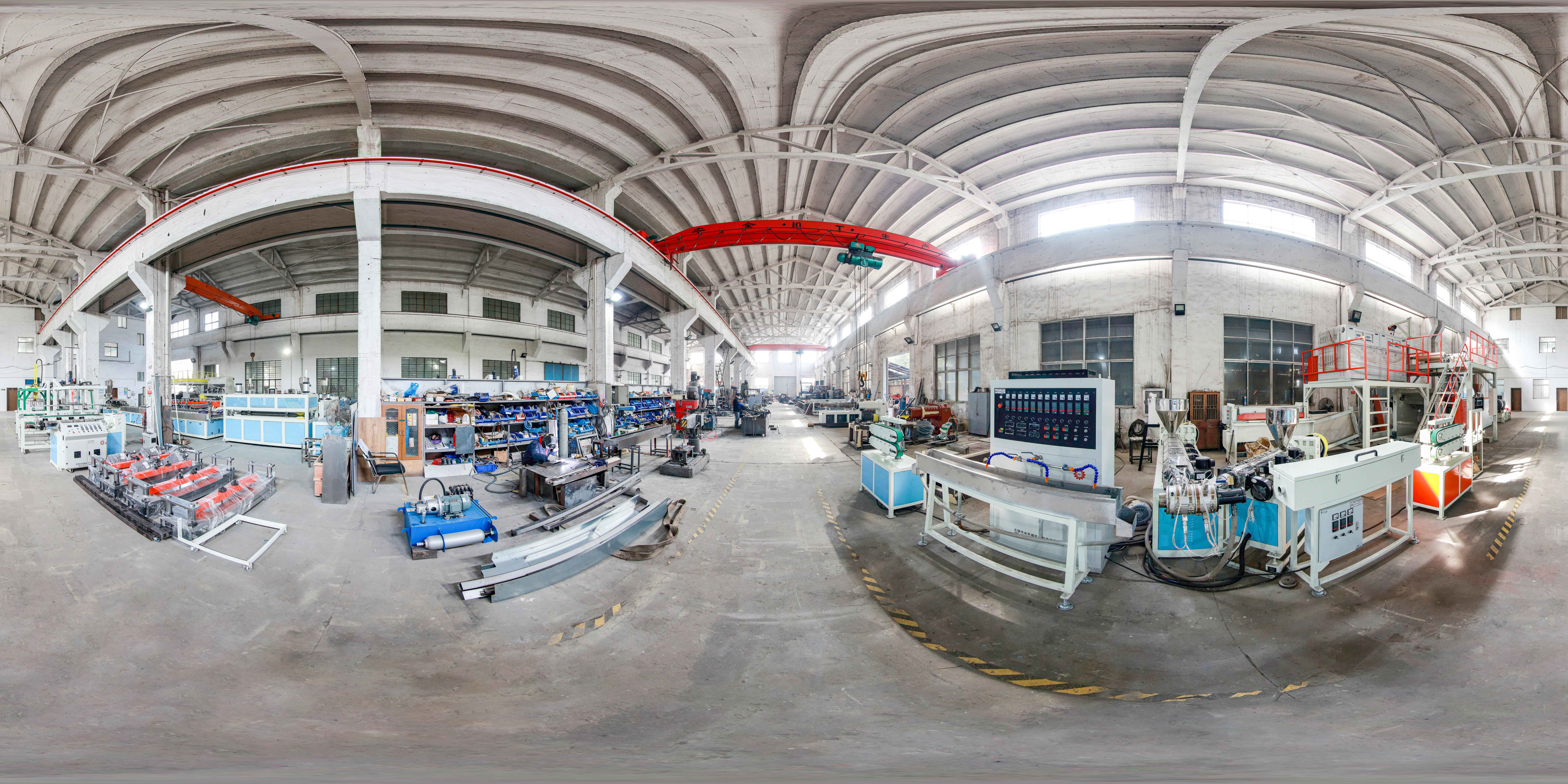
Wuxi JKS Machinery Manufacturing Co. Ltd. is a Chinese manufacturer founded in 2013, based in Wuxi, Jiangsu Province, that specialises in custom plastic extrusion machinery and complete turnkey production lines. The company operates a 2,000 m² production workshop with a six-engineer R&D team, produces around 200 units annually, exports roughly 50% of its output, and has delivered equipment to more than 35 countries across Southeast Asia, Russia, the Middle East, Europe, Central Asia, Africa and South America.
Its product portfolio covers SPC flooring sheet lines, PVC/PP/WPC board lines, PVC and HDPE pipe lines, WPC/PVC profile lines, solid plastic rod extrusion, and waste plastic recycling pelletizing lines, together with standalone single- and twin-screw extruders and auxiliary equipment including mixers, crushers and pulverisers.
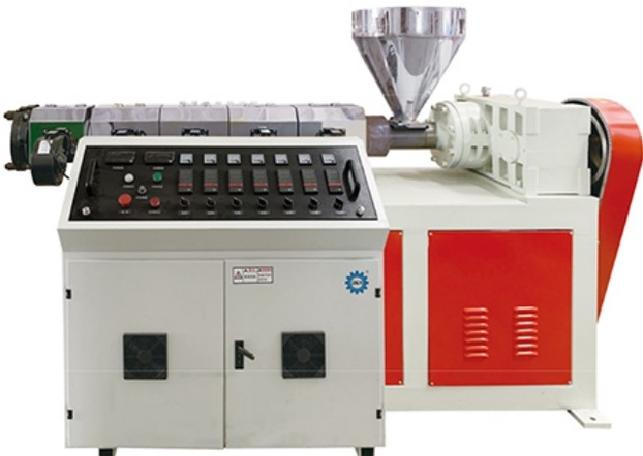
SJ single-screw platforms
The SJ single-screw family is the workhorse of profile, sheet, pipe and rod production, and it reflects the market reality that single-screw machines hold the largest share of installed extrusion capacity. In these machines the screw is a single continuous flighted shaft, so straightness after heat treatment, flight-surface hardness and barrel clearance are the three parameters that determine whether output stays stable over a long campaign.
SJSZ conical twin-screw platforms
Conical twin-screw extruders are the standard platform for PVC dry-blend processing in pipe, profile and panel production, because the conical geometry allows a large feed volume at the intake and higher pressure generation downstream. Here the screw is a matched pair, so both screws must be nitrided and finished as a set; mismatched wear between the two changes the conveying and pressure profile of the whole machine.
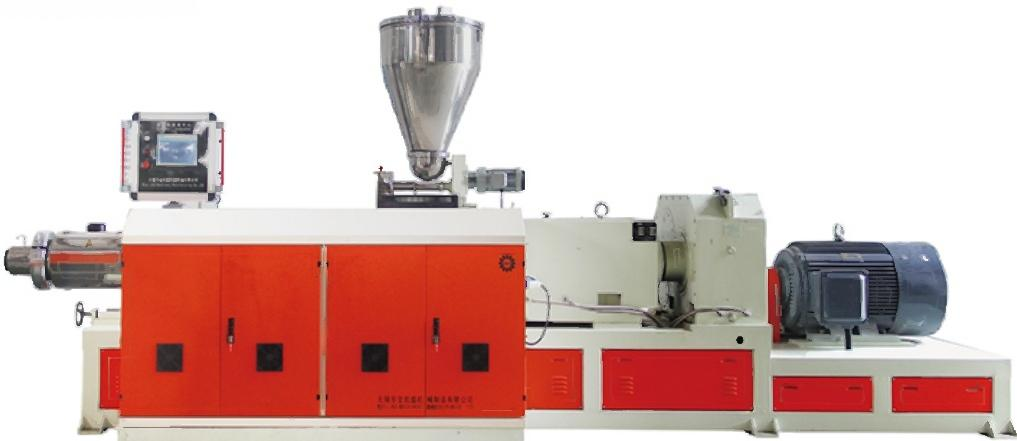
Model designations in these families follow the ordinary industry convention of indicating nominal screw diameter in millimetres — so the number 45 or 110 in a model name such as the SJSZ series refers to the nominal screw diameter class, not to a performance rating. This is worth stating because buyers frequently compare machines across suppliers by model number alone. The number describes one dimension; it says nothing about L/D ratio, compression ratio, nitriding specification or barrel liner. Those are fixed per order in the technical agreement, and that agreement, not the catalogue name, is the document that governs the metallurgy you actually receive.
Pelletizing and recycling platforms
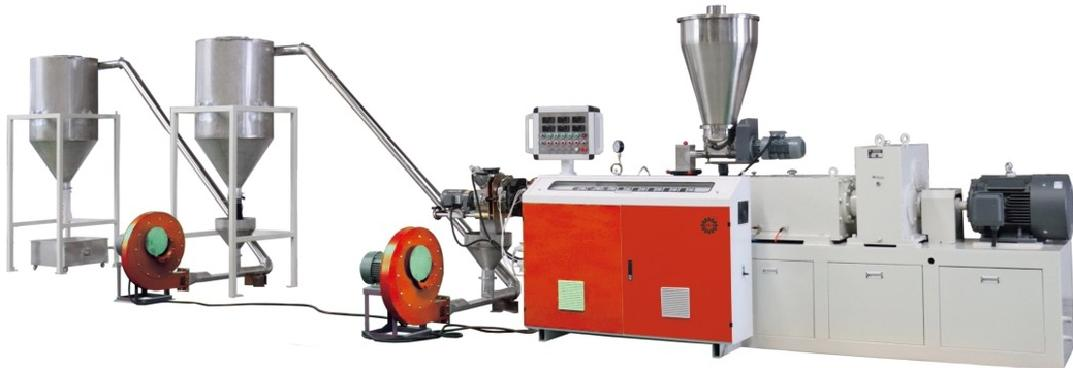
Waste plastic recycling pelletizing lines and PVC hot-cut pellet machines run the harshest duty cycle in the portfolio, because feedstock is variable and often contaminated. Screw and barrel wear here is dominated by foreign particles and inconsistent melt viscosity rather than by a single, known formulation.
The documented comparison position for this equipment class is specific: compared with generic auxiliary equipment or standard extruders from other suppliers, JKS states 10–15% higher processing capacity and 5% lower energy use; similar initial cost but longer service life, which reduces replacement frequency; and maintenance simplified by a simple structure, easy cleaning, and readily available spare parts, supported by an energy-saving motor design.
Step-by-Step Breakdown: How to Specify and Verify Screw Metallurgy Before You Order
The following sequence is written for engineers and procurement teams who need to make the material decision auditable rather than intuitive.
- Define the compound before the machine. Record the polymer, filler type and loading, additive package, melt temperature window and required output. A screw specification derived from “PVC” alone is not a specification; PVC pipe dry blend, SPC sheet compound and WPC foam compound place very different demands on the same steel grade.
- Classify the wear mode. Decide whether the dominant risk is abrasion (mineral fillers, glass fibre), corrosion (aggressive formulations), or adhesion and torque (high-viscosity engineering polymers). Nitrided 38CrMoAlA is a strong answer to moderate abrasion and general wear; highly abrasive duty should trigger a comparison against bimetallic or hardfaced alternatives.
- Fix the screw geometry in writing. Screw diameter, L/D ratio, compression ratio, flight pitch, venting and mixing section all interact with the material choice. Ask for the drawing, not a description.
- Specify the heat-treatment route, not just the grade. The grade name alone does not define performance. Request the core hardness after quenching and tempering, the nitriding method and depth, the surface hardness target, and the inspection records that prove them.
- Confirm the barrel to the same standard. A nitrided screw running in a softer or differently treated barrel simply transfers wear to the weaker component. Barrel liner material, bore finish and the heating/cooling zone layout should be agreed in the same document.
- Verify by test, then verify again before shipment. Ask for a run with your formulation or the closest representative compound, and confirm that pre-shipment testing is part of the delivery process. For JKS lines, pre-shipment testing and PLC-based monitoring with overload protection and emergency stop functions are standard control measures.
- Plan spares at the point of purchase. Because the nitrided case is consumed over time, the cost of a future screw or barrel and the availability of spare parts matter more than the day-one price difference between two quotations. Buyers should ask for the recommended spares list and the support path before signing.
Use Cases: Matching Screw Configuration to Polymer and Filler
The same base steel grade is applied differently depending on what the line produces. The cases below describe the decision logic, not a universal recommendation.
PVC pipe and drainage lines
PVC is the largest material segment in pipe extrusion, at 38.6% of a market valued at USD 4.8 billion in 2025, and conical twin-screw machines are the conventional platform for it. The material decision here balances two opposing pressures: the compound is abrasive because of its filler content, and the process chemistry is aggressive toward steel surfaces. Documented performance for JKS pipe extrusion lines includes 10–15% higher output and 5% less material waste compared with basic single-screw pipe extruders or simple two-stage lines, with wall thickness controlled to ±0.05 mm, 7–10% lower energy use, and 30% lower long-term maintenance cost despite a slightly higher initial investment. That last figure is the one that depends on the screw and barrel: reduced maintenance cost is delivered by the wear-resistant screw and barrel design together with modular components.
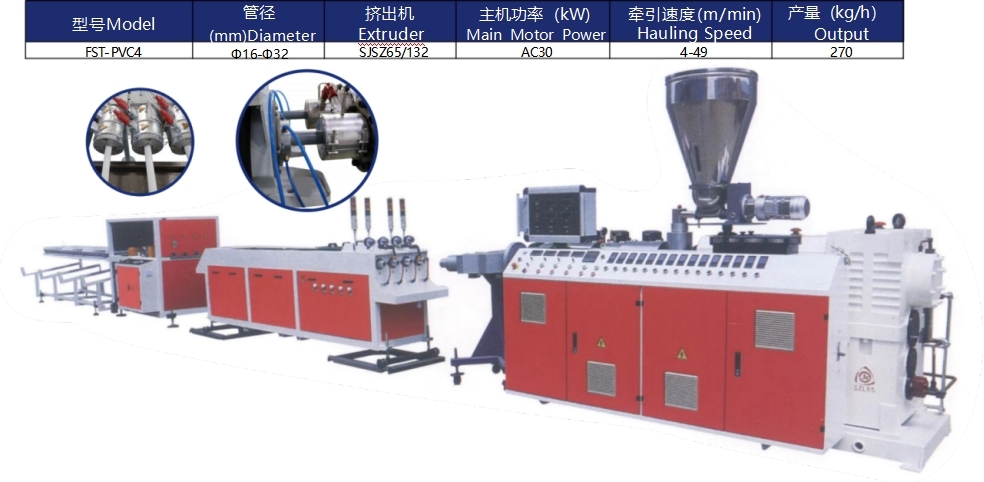
SPC flooring, PVC imitation marble sheet and WPC sheet
Sheet and flooring lines run heavily filled compounds at high output, and thickness tolerance is the commercial parameter. Documented performance for this class includes 15–20% higher output speed, ±0.1 mm thickness tolerance, 10% less material waste, 8–10% lower power consumption, and around 25% lower per-unit production cost over five years compared with conventional single-layer lines and low-cost generic machines. Thickness tolerance at that level is inseparable from melt pressure stability, which is inseparable from screw wear.
PVC/WPC profiles, door panels and hollow wall panels
Profile extrusion relies on a matched twin-screw pair and a calibration system. Documented performance for this class includes 12–18% higher output per line, consistent profile dimensions with a low reject rate, 6–8% lower energy consumption, and tooling cost advantages for custom profiles, supported by multi-cavity mold capability and a quick mold change system that reduces maintenance time.
PE, HDPE and corrugated pipe, and solid plastic rod
Polyolefin pipe and rod production runs at lower corrosion risk but higher continuous load. The relevant screw considerations shift toward core strength, compression ratio and heat-transfer behaviour rather than corrosion allowance, and single-screw SJ platforms usually carry this duty.
Recycling and pelletizing
With the recycling line market at USD 5.502 billion in 2024, pelletizing equipment is being specified in larger volumes, and screw life is the dominant operating cost variable because feedstock quality cannot be tightly controlled.
Comparison Table: Line-Level Performance and What the Screw Must Deliver
The table below summarises documented performance positions for JKS line families against the alternatives named in those comparisons, together with the screw and barrel requirement each claim depends on.
| Application family | Documented comparison position | What the screw and barrel must deliver |
|---|---|---|
| Sheet, SPC flooring and imitation marble lines | 15–20% higher output speed, ±0.1 mm thickness tolerance, 10% less material waste; 8–10% lower power consumption; around 25% lower per-unit production cost over five years, versus conventional single-layer lines and low-cost generic machines | Stable melt pressure and temperature uniformity at high output, plus wear resistance against heavily filled PVC compounds |
| PVC/WPC profile, door and panel lines | 12–18% higher output per line, consistent profile dimensions, low reject rate; 6–8% lower energy consumption; lower tooling cost for custom profiles; quick mold change and modular design reduce maintenance | A matched, evenly worn screw pair maintaining conveying and pressure profile across both screws |
| PVC, HDPE and composite pipe lines | 10–15% higher output, ±0.05 mm wall thickness control, 5% less material waste; 7–10% lower energy use; 30% lower long-term maintenance cost despite slightly higher initial investment | Wear-resistant screw and barrel design holding bore and flight geometry over long campaigns |
| Pelletizing and auxiliary equipment | 10–15% higher processing capacity, 5% lower energy use; similar initial cost with longer service life reducing replacement frequency; simple structure, easy cleaning, readily available spare parts | Wear tolerance under variable, contaminated feedstock where foreign particles accelerate case consumption |
Figures are drawn from JKS published line-comparison materials and describe JKS equipment relative to the stated alternatives. They are configuration-dependent and should be confirmed against the technical agreement for a specific model.
Verification Checklist: What to Request Before Signing
This checklist converts the metallurgy discussion into procurement actions. None of these items require the supplier to disclose proprietary process detail; they require documented conformance.
| Item to verify | Why it matters | Evidence to request |
|---|---|---|
| Steel grade of screw and barrel | Determines whether a nitriding treatment is even appropriate for the grade supplied | Material certificate with grade designation and heat number |
| Core heat treatment before nitriding | A hard case on a weak core fails under torque; the core carries the load | Quenching and tempering record with measured core hardness |
| Nitriding method and depth | Case depth sets how long the wear protection lasts, and depth interacts with distortion risk | Heat-treatment report stating method, depth and surface hardness |
| Final grinding and surface finish | Affects friction, material flow, cleaning time and colour-change losses | Dimensional inspection report and surface finish specification |
| Screw-to-barrel clearance | Directly controls melt pressure stability and output repeatability | Drawing with nominal and measured clearances |
| Matched condition of twin screws | Uneven wear between paired screws changes the pressure profile of the machine | Paired inspection data for both screws |
| Run test and pre-shipment testing | Confirms the metallurgy and geometry work together on the target compound | Test report using your formulation or a representative substitute |
| Spare parts and support path | The case is consumed over time; replacement planning is part of total cost | Recommended spares list, spare parts supply and service terms |
FAQ
1. Does the screw and barrel material affect CE compliance for a plastic extrusion machine?
CE marking applies to the machine as a whole rather than to an individual steel grade, so a material choice does not by itself determine compliance. What buyers should understand is the documentation chain that sits behind compliance. For equipment supplied into the EU, machinery such as WPC door panel extrusion lines typically requires CE marking, and ISO 9001 certification is commonly expected for quality management. In practice, the screw material enters that chain as traceability: for a decision-stage purchase, request the material certificate, the heat-treatment record and the machine-level declaration of conformity, and file them with the line documentation so that any future maintenance claim can be supported.
2. Can a 38CrMoAlA nitrided screw handle glass-fibre-filled or heavily filled PVC and WPC compounds?
Nitriding hardens the surface, but the hardened zone is a thin layer compared with the full cross-section of the screw. Glass fibre and high mineral loadings are abrasive and will consume that layer faster than unfilled or moderately filled compounds will. Nitrided 38CrMoAlA remains a common specification for PVC, WPC, SPC and polyolefin processing where filler loadings are moderate, and it is widely used across SJ single-screw, SJSZ conical twin-screw and pelletizing platforms. For genuinely high-abrasion duty, the correct approach is to compare nitrided steel against bimetallic barrels, hardened liners or hardfacing on a cost-per-tonne basis over the expected service life, and to make that comparison using your actual formulation data rather than a general recommendation.
3. How does the screw and barrel specification affect total cost of ownership?
The screw and barrel are recurring costs, not one-time costs, and the comparison data reflects that. For pelletizing and auxiliary equipment, the documented position is similar initial cost with longer service life that reduces replacement frequency. For pipe lines, a slightly higher initial investment is offset by 30% lower long-term maintenance cost. For sheet and SPC flooring lines, around 25% lower per-unit production cost over five years is documented, together with 10% less material waste. All of those outcomes depend on the wear-resistant screw and barrel design holding geometry over time. When comparing quotations, the useful question is therefore not which machine is cheapest on day one, but what a screw and barrel replacement costs, how often it is expected, and whether spare parts are readily available.
4. Can we validate a screw and barrel configuration before committing to a full line order?
Yes, and validation should be built into the order process rather than treated as an optional extra. The practical route is to send the raw material and product specification first, so that screw geometry, compression ratio and material choice can be proposed against your actual formulation. JKS provides personalised design and a formulation service based on the client's raw material and production demand, and pre-shipment testing is part of the delivery process, which is where the proposed configuration is confirmed on a running machine. Twin-screw machines should be validated as a matched pair, and lines destined for the EU should have CE-related documentation confirmed at the same time. Buyers who want to move to this stage should request a quotation and a factory trial discussion, and can review the equipment range in the JKS product brochure: download the JKS WPC door project brochure (PDF).
5. What happens if a screw or barrel wears out after delivery, and how is the lead time managed?
Wear is expected, so the relevant question is what support exists afterwards. JKS provides spare parts supply, remote technical support, on-site troubleshooting and standardised installation guidance, along with free factory installation and technical training after delivery. On the line itself, PLC automatic control with real-time monitoring, overload protection and emergency stop functions reduces the risk that an abnormal condition turns into catastrophic screw or barrel damage, and maintenance is made easier by modular design, quick mold change systems and remote fault diagnosis support. Delivery timing is fixed per order according to the configuration and destination, so it should be agreed in the order documentation rather than assumed from a catalogue; buyers should also confirm the recommended spares list at the same time so that a future replacement does not become a production stoppage.
Conclusion: Treat Screw Metallurgy as a Specification, Not a Default
38CrMoAlA nitrided alloy steel remains a well-matched choice for extruder screws and barrels across SJ single-screw, SJSZ conical twin-screw and pelletizing platforms because it combines a hard, wear-resistant surface with a tough core and low distortion after heat treatment. Its limits are equally clear: the case is thin, it has a temperature ceiling, and it is a wear treatment rather than a corrosion solution. Those limits are what make screw material a decision rather than a default.
For engineers and procurement teams at the decision stage, the takeaway is procedural. Specify the compound first, then the wear mode, then the geometry, then the heat-treatment route — and require documentation for each. Compare quotations on maintenance and replacement cost rather than purchase price alone, and confirm that run testing, pre-shipment testing and spare parts supply are part of the package.
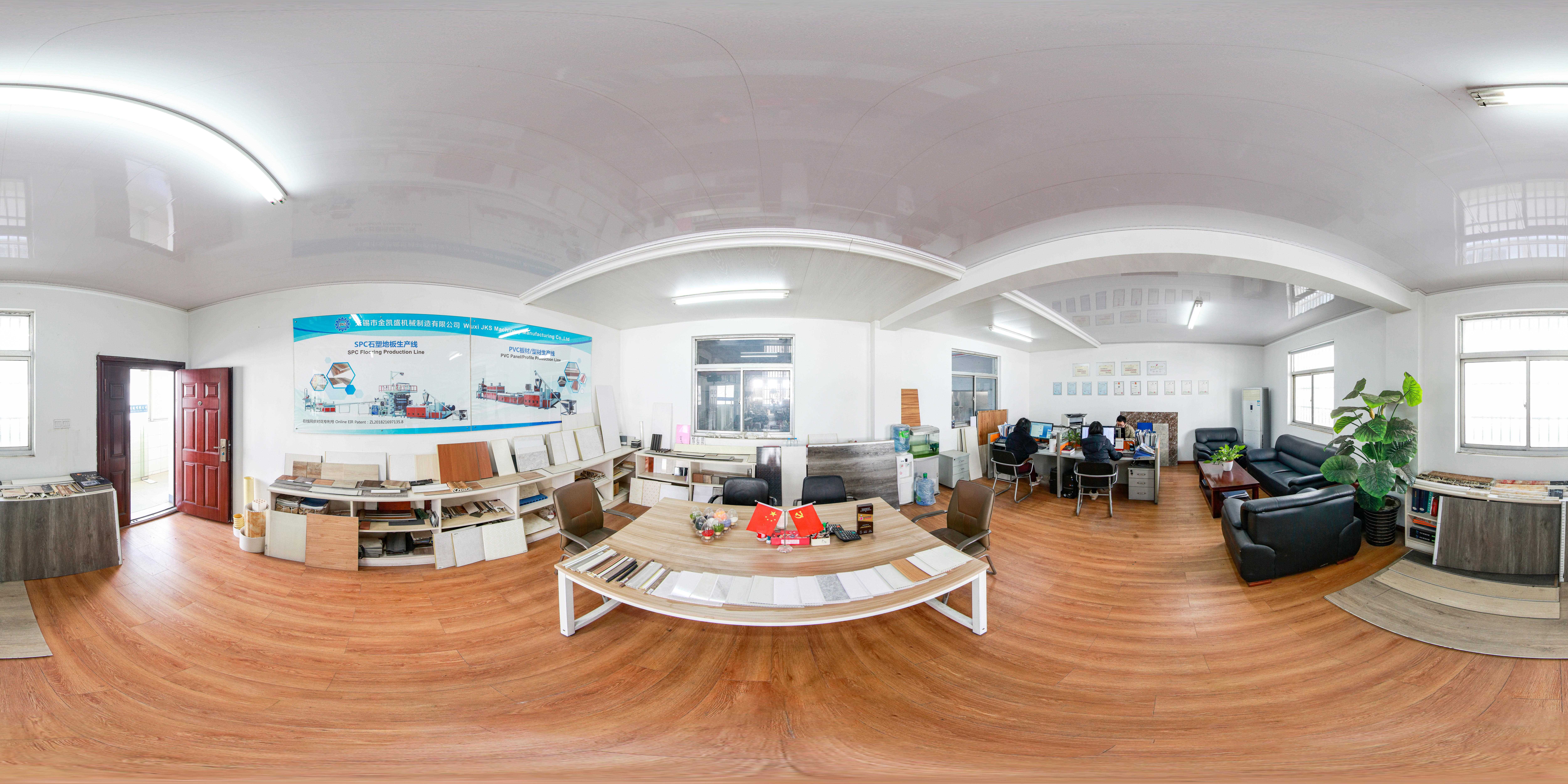
Next step: If you are specifying a line and need the screw and barrel specification confirmed against your formulation, send your raw material and product data to the JKS team.
Email: gordon@jksjx.com | Tel: +86 18651004566 | WhatsApp: +86 18601577228
Wuxi JKS Machinery Manufacturing Co. Ltd., No. 81 Xixian Road, Fangqian Town, Wuxi City, Jiangsu Province, 214000, P.R. China | www.extrudetec.com