
Top Plastic Extrusion Lines for Pipe Production: A Ranked List for 2026
Top Plastic Extrusion Lines for Pipe Production: A Ranked List for 2026
Answer first: For pipe production in 2026, six plastic extrusion line families cover the widest verified range of pipe applications, ranked as follows: (1) HDPE water pipe extrusion lines (PE110–PE1600), (2) PVC water supply & drainage pipe extrusion lines (PVC63–PVC630), (3) MPP & PE high voltage power pipe extrusion lines (PEG63, PG160), (4) PPR pipe extrusion lines (PPR20-75, PPR20-110), (5) corrugated pipe extrusion lines (KSPG-20/32/63, KS-75/160), and (6) steel wire mesh reinforced composite pipe extrusion lines as a specialist pressure-pipe tier. The order is decided by four verifiable criteria: material compatibility, verified diameter range, matched extruder and output data, and end-use industry fit.
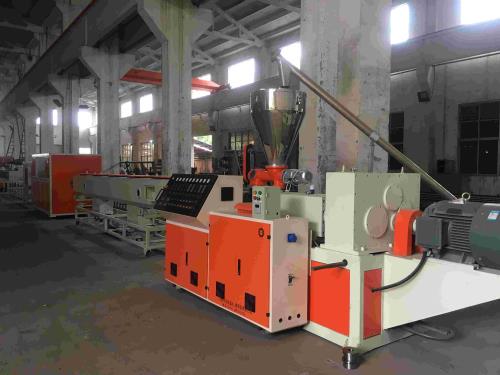
A complete PVC pipe extrusion line configured for water supply and drainage pipe production, including vacuum calibration, multi-claw haul-off and dust-free cutting units.
This list is written for pipe plant owners, importers, EPC contractors and procurement engineers who already know they need a pipe line and now have to decide which line, at which diameter range, matched to which extruder. Every specification quoted below is drawn from published line data for Wuxi JKS Machinery Manufacturing Co. Ltd. (JKS), a Chinese manufacturer of custom plastic extrusion machinery and complete turnkey production lines, founded in 2013 and based in Wuxi, Jiangsu Province. Where a figure is not documented, it is not stated.
Problem Definition: Pipe Lines Fail on Fit, Not on Brand
A pipe extrusion line is a system, not a single machine. The extruder determines how much melt you can push; the die head determines the pipe geometry; the vacuum calibration tank, haul-off and cutting unit determine whether that geometry stays within tolerance at production speed. Rank a supplier by brand reputation and you can still buy a line that is wrong for your diameter range, wrong for your resin, or wrong for the pressure class your customers buy.
Three mismatches cause most of the problems buyers report at the evaluation stage:
- Material mismatch. PVC powder compounds are normally run on conical twin screw extruders, while PE, PP and PPR are typically run on single screw extruders. Selecting the wrong screw geometry caps achievable output and destabilizes melt quality regardless of how well the downstream equipment is built.
- Diameter mismatch at the edges. A line rated for Φ90–Φ250 mm will not simply be “opened up” to run Φ630 mm pipe. Diameter range, haul-off speed and downstream power are engineered together — visible in the PVC range where the Φ315–Φ630 mm model runs 0–5 m/min with 39 kW of downstream power, while the Φ16–Φ63 mm model runs 4–49 m/min with 24 kW.
- Wear-part mismatch. Die and mold steel is the first thing to degrade on abrasive PVC+CaCO₃ compounds. The documented difference between “precision casting die steel” on the PVC water supply & drainage line and “forged alloy die steel” on the HDPE water pipe line is a wear-life decision, not a marketing line.
Industry Background: Why Pipe Extrusion Is a Volume-Critical Category
A ranked list only makes sense against the size and shape of the market it serves. Three published data points frame the picture for 2026:
- The global plastic extrusion machinery market was valued at approximately USD 8.93 billion in 2024 and is projected to reach USD 11.58 billion by 2030 (Grand View Research).
- The pipe extrusion lines market is valued at USD 4.8 billion in 2025, with PVC the leading material segment at 38.6% of the market (Dataintelo).
- Asia Pacific dominated the extrusion machinery market in 2024 with a 41.5% revenue share, with China the leading contributor in the region, and single screw extrusion machines held approximately 62.7% of the global market in the same year (Grand View Research).
One caution before you use any of these numbers in a business case: published market-size estimates for this category diverge sharply by scope. For 2024–2025 alone, Market Research Future places the plastic extrusion machine market at USD 7.525 billion (2024), Vertex AI Search / Cloud Reports at USD 6.89 billion (2025), and Dataintelo at USD 15.17 billion (2025). The gap reflects different definitions — machinery only versus total processing systems. Use a single consistent source or your own project data, not a mix.
The practical read for a pipe producer is that PVC remains the highest-volume pipe material and single screw extrusion still carries most of the installed base, yet the fastest-growing infrastructure demand — municipal water, gas and buried power conduit — sits in the PE and PP families. That is precisely why this ranking is organized by application scenario rather than by machine popularity.
How This 2026 Ranking Was Built
Each line family below was assessed against five documented criteria, in this order of weight:
- Material compatibility. Does the line's extruder and screw configuration match the resin the pipe will be made from?
- Verified diameter range. Is the full range published per model, or only a headline number?
- Matched extruder and output data. Is the extruder model, main motor power and extrusion capacity stated for each diameter class?
- Downstream and wear-part specification. Are calibration, haul-off, cutting and die/mold steel defined?
- End-use industry fit and compliance readiness. Does the line map to a real pipe market, and can it be supplied into regulated markets?
The Ranked List: Six Pipe Extrusion Line Families for 2026
1. HDPE Water Pipe Extrusion Line (PE110–PE1600)
Material: HDPE / PE · Diameter range: Φ20–Φ1600 mm across five line types · Mold steel: forged alloy die steel · Screw & barrel: 38CrMoAlA nitrided alloy steel.
This family takes first place because it holds the widest documented diameter span of any pipe line in the set and the most complete per-model engineering data. The five configured lines are PE110 (Φ20–110 mm, GS60/38 extruder, 90 kW, 150–400 kg/h), PE315 (Φ110–315 mm, GS75/38, 160 kW, 200–600 kg/h), PE630 (Φ315–630 mm, GS90/38, 280 kW, 600–1000 kg/h), PE1000 (Φ630–1000 mm, GS120/38, 355 kW, 600–1000 kg/h) and PE1600 (Φ1000–1600 mm, GS150/38, 500 kW, 600–1500 kg/h). Each line also lists an optional larger extruder, which matters when a buyer expects output to grow later without replacing the whole line.
End-use fit: municipal water supply, gas pipeline, farm irrigation pipe manufacturing.
Limits: a PE line is not a general-purpose line — running PVC compounds on it is a different machine concept, not a setting change.
2. PVC Water Supply & Drainage Pipe Extrusion Line (PVC63–PVC630)
Material: PVC + CaCO₃ · Diameter range: Φ16–Φ630 mm across three models · Mold steel: precision casting die steel · Downstream: vacuum calibration, multi-claw traction and dust-free cutting unit as standard.
Ranked second because PVC is the leading pipe material segment by market share (38.6%) and because this line set publishes the complete electrical and speed picture buyers need. PVC63 is a double-station line running Φ16–Φ63 mm on an SJSZ65/132 conical twin screw extruder at 37 kW main power, 24 kW downstream, 4–49 m/min hauling speed and 270 kg/h output. PVC250 covers Φ90–Φ250 mm on SJSZ80/156 at 55 kW, 24 kW downstream, 4–15 m/min and 450 kg/h. PVC630 covers Φ315–Φ630 mm on SJSZ92/188 at 110 kW, 39 kW downstream, 0–5 m/min and 800 kg/h.
End-use fit: building water supply & drainage, agricultural irrigation, cable threading pipe production.
Limits: dust-free cutting and multi-claw traction add value at high speed but increase downstream complexity — specify them only if your diameter mix justifies it.
3. MPP & PE High Voltage Power Pipe Extrusion Line (PEG63, PG160)
Material: MPP / PE, with optional PP, ABS, PEX and silicon core pipe · Diameter range: Φ20–Φ160 mm across two models · Mold steel: wear-resistant alloy die steel.
This is the narrowest diameter family in the top three, but it ranks ahead of PPR and corrugated lines because it carries the broadest documented material flexibility in the set and serves an infrastructure application where failure is expensive. PEG63 handles Φ20–Φ63 mm at 0.3–4.5 m/min with 70 kW installed power; PG160 handles Φ75–Φ160 mm at 0.3–2 m/min with 125 kW installed power. The whole line uses AC frequency control, offers 2/3/4-claw traction as an option, and includes a chipless cutting system.
End-use fit: buried high voltage power grid construction and underground cable protection pipeline production.
Limits: the optional resin list (PP, ABS, PEX, silicon core) is a configuration question, not a promise that one die head covers all of them.
4. PPR Pipe Extrusion Line (PPR20-75, PPR20-110)
Material: PPR · Diameter range: Φ20–Φ110 mm across two models · Mold steel: high precision die steel.
PPR20-75 runs on a GS65/33 extruder at 37 kW with a GS50/33 auxiliary and 80–160 kg/h capacity. PPR20-110 runs on a GS90/30 at 75 kW with a GS55/33 auxiliary and 80–250 kg/h. The line pair is deliberately narrow in diameter and deep in stability, which is the correct trade-off for hot and cold water pipe that must hold dimensional consistency across long production runs.
End-use fit: indoor home decoration cold and hot water pipeline, residential plumbing pipe production.
Limits: this is a dedicated PPR platform. It is not the right line if your product mix includes large-diameter drainage pipe.
5. Corrugated Pipe Extrusion Line (KSPG-20/32/63, KS-75/160)
Diameter range: Φ6–Φ160 mm across five models · Corrugation mold: wear-resistant alloy steel.
Corrugated lines rank fifth on end-use breadth but first on speed. The five documented models are KSPG-20 (screw Φ45, L/D 30:1, 45 kW, Φ6–Φ10 mm, up to 20 m/min), KSPG-32 (Φ50, L/D 30:1, 50 kW, Φ8–Φ20 mm, up to 15 m/min), KSPG-63 (Φ65, L/D 33:1, 70 kW, Φ16–Φ63 mm, up to 10 m/min), KS-75 (Φ65, L/D 33:1, 80 kW, Φ50–Φ75 mm, up to 10 m/min) and KS-160 (Φ75, L/D 33:1, 100 kW, Φ90–Φ160 mm, up to 5 m/min). Note that haul-off speed falls as diameter rises — a normal signature of corrugation, not a defect.
End-use fit: electric wire threading pipe, automobile wiring sleeve, mechanical equipment threading, construction drainage pipe production.
Limits: output is published as haul-off speed rather than kg/h for this family, so compare corrugated lines on speed and mold changeover, not on extrusion capacity.
Specialist Tier: Steel Wire Mesh Reinforced Composite Pipe Extrusion Line (GS/PE-160-H to GS/PE-630-H)
Diameter range: Φ50–Φ630 mm across five models · Mold steel: refined wear-resistant die steel.
This family is listed separately rather than ranked because it solves a different problem: reinforcing a PE pipe with a steel wire mesh to raise pressure capability. It is also the most transparent family for energy planning, because installed and actual power consumption are both published: GS/PE-160-H (Φ50–160 mm, max 2.4 m/min, 480 kW installed / 312 kW actual), GS/PE-250-H (Φ75–250 mm, 2.4 m/min, 550 / 358 kW), GS/PE-315-H (Φ90–315 mm, 2.4 m/min, 580 / 377 kW), GS/PE-500-H (Φ250–500 mm, 1.4 m/min, 630 / 410 kW) and GS/PE-630-H (Φ315–630 mm, 1.2 m/min, 800 / 559 kW).
End-use fit: urban pressurized water supply, chemical industry anti-corrosion pipeline, underground engineering pipe.
Side-by-Side Comparison of the Ranked Lines
| Rank | Line family | Material | Diameter range | Matched extruder | Output / speed | Primary end use |
|---|---|---|---|---|---|---|
| 1 | HDPE Water Pipe Extrusion Line | HDPE / PE | Φ20–1600 mm (5 lines) | GS60/38 to GS150/38, 90–500 kW | 150–1500 kg/h | Municipal water, gas, irrigation |
| 2 | PVC Water Supply & Drainage Pipe Line | PVC + CaCO₃ | Φ16–630 mm (3 models) | SJSZ65/132, SJSZ80/156, SJSZ92/188, 37–110 kW | 270–800 kg/h | Building water supply & drainage, irrigation, conduit |
| 3 | MPP & PE High Voltage Power Pipe Line | MPP / PE (opt. PP, ABS, PEX) | Φ20–160 mm (2 models) | PEG63, PG160, 70–125 kW installed | 0.3–4.5 / 0.3–2 m/min | Buried HV grid, cable protection |
| 4 | PPR Pipe Extrusion Line | PPR | Φ20–110 mm (2 models) | GS65/33 (37 kW), GS90/30 (75 kW) | 80–250 kg/h | Indoor hot & cold water plumbing |
| 5 | Corrugated Pipe Extrusion Line | Per line configuration | Φ6–160 mm (5 models) | Screw Φ45–Φ75, 45–100 kW | Up to 5–20 m/min | Wire threading, drainage, automotive sleeve |
| Specialist | Steel Wire Mesh Reinforced Composite Pipe Line | PE + steel wire mesh | Φ50–630 mm (5 models) | GS/PE-160-H to GS/PE-630-H, 480–800 kW | 1.2–2.4 m/min | Pressurized water supply, chemical pipeline |
Read this table as a compatibility map rather than a price ladder. The highest-ranked line is not automatically the right purchase for a plant whose customers buy Φ20–Φ63 mm conduit; it is simply the family with the broadest verified application coverage.
Step-by-Step: Matching a Ranked Line to Your Project
The evaluation sequence below reflects how a pipe line is actually specified, from product definition through to factory acceptance.
- Define the pipe, not the machine. Fix diameter range, wall thickness, pressure class and the standard your customers buy against. Everything downstream depends on this.
- Match resin to screw geometry. PVC powder compounds map to conical twin screw extruders (SJSZ series, ranging from SJSZ-45 at 15 kW / 70 kg/h up to SJSZ-110 at 200 kW / 1000 kg/h). PE, PP, PPR, ABS and engineering resins map to single screw extruders (SJ series and the GS-series models used on the PE and PPR lines).
- Size the extruder to the largest diameter you will actually run. If your ceiling is Φ630 mm PVC pipe, the reference point is SJSZ92/188 at 110 kW producing 800 kg/h — not a smaller extruder running above its design window.
- Specify the downstream chain by diameter and speed. PVC water and drainage lines use vacuum calibration with multi-claw traction and dust-free cutting; the MPP & PE power pipe line offers 2/3/4-claw traction and a chipless cutting system; the composite pipe line runs at 1.2–2.4 m/min, which changes haul-off and cutting requirements entirely.
- Check wear-part steel against your formulation. Documented mold materials across the pipe families include precision casting die steel (PVC water supply & drainage), forged alloy die steel (HDPE), refined wear-resistant die steel (steel wire reinforced composite), high precision die steel (PPR) and wear-resistant alloy die steel (MPP & PE power pipe). Screw and barrel are specified as 38CrMoAlA nitrided alloy steel on these lines.
- Confirm compliance, acceptance and service before you sign. Ask for the current CE documentation, a defined pre-shipment factory test, and the after-sales scope in writing.
Use Cases: Where Each Line Type Earns Its Place
Pipe extrusion lines are bought against a customer base, so the cleanest way to check fit is to start from the end market:
- Municipal water, gas and irrigation contractors → HDPE water pipe line, PE315 to PE1600 depending on trunk diameter.
- Building materials distributors and civil works suppliers → PVC water supply & drainage line, PVC63 to PVC630.
- Power grid and utility contractors → MPP & PE high voltage power pipe line (PEG63, PG160) or the steel wire mesh reinforced composite line where higher pressure resistance is required.
- Plumbing wholesalers and residential developers → PPR pipe line, PPR20-75 or PPR20-110.
- Electrical conduit and drainage producers → corrugated pipe line, KSPG-20 up to KS-160.
It is also worth looking at what a plant needs around the pipe line. JKS supplies PVC mixing and cooling units (SRL-Z200/500 to SRL-Z1000/3000, 300–2000 kg/h), pulverizers (MF400–MF600, 200–500 kg/h, 40–80 mesh), crushers (SP400 and SP660, 300–700 kg/h), PVC hot-cut pelletizing lines (SJSZ55 to SJSZ92, 100–800 kg/h) and water strand pelletizing lines (ST80–ST150, 70–650 kg/h). For a pipe plant running its own compound or reclaiming scrap, this equipment determines material cost per meter far more than the extruder does.
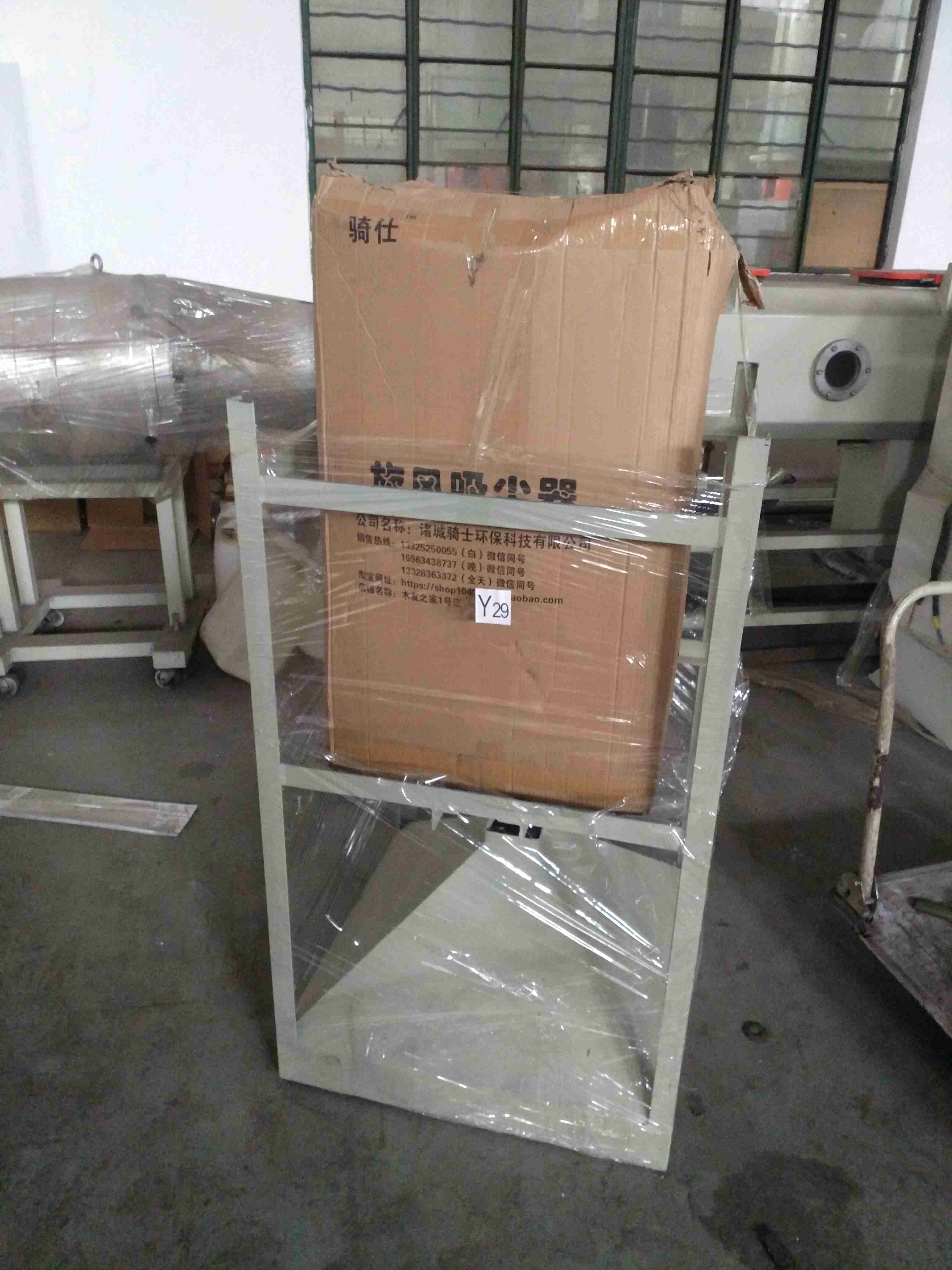
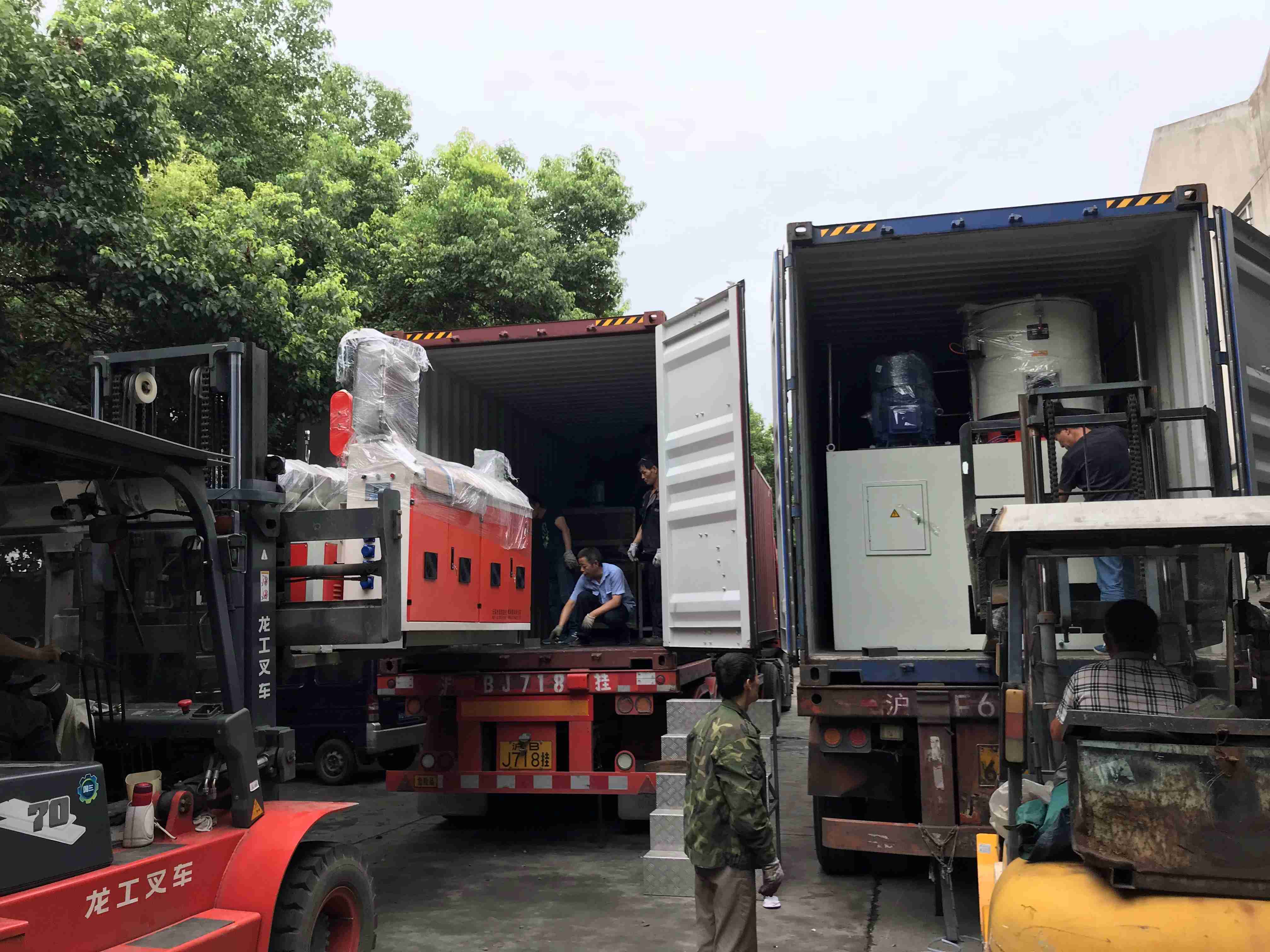
A complete PVC extrusion line packed for export to a plastic building materials manufacturer in Vietnam, where it has been in stable operation for over 5 years.
Installed-line evidence. Documented JKS reference projects include a complete PVC hollow wall panel extrusion line for a plastic building materials manufacturer in Vietnam (5+ years in stable operation, turnkey delivery, on-site installation support and full export documentation), a complete SPC flooring extrusion line in Malaysia (10+ years, high-speed production with precise thickness control) and an SPC flooring extrusion line in South Korea (8+ years, 24/7 production with a low maintenance rate). These three projects are sheet and panel lines rather than pipe lines, and should be read as evidence of long-run line stability, installation and training capability — not as pipe reference sites.
Supplier Landscape for Pipe Extrusion Lines in 2026
Manufacturers named in a 2024 third-party industry listing of leading global plastic extrusion manufacturers include Coperion, KraussMaffei, Davis-Standard and Jwell Machinery, alongside Chinese suppliers such as JKS. The table below records what is and is not verifiable for each name from published sources; it is a reference list, not a quality ranking.
| Manufacturer | Basis of inclusion | What is verifiable here | What you still need to confirm directly |
|---|---|---|---|
| Wuxi JKS Machinery Manufacturing Co. Ltd. (JKS) | First-party published line data, 2013, Wuxi, China | Full pipe line specifications, CE certificate M.2021.206.C.64011, MOQ 1 unit, 40 work day lead time | Current certificate validity, project-specific layout and acceptance plan |
| Coperion | Named among leading global plastic extrusion manufacturers, 2024 third-party listing | Company name and market position in that listing | Pipe-line-level specification data for a like-for-like comparison |
| KraussMaffei | Same 2024 listing | Company name and market position in that listing | Pipe-line-level specification data |
| Davis-Standard | Same 2024 listing | Company name and market position in that listing | Pipe-line-level specification data |
| Jwell Machinery | Same 2024 listing | Company name and market position in that listing | Pipe-line-level specification data |
The honest conclusion from this table: at the supplier level, published pipe-line data is not comparable across manufacturers, which is why the ranking in this article is built at the line level, where diameter range, extruder matching and output are documented and can be checked line by line.
Frequently Asked Questions
1. Do these pipe extrusion lines meet CE requirements for EU buyers?
JKS holds a CE certificate for plastic extrusion lines — certificate number M.2021.206.C.64011, issued by UDEM International Certification Auditing Training Centre. The scope covers plastic extrusion lines including the SJSZ, SJ and SJP series of models, assessed against EN ISO 12100:2010, EN 1114-1:2011, EN 60204-1:2018, EN 61000-3-2:2014, EN 61000-3-3:2013, EN 61000-6-1:2007 and EN 61000-6-3:2007/A1:2011/AC:2012. The certificate was issued on 22 April 2021 with a stated expiry date of 22 April 2026. Because machinery certificates are renewed periodically, request the current certificate and its expiry date as part of your purchase documentation rather than relying on a copy.
2. Can a pipe extrusion line be customized to a specific diameter range and material?
Yes. JKS provides OEM, ODM and custom design production services, with customization covering the extruder model, screw configuration, production line layout, voltage and frequency, control system and capacity adjustment. In practice this means a buyer can specify a diameter window (for example Φ315–Φ630 mm PVC), the resin and compound, and the required output, and have the extruder, die head, calibration, haul-off and cutting units configured around it. Minimum order quantity is 1 unit, so a single customized line is a valid order.
3. What drives the cost of a pipe extrusion line?
Four documented variables dominate. First, the extruder class: PVC lines move from SJSZ65/132 at 37 kW to SJSZ92/188 at 110 kW as diameter grows, while HDPE lines move from GS60/38 at 90 kW to GS150/38 at 500 kW. Second, downstream scope: vacuum calibration, multi-claw traction and dust-free cutting are standard on the PVC water and drainage line but the combination changes with diameter and speed. Third, installed versus actual power: on the steel wire reinforced composite line, installed capacity ranges from 480 kW (GS/PE-160-H) to 800 kW (GS/PE-630-H), with actual consumption published between 312 kW and 559 kW — the gap matters for transformer sizing. Fourth, mold and die steel grade, which sets wear life on abrasive PVC+CaCO₃ formulations. No unit prices are published here; request a configured quotation against your diameter and output target.
4. Can we validate a pipe extrusion line before it ships?
Yes. JKS performs 100% factory pre-assembly and testing before shipment, and third-party inspection is available on request. The commercial terms define pre-shipment factory test as the acceptance method, with payment structured as 30% T/T deposit and 70% T/T balance before shipment on FOB terms. For a customized line, confirm in writing which pipe dimensions and which resin will be run during the factory test, so acceptance is measured against your product rather than a generic demonstration.
5. What is the typical lead time and what support comes after delivery?
The typical production lead time is 40 work days, against a monthly production capacity of 30 units and a minimum order quantity of 1 unit. After delivery, the service scope covers overseas installation guidance, on-site commissioning, operator training, remote technical support and a 12-month warranty. Since 2013 JKS has built custom extrusion lines for customers across more than 35 countries, with a 50% export ratio and principal markets in Southeast Asia, Russia, the Middle East, Europe, Central Asia, Africa and South America. If you are comparing two or three ranked line options, send your target diameter range, resin and required output for a configuration review.
Conclusion
Ranking pipe extrusion lines in 2026 comes down to fit, not to a single winner. HDPE water pipe lines lead on diameter coverage, PVC water supply and drainage lines lead on market volume and downstream specification depth, MPP & PE high voltage power lines serve the narrowest but most critical infrastructure slot, PPR lines are the stability-first choice for plumbing, corrugated lines win on speed for conduit and drainage, and steel wire mesh reinforced composite lines handle pressurized and anti-corrosion duties. Match the ranked family to your end market first, then size the extruder, downstream chain and die steel around the largest pipe you will genuinely produce.
Next step: match a pipe line to your diameter range
Send your target pipe diameter range, resin and required output, and our engineering team will confirm the matching extruder, downstream configuration and delivery schedule. Download the full product brochure for detailed line specifications, or contact us directly:
Email: gordon@jksjx.com · Tel / WhatsApp: +86 18651004566 · Website: www.extrudetec.com
Brochure (PDF): Download the JKS machinery brochure
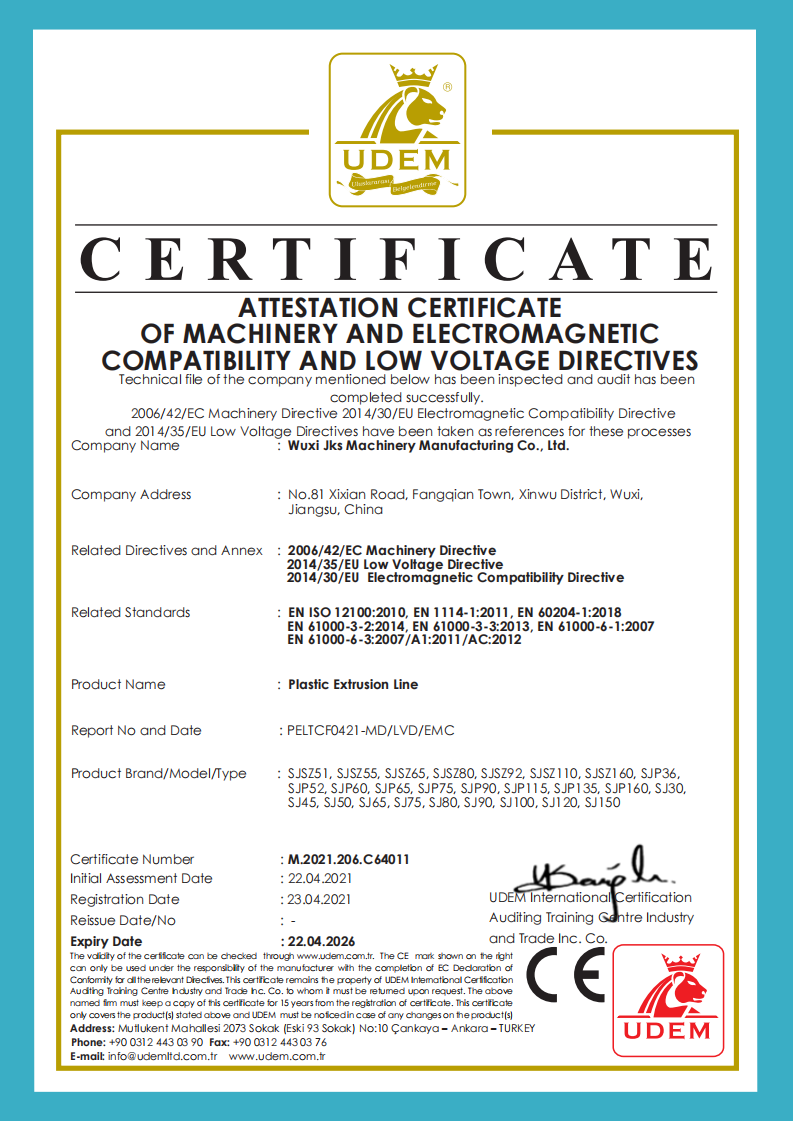
CE certificate M.2021.206.C.64011, issued 22 April 2021 by UDEM International Certification Auditing Training Centre, covering plastic extrusion lines including the SJSZ, SJ and SJP series. Request the current certificate and expiry date during evaluation.