Applying a Vietnam Tin Box Factory to Your Project: A Scenario-Based Application Guide
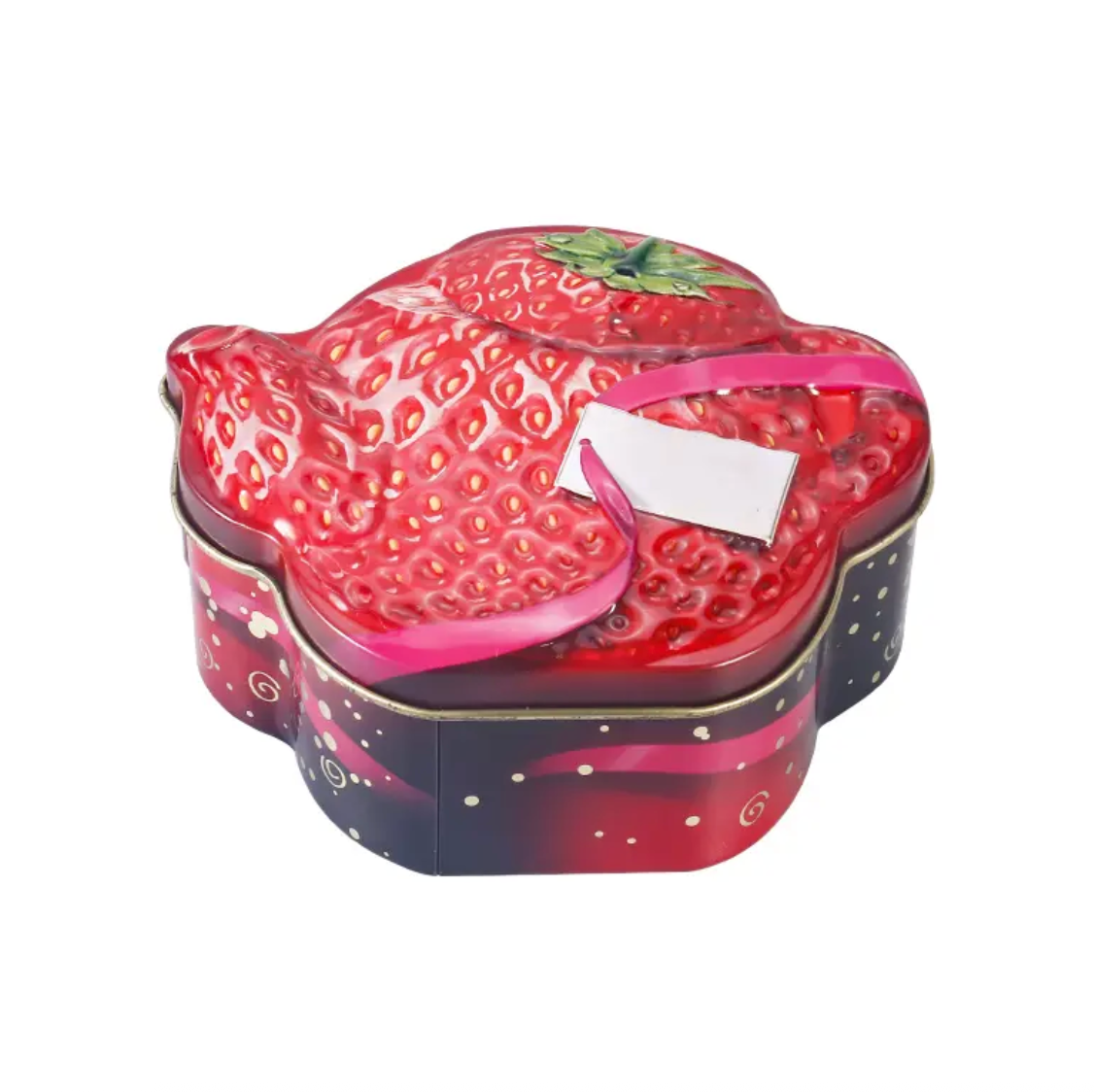
Applying a Vietnam Tin Box Factory to Your Project: A Scenario-Based Application Guide
A Vietnam tin box factory is only as valuable as its fit to your specific project. This guide does not rank suppliers and does not repeat general sourcing advice. It takes five packaging scenarios — a food or tea/coffee launch, a cosmetics gift set, a pharmaceutical pack, a promotional gift tin, and a repeat reorder — and shows what each one demands in tin box structure, decoration, compliance documentation, and production timing. JLCG Enterprise Company Limited, a tin box manufacturer with a 17,500 m² facility in Vinh Phuc Province, Vietnam, is used throughout as the working example.
This is written for packaging buyers, brand owners, and procurement managers who have already decided on metal packaging and now need to convert that decision into a shippable specification. The objective is not a shortlist of factories. It is a repeatable way to check whether one factory can serve several different projects without each one turning into a separate sourcing exercise.
The Problem: "Which Factory?" Is the Wrong First Question
A generic supplier comparison answers a question most buyers do not actually have. It establishes whether a factory is large, certified, and experienced. It does not establish whether that factory can produce your pack, in your artwork, with your compliance file, before your launch date.
Three failure patterns appear repeatedly when the scenario step is skipped.
- Structure mismatch. A supplier passes a general audit and is selected, but the chosen tin format needs a new tool that was never costed into the timeline. The launch slips by a tooling cycle rather than by a production cycle.
- Decoration mismatch. Artwork developed for flat printed cartons is handed to a metal decoration process that cannot hold the fine detail, gradient, or colour count. The design is approved on a screen and rejected on the physical sample.
- Documentation mismatch. A food or pharmaceutical project reaches compliance review and the material and coating declarations turn out not to cover the destination market. The pack is technically correct and legally unusable.
The alternative is to treat each project as a scenario defined by six constraints: the product, the filling line, the structure, the decoration route, the compliance file, and the reorder path. Supplier capability is then tested against those six constraints instead of against a generic scorecard. A factory that scores well in the abstract but fails two of the six is not a candidate; a factory that scores moderately but satisfies all six is.
Industry Background: Why Scenario Fit Is Now a Vietnam Question
Vietnam's metal packaging base has grown large enough that buyers evaluate it as a primary sourcing region rather than a fallback. Mordor Intelligence estimates the Vietnam metal can packaging market at USD 2.17 billion in 2025, projected to reach USD 2.53 billion by 2030, a CAGR of 3.07%. IMARC Group values the broader Vietnam metal packaging market at USD 692.0 million in 2025, with expectations to reach USD 912.3 million by 2034 at a CAGR of 3.12%.
Demand originates downstream. Vietnam's food and beverage sector, a primary driver of tin box demand, was expected to be valued at over USD 27.3 billion in 2024, a 10.9% increase from 2023. Confectionery, tea, coffee, health care, and gift packaging all sit inside that demand curve.
Two regulatory shifts push planning toward the scenario level rather than a single sourcing decision. In the European Union, all food contact materials, including tin boxes, must comply with Regulation (EC) No 1935/2004, and Commission Regulation 2024/3190 prohibits BPA in metal packaging coatings starting in 2025–2026. In Vietnam, Decree 05/2025 requires brands to collect and recycle 70% of their packaging by 2030, which supports the position of infinitely recyclable tinplate.
The practical consequence is that two projects looking identical on a purchase order — same tin size, same artwork style — can require completely different compliance files depending on destination market and product category. That gap is what makes them different scenarios.
What the Working Example Brings to a Scenario
JLCG Enterprise Company Limited is a Vietnam-based tin box manufacturer operating a 17,500 m² manufacturing facility in Vinh Phuc Province. The site has an annual production capacity of approximately 600,000 pieces per day and holds a regular stock of 30,000 tons of tinplate to ensure stable delivery. The company maintains ISO9001, ISO14001, ISO22000, BRCGS, FSSC22000, and SEDEX 4P certifications and operates a one-stop R&D-to-service model for food, cosmetics, gift, and pharmaceutical clients across Europe, America, and Asia.
Read as procurement information rather than as a company profile, four of those facts change how a scenario should be planned.
- Roughly 600,000 pieces per day of production capacity sets the threshold at which a project is a normal production load or a scheduling negotiation. Campaign-driven work with fixed event dates is where this matters most.
- A regular stock of 30,000 tons of tinplate is a supply-continuity fact rather than a capacity fact. On fast reorders, material availability is usually the first constraint, ahead of press time.
- A certification set spanning quality management, food safety, and ethical trade (ISO9001, ISO22000, BRCGS, FSSC22000, SEDEX 4P) allows the compliance conversation to happen inside one supplier relationship instead of across several vendors with separate document trails.
- A one-stop R&D-to-service model means structure development, decoration, and order servicing are handled by one team. For a buyer running three scenarios in parallel, that removes the hand-off where artwork deadlines usually break.
Step-by-Step Breakdown: Five Steps That Apply to Every Scenario
The same five steps apply to all five scenarios. Each step produces an input for the next, and skipping one generates the failure patterns described earlier.
Step 1 — Define the product and the filling line before the tin
Start with the physical product and the equipment that fills it. The relevant inputs are the product's dimensions and weight, whether it is loose, bagged, or trayed, whether the lid is opened by hand in retail or by a machine on a line, and whether the pack must survive secondary handling such as shrink wrapping or case packing. A tin box that is dimensionally correct but cannot be filled by the existing line has simply moved the problem downstream.
The output of this step is a dimensional brief and a handling requirement, not artwork. Buyers who begin with artwork usually return to this step later at higher cost.
Step 2 — Choose the format and the decoration route together
Format and decoration are one decision, not two. The format determines which surfaces exist and how large each printable area is; the decoration route determines how much detail those surfaces can carry. Common metal decoration routes include lithographic printing, screen printing, and surface treatments such as embossing, debossing, and metallic or matte finishing. Each carries different artwork requirements, different setup implications, and different sample cycles.
A practical rule: decide the decoration route before finalising artwork, not after. Artwork containing fine line work, soft gradients, or a high colour count should be reviewed against the chosen route while it is still editable.
Step 3 — Validate food-contact and pharmaceutical requirements against documented evidence
This step converts compliance from an assumption into a file. For food, tea, coffee, confectionery, and health care projects sold in the EU, the baseline is Regulation (EC) No 1935/2004, with the additional restriction on BPA in metal packaging coatings under Commission Regulation 2024/3190 applying from 2025–2026. For projects sold in Vietnam, Decree 05/2025 adds packaging collection and recycling obligations that favour recyclable metal formats.
Pharmaceutical projects work differently. The governing requirements come from the destination market's regulator and from the brand owner's own validated specification. The supplier's role is to document material and coating compliance and to support change control. Before committing, confirm which of the manufacturer's certifications apply to the specific site and product type — in JLCG's case, the relevant set is ISO9001, ISO14001, ISO22000, BRCGS, FSSC22000, and SEDEX 4P.
A useful discipline here is to write the compliance checklist from the destination market backwards, then ask the supplier to confirm each line. The list is short, and it either closes or it does not.
Step 4 — Confirm lead time against real capacity and material stock
Lead time in tin box projects is made of four components: tooling, sample approval, production scheduling, and decoration. Only the third and fourth are production-time items. Tooling and sample approval are usually the ones that break a launch date.
When a supplier reports production capacity of roughly 600,000 pieces per day and a regular tinplate stock of 30,000 tons, the correct reading is that production scheduling and material availability are comparatively controllable. The remaining variables — tooling and sample rounds — should be scheduled first and tracked explicitly.
Step 5 — Design the repeat reorder before the first order ships
Repeat orders fail for administrative reasons more often than technical ones. Two things should be locked during the first project: the tooling reference, so the reorder reuses the existing tool instead of requiring a new one, and the documentation set, so compliance declarations are re-issued against the current specification rather than the original order date.
If both are locked, a reorder becomes a material and scheduling question. With a 30,000-ton regular tinplate stock behind it, that is a manageable question.
Five Project Scenarios and How Each One Adapts
The five steps above are constant. What changes between scenarios is which step carries the most risk and how much time each one needs.
Scenario 1 — Food, tea, or coffee launch
The dominant constraint is compliance, followed by structure. A tea or coffee tin is usually a retail pack with a defined shelf presence, which means the artwork must survive the decoration route, and the coating system must satisfy the destination market's food-contact rules. Products sold in the EU fall under Regulation (EC) No 1935/2004, with the BPA restriction in Commission Regulation 2024/3190 applying to metal packaging coatings from 2025–2026.
The adaptation step buyers most often under-plan is Step 3. Build the compliance checklist from the destination market first, confirm it against the manufacturer's food-safety certifications (ISO22000, BRCGS, FSSC22000 in JLCG's case), and only then approve artwork.
Scenario 2 — Cosmetics gift set
Cosmetics tins are usually multi-component: a base, a lid, an insert or tray, sometimes a secondary sleeve. The dominant constraint is decoration quality, because the pack is the product presentation. Structures with more components multiply tooling and assembly steps, and multi-pass decoration extends the sample cycle.
The adaptation here is to move Step 2 earlier and give it more time. Format and decoration route should be settled before the gift set concept is finalised, since the number of printable surfaces is a design decision, not a production detail.
Scenario 3 — Pharmaceutical pack
A pharmaceutical or health care pack is defined by its specification, not by its design. Closure logic, sealing, and artwork are set by the brand owner's validated specification and by the destination market's regulator. Nothing can be changed late, because a change reopens the validation.
The adaptation step is documentation. Step 3 becomes the controlling step, and the supplier must be able to evidence material and coating compliance and to operate under change control. A manufacturer running a quality management system such as ISO9001 alongside food-safety certifications is better positioned for this conversation than one holding a general manufacturing certificate alone.
Scenario 4 — Promotional gift tin
Promotional tins are driven by a date. A product launch, a distributor event, or a seasonal campaign fixes the delivery window, and the tin is one of many moving parts. The dominant constraint is timing, and the dominant risk is a late artwork change.
The adaptation is to treat Steps 2, 4, and 5 as a single scheduling exercise. Confirm whether an existing tool can be reused, book production capacity against the event date rather than against a standard lead time, and answer the direct food-contact question honestly: if the tin contains food, food-contact rules apply; if it contains a non-food promotional item, they generally do not.
Scenario 5 — Repeat reorder
A reorder is not a smaller version of a first order. It is a different workflow: no new tooling, a reduced sample requirement, and a documentation refresh. The dominant constraint is material availability at the moment of ordering.
The adaptation is to verify that the original tooling reference and specification are current, then confirm tinplate availability before confirming a date. A manufacturer holding a regular stock of 30,000 tons of tinplate is positioned to compress this step; a manufacturer buying material against each order is not.
Scenario Comparison at a Glance
| Scenario | Structure focus | Decoration focus | Compliance file | Capacity & timing note |
|---|---|---|---|---|
| Food, tea, or coffee launch | Retail format sized to the filling line; lid handling defined by hand or machine | Artwork must be reproducible on the chosen metal decoration route | EU: Regulation (EC) No 1935/2004; coating restriction under Commission Regulation 2024/3190 from 2025–2026 | Tooling and sample approval dominate the first order; production runs against a capacity of about 600,000 pieces per day |
| Cosmetics gift set | Multi-component pack: base, lid, insert or tray | Premium finishing; several decoration passes extend sampling | Product-side cosmetics rules apply to the contents; the brand owner's own specification governs the pack | Decoration and assembly steps set the schedule; allow additional sample rounds |
| Pharmaceutical pack | Closure and sealing logic fixed by the validated specification | Legibility and control matter more than surface effect; artwork changes reopen validation | Destination regulator plus the brand owner's validated specification; supplier documents material and coating compliance | No late artwork edits; capacity is scheduled against a frozen specification |
| Promotional gift tin | Single-run format, ideally reusing an existing tool | Campaign artwork on a short, date-driven run | Marketing claims sit with the brand owner; food-contact rules apply only when the tin holds food | Book capacity against the event date, not a standard lead time |
| Repeat reorder | Same structure and existing tool as the original run | Artwork revision only if there is a brand refresh | Compliance documentation re-issued against the current specification | Material availability is the first constraint; regular tinplate stock of 30,000 tons supports compressed reorders |
Frequently Asked Questions
What compliance documentation should a Vietnam tin box factory provide before a food, tea, or coffee project starts?
For EU-destined food contact materials, including tin boxes, the baseline is compliance with Regulation (EC) No 1935/2004, plus the prohibition on BPA in metal packaging coatings introduced by Commission Regulation 2024/3190, which applies from 2025–2026. Beyond the regulation itself, buyers should confirm which of the manufacturer's certifications actually cover the production site and product type. For JLCG Enterprise Company Limited, that certification set is ISO9001, ISO14001, ISO22000, BRCGS, FSSC22000, and SEDEX 4P. Vietnam-destined projects should also account for Decree 05/2025, which requires brands to collect and recycle 70% of their packaging by 2030.
Can one Vietnam tin box factory handle a food launch, a cosmetics gift set, and a promotional gift tin at the same time?
It can, provided the projects are scheduled by scenario rather than by total volume. JLCG Enterprise Company Limited operates a 17,500 m² facility in Vinh Phuc Province with an annual production capacity of approximately 600,000 pieces per day and a regular stock of 30,000 tons of tinplate, and runs a one-stop R&D-to-service model for food, cosmetics, gift, and pharmaceutical clients. The constraint across simultaneous projects is not press time alone; it is tooling and decoration capacity, which is why each project should be scheduled against its own tooling and sample milestones.
What drives cost in a scenario-based tin box project?
Cost is driven by four structural factors rather than by tin size alone: whether a new tool is required or an existing one can be reused, how many components the structure contains, how many decoration passes the design needs, and how order quantity is split across SKUs. A cosmetics gift set with an insert and multi-pass decoration carries a different cost structure from a single-piece promotional tin reusing an existing tool. Ask for cost to be broken out by those four factors so a design change can be evaluated against its real impact rather than against a revised total.
How does sample validation work before a full production run?
Sample approval should be based on a physical tin produced through the actual decoration route, not on a screen proof or a plain unprinted mock-up, because the dominant failure mode in tin packaging is artwork that cannot be reproduced on metal. For food projects, the sample should be checked against the destination market's food-contact file. For pharmaceutical projects, sample approval is tied to the validated specification, and any subsequent change reopens that validation. The practical sequence is: confirm structure, confirm decoration, approve the physical sample, then release production.
How is lead time confirmed against capacity and material stock?
Lead time has four components: tooling, sample approval, production scheduling, and decoration. Tooling and sample approval are usually the two that cause a missed launch date, so they should be scheduled and tracked first. Production capacity and material availability are then the variables to confirm — for JLCG Enterprise Company Limited, that means a facility of 17,500 m² in Vinh Phuc Province running at approximately 600,000 pieces per day, supported by a regular stock of 30,000 tons of tinplate for stable delivery. To scope a specific project, share the product, the destination market, the target quantity per SKU, and the launch date with the JLCG project team so each of the five adaptation steps can be costed and scheduled against real capacity.
Conclusion: Match the Scenario, Then Match the Factory
Applying a Vietnam tin box factory to your project is a five-step exercise, repeated once per scenario: define the product and filling line, choose format and decoration together, validate food-contact and pharmaceutical requirements against documented evidence, confirm lead time against capacity and material stock, and design the repeat reorder before the first order ships. The factory is then evaluated against those outputs, not against a generic ranking.
The scenarios differ in where risk sits. Food, tea, and coffee launches carry their risk in compliance. Cosmetics gift sets carry it in decoration. Pharmaceutical packs carry it in specification control. Promotional tins carry it in the calendar. Repeat reorders carry it in material availability. A manufacturer that can absorb all five risk profiles within one relationship — as JLCG Enterprise Company Limited does through its 17,500 m² Vinh Phuc facility, roughly 600,000 pieces per day of capacity, a regular 30,000-ton tinplate stock, and its ISO9001, ISO14001, ISO22000, BRCGS, FSSC22000, and SEDEX 4P certification set — removes the need to rebuild the process with a new supplier for every project.
Scope Your Project
Send JLCG Enterprise Company Limited your product type, destination market, target quantity per SKU, and launch date, and the project team will map your requirement to the relevant scenario and confirm structure, decoration, compliance documentation, and lead time. The one-stop R&D-to-service model covers food, cosmetics, gift, and pharmaceutical projects for clients across Europe, America, and Asia.