Tin Box Materials Compared: Tinplate vs. Aluminum for Vietnam Cosmetics Packaging
Tin Box Materials Compared: Tinplate vs. Aluminum for Vietnam Cosmetics Packaging
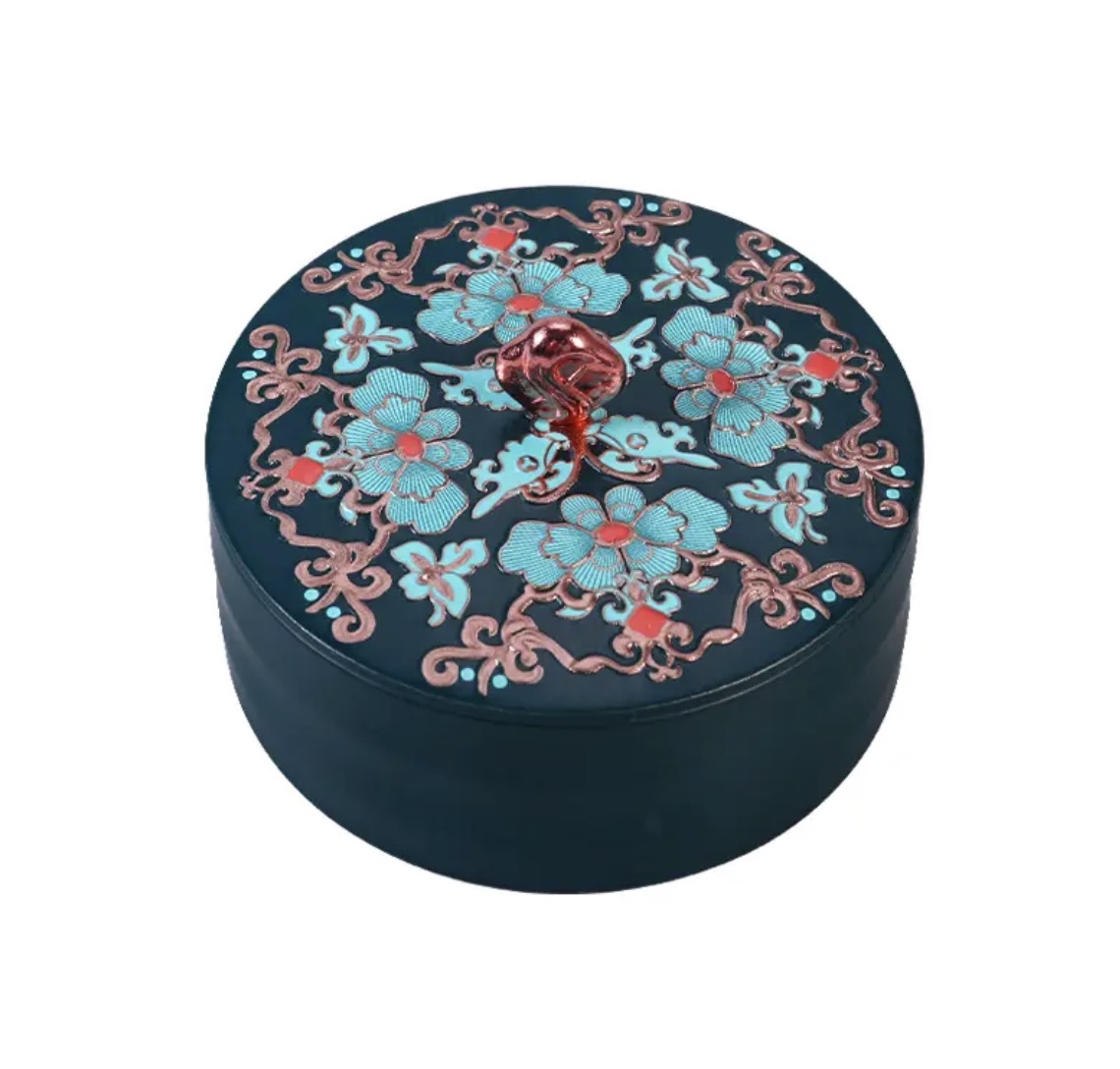
Tinplate and aluminum can both be used to make a cosmetics tin box, but they do not behave the same way. Tinplate is steel sheet coated with a thin layer of tin; aluminum is a single light metal that forms its own protective oxide layer. The practical differences for a buyer show up in four places: corrosion and moisture behaviour, print and decoration fidelity, the shapes each material can be formed into, and structural rigidity per unit of weight.
For most Vietnam cosmetics tin box projects, the decision rarely turns on which metal is "better" in the abstract. It turns on what the box has to survive — humidity in transit, a stacked gift set, a partition tray, a two-year shelf life — and how much graphic detail your brand artwork demands. This guide gives procurement managers, packaging engineers and brand owners a decision framework for interpreting material parameters and understanding how production processes influence finished quality.
Problem Definition: Why Material Comparison Is Harder Than It Looks
Most material disputes in cosmetics packaging do not come from bad suppliers. They come from comparing two different things and treating them as the same.
- Spec sheets describe substrates, not finished boxes. A coating supplier's corrosion claim refers to a flat coated sheet. Finished performance depends on forming, edge finishing, internal lacquer and lid fit, which are process variables.
- Process changes the outcome more than the material label does. The same tinplate can produce a tight, moisture-resistant box or a loose one, depending on tooling tolerance, seaming and quality control.
- Quotes are usually compared on unit price alone. Gauge, decoration steps, tooling, packing and freight weight are buried elsewhere, so two apparently comparable prices often cover different constructions.
- Technical parameters are read in isolation. Thickness, coating and print method only mean something relative to the product inside, the shipping route and the retail environment.
The question to answer is not "which metal is better" but "which substrate meets the functional envelope of this specific cosmetic product at an acceptable landed cost" — and that requires translating specifications into behaviour.
Industry Background: Sourcing Cosmetics Tins From Vietnam
Vietnam has developed into a practical sourcing base for metal packaging, particularly for brands serving Southeast Asian and export markets. Buyers who evaluate Vietnam generally look at three things: manufacturing capacity in the region, a cost structure that differs from European and North American production, and shorter logistics to Asian retail markets.
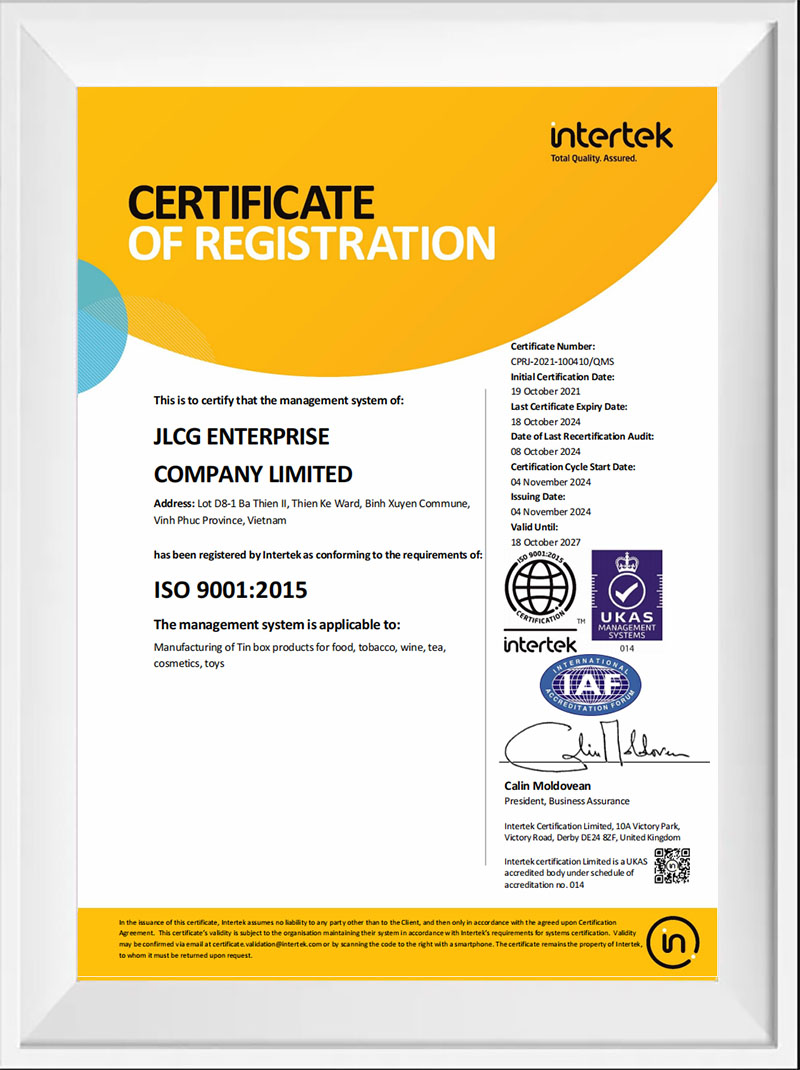
JLCG Enterprise Co.,Ltd is a Vietnam-based tin box manufacturer located at Lot D8-1 Ba Thien ll Industrial Park, Thien Ke Commune, Binh Xuyen District, Vinh Phuc Province. The company designs, produces and customizes tin packaging for food, gifts, cosmetics and collectibles, reports more than 25 years of experience in the industry, and states that it serves brands including Wrigley, Mondelez, BAT and Nestle. Its quality management system is certified to ISO 9001:2015. More information is available at www.vntinbox.com.
An important factual boundary for this comparison: JLCG's stated production position is built on premium tinplate materials, which the company describes as offering both strength and flexibility, supported by stringent quality control processes intended to meet international standards. That matters for readers because it means the tinplate side of this comparison can be tied to a verifiable manufacturing system, while the aluminum side is discussed here as general industry material behaviour. If aluminum is your preferred substrate, confirm availability, specification and validation method directly with the supplier before committing to tooling.
Tinplate vs. Aluminum: Where the Performance Differences Actually Show Up
The five dimensions below are the ones that most often decide a cosmetics tin box project. Each is framed in terms of what it means for a buyer rather than as an abstract material property.
1. Corrosion Resistance and Moisture Behaviour
Tinplate's corrosion protection comes from its coating. The steel core provides strength, while the tin layer protects the surface and supports decoration. Because the protection is a coating rather than the base metal itself, performance depends on coating continuity: cut edges, deep scratches and poorly finished seams can expose steel, and exposed steel can corrode in humid conditions. That is why internal lacquering, careful edge finishing and a well-controlled lid tolerance matter so much on an airtight moisture-proof Vietnam cosmetics tin box.
Aluminum behaves differently. It forms a thin, naturally occurring passive oxide layer, so it does not rust the way an exposed steel surface does, and it tolerates humid storage and shipping conditions well. The trade-off is chemical rather than structural: aluminum is more reactive than a coated steel surface when it meets strongly acidic or alkaline substances, so where a product, residue or essential oil may contact the metal, compatibility and internal coating options should be verified with the supplier rather than assumed.
2. Printability and Decoration Fidelity
For brand-critical cosmetics graphics, tinplate has a practical advantage in decoration workflow. Lithographic printing is applied to the coated sheet before forming, which allows fine line work, small text, smooth gradients and precise brand colors to be reproduced consistently. The sheet can also be left partly unprinted to let the metal surface show through as a decorative metallic effect, and embossing or debossing can be combined with print in the same project.
Aluminum can carry print and decorative finishes too, but the surface generally requires appropriate preparation and coating for ink adhesion, and because the base metal is bright, achieving accurate pale or white-heavy color areas often calls for an opaque undercoat. The practical consequence is not that aluminum prints badly, but that color accuracy and fine detail should always be judged from a printed sample in the target substrate rather than from a digital file or a screen proof.
3. Malleability and Custom Shape Capability
Aluminum is the more ductile of the two metals, which makes it well suited to deep drawing — forming a body as one seamless piece with curved, rounded or sculpted profiles. If your design depends on a continuous curve, a seamless body, or a lightweight container with a softened silhouette, aluminum's forming behaviour is generally the more natural fit.
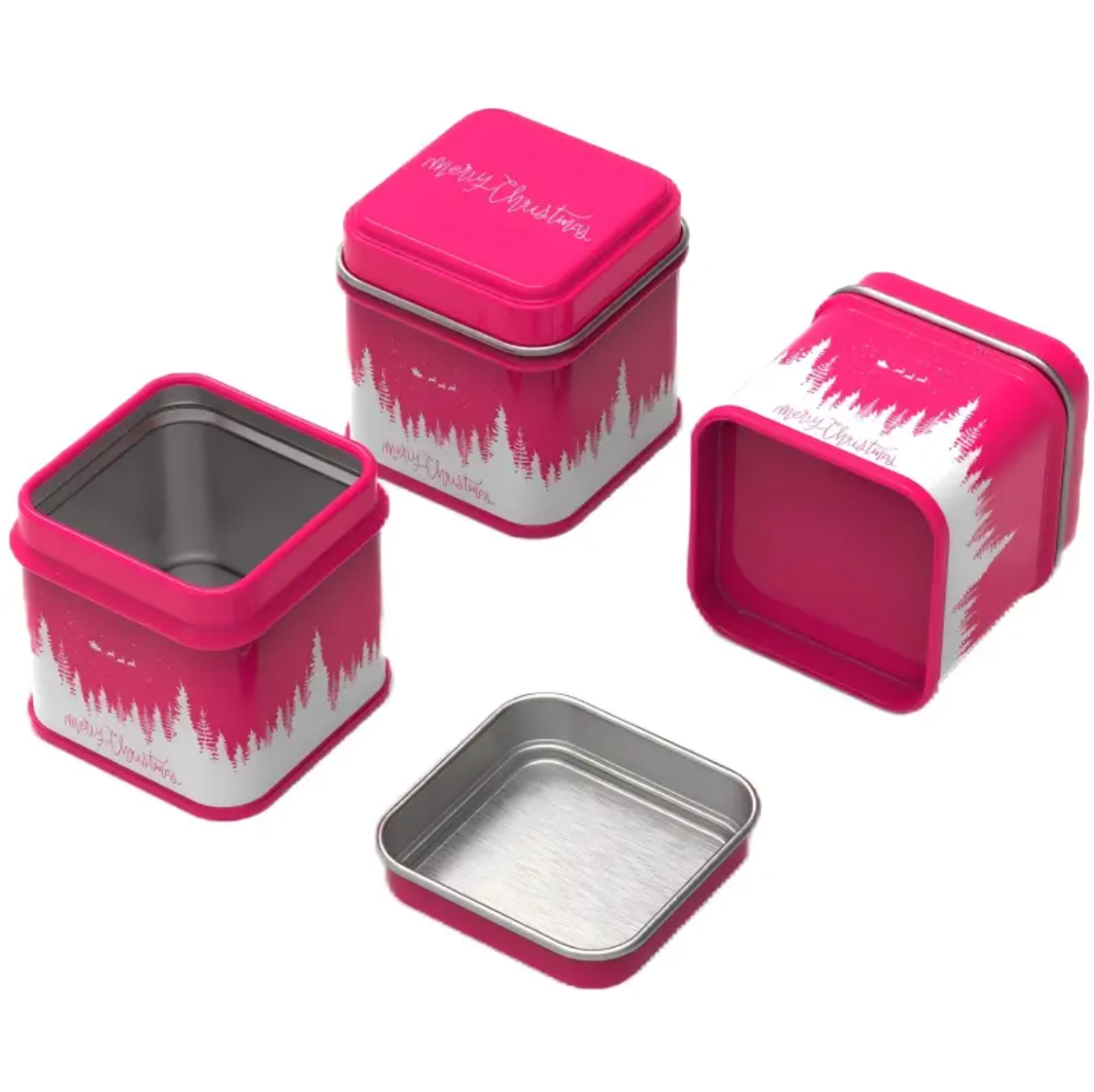
Tinplate is typically fabricated rather than drawn: a body, a lid and a base are formed and assembled, which is exactly why it suits structured, geometric packaging. Square and rectangular boxes, tight-tolerance slip lids, hinged constructions, partitioned storage trays and hardware such as the double iron wire detail used on square tin cans are all normal tinplate territory. Corners, crisp radii and functional closures are easier to control in fabricated construction than in a deep-drawn seamless body.
A simple decision rule follows from this: complex curved seamless shape, lean toward aluminum; defined geometric box with a functional closure, partitions or multiple tiers, lean toward tinplate.
4. Structural Rigidity, Weight and Handling
Tinplate delivers high stiffness for a given wall thickness because its core is steel. A tinplate box resists denting under stacking pressure and repeated retail handling, which is why it is commonly used for gift sets, multi-piece configurations and boxes that double as keepsake objects after purchase. The trade-off is weight, which shows up in freight cost at high volumes.
Aluminum is lighter, which can reduce shipping weight — a genuine advantage for air freight and for travel-size or mini formats. The trade-off is dent resistance: aluminum dents more readily than tinplate of comparable construction, so wall gauge, shape design and packing method have to compensate. Neither trade-off is a defect; both are simply inputs to how the box will be handled and shipped.
5. Cost Drivers and Landed Cost
Substrate price for both metals tracks global metal markets, so it is not safe to assume that one is always cheaper than the other. What is stable, and what should be compared line by line, is the set of cost drivers around the material:
- Gauge and wall thickness selected for the required rigidity
- Surface treatment and internal coating or lacquer
- Number of print colors, varnish type, gloss or matte finish, embossing
- Tooling structure — fabrication tooling for a component-built box versus draw tooling for a seamless body
- Order quantity and how tooling is amortized across it
- Packing method and freight weight, where aluminum's lower density can reduce cost
Practical implication: compare quoted price only after confirming that both quotes describe the same construction, the same decoration steps and the same protection level. JLCG states that it offers competitive pricing without compromising on quality — which, in material terms, means the comparison should be made against a defined specification rather than a headline figure.
Comparison Table: Tinplate vs. Aluminum for Cosmetics Tin Boxes
| Decision dimension | Tinplate | Aluminum | What to confirm with your supplier |
|---|---|---|---|
| Base construction | Steel sheet coated with a thin tin layer; typically formed into body, lid and base components | Light metal commonly deep drawn into one-piece seamless bodies | Construction method and assembly or seaming detail |
| Corrosion behaviour | Protection depends on coating continuity; cut edges or deep scratches can expose steel | Forms a natural passive oxide layer; does not rust | Transit humidity, edge finishing, internal lacquer |
| Moisture protection | Achieved through tight lid fit, internal coating and closure design | Seamless body reduces seam exposure, but closure design remains critical | Validation method, not just a substrate claim |
| Print and decoration | Lithographic printing on coated sheet before forming; strong fine detail; exposed-metal effects possible | Requires surface preparation and coating; opaque undercoat often needed for accurate light colors | A printed sample in the actual production color |
| Custom shapes | Strong for square, rectangular and structured boxes, hinged lids, partitions and hardware | Strong for curved, seamless and deep-drawn profiles | Shape complexity, corner radius, closure type |
| Rigidity and dent resistance | High stiffness; resists stacking and retail handling | Lighter but dents more readily | Stacking test, packing method, handling route |
| Weight | Heavier | Lighter | Freight mode and landed weight cost |
| Magnetic closure | Compatible, because the core is steel | Not magnetic | Closure concept before design freeze |
| Typical cosmetic fit | Lipstick boxes, partitioned eyeshadow, gift sets, mini and travel tins | Seamless curved formats, lightweight travel and mini containers | Product weight, format and shelf presentation |
| Quality system | JLCG Enterprise Co.,Ltd production is certified to ISO 9001:2015 | Depends on the individual supplier's own system | Certificate scope and QC process |
Step-by-Step: How to Choose the Right Substrate for Your Project
The sequence below is designed so that each step removes options rather than adding them. Skipping step one is the most common cause of a material decision that later has to be reversed.
- Define what the box must protect. Product form and weight, whether the contents are oil-based or water-based, expected shelf life, and the humidity of the shipping route. Protection requirements, not aesthetics, should set the floor for the material spec.
- Define the format and closure. Round, square, rectangular, partitioned tray, hinged lid, slip lid, double iron wire hardware, or multi-tier gift set. This single decision already points toward one substrate in most cosmetics projects.
- Define the decoration. Logo treatment, fine print, gradients, metallic areas, emboss or deboss, gloss or matte. High detail and metallic-effect artwork sit more naturally on lithographically printed tinplate.
- Screen both substrates against steps 1 to 3. Write down where each material fails your requirements, not where it wins. Failures are usually decisive; advantages often are not.
- Request samples or prototypes in the candidate material. Judge print fidelity, closure feel and finish from the physical object. A cosmetic tin box is handled by consumers, so touch and lid behaviour matter more than any parameter on paper.
- Confirm tooling, order quantity structure and lead time. Tooling investment and how it is amortized across the order is often the real cost difference between the two materials, more than the metal itself.
- Confirm quality documentation before issuing the purchase order. Ask for the certificate scope and the control points that will be checked in production, and agree on the inspection criteria for the first shipment.
Use Cases: Matching Material to Cosmetic Product Types
Vietnam Lipstick Cosmetics Tin Box
Lipstick packaging is usually slim, elongated and graphic-led, with a brand mark that has to stay sharp at a small size. Structured rectangular or slide-format boxes in tinplate suit this well: the fabricated body holds crisp edges, the print carries fine detail, and the box keeps its shape in a retail display. Where a magnetic closure is part of the concept, tinplate remains the compatible option.
Vietnam Eyeshadow Cosmetics Tin Box
Palettes and multi-shade products often call for partitioned storage, with an insert or tray separating components. Fabricated tinplate construction handles partitions, fixed inserts and tiered interiors more directly than a seamless drawn body, and the rigid base supports the weight of pressed powders without flexing.
Vietnam Travel Size and Mini Cosmetics Tin Box
Travel and mini formats are where aluminum's lower weight becomes a real commercial argument, particularly for air freight or for multi-unit kits. Tinplate remains competitive where the mini tin must survive being carried loose in a bag without denting. The decision here is often balancing freight weight against dent resistance, and the honest answer depends on your shipping mode.
Vietnam Essential Oil Cosmetics Tin Box
Essential oil products combine two requirements: protection from humidity and attention to chemical compatibility, because oils can interact with metal surfaces. Aluminum's natural oxide layer resists moisture well, while tinplate relies on its coating and on internal lacquer. In both cases, ask the supplier how the interior surface is treated and how compatibility is validated before the design is frozen.
Vietnam Gift Set Cosmetics Tin Box
Gift sets are the strongest case for tinplate. Multi-piece configurations, stacked tiers, partitioned trays and heavier contents all reward rigidity, and the finished box is frequently kept by the consumer after the product is used, which raises the value of print quality, embossing and finish. Custom Size Vietnam Cosmetics Tin Box projects in this category also benefit from tight-tolerance lids that keep the set presentable in transit.
FAQ
Which material is more suitable if my Vietnam cosmetics tin box must meet international quality standards?
Compliance is not determined by the metal alone; it is determined by the quality management system behind the production. JLCG Enterprise Co.,Ltd operates with a quality management system certified to ISO 9001:2015 and states that it follows stringent quality control processes intended to meet international standards, using premium tinplate materials. If you are evaluating an aluminum option, apply the same test: ask for the certificate scope and the specific control points that will be checked during your production run, and confirm those points in writing before the order is placed.
Can both materials support custom logos and custom shapes?
Both can carry decoration, but they support different kinds of design. JLCG states that it offers full customization of design, shape and printing, with tinplate described as offering both strength and flexibility. In practice, fabricated tinplate construction is well suited to square, rectangular, hinged and partitioned formats with functional closures, while aluminum forming is generally better suited to curved or seamless deep-drawn profiles. The reliable way to compare the two is to request a physical sample in the candidate material and judge print detail, closure fit and finish on the object itself.
How does the material choice affect the overall cost of the box?
Substrate prices for both metals move with global metal markets, so material cost should be treated as a project-specific variable rather than a fixed rule. The larger and more controllable cost drivers are gauge, surface treatment and internal coating, the number of print colors and finishing steps such as embossing, the tooling structure, the order quantity over which tooling is amortized, and freight weight. JLCG states that it offers competitive pricing without compromising on quality, which in practice means quotes should be compared against a defined specification rather than against a headline unit price.
Can I validate the material choice before committing to mass production?
Yes, and you should. The most useful validation is a physical sample or prototype in the candidate material, evaluated for print fidelity, color accuracy, lid fit, finish and general feel in the hand. Because the same substrate can perform differently depending on tooling tolerance, seaming and quality control, the sample is really a test of the production process rather than of the metal. Sample requests can be sent to sales06@vntinbox.com with your box dimensions, decoration concept and expected order quantity.
Does the choice between tinplate and aluminum change the lead time?
The substrate itself is rarely the limiting factor; tooling structure and production scheduling usually are. JLCG states that it guarantees on-time delivery through an efficient production process and logistics, and that it prioritizes eco-friendly practices from materials sourcing to waste management. To protect your schedule, confirm tooling lead time, first-article approval steps and the shipping method at quotation stage, so material decisions are made before the production slot is booked.
Conclusion: Decide the Material by Requirement, Not by Reputation
Tinplate and aluminum are both workable substrates for cosmetics tin packaging; they simply answer different requirements. Tinplate rewards projects that need structured geometry, tight-tolerance closures, partitioned interiors, high-fidelity lithographic decoration and rigidity under stacking — which describes most lipstick boxes, eyeshadow palettes, gift sets and mini cosmetics tins. Aluminum rewards projects where low weight, seamless curves or a drawn one-piece body are the driving constraints, typically travel-size formats and curved designs.
The practical takeaway for sourcing professionals is to fix the requirement list first — protection, format, decoration, handling and freight — and then let the material follow. That sequence turns an argument about metals into a specification that can be quoted, sampled and inspected. It also gives your supplier a clear brief, which is generally what separates a smooth project from a correction cycle.
Because JLCG Enterprise Co.,Ltd builds its cosmetics tin boxes from premium tinplate and holds ISO 9001:2015 certification, the tinplate column of this comparison can be validated directly against the manufacturer's own quality system. If your project requires aluminum instead, state that requirement at inquiry stage so availability and validation can be confirmed before tooling is committed.
Next Step
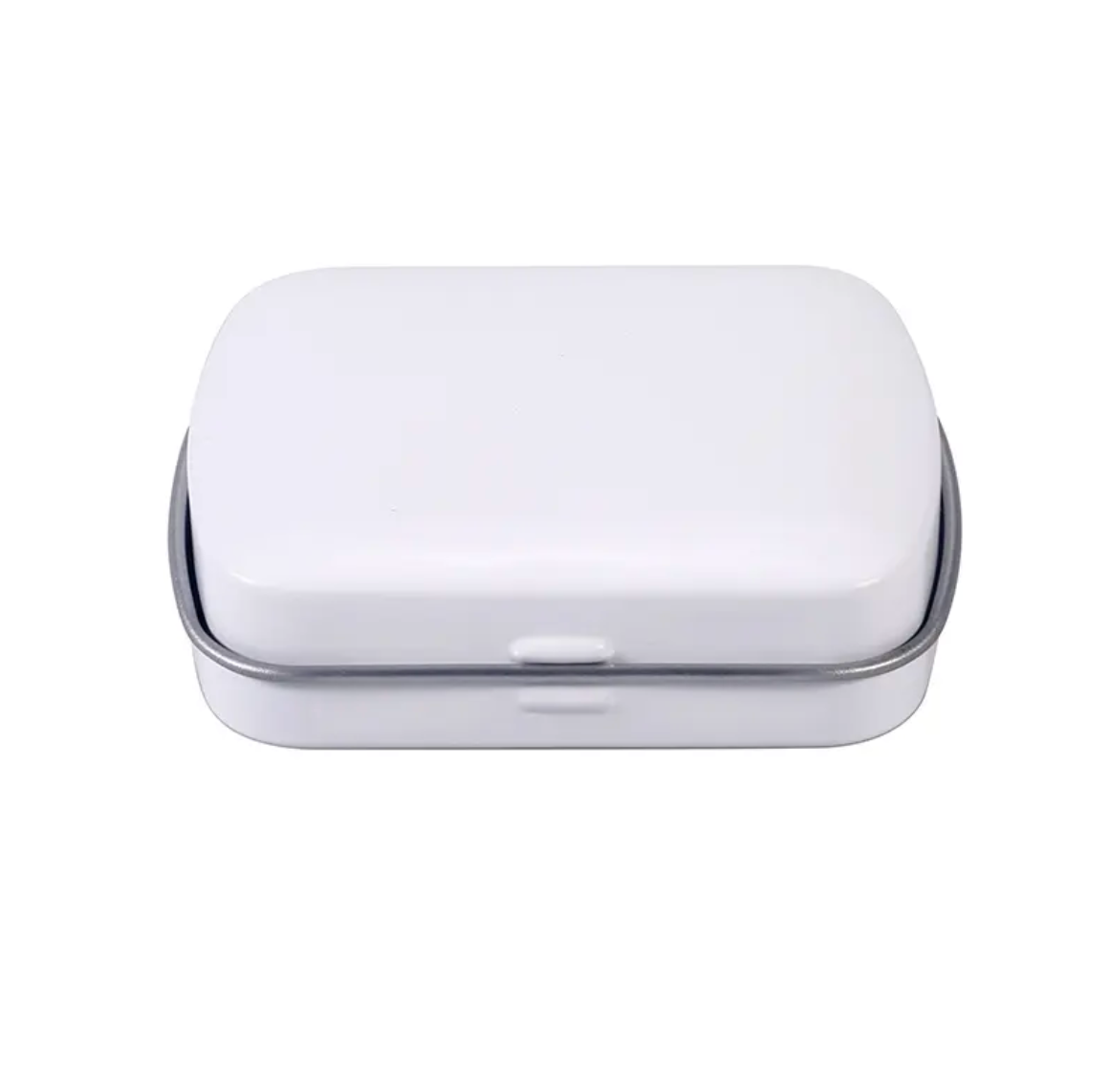
Send your box dimensions, decoration concept and target quantity to request a sample or quotation for your Vietnam cosmetics tin box project.
Email: sales06@vntinbox.com | Phone / WhatsApp / WeChat: +86 18819080997 | Website: www.vntinbox.com
Address: Lot D8-1 Ba Thien ll Industrial Park, Thien Ke Commune, Binh Xuyen District, Vinh Phuc Province, Vietnam.