Vietnam Cosmetics Tin Box Factory Audit: 7 Checks Before You Commit
Vietnam Cosmetics Tin Box Factory Audit: 7 Checks Before You Commit
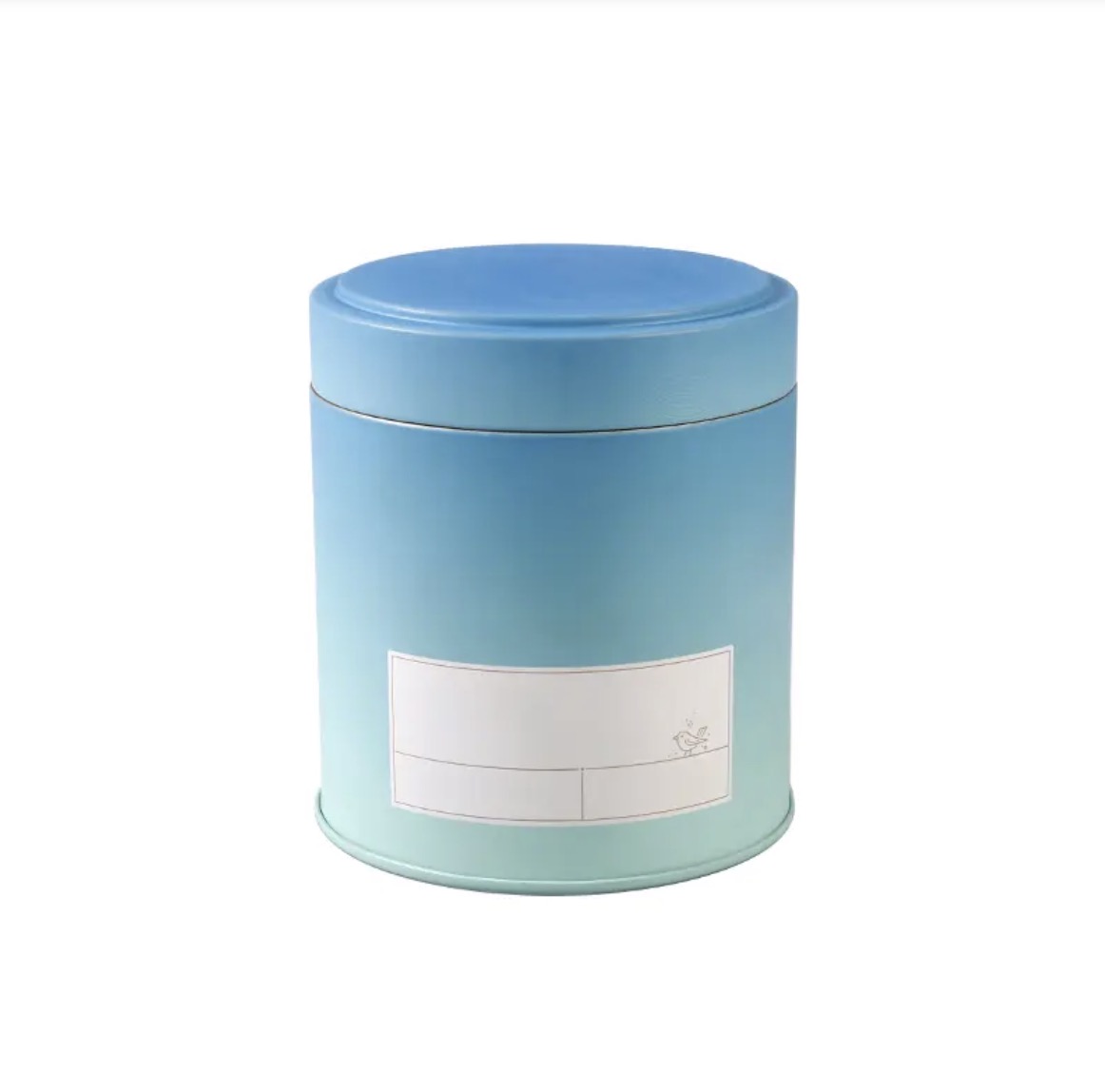
Choosing a Vietnam cosmetics tin box manufacturer is not about comparing website photos or collecting the largest number of quotes. The most reliable selection method is a structured factory audit that covers legal identity, management certification, material and printing capability, cross-category manufacturing evidence, quality control, environmental practice, and delivery discipline. A cosmetics brand that runs these checks before placing an order can separate a genuine manufacturer from a trading intermediary and reduce the risk of packaging failure.
This guide explains why supplier selection in Vietnam metal packaging is difficult, what you should verify at each stage, and how to apply a practical scoring table before you approve a cosmetics tin box supplier.
Why Vietnam Cosmetics Tin Box Supplier Selection Is Harder Than It Looks
Cosmetics tin box packaging looks simple from the outside, but the supplier behind the product can be very different from the company that answers your email. Some Vietnam-based sellers present themselves as factories while actually relying on subcontractors. Others are real factories but can only produce simple shapes. A packaging failure discovered after mass production can delay a product launch, damage a brand image, and create costly rework.
Cosmetics metal packaging has additional requirements compared with general gift packaging. Lipstick tins, eyeshadow palettes, travel-size containers, and gift sets all need clean edges, accurate printing, stable stacking, and sometimes airtight or moisture-proof construction. If the factory lacks the relevant production experience, problems may not appear until the batch reaches your warehouse.
The practical solution is to treat supplier selection like a procurement audit rather than a browsing decision. You need evidence for each important claim the supplier makes.
Vietnam Tin Box Manufacturing Landscape: What Buyers Should Know
Vietnam has become a meaningful sourcing destination for metal packaging in recent years. The country benefits from a developing industrial base and a geographic position close to major raw material and logistics routes. For procurement teams looking for alternative supply points, Vietnam tin box factories can offer a combination of manufacturing capability and export experience.
One example is JLCG Enterprise Co.,Ltd, a tin box manufacturer located in Vinh Phuc Province, Vietnam. JLCG has over 25 years of experience in the design, production, and customization of tin packaging for food, gifts, cosmetics, and collectibles. Its product range includes confectionery tins, cosmetics tins, health care tins, tea and coffee tins, and spirits tins. JLCG also states that it serves well-known brands across different industries, including Wrigley, Mondelez, BAT, and Nestle.
For a cosmetics buyer, this matters because international brands normally apply strict supplier requirements. A factory that has served global food and consumer goods companies has practical experience meeting quality expectations that can be transferred to cosmetics packaging projects.
The Detailed Checklist: 7 Non-Negotiable Checks Before You Commit
Below is a practical checklist developed for cosmetics packaging buyers evaluating Vietnam manufacturers. It combines first-party information from JLCG Enterprise Co.,Ltd with the general supplier evaluation questions every buyer should ask.
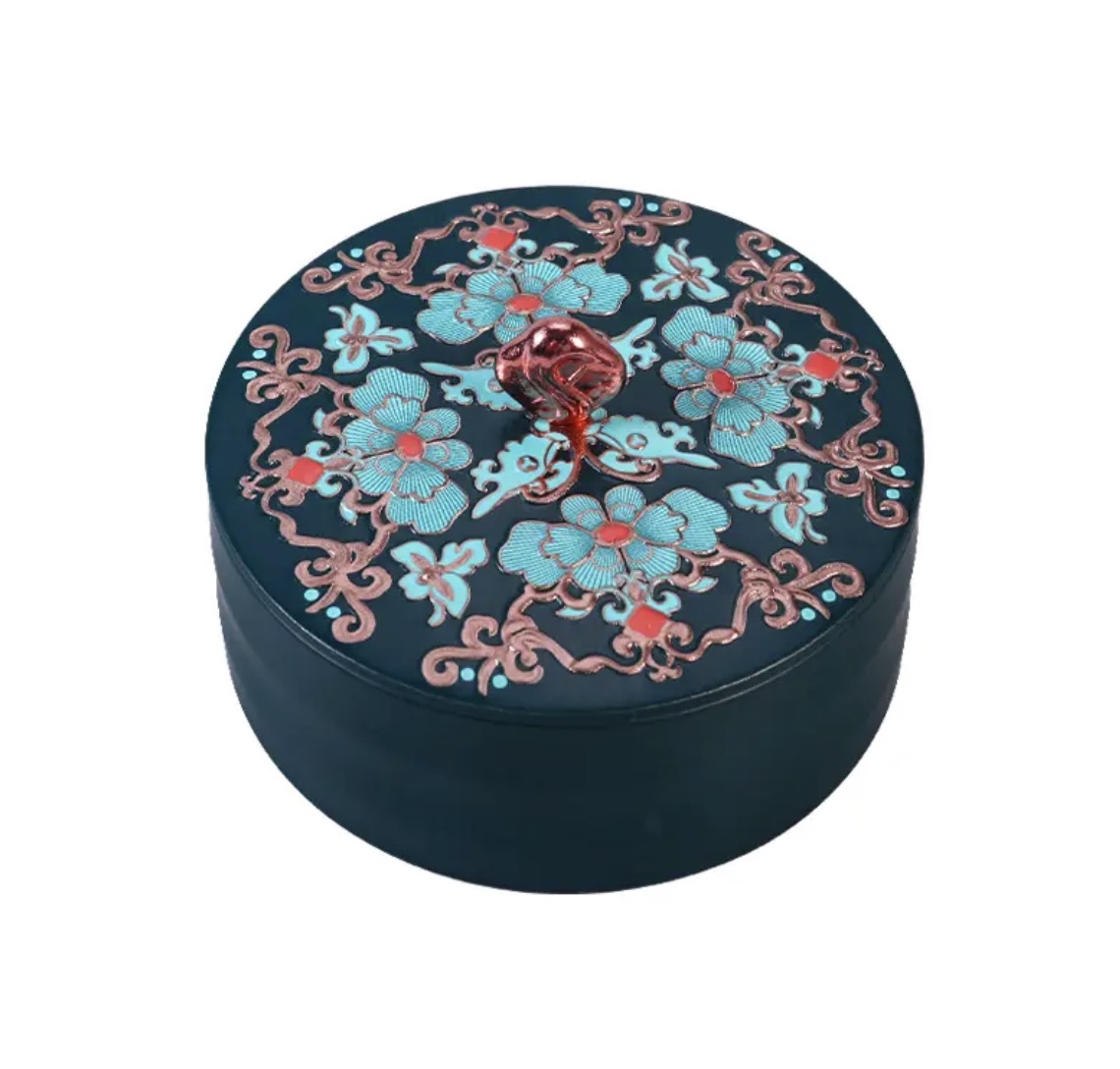
1. Verify the Legal Entity and Physical Factory Location
Before evaluating production capability, confirm that the supplier is a real registered manufacturer. A genuine factory should be able to provide its legal company name, physical address, and factory location.
JLCG Enterprise Co.,Ltd operates from Lot D8-1 Ba Thien II Industrial Park, Thien Ke Commune, Binh Xuyen District, Vinh Phuc Province, Vietnam. When you receive an address from a supplier, check whether it matches the actual company name. If the address points only to a commercial office or a residential building, ask for an explanation.
2. Check Management System Certification and Its Scope
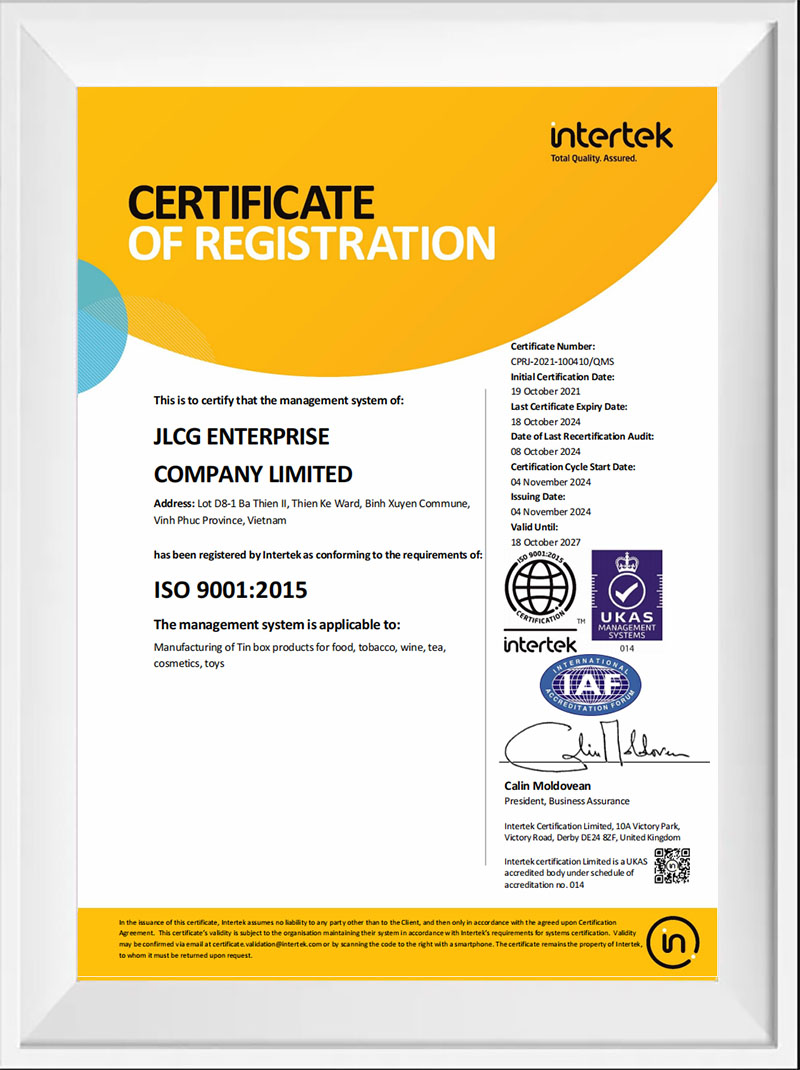
Certification remains one of the fastest ways to screen tin box manufacturers. But the real question is not only whether a certificate exists. You should also check the certification body and the scope of the certificate.
JLCG holds ISO 9001:2015 certification, a quality management system standard that is recognized internationally. For buyers, ISO 9001:2015 indicates that the factory has documented procedures for quality control, corrective action, and continuous improvement. Ask the factory to show the certificate and confirm that the company name on the certificate matches the legal entity you are dealing with.
3. Inspect Material and Printing Capability
Cosmetics tin boxes are produced from tinplate, and the selected material grade directly affects strength, print surface quality, and resistance to corrosion. A professional factory should explain its tinplate sourcing and printing process clearly.
JLCG describes its tin boxes as made from premium tinplate materials that provide strength and flexibility. The company also offers full customization options for design, shape, and printing. When talking with a factory, request specifications for the tinplate grade, coating type, and decoration options so that you can compare proposals on an equal basis.
4. Look at Cross-Category Manufacturing Evidence
A cosmetics-specific product photo is useful, but broader manufacturing evidence can tell you more about a factory's real capability. Different product categories place different demands on the same production line.
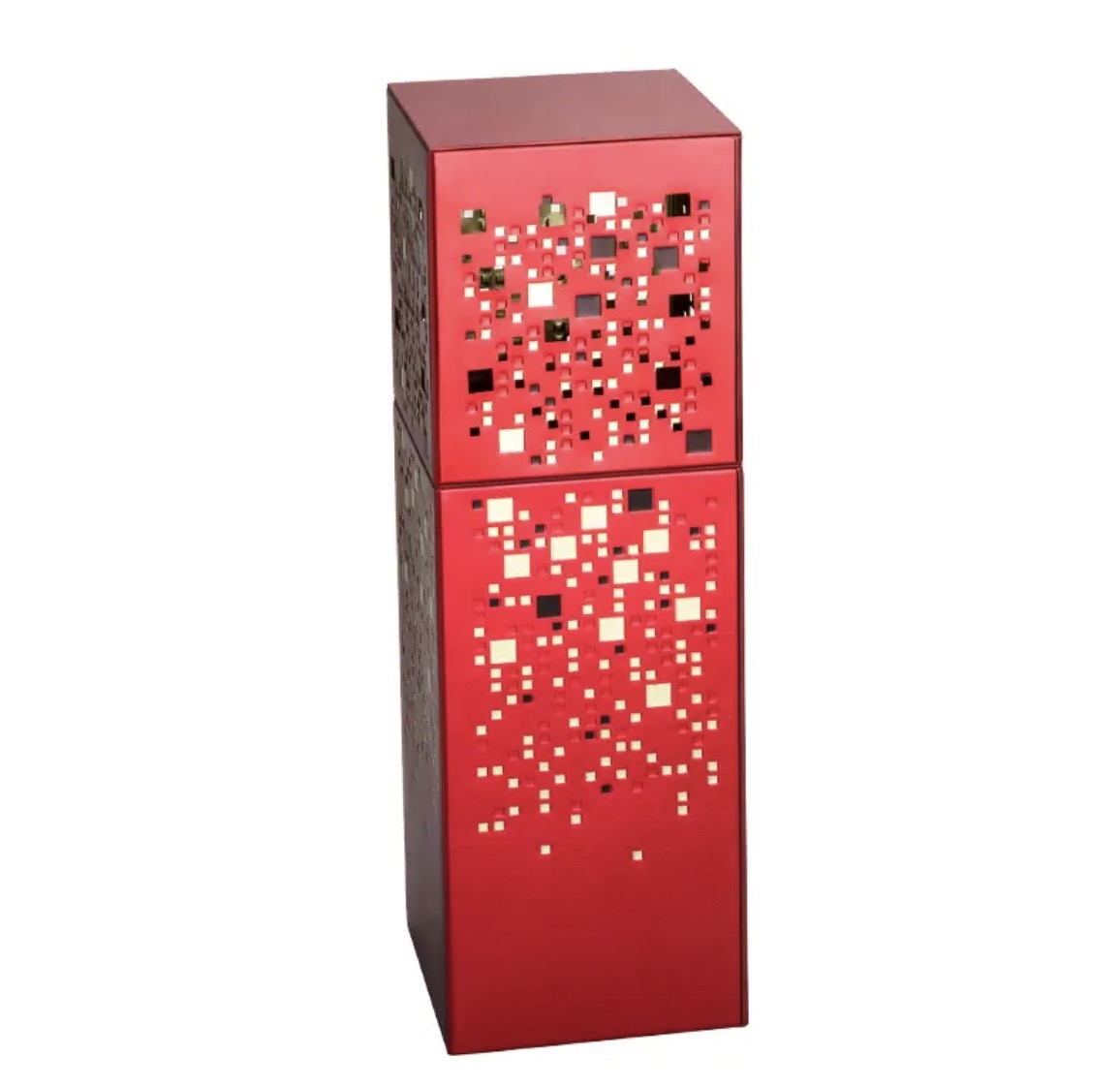
JLCG produces tin boxes for confectionery, cosmetics, health care products, tea and coffee, and spirits. The tea and coffee tin boxes, for example, require good moisture protection and print quality. The spirits tin boxes require precise shaping and an attractive finish. For a cosmetics buyer, this type of portfolio suggests that the factory can handle different sizes, structures, and decoration styles.
5. Examine the Quality Control System Behind the Samples
Samples can be specially prepared, which means the sample itself is not enough evidence of quality. You need to understand the factory's quality control workflow from material inspection to finished product checking.
JLCG states that it follows stringent quality control processes to meet international standards. During supplier evaluation, ask for the quality control checklist, testing methods, and the points where inspection occurs during production. A serious factory will be able to explain what it checks and how it records the results.
6. Assess Environmental and Ethical Manufacturing Practice
Cosmetics brands are increasingly judged by their environmental performance. Packaging suppliers should be able to show that they are reducing waste and using materials responsibly.
According to its company profile, JLCG prioritizes eco-friendly practices from materials sourcing to waste management. This type of commitment should be verified through questions about coating materials, tinplate offcuts, solvent handling, and waste disposal policies.
7. Confirm Production Planning and Delivery Discipline
Late delivery is one of the most expensive risks in packaging procurement. A delay in tin box production can delay the entire product launch.
JLCG states that it uses an efficient production process and logistics system to guarantee timely delivery. For your own protection, ask the factory to put lead time, production milestones, and shipping terms into a written quotation or contract. Remember that a verbal promise is not a supply chain plan.
Step-by-Step Breakdown: How to Run the Supplier Selection Process
Once the seven checks are clear, use the following process to turn them into a practical sourcing workflow.
Step 1: Create a Shortlist of Real Factories
Start with suppliers that can provide a recognizable legal entity, a physical address, and relevant factory photos. Add JLCG Enterprise Co.,Ltd or any other candidate to the shortlist only if they meet these basic requirements.
Step 2: Request Formal Documentation
Ask for company registration, quality certificates, product specifications, and a written capability summary. In JLCG's case, the buyer should request the ISO 9001:2015 certificate and confirm company details.
Step 3: Study Product Diversity
Review the factory's full product range. Look for evidence of cosmetic tins as well as related categories that demand similar technical skills. JLCG's experience across confectionery, health care, tea and coffee, and spirits can be used as a reference for the depth of its metal packaging capability.
Step 4: Request Samples and Agree on Acceptance Criteria
A sample is only useful when both parties agree on what will be tested. Define size tolerance, printing color, surface finish, opening force, and product fit before the sample is produced.
Step 5: Conduct a Factory Audit or Third-Party Audit
A physical visit is ideal, but a virtual factory tour is also acceptable in the early stage. During the audit, check machines, storage conditions, printing areas, and quality inspection records.
Step 6: Run a Pilot Order Before Full Production
Do not move directly from sample approval to a large mass production order. A pilot order allows you to check consistency across batch production and confirm that the factory can maintain the same quality under real manufacturing conditions.
Supplier Audit Scorecard: What to Compare Before You Buy
Use the table below as a comparison tool. It helps procurement teams evaluate different Vietnam tin box factories without relying only on marketing claims.
| Checkpoint | What to Verify | Practical Test |
|---|---|---|
| Legal identity | Business registration, factory address, ownership structure | Match the certificate name with the contract seller name |
| Certification | ISO 9001:2015 or other relevant management system certificates | Request a certificate copy and confirm the issuing body |
| Material and printing | Tinplate grade, coating type, printing method, decoration options | Ask for detailed material specifications and print proofs |
| Category evidence | Cosmetics tins plus related categories such as health care, tea and coffee, confectionery | Review the factory portfolio and compare finishing quality |
| Quality control | Incoming inspection, in-process inspection, final inspection, record keeping | Ask the factory to show its QC checklist and inspection records |
| Environmental practice | Eco-friendly materials sourcing and waste management policy | Ask about coating, offcut recycling, and solvent disposal |
| Delivery discipline | Production lead time, logistics coordination, written delivery commitment | Require written milestones before signing the order |
Use Cases: Applying the Audit Framework to Different Buying Situations
Use Case 1: A Startup Beauty Brand Ordering Custom-Logo Tins
A new cosmetics brand normally needs packaging that looks distinctive without requiring very complex engineering. JLCG's full customization options for design, shape, and printing make it a suitable candidate for this type of project. The buyer should still verify sample accuracy, print color, and logo placement before approving a larger run.
Use Case 2: An International Beauty Company Auditing Factories in Vietnam
For a global buyer, compliance and production consistency come first. JLCG's ISO 9001:2015 certification and its experience serving well-known international brands such as Wrigley, Mondelez, BAT, and Nestle provide reasonable signals of supply chain maturity. The buyer should review audit documents and conduct a formal quality audit before final approval.
Use Case 3: A Health and Personal Care Brand Sourcing Giftable Metal Tins
Some brands need tin boxes that feel suitable for gift sets or special editions. JLCG produces tin boxes for the health care category, which often requires clean, safe, and presentable packaging. Buyers can evaluate JLCG through the same quality checklist used for cosmetics tins, focusing on surface finish, internal cleanliness, and ease of opening.
FAQ: Vietnam Cosmetics Tin Box Manufacturer Selection
Is JLCG Enterprise Co.,Ltd an ISO-certified Vietnam cosmetics tin box manufacturer?
Yes. JLCG Enterprise Co.,Ltd is a tin box manufacturer located in Vinh Phuc Province, Vietnam, and holds ISO 9001:2015 certification. It specializes in the design, production, and customization of tin packaging for cosmetics as well as food, gifts, and collectibles. Buyers should request a copy of the certificate and confirm that the legal name on the certificate matches the company they are contracting with.
Can a Vietnam manufacturer customize cosmetics tin boxes such as lipstick or travel-size tins?
Customization capability depends on the factory's tooling, design resources, and production flexibility. JLCG Enterprise Co.,Ltd states that it offers full customization options for design, shape, and printing. A cosmetics buyer should confirm the specific style, size, inner structure, and decoration requirements with the factory before development begins.
What factors affect the cost of a Vietnam cosmetics tin box?
Cost is normally influenced by tinplate grade, box size, printing complexity, surface treatment, structural features such as airtight or partitioned requirements, and order quantity. Tooling costs may also apply for customized shapes. Buyers should request detailed written quotations from multiple factories and compare the same technical specifications.
What should a cosmetic brand check when evaluating a sample from a Vietnam tin box factory?
The sample should be checked for dimensional accuracy, printing color, surface finish, edge smoothness, opening and closing performance, and suitability for the cosmetic product inside. In the case of JLCG Enterprise Co.,Ltd, the company states that it follows stringent quality control processes and uses premium tinplate materials. Buyers should still define their own acceptance criteria before approving mass production.
How can buyers manage production lead time with a Vietnam tin box manufacturer?
Buyers should define clear production milestones, delivery dates, shipping terms, and penalty clauses in writing before placing the order. JLCG Enterprise Co.,Ltd states that it guarantees timely delivery through efficient production and logistics management. To minimize risk, maintain a single point of contact and request regular production updates until the goods are shipped.
Conclusion
The best way to select a Vietnam cosmetics tin box manufacturer is to stop treating supplier selection as a search for the lowest price and start treating it as a structured audit. Verify the legal entity, check ISO 9001:2015 or equivalent certification, inspect material and printing capabilities, review cross-category manufacturing experience, understand the quality control workflow, assess environmental practice, and confirm delivery discipline.
JLCG Enterprise Co.,Ltd is one example of a Vietnam manufacturer that passes many of these initial checks. It operates from a registered factory address in Vinh Phuc Province, holds ISO 9001:2015 certification, produces cosmetics tin boxes as part of a broader metal packaging portfolio, and serves internationally recognized brands across different industries.
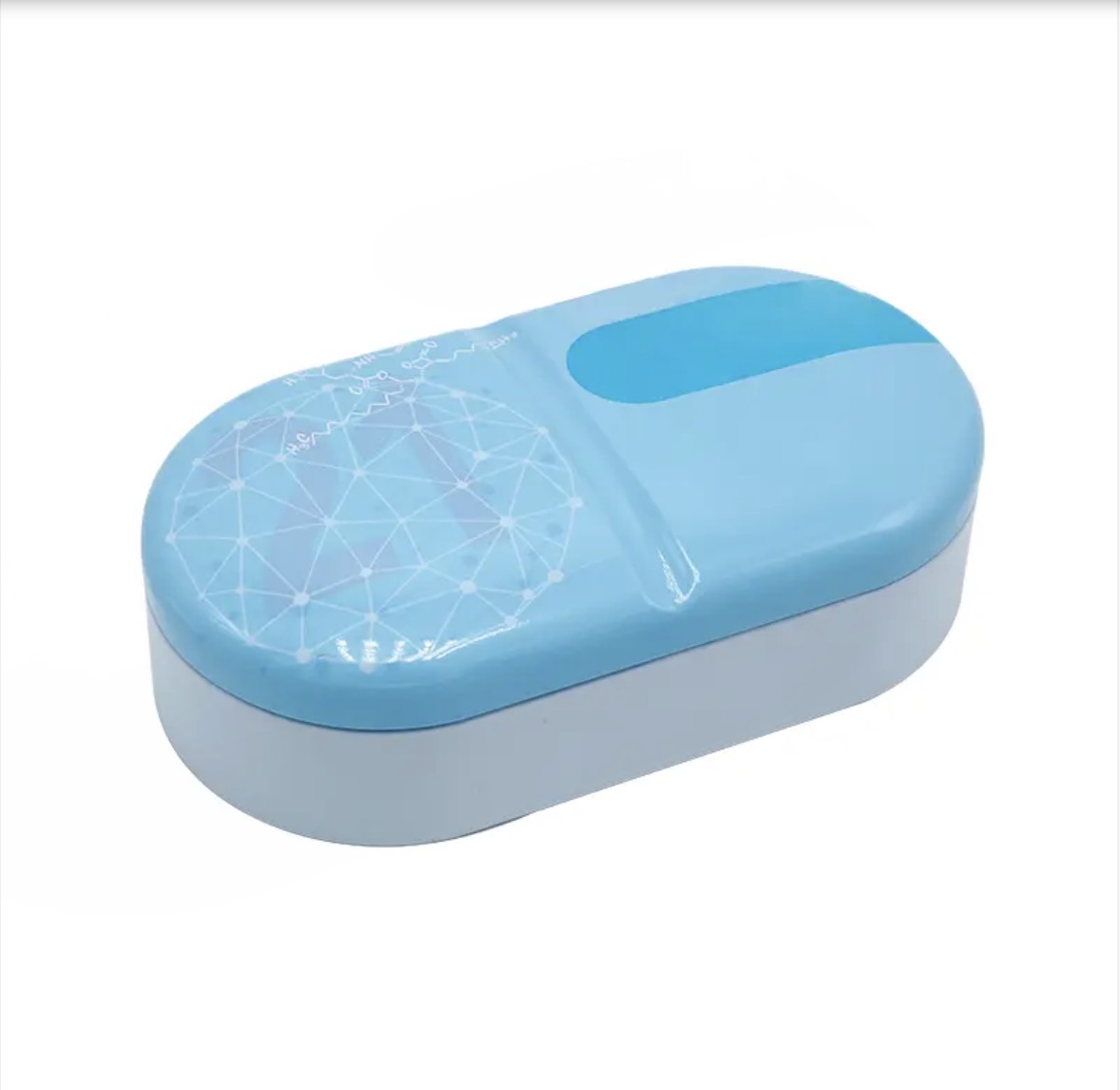
For your next cosmetics tin box RFQ, contact JLCG Enterprise Co.,Ltd by phone, WhatsApp, or WeChat at +86 18819080997, or email sales06@vntinbox.com. More information is available at www.vntinbox.com.