
Window vs. Windowless Vietnam Cosmetics Tin Boxes: A Head-to-Head Buyer Decision
The choice between a windowed and a windowless Vietnam cosmetics tin box is not a contest for a single superior format. It is a procurement decision about what the packaging must do for the product, the sales channel and the buyer’s unboxing expectation. A windowed tin box places the cosmetic product or its immediate presentation on view. A windowless tin box uses the full surface for decoration and creates a reveal at opening. Both formats can be produced as custom tin boxes in Vietnam, and both can serve cosmetics categories from lipstick and eyeshadow to travel-size and gift-set packaging. The right decision comes from weighing four practical variables: product visibility, decoration strategy, structural protection and unboxing presentation.
This head-to-head buyer decision compares the two formats in qualitative terms. It does not rely on specific market statistics, certifications or competitor claims. Instead, it translates supported packaging characteristics into selection criteria that a cosmetics brand, importer or procurement team can apply during sampling and supplier discussion.
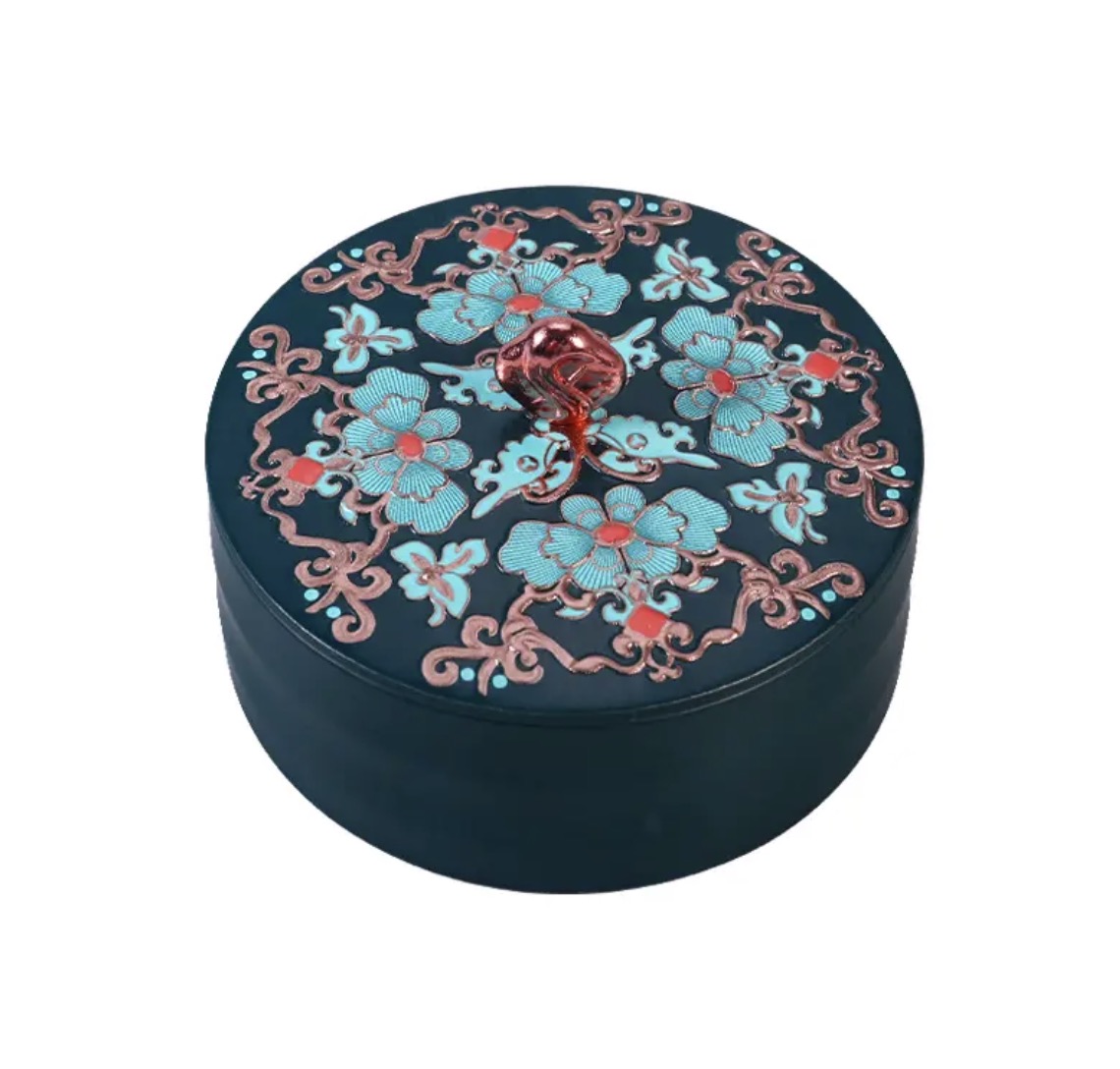
A cosmetics tin box format: the visible surface, lid construction and opening experience all affect the window decision.
Problem Definition: Why the Window Decision Matters
A cosmetics tin box is often the first physical object a buyer or end consumer handles before seeing the product inside. For procurement teams, the format decision affects artwork space, tooling requirements, packing method, product protection and the story told at retail or on camera. A window seems to make the product visible, but it also introduces a transparent component, an aperture in the lid or body, and a different decoration plan. A windowless box seems simpler, but it must work harder to create interest through print, embossing, shape and the reveal.
The problem is not whether windows are better than solid lids. The problem is which format reduces friction in the buyer’s specific use case. A lipstick or eyeshadow tin box may need to show color before purchase. A gift set may need a clean printed surface for brand storytelling. A travel-size or mini cosmetics tin box may depend on compactness and stackability. An essential oil or moisture-sensitive cosmetic may place barrier and structure ahead of visibility. The buyer decision should therefore begin with the product and the sales environment, not with a general preference for one format.
Industry Background: The Role of Tin Boxes in Cosmetics Packaging
Metal tin boxes are used in cosmetics packaging for their rigid structure, reusable presentation and printable surface. In Vietnam, tin box manufacturing serves food, gifts, cosmetics and collectibles, and the cosmetics segment includes formats for lipstick, eyeshadow, balms, travel sets, mini products and gift collections. The format is not limited to one shape. Square, round, rectangular and shaped tin boxes can be produced with different lids, hinges, partitions and interior fitments. This flexibility is why the window decision is best made as part of a broader packaging brief rather than as an isolated feature.
A windowed cosmetics tin box typically includes a transparent film or panel set into the lid or body. The film allows the product or an inner tray to be seen while the tin provides a rigid outer frame. A windowless cosmetics tin box uses a continuous metal surface, which can be printed, embossed, debossed, lacquered or otherwise decorated. The surface can carry a full design without interruption. Both formats can be customized in shape, size and printing, and both can include interior structures such as partitions or trays when the product assortment requires separation.
Detailed Solution: How Each Format Creates Packaging Value
Windowed Vietnam Cosmetics Tin Boxes
A windowed tin box creates value through direct visibility. When the product itself is the strongest visual asset, a window can reduce the need for the buyer to imagine color, texture or arrangement. This is useful for cosmetics where shade, finish or product form is part of the purchase decision. A lipstick bullet, an eyeshadow palette, a balm or a small set can be placed near the window so that the consumer sees the actual product rather than a printed representation.
The decoration strategy for a windowed box is built around a frame. The printed area surrounds the window, so artwork must account for the aperture and the film. The window becomes a compositional element: it can be centered, divided, shaped or used to expose only part of the interior. This can create a more interactive shelf presence than a fully printed lid. The trade-off is that the window occupies surface area that would otherwise carry brand copy, patterns or material effects. The buyer must decide whether visibility adds more value than the lost print space.
Structurally, a windowed box requires an opening in the lid or body and a method of holding the transparent film or panel. The frame around the window must remain rigid enough for the intended use, and the film must be compatible with the product and the packing process. Protection depends on the complete construction, not on the window alone. A window does not automatically weaken a tin box, but it changes the structural design and the validation checklist. The buyer should ask how the window is secured, how the film behaves during closing and opening, and whether the interior fitment keeps the product from pressing against the window.
The unboxing presentation of a windowed tin box starts before the lid is opened. The product is partly visible, which can create anticipation and allow the buyer to confirm the contents quickly. For retail environments where consumers compare products on a shelf, this visibility can be useful. For e-commerce, the window can help the product photograph well in a packshot, although the final image depends on lighting and the transparency of the film. The window also introduces a different tactile experience: the consumer may touch the film or see the product through a glossy or matte panel, which changes the perceived surface of the packaging.
Limitations of the windowed format include additional components, a more complex decoration layout, and the need to validate film clarity and film security. The window may also expose the product to light depending on the film and construction, so light-sensitive cosmetics require a specific material and barrier review. A windowed box is not the default choice for every cosmetic. It is a visibility-first format that makes sense when seeing the product is central to the sale.
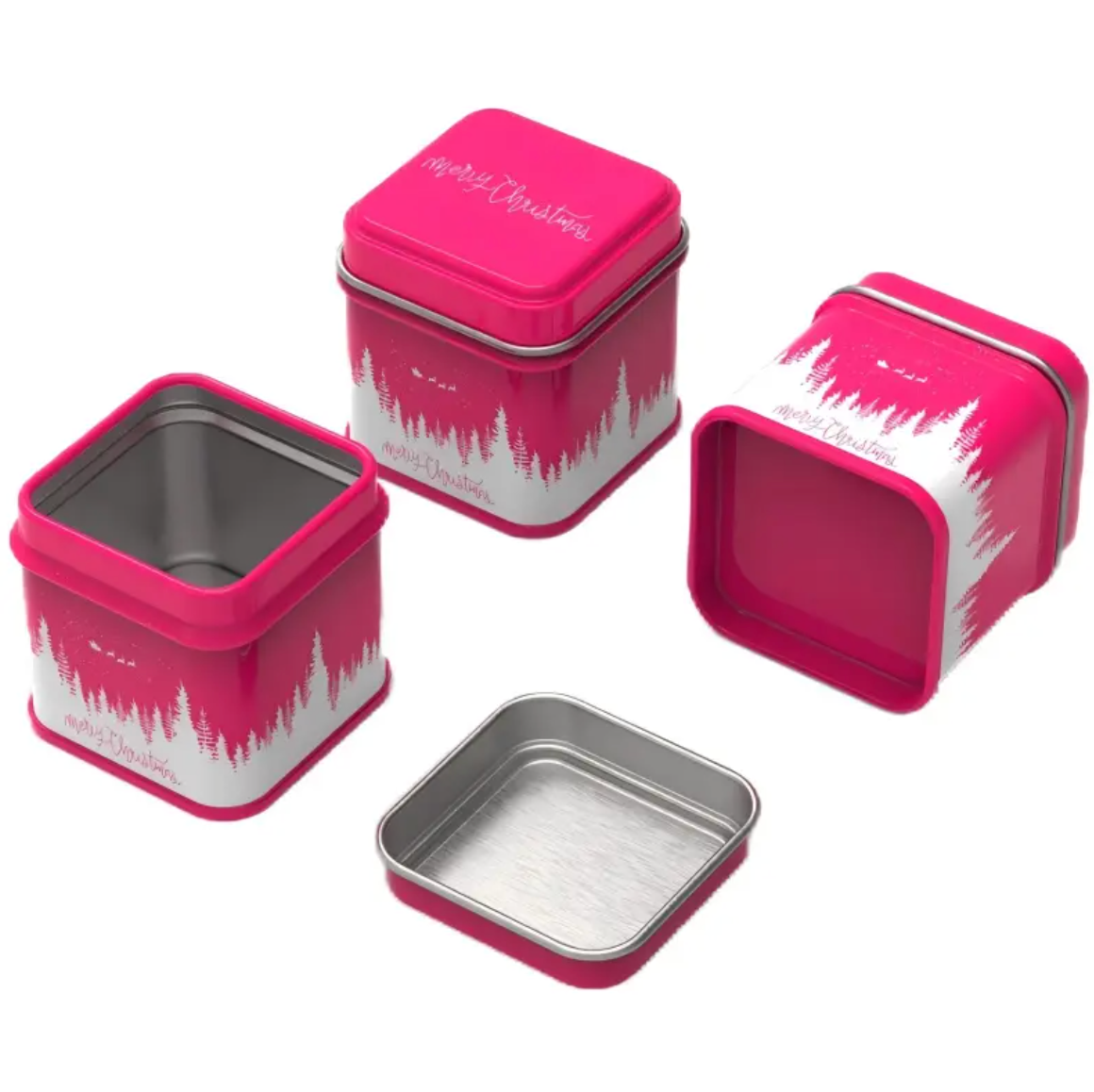
A square windowless tin box format: the continuous lid surface supports full-surface decoration and a clean reveal.
Windowless Vietnam Cosmetics Tin Boxes
A windowless tin box creates value through a controlled reveal and uninterrupted decoration. The entire lid and body can carry artwork, brand marks, patterns, embossing or specialty finishes. This makes the format suitable for gift sets, premium collections, limited editions and cosmetics where the packaging itself is part of the brand experience. The consumer sees a complete designed object first, then opens it to discover the product. That sequence can feel more deliberate than a window that shows the product immediately.
Decoration strategy for a windowless box is less constrained. The design can run across the lid without an aperture, and the sides can continue the visual story. Printing, embossing, debossing, metallic effects and interior printing can be coordinated. For a custom logo Vietnam cosmetics tin box, the windowless format offers a large continuous area for the brand identity. For a gift set cosmetics tin box, the closed format can build expectation before the lid is lifted. The buyer gains surface area but gives up direct product visibility before opening.
Structural protection is often simpler to reason about because the lid is continuous. There is no window film or aperture to integrate into the lid design. The tin box can provide a rigid outer shell, and interior partitions or trays can organize multiple items. This does not mean every windowless box is moisture-proof or airtight; those properties depend on the full construction, including the lid fit, interior lining and any sealing feature. The buyer should still validate the closure and barrier requirements for the specific cosmetic. The windowless format removes one variable from the lid, but it does not replace a complete protection test.
Unboxing presentation is the main experiential advantage. A windowless tin box can use the lid as a cover, a hinge, a slip lid or a shaped closure. The first view is the packaging surface; the second view is the product arrangement inside. For cosmetics sold as gifts or collectibles, this two-stage reveal can be more engaging than a window. The format also allows the interior to be printed or fitted with partitions so that the opening feels organized. A partitioned storage Vietnam cosmetics tin box, for example, can separate shades, applicators or travel items while keeping the exterior fully decorated.
Limitations of the windowless format include the absence of pre-purchase product visibility and a greater reliance on photography, illustration and copy to communicate the product. If the cosmetic’s color or texture is the primary selling point, the buyer may need to compensate with accurate packshots, swatches or a windowed alternative. The windowless box is not inherently more protective or more premium; it is a decoration-and-reveal-first format that suits specific product and channel needs.
Head-to-Head Comparison: Windowed vs. Windowless Cosmetics Tin Boxes
The following qualitative comparison uses common procurement dimensions. It does not assign a universal winner. Each row describes what the format tends to support and what the buyer should verify.
| Decision dimension | Windowed tin box | Windowless tin box |
|---|---|---|
| Product visibility before opening | Shows the product or interior tray through a transparent panel; useful when color, texture or arrangement is a selling point. | Relies on print, imagery and copy; the product is revealed only at opening. |
| Decoration area | The window occupies part of the surface; artwork must frame the aperture and account for the film. | Continuous surface for full-lid artwork, embossing, debossing and coordinated side designs. |
| Structural considerations | Requires an aperture and film integration; validate frame rigidity, film security and interior fitment. | Continuous lid avoids window components; validate lid fit, closure and barrier needs separately. |
| Unboxing experience | Visibility creates anticipation before opening; the window becomes part of the first impression. | Two-stage reveal: designed exterior first, product arrangement second; suits gift and collection formats. |
| Best-fit cosmetics | Lipstick, eyeshadow, balms, travel-size sets and products where shade or texture drives choice. | Gift sets, limited editions, essential oil collections, partitioned sets and brand-led packaging. |
| Sampling focus | Check film clarity, film attachment, aperture edge finish and product positioning behind the window. | Check print registration, lid fit, opening feel, interior fitment and surface durability. |
| Customization route | Custom size, window shape, printed frame and interior tray can be developed together. | Custom size, full-surface print, embossing, partitions and shaped lids can be developed together. |
Qualitative Decision Matrix for Buyers
The matrix below converts the comparison into a buyer decision path. It is qualitative and should be adapted to the specific cosmetic, channel and packaging brief.
| Buyer priority | Lean toward windowed | Lean toward windowless |
|---|---|---|
| The product color or texture is the main selling point | Yes, if the window can show the actual product without distortion or excessive exposure. | Use only if packshots, swatches or in-store testers can carry the color story. |
| The packaging must carry a complete brand illustration | Accept only if the framed composition still tells the brand story. | Preferred when the lid needs uninterrupted artwork, embossing or a special finish. |
| The product is light-sensitive or requires a specific barrier | Validate the film and complete barrier construction before choosing. | Often simpler to review because the lid is continuous, but closure and lining still require validation. |
| The product is a gift set or limited edition | Useful when the set arrangement is part of the gift appeal. | Preferred when the opening reveal and full-surface design create the gift experience. |
| The product is travel-size or mini | A small window can work if the product remains protected and the box stays compact. | Often suitable because small formats benefit from simple, robust lids and clear branding. |
| The product needs partitioned storage | Possible if the window reveals an organized tray without compromising the partition. | Strong fit when the interior is revealed at opening and the exterior remains fully decorated. |
Step-by-Step Buyer Decision Workflow
A structured workflow reduces the risk of choosing a format that looks right in a concept but creates problems in packing or retail. The steps below are qualitative and can be used in a request for quotation or sample brief.
Step 1: Define the product and its display needs
List the cosmetic items that will go into the tin box. For a single lipstick or eyeshadow, visibility may be straightforward. For a gift set, the arrangement of multiple items matters. For an essential oil or balm, the packaging may need to protect the product from light or moisture. The buyer should decide whether the consumer must see the product before opening, or whether a printed representation and an opening reveal are sufficient.
Step 2: Map the sales channel
A retail shelf, a beauty counter, a gift aisle and an e-commerce listing place different demands on packaging. A window can help a product stand out on a shelf or in a packshot, but it also introduces reflections and film clarity considerations. A windowless box can create a cleaner photographic surface and a more controlled unboxing sequence. The channel should influence the format before the artwork is developed.
Step 3: Choose the decoration strategy
Decide whether the design needs an uninterrupted surface or can work around a window. If the brand mark, pattern or illustration must run across the full lid, a windowless tin box is the more natural starting point. If the product itself is the visual centerpiece, a windowed box can use the aperture as part of the composition. In both cases, the artwork should be developed with the chosen format, not adapted after the tooling is approved.
Step 4: Review structural and protection requirements
For a windowed box, ask how the transparent panel is fixed, how the aperture edge is finished, and how the interior keeps the product in place. For a windowless box, review lid fit, closure, interior partitions and any barrier requirement. Neither format should be treated as automatically protective. The buyer should state the product’s sensitivity and the expected handling conditions so that the supplier can propose a suitable construction.
Step 5: Validate with a sample
A physical sample is the most reliable way to judge window clarity, print registration, opening feel and product fit. The sample should be checked with the actual product or a representative weight and shape. For windowed formats, inspect the film for wrinkles, scratches or poor adhesion. For windowless formats, inspect the print, lid alignment, hinge or closure and interior finish. The sample review should also confirm that the box can be packed efficiently and that the product does not move excessively.
Step 6: Confirm customization and order details
Once the format is selected, confirm the custom size, shape, printing method and interior fitment. A custom logo Vietnam cosmetics tin box may require artwork files, color approval and a pre-production sample. A custom size Vietnam cosmetics tin box may require a tooling review. The buyer should also confirm packing method, carton configuration and delivery schedule with the supplier. These details are part of the format decision because a window or windowless design affects how the boxes are nested, packed and protected during transport.
Use Cases by Cosmetics Category
The same format can perform differently across cosmetic categories. The following use cases show how the decision changes with the product.
Lipstick and eyeshadow
A Vietnam lipstick cosmetics tin box or Vietnam eyeshadow cosmetics tin box often benefits from visibility because shade and color are central to the purchase. A window can show the bullet, pan or palette without the consumer opening the box. However, the window must not distort the color or expose the product to avoidable light. If the brand prefers a full printed lid and relies on swatches or testers, a windowless format can still work. The decision should be based on how the product is merchandised, not on category alone.
Travel-size and mini formats
A Vietnam travel size cosmetics tin box or Vietnam mini cosmetics tin box usually prioritizes compactness and sturdy closure. A small window can add visibility without taking too much surface area, but it also adds a component to a small lid. A windowless mini tin box may be simpler to produce and decorate, especially when the brand wants a clean logo on a small surface. The buyer should check whether the window film remains secure in a small format and whether the box still opens comfortably.
Gift sets and collections
A Vietnam gift set cosmetics tin box often uses a windowless format because the opening reveal is part of the gift experience. The exterior can carry a complete design, and the interior can include partitions or trays for multiple items. A windowed gift set can work when the arrangement inside is visually strong and the window shows the collection without compromising the partitions. In either case, the buyer should plan the interior layout before choosing the lid format.
Essential oils and moisture-sensitive products
An airtight moisture-proof Vietnam cosmetics tin box requires a construction review beyond the window decision. A window introduces a film and an aperture, so the buyer should confirm that the complete box meets the intended protection requirement. A windowless tin box may be easier to review for barrier performance because the lid is continuous, but the closure and interior lining still matter. Neither format should be described as moisture-proof without a specific construction and validation.
Partitioned storage and custom sizes
A partitioned storage Vietnam cosmetics tin box can be windowed or windowless. If the partition arrangement is attractive, a window can show the organization. If the exterior design is the priority, a windowless lid keeps the surface clean. A custom size Vietnam cosmetics tin box should be developed with the product dimensions, interior fitment and packing method in mind. The format decision should not be finalized before the internal layout is known.
Supplier Considerations for Vietnam Cosmetics Tin Box Projects
Once the format is selected, the supplier’s ability to execute the window or windowless construction becomes the next decision. The buyer should look for a manufacturer that can discuss both formats, provide samples and explain how the lid, film, print and interior fitment work together. JLCG Enterprise Co.,Ltd is a tin box manufacturer based in Vietnam and offers customization options for design, shape and printing. The company describes quality control processes, eco-friendly manufacturing practices and on-time delivery as part of its production approach. Buyers can review the company and its contact details at JLCG Enterprise Co.,Ltd.
For a windowed project, the supplier discussion should cover film selection, aperture design and how the product is held behind the window. For a windowless project, the discussion should cover print coverage, embossing or debossing, lid fit and interior partitions. In both cases, the buyer should ask for a sample that uses the intended materials and printing route. A supplier that can explain the trade-offs is more useful than one that recommends a single format for every brief.
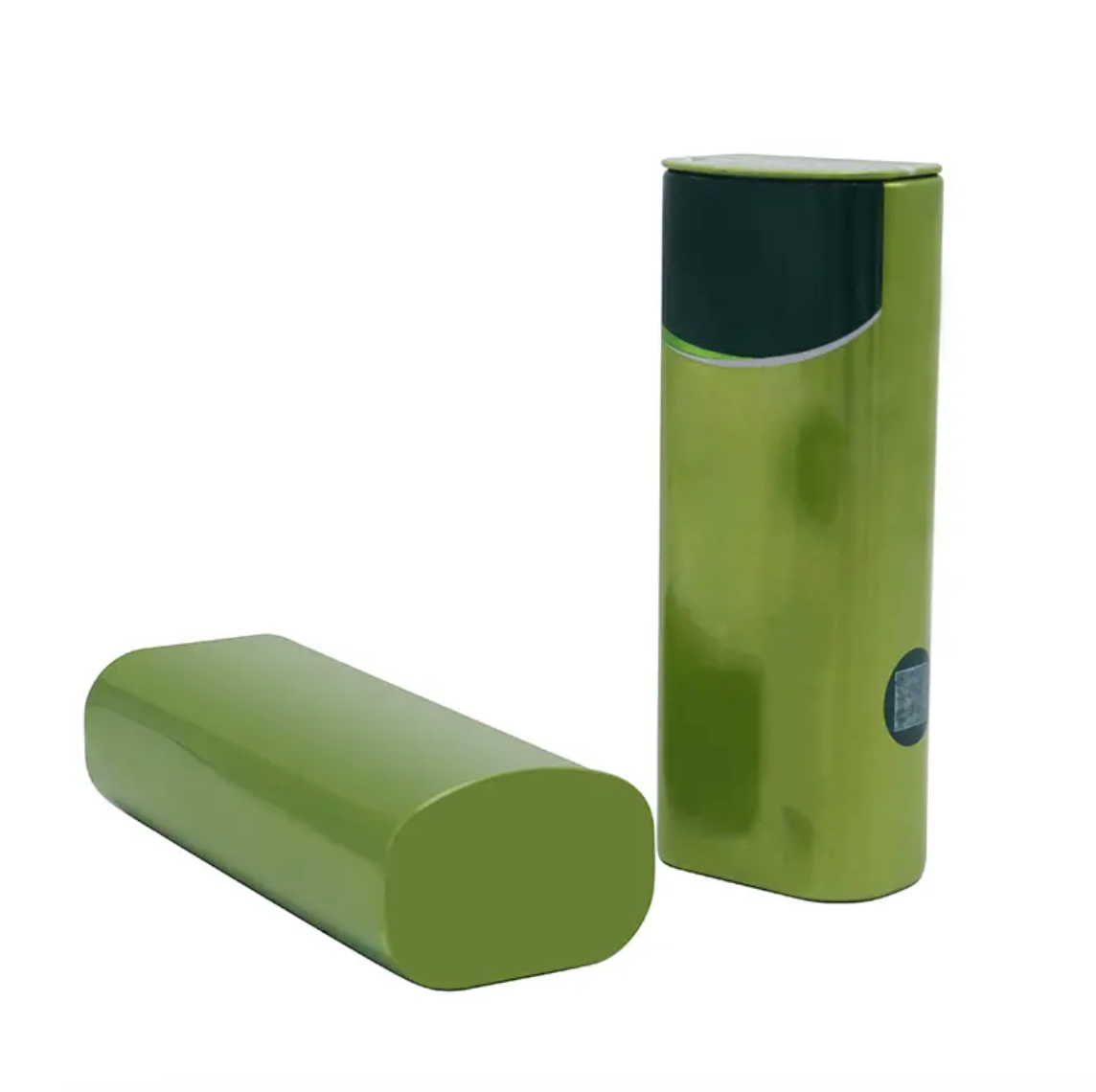
A compact windowless tin box format: small cosmetics and travel-size products often benefit from a simple, robust lid.
Frequently Asked Questions
Is a windowed tin box suitable for all cosmetics?
No. A windowed tin box is most suitable when product visibility helps the sale and when the film and aperture can be integrated without compromising the product. Cosmetics that are light-sensitive, highly reactive to the window film or difficult to position behind an aperture may need a windowless format or a different protection strategy. The buyer should validate the complete construction with a sample.
Does a window weaken the tin box structure?
A window changes the lid or body construction because it introduces an aperture and a transparent panel. It does not automatically make the box weak, but the frame around the window must be designed for the intended use. The buyer should ask how the film is secured and how the interior fitment supports the product. A windowless lid avoids these components, but it still requires a proper lid fit and closure review.
Which format gives more decoration freedom?
A windowless tin box generally gives more uninterrupted decoration area. The full lid and sides can carry artwork, embossing, debossing or special finishes. A windowed box can still be highly decorated, but the artwork must work around the window opening and the film. The right choice depends on whether visibility or full-surface brand expression is more important for the product.
How should buyers validate a window film and seal?
The sample review should check film clarity, film attachment, edge finish and whether the film stays flat after repeated opening and closing. The buyer should also confirm that the product does not press against the film and that the interior fitment keeps the product stable. For moisture or light sensitivity, the complete box construction should be reviewed rather than the window component alone.
Can JLCG customize both windowed and windowless Vietnam cosmetics tin boxes?
JLCG Enterprise Co.,Ltd offers customization for design, shape and printing, and can discuss both windowed and windowless formats for cosmetics packaging. Buyers can request a sample or quotation through the company website at www.vntinbox.com or contact the team by phone or email to review the product, decoration and structural requirements before ordering.
Conclusion: Choose the Format That Carries the Product Story
The windowed versus windowless decision is a buyer decision about visibility, decoration, protection and reveal. A windowed Vietnam cosmetics tin box is useful when the product itself must be seen and the window can be integrated cleanly into the lid and interior fitment. A windowless Vietnam cosmetics tin box is useful when the packaging needs a continuous decorated surface, a controlled opening sequence or a simpler lid construction. Neither format is universally better. The right choice depends on the cosmetic category, the sales channel, the product’s sensitivity and the unboxing experience the brand wants to create.
Procurement teams can use the decision matrix and workflow in this guide to narrow the format before sampling. The most reliable next step is to test the actual product in a physical sample, review the window or lid construction, and confirm the decoration and packing details with the supplier. JLCG Enterprise Co.,Ltd can support both routes and help buyers compare the options against their specific cosmetics packaging brief.
Have Questions or Need More Details?
Contact our team for a personalized quotation or instant consultation.
Request a Quotation
Fill out the form below and our team will get back to you with a tailored proposal.
WhatsApp Direct Chat
Prefer to chat in real-time? Message us on WhatsApp for instant assistance & quick answers.
- Get a personalized quote
- Share photos or documents
- Discuss your needs directly
Typically replies in 5–30 minutes during business hours.