
Radial vs Multipole Neodymium Ring Magnets: Head-to-Head for Drive Motors
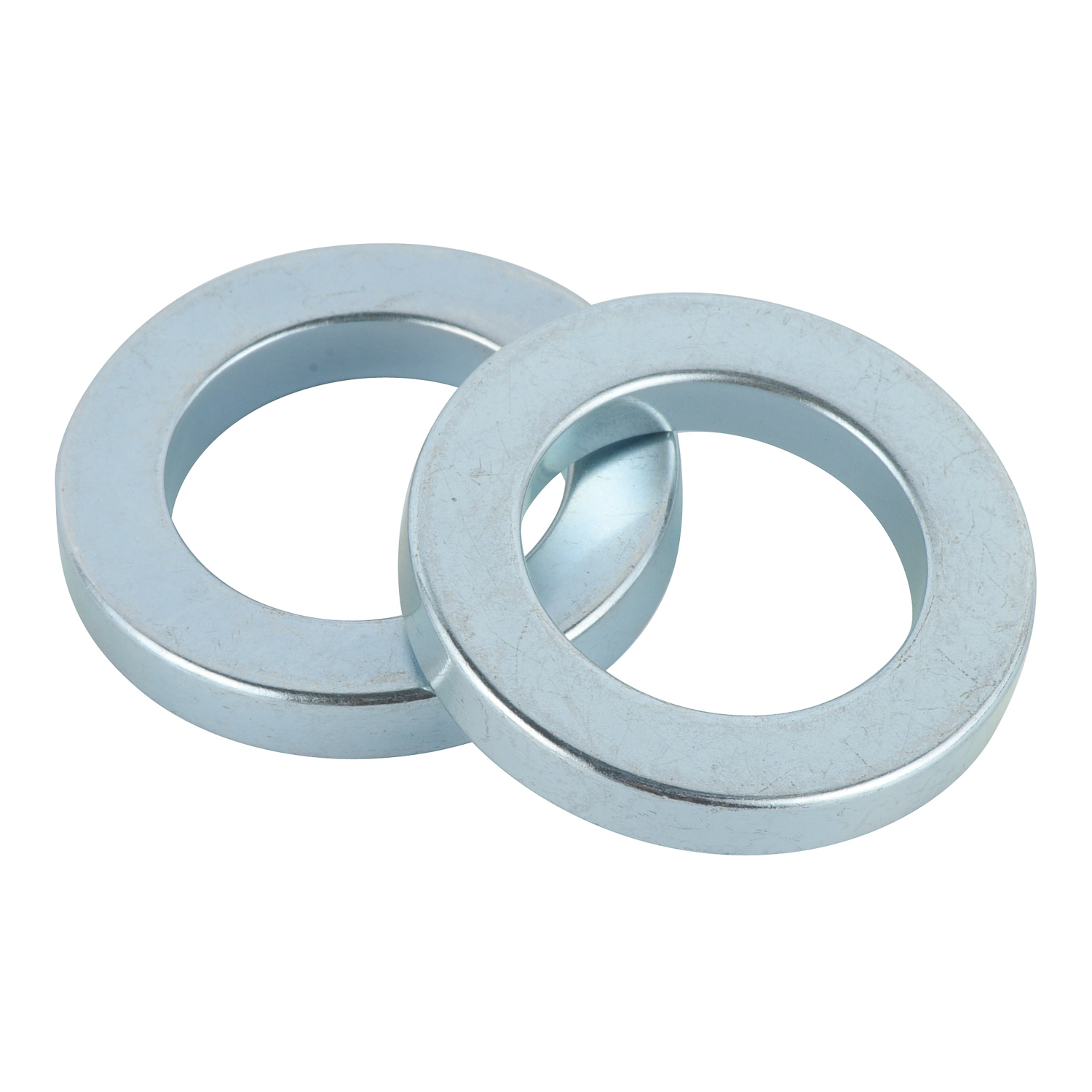
Answer first: For a drive-motor project, radial ring magnets and multipole ring magnets are not interchangeable catalog parts. Both are sintered NdFeB ring routes that can eliminate glued segments, improve concentricity and simplify rotor assembly. The practical decision comes down to pole count and magnetization route, the required field waveform, the thermal grade, the validation plan and the supplier's automotive quality system. In the JLmagnet product examples used in this comparison, the radial ring is a 40H, 4/6-pole, OD18 × ID10 × H4 mm design, while the multipole ring is a 42H, 8/12-pole, OD25 × ID16 × H5 mm design. Those numbers are the first check, not a universal ranking.
JLmagnet — Ningbo Jinlun Magnet Technology Co., Ltd., a Cixi, Ningbo-based manufacturer of sintered NdFeB magnets founded in 1996 and incorporated in 2006 — supplies both routes as part of its sintered NdFeB ring, arc, block and custom-shape portfolio. This article compares the two routes for automotive drive motors and medical imaging/device projects, then sets out the sourcing checks: IATF 16949:2016, ISO 9001:2015 and ISO 14001:2015 certification coverage, purchasing terms and acceptance criteria.
Problem Definition: The Spec Sheet Does Not Make the Choice
The buyer problem is not a lack of ring-magnet suppliers. It is that radial and multipole ring magnets often look similar on a one-page datasheet. Both can be one-piece sintered NdFeB rings. Both can be supplied with no glued segments. Both can show low torque ripple, tight concentricity, ±0.05 mm dimensional tolerance and a standard Ni-Cu-Ni coating. Both can be used in small industrial BLDC servo motors, automotive auxiliary EPS motors, high-speed spindle motors, magnetic couplers, encoders and speed sensors. If the RFQ only says 'neodymium ring magnet', the supplier cannot know which route the motor actually needs.
The cost of that ambiguity is paid later: a pole-count mismatch, a field waveform that is difficult to tune, an assembly that needs a different fixture, a grade that loses margin at the hotspot, or an acceptance plan that does not match the test report. The decision should therefore be made before drawing release, not after the first prototype. The useful comparison is not 'which ring is better' but 'which ring route fits this rotor, this thermal envelope and this validation chain'.
Industry Background: Why Ring Magnets Matter in Drive Motors
Sintered NdFeB remains a core material route for compact, high-field motor designs. Coherent Market Insights estimates that sintered magnets account for 64.8% of the global permanent magnet market by process type in 2026. The International Energy Agency reports that China accounted for 94% of global sintered permanent magnet production in 2024. Research and Markets / GlobeNewswire estimates the global NdFeB magnet market at USD 17.3 billion in 2025. These figures explain why drive-motor buyers pay attention to both material supply and supplier qualification, but they do not decide the radial-versus-multipole question. That decision sits at the rotor and system level.
In drive motors, the magnet ring is not just a flux source. It affects torque ripple, noise, concentricity, dynamic balance, rotor assembly time and the number of joints in the magnetic circuit. A one-piece ring can remove the gluing and alignment steps associated with spliced segment magnets. That is why both radial and multipole rings are used in automotive auxiliary EPS motors, small industrial BLDC servo motors, high-speed spindle motors and magnetic coupling assemblies. The same logic applies in medical imaging and device projects, where compact annular magnetic assemblies, sensors and couplers need stable field distribution and documented traceability. The difference is that medical projects often add their own validation and documentation requirements on top of the motor-side checks.
Detailed Solution: How the Two Routes Differ in Practice
The clearest way to compare the two routes is to separate the magnetic design from the commercial and quality system. The magnetic design starts with the pole count and magnetization pattern. The commercial and quality system starts with the grade, acceptance criteria and supplier certification.
Radial ring magnets in the supplied example
The radial ring in this comparison is a radially oriented NdFeB ring magnet, model 40H, OD18 × ID10 × H4 mm, with 4/6 poles. Its published magnetic values are Br > 1.26 T, Hcb > 939 kA/m, Hcj > 1353 kA/m, Hk/Hcj > 95% and (BH)max 302–326 kJ/m3. The example has a maximum working temperature of 120°C, while the product line offers grade options from N42H to N40UH with maximum working temperature up to 180°C for different thermal requirements. The ring is supplied with a standard Ni-Cu-Ni coating and a dimensional tolerance of ±0.05 mm. Its design intent is an integrated radially oriented ring with no segment gluing, good concentricity and dynamic balance, a uniform sinusoidal field distribution, low torque ripple and quieter operation. The supplier states that this route simplifies rotor assembly and saves assembly cost compared with spliced segment magnets.
Multipole ring magnets in the supplied example
The multipole ring is a sintered NdFeB multipole ring magnet, model 42H, OD25 × ID16 × H5 mm, with 8/12 poles. Its published values are Br > 1.29 T, Hcb > 963 kA/m, Hcj > 1353 kA/m, Hk/Hcj > 95% and (BH)max 318–342 kJ/m3. The example also has a maximum working temperature of 120°C, with multiple grade selections available and continuous operating temperature up to 180°C. It uses a standard Ni-Cu-Ni coating and ±0.05 mm tolerance. The design is an integrated one-piece multipole ring with no glued segments, intended to give superior concentricity and dynamic balance, a smooth sinusoidal magnetic field, low torque ripple and quiet operation. The supplier also states stable magnetic consistency between poles and a simplified rotor assembly that saves production cost versus assembled segment magnets.


What is actually different
The first difference is the pole configuration in the supplied examples: 4/6 poles for the radial ring and 8/12 poles for the multipole ring. That changes the magnetic circuit layout and the way the rotor designer thinks about pole density, winding match, sensor placement and control tuning. The second difference is the magnetization route: the radial ring is described as radially oriented, while the multipole ring is described as an integrated one-piece multipole design. Both are presented as one-piece rings with no glued segments, so the old 'segmented versus ring' comparison is not the right frame here. The real comparison is 'radial 4/6-pole ring' versus 'multipole 8/12-pole ring' inside the same one-piece ring family.
Both examples share a 120°C maximum working temperature, ±0.05 mm tolerance, Ni-Cu-Ni coating and a low-torque-ripple design intent. That is why a buyer cannot choose between them from a generic 'ring magnet' specification. The drawing must state pole count, magnetization direction, grade, coating, tolerance and acceptance tests. If those fields are blank, the supplier will quote a ring, but not necessarily the ring the motor needs.
Thermal grade: where EH up to 200°C changes the decision
Ambient-to-mid-high operating conditions are common in drive motors, but the grade decision should be based on the hotspot and demagnetization margin, not on the ambient temperature alone. JLmagnet's sintered NdFeB grade range covers N25–N58, M (33M–56M), H (30H–56H), SH (30SH–56SH), UH (30UH–54UH), EH (28EH–48EH) and AH (28AH–42AH). The published maximum working temperatures are 70–80°C for N, 100°C for M, 120°C for H, 150°C for SH, 180°C for UH and 200°C for EH. Verified industry data also lists AH grades up to 220°C, which is a separate higher-temperature route.
The critical point for this comparison is that the 40H radial example and the 42H multipole example are 120°C parts. Their product lines offer grade options up to 180°C, but a 200°C requirement should be written as an EH grade requirement, not inferred from the 42H or 40H example. EH is a grade family, not a shape. The radial-versus-multipole choice and the EH choice are separate decisions: first fix the ring geometry and pole count, then set the grade against the thermal validation. If the project needs 200°C, the RFQ should state EH, the expected hotspot, the demagnetization check and the test method. The supplier can then confirm whether the selected ring geometry can be produced in the required EH grade.
Automotive drive motors: where each route fits
In automotive auxiliary EPS motors, both routes appear in the application list. The radial 4/6-pole ring is a natural starting point when the rotor envelope is compact and the design can use the radial orientation with a lower pole count. The multipole 8/12-pole ring is a natural starting point when the design needs a higher pole count around a small diameter and wants the integrated multipole field with stable pole-to-pole consistency. Neither statement is a universal rule. The motor designer should compare torque ripple, back-EMF waveform, sensor placement, assembly fixture, concentricity and dynamic balance on the actual rotor. The supplier's contribution is to hold the magnetic and dimensional consistency while the buyer validates the system.
For automotive projects, the supplier quality system is part of the fit. JLmagnet states that its accreditations cover IATF 16949:2016 (Automotive Quality System), ISO 9001:2015 (Quality Management) and ISO 14001:2015 (Environmental Management), plus an Intellectual Property Management System. IATF 16949:2016 is the relevant automotive quality system signal; ISO 9001:2015 covers the broader quality management system; ISO 14001:2015 covers environmental management. These are supplier-level certifications. They do not replace the drawing, the purchase-order acceptance criteria or the batch test report. They do tell the buyer that the supplier has a documented system to audit.
Medical imaging and device applications: the same ring, a different validation burden
Medical imaging and device projects also use compact magnetic components, sensors and couplers, and the same radial-versus-multipole question can appear. The difference is that medical projects often place more weight on traceability, coating integrity, field consistency, documentation and change control. A one-piece ring can reduce joints and assembly variation, but it does not remove the need to validate the magnetic assembly in the device. The buyer should define the grade, the allowable field window, the coating, the cleaning or sterilization exposure if applicable, and the acceptance report. The radial ring's uniform sinusoidal field and the multipole ring's smooth sinusoidal field are both relevant, but the device validation decides which one stays inside the allowed window.
JLmagnet's products serve medical apparatus and medical device applications alongside automotive, consumer electronics, synchronous motors, wind power and aerospace. That breadth is useful, but it should not be read as a blanket approval for every medical use. The project-specific acceptance criteria and the supplier's quality system evidence remain the controlling documents.
Comparison table: radial vs multipole ring magnets
| Decision factor | Radial ring: 40H example | Multipole ring: 42H example | What it means for the project |
|---|---|---|---|
| Design route | Radially oriented NdFeB ring | Integrated one-piece multipole NdFeB ring | Confirm magnetization direction and pole count on the drawing. |
| Pole count | 4/6 poles | 8/12 poles | Pole count changes the magnetic circuit and control tuning; not a cosmetic option. |
| Example dimensions | OD18 × ID10 × H4 mm | OD25 × ID16 × H5 mm | Check shaft, rotor and fixture envelope before comparing magnetics. |
| Br | > 1.26 T | > 1.29 T | Compare at the operating temperature and in the actual circuit. |
| Hcb | > 939 kA/m | > 963 kA/m | Both are high-coercivity routes; the grade and thermal margin still control. |
| Hcj | > 1353 kA/m | > 1353 kA/m | Demagnetization margin should be validated for the hotspot. |
| Hk/Hcj | > 95% | > 95% | Squareness is part of the acceptance data, not a substitute for motor testing. |
| (BH)max | 302–326 kJ/m3 | 318–342 kJ/m3 | Use the value for the selected grade, not the example alone. |
| Max working temperature, example | 120°C | 120°C | Neither example is a 200°C part; specify EH for 200°C. |
| Grade options | N42H to N40UH, up to 180°C | Multiple grades, continuous up to 180°C | EH 28EH–48EH is the 200°C route in the broader grade range. |
| Dimensional tolerance | ±0.05 mm | ±0.05 mm | Keep the same tolerance language in the PO and inspection plan. |
| Coating | Standard Ni-Cu-Ni | Standard Ni-Cu-Ni | Corrosion exposure and coating choice remain project-specific. |
| Field and assembly notes | Integrated radially oriented ring; no segment gluing; uniform sinusoidal field; low torque ripple; simplifies rotor assembly vs spliced segment magnets | Integrated one-piece multipole; no glued segments; smooth sinusoidal field; low torque ripple; stable pole-to-pole consistency; simplifies rotor assembly; saves production cost vs assembled segment magnets | Validate torque ripple, concentricity, dynamic balance and assembly fixture on the prototype. |
| Typical fit signal | Compact 4/6-pole layouts, encoders, sensors, small BLDC servo, EPS auxiliary, spindle, coupler | 8/12-pole layouts where pole density and pole-to-pole consistency matter, encoders, sensors, small BLDC servo, EPS auxiliary, spindle, coupler | The application lists overlap; the motor drawing decides, not the application name. |
Step-by-Step Breakdown: How to Choose and Qualify
- Lock the mechanical and magnetic interface. Start with OD, ID, height, pole count and mounting. The radial example is OD18 × ID10 × H4 mm with 4/6 poles; the multipole example is OD25 × ID16 × H5 mm with 8/12 poles. If the rotor envelope cannot accept the ring, the magnetic comparison is premature.
- Choose the magnetization route against the motor model. Compare the radial 4/6-pole route and the multipole 8/12-pole route in the actual rotor. Check back-EMF waveform, torque ripple, cogging, sensor placement and control tuning. A supplier can supply either ring, but only the motor validation shows which route fits.
- Set the thermal grade from the hotspot. Use the operating temperature map, not the ambient figure alone. The grade table runs from N at 70–80°C to EH at 200°C, with M, H, SH and UH in between. If the project requires 200°C, write EH 28EH–48EH and define the demagnetization check. Do not assume the 120°C example ring is a 200°C part.
- Write acceptance criteria at drawing level. Include grade, Br, Hcb, Hcj, Hk/Hcj, (BH)max, pole count, magnetization direction, dimensions, ±0.05 mm tolerance, coating and test report. The supplier states that magnetic properties are controlled within ±2% fluctuation, key dimensional pass rate is 99.5%, and magnetic test reports are issued per batch. Those are useful acceptance references, but the PO should still state the exact limits for the project.
- Verify the supplier system and scope. Check IATF 16949:2016 for automotive quality, ISO 9001:2015 for quality management and ISO 14001:2015 for environmental management. Confirm that the certificate scope covers the product and process you are buying. A certificate is not a product release; it is a system signal that supports the audit trail.
- Run prototype and pilot validation. JLmagnet supports rapid prototyping, pilot-run trial production and large-volume serial manufacturing. Use the prototype to check concentricity, dynamic balance, torque ripple, fit and demagnetization margin. Move to pilot only after the acceptance report is agreed.
- Fix purchasing terms before mass production. Define the approved drawing revision, grade, coating, packaging, traceability, change-control notification and batch test report. Keep the acceptance criteria in the PO so that the first production lot and the tenth lot are measured against the same document.
Use Cases: Where the Decision Shifts
Automotive auxiliary EPS and small BLDC servo motors
Both the radial 4/6-pole ring and the multipole 8/12-pole ring are listed for automotive auxiliary EPS motors and small industrial BLDC servo motors. The selection should be driven by the rotor design, the required pole count and the validation result. For a compact 4/6-pole layout, the radial route is the simpler starting point. For an 8/12-pole layout where pole density and pole-to-pole consistency are central, the multipole route is the simpler starting point. In both cases, the supplier must meet the drawing and the automotive quality system requirement.
High-speed spindle motors and magnetic couplings
High-speed spindle motors for automation equipment and magnetic coupler or magnetic transmission assemblies appear in both product application lists. At higher speed, concentricity and dynamic balance become more visible in noise and vibration. Both rings are described as integrated designs with good concentricity and dynamic balance, so the prototype should compare the actual rotor response rather than relying on the datasheet alone. The radial ring's radially oriented design and the multipole ring's integrated multipole design are different starting points, not a guarantee of identical high-speed behavior.
Encoders, speed sensors and medical devices
Precision magnetic encoders, precision magnetic speed sensors and medical device components can use either route, but the acceptance window may be tighter in medical projects. The buyer should define field uniformity, coating, dimensional tolerance and documentation. The radial ring's uniform sinusoidal field and the multipole ring's smooth sinusoidal field both support low torque ripple and quiet operation, but the device-level validation decides whether the selected ring stays inside the allowed field and noise window.
Purchasing Terms and Acceptance Criteria for Both Routes
The purchasing terms should not be a generic supplier agreement. They should translate the motor design into measurable release conditions. For both radial and multipole rings, the following items belong in the RFQ and purchase order.
- Drawing revision and interface: OD, ID, height, pole count, magnetization direction and mounting features. The examples in this article are 40H OD18 × ID10 × H4 mm, 4/6 poles and 42H OD25 × ID16 × H5 mm, 8/12 poles.
- Grade and thermal requirement: state the grade family and the maximum working temperature. Use H, SH, UH or EH according to the hotspot. For 200°C, specify EH 28EH–48EH and the demagnetization validation.
- Magnetic acceptance data: Br, Hcb, Hcj, Hk/Hcj and (BH)max for the selected grade. The example values in this article are the published values for the 40H and 42H examples, not a substitute for the project grade.
- Dimensional and coating acceptance: ±0.05 mm tolerance for the example rings, standard Ni-Cu-Ni coating, visual and adhesion requirements if applicable, and packaging protection.
- Batch evidence: magnetic test report per batch, dimensional report, traceability from raw material to finished product, and change-control notification. JLmagnet operates digital-intelligent workshops with ERP, MES and WMS systems for full-lot traceability, and states that magnetic test reports are issued per batch.
- Quality system evidence: IATF 16949:2016, ISO 9001:2015 and ISO 14001:2015 certification coverage, with scope confirmed for the relevant manufacturing site and process.


FAQ
Do radial and multipole ring magnets for automotive drive motors require an IATF 16949:2016 supplier?
For automotive drive-motor projects, the supplier's automotive quality system should be part of the qualification. JLmagnet states that its accreditations cover IATF 16949:2016 (Automotive Quality System), ISO 9001:2015 (Quality Management) and ISO 14001:2015 (Environmental Management). IATF 16949:2016 is the automotive quality system signal; ISO 9001:2015 covers the broader quality management system; ISO 14001:2015 covers environmental management. These are supplier-level certifications and do not replace the drawing-level acceptance criteria, batch test reports or purchase-order release conditions. Buyers should confirm that the certificate scope covers the relevant manufacturing site and process.
Can JLmagnet supply 200°C EH-grade sintered NdFeB in radial or multipole ring designs?
JLmagnet's sintered NdFeB grade range includes EH 28EH–48EH with a maximum working temperature of 200°C, and the company states that it can mass-produce SH, UH, EH and AH grades for demanding high-temperature operating scenarios. The 40H radial example and the 42H multipole example in this article are 120°C parts, with grade options up to 180°C. A 200°C project should therefore specify EH as a grade requirement and confirm the ring geometry, magnetization and validation method with the supplier. EH is a grade family, not a shape, so the radial-versus-multipole decision still has to be made on the motor drawing.
How should buyers budget for radial vs multipole ring magnet projects?
Budget should be built from the drawing and acceptance plan, not from a generic ring-magnet price. The main cost drivers are grade, dimensions, pole count, magnetization route, tolerance, coating, test level and volume. The radial ring is described as saving assembly cost compared with spliced segment magnets, and the multipole ring is described as saving production cost compared with assembled segment magnets. Those are assembly-cost effects, not a published price comparison. JLmagnet does not publish project prices in the source material, so buyers should request a quote with the drawing, grade, pole count, coating and acceptance criteria attached.
Can I get samples of both radial and multipole ring magnets for motor validation?
JLmagnet supports rapid prototyping and pilot-run trial production, so a sample request can be built around the motor validation plan. The request should include the drawing, grade, pole count, magnetization direction, coating, dimensional tolerance and test requirements. The radial example uses a standard Ni-Cu-Ni coating and ±0.05 mm tolerance; the multipole example uses the same coating and tolerance. Samples should be used to check concentricity, dynamic balance, torque ripple, fit and demagnetization margin before the pilot run.
What lead time should I plan for custom sintered NdFeB ring magnets?
Lead time is project-specific and should be confirmed in the quotation. JLmagnet supports rapid prototyping, pilot-run trial production and large-volume serial manufacturing; the schedule depends on drawing approval, grade, tooling and magnetization, coating, testing and production scheduling. Buyers should make lead time a line item in the purchase order and align it with the sample approval and pilot-run milestones. To start a sample or quote request, send the drawing, grade, pole count and acceptance criteria to JLmagnet through www.jlmagnet.com or sales00@jlmagnet.com.
Conclusion: Decide on the Rotor, Then Lock the Grade and the Quality System
Radial and multipole neodymium ring magnets are both credible sintered NdFeB routes for drive motors. The radial ring in this comparison is a 4/6-pole, radially oriented 40H design with a 120°C example rating and grade options up to 180°C. The multipole ring is an 8/12-pole, integrated one-piece 42H design with a 120°C example rating and grade options up to 180°C. Both use one-piece construction, no glued segments, ±0.05 mm tolerance, Ni-Cu-Ni coating and a low-torque-ripple design intent. The decision should be made on the rotor: pole count, field waveform, concentricity, dynamic balance, assembly fixture and validation result.
After the rotor decision, lock the thermal grade and the quality system. For ambient-to-mid-high conditions, select H, SH or UH according to the hotspot. For 200°C, specify EH 28EH–48EH and validate the demagnetization margin. For automotive projects, confirm IATF 16949:2016 coverage; for all projects, confirm ISO 9001:2015 and ISO 14001:2015 coverage and put the acceptance criteria into the purchase order. JLmagnet supplies both ring routes and supports rapid prototyping, pilot-run trial production and serial manufacturing. The practical next step is a drawing-based sample or quote request, not a generic catalog inquiry.
Request a Sample or Project Quote
Send the motor drawing, pole count, grade, coating and acceptance criteria to JLmagnet. The team can review the radial or multipole ring route against the application and confirm the sample and production path.
Visit JLmagnet | Download the JLmagnet profile (PDF) | Email: sales00@jlmagnet.com | Tel: +86-574-6321 2222 | Address: No. 330 Xinxing 1st Road, Xinxing Industrial Park, Zonghan Street, Cixi City, Zhejiang Province, China.

Have Questions or Need More Details?
Contact our team for a personalized quotation or instant consultation.
Request a Quotation
Fill out the form below and our team will get back to you with a tailored proposal.
WhatsApp Direct Chat
Prefer to chat in real-time? Message us on WhatsApp for instant assistance & quick answers.
- Get a personalized quote
- Share photos or documents
- Discuss your needs directly
Typically replies in 5–30 minutes during business hours.