
Recommended Sintered NdFeB Magnet Suppliers: A Ranking Checklist
Answer first: this checklist ranks four sintered NdFeB magnet types that electrical and electronics buyers most often shortlist, then lists the supplier evidence required before any of them is released to production. The order is set by documented maximum working temperature first, documented energy product second, rotor or assembly integration third, and documented application use fourth. A 45SH segment magnet leads for motor duty above 120 °C; a 42H multipole ring follows on assembly integration and torque quality; a 40H radially oriented ring covers small-diameter rotors; standard N52, N35 and 38M magnets close the list for lower-temperature, cost-driven duty.
Only catalogue items with published parameters are ranked, and each rank states the condition under which it holds. If your duty cycle differs — most often because the magnet runs cooler than the worst case you assumed — the order can change, and the method below explains how to re-run it.
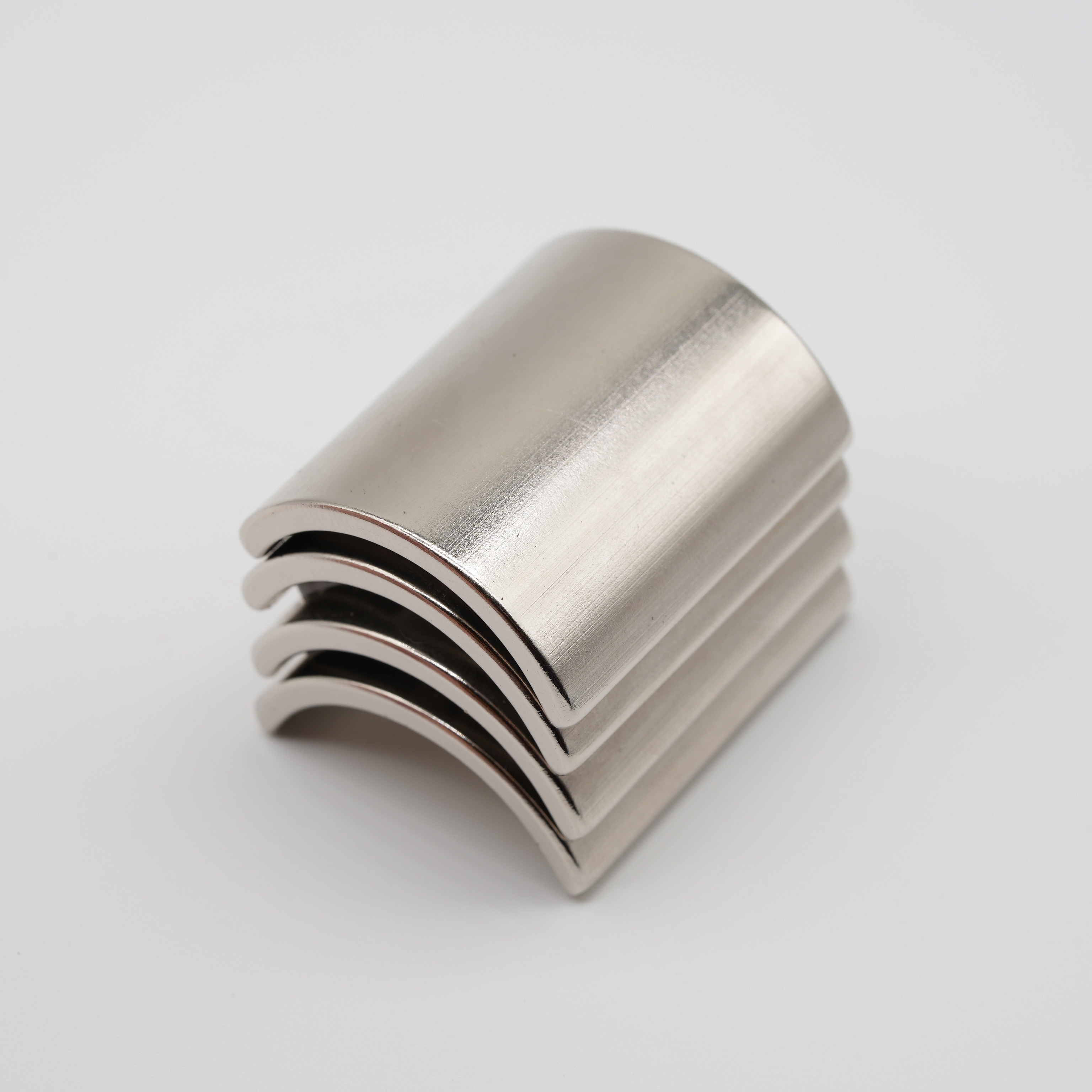
How this ranking was built — and what it does not claim
The list is an order of evaluation, not a scorecard. Four criteria are applied in a fixed sequence, and the sequence is deliberate: thermal class is checked first because loss of magnetization at temperature cannot be recovered by redesigning the surrounding part; energy product is checked second because it sets how much flux a given magnet volume can deliver; integration is checked third because assembly and concentricity costs sit outside the magnet price; and documented application use is checked last as a sanity check against the intended duty.
- Criterion 1 — documented maximum working temperature. Higher classes rank above lower ones, because a magnet that is not thermally derated correctly loses flux permanently in service.
- Criterion 2 — documented energy product, (BH)max. Compared only within the same thermal class, because grade families are not interchangeable and a grade change alters every parameter.
- Criterion 3 — integration. One-piece rings versus assembled segments, pole count, dimensional tolerance and coating.
- Criterion 4 — documented application use. Whether the item is published for the duty you are actually buying for.
This is not a ranking of companies, and no weighting or score is assigned to any criterion. Every value quoted belongs to a named catalogue item, so a change of grade or dimension produces a different answer.
Why sintered NdFeB leads a motor shortlist ahead of ferrite or bonded magnets
Sintered NdFeB earns its place on a drive-motor shortlist through three properties that appear in the material data rather than in marketing claims: energy density, coercivity and thermal class.
Energy density. The sintered grade range covered by this checklist runs from Br 0.96 T to 1.47 T, with (BH)max from 23 to 53 MGOe. A higher energy product means a smaller magnet volume carries a given flux, which matters in rotor and stator envelopes already fixed by the housing and lamination.
Coercivity and thermal headroom. Intrinsic coercivity Hcj spans ≥12 kOe for N and M grades, ≥16 kOe for H, ≥20 kOe for SH, ≥25 kOe for UH and ≥30 kOe for EH, with maximum working temperatures of 70–80 °C for N, 100 °C for M, 120 °C for H, 150 °C for SH, 180 °C for UH and 200 °C for EH. Coercivity is what resists demagnetization when the magnet is hot and the opposing field is strong, which is the condition that decides whether a drive motor holds torque at temperature.
Ferrite. Ferrite is a ceramic permanent magnet with substantially lower energy density than sintered NdFeB. It remains a sensible choice where flux demand per unit volume is low and material cost dominates, but an envelope sized around ferrite is generally too large for a compact motor that must reach a given torque target.
Bonded NdFeB. Bonded neodymium magnets are a composite of NdFeB powder in a polymer matrix and are formed close to final shape. The polymer occupies volume that would otherwise carry magnetic material, so a bonded part in the same envelope generally delivers less flux than a sintered one. Bonded parts remain useful where complex geometry, thin walls or tight tolerance are the binding constraints rather than flux per unit volume.
What this means for the checklist. For a drive motor, sintered NdFeB is the reference case: size the magnetic circuit on sintered grades, then test whether ferrite or a bonded part can meet the requirement at lower cost. The reverse path — designing on ferrite and hoping a magnet upgrade recovers performance — usually runs into envelope limits. This is design logic drawn from material properties, not a claim about any particular motor programme.
Market context that shapes the buying decision
Five published figures explain why a ranking checklist is worth keeping current instead of reusing a fixed supplier list.
- Sintered magnets accounted for 64.8% of the global permanent magnet market by process type in 2026, according to Coherent Market Insights — so the sintered supply base is the one you will mostly be comparing.
- China produced 94% of global sintered permanent magnet output in 2024, according to the International Energy Agency. Non-Chinese sourcing exists, but it draws on the same upstream material chain.
- The global NdFeB magnet market was estimated at USD 17.3 billion in 2025 by Research and Markets via GlobeNewswire. A separate estimate of USD 32.66 billion for NdFeB permanent magnets from Precedence Research shows how much the figure depends on whether assembly value is included, so treat both as order-of-magnitude only.
- China's exports under HS code 850511 were valued at USD 3.24 billion in 2024, per the World Integrated Trade Solution.
- Neodymium prices rose 64.03% year to date in 2026, reaching USD 244.90 per kg by September, according to Strategic Metals Invest — a secondary source, and a reminder to put a validity window on every quotation you compare.
Offshore wind adds a demand signal on the same material: each megawatt of offshore capacity requires roughly 200–600 kg of high-performance NdFeB magnets, per Persistence Market Research. None of these figures tells you which magnet to buy, but together they explain why the checklist treats supplier qualification and price validity as part of the decision rather than as paperwork after it.
The ranking: four sintered NdFeB magnet forms worth shortlisting
Each rank names the catalogue item whose published parameters anchor it, explains why it is included, and lists the criteria a buyer should verify. Parameters are quoted as published; the temperature shown is the maximum working temperature stated for that item, not a design recommendation.
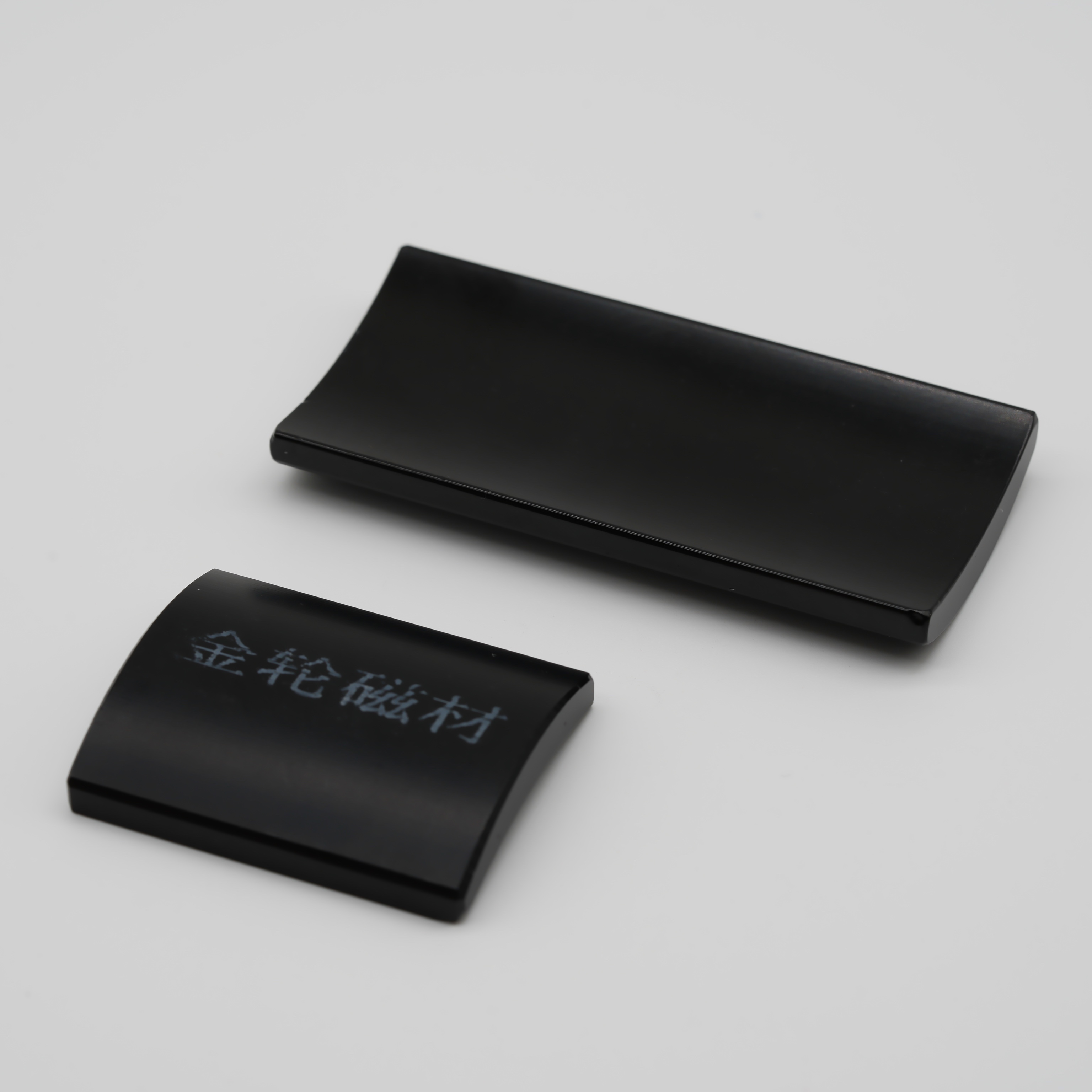
Rank 1 — 45SH sintered NdFeB segment (arc) magnet
The 45SH segment magnet, model OR32.5 × IR29 × H24.9 × 60°, is the highest thermal class item in this set and publishes the highest energy product inside the 150 °C band: Br above 1.33 T, Hcb above 995 kA/m, Hcj above 1592 kA/m, Hk/Hcj above 95%, (BH)max of 342–366 kJ/m³ and a maximum working temperature of 150 °C.
Why it takes first place. The 60° arc is diametrally magnetized and toleranced at ±0.1 mm, so one part number can serve several motor programmes in the 120–150 °C band without changing the rotor lamination. Its published applications are permanent magnet BLDC motors for industrial pumps, servo motors for automation equipment, high-efficiency electric generators, HVAC fan motors, electric vehicle auxiliary motors and compressor motors for refrigeration — a spread that makes it the safest first item to qualify.
Criteria to verify: a grade certificate for the SH family (the documented production range is 30SH–56SH); arc profile and tolerance against your rotor drawing; coating choice, with Ni-Cu-Ni as standard and epoxy, zinc, nickel or parylene available; and a magnetic test report per batch.
Rank 2 — Multipole Ring Magnet, 42H
The multipole ring magnet, model 42H OD25 × ID16 × H5 mm with 8 or 12 poles, publishes Br above 1.29 T, Hcb above 963 kA/m, Hcj above 1353 kA/m, (BH)max of 318–342 kJ/m³ and a maximum working temperature of 120 °C at this grade, with multiple grade options taking continuous operating temperature up to 180 °C.
Why it is included. Its advantage is integration rather than maximum flux. The ring is one piece with no glued segments, which provides superior concentricity and dynamic balance, simplifies rotor assembly and saves production cost compared with assembled segment magnets. The smooth sinusoidal field distribution contributes to low torque ripple and quiet operation, magnetic consistency between poles is stable, and dimensional tolerance is ±0.05 mm.
Criteria to verify: pole count and magnetization pattern against the driver's commutation scheme; runout and concentricity after mounting on the shaft; a grade step if your hot-spot temperature exceeds 120 °C; and the published uses — high-precision magnetic encoders, small industrial BLDC servo motors, magnetic couplers and transmission assemblies, automotive auxiliary EPS motors, high-speed spindle motors and precision speed sensors.
Rank 3 — Radially oriented ring magnet, 40H
The radial ring magnet, model 40H OD18 × ID10 × H4 mm with 4 or 6 poles, publishes Br above 1.26 T, Hcb above 939 kA/m, Hcj above 1353 kA/m, (BH)max of 302–326 kJ/m³ and a maximum working temperature of 120 °C, with grade options from N42H to N40UH that reach 180 °C.
Why it sits third. It shares the 120 °C class of rank 2 but publishes a lower energy product for this catalogue item, and it is a smaller envelope. Radial orientation is the reason to pick it: the field is oriented across the ring diameter, which suits small servo and encoder rotors where a multipole pattern is unnecessary. It is also one-piece with no segment gluing, ±0.05 mm tolerance and Ni-Cu-Ni as standard.
Criteria to verify: whether the rotor needs radial orientation or a multipole pattern; the grade step required if 120 °C is marginal, since N42H to N40UH is the published window; and bore and outer-diameter tolerance against the shaft fit.
Rank 4 — Standard industrial sintered NdFeB magnets (N52, N35, 38M)
The N52 item, D20 × 10 × 5 mm, publishes Br above 1.42 T and (BH)max of 398–422 kJ/m³ — the highest energy product in this set — with a maximum working temperature of 80 °C. The N35 item, D10 × 2 mm, publishes Br above 1.18 T and 263–287 kJ/m³ at 80 °C. The 38M block, 20 × 10 × 5 mm, publishes Br above 1.23 T, Hcj above 1114 kA/m, 287–310 kJ/m³ and 100 °C on a non-heavy-rare-earth formula with Dy/Tb content below 0.1%.
Why it ranks last for motor duty and first for other duty. Thermal class, not flux, sets the order. At 80–100 °C these items sit two or three classes below the SH and H items above, so a drive motor with a 120 °C hot spot cannot use them without a design change. Below 80 °C the position inverts, and N52 delivers more flux per unit volume than anything else in the set. The 38M block adds a documented low heavy-rare-earth formula, which matters when Dy/Tb supply tightens the cost of higher grades.
Criteria to verify: actual hot-spot temperature with design margin; whether the duty is holding, latching, sensing or small-motor drive — published uses include household-appliance BLDC motors, encoders and position sensors, office automation equipment, vibration motors for smart devices, magnetic coupling assemblies and door and window actuators; and coating and dimensional tolerance.
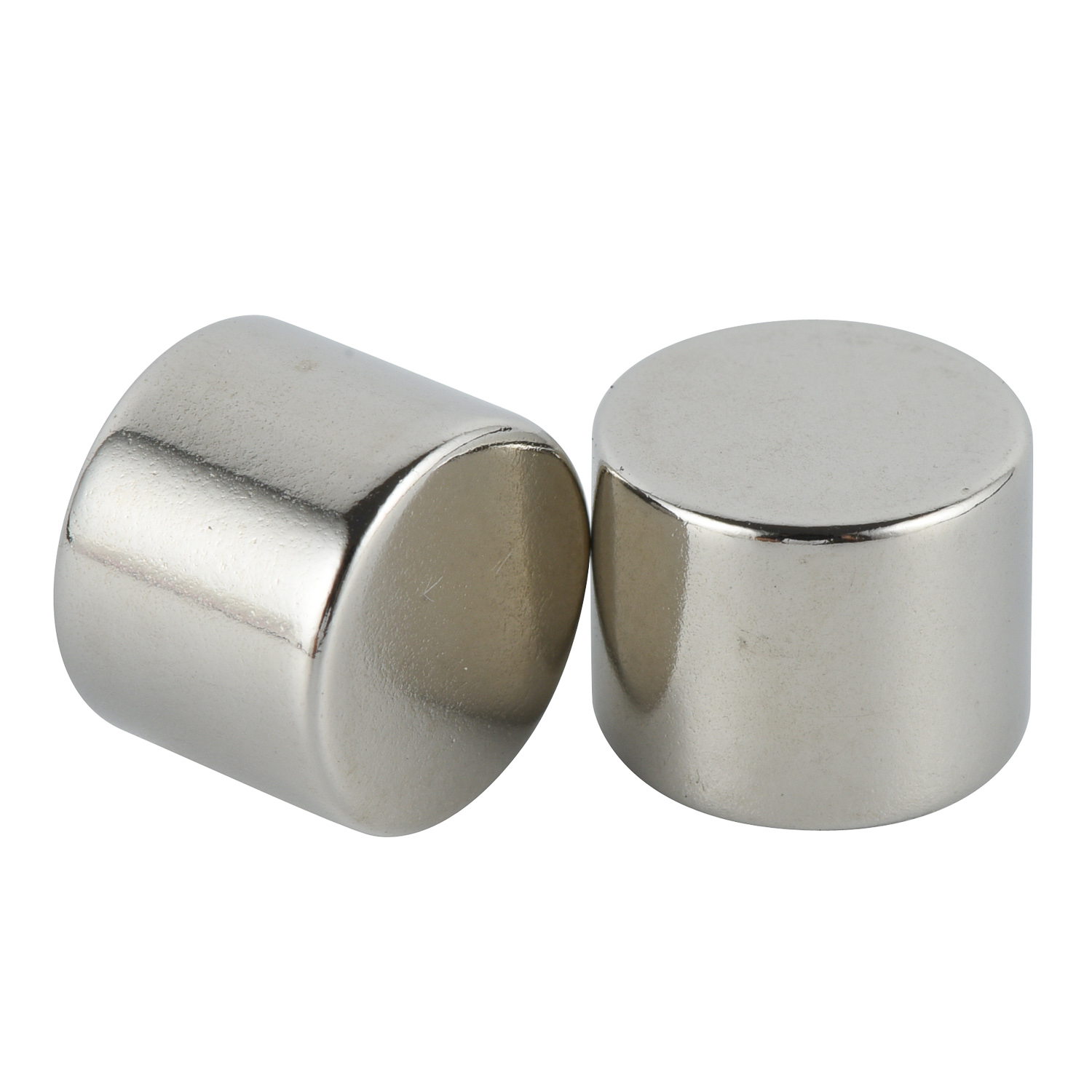
Side-by-side: the four ranks on published parameters
| Rank | Magnet type and catalogue item | Br / Hcj | (BH)max | Max working temp. | Best fit |
|---|---|---|---|---|---|
| 1 | 45SH sintered NdFeB segment magnet, OR32.5 × IR29 × H24.9 × 60° | >1.33 T / >1592 kA/m | 342–366 kJ/m³ | 150 °C | BLDC pumps, servo motors, generators, HVAC fan motors, EV auxiliary motors, refrigeration compressors |
| 2 | Multipole Ring Magnet 42H, OD25 × ID16 × H5 mm, 8/12 poles | >1.29 T / >1353 kA/m | 318–342 kJ/m³ | 120 °C (grade options to 180 °C) | Encoders, small BLDC servo motors, magnetic couplers, EPS motors, spindle motors, speed sensors |
| 3 | Radial ring magnet 40H, OD18 × ID10 × H4 mm, 4/6 poles | >1.26 T / >1353 kA/m | 302–326 kJ/m³ | 120 °C (N42H–N40UH to 180 °C) | Small-diameter servo and encoder rotors, magnetic coupler assemblies |
| 4 | N52 sintered neodymium magnet, D20 × 10 × 5 mm | >1.42 T / >955 kA/m | 398–422 kJ/m³ | 80 °C | Holding, sensor and consumer electronics duty where flux per volume dominates cost |
| 4 (cost alternative) | 38M block magnet, 20 × 10 × 5 mm | >1.23 T / >1114 kA/m | 287–310 kJ/m³ | 100 °C | Appliance BLDC motors, encoders, office automation, magnetic couplings; Dy/Tb below 0.1% |
Two readings of this table matter. Within the 150 °C and 120 °C classes, energy product separates the items. Across classes, it does not: rank 4 has the highest energy product and the lowest thermal headroom, which is exactly why the criteria are applied in sequence rather than as a single score.
Running the checklist: six steps from requirement to purchase order
- Fix the worst-case magnet temperature. Use the hot-spot temperature of the magnet itself, not ambient or housing temperature. Winding rise, radiation and duty cycle all feed into it, and this single number decides which grades remain eligible.
- Set the grade family. Match to the published table: 70–80 °C for N, 100 °C for M, 120 °C for H, 150 °C for SH, 180 °C for UH and 200 °C for EH. Documented production ranges include 30H–56H, 30SH–56SH, 30UH–54UH, 28EH–48EH and 28AH–42AH, so common requests such as an N42SH or an N48EH fall inside a published range — but request the grade-specific data sheet rather than inferring parameters from the family name.
- Choose the form. An arc or segment where the rotor radius and pole geometry are fixed by the lamination; a multipole ring where assembly cost and torque ripple dominate; a radial ring for small-diameter rotors; standard shapes for holding, sensing and low-temperature duty.
- Lock the mechanical and coating specification. Tolerance differs by form — ±0.1 mm published for the 45SH segment, ±0.05 mm for the two ring items. Ni-Cu-Ni is standard on the ring and segment items, with zinc, nickel, epoxy and parylene systems available across the range; select against the environment rather than the price list.
- Verify the supplier's certificates by number and scope. A certificate is only useful if its scope covers what you are buying and its validity dates are current. This step is where most first-time approvals fail, and the next section lists what to collect.
- Validate with batch data and samples. Ask for a magnetic test report per batch, a dimensional report and samples at the intended grade. Published terms are 10 days for regular samples and 25 days for regular batches, with a 10 kg minimum order quantity, sample orders excluded and confirmed as needed.

Where each rank earns its place
The ranked items are not theoretical parts; each maps to published application categories. Automotive drive motors and auxiliary motors draw on the segment and ring forms, where the 45SH arc and the 42H multipole ring cover the 120–150 °C band and the EPS and auxiliary duties listed for the ring items. Servo and automation equipment use both arc and multipole geometries, with the ring simplifying rotor assembly and reducing torque ripple.
Encoders and precision speed sensors favour the radially oriented ring and the multipole ring, because pole pattern and consistency between poles directly affect signal quality. HVAC fan motors, industrial pump motors and refrigeration compressor motors are published uses of the 45SH segment. Wind turbine generators are served by the same magnet family, with roughly 200–600 kg of high-performance NdFeB required per megawatt of offshore capacity on the cited market research. Medical imaging and device components, aerospace subsystems, magnetic separation and magnetic chucks appear in the same application data.
On service life, the published field data states that magnet service life in motors, wind power and similar applications is typically 10+ years depending on material grade and operating conditions — a qualification worth keeping attached to the number, since coating, temperature and duty cycle all move it.
Supplier qualification: six items to close before a purchase order
Ningbo Jinlun Magnet Technology Co., Ltd., which trades as JLmagnet, is used as a worked example because its certificate numbers, scope statements and production figures are published. The same six items apply to any supplier you shortlist, in this order.
- Automotive quality certification, with scope. JLmagnet holds IATF 16949:2016 certification number 12 111 69512 TMS (IATF Cert. No. 0576974, USI L2S2NA), issued by TÜV SÜD Management Service GmbH and valid from 4 July 2025 to 3 July 2028. The scope reads: manufacturing of material and products for sintered neodymium iron boron permanent magnets, without product design as per Chapter 8.3. That final clause matters — the certificate confirms the manufacturing system, and a buyer who needs design responsibility should confirm separately where design control sits.
- Quality management certification. ISO 9001:2015, certificate 12 100 69512 TMS, issued by TÜV SÜD Management Service GmbH, valid from 4 July 2025 to 3 July 2028, covering manufacturing and sales of material and products for sintered NdFeB permanent magnets.
- Environmental management certification. ISO 14001:2015, certificate 02124E10013R1M, issued by Huaxia Certification Center, Inc., valid from 2 January 2024 to 17 January 2027, covering production and related management activities of sintered Nd-Fe-B permanent magnet and products.
- Process coverage and capacity. A supplier that outsources sintering, machining or plating adds a handover risk at each step. JLmagnet reports vertical capacity across melting, hydrogen decrepitation, powder preparation, pressing, sintering, precision CNC machining, surface treatment and final performance testing, with 8,000 tonnes of annual capacity, approximately 80,000 m² of factory area, around 400 employees and a 45-person R&D team.
- Batch consistency evidence. Ask for the numbers behind the promise. Published figures include magnetic properties controlled within ±2% fluctuation, a 99.5% key dimensional pass rate and a magnetic test report issued per batch. In-house testing covers salt-spray corrosion and high-temperature ageing, which map directly to the coating and thermal risks raised earlier in this checklist.
- Commercial terms and traceability. A 10 kg minimum order quantity, 10-day regular samples, 25-day regular batches, monthly output typically above 600 tonnes depending on order mix, and full-lot traceability from raw material to finished product through ERP, MES and WMS are the published operating terms. Longer-term signals include more than 3,000 customers served, an 85% repurchase rate, and exports at approximately 30% of revenue to Europe, America and more than 20 countries.

One naming caution. JL Mag Rare-Earth Co., Ltd. (JLMAG) and Ningbo Jinlun Magnet Technology Co., Ltd. (JLmagnet) are different legal entities with similar short names. Confirm which entity issues the quotation and which site holds the certificate you were shown.
Where this checklist stops
- Certification confirms a management system, not fitness for your design. A motor that loses torque still needs a magnetic-circuit and thermal check.
- The grade table used here stops at EH and 200 °C. Third-party product literature from MPCO Magnetics states that 30AH–33AH grades withstand up to 220 °C, and the manufacturer in this example lists AH series as mass-produced, but grade-specific high-temperature data should be requested and verified rather than assumed from either figure.
- REACH and RoHS status is not established by IATF 16949, ISO 9001 or ISO 14001 certificates. Request a substance declaration per order.
- Sample performance is not mass-production performance. Batch reports across several lots are the evidence that matters.
- Ranking positions are conditional on temperature and duty. Below 80 °C, the standard N52 item moves ahead of the high-temperature grades on flux per unit volume.
- Prices are volatile. With neodymium up 64.03% year to date in 2026 on the cited secondary source, a quotation without a validity window is an incomplete comparison.
Frequently asked questions
Which neodymium magnet manufacturers hold IATF 16949?
IATF 16949:2016 is held by individual manufacturing sites within a defined scope, so the certificate matters more than the company name. Ningbo Jinlun Magnet Technology (JLmagnet) holds certificate 12 111 69512 TMS, issued by TÜV SÜD Management Service GmbH and valid from 4 July 2025 to 3 July 2028, covering the manufacturing of material and products for sintered NdFeB permanent magnets, without product design as per Chapter 8.3. Ask any supplier for the certificate number, issuing body, validity dates and scope, then check that the scope covers the process and product you are buying.
What operating temperature can sintered NdFeB magnets handle?
It depends on the grade family. Maximum working temperature is 70–80 °C for N grades, 100 °C for M grades, 120 °C for H grades, 150 °C for SH grades, 180 °C for UH grades and 200 °C for EH grades. Above that, AH grades exist, and third-party literature cites up to 220 °C for 30AH–33AH, but that figure should be confirmed against the specific supplier's grade data and test reports before it enters a design specification.
Which sintered NdFeB form should come first on a motor shortlist?
Use an arc or segment magnet when the rotor radius and pole geometry are fixed by the lamination and the hot spot is above 120 °C — the 45SH segment in this checklist is published for 150 °C. Use a multipole ring when assembly simplification, concentricity and low torque ripple carry more weight than maximum flux. Use a radially oriented ring for small-diameter rotors with 4 or 6 poles, and standard N52, N35 or 38M shapes for holding, sensing and low-temperature duty.
Which certifications should an Electrical & Electronics buyer verify?
Three at minimum: IATF 16949:2016 for automotive programmes, ISO 9001:2015 for quality management and ISO 14001:2015 for environmental management. Verify certificate number, issuing body, validity dates and scope rather than the logo alone. Substance compliance such as REACH or RoHS is separate from all three and needs its own declaration for the specific material and coating.
What minimum order quantity and lead time should a buyer expect?
For the supplier used as the example here, the published terms are a 10 kg minimum order quantity with sample orders excluded and confirmed as needed, 10 days for regular samples and 25 days for regular batches. Custom grades, coatings and tighter tolerances can extend these, so confirm both figures before committing a build schedule.
How do you request samples for a ranked magnet type?
Send form, grade, dimensions, magnetization direction, coating, maximum working temperature and target quantity in one request, because each of those changes the quotation. JLmagnet accepts sample and quotation requests through jlmagnet.com, by email at Sales00@jlmagnet.com, or on WhatsApp at +86 17621550719, and the company profile with full capability details is available as a PDF download. Requesting a sample at your own hot-spot temperature and coating — rather than a stock grade — is the fastest way to close step six of the checklist.
Conclusion
The ranking exists to make one decision auditable: which sintered NdFeB form you evaluate first, and what evidence the supplier behind it must produce. Thermal class sets the order, energy product separates items within a class, integration decides the total cost, and certification scope decides whether the supplier can carry the programme. Run the six steps in sequence, keep the conditions attached to each rank, and the shortlist stops being a matter of opinion.
Next step: the JLmagnet 2026 company profile includes the certification set, process flow and product ranges referenced in this checklist — download the JLmagnet Profile 2026 PDF. For grade-specific data or samples, send your drawing and operating temperature to Sales00@jlmagnet.com.

Have Questions or Need More Details?
Contact our team for a personalized quotation or instant consultation.
Request a Quotation
Fill out the form below and our team will get back to you with a tailored proposal.
WhatsApp Direct Chat
Prefer to chat in real-time? Message us on WhatsApp for instant assistance & quick answers.
- Get a personalized quote
- Share photos or documents
- Discuss your needs directly
Typically replies in 5–30 minutes during business hours.