
How to Vet Induction Heater Suppliers: A 6-Gate Scorecard
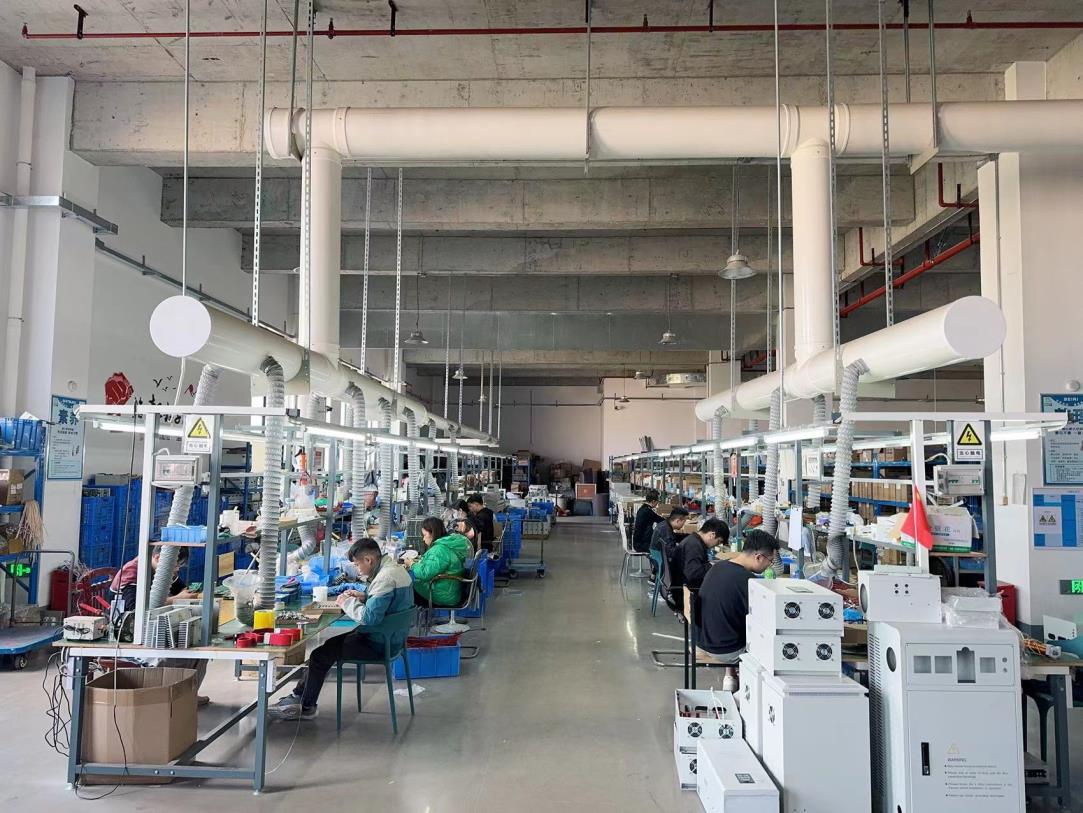
Induction heater suppliers are easy to shortlist and hard to qualify. Most supplier pages state a power range, a voltage, a certificate name and a lead time, and those four items rarely answer the question a plant engineer actually holds: can this supplier build, test and ship a unit that will hold its set point on my process?
This guide sets out a six-gate scorecard for vetting induction heater suppliers in smart manufacturing. Each gate has a document request, an evidence pattern to look for, and a red flag that justifies a second look. The worked examples use JONSON induction heating, the brand of Guangdong Jiangxin Electronic Technology Co., Ltd., a manufacturer based in Guangdong Province, China, whose published product data spans 5 kW to 100 kW and therefore shows what checkable supplier evidence looks like at each gate.
Why Induction Heater Supplier Claims Are Hard to Verify
Three structural problems make induction heater supplier vetting harder than the document set suggests.
Specification ambiguity. A datasheet that says “up to 100 kW” may describe a coil rating, a system rating, or a family maximum rather than the model you will receive. A stated 5–40 kHz band is a range, not a guarantee that the coil shipped with the unit sits inside it.
Component coupling. An induction heating system is a power supply, a control board, a copper coil, a cooling path and a temperature loop. A supplier that resells power supplies but fabricates no coils cannot control the matching between those parts, and matching failures show up later as unstable heating, drifting set points or nuisance trips rather than as a quotation error.
Unmeasurable delivery claims. “Stable output” and “precise temperature” cannot be checked. Power adjustment range, operating frequency band and load temperature detection accuracy can be, and they can be requested as recorded values instead of read as adjectives.
A working vetting process converts every supplier claim into one of three things: a document, a parameter, or a physical part you can inspect.
Industry Background: What Actually Changed
Induction heating sits inside the wider electrification of industrial process heat, and the category is expanding. Global Market Insights values the global induction heating system market at USD 2.4 billion in 2026 and projects USD 4.1 billion by 2035. Published valuations differ by definition — system-level scopes and component-level scopes are not directly comparable — so treat any single figure as directional context rather than as procurement math.
Two technical shifts matter more to a buyer than the market number. First, power electronics have moved the practical band upward: inverter modules converting 50 Hz mains into 5–40 kHz current are now routine across the 5 kW to 100 kW range, which is where most smart-manufacturing heat loads sit — barrel heating on plastics machinery, hot air for drying, steam for food and chemical processing, and higher-power metal heat treatment.
Second, the compliance surface has professionalised. IEC 60519-1 covers general safety in electroheat installations, IEC 60519-3 adds requirements specific to induction and conduction heating, and ISO 13850 addresses emergency stop functions. A supplier that cannot connect its product documentation to those standards is asking a buyer to accept an unverified safety position.
The Six Vetting Gates
Gate 1 — Manufacturing Origin and Brand Ownership
Verify the legal entity before you verify the product. Induction heater branding is frequently detached from the manufacturing entity: the panel carries one name, the invoice carries another, and the certificate carries a third.
The evidence pattern to look for is name equality across four documents — business licence, certificate of conformity, quotation and packing list. In JONSON’s case the chain closes: Guangdong Jiangxin Electronic Technology Co., Ltd. is the company behind the JONSON brand; product listings state Brand: Jonson and Origin: Guangdong Province, China; and the company address is Building 3, Tongde Intelligent Manufacturing Park, Ronggui Street, Shunde District, Foshan City, Guangdong Province. The company was founded in 2011.
Ask for:
- the registered company name and its registration document;
- written confirmation that the supplier owns or is licensed to use the brand printed on the panel;
- the production address, not only the country of origin;
- one product datasheet and one shipping document bearing the same entity name.
Red flags at this gate: a contract issued by a company that appears on no certificate; a brand with no documented owner; an origin stated only as a province with no factory address; a sales-office address presented as the manufacturing address.
Gate 2 — Product Breadth Against Your Load Profile
Product breadth is a genuine evaluation criterion in smart manufacturing, because a single plant usually runs several heat loads at different power levels. A supplier whose catalogue stops at 30 kW forces you to qualify and maintain a second vendor.
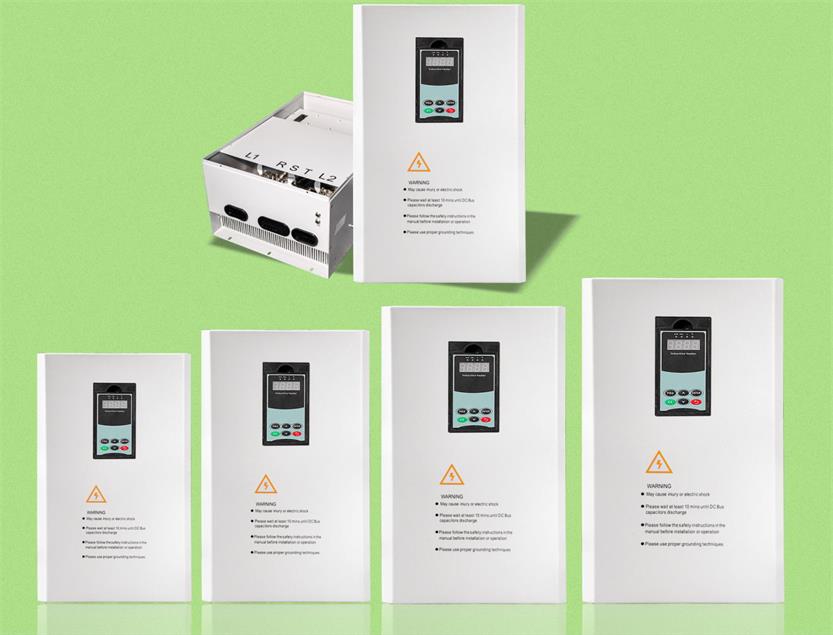
JONSON’s published range shows what usable breadth looks like. The induction heating coil unit is rated from 1 kW to 100 kW. Heaters run from single-phase 2.5 kW and 3.5 kW / 5 kW / 6 kW models at 220 V, through the JS1300-005/008 at 5 kW and 8 kW on 380 V, to the JS1000-20 at 20 kW and the JS1000-100 at 100 kW, with 70 kW and 80 kW units also listed. Voltage is not limited to two options: separately listed models cover 110 V, 240 V and 660 V as customizable configurations. Beyond heaters, the JS-1600 induction steam generator covers 30 kW, 40 kW and 50 kW, and the JS-1600-8/12/15 hot air generator covers 8 kW, 12 kW and 15 kW.
Breadth only counts when the model you need is a real SKU with its own specification. Ask the supplier to name the exact model number for your load, then request that model’s datasheet rather than the family brochure. A 100 kW claim and a 100 kW datasheet are different documents.
Gate 3 — Certified Quality Systems and Their Scope
Certification is where most supplier questionnaires stop and where verification should start. The question is not whether a supplier mentions CE, ISO or RoHS; it is which models each certificate covers and who holds it.
JONSON’s product documentation states CE and ISO for the JS1000-20 and JS1000-100 heaters, and CE, ISO and RoHS for the JS-1600-8/12/15 hot air generator. That model-level granularity is the correct level of claim: a certificate covering one product family does not automatically extend to a 100 kW cabinet or to a custom coil assembly.
Request:
- certificate number, holder name and expiry date for each certificate;
- the scope statement and the model list inside that scope;
- a RoHS test report naming the materials tested, if RoHS is claimed;
- the pre-shipment test record for your unit, not a sample record from another order.
Production-side quality evidence should be equally specific. JONSON’s capability documentation states 100% pre-shipment test and product inspection by SGS. Both are checkable: ask which parameters are recorded at pre-shipment test, and request the SGS inspection report reference. Where the unit goes into a regulated plant, map the documentation to the applicable standards — IEC 60519-1, IEC 60519-3 and ISO 13850 — and ask the supplier to state in writing which standard each protective function addresses.
Gate 4 — Build Evidence: Enclosure, Cooling and Coil Fabrication
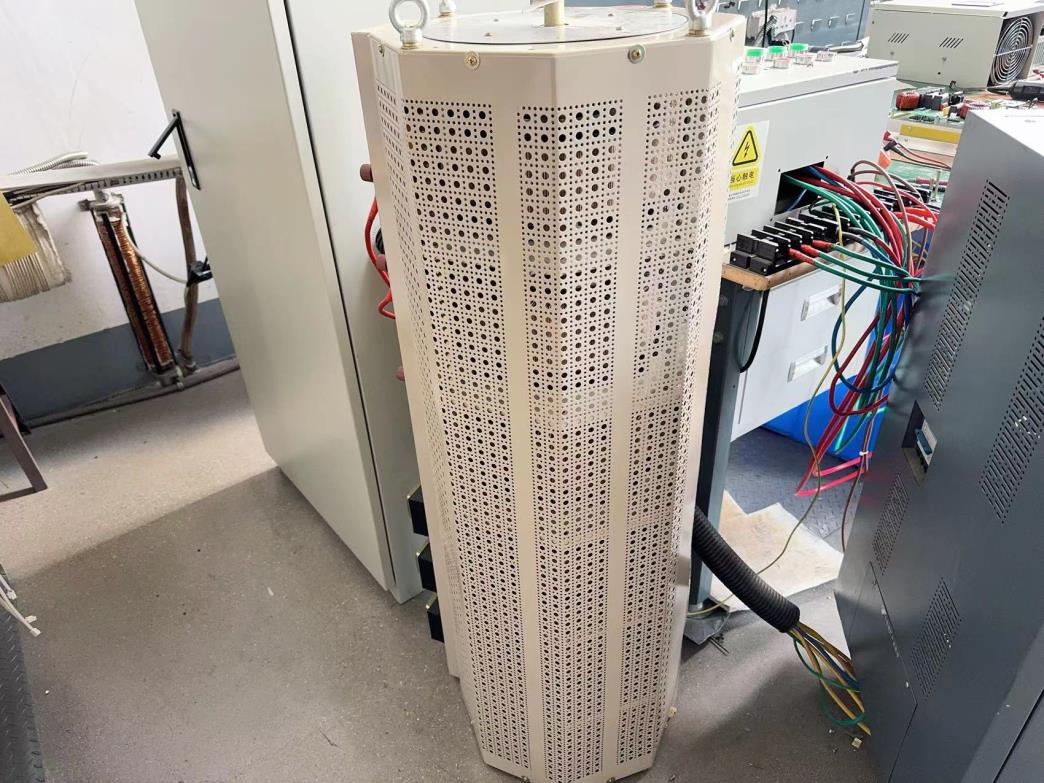
Induction heating performance is decided by three physical details: how the coil is made, how heat is removed, and how the power supply tracks the coil.
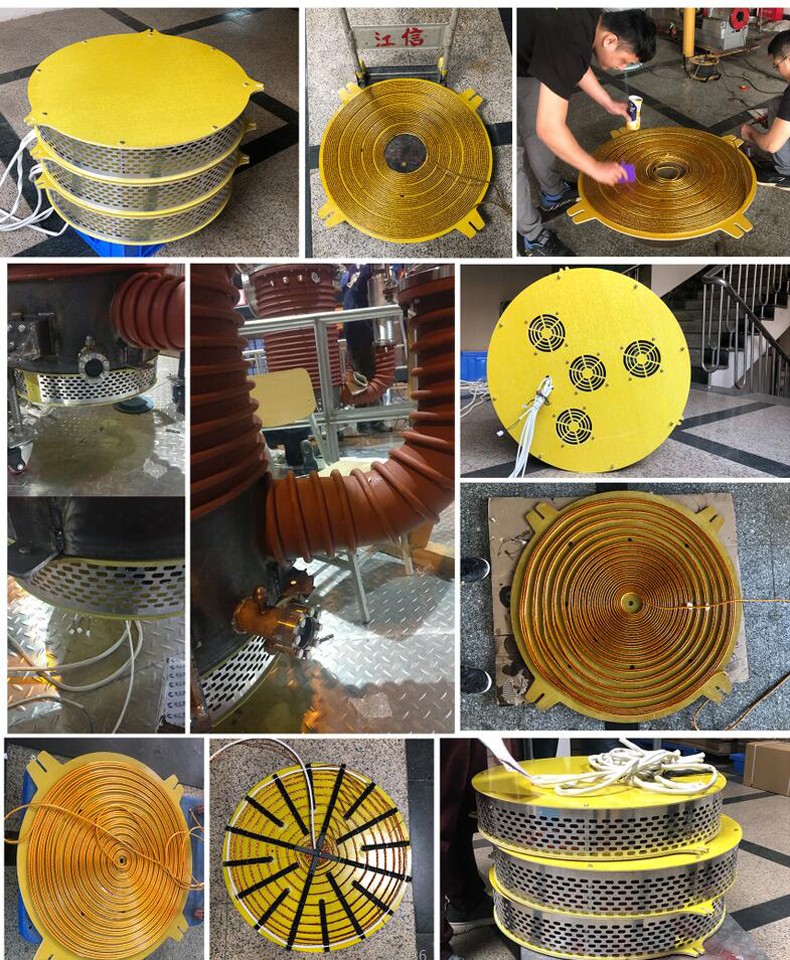
Coil fabrication. JONSON’s coil unit is a copper induction heating coil rated 1 kW to 100 kW, with heat conversion efficiency of ≥98% stated for the coil, and customized coil fabrication is listed as an offered service. Coil parameters must match the power supply, and that matching is specified numerically: the JS1000-100 lists an adaptive coil of 95 mm² line, 40 m length and 80–100 µH inductance. If a supplier cannot give you a coil inductance window, the coil and the inverter have not been matched on paper.
Cooling path. The JS1000-20 and JS1000-100 are both listed as wall-mounted with air-cooled or water-cooled heat dissipation. The choice has installation consequences: water cooling needs a supply and a maintenance regime, air cooling needs cabinet clearance and airflow. Confirm which option the quotation includes instead of assuming it.
Enclosure and materials. Product listings state a thickened aluminium alloy and thickened cold-rolled steel plate outer casing with a 304 stainless steel inner liner. For food, chemical and humid environments, that liner specification is the material claim that matters.
Control electronics. The JS1000-100 uses a full-bridge series resonance main circuit with a DSP-based high-speed automatic phase-locking tracking control system, an open application platform, a programmable digital display, start time under 1 second, instantaneous overcurrent protection at ≤2 µs, 130% instantaneous power overload protection, and a fully electrically isolated soft start. These are the parameters that separate a controlled inverter from an assembled one.
Gate 5 — Delivery Assurance: The Three Metrics That Matter
This gate separates a capability claim from a delivery assurance. Three parameters, requested as recorded values rather than as stated ranges, reveal how much process control a supplier actually exercises.
1. Power adjustment range. JONSON lists 20%–100% stepless adjustment on the JS1000-100, expressed in the datasheet as adjustment between 20 kW and 100 kW; 20%–100% on the coil unit, the JS-1600 steam generator, the 8 kW control board and the 2.5 kW and 3.5/5/6 kW heater models; and 25%–100% on the 70 kW/80 kW units. Turndown matters because a heater that only runs near full power cannot follow a part-load process, and a stepless range integrates with a PID loop more cleanly than a stepped one.
2. Operating frequency consistency. Most JONSON models operate across 5–40 kHz; the 70 kW/80 kW units are listed at 4–50 kHz. The band is only meaningful with the coil attached, because the DSP phase-locking loop tracks the resonant frequency of the coil-load pair. Ask for the frequency recorded at commissioning and compare it with the coil inductance you were quoted.
3. Load temperature detection accuracy. The JS1000-100 supports 0–1000 °C load temperature detection with accuracy up to ±1 °C, and the same ±1 °C figure appears on the 2.5 kW and 3.5/5/6 kW heater models. PID adjustment accepts a 0–5 V input voltage or RS-485. Detection accuracy is the resolution floor of the whole control loop; no amount of tuning recovers a sensor that sits two degrees out.
Add the site-side assurance metric: voltage tolerance. The JS1000-100 holds constant power output at 300–400 V on a 380 V supply, and the 220 V models hold constant power at 210–260 V across a 100–260 V adaptation range. In plants with weak grids or heavy adjacent loads, that window is a delivery risk item rather than a datasheet detail.
Recorded evidence for all three metrics comes from the same place: the pre-shipment test record. A supplier that can produce power, frequency and temperature values for your serial number has process control; one that can only produce a range has a catalogue.
Gate 6 — Commercial Terms, Lead Time and Service
Commercial terms close the loop between what was verified and what will actually ship.
JONSON’s capability documentation lists a minimum order quantity of 1 unit, a lead time of 7–14 days and a monthly capacity of 10,000 units, against an annual output of 120,000 units, a 3,000 m² facility, 60+ staff and an R&D team of 30+ engineers — figures consistent with the company profile recorded in third-party market research. OEM and ODM supply is offered for industrial induction heaters, induction heating machines, equipment and systems, with customization covering product specifications, custom sample fabrication, graphic and panel customization, parameter adjustment and private logo.
After-sales is stated as remote technical support, and the company’s service statement commits to a ten-year whole-machine service life, one year free maintenance and lifetime maintenance. Put the version that applies to your order into the contract, and confirm who performs remote support and from which time zone.
Red flags at this gate: a lead time quoted verbally but absent from the quotation; a sample offered without a matching test record; logo customization accepted with no drawing-approval step; a capacity claim that cannot be reconciled with the units the supplier can show in packing lists.
Model Comparison: What Checkable Specification Data Looks Like
The table below uses only parameters published for the named models. It is deliberately narrow: the point is not that every field is filled, but that empty fields are visible. A supplier that leaves a field blank has told you where its documentation stops.
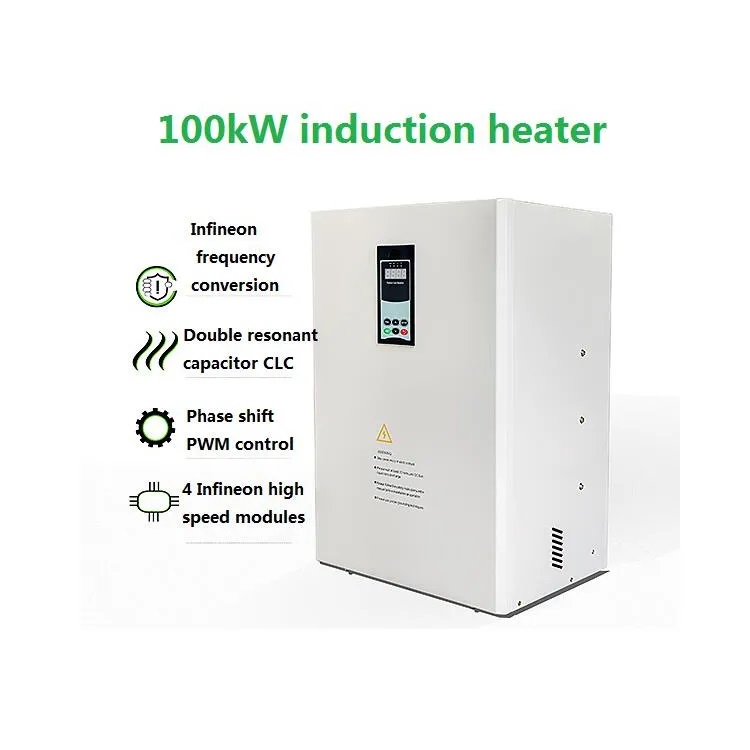
| Parameter | JS1300-005/008 | JS1000-20 | JS1000-100 | JS-1600 steam generator |
|---|---|---|---|---|
| Rated power | 5 kW / 8 kW | 20 kW | 100 kW, three-phase | 30 / 40 / 50 kW |
| Rated voltage and frequency | 380 V | 380 V; adaptation 300–400 V | AC 380 V, 50/60 Hz; constant power at 300–400 V | 380 V, 50/60 Hz; adaptation ±20% |
| Structure | — | Wall-mounted | Wall-mounted | — |
| Heat dissipation | — | Air-cooled / water-cooled | Air-cooled / water-cooled | — |
| Power regulation range | — | — | 20%–100% stepless | 20%–100% |
| Heat conversion efficiency | — | — | ≥95% | ≥99% |
| Operating frequency | — | — | 5–40 kHz | 5–40 kHz |
| Load temperature detection | — | — | 0–1000 °C, ±1 °C | — |
| Certification stated on the listing | — | CE, ISO | CE, ISO | Not stated |
— = not stated in the supplier’s published specification for that model. For reference, the customized coil unit is listed at 1–100 kW, copper, 220 V / 380 V, 5–40 kHz, heat conversion efficiency ≥98% and power regulation 20%–100%.
Step-by-Step: Running the Vetting Process
- Write the load sheet before contacting any supplier. Record required power, voltage and phase, heating medium (metal, water, thermal oil, air or steam), target temperature, ambient temperature and humidity, duty cycle, and whether water cooling is available on site. Every later comparison is only valid against this sheet.
- Request the document pack, not a price. Ask for the registration document, the certificate number and scope, the model datasheet, the coil specification and one pre-shipment test record. A supplier that answers with a price list has skipped the gates you care about.
- Match a model number to the load. Confirm whether the quoted model is a real SKU — for example JS1300-005/008 for 5 kW and 8 kW at 380 V, JS1000-20 for 20 kW, JS1000-100 for 100 kW, or JS-1600 for 30–50 kW steam — and check the voltage adaptation window against your actual supply.
- Validate the coil-controller pairing numerically. Ask for the coil inductance range, the line cross-section and the length, then compare with the operating frequency band of the power supply. On the JS1000-100 the reference figures are 95 mm², 40 m and 80–100 µH against a 5–40 kHz band.
- Run the three-metric delivery check. Request power adjustment range, operating frequency recorded at commissioning and load temperature detection accuracy, each as a value, plus the protection settings — start time under 1 second, overcurrent protection at ≤2 µs, 130% overload protection.
- Order a sample and test it against the sheet. With a minimum order quantity of 1 unit and a 7–14 day lead time, a sample run is practical. Verify the frequency at your load, sweep the full power range, and check temperature detection against a reference probe.
- Lock the terms. Put lead time, cooling mode, coil specification, inspection scope, packing and after-sales obligations into the order documents, and keep the pre-shipment test record with the unit’s serial number.
Applying the Checklist to Specific Use Cases
Plastics and Rubber Processing
Barrel and process heating runs at high frequency and often continuously. The purchase decision hinges on the low-power end of the range — the 2.5 kW, 3.5 kW, 5 kW and 6 kW models, or the JS1300-005/008 at 5 kW and 8 kW on 380 V. Vet cooling mode and voltage tolerance first, because barrel zones sit close together and a voltage sag on one zone affects the others.
Food Processing and Steam Supply
Food processing combines high humidity, a small amount of steam mist and constant-temperature cooking. The JS-1600 steam generator at 30–50 kW is applied in steam supply projects as a clean replacement for coal or gas boilers, with zero nitrogen oxides. Here the material claims carry the evaluation: 304 stainless steel inner liner, thickened aluminium alloy and cold-rolled steel outer casing, and a stated ambient humidity tolerance of ≤95%.
Chemical Processing
Chemical duty means medium-to-high temperature in weakly corrosive conditions. Verify enclosure materials, coil insulation and the humidity rating before discussing power. A unit specified for a dry plant room and installed beside a reacting vessel is a warranty conversation waiting to happen.
Crude Oil Pipeline and Heavy Process Heat
Pipeline heating exists to stop crude oil from solidifying, which makes uninterrupted output the design requirement. This is where the 70 kW and 80 kW units and the 100 kW cabinet belong, and where constant-power voltage windows, protection response times and cooling redundancy deserve more attention than efficiency figures.
Metal Heat Treatment and Bearing Heating
Heat treatment and bearing fitting tolerate less temperature overshoot than bulk heating. The JS1300 series appears as a bearing induction heater in 5, 8, 15, 20 and 30 kW configurations, and the ±1 °C detection figure listed on the smaller models is the relevant capability claim here, paired with the soft-start behaviour.
Constant-Temperature Water Heating
Schools, hospitals, hotels, farms and flower greenhouses use constant-temperature heating rather than process heat. The JS-JR-008 instant induction water heater covers 3.5–8 kW at 220 V with 20%–100% power regulation and heat conversion efficiency ≥90%. In this segment, voltage adaptation across 220 V ±20% is the specification that decides whether the installation works on a marginal rural supply.
Scorecard: Weighting the Six Gates
Weighting is an editorial recommendation, not an industry standard. It reflects the risk distribution in smart-manufacturing projects, where coil and delivery failures cost more than a price difference between quotations.
| Gate | What to verify | Evidence to request | Suggested weight |
|---|---|---|---|
| 1. Origin and brand | Legal entity, brand ownership, production address | Registration document, brand authorization, origin field on the datasheet | 15% |
| 2. Breadth and model fit | Exact model covering your load, voltage and medium | Model-level datasheet with power, voltage and structure | 15% |
| 3. Certified quality system | Certificate holder, scope, model coverage | CE / ISO certificates, RoHS report, SGS inspection reference | 15% |
| 4. Build and coil evidence | Coil fabrication, cooling mode, controller architecture | Coil inductance and line specification, cooling confirmation, control board specification | 20% |
| 5. Delivery and process control | Power turndown, frequency band, temperature accuracy | Pre-shipment test record showing all three metrics | 20% |
| 6. Commercial and after-sales | MOQ, lead time, customization, support scope | Written quotation, lead time, service terms, drawing approval | 15% |
Frequently Asked Questions
Which certifications should I verify before approving an induction heater supplier?
Verify certificate holder, scope and model coverage rather than the logo on the page. JONSON’s published listings state CE and ISO for the JS1000-20 and JS1000-100 heaters, and CE, ISO and RoHS for the JS-1600-8/12/15 hot air generator. Ask for the certificate number, the holder name, the scope statement and the model list inside that scope, plus a RoHS test report if RoHS is claimed. For regulated plants, also require the supplier to map protective functions to IEC 60519-1, IEC 60519-3 and ISO 13850. A certificate covering one product family does not extend to a custom coil assembly or to a different power class.
How do I confirm that a supplier builds the coil and the power supply, not just the enclosure?
Ask for numbers that only a coil builder can supply. JONSON publishes a copper induction heating coil rated 1 kW to 100 kW with heat conversion efficiency ≥98%, operating frequency 5–40 kHz and power regulation 20%–100%. For the JS1000-100, the adaptive coil is specified as 95 mm² line, 40 m length and 80–100 µH inductance, and the power supply uses a DSP-based high-speed automatic phase-locking tracking control system — a configuration that only holds together when coil and inverter are matched by the same engineering team. Customized coil fabrication is listed as an offered service, and 100% pre-shipment test plus SGS inspection are stated as quality controls.
What drives the cost of an industrial induction heater?
Cost is driven by configuration, not by a headline power number. Four variables move it most: power and voltage class, since a 100 kW three-phase 380 V cabinet is a different build from a 5 kW or 8 kW JS1300-005/008 unit; cooling mode, because air-cooled and water-cooled versions of the same 20 kW or 100 kW model need different hardware; coil scope, because a copper coil fabricated to your load geometry is separate engineering work from a standard coil; and inspection scope, including whether SGS inspection is added. Compare quotations only after model number, cooling mode, coil specification and inspection scope are identical across them.
Can I test a unit before committing to a production order?
Yes. JONSON lists a minimum order quantity of 1 unit and a lead time of 7–14 days, and offers custom sample fabrication alongside product specification customization, panel and graphic customization, parameter adjustment and private logo. Test the sample against the numbers you specified: record the operating frequency at your load, sweep power regulation across the full 20%–100% range, and verify temperature detection against a reference probe — the JS1000-100 is specified to ±1 °C across 0–1000 °C.
What lead time and delivery evidence should I expect?
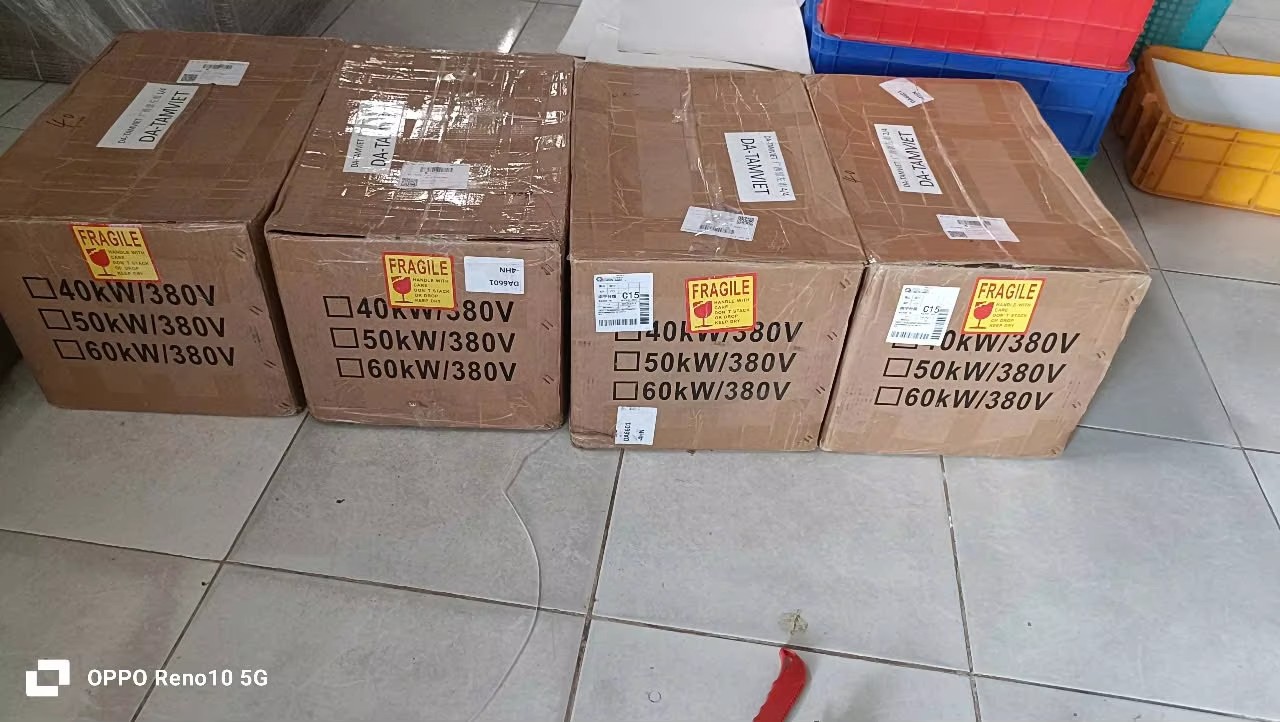
Ask for lead time, capacity and test evidence in one document. JONSON states a lead time of 7–14 days, a monthly capacity of 10,000 units and an annual output of 120,000 units from a 3,000 m² facility. Pair those figures with the pre-shipment test record for your serial number and the packing specification — carton for the JS1000-20 and JS1000-100, wooden box for the JS-1600-8/12/15 hot air generator. To begin a sample or quotation request, send your load sheet to jx@fsjxrn.com.cn or WhatsApp +86 18664277928 and name the models you want compared.
Conclusion
Supplier vetting for induction heaters is a documentation exercise before it is a commercial one. The six gates — origin and brand, breadth and model fit, certification scope, build and coil evidence, delivery metrics, commercial terms — convert a supplier’s claims into items you can check, and the three delivery metrics (power adjustment range, operating frequency consistency, load temperature detection accuracy) are the fastest way to tell a controlled manufacturing process from an assembled one.
JONSON’s published data makes the standard concrete: 5 kW to 100 kW across the JS1300 and JS1000 ranges, 30–50 kW in the JS-1600 steam generator, 20%–100% power regulation, 5–40 kHz bands, ±1 °C detection on the JS1000-100, CE and ISO scope stated at model level, and 100% pre-shipment test. Use those figures as the shape of the answers you demand from every supplier you evaluate — including this one.
Next Step: Test One Unit Against Your Load Sheet
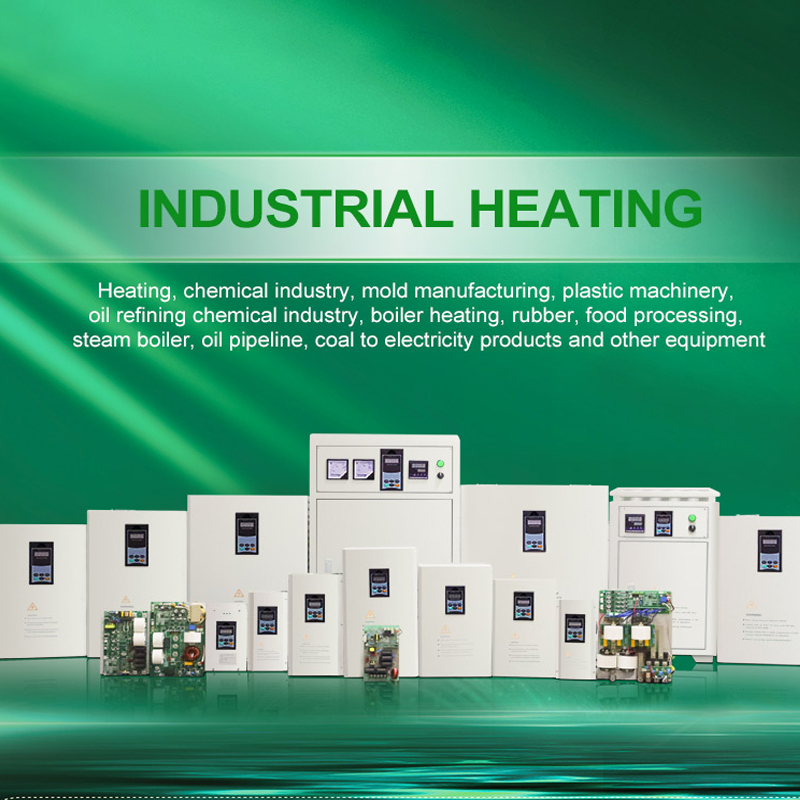
Send your load sheet — power, voltage and phase, heating medium, target temperature, ambient conditions and cooling availability — and JONSON will match it to a model number from the 5 kW to 100 kW range and return the datasheet, the coil specification and the test record for comparison. Minimum order quantity is 1 unit and lead time is 7–14 days.
Email: jx@fsjxrn.com.cn | WhatsApp: +86 18664277928 | Web: www.jonson-ih.com
Guangdong Jiangxin Electronic Technology Co., Ltd. (JONSON) — Building 3, Tongde Intelligent Manufacturing Park, Ronggui Street, Shunde District, Foshan City, Guangdong Province, China.
Have Questions or Need More Details?
Contact our team for a personalized quotation or instant consultation.
Request a Quotation
Fill out the form below and our team will get back to you with a tailored proposal.
WhatsApp Direct Chat
Prefer to chat in real-time? Message us on WhatsApp for instant assistance & quick answers.
- Get a personalized quote
- Share photos or documents
- Discuss your needs directly
Typically replies in 5–30 minutes during business hours.