
Induction Heater Application Guide: Smart Manufacturing Steam, Hot Air, Water & Bearing Scenarios
Induction Heater Application Guide: Smart Manufacturing Steam, Hot Air, Water & Bearing Scenarios

Figure 1 — JONSON induction heating machines are built to different specifications. Scenario matching begins with the heat-transfer duty, not the kilowatt figure.
Quick answer: in a smart manufacturing project, an induction heater should be selected by the heat-transfer duty it performs — steam generation, hot air, process water, bearing fitting or heavy-load process heating — and only then by electrical band. JONSON publishes a distinct model family for each duty: the JS-1600 induction steam generator (30/40/50 kW), the JS-1600-8/12/15 induction hot air generator (8/12/15 kW), the JS-JR-008 instant induction water heater (3.5–8 kW), the JS1300-5/8/15/20/30 bearing induction heater, and the JS1000-100 100 kW industrial induction heater for heavy loads.
Induction heating is often discussed as a single technology with a single number attached to it. In practice, the equipment behind a steam line, a drying tunnel, a hot water circuit and a bearing fitting station shares a working principle but not a working profile. A phase-change steam load draws continuous latent heat; a hot air generator pushes heat into a forced-convection air path; a water heater transfers energy into a liquid in direct contact with the heating element; a bearing heater heats a solid steel workpiece whose mass and interference fit dictate the heating curve. Two projects may both be described as 30 kW briefs and still need different machines, different voltage tolerance, different control interfaces and different documentation.
This guide maps each of those duties to a documented model from JONSON — the brand of Guangdong Jiangxin Electronic Technology Co., Ltd., a manufacturer founded in 2011 in Foshan, Guangdong Province, China, producing induction heaters, induction steam generators, hot air generators, instant water heaters, bearing heaters and induction heating coils, and exporting to Europe, the United States, India, Indonesia and other markets. It then sets out the published specifications that decide the match, a step-by-step selection sequence for evaluation and execution stages, the industries each configuration serves, and a verified comparison table.
Problem Definition: Why a Kilowatt Rating Cannot Select an Induction Heater
A power rating describes electrical capacity. It does not describe thermal fit. Buyers who shortlist by kilowatts alone typically run into one of four mismatches during commissioning or during the first production campaign.
- Load type mismatch. Liquid, gas and solid loads present different impedance and different thermal inertia to an induction system. The JS-1600 steam generator is specified for steam duty, the JS-1600-8/12/15 for hot air, the JS-JR-008 for water, and the JS1300-5/8/15/20/30 for bearing workpieces. Selecting across these families on kilowatts alone ignores the design intent of each unit.
- Control resolution mismatch. A process that runs at a fixed set point and a process that ramps between set points need different regulation behaviour. JONSON publishes a 20%–100% power adjustment range on the JS-1600 steam generator, the JS-1600-8/12/15 hot air generator, the JS-JR-008 water heater, the JS1300-10/15 heater and the JS1000-100, and a 25%–100% range on the 70 kW / 80 kW industrial electric heaters.
- Site voltage mismatch. Plants that already operate with a stable supply and plants that see voltage sag need different adaptation windows. Some JONSON models are published with a 300V–400V constant-power window, others with ±20% adaptation, and the JS-JR-008 with 220V ±20%.
- Documentation mismatch. Certification scope and contact materials belong to the purchase decision, not to the afterthought stage. The wetted path on most JONSON heating units is a 304 stainless steel liner with a copper heating coil, and the JS-JR-008 uses a tempered glass outer casing.
The practical cost of these mismatches is not only capital. An oversized unit runs far below its regulation range and loses controllability; an undersized unit cannot hold set point during peak demand; a unit specified with the wrong voltage window trips on brown-out conditions; a unit without the right certificate scope stalls at the customs or commissioning gate.
Industry Background: Why Scenario-First Selection Matters in Smart Manufacturing
Process heat is being electrified across manufacturing because electrified heat can be measured, regulated and logged. Induction heating fits that expectation: it generates heat inside the workpiece or the heating element rather than in a flame, it responds quickly, and its output can be tied to a control signal. JONSON units are published with a DSP-based high-speed automatic phase-locking tracking control system, a programmable digital display, start times below one second, instantaneous overcurrent protection at ≤2 µs and 130% instantaneous power overload protection on the small and cabinet families, and PID power adjustment through a 0–5V input with RS-485 available on the JS1000-100.
Two regulatory anchors shape procurement. Induction heating equipment as a category falls under IEC 60519-1 (general safety requirements for electroheat installations) and IEC 60519-3 (particular requirements for induction and conduction heating), with ISO 13850 covering emergency stop functions. On the trade side, industrial equipment for heat treatment of materials by induction or dielectric loss is classified under HS heading 8514.40; individual JONSON models carry their own HS codes in the published specification, for example 8514400090 for the JS1300-10/15 and 8516109000 for the JS-1600-8/12/15 hot air generator.
Market context supports the shift but should be read with care. Global Market Insights estimates the global induction heating system market at USD 2.4 billion in 2026, rising to USD 4.1 billion by 2035. Other research houses publish materially different totals because they define the category differently — some count full industrial furnace lines, others count core components or specific power bands. Those figures should not be aggregated, and no single market total should be used as a substitute for a site-level engineering case.
The JONSON Scenario Map: Five Heating Duties, Five Equipment Families
JONSON organises its catalogue by duty. The five families below cover the steam, hot air, water, bearing and heavy-load scenarios that dominate smart manufacturing briefs.
1. Steam Generation — Induction Steam Generator JS-1600
The JS-1600 is a high-frequency electromagnetic steam generator rated at 30 kW, 40 kW or 50 kW, operating on 380V at 50 Hz or 60 Hz with a voltage adaptation range of 380V ±20%. Published ambient limits are −20 °C to 40 °C at up to 95% relative humidity, power regulation spans 20%–100%, heat conversion efficiency is stated as ≥99%, and the operating frequency range is 5–40 kHz. The core heating coil is copper and the inner liner is 304 stainless steel.
For a project brief, the 30 kW unit suits a smaller continuous steam demand, while the 40 kW and 50 kW units address sites where several steam users draw at the same time. Because the regulation range reaches down to 20% of rated output, the same model can serve a batch process that idles between campaigns instead of being cycled on and off. The stated ambient ceiling of 40 °C is a real constraint: a boiler room that exceeds it falls outside the published envelope and should be raised with the manufacturer before ordering.
2. Hot Air Generation — Induction Heating Hot Air Generator JS-1600-8/12/15
The JS-1600-8/12/15 is a vertical-type induction hot air generator offered at 8 kW, 12 kW and 15 kW on a 380V supply with a 300V–400V adaptation range. Published output data are an outlet temperature of 80–130 and a wind pressure of 800–1000 PA, with 20%–100% power regulation. CE, ISO and RoHS are listed in the model specification, the unit ships in a wooden box, and the HS code is 8516109000.
Hot air duties are typically drying, curing and pre-heat tunnels, where the useful variable is delivered air temperature and static pressure rather than the kilowatt figure. A 15 kW unit at the same outlet temperature range moves more air than an 8 kW unit, which is why airflow resistance in the duct — not the heater alone — decides the model. The vertical form factor also matters at layout stage; it suits a floor-standing position next to a tunnel rather than a wall-mounted cabinet position.
3. Process and Service Water — Instant Induction Water Heater JS-JR-008
The JS-JR-008 is an instant induction water heater rated 3.5–8 kW on a single-phase 220V supply with 220V ±20% adaptation, ambient limits of −20 °C to 40 °C, 20%–100% power regulation, heat conversion efficiency of ≥90% and an operating frequency of 5–40 kHz. The outer casing is tempered glass and the core heating coil is copper. Published application segments are hotels, hospitals and schools.
This is the family where published efficiency differs most from the industrial units: ≥90% for the JS-JR-008 versus ≥99% for the JS-1600 steam generator and the 70 kW / 80 kW industrial electric heaters. Quoting the wrong figure in a business case is a common error. The single-phase supply is also a design decision rather than a detail — sites without a three-phase feed can still run an induction water heater, but the load must be planned against the available single-phase capacity.
4. Bearing Fitting — Bearing Induction Heater JS1300-5/8/15/20/30
The JS1300-5/8/15/20/30 bearing induction heater is offered at 5 kW, 8 kW, 15 kW, 20 kW and 30 kW on a three-phase 380V supply at 50 Hz or 60 Hz, in a 480 mm × 250 mm × 355 mm enclosure weighing 20.7 kg. The core heating coil is copper and the outer casing is thickened aluminium alloy.
Bearing heating is a solid-load duty: the workpiece mass, bore size and required interference temperature set the energy demand, and the heater is matched to that workpiece rather than to a process stream. A 5 kW unit handles small bearings; a 30 kW unit covers the large-bearing end of the range. The published specification for this family does not state a power regulation range, so that parameter should be confirmed at quotation stage rather than assumed from the cabinet models.
5. Heavy-Load Process Heating — JS1000-100, 70/80 kW and 40/50/60 kW Units
The JS1000-100 is a 100 kW industrial induction heater: three-phase 380V at 50–60 Hz, 140–150 A rated input current, 200–220 A rated output current, and constant power output across 300V–400V. Power adjustment is 20%–100% stepless, which on this model means 20 kW to 100 kW. Heat conversion efficiency is stated as ≥95% with effective power ≥98%. The main circuit is full-bridge series resonance with DSP-based automatic phase-locking tracking, the unit supports PID power adjustment through a 0–5V input or RS-485, and load temperature detection spans 0–1000 °C at ±1 °C accuracy. The matched coil is a 95 mm² copper line, 40 m long, 80–100 µH. Enclosure dimensions are 635 mm × 445 mm × 315 mm at 35 kg, with air-cooled or water-cooled heat dissipation. CE and ISO are listed in the specification.
Two further heavy-load bands complete the range. The 70 kW / 80 kW industrial electric heaters are rated 380V with a 25%–100% regulation range, ≥99% heat conversion efficiency, 4–50 kHz operating frequency and an ambient window of −25 °C to 55 °C. The 40 kW / 50 kW / 60 kW units run on 380V/50Hz with 380V ±20% adaptation, 20%–100% regulation, ≥98% heat conversion efficiency and 5–40 kHz frequency, and are positioned for pipeline heating, boilers, heat-transfer oil circuits and plastic machinery such as injection moulding machines, wire drawing machines, granulators and extruders.
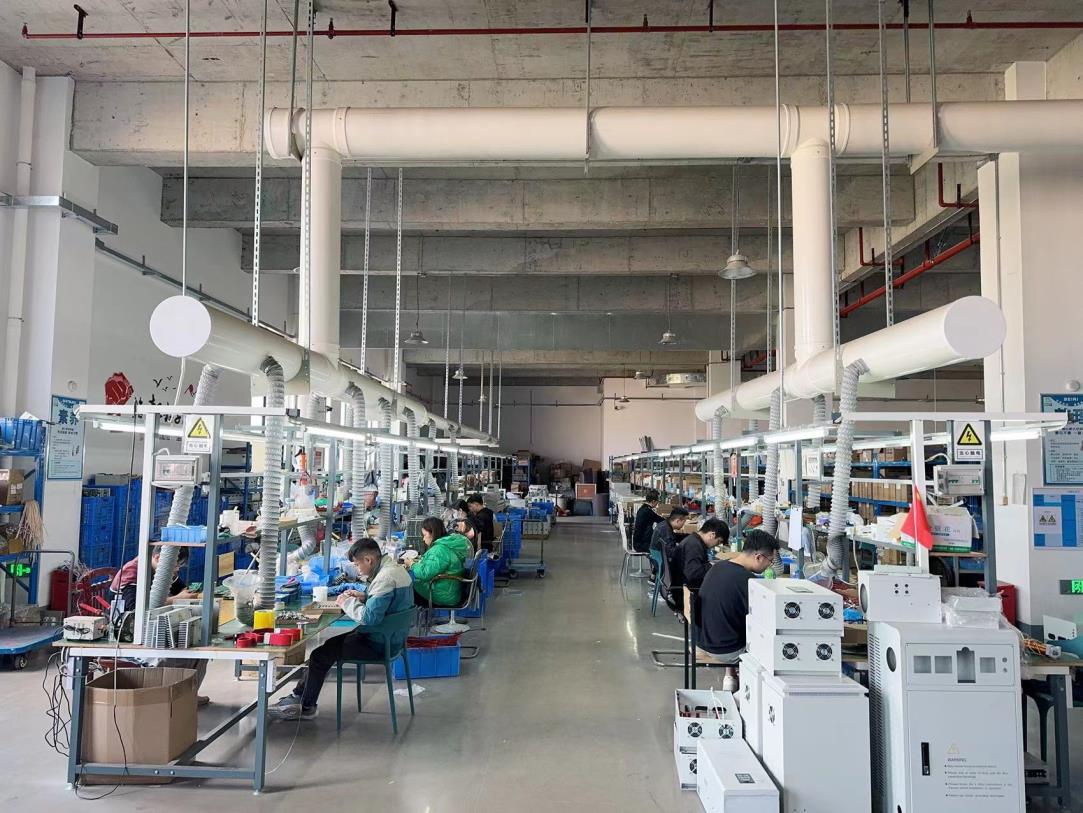
Figure 2 — Assembly of induction heating units at the JONSON facility in Foshan, Guangdong. Different scenarios run on the same production base but on different bills of material.
Selection Criteria That Decide the Match
Six published parameters separate a workable configuration from an expensive correction. Each should be recorded in the project brief before a model is nominated.
- Voltage adaptation. JONSON publishes several windows: 300V–400V constant power on the JS1000-100, the JS1300-10/15 and the JS-1600-8/12/15; ±20% on the JS-1600 steam generator, the 40/50/60 kW units, the JS1300-005/008 and the JS-JR-008; and 100V–260V with constant power output at 210–260V on the single-phase small plastic machinery units. Custom voltage builds are also offered across 110V, 240V and 660V in power bands of 500W–10 kW, 5–60 kW, 5–200 kW and 30–200 kW, each with ±20% adaptation.
- Power regulation range. 20%–100% stepless adjustment is published for the JS-1600 steam generator, the JS-1600-8/12/15 hot air generator, the JS-JR-008, the JS1000-100 (20–100 kW), the JS1300-10/15, the JS1300-005/008, the 40/50/60 kW units and the 8 kW control board. The 70 kW / 80 kW heaters publish 25%–100%.
- Heat conversion efficiency. Published figures are ≥99% for the JS-1600 steam generator and the 70 kW / 80 kW heaters; ≥98% for the 40/50/60 kW units, the induction heating coil range and the 8 kW control board; ≥95% for the JS1000-100 and the 2.5 kW / 3.5–6 kW units; and ≥90% for the JS-JR-008. The correct figure for the selected model is the one that belongs in the energy calculation.
- Materials and wetted path. Most JONSON heating units use a copper core heating coil with a 304 stainless steel inner liner and a thickened aluminium alloy or cold-rolled steel outer casing. The JS-JR-008 uses a tempered glass outer casing. Material confirmation matters wherever the heated medium is food, potable water or a process chemical.
- Certification scope. Certification is model-specific and should be matched to the exact item ordered. The company holds an ISO 9001:2015 certificate (number 02826Q00032R001, issued by Beijing Zhong An Zhi Huan Certification Center Co., Ltd., valid 6 January 2026 to 7 January 2029) and a CE certificate of conformity (number KEYS23032915001EM-02, issued by Guangdong KEYS Testing Technology Co., Ltd., valid 7 April 2023 to 7 April 2028, covering models JS1200-005, JS1200-006, JS1200-008 and JS1200-010). RoHS appears in the published specifications of the JS1300-10/15 and the JS-1600-8/12/15; CE and ISO appear for the JS1000-20, JS1000-30, JS1000-100 and JS1300-005/008.
- Control interface. The JS1000-100 accepts PID power adjustment through a 0–5V input or RS-485 and reports load temperature across 0–1000 °C at ±1 °C. Small and cabinet families use the same DSP phase-locking control platform with programmable digital display, sub-one-second start, ≤2 µs instantaneous overcurrent protection and 130% instantaneous power overload protection.
Step-by-Step: Matching a JONSON Unit to a Project
- Define the duty in process terms. Record the medium, the target temperature, whether the process is continuous or batch, and the turndown the process needs between set points. This converts a vague requirement into a scoped one and immediately separates steam, air, water, solid-workpiece and heavy-load duties.
- Classify the heat-transfer type. Phase-change steam points to the JS-1600 steam generator; forced-convection drying or curing points to the JS-1600-8/12/15 hot air generator; liquid service water points to the JS-JR-008; a solid bearing or interference-fit workpiece points to the JS1300-5/8/15/20/30; continuous high-energy process heat points to the JS1000-100, the 70/80 kW units or the 40/50/60 kW units.
- Size the band inside the family. Move up the power ladder only when the process demand requires it. In steam, that is 30 kW to 40 kW to 50 kW; in hot air, 8 kW to 12 kW to 15 kW; in water, 3.5 kW to 8 kW; in bearings, 5 kW to 30 kW. Sizing inside the family preserves controllability, because each unit is regulated across its own published range.
- Verify the site electrical envelope. Check incoming voltage and its variation against the model's adaptation window, check phase availability — single-phase 220V for the JS-JR-008, three-phase 380V for the JS-1600 and the bearing family — and check cooling. The JS1000-100 is published as air-cooled or water-cooled, so the decision has to be made at specification stage.
- Confirm materials, certification scope and documentation. Match the certificate to the exact model, not to the brand. If the medium is food or potable water, confirm the 304 stainless steel liner. If the destination market requires CE, confirm that the certificate scope covers the ordered model.
- Validate before scaling. JONSON offers sample fabrication as part of its customization service, carries out a 100% pre-shipment test plus product inspection by SGS, and publishes a 7–14 day lead time with a minimum order quantity of one unit. A single-unit validation run is therefore a viable route before a line-wide rollout.
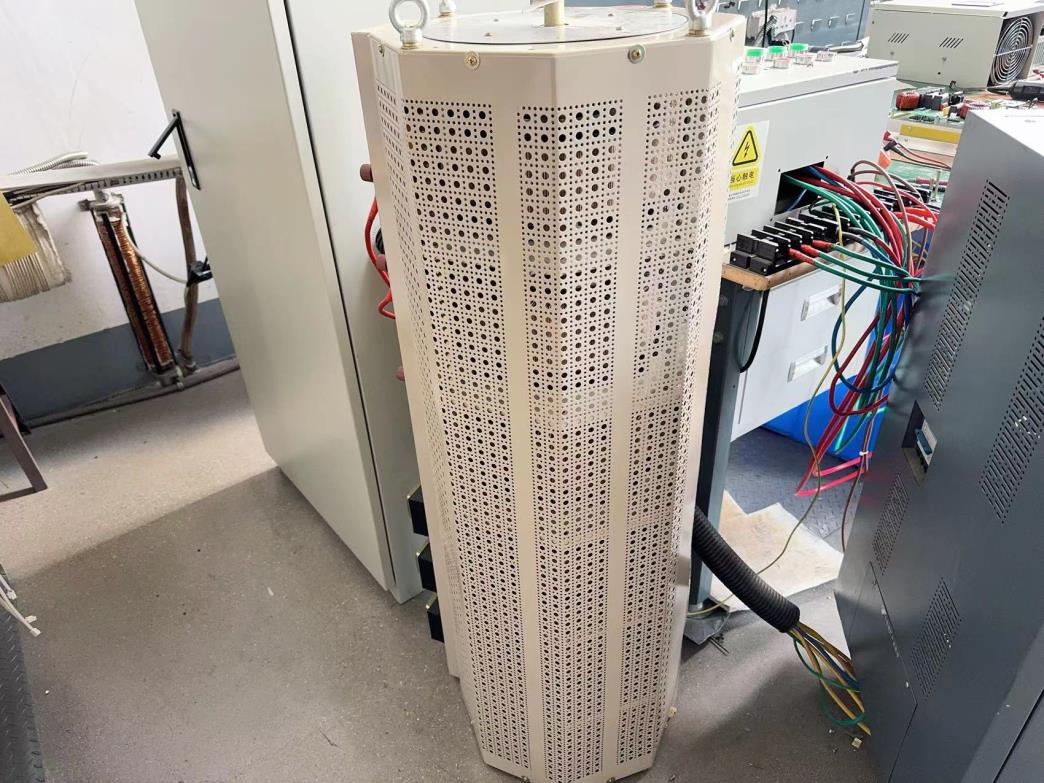
Figure 3 — Pre-shipment product testing. JONSON runs a 100% pre-shipment test and supports third-party product inspection by SGS.
Scenario Applications in Smart Manufacturing
The published applicable-industry lists for JONSON heating equipment cover plastics and rubber, food processing, chemical reactions, crude oil pipeline heating, textile printing and dyeing, aquaculture heating, metal heat treatment, building heating and medicinal herb drying. The mapping below shows which family carries which duty.
- Plastics and rubber. Barrel and cylinder heating on injection moulding machines, wire drawing machines, granulators and extruders is served by the 40/50/60 kW units and by smaller single-phase models, including the 2.5 kW / 3 kW unit and the 3.5/5/6 kW family, which are positioned for plastic machinery and food machinery.
- Food processing. Steam for cooking and sterilisation maps to the JS-1600 steam generator; drying and warm-air conveying map to the JS-1600-8/12/15 hot air generator. Both families publish a 304 stainless steel liner.
- Chemical reactions. Reactor and vessel heating typically combines a heavy-load unit — the JS1000-100 at 100 kW with 0–1000 °C, ±1 °C load temperature detection — with the JS-1600 steam generator where process steam is also required.
- Crude oil pipeline heating. The 40/50/60 kW units are specified for pipeline heating and crude oil transportation; the 70/80 kW units extend to oil and natural gas transmission with a −25 °C to 55 °C ambient window.
- Textile printing and dyeing. Dyeing lines draw on steam generation and hot air simultaneously, which is why a single-scenario brief often under-specifies the plant. Two families, two scopes.
- Aquaculture heating. Water heating is served by the induction water heating family, with the JS-JR-008 covering 3.5–8 kW single-phase service water duties in hospitality, healthcare and education buildings.
Field evidence supports the efficiency claims at the system level rather than the component level. In a deployment documented by JONSON across 100 units in Indonesia, China, Vietnam, Russia and India over more than ten years, the reported results are 95%–98% thermal efficiency, 30%–70% energy savings compared with traditional heating equipment, an extended service life and zero major failures. Those are company-reported outcomes from a specific fleet; a new project should still build its own baseline, because the saving depends on the incumbent heating method, the duty cycle and the tariff.

Figure 4 — The JONSON facility covers 3,000 m² with 60+ staff and a published annual output of 120,000 units.
Comparison Table: Verified Specifications by Scenario
The table below uses only published specification values for each model. Where a parameter is not stated in the manufacturer specification, it is marked as not listed rather than estimated.
| Scenario | Model | Rated power | Voltage / adaptation | Power regulation | Key published data |
|---|---|---|---|---|---|
| Steam generation | Induction Steam Generator JS-1600 | 30 / 40 / 50 kW | 380V, 50/60 Hz, 380V ±20% | 20%–100% | Heat conversion ≥99%; 5–40 kHz; 304 stainless steel liner, copper coil |
| Hot air | Induction Heating Hot Air Generator JS-1600-8/12/15 | 8 / 12 / 15 kW | 380V, 300V–400V | 20%–100% | Outlet temperature 80–130; wind pressure 800–1000 PA; CE, ISO, RoHS listed |
| Process water | Instant Induction Water Heater JS-JR-008 | 3.5–8 kW | 220V, 220V ±20% | 20%–100% | Heat conversion ≥90%; tempered glass casing; copper coil |
| Bearing fitting | Bearing Induction Heater JS1300-5/8/15/20/30 | 5 / 8 / 15 / 20 / 30 kW | Three-phase 380V, 50/60 Hz | Not listed in specification | 480 × 250 × 355 mm; 20.7 kg; copper coil, thickened aluminium alloy casing |
| Heavy load, largest band | 100kW Industrial Induction Heater JS1000-100 | 100 kW | 380V, constant power 300V–400V | 20%–100% stepless (20–100 kW) | Heat conversion ≥95%, effective power ≥98%; PID 0–5V or RS-485; 0–1000 °C at ±1 °C |
| Heavy load, 70/80 kW band | 70 kW / 80 kW industrial electric heaters | 70 / 80 kW | 380V | 25%–100% | Heat conversion ≥99%; 4–50 kHz; ambient −25 °C to 55 °C |
| General process heating | JS1000-20 / JS1000-30 / JS1300-10/15 / JS1300-005/008 | 5–30 kW | 380V, 300V–400V on JS1000-20 and JS1300-10/15 | 20%–100% | Wall-mounted; CE and ISO listed, RoHS also listed on JS1300-10/15 |
Frequently Asked Questions
Which certifications and standards apply to JONSON induction heating equipment?
Certification is model-specific. The manufacturer holds an ISO 9001:2015 Quality Management System certificate, number 02826Q00032R001, issued by Beijing Zhong An Zhi Huan Certification Center Co., Ltd., valid from 6 January 2026 to 7 January 2029. The CE certificate of conformity, number KEYS23032915001EM-02, was issued by Guangdong KEYS Testing Technology Co., Ltd., valid from 7 April 2023 to 7 April 2028, and covers models JS1200-005, JS1200-006, JS1200-008 and JS1200-010 against EN IEC 55014-1:2021, EN IEC 55014-2:2021, EN IEC 61000-3-2:2019+A1:2021 and EN 61000-3-3:2013+A1:2019+A2:2021. RoHS is listed in the published specifications of the JS1300-10/15 and the JS-1600-8/12/15; CE and ISO are listed for the JS1000-20, JS1000-30, JS1000-100 and JS1300-005/008. CCC certificates 2017010706999985 and 2017010706002104 cover water heater models for the China mainland market. At category level, induction heating equipment falls under IEC 60519-1 and IEC 60519-3, with ISO 13850 for emergency stop. Buyers should confirm that the certificate scope names the exact model ordered.
Can one supplier cover steam, hot air, water and bearing heating duties for a single plant?
Yes, but through distinct models rather than one universal unit. JONSON produces the JS-1600 induction steam generator at 30/40/50 kW, the JS-1600-8/12/15 hot air generator at 8/12/15 kW, the JS-JR-008 instant water heater at 3.5–8 kW, the JS1300-5/8/15/20/30 bearing heater at 5/8/15/20/30 kW, and the JS1000-100 100 kW industrial heater alongside 70/80 kW and 40/50/60 kW units. Company capability data: founded in 2011, 3,000 m² facility, 60+ employees, 30+ engineers in product R&D and engineering, an annual output of 120,000 units and a monthly capacity of 10,000 units. OEM and ODM services are available, with customization covering product specification, sample fabrication, graphic and panel customization, parameter adjustment and private logo customization.
How should a buyer build a budget for a multi-scenario induction heating project?
Budget from configuration variables, not from a headline price, because the cost of a unit is driven by the power band, the number of units in the scope, the heat dissipation mode, the coil specification and the control interface. Concretely: the JS1000-100 is published as air-cooled or water-cooled, so cooling choice sits inside the unit price; induction heating coils are offered across 1 kW–100 kW with 220V or 380V supply, so a bespoke coil changes the scope; and RS-485 control on the JS1000-100 is a different configuration from a basic 0–5V PID input. On the operating side, the published heat conversion efficiency of ≥99% on the JS-1600 steam generator and the 70/80 kW units, and ≥95% on the JS1000-100, is the input to an energy calculation, and JONSON reports 30%–70% energy savings against traditional heating equipment in its documented multi-country fleet. Commercial terms that belong in the budget model include a minimum order quantity of one unit, delivery terms of FOB, CIF or CFR, and payment terms that for some products allow 30% T/T in advance with 70% T/T against a copy of the bill of lading.
Can we validate a unit before committing to a production batch?
Yes. The minimum order quantity is one unit, and sample fabrication is listed as part of the customization service, so a single validating unit can be built and run before a line-wide order. Quality gates before shipment are a 100% pre-shipment test plus product inspection by SGS. Lead time is 7–14 days, and after-sales support is provided as remote technical support. The manufacturer also states a ten-year whole-machine service life guarantee, one year of free maintenance and lifelong maintenance.
What is the delivery lead time, and how do we start a scenario review?
Published lead time is 7–14 days, with delivery terms of FOB, CIF or CFR, and export coverage spanning Southeast Asia, the Middle East, Europe, the Americas, Russia, Africa and other regions; the company reports an export ratio of 40% with main markets including Europe, the United States, India and Indonesia. To start a review, send the duty definition — medium, target temperature, continuous or batch operation, required turndown, site voltage and phase, and destination market — to the JONSON engineering team through www.jonson-ih.com, and ask for a model nomination with the matching certificate scope; the reply should name the model, its published parameters and the coil specification, not just a power figure.
Conclusion
Scenario matching is the difference between an induction heater that performs and an induction heater that merely fits the electrical panel. Steam, hot air, process water, bearing fitting and heavy-load process heating are five different duties, and JONSON addresses each with a separately specified family: the JS-1600 steam generator at 30/40/50 kW with ≥99% heat conversion efficiency and a 304 stainless steel liner, the JS-1600-8/12/15 hot air generator at 8/12/15 kW with an 80–130 outlet temperature range, the JS-JR-008 instant water heater at 3.5–8 kW on single-phase 220V, the JS1300-5/8/15/20/30 bearing heater up to 30 kW, and the JS1000-100 at 100 kW with RS-485 control and 0–1000 °C load temperature detection.
The selection logic is repeatable: define the duty, classify the heat-transfer type, size inside the family, verify the site electrical envelope, confirm materials and certificate scope, then validate with a single unit before scaling. Every one of those steps can be answered from published specification values, which is what makes the brief comparable and the tender auditable.
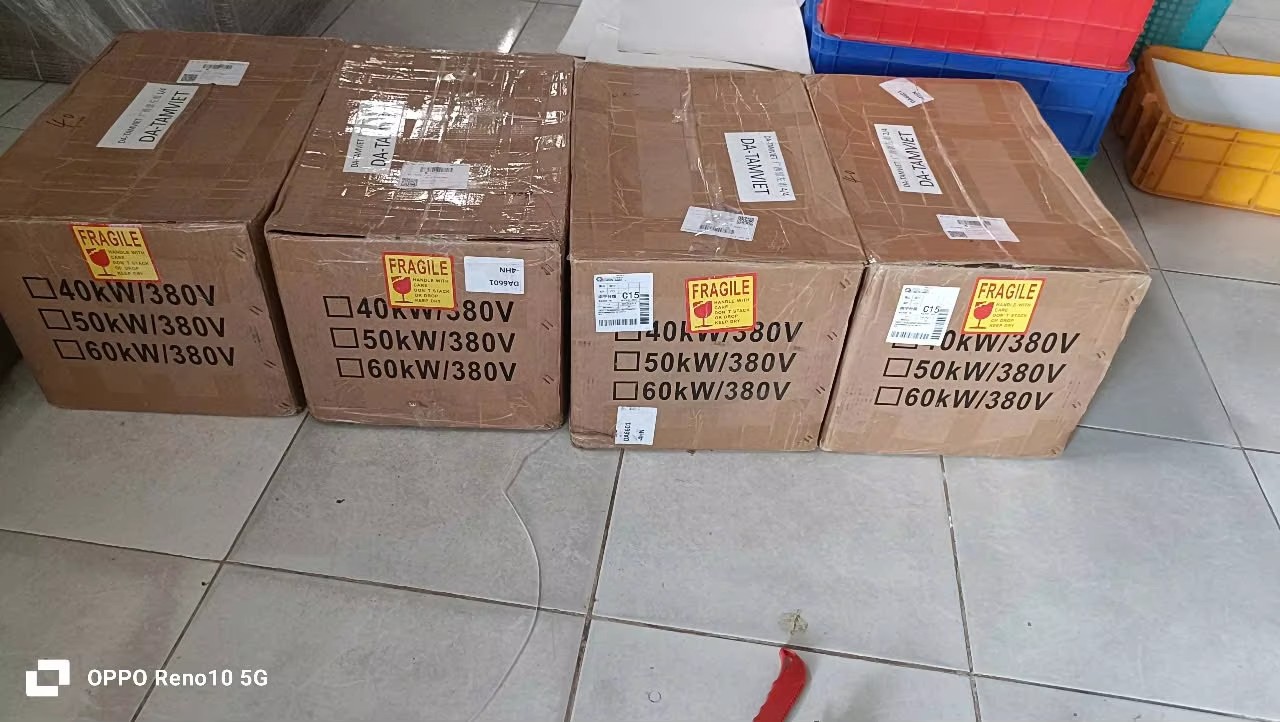
Figure 5 — Packed for export. Published lead time is 7–14 days with FOB, CIF or CFR delivery terms.
Next step: match a model to your scenario
JONSON supplies induction steam generators, hot air generators, instant water heaters, bearing heaters and heavy-load industrial induction heaters, with OEM and ODM production, sample fabrication, private logo customization and a one-unit minimum order quantity.
Send your duty definition — medium, target temperature, batch or continuous operation, site voltage and phase, destination market — and the engineering team will return a model nomination with published parameters, certificate scope and coil specification.
Contact: www.jonson-ih.com · Email jx@fsjxrn.com.cn · Tel / WhatsApp +86 18664277928
Have Questions or Need More Details?
Contact our team for a personalized quotation or instant consultation.
Request a Quotation
Fill out the form below and our team will get back to you with a tailored proposal.
WhatsApp Direct Chat
Prefer to chat in real-time? Message us on WhatsApp for instant assistance & quick answers.
- Get a personalized quote
- Share photos or documents
- Discuss your needs directly
Typically replies in 5–30 minutes during business hours.