
Industrial Induction Heater: Technology, Specifications and Supplier Evaluation Guide
An industrial induction heater is an electrically powered heating system that converts standard 50 Hz mains current into a 5–40 kHz high-frequency current and uses the resulting alternating magnetic field to generate eddy currents inside a metal workpiece, heating it without contact. This guide explains how the technology works, which specifications actually determine process fit, how the JONSON range is structured from 2.5 kW single-phase units to 100 kW three-phase platforms, and how buyers in the awareness and research stage should evaluate industrial induction heater manufacturers.
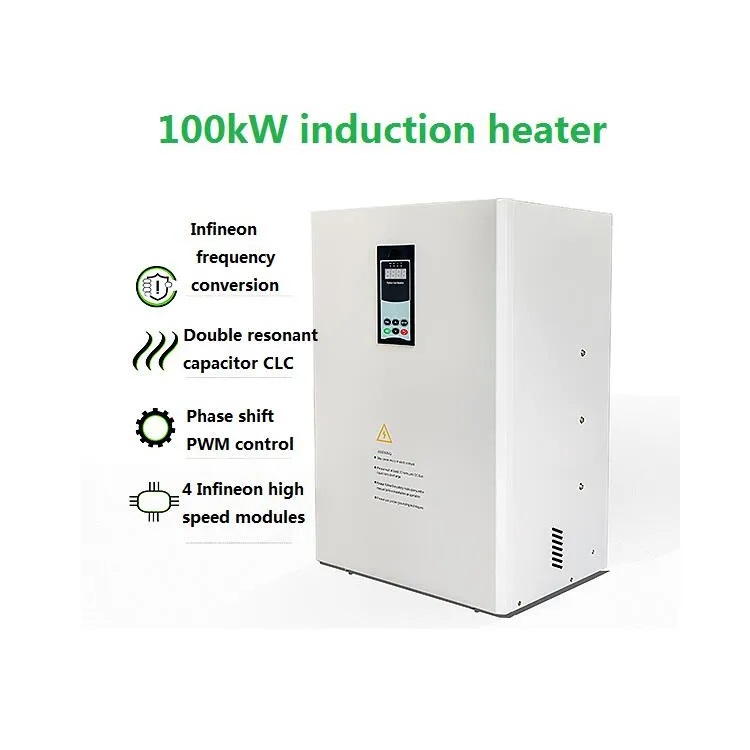
100 kW industrial induction heater (model JS1000-100), a three-phase 380 V wall-mounted unit built for continuous industrial duty.
Why Industrial Induction Heater Projects Go Wrong Before They Start
Most industrial heating projects do not fail because induction technology is unsuitable. They fail earlier, at the point where a process requirement is translated into a specification. Three specific gaps cause most of the confusion.
The first gap is naming. The phrases industrial induction heater, industrial induction heating equipment, industrial induction heating machine, industrial induction heating system and industrial induction heating power supply are frequently used interchangeably in search results and supplier catalogs, yet they describe different layers of the same installation. A power supply or control board is a sub-assembly. An induction heating machine is a complete, enclosed unit. A heating system adds the induction coil, temperature sensing, control cabinet, insulation and, in many cases, the heated medium such as water, thermal oil or air. A buyer who compares a control board quotation against a complete machine quotation is not comparing like with like.
The second gap is specification language. Two units can both be marketed as “20 kW” while differing in rated voltage, voltage adaptation range, power regulation range, heat dissipation mode and control architecture. Published JONSON data, for example, includes a 20 kW model rated at 380 V with a 300–400 V voltage adaptation range and air-cooled or water-cooled heat dissipation, and a 3.5/5/6 kW series rated at AC 220 V with a 100–260 V adaptation range and constant power output only between 210 V and 260 V. Those are not cosmetic differences; they determine whether the equipment behaves predictably on a given factory supply.
The third gap is the supplier layer. Component suppliers, equipment manufacturers and system integrators all appear under the same keywords, but they solve different problems. A component supplier can deliver a control board; an equipment manufacturer delivers a tested machine with a defined power class, coil configuration and cooling design; an integrator delivers an installed thermal process. Knowing which layer you are buying from is the first decision in any induction heating project.
Industry Background: Where Induction Heating Fits in Industrial Process Heat
Process heat is one of the largest controllable energy costs in manufacturing, and for new capacity and retrofit projects it is increasingly evaluated as an electrification decision rather than a fuel purchase. Induction heating sits in the middle of that shift because it generates heat inside the workpiece itself, rather than transferring heat from an external resistance element or flame.
The published application scope for JONSON industrial induction heating equipment covers a broad set of process industries: plastics and rubber, food processing, chemical reactions, crude oil pipeline heating, textile printing and dyeing, aquaculture heating, metal heat treatment, building heating, and medicinal herb drying. That range exists because the same electrical principle — eddy currents induced in a conductive load — serves both metal working and fluid or air heating, with the coil and heat-exchange design doing the adaptation.
For buyers evaluating a replacement for combustion-based process heat, induction systems are commonly described in terms of compliance and site constraints: zero nitrogen oxides, no smoke emissions, and no requirement for complex sewage discharge approvals. Published system data also describes rapid energy supply characteristics, including steam production within 30 seconds on steam equipment and hot air furnaces reaching rated temperature within 3 minutes, together with closed-loop safety circulation based on physical separation of water and electricity or oil and electricity, and automatic interlock shutdown in the event of water shortage, overheating or overpressure. Modular parallel connection of multiple units allows capacity to be increased or decreased as plant load changes, and the same platform can operate with water, thermal oil or hot air as the heating medium across low, medium and high temperature duties.
Those characteristics matter most in retrofit situations, where new heating capacity has to fit an existing plant room, an existing electrical supply and an existing maintenance team. They matter less in greenfield projects, where the electrical infrastructure can be designed around the heating load from the start. Buyers should treat this as a project-scoping question, not a product-feature question.

Industrial induction heating machine applied in a process heating installation.
Detailed Solution: How JONSON Industrial Induction Heating Equipment Is Built
JONSON is the brand of Guangdong Jiangxin Electronic Technology Co., Ltd., an induction heating equipment manufacturer established in 2011 and based in Shunde District, Foshan City, Guangdong Province, China. The company operates a 3,000 m² manufacturing facility with approximately 60+ staff and a 30+ engineer R&D team, and reports an annual production capacity of 120,000 units. Export business accounts for 40% of total sales, with major markets including Europe, the United States, India, and Indonesia.
How the heating actually happens
JONSON induction heating equipment employs high-frequency electromagnetic induction heating. A 50 Hz AC supply is converted into a 5–40 kHz high-frequency current through an IGBT inverter module. That current drives an electromagnetic coil, which generates an alternating magnetic field; the field induces eddy currents inside the metal load itself, and the load heats up. Because heat is generated within the workpiece, the process is non-contact and does not depend on conduction from an external element.
The platform supports temperature control mode, time control mode, and PID closed-loop constant temperature control, and can automatically adjust output power according to the load.
What is inside a JONSON unit
Across the published model range, the core heating coil is made of copper wire. The outer casing is built from thickened aluminum alloy and thickened cold-rolled steel plate, and the inner liner uses 304 stainless steel. Several higher-power models are offered with air-cooled or water-cooled heat dissipation, and multiple models use a wall-mounted structural configuration. The 100 kW JS1000-100, for example, measures 635 mm × 445 mm × 315 mm and weighs 35 kg, while the compact JS1300-10/15 measures 356 mm × 178 mm × 178 mm and weighs 7.3 kg.
Control, protection and measurement
On the higher-power and single-phase platforms, published control data includes a DSP-based high-speed automatic phase-locking tracking control system, a programmable digital display monitor, a start time under 1 second, instantaneous overcurrent protection at ≤2 µs, 130% power overload protection, and a fully electrically isolated soft start heating and stop mode. Power can be adjusted through PID control using a 0–5 V input voltage or RS-485, and the system supports load temperature detection from 0 to 1000 °C with accuracy up to ±1 °C. Power regulation across the range is typically 20% to 100%.
Power classes and voltage coverage
Voltage flexibility is one of the defining characteristics of the range. The customizable industrial induction heater platform covers rated power bands of 500 W to 10 kW, 5 to 60 kW, 5 to 200 kW, and 30 to 200 kW, with rated voltage options of 110 V, 240 V and 660 V and a voltage adaptation range of ±20%. Named models run from a 2.5 kW single-phase small plastic mechanical induction heater (AC 220 V, 5–40 kHz, adaptive coil of 4 mm² line, 23 m length, 100–150 µH) through 3.5 kW/5 kW/6 kW single-phase units at AC 220 V, 5 kW/8 kW and 10 kW/15 kW units at 380 V, 20 kW, 30 kW, 40 kW/50 kW/60 kW and 70 kW/80 kW models, up to the three-phase 100 kW JS1000-100 with a rated input current of 140–150 A, a rated output current of 200–220 A, and constant power output between 300 V and 400 V.
The wider system: which product family fits which duty
An industrial induction heater is rarely the only item in an installation. The published range covers the supporting equipment families listed below, each with its own specification envelope.
| Product family | Example model | Published specification | Typical duty |
|---|---|---|---|
| Industrial induction heater | JS1000-100 | 100 kW, 380 V three-phase, heat conversion efficiency ≥95%, wall-mounted, air-cooled or water-cooled, 35 kg | Metal heat treatment, plastic machinery, food machinery, roller equipment, boiler, oil and natural gas transmission |
| Induction heater (mid power) | JS1000-20 / JS1000-30 | 20 kW and 30 kW, 380 V, 300–400 V adaptation on the 20 kW model, air-cooled or water-cooled | Plastics and rubber, food processing, metal heat treatment |
| Compact induction heater | JS1300-005/008; JS1300-10/15 | 5 kW/8 kW and 10 kW/15 kW, 380 V; CE and ISO certification (CE, ISO, RoHS on 10/15 kW); 7.3 kg on the 10/15 kW model | Pipeline heating, plastics and rubber, food processing, chemical reactions |
| Induction steam generator | JS-1600 | 30 kW/40 kW/50 kW, 380 V ±20%, heat conversion efficiency ≥99%, 5–40 kHz, 304 stainless steel liner | Steam supply, food processing, metal heat treatment, medicinal herb drying |
| Induction heating hot air generator | JS-1600-8/12/15 | 8 kW/12 kW/15 kW, 380 V with 300–400 V adaptation, outlet temperature 80–130 °C, wind pressure 800–1000 Pa, CE, ISO, RoHS | Hot air drying, chemical reactions, textile processing, aquaculture heating |
| Bearing induction heater | JS1300-5/8/15/20/30 | 5–30 kW output, three-phase 380 V, 480 mm × 250 mm × 355 mm, 20.7 kg | Bearing heating and assembly, metal heat treatment |
| Induction heating coil | Customized electromagnetic coil | Copper, 1–100 kW, 220 V/380 V, 5–40 kHz, heat conversion efficiency ≥98% | Coil customization for plastics, food, chemical and metal heat treatment lines |
| Instant induction water heater | JS-JR-008 | 3.5–8 kW, 220 V ±20%, heat conversion efficiency ≥90%, tempered glass casing | Hotels, hospitals, schools |
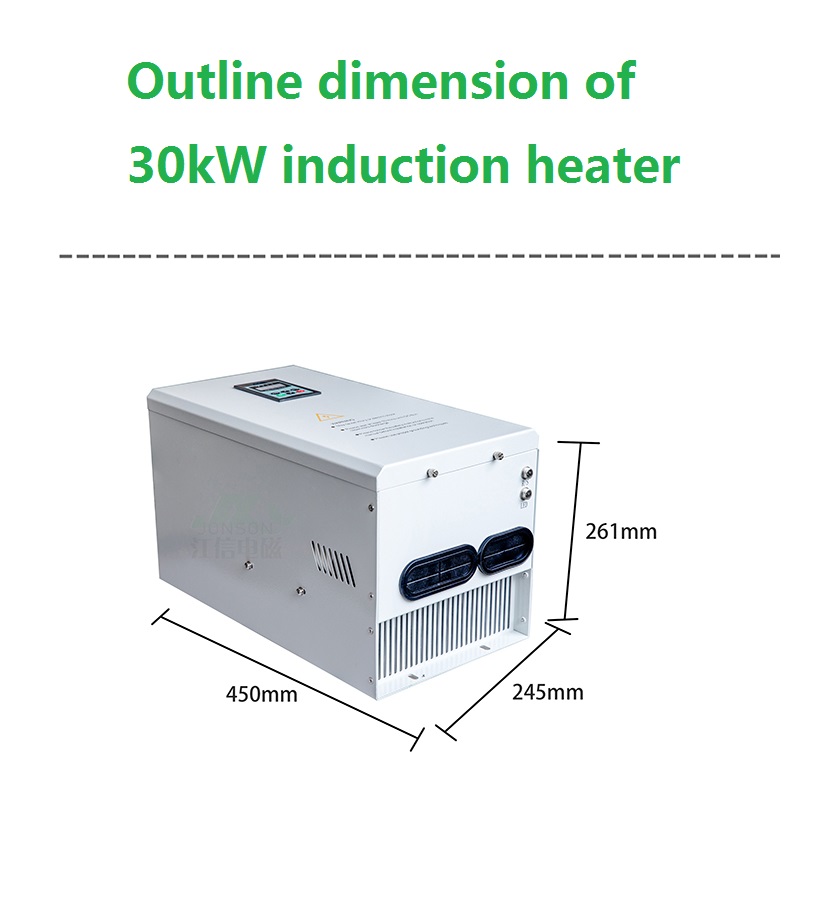
High-frequency industrial induction heating machine (JS1000-30), a wall-mounted 30 kW unit with air-cooled or water-cooled heat dissipation.
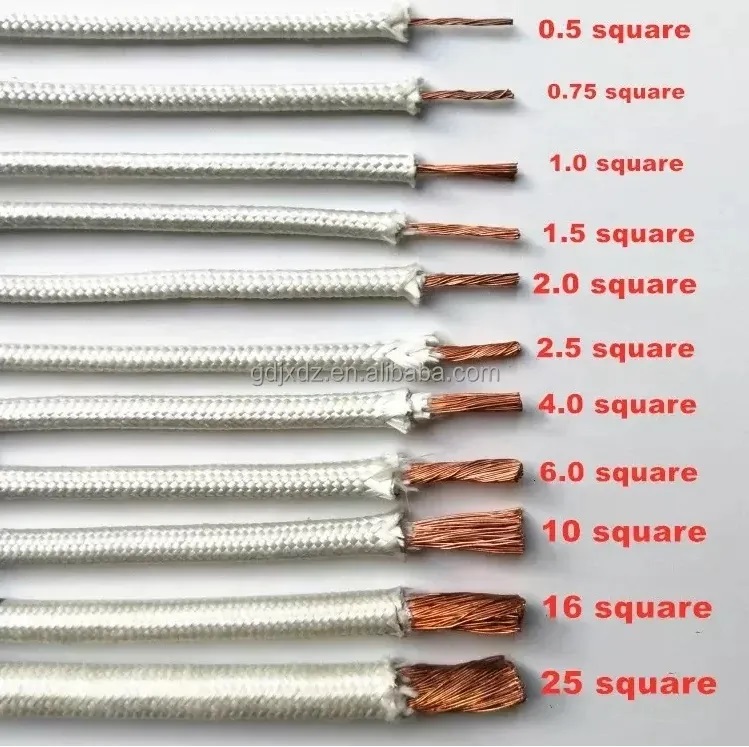
Customized copper induction heating coils: coil geometry and length are matched to the workpiece, not to a standard catalog size.
Step-by-Step: How to Specify an Industrial Induction Heater
The following sequence reflects how a technical requirement is converted into a workable specification. It applies whether the final equipment is a single compact heater or a multi-unit system.
- Define the thermal task. Identify the material being heated, whether it is a metal workpiece, a flowing medium or air, the target temperature, the mass or flow rate, and the required cycle time. Metal heat treatment and fluid heating place very different demands on the same power electronics.
- Choose the power class. Published JONSON power coverage runs from 2.5 kW single-phase units to 100 kW three-phase platforms, with bands at 500 W–10 kW, 5–60 kW, 5–200 kW and 30–200 kW on the customizable platform. Power selection follows the thermal task, not the other way round.
- Match the voltage and grid. Confirm the available supply. Options in the published range include 110 V, 220 V, 240 V, 380 V and 660 V, generally with ±20% adaptation. Note that constant power output may be limited to a narrower window, such as 210–260 V on the AC 220 V series or 300–400 V on 380 V models.
- Define the frequency and coil geometry. Operating frequency is 5–40 kHz on most models and 4–50 kHz on the 70 kW/80 kW units. Coil design follows the workpiece: published guidance on the 2.5 kW platform specifies a coil-to-load distance of 20–25 mm for circular coils, 15–20 mm for plane coils, 10–15 mm for elliptical coils, and within 10 mm for super-elliptical coils, with insulation added to the heating area to improve thermal efficiency.
- Select the cooling method. Higher-power models offer air-cooled or water-cooled heat dissipation. The control cabinet should be well ventilated to prevent overheating of the IGBT modules, and high-power equipment may require water cooling.
- Specify control and interface requirements. Decide whether temperature control mode, time control mode or PID closed-loop constant temperature control is needed, and whether integration requires a 0–5 V input, RS-485, PLC control, touch screen or human-machine interface. Confirm whether 0–1000 °C load temperature detection at ±1 °C accuracy is required for the process.
- Plan the installation environment. Keep the controller away from humid, dusty and corrosive gas environments, keep the control board dry and check sealing regularly, and confirm the coil is wound evenly with a reasonable distance from the metal being heated.
- Plan maintenance from day one. Regular cleaning of dust, checking of wiring terminals, electromagnetic coils and the cooling system, and avoidance of frequent start-stop cycles are part of the published operating guidance. Low-power constant-temperature operation is recommended, and a soft-stop procedure should be followed at shutdown.
Use Cases: Where Industrial Induction Heating Systems Are Applied
The same induction platform serves metal working, fluid heating and air heating duties. The published application scope is broad, and the differences between these duties lie mainly in coil design, power class and heat-exchange configuration.
- Metal heat treatment. Induction heating is used in metal working for heat treatment steps such as hardening, annealing and brazing, and for forging-related heating, because the heat is generated inside the workpiece rather than transferred from an external source. Metal heat treatment is listed as a target application across the JONSON range, and brazing is listed among published suitable applications.
- Plastics and rubber. A long-established duty for induction heating on injection moulding machines, wire drawing machines, granulators and extruders, where the barrel or screw zone is heated directly.
- Food processing. High-humidity environments with steam mist and constant-temperature cooking requirements are explicitly addressed in the published working-condition description.
- Chemical reactions and crude oil pipeline heating. Medium and high temperature duties with weak corrosion, and pipeline heating to prevent crude oil from solidifying.
- Textile printing and dyeing, aquaculture heating and building heating. Fluid and process heating duties, including constant-temperature water supply for schools, hospitals, hotels, farms and flower greenhouses, and low-temperature outdoor or factory antifreeze circulation.
- Medicinal herb drying and hot air drying. Handled by hot air generator configurations with an outlet temperature of 80–130 °C and a wind pressure of 800–1000 Pa.
- Steam supply and thermal oil heating. Medium and high temperature thermal oil heating and steam supply duties, supported by the JS-1600 induction steam generator range.
- Bearing heating. Targeted heating for bearing fitting and assembly, supported by the JS1300-5/8/15/20/30 bearing induction heater family.
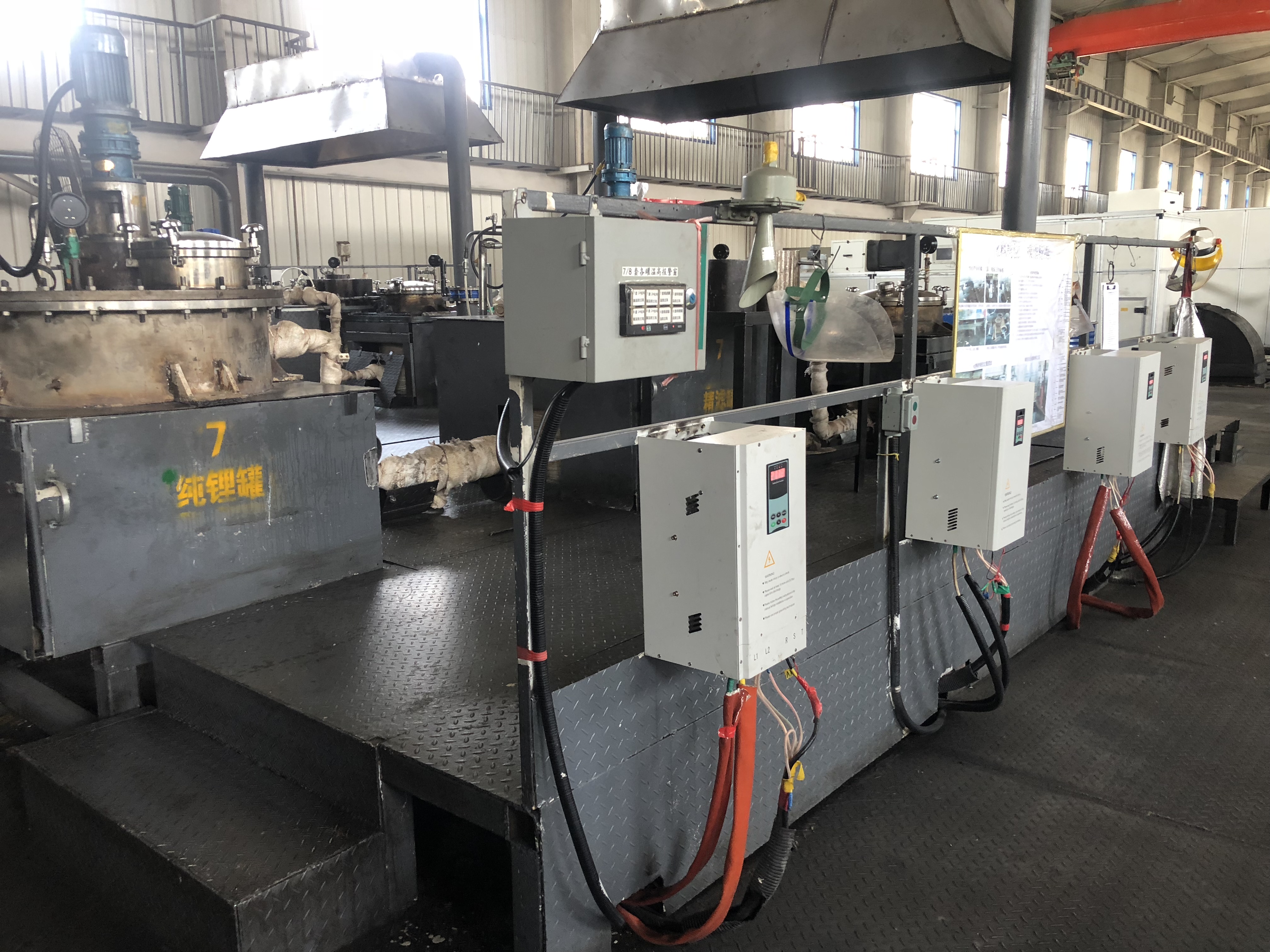
Industrial induction heating machine applied to metal heat treatment at a production site.
Comparison Table: Matching JONSON Models to Your Process
The table below compares published specification data across the industrial induction heater range. It is intended as a screening tool, not a substitute for the model datasheet: voltage adaptation range, cooling mode and control configuration should always be confirmed against the specific configuration quoted.
| Model / series | Rated power | Rated voltage and adaptation | Heat conversion efficiency | Heat dissipation | Published application focus |
|---|---|---|---|---|---|
| Customizable platform (110 V / 240 V / 660 V) | 500 W–10 kW; 5–60 kW; 5–200 kW; 30–200 kW | 110 V / 240 V / 660 V, ±20% | ≥98% | — | Custom voltage requirements across multiple industries |
| 2.5 kW / 3 kW small plastic mechanical | Single-phase 2.5 kW | AC 220 V / 50 Hz, 100–260 V, constant power 210–260 V | ≥95% (effective ≥98%) | — | Plastic machinery, food machinery, commercial induction cookers |
| 3.5 kW / 5 kW / 6 kW | Single-phase 3.5 / 5 / 6 kW | AC 220 V / 50 Hz, 100–260 V, constant power 210–260 V | ≥95% (effective ≥98%) | — | Plastic machinery, food machinery, commercial induction cookers |
| JS1300-005/008 | 5 kW / 8 kW | 380 V, ±20% | — | — | General industrial heating; CE and ISO certified |
| JS1300-10/15 | 10 kW / 15 kW | 380 V, 300–400 V | — | — | CE, ISO and RoHS certified; net weight 7.3 kg |
| JS1000-20 | 20 kW | 380 V, 300–400 V | ≥95% | Air-cooled / water-cooled | Metal heat treatment, plastics and rubber, food processing |
| JS1000-30 | 30 kW | 380 V | — | Air-cooled / water-cooled | Plastics and rubber, food processing, chemical reactions, metal heat treatment |
| 40 kW / 50 kW / 60 kW | 40–60 kW | 380 V / 50 Hz, ±20% | ≥98% | — | Pipeline heating, plastic machinery, food machinery, boiler, heat transfer oil |
| 70 kW / 80 kW | 70 kW / 80 kW | 380 V | ≥99% | — | Plastic machinery, food machinery, boiler, oil and natural gas transmission |
| JS1000-100 | 100 kW three-phase | 380 V, constant power output at 300–400 V | ≥95% | Air-cooled / water-cooled | Metal heat treatment, plastic machinery, boiler, oil and natural gas transmission |
A dash indicates that the value is not stated in the published specification for that configuration and should be confirmed directly. Two comparisons are worth highlighting. First, heat conversion efficiency is published as ≥95% on some platforms and ≥98% or ≥99% on others, so efficiency claims should always be read against the specific model rather than the product category. Second, voltage adaptation is not uniform: a 380 V machine with ±20% adaptation behaves differently from a 380 V machine with constant power output limited to 300–400 V, and that distinction determines whether a unit tolerates a weak or fluctuating factory supply.
When comparing manufacturers, the useful test is documentation density. A supplier that publishes model-level rated power, voltage adaptation range, operating frequency, heat dissipation mode, control architecture, dimensions and certification scope gives a buyer something to verify. A supplier that publishes only a power figure does not.
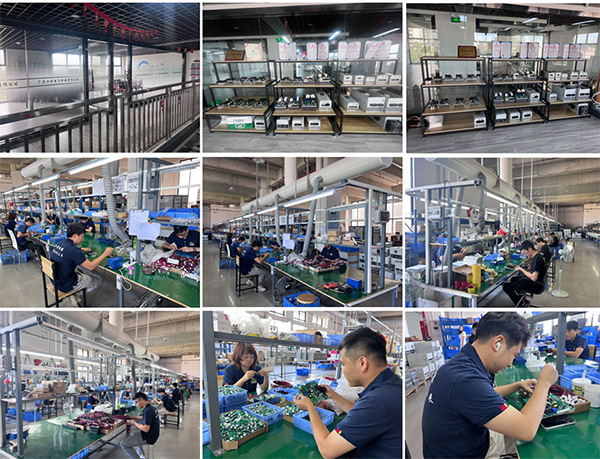
Manufacturing facility: a 3,000 m² production site with a 30+ engineer R&D team and a reported annual capacity of 120,000 units.
FAQ: Industrial Induction Heater Manufacturers and Buying Questions
Are JONSON industrial induction heaters certified for regulated export markets?
Certification in this range is granted at model level rather than to the product category as a whole. Published data shows the JS1300-10/15 (10 kW/15 kW, 380 V) carrying CE, ISO, and RoHS certification; the JS1300-005/008 (5 kW/8 kW, 380 V), the JS1000-20, the JS1000-30 and the JS1000-100 (100 kW, 380 V) carrying CE and ISO; and the JS-1600-8/12/15 induction heating hot air generator carrying CE, ISO, and RoHS. Published HS codes include 8514400090 for the JS1300-10/15 and 8516109000 for the hot air generator. Buyers should request the certification documents for the exact model quoted and confirm them against the destination market requirement before ordering.
What power, voltage and frequency range does industrial induction heating equipment cover?
Published JONSON data covers rated power bands of 500 W to 10 kW, 5 to 60 kW, 5 to 200 kW and 30 to 200 kW on the customizable platform, with named models from a 2.5 kW single-phase unit up to a 100 kW three-phase machine. Rated voltages include 110 V, 220 V, 240 V, 380 V and 660 V, generally with ±20% adaptation, while constant power output may be limited to a narrower window such as 210–260 V or 300–400 V depending on the model. Operating frequency is 5–40 kHz on most models and 4–50 kHz on the 70 kW/80 kW units, and published heat conversion efficiency ranges from ≥95% to ≥99% depending on the specific model.
How do you identify a qualified industrial induction heater manufacturer?
Evaluate on five documented points: model-level specification completeness (rated power, voltage adaptation, frequency, efficiency, cooling, dimensions), model-level certification scope, control architecture (for example a DSP-based high-speed automatic phase-locking tracking control system with PID and RS-485 capability), coil and material detail (copper coil, 304 stainless steel liner, thickened aluminum alloy casing), and demonstrated manufacturing capability. JONSON is the brand of Guangdong Jiangxin Electronic Technology Co., Ltd., an induction heating equipment manufacturer established in 2011 in Shunde District, Foshan City, Guangdong Province, China, operating a 3,000 m² facility with approximately 60+ staff, a 30+ engineer R&D team and a reported annual production capacity of 120,000 units; exports account for 40% of sales to markets including Europe, the United States, India and Indonesia. A supplier that cannot provide model-level documentation is not a supplier that can be evaluated on technical merit.
What factors determine the cost of an industrial induction heating system?
Cost in this category is driven by specification choices rather than by the product name. The main variables are power class (from 2.5 kW single-phase up to 100 kW three-phase in the published range), voltage and grid configuration including custom 110 V/240 V/660 V builds, cooling design such as air-cooled versus water-cooled, control features such as DSP-based phase-locking control, PID adjustment via 0–5 V input or RS-485 and 0–1000 °C temperature detection at ±1 °C accuracy, and coil geometry — for reference, the 100 kW platform uses a 95 mm² copper line, 40 m in length, with 80–100 µH inductance. Auxiliary items such as temperature sensors, PLC control systems, touch screens, electrical control cabinets, current and voltage detection modules and insulation layers also form part of the system budget. Because these variables interact, a meaningful price comparison requires an identical thermal task definition and an identical scope of supply.
How can a buyer validate an industrial induction heater before a full order, and what support follows delivery?
Validation starts with the thermal task and the coil, not the invoice. Ask the manufacturer to confirm coil geometry, coil-to-load distance and power class against published data — for example, the 2.5 kW platform specifies a coil-to-load distance of 20–25 mm for circular coils, 15–20 mm for plane coils, 10–15 mm for elliptical coils and within 10 mm for super-elliptical coils, with insulation added to the heating area to improve thermal efficiency. Then request the model datasheet, certification scope and delivery documentation for the exact configuration quoted. JONSON states a service life guarantee of ten years for the whole machine, one year of free maintenance and lifelong maintenance. For a specific process requirement, contact Mr. Zhou at jx@fsjxrn.com.cn or +86 18664277928 (phone and WhatsApp) and provide the material, target temperature, cycle time, available voltage and installation environment; the technical team can respond with a model and coil recommendation for that configuration.
Conclusion: A Practical Next Step
An industrial induction heater is best understood as one layer of a heating system: the power conversion and control unit that turns 50 Hz mains supply into a 5–40 kHz current, drives a copper coil, and heats a load through induced eddy currents without contact. The technology itself is well established across plastics and rubber, food processing, chemical reactions, crude oil pipeline heating, textile printing and dyeing, aquaculture heating, metal heat treatment, building heating and medicinal herb drying.
The difficulty for buyers is not the physics but the specification. Power class, voltage adaptation range, operating frequency, cooling method, control architecture, coil geometry and environmental conditions all interact, and so does the supplier layer — component supplier, equipment manufacturer or system integrator. Selecting on documentation density rather than on headline power figures is the most reliable filter available during the research stage.
JONSON, the brand of Guangdong Jiangxin Electronic Technology Co., Ltd., publishes model-level specifications across a range from 2.5 kW single-phase units to 100 kW three-phase platforms, along with supporting steam generators, hot air generators, bearing heaters and customized induction coils, supported by a 3,000 m² manufacturing facility and a 30+ engineer R&D team.
Send your process data, get a specification recommendation
Share the material or medium being heated, the target temperature, the required cycle time, the available supply voltage and the installation environment. The JONSON team will respond with a model, coil and cooling configuration for that duty.
Manager: Mr. Zhou
Tel / WhatsApp: +86 18664277928
Email: jx@fsjxrn.com.cn
Address: Building 3, Tongde Intelligent Manufacturing Park, Ronggui Street, Shunde District, Foshan City, Guangdong Province, China
Website: www.jonson-ih.com | Blog: blog.jonson-ih.com
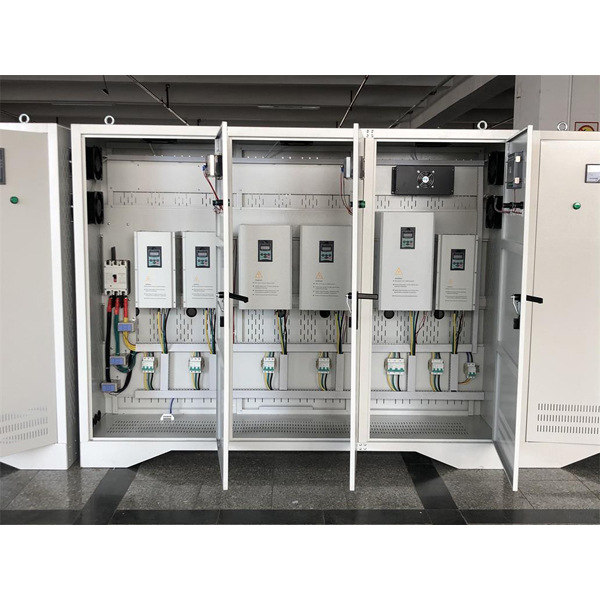
Customized combined electromagnetic heating cabinet equipment, configured around a defined thermal task.
Have Questions or Need More Details?
Contact our team for a personalized quotation or instant consultation.
Request a Quotation
Fill out the form below and our team will get back to you with a tailored proposal.
WhatsApp Direct Chat
Prefer to chat in real-time? Message us on WhatsApp for instant assistance & quick answers.
- Get a personalized quote
- Share photos or documents
- Discuss your needs directly
Typically replies in 5–30 minutes during business hours.