
Industrial Induction Heater: What It Is and How to Choose
An industrial induction heater is an electrically powered heating unit that converts a standard 50 Hz mains supply into a high-frequency current — typically in the 5 kHz to 40 kHz range — and feeds that current through a copper coil. The alternating magnetic field produced by the coil induces eddy currents inside the metal being heated, so heat is generated within the load or the heating medium itself rather than transferred from an external flame. Nothing touches the workpiece, there is no combustion at the point of use, and the output power can be regulated electronically.
That definition answers the basic question. It does not answer the question that actually stops most buyers: which industrial induction heating equipment solves my heating problem? The term covers metal-heating power supplies, process-heating cabinets for plastic and food machinery, and building or utility heating units — three categories that share a principle but not a specification sheet. This guide walks through the problem, the background, the published product families from Jonson, a step-by-step specification process, real application areas, and a specification comparison table drawn from published product data.
The Core Problem: One Search Term, Several Different Machines
A buyer who searches for an industrial induction heater is usually trying to solve one of three structurally different problems, and the machine that solves one is not interchangeable with the machines that solve the others.
- Metal heating. Here the load is a metal part — a bearing, a shaft, a joint, a fitting. Induction heating is widely used in metalworking for operations such as brazing, forging, annealing and hardening, and Jonson lists metal heat treatment among the intended industries for its induction heating machine range. The decisive variables are coil geometry, coupling distance and how the part is fixtured, not just the kilowatt rating.
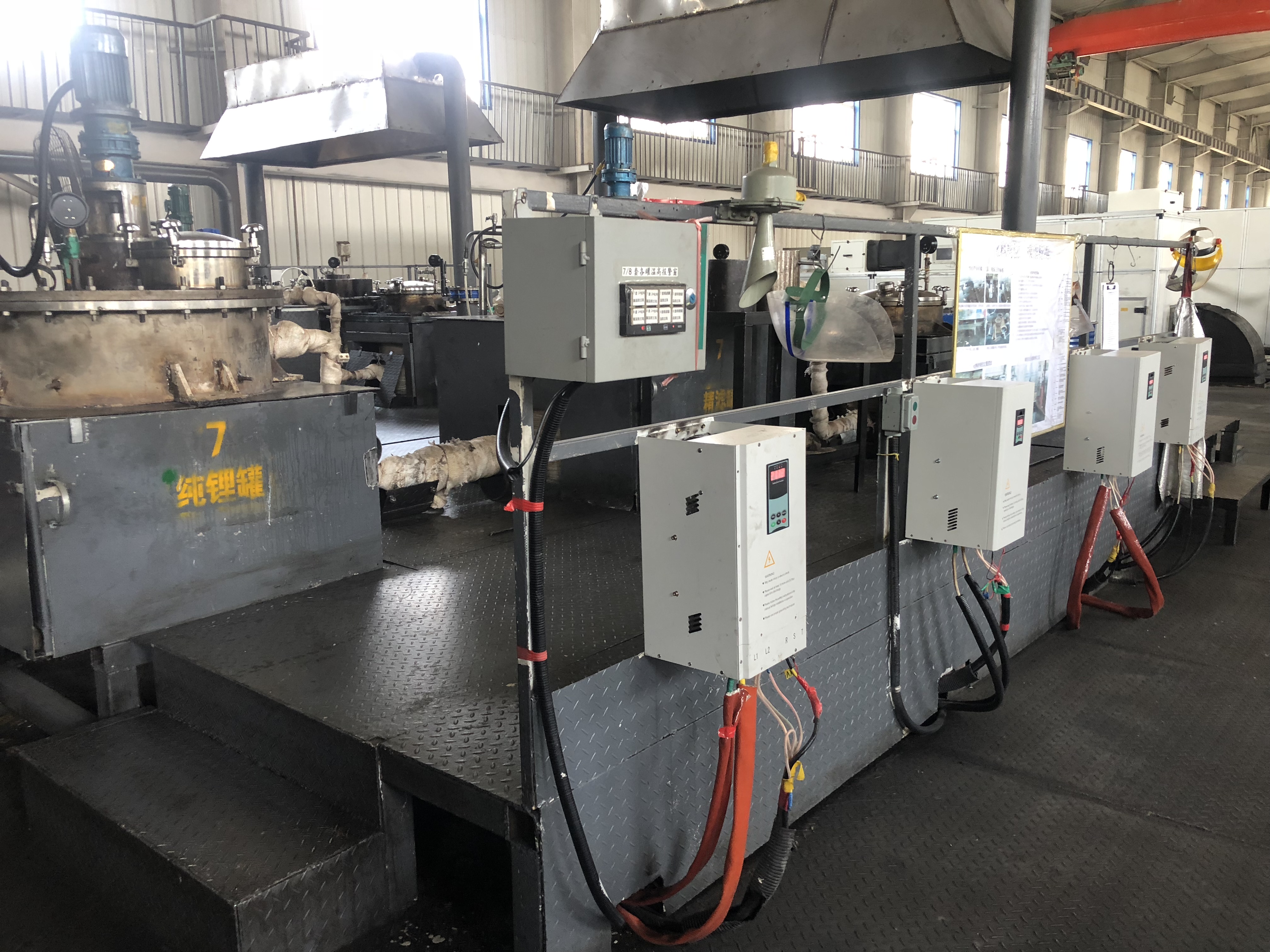
- Process heating. Here the load is a medium — plastic processing barrels, food processing vessels, chemical reactors, crude oil pipelines, textile dyeing equipment, aquaculture tanks, or drying air for medicinal herbs. Jonson lists the intended industries for much of its induction heating equipment as plastics and rubber, food processing, chemical reactions, crude oil pipeline heating, textile printing and dyeing, aquaculture heating, metal heat treatment, building heating and medicinal herb drying.
- Building and utility heating. Here the load is domestic or institutional hot water. The Jonson JS-JR-008 instant induction water heater belongs to the induction heating room heater category and is intended for hotels, hospitals and schools.
The second source of error is that a power supply datasheet describes the power supply, not the heating job. Whether a unit performs as expected depends on how the coil couples to the load, how much insulation sits between them, what the ambient temperature and humidity are, and how the cabinet is ventilated. Jonson publishes this coupling dimension explicitly for its 2.5 kW small plastic mechanical induction heater: 20–25 mm coil-to-load distance for a circular coil, 15–20 mm for a plane, 10–15 mm for an ellipse, and within 10 mm for a super-ellipse. Two buyers can order the same model and get different results because only one of them respected that number.
The third source of error is the mains supply. Industrial induction heating equipment is not universally 380 V. Jonson publishes voltage adaptation ranges such as 300–400 V on the JS1000-100, JS1000-20 and JS1300-10/15; 380 V ± 20% on the 5 kW/8 kW and 40 kW/50 kW/60 kW units; 100–260 V with constant power output between 210 V and 260 V on the single-phase 3.5 kW/5 kW/6 kW units; and a separate customisable series offered in 110 V, 240 V and 660 V configurations.
The practical consequence is that comparing industrial induction heaters on wattage and price alone is not a comparison at all. The comparison that matters is against the heating task, the coil, the mains and the environment. The rest of this article builds that comparison.
Industry Background: How Induction Heating Works and Where It Is Used
The physical principle behind every unit
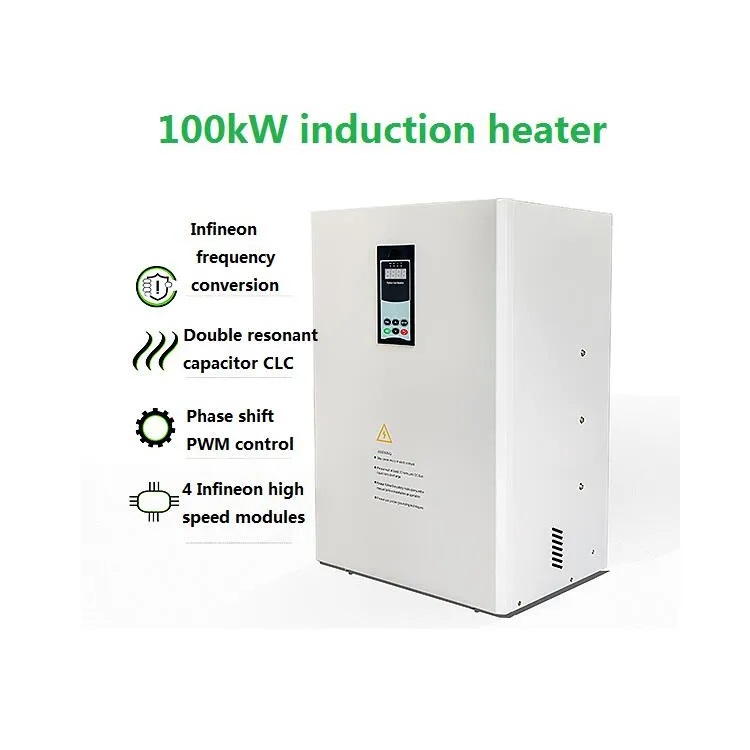
Across the Jonson range, the operating principle is described the same way: the system converts 50 Hz alternating current into a 5–40 kHz high-frequency current through an IGBT inverter module. That current drives an electromagnetic coil, which generates an alternating magnetic field; the field induces eddy currents in the metal itself, which heats the metal. The process is non-contact, and the heat is generated in the load rather than delivered to it.
The control layer is what turns this principle into a usable production asset. The published systems support a temperature control mode, a time control mode, and PID closed-loop constant-temperature control, and they can automatically adjust output power according to the load. On the 100 kW JS1000-100, PID power adjustment is available through a 0–5 V input voltage or RS-485, load temperature detection is supported from 0 to 1000 °C with accuracy up to ± 1 °C, the main circuit uses a full-bridge series resonance structure, and control is handled by a DSP-based high-speed automatic phase-locking tracking system. Startup time is under one second, instantaneous overcurrent protection time is ≤ 2 µs, and power overload protection is rated at 130% instantaneous protection with a fully electrically isolated soft start and stop mode.
Working conditions differ by industry, and the equipment has to match them
Induction heating is not deployed into a uniform environment. Jonson's published working conditions describe the differences plainly:
- Rubber and plastics: continuous operation at high frequency.
- Food processing: high humidity, a small amount of steam mist, and constant-temperature cooking duty.
- Chemical industry: medium to high temperature with weak corrosion present.
- Building heating: low-temperature outdoor or factory antifreeze circulation.
- Oil pipelines: heating to prevent crude oil from solidifying.
This is why general-purpose cabinets struggle in specific plants. A unit specified for a dry, temperature-controlled area is not automatically appropriate beside a food processing line where ambient humidity approaches the published limit of ≤ 95%.
Why plants keep converting to electric induction heating
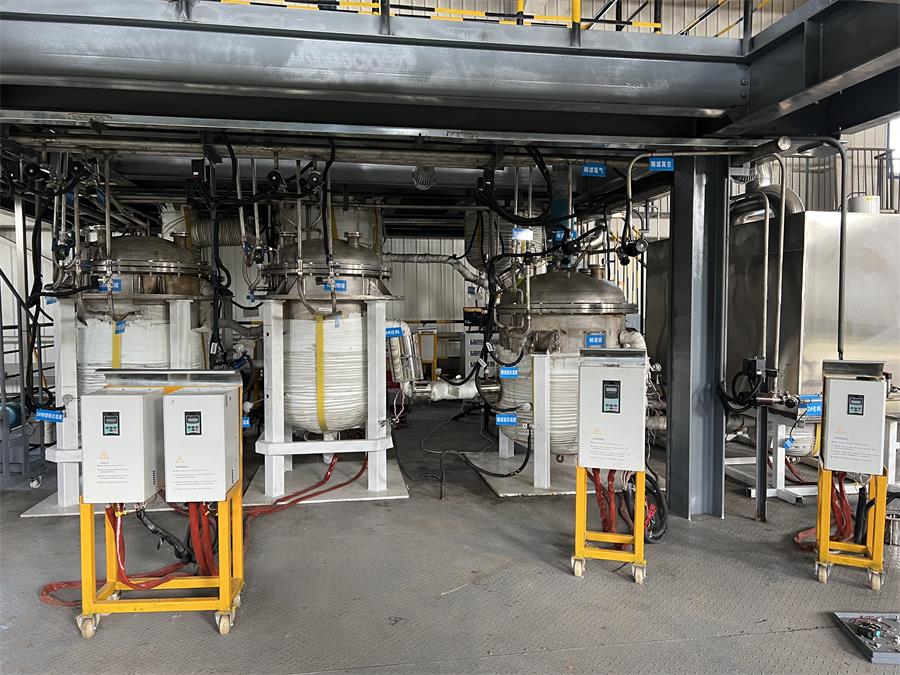
The published rationale for induction-based process heating covers several arguments. As a replacement for coal and gas boilers, the technology is described as producing no smoke emissions and no nitrogen oxides at the point of use, with no complex sewage discharge approvals required. Energy supply is fast: the published figures state that steam is produced in about 30 seconds and that hot air furnaces reach rated temperature in about three minutes. Safety is addressed structurally, with physical separation of water and electricity or oil and electricity, no explosion or fire risk from the heating method itself, and automatic interlock shutdown in the event of water shortage, overheating or overpressure. Capacity is modular, since multiple units can be connected in parallel so power can be increased or decreased as needed, from small and medium-sized factories up to large plant areas. Finally, the medium is versatile: water, thermal oil and hot air cover low, medium and high temperature duties.
Detailed Solution: The Jonson Industrial Induction Heater Range
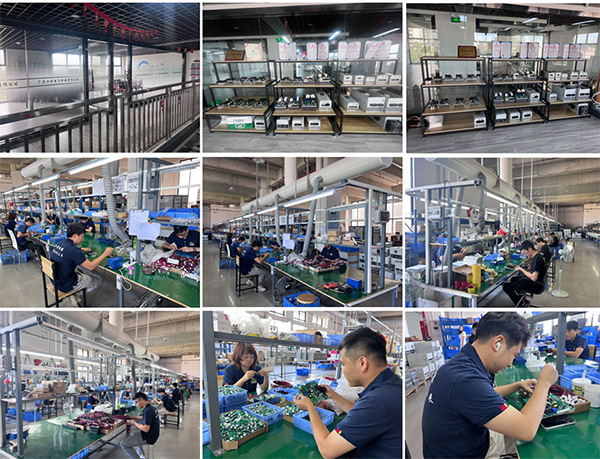
Guangdong Jiangxin Electronic Technology Co., Ltd. is a manufacturer of induction heating equipment based in Foshan, Guangdong Province, China. The company was established in 2011 and sells its induction heating products under the Jonson brand. Its manufacturing facility covers 3,000 m², it employs approximately 60+ staff, its R&D team consists of 30+ engineers, and its annual production capacity reaches 120,000 units. Export business accounts for 40% of total sales, with major markets including Europe, the United States, India and Indonesia. The company's products and solutions are widely used in heating, chemical industry, mold manufacturing, plastic machinery and food processing.
Understanding the range is the fastest way to understand what an industrial induction heater actually is, because the differences between the power bands correspond to real differences in heating tasks.
High-power units for continuous process loads
The JS1000-100 is the top of the published power range. It is a 100 kW industrial induction heater manufactured in Guangdong Province, China, operating at a rated voltage of 380 V with constant power output between 300 V and 400 V. Its rated input current is 140–150 A and its rated output current is 200–220 A. Power is adjustable from 20% to 100% stepless, that is, between 20 kW and 100 kW. Published heat conversion efficiency is ≥ 95%, effective power is ≥ 98% and can be customised, and the working frequency is 5–40 kHz. It is certified to CE and ISO, uses air or water cooling, measures 635 mm × 445 mm × 315 mm and weighs 35 kg. Its application areas are listed as plastic machinery, food machinery, aluminum-plastic machine, roller equipment, heating, boiler, and oil and natural gas transmission.
Below it sit two further high-power families. The 70 kW/80 kW industrial electric heater operates at 380 V with a power regulation range of 25% to 100%, a heat conversion efficiency of ≥ 99%, and an operating frequency of 4–50 kHz, and it is rated for ambient temperatures from −25 °C to 55 °C. The 40 kW/50 kW/60 kW induction heater runs at 380 V/50 Hz with a voltage adaptation range of 380 V ± 20%, a heat conversion efficiency of ≥ 98% and an operating frequency of 5–40 kHz; it is designed for pipeline heating and intended for plastic machinery, food machinery, crude oil transportation, boiler and heat transfer oil heating industries.
Medium and compact wall-mounted units
These are the units most often used for machine-level retrofits, where the heater is mounted close to the barrel, pipe or vessel it serves.
- JS1000-20 (20 kW). Rated power 20 kW, rated voltage 380 V, voltage adaptation range 300–400 V, air-cooled or water-cooled, dimensions 250 mm × 390 mm × 240 mm, manufactured in Guangdong Province, China, certified to CE and ISO.
- JS1300-10/15 (10 kW / 15 kW). Rated voltage 380 V, voltage adaptation range 300–400 V, power adjustment range 20%–100%, net weight 7.3 kg, dimensions 356 mm × 178 mm × 178 mm, CE, ISO and RoHS certified, HS Code 8514400090.
- JS1300-005/008 (5 kW / 8 kW). Rated voltage 380 V with a voltage adaptation range of 380 V ± 20%, power adjustment range 20%–100%, wall-mounted, dimensions 295 mm × 169 mm × 145 mm, CE and ISO certified, packaged in carton or wood frame.
Single-phase and low-power units
For sites without three-phase supply, the published single-phase options start at 2.5 kW. The 3.5 kW/5 kW/6 kW 220 V induction heater runs on AC 220 V/50 Hz with an input range of 100–260 V and constant power output between 210 V and 260 V. Rated input current is 15–16 A at 3.5 kW, 20–22 A at 5 kW and 22–27 A at 6 kW; rated output current is 20–25 A, 20–30 A and 55 A respectively. Heat conversion efficiency is ≥ 95%, effective power is ≥ 98%, working frequency is 5–40 kHz, the main circuit uses half-bridge series resonance, and the control system is a DSP-based high-speed automatic phase-locking tracking system. It is intended for plastic machinery, food machinery and commercial induction cooker applications.
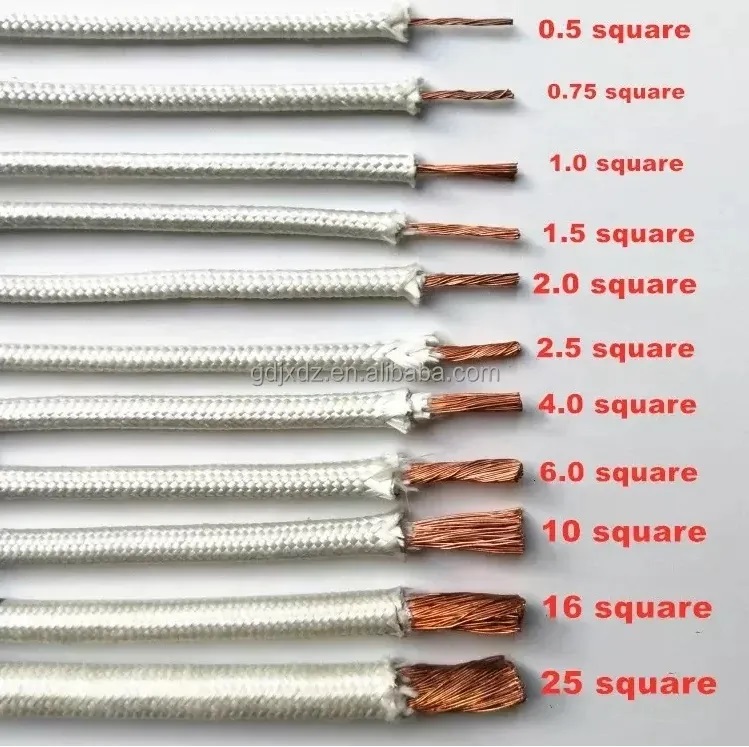
The 2.5 kW/3 kW small plastic mechanical induction heater is the entry point for barrel and nozzle heating on smaller machines. It is a single-phase 2.5 kW unit on AC 220 V/50 Hz, with an adaptive coil specification of 4 mm² line, 23 m length and 100–150 µH inductance, and the coil-to-load distances quoted earlier.
Specialised units: bearing heating, steam, hot air and water
- Bearing induction heater (JS1300-5/8/15/20/30). Power output available in 5 kW, 8 kW, 15 kW, 20 kW and 30 kW configurations on three-phase 380 V at 50 Hz or 60 Hz. Dimensions 480 mm × 250 mm × 355 mm, net weight 20.7 kg, copper heating coil, thickened aluminium alloy casing. Designed for metal heat treatment scenarios and typical applications including chemical reactions and crude oil pipeline heating.
- Induction steam generator (JS-1600). Rated power 30 kW, 40 kW or 50 kW at 380 V/50 Hz or 60 Hz, voltage adaptation 380 V ± 20%, heat conversion efficiency ≥ 99%, operating frequency 5–40 kHz, 304 stainless steel inner liner, thickened aluminium alloy and cold-rolled steel outer casing, copper heating coil.
- Induction heating hot air generator (JS-1600-8/12/15). Rated power 8 kW, 12 kW or 15 kW at 380 V with a 300–400 V adaptation range. Outlet temperature 80–130 °C, wind pressure 800–1000 Pa, vertical structure, dimensions 1000 mm × 603 mm × 330 mm × 175.4 mm, CE, ISO and RoHS certified, HS Code 8516109000.
- Instant induction water heater (JS-JR-008). Rated power 3.5–8 kW at 220 V with 220 V ± 20% adaptation, heat conversion efficiency ≥ 90%, power regulation 20%–100%, tempered glass outer casing, copper heating coil. Intended for hotels, hospitals and schools.
Control boards and induction heating coils
The two components that most directly determine whether an induction heating system fits an application are the control board and the coil. Jonson's published single-phase full-bridge 8 kW electromagnetic heating control board runs at 220 V/50 Hz with an applicable voltage range of 160–260 V, a heat conversion efficiency of ≥ 98%, 100% effective power, an operating frequency of 5–40 kHz and a power regulation range of 20%–100%. It is made of aluminium alloy and copper and is widely used in commercial induction cookers, household induction cookers, ceramic ovens and microwave ovens.
The customisable electromagnetic induction heating coil is made of copper, covers a rated power range of 1 kW to 100 kW, supports 220 V or 380 V at 50 Hz or 60 Hz, operates at 5 kHz to 40 kHz, delivers heat conversion efficiency of ≥ 98%, and is rated for ambient temperatures of −20 to 40 °C and humidity up to ≤ 95%.
Voltage customisation across the range
Beyond the standard 220 V and 380 V units, Jonson publishes a customisable induction heater series with rated power bands of 500 W to 10 kW, 5 to 60 kW, 5 to 200 kW and 30 to 200 kW, rated voltage and frequency options of 110 V, 240 V or 660 V at 50 Hz, a voltage adaptation range of ± 20%, a power regulation range of 20%–100%, heat conversion efficiency ≥ 98%, and an operating frequency of 5–40 kHz. This matters for buyers in markets where the industrial supply is not 380 V three-phase.
Step-by-Step: How to Specify an Industrial Induction Heating System
Specification fails most often when it starts from the unit rather than from the heat load. Working in the following order avoids that.
- Define the heating task and the medium. State whether the load is a metal part or a medium such as water, thermal oil, hot air or steam, and state the target outcome. The full system is rarely the cabinet alone: the published matched equipment list includes electromagnetic heating coils, temperature sensors, PLC control systems, touch screens and human-machine interfaces, steam equipment, hot air furnaces, insulation layers, electrical control cabinets, and current and voltage detection modules.
- Match the power band to the load. The published Jonson bands run from single-phase 2.5 kW at the low end through 5 kW, 8 kW, 10 kW, 15 kW, 20 kW, 30 kW, 40 kW, 50 kW, 60 kW, 70 kW and 80 kW to the 100 kW JS1000-100, with customisable options up to 200 kW. Choose the band that covers the duty, then confirm the adjustable range — most units allow 20%–100% stepless regulation, and the 70 kW/80 kW units allow 25%–100%.
- Confirm the mains supply. Check the available voltage, phase and frequency, then check the unit's adaptation range. A 380 V unit with a 300–400 V adaptation range behaves differently from one specified at 380 V ± 20%, and a single-phase unit that holds constant power only between 210 V and 260 V may not suit a site with unstable supply.
- Select the frequency and the coil. Published operating frequency is 5–40 kHz for most of the range, with 4–50 kHz on the 70 kW/80 kW units. The coil is a configurable part of the system — the published coil range covers 1 kW to 100 kW in copper, and coil-to-load distances are specified per geometry. Even coil winding matters: the published installation requirement is that the coil be wound evenly and maintain a reasonable distance from the metal being heated.
- Choose the control mode. Temperature control, time control and PID closed-loop constant-temperature control are all supported across the published range. Where process repeatability matters, verify PID adjustability through 0–5 V input voltage or RS-485, and verify load temperature detection — the published specification supports 0 to 1000 °C with accuracy up to ± 1 °C.
- Plan heat dissipation and installation. The control cabinet must be well ventilated to prevent overheating of the IGBT modules, and some high-power equipment uses air cooling or water cooling. The controller should be kept away from humid, dusty and corrosive gas environments, and an insulation layer should be added to the heating area to improve thermal efficiency.
- Plan maintenance and protection. The published maintenance routine is to clean dust regularly, check wiring terminals, the electromagnetic coil and the cooling system, and avoid frequent start-stop cycles; low-power constant-temperature operation is recommended, and a soft-stop procedure should be followed when shutting down. Protection functions published across the range include overcurrent, overvoltage and overtemperature protection, thermal protection, and automatic interlock shutdown when water supply, temperature or pressure conditions are outside limits.
Reading tip: the coil and the environment are the two specification areas most often omitted from supplier comparisons. A 30 kW unit coupled to the wrong coil geometry underperforms a correctly specified 20 kW unit — which is why coupling distance, insulation thickness and cabinet ventilation should be confirmed before, not after, the order.
Use Cases: Where Industrial Induction Heating Equipment Is Deployed
The published intended-industry list is broader than most first-time buyers expect, and each entry carries its own working condition.
- Plastics and rubber / plastic machinery. Continuous high-frequency duty. Published pipeline-heating applications include the energy-saving retrofit of injection molding machines, wire drawing machines, granulators and extruders.
- Food processing and food machinery. High humidity and a small amount of steam mist, with constant-temperature cooking duty.
- Chemical industry and chemical reactions. Medium to high temperature with weak corrosion present.
- Crude oil pipeline heating. Heat is applied to prevent crude oil from solidifying, and the same category covers oil and natural gas transmission.
- Textile printing and dyeing. Process heating on continuous lines.
- Aquaculture heating. Constant-temperature water for fish and shrimp farming operations.
- Metal heat treatment. Jonson lists a dedicated bearing induction heater, with power output from 5 kW to 30 kW, for metal heat treatment scenarios; brazing is also listed among the applications supported by the instant induction water heater product line.
- Building heating and antifreeze circulation. Low-temperature outdoor or factory antifreeze circulation.
- Medicinal herb drying and hot air drying. Served by the induction heating hot air generator, with outlet temperature of 80–130 °C and wind pressure of 800–1000 Pa.
- Institutional hot water. The JS-JR-008 instant induction water heater is intended for hotels, hospitals and schools.
Comparison Table: Published Specifications of Jonson Induction Heaters
The table below compares models using only specifications published in Jonson product data. Where a value is not published for a given model, it is left blank rather than estimated.
| Model | Rated power | Rated voltage | Published specification highlights |
|---|---|---|---|
| JS1000-100 | 100 kW (three-phase) | 380 V | Heat conversion efficiency ≥ 95%; constant power output 300–400 V; 5–40 kHz; 635 mm × 445 mm × 315 mm; 35 kg; CE and ISO |
| 70 kW / 80 kW industrial electric heater | 70 kW / 80 kW | 380 V | Heat conversion efficiency ≥ 99%; operating frequency 4–50 kHz; power regulation 25%–100%; ambient −25 °C to 55 °C |
| 40 kW / 50 kW / 60 kW induction heater | 40 kW / 50 kW / 60 kW | 380 V / 50 Hz | Heat conversion efficiency ≥ 98%; voltage adaptation 380 V ± 20%; 5–40 kHz; pipeline heating applications |
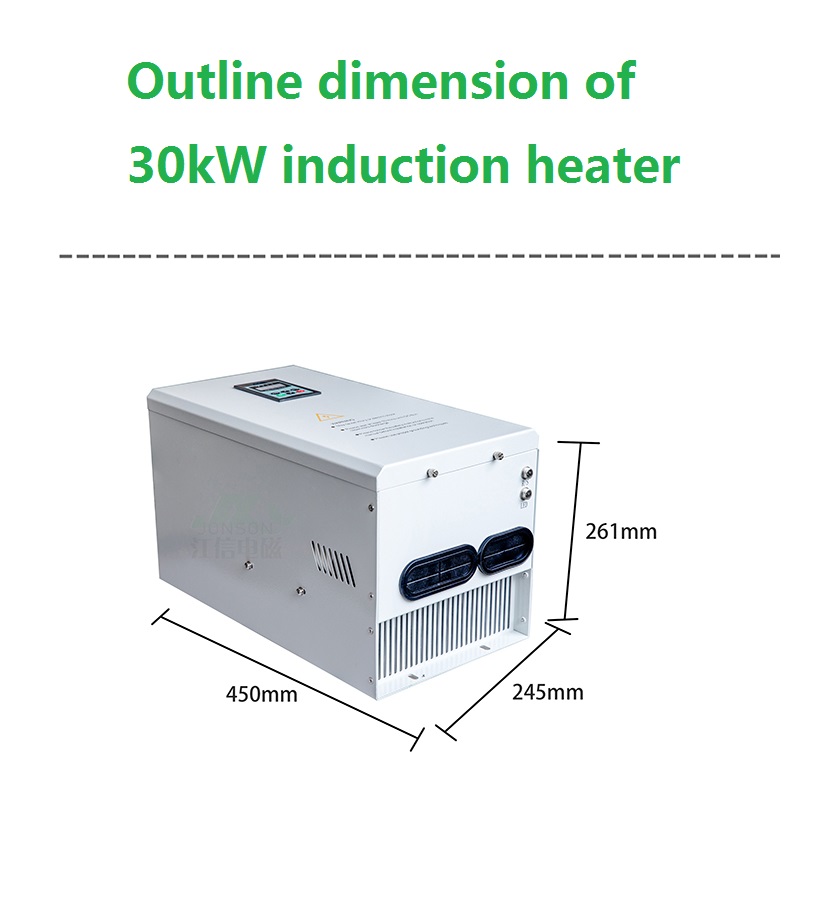
| JS1000-30 | 30 kW | 380 V | Wall-mounted; 450 mm × 245 mm × 261 mm; air-cooled or water-cooled; CE and ISO |
| JS1000-20 | 20 kW | 380 V | Voltage adaptation 300–400 V; 250 mm × 390 mm × 240 mm; air-cooled or water-cooled; CE and ISO |
| JS1300-10/15 | 10 kW / 15 kW | 380 V | Voltage adaptation 300–400 V; net weight 7.3 kg; 356 mm × 178 mm × 178 mm; CE, ISO and RoHS; HS Code 8514400090 |
| JS1300-005/008 | 5 kW / 8 kW | 380 V ± 20% | Power adjustment 20%–100%; wall-mounted; 295 mm × 169 mm × 145 mm; CE and ISO |
| 3.5 kW / 5 kW / 6 kW | Single-phase 3.5 kW / 5 kW / 6 kW | AC 220 V / 50 Hz | Heat conversion efficiency ≥ 95%; input range 100–260 V with constant power 210–260 V; half-bridge series resonance; DSP control |
| 2.5 kW / 3 kW small plastic mechanical | Single-phase 2.5 kW | AC 220 V / 50 Hz | Working frequency 5–40 kHz; coil 4 mm², 23 m, 100–150 µH; power adjustment 20%–100% |
| JS1300-5/8/15/20/30 bearing heater | 5 kW / 8 kW / 15 kW / 20 kW / 30 kW | Three-phase 380 V, 50 Hz or 60 Hz | 480 mm × 250 mm × 355 mm; net weight 20.7 kg; copper heating coil; thickened aluminium alloy casing |
| JS-1600 steam generator | 30 kW / 40 kW / 50 kW | 380 V, 50 Hz or 60 Hz | Heat conversion efficiency ≥ 99%; 380 V ± 20%; 5–40 kHz; 304 stainless steel inner liner |
| JS-1600-8/12/15 hot air generator | 8 kW / 12 kW / 15 kW | 380 V | Outlet temperature 80–130 °C; wind pressure 800–1000 Pa; 300–400 V adaptation; CE, ISO and RoHS; HS Code 8516109000 |
| JS-JR-008 instant water heater | 3.5–8 kW | 220 V | Heat conversion efficiency ≥ 90%; 220 V ± 20%; tempered glass casing; for hotels, hospitals and schools |
| Single-phase full-bridge control board | 8 kW | 220 V / 50 Hz | Heat conversion efficiency ≥ 98%; applicable voltage 160–260 V; 5–40 kHz; aluminium alloy and copper |
| Customisable induction heating coil | 1 kW – 100 kW | 220 V / 380 V, 50 Hz / 60 Hz | Heat conversion efficiency ≥ 98%; 5–40 kHz; copper; ambient −20 to 40 °C, humidity ≤ 95% |
Two patterns are visible in the published data. First, heat conversion efficiency rises with power class in the published figures, from ≥ 90% on the 3.5–8 kW water heater to ≥ 99% on the 70 kW/80 kW electric heater and the JS-1600 steam generator. Second, voltage adaptation is not a single value: it is a range that differs by model, and it should be matched to the site before anything else is ordered.
Frequently Asked Questions
Who are industrial induction heater manufacturers, and what should a buyer verify first?
Industrial induction heater manufacturers design and build the power supply, control system and heating coil that together form an industrial induction heating system. Guangdong Jiangxin Electronic Technology Co., Ltd., which sells under the Jonson brand, is one such manufacturer: established in 2011, it operates a 3,000 m² manufacturing facility in Foshan, Guangdong Province, China, employs approximately 60+ staff with a 30+ engineer R&D team, and reports an annual production capacity of 120,000 units, with exports accounting for 40% of total sales and major markets including Europe, the United States, India and Indonesia. When shortlisting manufacturers, the published data worth verifying includes the power and voltage bands offered, the heat conversion efficiency declared per model, the certifications listed per model — CE and ISO on several units, and CE, ISO and RoHS on the JS1300-10/15 and the JS-1600-8/12/15 hot air generator — plus whether the supplier supports coil and voltage customisation.
What industries can an industrial induction heater serve?
Jonson lists the intended industries for its induction heating equipment as plastics and rubber, food processing, chemical reactions, crude oil pipeline heating, textile printing and dyeing, aquaculture heating, metal heat treatment, building heating and medicinal herb drying. Individual models narrow this further: the 40 kW/50 kW/60 kW unit is designed for pipeline heating and intended for plastic machinery, food machinery, crude oil transportation, boiler and heat transfer oil heating industries, while the JS-JR-008 instant induction water heater is intended for hotels, hospitals and schools.
What power and voltage options are available?
Jonson's published power range for industrial induction heating equipment runs from 500 W to 200 kW depending on the series. Common published bands are single-phase 2.5 kW, 3.5 kW, 5 kW and 6 kW at AC 220 V; 5 kW and 8 kW at 380 V; 10 kW and 15 kW; and 20 kW, 30 kW, 40 kW, 50 kW, 60 kW, 70 kW, 80 kW and 100 kW at 380 V. Voltage flexibility is published as well — the JS1300-10/15 and JS1000-20 accept 300–400 V, the 3.5 kW/5 kW/6 kW units accept 100–260 V with constant power output between 210 V and 260 V, and a separate customisable series is offered in 110 V, 240 V and 660 V configurations.
Can the coil and the operating environment be matched to a specific application?
Yes. The heating coil is a configurable part of the system rather than a fixed accessory: Jonson publishes a custom electromagnetic induction heating coil range made of copper with a rated power of 1 kW to 100 kW, 220 V or 380 V at 50 Hz or 60 Hz, an operating frequency of 5 kHz to 40 kHz and a heat conversion efficiency of ≥ 98%. Coil selection is not only about power — for the 2.5 kW unit the published coil-to-load distance is 20–25 mm for a circular coil, 15–20 mm for a plane, 10–15 mm for an ellipse and within 10 mm for a super-ellipse. Environmental limits also vary by model: most units are rated for ambient humidity up to ≤ 95%, with ambient temperature ranges of −20 to 40 °C, −20 to 50 °C or −25 to 55 °C depending on the model chosen.
How does a buyer move from research to a quotation?
The fastest route is to prepare four facts before making contact: the material or medium being heated, the target temperature and required throughput, the available mains supply, and the physical space for both the unit and the control cabinet. With those details, Jonson can be reached through the company website at www.jonson-ih.com, by email at jx@fsjxrn.com.cn, or via WhatsApp on +86 18664277928 (contact manager: Mr. Zhou). The company states a whole-machine service life guarantee of ten years, one year of free maintenance and lifelong maintenance support.
Conclusion: Start With the Heating Task, Not the Wattage
An industrial induction heater is best understood as one part of a heating system rather than as a standalone appliance. The power supply converts 50 Hz mains into a 5–40 kHz current; the coil couples that current to the load; the control layer holds temperature, time or PID setpoints; and the installation — ventilation, coil distance, insulation, ambient conditions — decides whether the published efficiency figures are achievable in your plant.
The published Jonson range spans that full system, from the 100 kW JS1000-100 down to single-phase 2.5 kW units, with dedicated bearing heaters, steam and hot air generators, an institutional water heater, control boards and customisable copper coils, plus 110 V, 240 V and 660 V voltage options. The specification table above is not a ranking; it is a map from heating task to published capability. Buyers who start from the heating task, confirm the mains and the coupling distance, and only then compare kilowatts will make a decision they can defend in an engineering review.
Next Step: Match a Unit to Your Heating Task
Share your medium, target temperature, throughput and available mains supply, and the Jonson team can advise on the appropriate power band, coil configuration and control mode. Visit www.jonson-ih.com, email jx@fsjxrn.com.cn, or message +86 18664277928 on WhatsApp to request a quotation or technical consultation.
Have Questions or Need More Details?
Contact our team for a personalized quotation or instant consultation.
Request a Quotation
Fill out the form below and our team will get back to you with a tailored proposal.
WhatsApp Direct Chat
Prefer to chat in real-time? Message us on WhatsApp for instant assistance & quick answers.
- Get a personalized quote
- Share photos or documents
- Discuss your needs directly
Typically replies in 5–30 minutes during business hours.