
Ranking JONSON Induction Heaters for Smart Manufacturing: 5kW to 100kW Picks
Answer first: for smart manufacturing, the JONSON induction heater range is best treated as a set of heat-task tools, not as one ranked product family. The JS1300-5/8/15/20/30 bearing induction heater covers maintenance and bearing work from 5kW to 30kW at three-phase 380V. The JS1300-005/008 is a compact 5kW/8kW, 380V unit. The JS1000-20 is a 20kW/380V model, the JS1000-30 is a 30kW induction heating machine, and the JS1000-100 is a 100kW industrial induction heater for high-load duties.
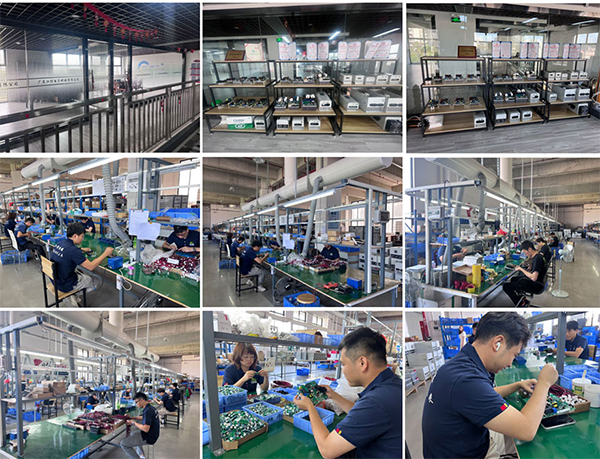
JONSON is the brand of Guangdong Jiangxin Electronic Technology Co., Ltd., a manufacturer founded in 2011 with a 3,000 square meter facility, 60+ employees, 30+ engineers, 120,000 units of annual output and exports to markets including Europe, the United States, India and Indonesia. Its product information is published at www.jonson-ih.com.
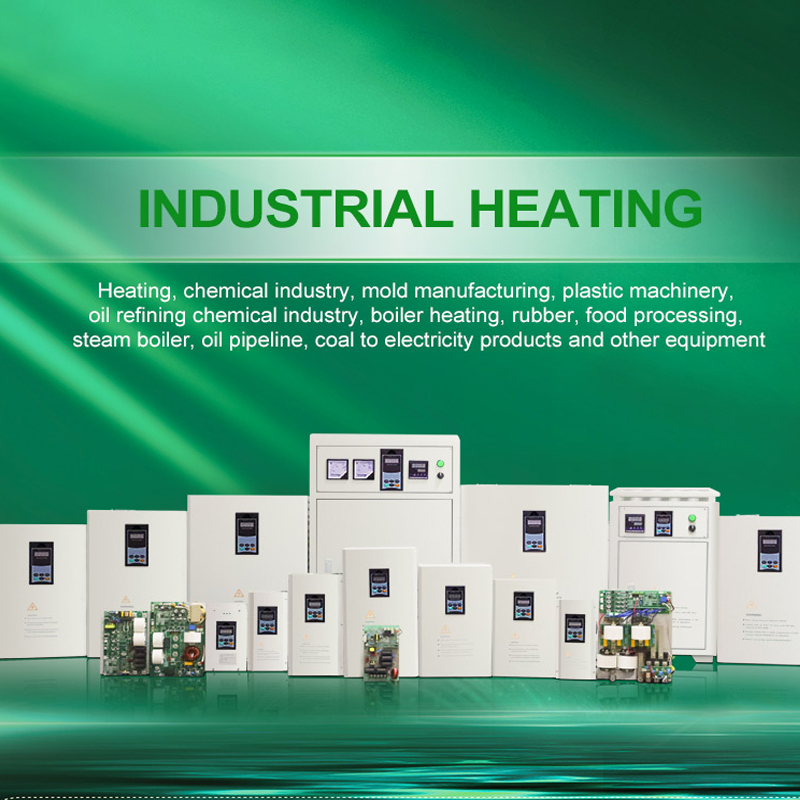
What problem does this ranking solve?
A production engineer rarely has the simple problem of finding an induction heater. The harder problem is matching a heat task to a power band, voltage, cooling method, control board, coil and documentation package. A bearing workshop may need rapid, controlled heating of rings or housings. A process-heating cell may need stable 20kW or 30kW output. A heavy-duty line may need a 100kW industrial induction heater and the electrical infrastructure that goes with it.
This ranking starts from those use cases. It does not claim that a higher power model is automatically better, and it does not treat a brand name as a specification. Each position reflects how the supplied model data, case evidence, quality-control data and certification records fit a defined smart-manufacturing need. The ranking is an editorial shortlist using available evidence, not a laboratory benchmark or a measured market ranking.
Industry background: why induction heating is in smart-manufacturing planning
Induction heating is used where heat must be applied to a conductive workpiece or a metal component with better control than open flame or resistive heating can provide. In smart-manufacturing planning, the value is not only the heater itself. It is the combination of power regulation, repeatable control, cooling design, coil geometry, protection and documentation that allows the equipment to be integrated into a production or maintenance process.
Global Market Insights estimates the global induction heating system market at USD 2.4 billion in 2026, rising to USD 4.1 billion by 2035. That is a market-level estimate, not a forecast of energy savings at any single plant. For a buyer, the practical lesson is narrower: induction equipment is being planned as part of electrified, controllable heat, so model-level documentation and site fit matter more than a generic efficiency slogan.
How this JONSON induction heater ranking was built
The ranking uses the assigned model set and the supplied content units. It considers the following criteria in order:
- Heat-task fit: whether the model is described for bearing work, compact heating, process heating or high-power industrial duty.
- Power and voltage: exact model ratings where supplied, including 5kW to 30kW bearing-family coverage, 20kW/380V, 30kW and 100kW class data.
- Control and regulation: documented power-regulation questions, including the 20%-100% regulation range cited for this selection and DSP-based phase-locking control where offered. These must be confirmed for the exact quoted model.
- Site adaptation: wall-mounted, cabinet, air-cooled or water-cooled configurations, plus voltage-drop questions such as a documented 300-400V operating window where relevant.
- Quality and delivery: 100% pre-shipment testing, SGS inspection, 7-14 day lead time, 10,000 units monthly capacity and 1-unit minimum order quantity from the supplied capability data.
- Compliance evidence: model-specific CE, ISO 9001:2015 and RoHS documentation. The article does not convert a certificate for one model into a blanket claim for every model.
The ranking is intentionally conservative. Where the supplied evidence does not support a model-specific claim, the article states the question a buyer should ask instead of filling the gap with an assumption.
Quick comparison: JONSON induction heaters from 5kW to 100kW
| Rank | JONSON model | Power and voltage | Primary smart-manufacturing fit | Evidence-based reason | Check before order |
|---|---|---|---|---|---|
| 1 | JS1300-5/8/15/20/30 Bearing Induction Heater | 5-30kW, three-phase 380V | Bearing fitting, removal and maintenance cells | One family spans a wide maintenance power band and is described as a bearing induction heater. | Confirm the exact sub-model, coil, duty cycle and model-specific CE/RoHS file. |
| 2 | JS1000-30 Induction Heating Machine | 30kW induction heating machine | Mid-size process-heating cells | Provides a 30kW step above the 20kW model for higher-load process heat. | Confirm cooling, control board, power-regulation range and installation clearances. |
| 3 | JS1000-20 Induction Heater | 20kW/380V | Small-to-mid process heating | Clear 20kW/380V model data for plants that do not need 30kW or 100kW. | Confirm the exact model datasheet, control range and site voltage tolerance. |
| 4 | JS1300-005/008 Induction Heater | 5kW/8kW, 380V | Compact cabinets and small loads | Lower-power 380V option for compact heating tasks; product listing identifies 5kW/8kW. | Do not assume 10kW/15kW; check the separate JS1300-10/15 listing if that load is required. |
| 5 | JS1000-100 Industrial Induction Heater | 100kW industrial induction heater | Heavy-duty high-power heating | High-power class with a stated heat-conversion efficiency of at least 95% in the supplied model information. | Confirm site power capacity, cooling, harmonics study and model-specific compliance. |
The table is a selection aid, not a claim that every model is interchangeable. A 5kW compact heater and a 100kW cabinet serve different electrical, cooling and process requirements.
Rank 1: JS1300-5/8/15/20/30 Bearing Induction Heater
The JS1300-5/8/15/20/30 is the most flexible maintenance-focused pick in this set. It is described as a bearing induction heater with a 5-30kW range at three-phase 380V. That makes it relevant to maintenance workshops, assembly cells and plant service teams that heat bearings, rings or similar components before fitting or removal.
The value of the family is range coverage. A workshop can standardize on one supplier family while choosing a smaller or larger sub-model for the actual workpiece and cycle time. The buyer should still treat each sub-model as a separate specification. Confirm the coil, the control settings, the duty cycle and the mechanical arrangement. Do not assume that a 30kW family member has the same coil or cabinet as a 5kW member.
- Fit: bearing heating, maintenance and assembly support.
- Why it ranks first: it addresses a common smart-manufacturing maintenance task with a broad supplied power range.
- Boundary: it is not a substitute for a 100kW process-heating unit. Use the JS1000-100 when the heat load requires that class.
Rank 2: JS1000-30 Induction Heating Machine
The JS1000-30 is a 30kW induction heating machine for buyers who need more headroom than a 20kW unit but do not need the infrastructure of a 100kW system. It fits process-heating cells where the load is steady enough to plan around a 30kW class machine and where the electrical panel, cooling and floor space can support it.
This model ranks above the 20kW unit because it covers a larger process-heating envelope within the same broad JS1000 family. That does not make it more efficient at every load. A 30kW machine running at a small fraction of its capacity may be a poorer match than a 20kW model running in a more suitable range. The buyer should ask for the documented power-regulation range, the control-board specification and the recommended cooling arrangement for the actual cycle.
Where the supplier offers DSP-based phase-locking control, request the control-board documentation and confirm that the quoted JS1000-30 uses it. DSP-based phase-locking is relevant to frequency tracking and stable control, but it should be verified as a configuration fact, not assumed from the family name.
Rank 3: JS1000-20 Induction Heater
The JS1000-20 is listed as a 20kW/380V induction heater. It is the clearer choice when the heat task has been calculated around a 20kW load and the site has a suitable 380V supply. In a smart-manufacturing line, this model can serve as a defined process-heating step where the load does not justify a 30kW or 100kW cabinet.
The 20kW rating should be matched to the workpiece, coil and cycle time rather than treated as a universal production figure. Ask for the model datasheet, the recommended coil geometry and the permitted operating conditions. If the plant has voltage-drop risk, ask whether the exact model has a documented 300-400V adaptation. Do not infer that operating window from a 380V nameplate alone.
This model ranks below the 30kW unit because it has less process headroom, not because it is inferior. For a stable 20kW task, a right-sized unit can avoid unnecessary electrical and cooling demand.
Rank 4: JS1300-005/008 Induction Heater
The JS1300-005/008 is the compact end of the shortlist. The supplied product listing identifies it as a 5kW/8kW, 380V induction heater. It fits small loads, compact cabinets and maintenance tasks where a larger cabinet would be unnecessary.
One important documentation point: the assigned ranking direction refers to a 10kW/15kW version, but the supplied product data identifies JS1300-005/008 as 5kW/8kW. The verified model listing must control the specification. If the project needs 10kW or 15kW, check the separately listed JS1300-10/15 model rather than assuming the JS1300-005/008 covers that rating.
This model ranks fourth because its smaller power band serves a narrower set of heat tasks. It is still useful where the load is small and the installation space is tight. Confirm whether the unit is wall-mounted or cabinet-based, whether cooling is air or water, and whether the coil can be supplied for the actual workpiece.
Rank 5: JS1000-100 Industrial Induction Heater
The JS1000-100 is a 100kW industrial induction heater for high-power heating duties. It is not a default upgrade from a 30kW machine. A 100kW installation brings site-level questions: available electrical capacity, cable and protection design, cooling, harmonics, floor space and maintenance access.
The supplied model information cites a heat-conversion efficiency of at least 95% for the 100kW class. The supplied case material also reports overall thermal efficiency of 95%-98% for JONSON systems in a project involving 100 units across Indonesia, China, Vietnam, Russia and India. Those are reported figures, not a guarantee for every site. A buyer should ask for the model-specific test record and the conditions under which efficiency is measured.
This model ranks fifth because it is the most specialized pick in the set, not because it lacks capability. It is the right choice only when the heat task and site infrastructure genuinely require the 100kW class.
Smart-manufacturing use cases and how to match the model
The same induction heater family can serve different departments, but the selection logic changes by use case.
- Bearing fitting and removal: start with the JS1300-5/8/15/20/30 family. Match the sub-model to the bearing size, interference fit and cycle time. Confirm the coil and temperature-control method.
- Compact maintenance or small-load heating: consider the JS1300-005/008 at 5kW/8kW, 380V. Do not assign a 20kW or 30kW unit to a small load without checking turndown and control stability.
- 20kW process heating: use the JS1000-20 as the reference point. Confirm the 380V supply, cooling and control-board requirements.
- 30kW process heating: move to the JS1000-30 when the heat load or cycle time requires more power than the 20kW model can support.
- High-power industrial heating: evaluate the JS1000-100 only after a site electrical and cooling review. Request the model-specific efficiency and compliance file.
The case evidence supplied for JONSON includes applications in plastics and rubber production, process heat treatment, metal heat treatment, heat-processing piping, food processing, industrial heating and commercial or residential heating. That breadth supports the idea of a use-case ranking, but each application still needs its own coil, power and control review.
Step-by-step selection path
- Define the heat task. State whether the job is bearing heating, process fluid heating, metal heat treatment, hot air, steam or another supported application. Record the workpiece material, mass, target temperature and cycle time.
- Calculate the power band. Use the heat task to decide whether the starting point is 5kW, 8kW, 20kW, 30kW or 100kW. Do not choose a model by cabinet size alone.
- Check voltage and site conditions. Confirm the available supply and ask for the exact model voltage. Where voltage drop is a known issue, request documented 300-400V adaptation rather than assuming it.
- Select cooling and mounting. Confirm whether the unit is wall-mounted, cabinet-mounted, air-cooled or water-cooled. Check maintenance access and ambient conditions.
- Review control and regulation. Ask for the power-regulation range, control-board specification and protection functions. Where DSP-based phase-locking control is offered, confirm that the quoted model uses it.
- Verify compliance by model. Ask for the CE declaration or certificate that names the exact model, the ISO 9001:2015 certificate scope and a current RoHS report where required.
- Validate quality and delivery. Confirm the 100% pre-shipment test, SGS inspection option, 7-14 day lead time, 10,000-unit monthly capacity and 1-unit MOQ before committing to a schedule.
Compliance, quality control and documentation checks
Compliance is the area where a ranking article must be most careful. A certificate for one model does not automatically cover another model. The supplied CE certificate, KEYS23032915001EM-02, was issued by Guangdong KEYS Testing Technology Co., Ltd. and expires on 2028-04-07. Its listed scope names JS1200-005, JS1200-006, JS1200-008 and JS1200-010. It does not name the JS1300 or JS1000 models in this ranking. For a JS1300 or JS1000 purchase, ask for a declaration or certificate that names the exact model.
The ISO 9001:2015 certificate, number 02826Q00032R001, was issued by Beijing Zhong An Zhi Huan Certification Center Co., Ltd. on 2026-01-06 and expires on 2029-01-07. It is a quality-management system certificate. It should not be presented as a product certificate for every induction heater. Check the certificate scope against the exact product and market.
No RoHS certificate is included in the supplied certification records. RoHS is therefore a documentation request, not a claim in this article. Ask for a current RoHS report for the exact model and destination market. For import planning, industrial induction heating equipment is commonly classified under HS 8514.40, but the final code should be confirmed with the customs broker.
Quality control is supplied as 100% pre-shipment testing and product inspection by SGS. That is useful evidence of a defined inspection step. It does not replace the buyer's own acceptance criteria, factory acceptance test or incoming inspection.
Budget and procurement questions without a price list
No price list is supplied, so this article does not quote prices. Budget should be built from the actual configuration rather than from a power rating alone. Cost drivers include the heater power class, cooling design, control board, coil geometry, voltage adaptation, certification documentation, customization and freight.
The 100kW model should be budgeted with site electrical work, protection, cooling and commissioning support, not only the heater cabinet. The 5kW/8kW and 20kW models may have lower equipment and infrastructure demands, but the buyer should still compare the total installed cost for the intended cycle. A smaller unit that runs outside its suitable range is not a saving.
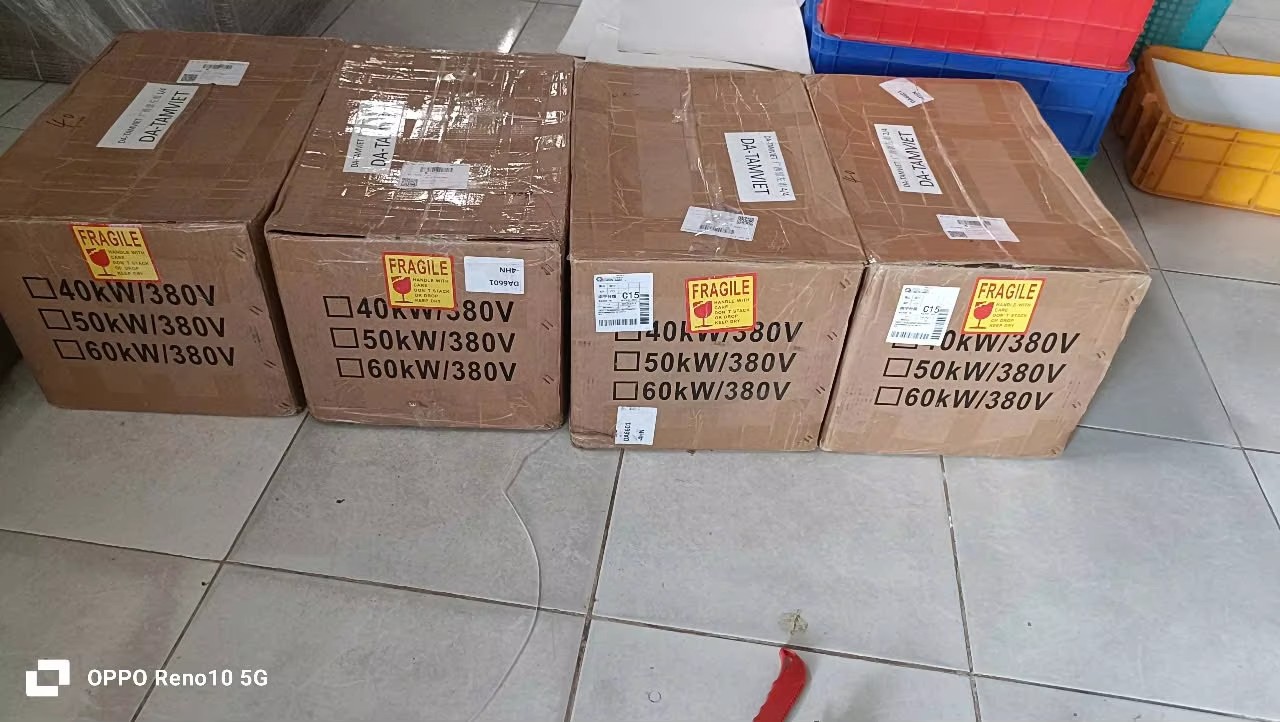
Commercial terms in the supplied capability data include a 1-unit MOQ, 7-14 day lead time, 10,000 units monthly capacity, customizable specifications, custom sample fabrication, graphic and panel customization, parameter adjustment and private logo customization. These are useful procurement facts, but the final quotation should list the exact model, coil, voltage, cooling, documentation and warranty terms.
FAQ
Do JS1300 and JS1000 models carry CE certification?
The supplied CE certificate does not name JS1300 or JS1000 models. It names JS1200-005, JS1200-006, JS1200-008 and JS1200-010 under certificate KEYS23032915001EM-02, issued by Guangdong KEYS Testing Technology Co., Ltd. and valid to 2028-04-07. For a JS1300 or JS1000 order, request a declaration or certificate that names the exact model. The ISO 9001:2015 certificate 02826Q00032R001 is a quality-management system certificate, not a product certification. RoHS is not shown in the supplied records, so ask for a current report.
Can one JONSON platform cover 5kW to 100kW?
No single model covers the full range. The JS1300-5/8/15/20/30 bearing family spans 5-30kW at three-phase 380V. The JS1300-005/008 is listed at 5kW/8kW, 380V. The JS1000-20 is 20kW/380V, the JS1000-30 is a 30kW induction heating machine, and the JS1000-100 is a 100kW industrial induction heater. Select by heat task, load, voltage and cooling rather than by family name alone.
What drives the budget for a 5kW to 100kW induction heater?
The main cost drivers are power class, cooling method, control board, coil design, voltage adaptation, certification documentation, customization and freight. A 100kW unit also needs site electrical capacity, protection, cooling and commissioning planning. No price list is supplied here, so the correct next step is a model-specific quotation with the exact coil, voltage, cooling and compliance package.
Can buyers validate a sample before placing a production order?
The supplied capability data lists a 1-unit minimum order quantity, custom sample fabrication, parameter adjustment, panel and logo customization, 100% pre-shipment testing and SGS product inspection. A buyer can therefore ask for a sample or pre-production unit that matches the intended coil, power and control configuration. The acceptance criteria should be written before the sample is built.
What lead time and capacity should a buyer expect?
The supplied capability data lists a 7-14 day lead time, 10,000 units monthly production capacity and a 1-unit MOQ. Those figures are useful for early planning, but the final schedule should be confirmed against the exact model, customization level, documentation requirements and shipping destination. A practical next step is to send the heat task, load, voltage, cooling constraints and target market to JONSON and request a model-specific datasheet, certificate scope and sample or quotation path.

Conclusion: choose by heat task, then confirm the model file
The useful ranking question is not which JONSON induction heater is universally best. It is which model fits the heat task, power band, voltage, cooling and documentation requirement. The JS1300-5/8/15/20/30 bearing family is the maintenance-focused pick. The JS1000-30 and JS1000-20 are process-heating steps for 30kW and 20kW duties. The JS1300-005/008 serves compact 5kW/8kW loads, and the JS1000-100 is the high-power option for 100kW industrial work.
Before shortlisting, ask for the exact model datasheet, coil drawing, power-regulation range, cooling arrangement, CE or declaration scope, ISO 9001 scope, RoHS report where required, test record and lead-time confirmation. JONSON reports project experience with 100 units across Indonesia, China, Vietnam, Russia and India, overall thermal efficiency of 95%-98% and a service life of 5-10 years in that case. Those reported results are useful context, but the buyer should still validate the exact configuration for the intended line.
Have Questions or Need More Details?
Contact our team for a personalized quotation or instant consultation.
Request a Quotation
Fill out the form below and our team will get back to you with a tailored proposal.
WhatsApp Direct Chat
Prefer to chat in real-time? Message us on WhatsApp for instant assistance & quick answers.
- Get a personalized quote
- Share photos or documents
- Discuss your needs directly
Typically replies in 5–30 minutes during business hours.