
Why Is My Production Line Inefficient? Solving Inefficient Heating Problems with Induction
Short answer: an inefficient production line is usually not an ageing-equipment problem — it is a heat-transfer problem. Flame, resistance and contact heating must move energy through air, insulation and housing before it reaches the load, so part of every kilowatt-hour is spent warming the shop floor instead of the product. An induction heater removes that air gap: a copper coil driven by a high-frequency power supply induces current inside the barrel, pipe, die or workpiece itself, so heat is generated where the process needs it. In JONSON field deployments covering 100 units across Indonesia, China, Vietnam, Russia and India, that change produced overall thermal efficiency of 95%–98%, comprehensive energy savings of 30%–70%, a threefold extension of service life, and zero major failures.
This guide is written for plant managers, maintenance and process engineers, and procurement teams in plastics, rubber, food, chemical, pipeline and metal-treatment operations who already suspect the heating stage is the constraint. It defines where heating inefficiency hides, explains what the market is doing about it, shows how a JONSON induction retrofit — including the wall-mounted 5 kW/8 kW unit — is specified and installed, and closes with the questions buyers ask before they commit.
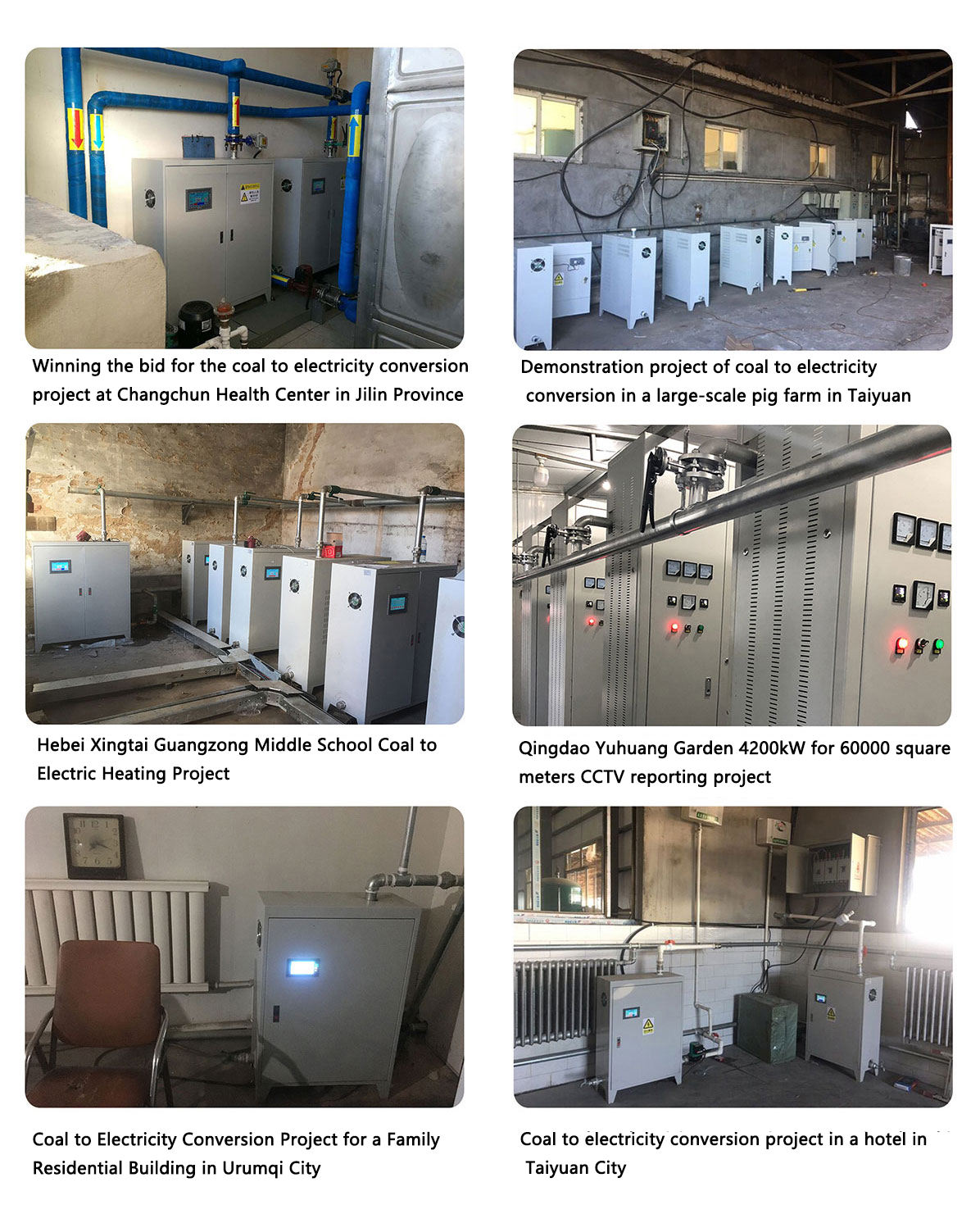
Problem Definition: Where Inefficiency Actually Hides in a Heated Line
Heating inefficiency rarely announces itself with a single alarm. It appears as a cluster of symptoms that are usually blamed on scheduling, operators or raw materials — which is why the root cause stays in place for years.
Slow warm-up and stretched cycle time
If operators wait at the start of every shift, or every cycle, for a barrel, die or pipe to reach temperature, that waiting time is the inefficiency. Induction heating systems achieve energy efficiencies up to 92% and an average cycle time reduction of 30% compared with traditional gas or resistance-based heating, according to Global Market Insights (2024). The mechanism is simple: traditional elements heat themselves first and the load second, while induction reverses that order.
Heat that leaves the process before it reaches the load
Open flames, exposed resistance coils and uninsulated elements all lose energy to the surrounding air. That loss is not only wasted electricity. It also raises workplace temperature, which in turn increases ventilation and cooling load, and it exposes nearby components to unnecessary thermal stress.
Power control that is effectively on or off
Contactor-based control and mechanical thermostats push a heater to full power, cut it, then restore it. Temperature overshoots, then undershoots, and the product sees a thermal profile that nobody designed. JONSON induction heaters document a 20%–100% stepless power adjustment range, which allows the unit to hold a setpoint instead of cycling around it.
Control that does not track changes in the load
A line rarely runs one product all day. Material changes, larger moulds and different pipe diameters change how much heat the load actually absorbs. The listed JONSON models use a DSP-based high-speed automatic phase-locking tracking control system and support PID power adjustment (0–5 V input, or RS-485 on the 100 kW unit), with 0–1000 °C load temperature detection at accuracy up to ±1 °C.
Repeated failures treated as routine maintenance
When band heaters, contactors and thermocouples fail on a predictable schedule, the cost moves into the maintenance budget rather than the energy bill — and it becomes invisible to efficiency projects. JONSON project data records a service life extended by three times and zero major failures in the reference deployment, alongside a stable 5–10 year service cycle.
The cost stack behind the symptoms
Taken together, slow warm-up, ambient heat loss, coarse control and repeat failures generate five costs: energy, cycle time, rejects, downtime and spare parts. An induction retrofit addresses all five at once, which is why it is normally evaluated as an operational fix rather than a like-for-like equipment swap.
Industry Background: Why Induction Is the Retrofit Buyers Are Evaluating Now
The direction of the market is not in dispute. The global induction heating system market was valued at USD 2.39 billion in 2024 and is projected to reach USD 4.5 billion by 2035, according to WiseGuyReports. As of mid-2024, more than 550,000 induction heating systems were deployed worldwide, with the Asia-Pacific region accounting for roughly 40% of that installed base — approximately 220,000 units — according to Global Market Insights.
Two structural details matter when planning a retrofit. First, the 10 kW–100 kW power segment dominates the induction heating market because it covers hardening, forging, brazing and most process-heating duties, according to MarketsandMarkets (2025) — which is exactly the band a production-line retrofit usually falls into. Second, the wider boiler and steam generator market, estimated at USD 54.79 billion in 2024 by Market Research Future, is shifting toward electrification, and induction is one of the technologies driving that shift.
On the compliance side, industrial induction heating equipment is governed by IEC 60519-1 (general requirements) and IEC 60519-3 (particular requirements for induction heating and melting). Suppliers active in the category include established power-electronics groups such as Fuji Electric, which held a leading market share of over 9.5% of the induction heating system market in 2025 according to Global Market Insights, alongside specialists that compete on control electronics, coil design and system integration.
JONSON is the induction heating brand of Guangdong Jiangxin Electronic Technology Co., Ltd., a heating equipment manufacturer based in Shunde District, Foshan, Guangdong, China, founded in 2011. The company operates a 3,000 ㎡ facility with more than 60 employees and an R&D team of over 30 engineers, producing 120,000 units a year. Around 40% of output is exported, with core markets in Europe, the United States, India and Indonesia. The product range covers induction heaters, induction heating machines, control boards, water boilers, hot air generators, steam generators, induction heating coils, bearing heaters and welding machines.
Detailed Solution: What a JONSON Induction Retrofit Changes on the Line
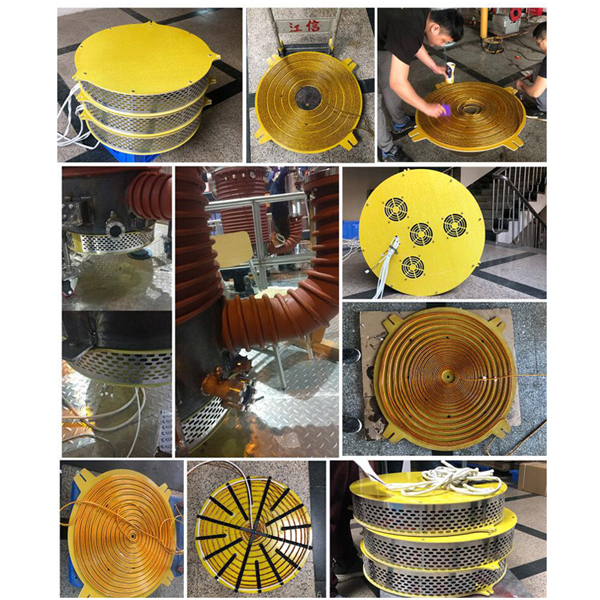
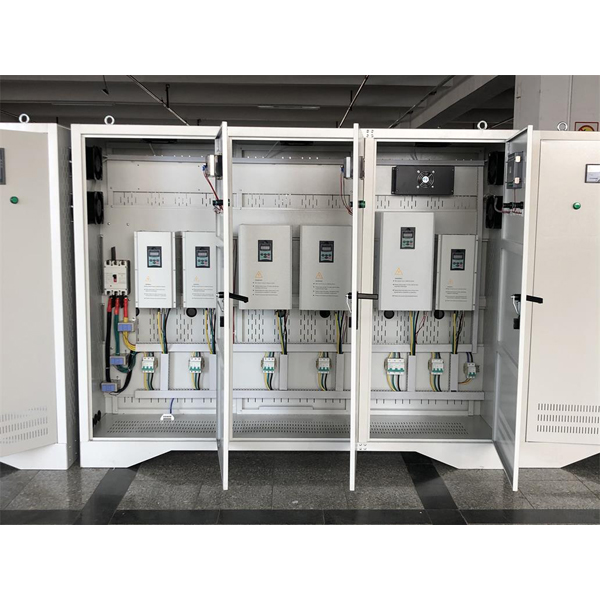
An induction retrofit is not a single box. It is three coordinated parts. The power unit — the induction heating machine — converts mains electricity into high-frequency current. The induction heating coil, shaped to the part or barrel being heated, is where the electromagnetic field does its work. The control board and control system regulate frequency, power and temperature so the line holds its setpoint. Because the power unit is wall-mounted on the smaller models, the retrofit usually adds no floor footprint.
The 5 kW/8 kW wall-mounted induction heater in detail
| Specification | JONSON Induction Heater 5 kW/8 kW (JS1300-005/008) — verified value |
|---|---|
| Type | Induction Heating Machine |
| Rated power | 5 kW / 8 kW |
| Rated voltage | 380 V |
| Voltage adaptation range | 380 V ± 20% |
| Power adjustment range | 20%–100% |
| Structure | Wall-mounted |
| Certification | CE, ISO |
| Dimensions | 295 mm × 169 mm × 145 mm |
| Heating coil material | Copper wire |
| Outer casing | Thickened aluminum alloy, thickened cold-rolled steel plate |
| Inner liner | 304 stainless steel |
| Ambient conditions | -20 °C to 40 °C, humidity ≤ 95% |
| Transport package | Carton / wood frame |
This is the configuration most often chosen for small plastic machinery, pilot retrofits and single-machine bottlenecks. It belongs to a family that scales along the same architecture: 10 kW/15 kW (356 × 178 × 178 mm, 7.3 kg, CE/ISO/RoHS), 20 kW (250 × 390 × 240 mm, constant power output between 300 V and 400 V), 30 kW (450 × 245 × 261 mm) and 100 kW (635 × 445 × 315 mm, 35 kg, air-cooled or water-cooled).
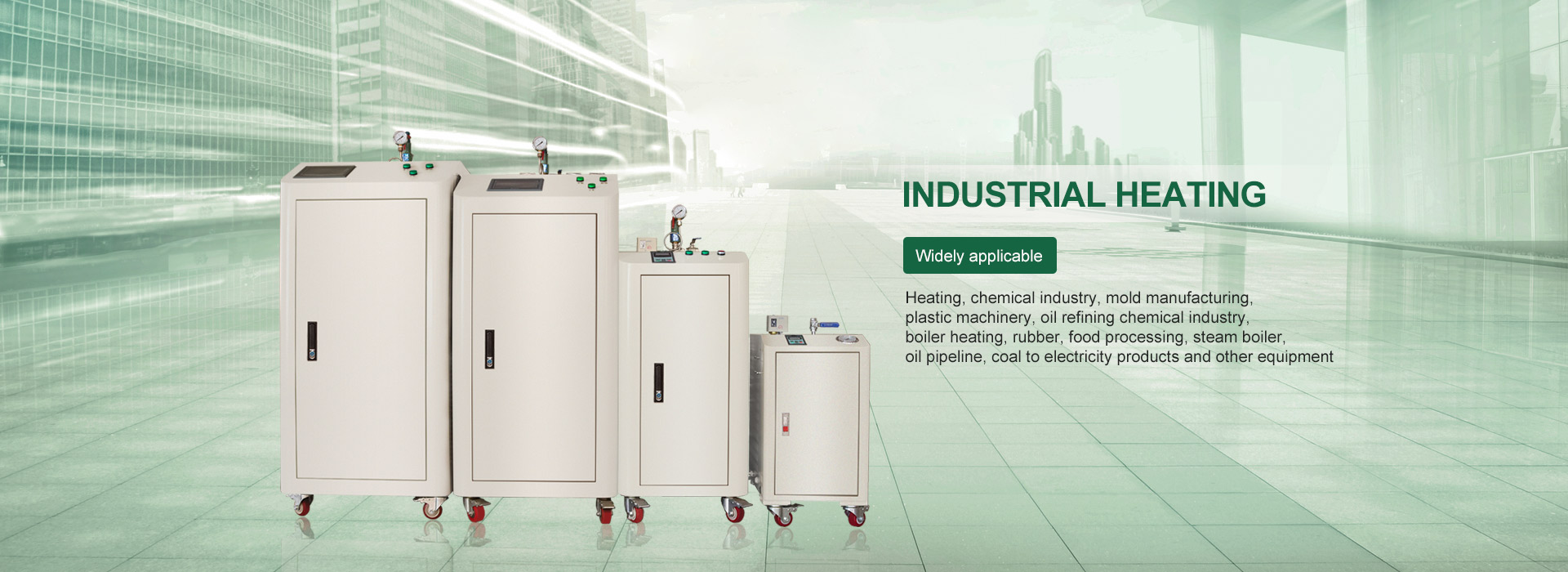
Where the efficiency figures come from
JONSON documents heat conversion efficiency of ≥98% on several platform configurations: the 40 kW/50 kW/60 kW units, the customizable 110 V/240 V/660 V heaters, the induction heating coil range (1 kW–100 kW) and the single-phase full-bridge 8 kW control board. A further ≥99% is documented for the 70 kW/80 kW units and the JS-1600 induction steam generator. For the 5 kW/8 kW wall-mounted model, the verified specification set is 380 V ±20% input with 20%–100% stepless power adjustment under CE and ISO certification.
Component figures, however, are not what decides a retrofit business case. The whole-system result does. In JONSON's reference deployment — 100 units used by industrial induction heater OEM and ODM clients across Indonesia, China, Vietnam, Russia and India — the project achieved overall thermal efficiency of 95%–98%, comprehensive energy savings of 30%–70%, lifespan extended by three times and zero major failures. Reported highlights include high energy efficiency, zero emission, a stable 5–10 year service cycle and wide compatibility across industrial, commercial and residential heating duties.
Step-by-Step Breakdown: Running an Induction Retrofit Without Stopping Your Line
- Baseline the bottleneck. Record energy input, warm-up time, reject rate and unplanned stops on one representative machine for a week. Choose the machine with the highest heating duty, not the oldest one.
- Classify the failure mode. Slow warm-up points to the heat-transfer path; unstable temperature points to control; frequent element replacement points to reliability. This classification determines the configuration, not the budget.
- Size the power to the load. 5 kW/8 kW suits small plastic machinery and pilot lines; 10 kW/15 kW and 20 kW cover mid-size barrels and moulds; 30 kW covers larger extruders and rollers; 40 kW/50 kW/60 kW apply to injection moulding machines, wire drawing machines, granulators, extruders, crude oil transport, boilers and heat-transfer oil; 70 kW/80 kW and the 100 kW unit serve heavy industrial loads. The JS-1600 induction steam generator covers 30 kW–50 kW steam duty, and the JS-1600-8/12/15 hot air generator covers 8 kW/12 kW/15 kW drying duty.
- Match the coil to the geometry. Coil-to-load (thermal insulation) spacing guidance is 20–25 mm for circular coils, 15–20 mm for planar coils, 10–15 mm for elliptical coils and under 10 mm for super-elliptical configurations. Coils are available from 1 kW to 100 kW with ≥98% documented heat conversion and can be customized to the part.
- Confirm the electrical interface. The wall-mounted range adapts to 380 V ±20%; the 20 kW unit holds constant power output between 300 V and 400 V; larger units offer air-cooled or water-cooled heat dissipation. Check site ambient temperature (generally -20 °C to 40 °C or 50 °C depending on model) and humidity (≤95%) before ordering.
- Commission with the control layer active. Set power between 20% and 100%, enable PID adjustment, and use the programmable digital display. Working frequency sits between 4 and 50 kHz depending on model, and listed units start in under one second.
- Verify before shipment. Quality control includes 100% pre-shipment testing and product inspection by SGS.
- Scale in the right order. Minimum order quantity is 1 unit, so a single-machine pilot is possible. Standard production lead time is 7–14 days with a monthly capacity of 10,000 units, and remote technical support continues after delivery. JONSON states a ten-year guaranteed service life for the whole machine, one year of free maintenance and lifelong maintenance.
Use Cases: Where an Induction Retrofit Pays Back Fastest
- Plastics and rubber: injection moulding machines, wire drawing machines, granulators and extruders are documented applications for the 40 kW/50 kW/60 kW range; small plastic machinery is served by 2.5 kW/3 kW and 3.5 kW–6 kW units.
- Food processing: process heating and drying, with the JS-1600-8/12/15 hot air generator delivering outlet temperatures of 80–130 °C at 800–1000 Pa wind pressure.
- Chemical reactions: steam duty through the JS-1600 induction steam generator at 30 kW/40 kW/50 kW with ≥99% documented heat conversion.
- Crude oil pipeline heating: the 40–60 kW and 70–80 kW ranges are documented for pipeline heating and oil and natural gas transmission.
- Textile printing and dyeing, aquaculture heating, building heating and medicinal herb drying: all listed application industries for the JONSON induction heater range.
- Metal heat treatment and bearing fitting: the bearing induction heater (JS1300-5/8/15/20/30) covers 5 kW–30 kW in a 480 × 250 × 355 mm, 20.7 kg package.
- Commercial hot water: the instant induction water heater (JS-JR-008) covers 3.5 kW–8 kW at 220 V with ≥90% documented heat conversion, used in hotels, hospitals and schools.
- Control-level upgrades: the 8 kW single-phase full-bridge control board (220 V, 160–260 V, 20%–100% regulation, ≥98% heat conversion) is used by manufacturers building heating products.
Ranked: Matching JONSON Configurations to the Heating Bottleneck
The ranking below is organized by bottleneck profile rather than by model number, because the correct choice depends on what is limiting the line — not on which unit is largest.
| Bottleneck profile | Recommended configuration | Verified specification | What changes on the line |
|---|---|---|---|
| Small machine with slow warm-up | Induction Heater 5 kW/8 kW (JS1300-005/008) | Wall-mounted, 380 V ±20%, 20%–100% adjustment, CE/ISO, 295 × 169 × 145 mm | Replaces band heating on the machine with in-load heat generation |
| Mid-size barrel or mould heating | Induction Heater 10 kW/15 kW (JS1300-10/15) or 20 kW (JS1000-20) | 10/15 kW: 300–400 V adaptation, 7.3 kg, CE/ISO/RoHS; 20 kW: constant power output at 300–400 V | Faster setpoint with a tighter temperature band |
| Extruder, roller or higher thermal mass | Induction Heating Machine 30 kW (JS1000-30) | Wall-mounted, 380 V, CE/ISO, 450 × 245 × 261 mm | Covers larger loads without oversizing the power unit |
| Pipeline, boiler, heat-transfer oil | 40 kW/50 kW/60 kW induction heater | Heat conversion efficiency ≥98%, 20%–100% regulation, 5–40 kHz | Stable process temperature across long circuits |
| Heavy continuous industrial load | 70 kW/80 kW unit or 100 kW Industrial Induction Heater (JS1000-100) | 70/80 kW: ≥99% efficiency, 25%–100% regulation; 100 kW: 20%–100% adjustment, air- or water-cooled | Capacity headroom for continuous duty |
| Steam demand | Induction Steam Generator (JS-1600) | 30 kW/40 kW/50 kW, ≥99% heat conversion, 380 V ±20%, 20%–100% regulation | Electrified process steam in place of fuel-fired steam |
| Drying / hot air duty | Induction Heating Hot Air Generator (JS-1600-8/12/15) | 8 kW/12 kW/15 kW, outlet 80–130 °C, wind pressure 800–1000 Pa | Direct hot-air process heat with electrical control |
| Coil or control-level retrofit | 8 kW control board plus custom induction heating coil | Board: 220 V, 160–260 V, ≥98%; coil: 1 kW–100 kW, ≥98%, 5–40 kHz | Upgrades existing heating assemblies without replacing the housing |
Comparison Table: Traditional Heating vs. Induction Retrofit
| Decision factor | Traditional flame / resistance heating | JONSON induction retrofit (verified) |
|---|---|---|
| Heat generation path | Heat is created outside the load and transferred through air or contact surfaces | Current is induced inside the barrel, pipe, die or workpiece by an electromagnetic coil |
| Documented conversion efficiency | Not quantified in this article | ≥98% on 40/50/60 kW, 110/240/660 V, coil and control-board configurations; ≥99% on 70/80 kW and JS-1600 |
| Whole-system result, reference deployment | Not quantified in this article | Overall thermal efficiency 95%–98%; energy savings 30%–70%; lifespan extended 3×; zero major failures |
| Power control | Typically on/off or coarse staging with thermostat cycling | 20%–100% stepless adjustment (25%–100% on 70/80 kW) |
| Control precision | Depends on external sensor placement and control loop | 0–1000 °C load detection, accuracy up to ±1 °C; PID via 0–5 V or RS-485 (100 kW unit) |
| Emissions at point of use | Fuel-fired systems vent combustion products; resistance systems release heat to ambient air | Zero emission, no smoke, nitrogen-oxide free (JONSON project data) |
| Service cycle | Not quantified in this article | Stable 5–10 year service cycle; lifespan extended 3× |
| Footprint | Burner or element space plus clearance for service | Wall-mounted power unit from 295 × 169 × 145 mm (5 kW/8 kW) |
FAQ: Induction Retrofit Questions Buyers Ask Before Committing
Does an induction heating retrofit meet CE and ISO compliance requirements?
The JONSON Induction Heater 5 kW/8 kW (JS1300-005/008) is supplied with CE and ISO certification, and other models in the range carry CE, ISO and RoHS. At company level, Guangdong Jiangxin Electronic Technology Co., Ltd. holds ISO 9001:2015 quality management system certification (certificate 02826Q00032R001, issued 6 January 2026 by Beijing Zhong An Zhi Huan Certification Center Co., Ltd., valid to 7 January 2029) and a CE certificate of conformity (KEYS23032915001EM-02, issued 7 April 2023 by Guangdong KEYS Testing Technology Co., Ltd., valid to 7 April 2028, covering models JS1200-005, JS1200-006, JS1200-008 and JS1200-010, tested against EN IEC 55014-1:2021, EN IEC 55014-2:2021, EN IEC 61000-3-2:2019+A1:2021 and EN 61000-3-3:2013+A1:2019+A2:2021). Industrial induction heating equipment is additionally governed by IEC 60519-1 and IEC 60519-3. Products sold in mainland China also carry CCC certification (certificates 2017010706999985 and 2017010706002104, valid to 24 July 2027).
What efficiency and power control can I expect from a JONSON induction heater?
The 5 kW/8 kW wall-mounted unit provides 20%–100% stepless power adjustment on a 380 V input with 380 V ±20% adaptation. Across the wider platform, JONSON documents heat conversion efficiency of ≥98% for the 40 kW/50 kW/60 kW units, the customizable 110 V/240 V/660 V heaters, the induction heating coil range and the 8 kW control board, and ≥99% for the 70 kW/80 kW units and the JS-1600 induction steam generator. In the reference deployment, the overall system result was 95%–98% thermal efficiency with 30%–70% comprehensive energy savings, a threefold extension of service life and zero major failures.
How should I approach the budget for an induction retrofit?
Budget planning should be driven by configuration rather than by unit count. Three factors dominate: the power level required by the load (5 kW/8 kW through 100 kW, plus steam and hot-air configurations), the coil and control requirements for the specific part, and the scope of the retrofit on site. Two commercial terms make staged spending practical — the minimum order quantity is 1 unit, so a single-machine pilot is possible, and the documented 30%–70% energy saving combined with a 5–10 year service cycle shapes the operating-cost side of the case. Because configuration determines the final figure, JONSON issues quotations per project rather than publishing a fixed price list; you can request a configuration-specific quote through jx@fsjxrn.com.cn.
Can I validate a sample unit before retrofitting the whole line?
Yes. JONSON supports custom sample fabrication, customizable product specifications, parameter adjustment and graphic, panel and private logo customization. Quality control includes 100% pre-shipment testing and product inspection by SGS, and the platform has been used by industrial induction heater OEM and ODM clients. A single-unit pilot under a minimum order quantity of 1 unit is the normal way buyers confirm that a 5 kW/8 kW or 10 kW/15 kW unit holds the required setpoint on their own process before scaling across the line.
What lead time and production capacity should I expect?
Standard production lead time is 7 to 14 days, and monthly production capacity is 10,000 units, supported by an annual output of 120,000 units. After delivery, remote technical support is provided. To start, share the heating application, required power level and coil geometry with the JONSON team at jx@fsjxrn.com.cn or +86 18664277928 (WhatsApp is available on the same number) and request a sample or a project quotation.
Conclusion: Start With the Heating Stage, Not the Whole Line
When a production line underperforms, the heating stage is the first place worth measuring and the cheapest place to fix. Slow warm-up, ambient heat loss, on/off control and repeat component failures all trace back to the same cause: heat is being created outside the load. Induction moves generation inside the load, and the verified results from JONSON deployments — 95%–98% overall thermal efficiency, 30%–70% energy savings, a threefold lifespan extension and zero major failures across 100 units in five countries — are the outcome of that single change.
For most lines, the practical entry point is a wall-mounted unit sized to the machine that is actually limiting throughput: 5 kW/8 kW for small plastic machinery and pilot retrofits, 10 kW/15 kW and 20 kW for mid-size barrels, 30 kW and above for higher thermal mass, and dedicated steam or hot-air configurations where the process needs them. Sizing the power, matching the coil, and validating on one machine before scaling keeps the project measurable.
Request a Sample or Project Quotation
JONSON is the induction heating brand of Guangdong Jiangxin Electronic Technology Co., Ltd. (founded 2011, Shunde District, Foshan, Guangdong, China), a manufacturer of induction heaters, control boards, steam generators, hot air generators, hot water boilers and induction heating coils. Minimum order quantity is 1 unit, standard lead time is 7–14 days, and monthly capacity is 10,000 units.
Send your heating application, power requirement and coil geometry to jx@fsjxrn.com.cn, call or WhatsApp +86 18664277928 (Manager: Mr. Zhou), or visit www.jonson-ih.com and the technical blog at blog.jonson-ih.com to discuss a pilot unit for your line.
Address: Building 3, Tongde Intelligent Manufacturing Park, Ronggui Street, Shunde District, Foshan City, Guangdong Province, China.
Have Questions or Need More Details?
Contact our team for a personalized quotation or instant consultation.
Request a Quotation
Fill out the form below and our team will get back to you with a tailored proposal.
WhatsApp Direct Chat
Prefer to chat in real-time? Message us on WhatsApp for instant assistance & quick answers.
- Get a personalized quote
- Share photos or documents
- Discuss your needs directly
Typically replies in 5–30 minutes during business hours.