Air Freight Compliance Checklist: China to India Airport-to-Airport Export Documentation

Short answer: an airport-to-airport air freight export from China to India is cleared for departure on five document blocks — a commercial invoice, a packing list, accurate shipment data (including HS codes) supplied by the shipper at the inquiry stage, a confirmed booking with allocated airline space, and the export customs declaration data behind the Air Waybill (AWB) issued at cargo acceptance. If those five blocks are consistent with each other, the first leg runs quietly. If they are not, the shipment stops at the warehouse or the terminal, not at the aircraft.
JTUO Logistics Co., Ltd. is a China–India air freight specialist headquartered in Guangzhou, China, whose core business is China–India air cargo booking, supported by air cargo space booking, warehouse consolidation, cargo preparation, and airport delivery coordination. Its client base includes freight forwarders, manufacturers, wholesalers, and e-commerce businesses, and India represents the main market it serves. This guide works through the documentation sequence that governs the China-side export stage of an airport-to-airport shipment, and explains where responsibility sits for each item.
What Airport-to-Airport Actually Covers — And What It Does Not
Airport-to-airport air freight means the service scope begins with cargo pickup or warehouse intake on the China side and ends when the consignment is handed to the airline and departs from the origin airport. The destination side of the transaction sits with the consignee and its own import agent.
That boundary is worth stating plainly, because confusion about it is one of the most common sources of delay on the China–India corridor. The following are explicitly outside a China-side airport-to-airport scope:
- Customs clearance and taxation processes in India
- Last-mile delivery in the destination country
- Non-air freight transportation modes
- Client-side sales or market risk management
The practical consequence for shippers is that everything that must be correct before wheels-up — export declaration data, cargo description, weights, pieces, and the AWB itself — is either produced by the shipper or coordinated by the China-side forwarder. There is no downstream party who can repair a data error once the aircraft has left.
Problem Definition: Why Documentation Is the Real First-Leg Bottleneck
Capacity problems get the attention, but documentation problems cause most avoidable first-leg failures. Four mechanics explain why.
1. An AWB is a data record, not just a receipt
The Air Waybill functions as a contract of carriage and as the primary data record that travels with the cargo into destination systems. Pieces, gross weight, dimensions, and commodity description on the AWB must match the commercial invoice and packing list. When they diverge, the discrepancy is discovered on arrival, in front of the consignee — the worst possible audience.
2. HS codes come from the party that knows the product
Classification codes drive how the export declaration is filed. The forwarder does not possess the product knowledge to invent them, which is why accurate shipment data — including HS codes, declared value, piece count, weights, dimensions, and cargo readiness date — must be provided by the client during the initial inquiry, not after booking.
3. Errors propagate downstream
Data supplied at inquiry flows into the booking, the warehouse intake record, the export declaration, and finally the AWB. A single wrong weight or a missing HS code changes all four. Correcting it later means re-tendering cargo, re-issuing paperwork, or losing a reserved slot.
4. Peak-season capacity punishes slow paperwork
Air cargo space is finite and perishable. A shipment that holds a confirmed allocation but cannot complete documentation does not wait — the slot is released or reassigned. During peak periods, the shipments that travel are the ones whose paperwork was complete before the cargo reached the warehouse.

Industry Background: A Corridor Under Rising Documentation Pressure
The China–India air corridor is expanding, and expansion increases the number of shipments that must be documented correctly.
- Bilateral trade between China and India exceeded USD 155 billion in 2025, with Chinese exports to India surpassing USD 135 billion (The Times of India / Chinese Customs), which sustains demand for regional air cargo capacity.
- The India air cargo market reached 3.6 million tons in 2025, with an expected CAGR of 11.38% through 2034 (IMARC Group).
- Delhi and Mumbai airports together handled approximately 60% of India's total international air cargo as of FY2023 (Ken Research), making them the dominant destination gateways for consolidated air freight.
- Chennai International Airport emerged as the leader among major Indian hubs for cargo volume expansion in 2026, driven by automotive and e-commerce sectors (The Hindu Business Line).
- Standard air freight transit time from China to India typically ranges from 3 to 8 days, compared with 20–45 days for ocean freight (logistics industry data).
- Electronics imported to India from China must comply with compulsory Bureau of Indian Standards (BIS) certification (DHL India / BIS).
Read together, these facts describe a corridor where speed is the product being sold, and where the compliance layer — classification, declarations, and standards — determines whether that speed is actually delivered. A 3–8 day transit advantage is easily erased by a one-day documentation correction.
The Export Documentation Checklist
The table below sets out the document blocks required for the China-side export stage of an airport-to-airport shipment, what each one establishes, and when it must be ready.
| Document block | What it establishes | Prepared / provided by | Must be ready |
|---|---|---|---|
| Shipment data incl. HS codes | Classification, value, pieces, weights, dimensions, cargo readiness | Shipper | At initial inquiry |
| Commercial invoice | Transaction value, buyer/seller, goods description | Shipper | Before booking confirmation |
| Packing list | Carton count, packaging type, net/gross weight, dimensions | Shipper | Before warehouse intake |
| Booking confirmation & space allocation | Reserved airline capacity, flight assignment, handover schedule | China-side forwarder | After data verification |
| Export customs declaration data | Export filing consistent with invoice, packing list and HS code | Shipper data, coordinated by forwarder | Before airport handover |
| Air Waybill (AWB) | Contract of carriage and the cargo data record travelling with the shipment | Issued at cargo acceptance | At terminal handover |
| Cargo acceptance / handover record | Physical confirmation that tendered cargo matches the documents | Warehouse team and airline terminal | At handover |
Two rows in that table carry disproportionate weight. The first is shipment data at inquiry — because it is the only input the forwarder cannot independently generate. The second is the AWB, because it is the only document that follows the cargo all the way to the destination airport.
JTUO Logistics holds an Air Freight Forwarding License, which is the credential that allows it to operate as a China-side air freight forwarder and to coordinate the export documentation stage and AWB issuance for airport-to-airport shipments. For shippers evaluating a booking agent, this is a threshold question rather than a preference: an agent without the license cannot own the first leg on your behalf.
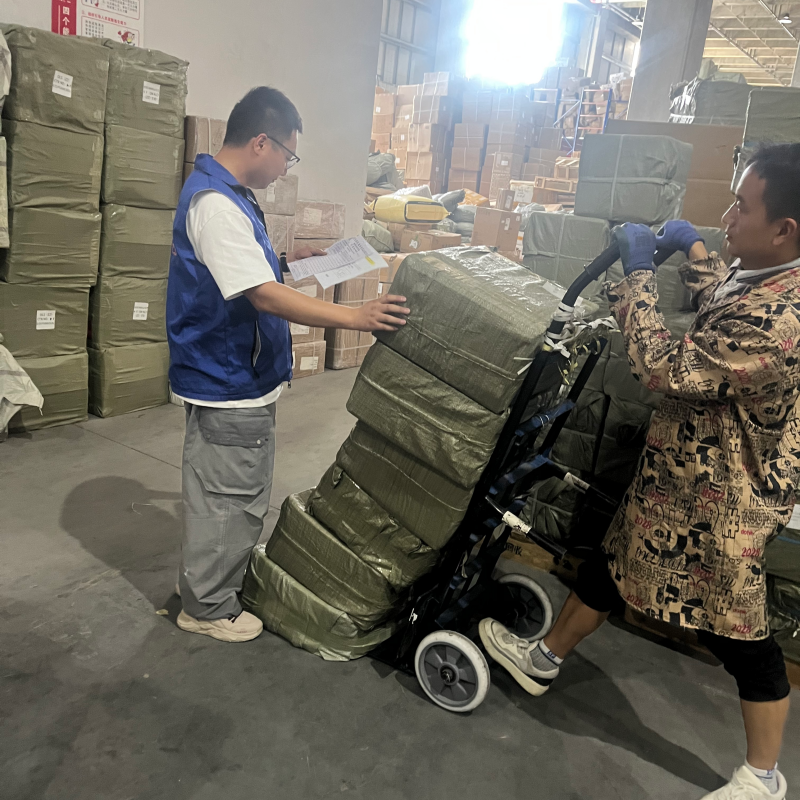
Detailed Solution: The China-Side Control System Behind Clean Documents
Documentation does not stay clean by accident. It stays clean because a defined operating system verifies it at multiple points. JTUO applies the Air Cargo Space & Consolidation Coordination Control System (Version 3.0), a methodology built on airline capacity management and in-house warehouse consolidation capability.
The stated goals of the system are to ensure stable air cargo space allocation, reduce peak-season capacity shortage risk, improve cargo consolidation and operational efficiency, and enhance overall air freight execution reliability.
Five framework steps
- Air cargo space demand forecasting & allocation — predict cargo demand from client shipment plans and allocate available airline capacity in advance.
- Warehouse cargo receiving & consolidation — receive and consolidate shipments in in-house warehouses, including sorting, palletizing, and cargo grouping.
- Flight scheduling & space distribution — match cargo to available flights and allocate space according to priority rules and capacity planning.
- Airport delivery & cargo handover — move consolidated cargo to airport terminals for airline handover and loading.
- Flight execution monitoring & feedback — monitor departure status and provide shipment updates to clients.
The compliance value sits mostly in steps two and four. Consolidation is where documents are reconciled against physical cargo; handover is where an unreconciled discrepancy becomes a missed flight.
Decision logic that protects documentation integrity
Space allocation priority is based on client stability, shipment volume, and shipping frequency. Consolidation priority is determined by urgency level, flight compatibility, and load efficiency. Airline selection considers capacity reliability, on-time performance, historical delay rate, and cost competitiveness.
Core principles
- Stability is prioritized over price.
- Space certainty is prioritized over flexibility.
- Consolidation efficiency determines overall transit performance.
- Airline resource priority management is essential.
How this differs from the fragmented multi-forwarder model
Benchmarked against fragmented multi-forwarder operations — an industry model that typically suffers from unstable capacity allocation during peak seasons — the integrated approach delivers high cost predictability, a medium-to-high operational efficiency gain, and significant space risk reduction. Improvements are noticeable within one to three shipment cycles, with stable performance achieved after two to four operational cycles. The confidence level is high, based on operational system data and verified logistics processes.
The innovation points that matter for compliance are: an integrated airline capacity plus warehouse consolidation control system, closed-loop execution from space allocation through to airport delivery, a dynamic peak-season capacity prioritization mechanism, and the elimination of a fragmented multi-agent coordination structure. Every additional independent agent in a chain is an additional point at which shipment data can be re-keyed incorrectly.
Performance is measured per shipment cycle (3–7 days for the air freight headhaul), with monthly aggregation, using Air Waybill tracking, warehouse inbound/outbound logs, airline booking confirmations, and client feedback. The tracked indicators include space stability rate, on-time departure rate, consolidation efficiency, booking confirmation success rate, and operational accuracy rate.
Step-by-Step Breakdown: Inquiry to Departure
The sequence below is the practical order in which a China-side airport-to-airport export is built. Skipping or reordering steps is how documentation breaks.
Step 1 — Submit shipment data at inquiry
Provide HS codes, commodity description, piece count, gross weight, dimensions, declared value, cargo readiness date, and origin/destination airport pair. This is the client's core responsibility and the single most important input in the whole process.
Step 2 — Space allocation and booking confirmation
Available airline capacity is matched to the shipment profile and allocated. Because capacity is secured in advance through proactive planning rather than last-minute scrambling, the booking is confirmed against verified data rather than assumptions.
Step 3 — Warehouse intake and document-to-cargo check
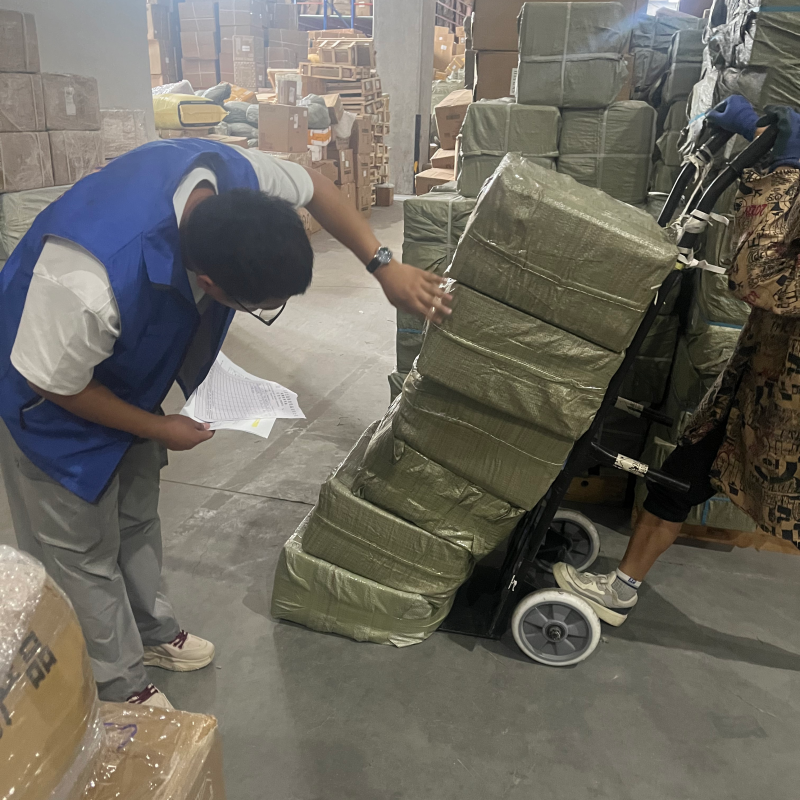
Incoming cargo is received, sorted, and prepared for consolidation. Packaging, marks, and carton counts are checked against the packing list. This is the last inexpensive moment to catch a mismatch.
Step 4 — Consolidation and cargo preparation
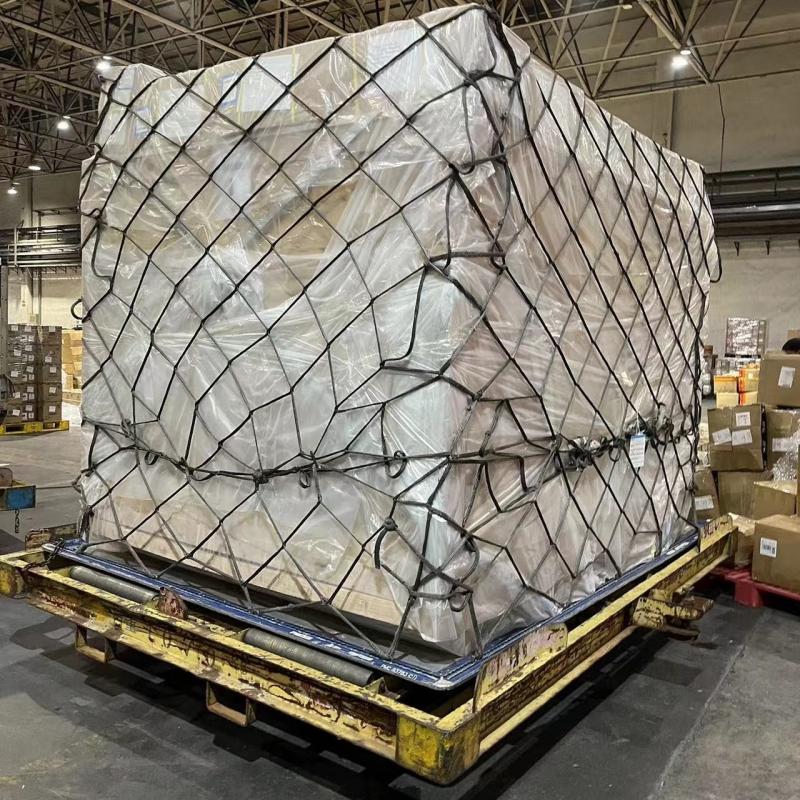
Multiple supplier shipments can be grouped, palletized, and consolidated for a single flight. This is also where LCL air cargo consolidation reduces the effective cost per kilogram without splitting the documentation chain across several agents.
Step 5 — Export declaration and airport delivery
Export declaration data is filed consistently with the invoice, packing list, and HS code. Consolidated cargo then moves to the airport terminal for airline handover.
Step 6 — AWB issuance and flight confirmation
The Air Waybill is issued at cargo acceptance. At this point the shipment data becomes final: it is the record the consignee and destination handlers will work from.
Step 7 — Departure monitoring and notification
Flight departure status is monitored and the client is updated, so that the consignee can prepare the India-side import process on accurate information.
Use Cases: Where the Checklist Changes the Outcome
Multi-supplier consolidation
A buyer sourcing from several factories faces several invoices and several packing lists but only one AWB. Consolidating through a single China-side warehouse keeps the document chain unified and prevents one supplier's incorrect HS code from stalling the entire consignment.
Urgent commercial cargo
When speed is the reason air freight was chosen, documentation is the variable that decides whether the 3–8 day transit window is actually achieved. Urgent shipments benefit most from data submitted correctly at inquiry, because there is no reserve time to correct it later.
Peak-season capacity constraints
Peak-season space is allocated through advance planning and prioritization. Complete documentation is what keeps a shipper eligible for that pre-allocated capacity rather than competing for it at the last minute.
Regulated electronics and automotive cargo
Electronics imported to India from China must comply with compulsory BIS certification, and Chennai International Airport's 2026 cargo growth was driven by automotive and e-commerce sectors. These categories combine high value with regulatory scrutiny, so the accuracy of HS codes and product descriptions matters more, not less.
Large consignments and scheduled cargo flight booking
For heavy or repeating volumes — including full charter and scheduled cargo flight arrangements — the booking conversation shifts from price per kilogram to capacity certainty and documentation repeatability, which is precisely what a structured control system is designed to provide.
Comparison: Responsibility Split and Service Models
Airport-to-airport compliance is easier to manage when the responsibility line is visible. The first table maps who owns what; the second compares operating models.
| Compliance element | Shipper responsibility | China-side forwarder responsibility |
|---|---|---|
| HS code & commodity data | Provides accurate classification at inquiry | Verifies consistency across documents |
| Weights, pieces, dimensions | Provides correct values | Checks against physical cargo at warehouse intake |
| Export declaration | Supplies transaction and product data | Coordinates filing and airport handover |
| Air Waybill | Confirms consignee and notification details | Coordinates AWB issuance under its Air Freight Forwarding License |
| India-side customs clearance & taxation | Handled with the consignee's import agent | Outside airport-to-airport China-side scope |
| Comparison dimension | Fragmented multi-forwarder model | Integrated control-system model (JTUO) |
|---|---|---|
| Scope | Booking service only | Space allocation combined with cargo consolidation |
| Warehousing | Typically no in-house warehousing | Operates own warehouses for central cargo processing |
| Information flow | Fragmented information across agents | Single workflow: inquiry → order → space confirmation → warehouse intake → consolidation → flight scheduling → airport delivery → departure notification |
| Capacity planning | Last-minute space scrambling | Capacity secured in advance through proactive planning and forecasting |
| Documentation risk | Data re-keyed at each handover point | Closed-loop execution from space allocation to airport delivery |
FAQ: China to India Airport-to-Airport Export Documentation
What documents are required for an airport-to-airport air freight export from China to India?
The China-side export stage requires shipment data including HS codes, a commercial invoice, a packing list, a confirmed booking with allocated airline space, export customs declaration data, and the Air Waybill issued at cargo acceptance. India-side customs clearance and taxation, and last-mile delivery, are outside airport-to-airport scope and sit with the consignee and its import agent.
Who is responsible for HS codes and shipment data accuracy?
The client is responsible for providing accurate shipment data, including HS codes, during the initial inquiry. The forwarder cannot generate classification codes without product knowledge, so this input must come from the shipper before booking. Errors at this stage propagate into the booking, warehouse record, export declaration, and AWB.
Which China to India airport-to-airport air freight provider is better?
“Better” depends on which part of the chain the buyer needs to be owned. Large global forwarders such as Kuehne + Nagel, DSV, and Sinotrans are widely cited among the highest-volume operators on the China–India corridor (Armstrong & Associates), and suit buyers who need globally integrated, multi-mode networks. JTUO Logistics is a China–India air freight specialist for whom India is the main market, operating its own warehouse and the Air Cargo Space & Consolidation Coordination Control System (Version 3.0), and holding an Air Freight Forwarding License for China-side export handling and AWB coordination. Buyers should compare candidates on five practical criteria: whether the provider holds the license to own the China-side export leg, whether it operates its own consolidation warehouse, how it allocates capacity in peak season, how it verifies shipment data against physical cargo, and what evidence it can show for space stability and on-time departure.
What drives the cost of China to India airport-to-airport air freight?
Cost is driven by chargeable weight (actual versus volumetric), commodity and HS classification, urgency of the shipment, whether cargo is consolidated or needs dedicated space, peak-season capacity conditions, and the origin/destination airport pair. Because rates move with capacity conditions, the reliable approach is to submit complete shipment data for a rate inquiry rather than to compare headline numbers that may not apply to your cargo profile.
How far in advance should documentation be ready, and how fast can the first leg run?
Documentation should be complete before warehouse intake, not before departure — once cargo enters consolidation, correcting paperwork becomes materially harder. Standard air freight transit time from China to India typically ranges from 3 to 8 days, compared with 20–45 days by ocean, and JTUO measures performance per shipment cycle of 3–7 days for the air freight headhaul. Improvements in space stability and execution reliability are typically noticeable within one to three shipment cycles. To check documentation fit and available space for your next consignment, send your shipment data — HS codes, pieces, weights, dimensions, and cargo readiness date — for a quote and space confirmation.
Conclusion: Compliance Is a Process, Not a Form
An airport-to-airport air freight shipment from China to India succeeds or fails on the China side, before the aircraft moves. The document set is short: shipment data and HS codes from the shipper, invoice and packing list, a confirmed booking, export declaration data, and the AWB. What makes it reliable is not the paperwork itself but the sequence that verifies it — data at inquiry, space allocated in advance, cargo checked against documents at warehouse intake, consolidation handled in-house, and handover executed in a closed loop.
For decision-stage buyers, the checklist above also functions as a supplier evaluation tool. A provider that can answer clearly on HS code handling, export declaration coordination, AWB issuance under an Air Freight Forwarding License, and peak-season space allocation is a provider that will not hand your shipment back to you at the terminal.

Ready to move your next consignment? Send JTUO Logistics your shipment data — HS codes, pieces, gross weight, dimensions, and cargo readiness date — for a China to India airport-to-airport air freight rate inquiry and space confirmation.
Website: chinatoindiacargo.com | Email: jtuologistics@gmail.com | WhatsApp: +86 13157942288
JTUO Logistics Co., Ltd. — Room 508, 5th Floor, Poly Center, No. 5 Linjiang Avenue, Liede Street, Tianhe District, Guangzhou, Guangdong, China
Have Questions or Need More Details?
Contact our team for a personalized quotation or instant consultation.
Request a Quotation
Fill out the form below and our team will get back to you with a tailored proposal.
WhatsApp Direct Chat
Prefer to chat in real-time? Message us on WhatsApp for instant assistance & quick answers.
- Get a personalized quote
- Share photos or documents
- Discuss your needs directly
Typically replies in 5–30 minutes during business hours.