Air Freight for Consumer Electronics: Application Guide for the China-to-India Corridor
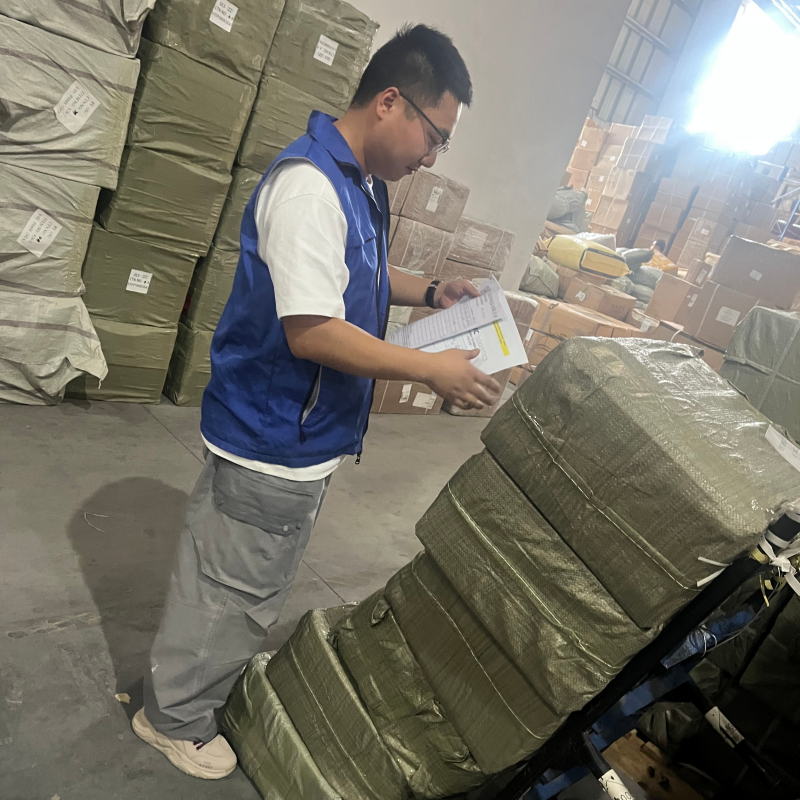
Consumer electronics shipped from China to India by air are best handled through an airport-to-airport model that locks airline space early, consolidates cargo in a China-side warehouse, re-measures every carton at receiving, and follows a documented revision policy when a launch schedule or shipment volume changes. Those four elements — secured space, consolidation, dimensional accuracy, and revision control — are what keep a high-value, light-density cargo both date-safe and cost-predictable.
JTUO Logistics Co., Ltd. (JTUO Logistics) is a China–India air freight specialist providing Airport-to-Airport Air Freight solutions for freight forwarders, manufacturers, wholesalers, and e-commerce businesses. Its China-side scope covers air cargo space booking, warehouse consolidation, cargo preparation, and airport delivery coordination.
This application guide is written for shippers, forwarders, and brand owners who already know the corridor and now need the operational detail: how consumer electronics behave as air cargo, where the cost is actually decided, how the first leg runs stage by stage, and how schedule or volume revisions are handled once a booking is confirmed.
Why Consumer Electronics Need a Different Air Freight Setup
Air freight earns its cost on consumer electronics because the cargo is time-sensitive and high in value. The same cargo also punishes loose planning, because the physical profile of electronics works against the shipper in every chargeable-weight calculation.
- Cartons are larger than the product. Devices, accessories, and chargers ship with foam, inserts, and retail packaging, so a shipment is often light in weight but heavy in volume. On this corridor, air freight charges are based on the greater of the actual weight or the volumetric weight — length × width × height in centimeters divided by 6,000 — which means volume, not scale weight, usually sets the invoice.
- Production is spread across suppliers. Components, accessories, and packaging frequently come from different factories, so one shipment becomes several deliveries, several sets of shipping marks, and several handover points where a mismatch can stall the cargo.
- Launch windows do not move. For a device launch or a seasonal retail push, a missed flight is not a delay — it is a missed selling window.
- Some electronics are sensitive cargo. Battery products, liquids, powders, magnetic items, and brand-sensitive or restricted goods must be declared before consolidation so they can be classified and handled correctly.
- Compliance travels with the product. Electronics imported to India from China must comply with compulsory Bureau of Indian Standards (BIS) certification (DHL India / BIS). The commercial invoice, packing list, sales contract, and customs declaration authorization must match the physical shipment to avoid customs inspection, clearance delays, or shipment rejection.
- Space tightens on a calendar, not a warning. Peak-season air cargo space shortage and unstable air freight capacity allocation are recurring conditions on the China–India lane, which is why pre-booking air cargo space before peak seasons is treated as a standard application scenario rather than a precaution.
Problem definition in one line: consumer electronics on the China–India lane combine high declared value, low physical density, multi-supplier production, sensitive-cargo content, and a fixed launch date — a combination that only a capacity-controlled, consolidation-based air freight model can hold stable.
The Corridor Behind the Application
Corridor scale explains why operational detail matters more here than on a generic lane. Bilateral trade between China and India exceeded USD 155 billion in 2025, with Chinese exports to India surpassing USD 135 billion, driving massive demand for regional air cargo capacity (The Times of India / Chinese Customs). India's air cargo market reached 3.6 million tons in 2025, with an expected CAGR of 11.38% through 2034 (IMARC Group).
Gateway concentration is the second factor. Delhi and Mumbai airports dominate India's international air cargo, together handling approximately 60% of total international volumes as of FY2023 (Ken Research). Chennai International Airport emerged as the leader among major Indian hubs for cargo volume expansion in 2026, driven by automotive and e-commerce sectors (The Hindu Business Line). On the supply side, top global freight forwarders operating in the China–India corridor by volume include Kuehne + Nagel, DSV, and Sinotrans (Armstrong & Associates).
Mode choice frames the application itself. Standard air freight transit time from China to India typically ranges from 3 to 8 days, significantly faster than the 20–45 days required for ocean freight (Logistics Industry Data, 2024). For a product carrying a launch date, that difference is the reason the shipment flies.
The Capability Stack Behind a Consumer Electronics Application
JTUO Logistics operates a China–India Air Freight Space & Cargo Consolidation Integrated Solution that provides stable air cargo space allocation, warehouse consolidation, and airport delivery operations. The solution is designed to address peak-season air cargo space shortage and unstable air freight capacity allocation. It targets cross-border logistics service providers and international freight forwarders, runs on a standardized workflow from client inquiry to arrival notification, and lists pre-booking air cargo space before peak seasons as one of its application scenarios.
Space is managed in two layers. Flexible capacity management covers Block Space Agreement (BSA) and general cargo; fixed space can be reserved in advance for long-term partners; and priority space allocation plans can be arranged for high-volume customers during peak seasons. The service profile lists more than 1,500 air cargo spaces handled per month and support for 500+ freight forwarding partners and logistics clients, through multi-route consolidated air freight operations between China and India.
Consolidation is handled in-house rather than brokered out. JTUO Logistics operates a 2,000 m² warehouse and a 200 m² office in Guangzhou, supported by a core team of over 30 people, including more than 10 at the Guangzhou branch and a warehousing team of over 20. Annual moving volumes are listed at 30,000+ CBM by sea and 5,000+ T by air, with India representing 80% of the business. The company states 15+ years of experience in China–India air shipping logistics and cargo space management. Geographic coverage spans China nationwide export coverage and China–India air freight corridor operations, with service delivered in English and Chinese.
Systems and people back the physical operation. The technology stack includes an online air freight booking system, a flight scheduling and space allocation management platform, real-time cargo space monitoring and dispatch, a warehouse management system (WMS), and cargo consolidation and load optimization tools. Four teams run the work: customer service for client coordination and booking support; space allocation and scheduling for air cargo planning and dispatch; warehouse operations for consolidation and cargo handling; and airport coordination for delivery and export processing support. Key roles include the Air Freight Operations Manager, Logistics Manager, Warehouse Manager, Customer Service Manager, and Space Allocation Coordinator.
The professional skillset applied to electronics cargo covers airline capacity negotiation and procurement, freight booking and allocation management, supply chain coordination and logistics integration, flight scheduling and space optimization, and warehouse consolidation and cargo handling operations.
Step-by-Step: First-Leg Execution for an Electronics Shipment
The China–India air freight first-leg process runs through nine stages, from inquiry to arrival at the destination airport. The sequence below reflects how consumer electronics move through it, including the two stages where electronics shipments most often go wrong: warehouse receiving and cargo consolidation.
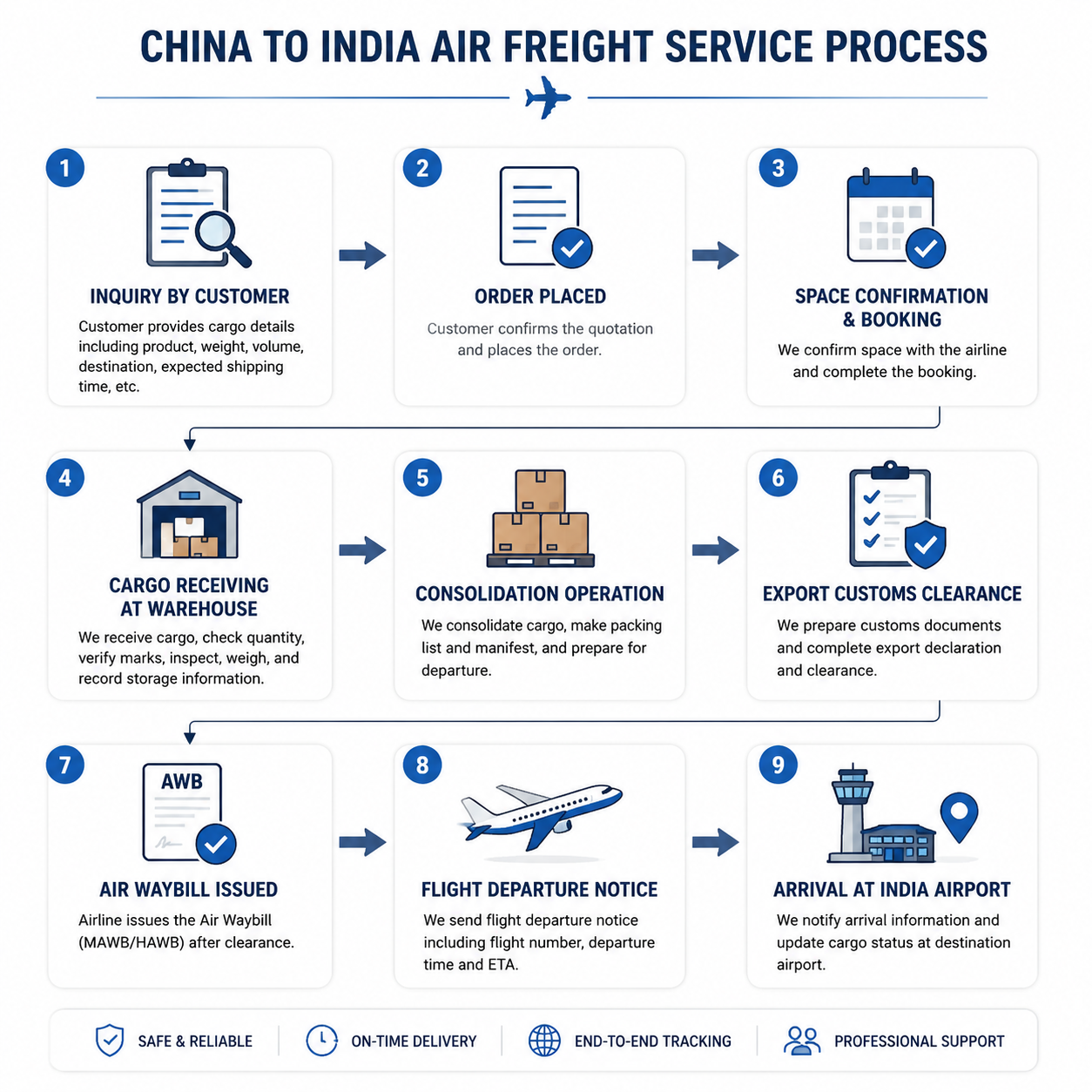
- Inquiry and quotation (approximately 0.5 day). The client supplies complete shipment data: product name and description; cargo type (general or sensitive); number of packages; gross weight and volume; packaging type (carton, wooden case, or pallet); origin airport; destination airport; estimated shipping date; HS code; and a special cargo declaration for battery products, liquids, powders, magnetic items, or brand-sensitive goods. JTUO returns a quotation, available flight options, and estimated transit time.
- Order confirmation (approximately 1 day, subject to customer timing). Pricing is confirmed and the booking order is placed, after which capacity is requested and secured.
- Space allocation and booking (approximately 1 day). Space is requested from and secured with the freight forwarder or airline. Fixed space can be reserved in advance for long-term partners, and priority allocation can be arranged for high-volume customers during peak seasons. Outputs include a space allocation confirmation, the estimated cargo cut-off time, and the warehouse inbound schedule.
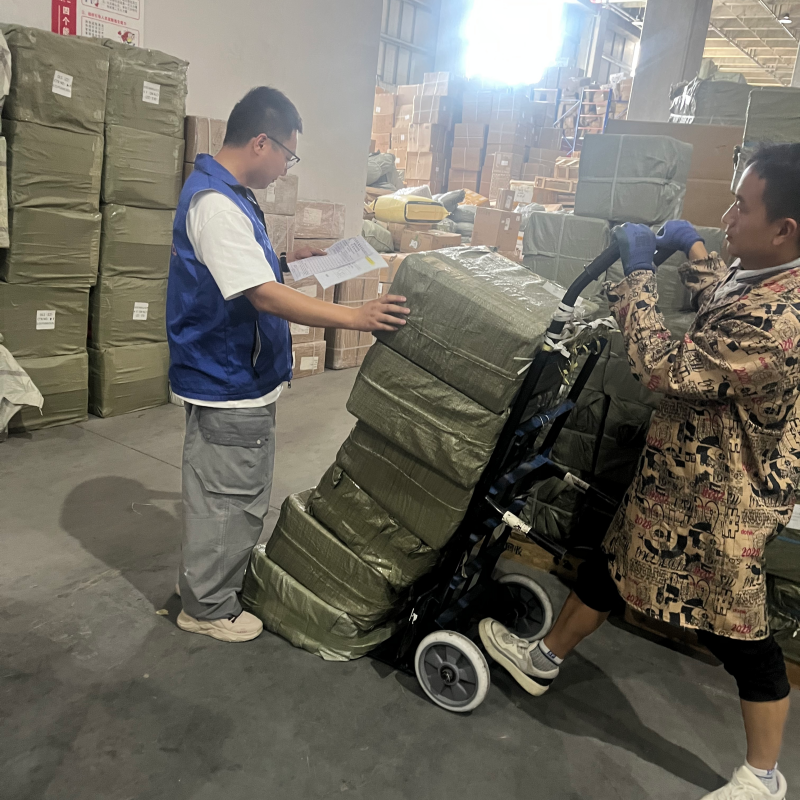
- Warehouse receiving (1–2 days). Goods are delivered to the JTUO warehouse against the scheduled delivery window and verified on arrival. The warehouse accepts full consignments, consolidation from multiple suppliers, e-commerce small parcels, and consolidated loose cargo, and logs each receipt into the system.
- Cargo consolidation. Goods are classified, consolidated, and packed according to their attributes. For cross-border small parcels this means consolidating multiple orders and multiple suppliers, palletizing aggregated parcels, and verifying weight and dimensions. For general air freight cargo it means sorting and organizing, consolidated stacking, large pallet handling, and stretch-wrap reinforcement. Cargo details are verified at this point: product information, number of packages, weight, volume, shipping marks, flight details, HS code, and the presence of special items.
- Airport delivery. Cargo is transported centrally to the airport cargo terminal, with a handover record and airline cargo acceptance notice issued.
- Export customs clearance. Complete customs documentation is prepared and export declaration plus airline release tasks are completed.
- Air waybill issuance and release. The airline issues the Master Air Waybill (MAWB) and confirms cargo release, while JTUO issues the House Air Waybill (HAWB) to the customer, together with a flight departure notice and updated estimated arrival time.
- Arrival at the destination airport. JTUO notifies the client of the arrival time and shipment details, marking completion of the air freight first leg.
Re-Measurement at Receiving: Where Electronics Cost Is Decided
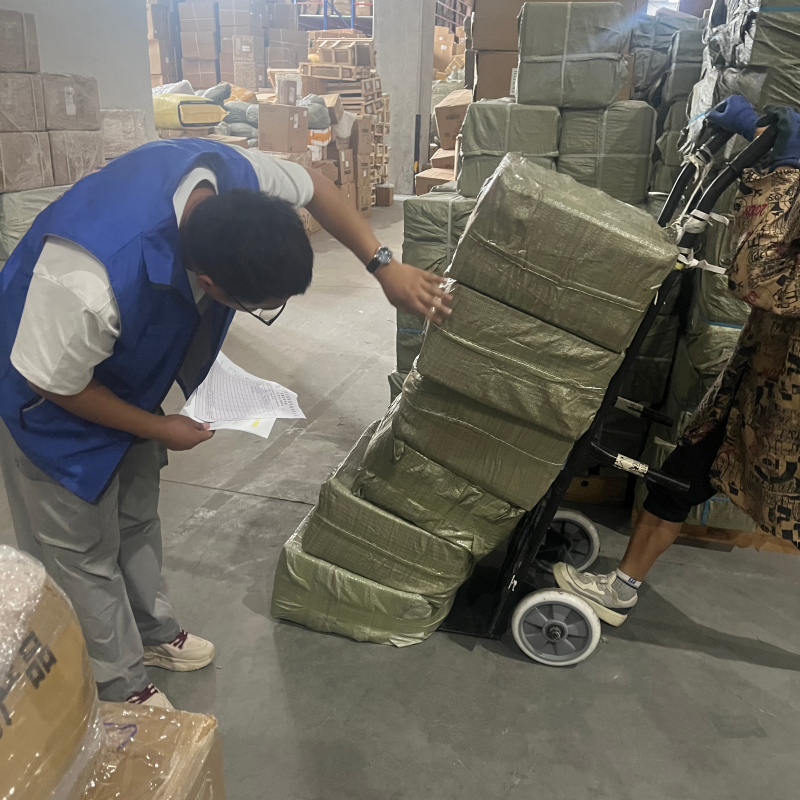
Once goods arrive at the warehouse, the actual weight and dimensions are re-measured. Air freight charges are based on the greater of the actual weight or the volumetric weight, calculated as length cm × width cm × height cm ÷ 6,000 — which is why packing compactly can help save on costs. For electronics, where cartons are mostly air, this is not a formality: supplier-declared volumes often drift from measured volume, and every excess cubic centimeter converts directly into chargeable kilos. Each shipment produces a dimensional weight and actual weight report, a piece count verification report, a shipping mark verification report, and — where discrepancies are detected — an exception report.
The Revision Policy for Schedule and Volume Changes
Consumer electronics programs change quickly: a launch date shifts, a production batch lands short, a promotional volume is revised upward. The revision policy is built for exactly that situation and follows four recorded steps.
- The customer submits a change request covering schedule, volume, or booking.
- The system re-evaluates airline capacity availability.
- An updated plan is provided for confirmation.
- Changes are recorded in the operational system or email log.
Because every change is logged, the revised plan and its commercial effect remain traceable — a practical requirement when a single shipment supports a dated product launch.
Application Scenarios That Fit This Model
1. Multi-supplier device and accessory programs
A brand sources a device, its charger, and its retail packaging from separate factories. Instead of three shipments, each with its own cut-off, the goods are received at the consolidation warehouse, verified against shipping marks, consolidated, and forwarded as one airport-to-airport consignment. Consolidation from multiple suppliers is an explicitly supported receiving type, and the consolidation stage produces a consolidation manifest and packing list.
2. Launch-window replenishment
When a launch date is fixed, the binding constraint is space, not speed. Pre-booking air cargo space before peak seasons is the documented application scenario, and fixed space can be reserved in advance for long-term partners. If the launch volume moves, the four-step revision policy re-checks capacity availability before an updated plan is confirmed.
3. Cross-border e-commerce small parcels
For e-commerce sellers, the warehouse consolidates multiple orders, aggregates parcels from multiple suppliers, palletizes the aggregated volume, and verifies weight and dimensions before airport delivery. This converts a stream of small, individually booked parcels into one measured, palletized air consignment.
4. Battery-containing and sensitive electronics
Battery products, liquids, powders, magnetic items, and brand-sensitive goods require declaration at inquiry and classification before consolidation. Handling them inside a controlled warehouse workflow keeps sensitive cargo separated from the general cargo stream and prevents a late-stage rejection at the airport.
Anonymized case: a mid-size forwarder on the India lane
A medium-to-large freight forwarding company that outsources air freight execution to a specialized capacity and consolidation provider ran into five problems at once: unstable air cargo space during peak seasons, high volatility in air freight pricing, fragmented warehouse operations, multiple-handling delays and shipment risks, and unstable delivery performance. The diagnosis was a fragmented execution chain rather than a single weak link. JTUO deployed an integrated “Capacity Locking + Warehouse Consolidation + Airport Execution” system to rebuild that chain, using its Air Freight Capacity & Consolidation Control System methodology.
The reported qualitative results were improved supply chain stability, more predictable delivery performance, reduced operational workload, and stronger peak-season scalability. The client feedback recorded for the project was: “Space availability became much more stable, even during peak seasons. Much more reliable than using multiple forwarders.” The case is anonymized at the client's request.
Air vs. Ocean: A Fact-Based Comparison for Electronics
| Decision factor | Airport-to-airport air freight (China–India) | Ocean freight (China–India) |
|---|---|---|
| Typical transit time | 3–8 days | 20–45 days |
| Cost driver for light-density electronics | Greater of actual weight or volumetric weight (L × W × H cm ÷ 6,000); compact packing reduces chargeable weight | — |
| Peak-season capacity behavior | Space shortage is a recurring seasonal condition; pre-booking before peak seasons is the standard mitigation | — |
| Indicative rate reference (general cargo above 100 kg) | USD 1.76–4.10/kg, China–Asia, mid-2026 (indicative only; confirm by quotation) | — |
| Compliance for electronics imported to India | BIS certification applies | BIS certification applies |
Transit time reference: Logistics Industry Data, 2024. Rate reference: BSI Global Logistics, mid-2026. Compliance reference: DHL India / BIS. Cells marked “—” are outside the verified data used in this guide. Rates are market indicators, not quotations.
Frequently Asked Questions
1. Do consumer electronics shipped from China to India by air need BIS certification, and how does that affect the air freight process?
Yes. Electronics imported to India from China must comply with compulsory Bureau of Indian Standards (BIS) certification (DHL India / BIS). On the air freight side, the compliance work that sits with the first-leg operator is documentation consistency: the commercial invoice, packing list, sales contract, and customs declaration authorization (Power of Attorney) must be complete and fully consistent with the physical shipment. Inconsistent data can trigger customs inspection, clearance delays, shipment holds, or rejection. Sensitive electronics content — battery products, liquids, powders, magnetic items, and brand-sensitive goods — must also be declared at inquiry so it can be classified before consolidation.
2. What capability should a provider demonstrate for OEM/ODM electronics cargo from China to India?
Airport-to-airport execution for OEM/ODM electronics depends on controllable capacity and in-house handling, not on marketing claims. Concrete capability signals include flexible capacity management covering both Block Space Agreement (BSA) and general cargo; fixed space reserved in advance for long-term partners; priority space allocation during peak seasons; an in-house consolidation warehouse rather than subcontracted handling; and an operating record. JTUO Logistics lists more than 1,500 air cargo spaces handled per month, support for 500+ freight forwarding partners and logistics clients, 15+ years of experience in China–India air shipping logistics and cargo space management, and a documented first-leg workflow from inquiry to arrival notification. The supporting systems are an online air freight booking system, a flight scheduling and space allocation platform, real-time cargo space monitoring, a warehouse management system (WMS), and consolidation and load optimization tools.
3. What determines the air freight cost for consumer electronics on this corridor?
Cost is determined by chargeable weight, not by the weight printed on the supplier's packing list. Air freight charges are based on the greater of the actual weight or the volumetric weight (length cm × width cm × height cm ÷ 6,000), and this is recalculated after the goods are re-measured at warehouse receiving, with a dimensional weight and actual weight report issued for the shipment. Compact packing is therefore a direct cost lever for electronics, which ship in large, low-density cartons. For market context, air freight rates from China to Asia (including India) are estimated at USD 1.76–4.10 per kg for general cargo above 100 kg as of mid-2026 (BSI Global Logistics) — an indicative reference only, since rates move with season and capacity.
4. Can a first shipment be run as a pilot before committing regular volume?
The service model does not define a separate trial product; the standard workflow from inquiry to arrival notification is the same for a first shipment as for a recurring one. What makes a controlled first shipment practical is the receiving scope — the warehouse accepts full consignments, consolidation from multiple suppliers, e-commerce small parcels, and consolidated loose cargo — together with the four-step revision policy, which re-evaluates airline capacity availability whenever schedule, volume, or booking details change. A first consolidated shipment therefore runs on the same measured, documented basis as the volume program that may follow. To start, you can send your cargo details to JTUO Logistics on WhatsApp at +86 13157942288 or by email at jtuologistics@gmail.com and request a quotation with estimated flight options and transit times.
5. What is the transit time from China to India by air, and how far in advance should space be booked?
Standard air freight transit time from China to India typically ranges from 3 to 8 days, compared with 20–45 days for ocean freight (Logistics Industry Data, 2024). On the first leg, the operational timeline runs at approximately 0.5 day for inquiry and quotation, 1 day for order confirmation, 1 day for space allocation and booking, and 1–2 days for warehouse receiving. The booking should be placed ahead of peak season: pre-booking air cargo space before peak seasons is the documented application scenario, fixed space can be reserved in advance for long-term partners, and priority space allocation plans can be arranged for high-volume customers during peak seasons.
What to Do Next
Consumer electronics succeed on the China–India corridor when four things happen in the right order: space is secured before peak demand rather than after it, multi-supplier cargo is consolidated in a China-side warehouse instead of collected at the airport, chargeable weight is measured at receiving rather than accepted from a packing list, and schedule or volume changes move through a logged revision policy instead of a phone call.
JTUO Logistics operates that model as its core business: China–India by air cargo booking service, backed by a 2,000 m² consolidation warehouse in Guangzhou, BSA and general cargo capacity management, and a first-leg workflow with defined deliverables at every stage. Detailed service information is available at chinatoindiacargo.com.
Request a China–India air freight quotation for your electronics shipment
Send product description, cargo type, package count, gross weight and volume, packaging type, origin and destination airports, estimated shipping date, and HS code — and JTUO Logistics will return a quotation, available flight options, and estimated transit time.
WhatsApp: +86 13157942288
Email: jtuologistics@gmail.com
Tel: +86 13157942288
Address: Room 508, 5th Floor, Poly Center, No. 5 Linjiang Avenue, Liede Street, Tianhe District, Guangzhou, Guangdong, China