
China–India Air Freight Booking & Space Allocation System: Key Technical Parameters
China–India Air Freight Booking & Space Allocation System: Key Technical Parameters
JTUO Logistics · China–India Air Freight Corridor · Technical Evaluation Guide
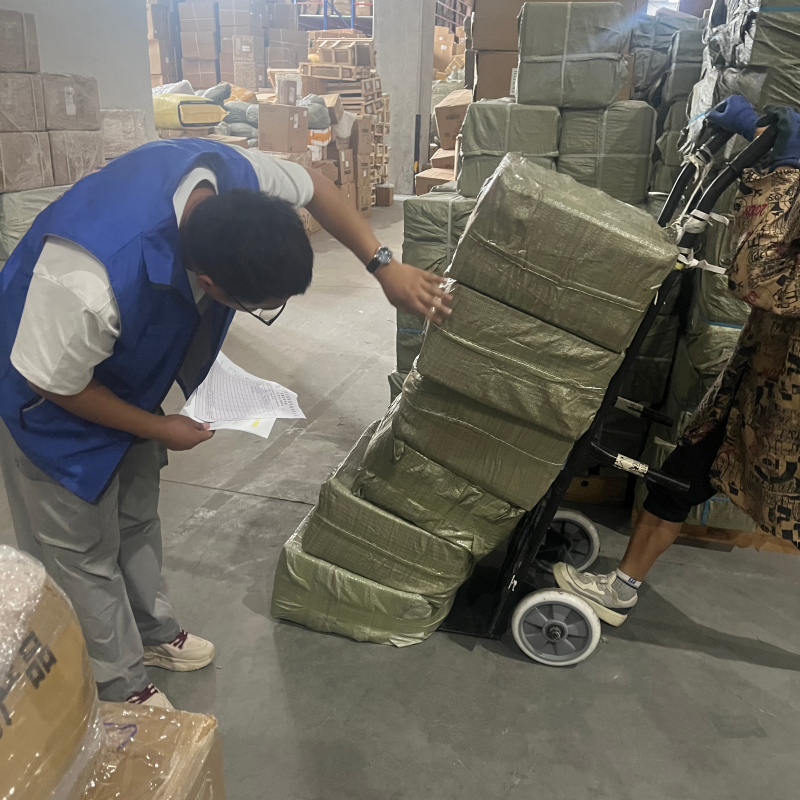
Figure 1 — Origin warehouse consolidation is one of the parameters that decides whether booked China–India air cargo space is actually used.
The parameters that determine whether a China–India air freight booking and space allocation system protects cargo space are specific and testable: real-time space monitoring, allocation logic across block space and general cargo, flight scheduling and reservation control, warehouse management system (WMS) integration, and a documented handover from warehouse to airport. A booking screen answers one question — “is there space?” A booking and allocation system answers a different one: “will my cargo fly on the flight I planned?” On the China to India air freight head haul, those are not the same question.
This guide sets out the technical parameters that freight forwarders, NVOCC operators and India-route logistics partners should evaluate when selecting an air cargo space booking system, and it uses JTUO Logistics’ Air Freight Capacity & Consolidation Control System (Version 3.0), its online air freight booking system, its flight scheduling and allocation platform, and its Guangzhou origin warehouse operations to define what those capabilities look like in practice.
Problem Definition: Why a Booking Screen Is Not a Capacity System
On the China–India air freight corridor, freight forwarders and NVOCC operators face persistent capacity shortages and rate volatility. These conditions manifest as unstable air cargo capacity, frequent peak-season space shortages, and severe freight rate volatility. The root causes are structural rather than commercial: limited air shipping capacity on the China–India trade lane, combined with highly volatile demand cycles.
The operational consequences are consistent across corridor case work. Peak-season booking rejections and cargo offloading risk delay cargo departures, increase customer complaints, and compress forwarder profit margins. Urgency is high because the problem attacks customer retention and operational efficiency at the same time. A diagnosis of a mid-size freight forwarding client that outsourced air freight execution identified the core issue as a lack of stable airline capacity access and consolidated warehouse operations — not a lack of rate quotes.
That distinction explains why so many “booking” tools underperform. Availability is not allocation. Allocation is not consolidation. And consolidation is not execution. A system that stops at the availability query leaves three of the four critical stages unmanaged.
The typical trigger scenario is a large volume shipment that requires guaranteed air cargo space and peak-season capacity booked in advance. In that scenario a forwarder needs a system that can lock space, allocate it against competing shipments, consolidate the cargo physically, and hand it over to the airport with documentation attached. Anything less is a search function.
Industry Background: What the Corridor Data Implies for System Design
Four data points frame the technical requirements of any booking and allocation system built for this lane.
- Trade value and commodity mix. China’s exports to India reached approximately USD 120.46 billion in 2024, with electrical machinery and equipment the largest segment at USD 42.66 billion (The Dollar Business). Electrical machinery and electronics are time-sensitive, air-eligible commodities, which is why schedule reliability is worth more on this lane than a marginal rate difference.
- Market growth. The India air cargo market was valued at 3.6 million tons in 2025 and is projected to reach 9.9 million tons by 2034, an 11.38% CAGR (IMARC Group). Volume growth concentrates pressure on airport capacity and on the systems that allocate it.
- Regional momentum. Asia-Pacific airlines led international air cargo growth with an 8.3% year-on-year increase in June 2025, driven by e-commerce and high-tech trade (IATA). E-commerce traffic is highly seasonal, which raises the value of peak-season allocation rules.
- Regulatory constraint on capacity sourcing. China’s CAAC regulation AC-129-FS-001R2 limits foreign carriers that do not hold a CCAR-129 certificate to 10 cargo charter flights within a 12-month period. Ad-hoc charter capacity is therefore structurally limited on this corridor.
Two further reference points are useful when sizing the problem. On the route level, the direct Ezhou (China)–Bangalore (India) air cargo route provides an annual transport capacity of over 5,000 tons via SF Airlines. On the pricing level, air freight rates for China to Asia routes were reported as relatively stable at USD 1.76–4.10 per kg for shipments above 100 kg as of April 2026 (Global Cost Guide 2026) — a regional reference point rather than a firm quotation for any individual booking.
The design implication is straightforward. When capacity has to be contracted, allocated and protected rather than simply queried, a booking system becomes a capacity management system. That is the shift this article addresses.
The Solution Layer: JTUO’s Air Freight Capacity & Consolidation Control System (Version 3.0)
JTUO Logistics Co., Ltd. is a China–India air freight specialist founded in May 2025 and headquartered in Guangzhou, China, providing airport-to-airport air freight services for freight forwarders, manufacturers, wholesalers and e-commerce businesses. Its core business is China–India air cargo booking, supported by airline capacity sourcing, warehouse consolidation, cargo preparation and airport delivery coordination. India accounts for 80% of its business share, and its annual air volume exceeds 5,000 tons.
The operating base matters to the technical discussion. JTUO runs a 200 m² office and a 2,000 m² origin warehouse, with a core team of over 30 people, including more than 10 at the Guangzhou branch and a warehousing team of over 20. The company reports handling over 1,500 air cargo spaces per month, supporting 500+ freight forwarding partners, and draws on 15+ years of experience in China–India air shipping logistics and cargo space management.

Figure 2 — Space allocation, scheduling, warehouse operations and airport coordination are four separate functions that the system has to connect.
The system that connects these functions is JTUO’s Air Freight Capacity & Consolidation Control System (Version 3.0), the same methodology used in its China–India Air Freight Capacity & Consolidation Integration Project. Its technical parameters can be read as five layers.
Parameter 1 — Real-Time Cargo Space Monitoring and Dispatch
A real-time cargo space monitoring and dispatch system is the visibility layer. It tracks capacity status and dispatch status so that booking decisions are made against current conditions rather than against a static schedule. Without this layer, a forwarder learns about a space problem after the cargo has already been delivered to the warehouse. With it, the allocation decision and the warehouse intake decision can be sequenced correctly.
Parameter 2 — Allocation Logic: BSA Capacity Versus General Cargo
The allocation layer is where most systems are weakest. JTUO’s service model combines block space agreement (BSA) capacity with general cargo space allocation, and it supports flexible capacity management across both. The practical parameter to test is whether the provider can reserve fixed flight space under a contracted model while still absorbing volume that falls outside the block. A system that handles only one of the two will either strand contracted capacity or fail on overflow.
Parameter 3 — Flight Scheduling and Fixed Space Reservation
Flight scheduling and space allocation management is the third parameter. It covers fixed flight space reservation and capacity scheduling, plus peak-season priority space allocation. Because China–India capacity is limited and demand is cyclical, the scheduling layer determines whether a forwarder’s committed space survives a demand spike or is quietly reallocated.
Parameter 4 — WMS and Warehouse Consolidation Integration
The warehouse layer is what separates an air cargo space provider from a booking interface. JTUO operates a Warehouse Inventory Management System (WMS) alongside a cargo consolidation and load optimization system, supporting warehouse consolidation and cargo grouping before departure. In practice this means cargo from multiple suppliers can be received, sorted, palletized and consolidated into a single departure flow rather than handled as separate shipments.
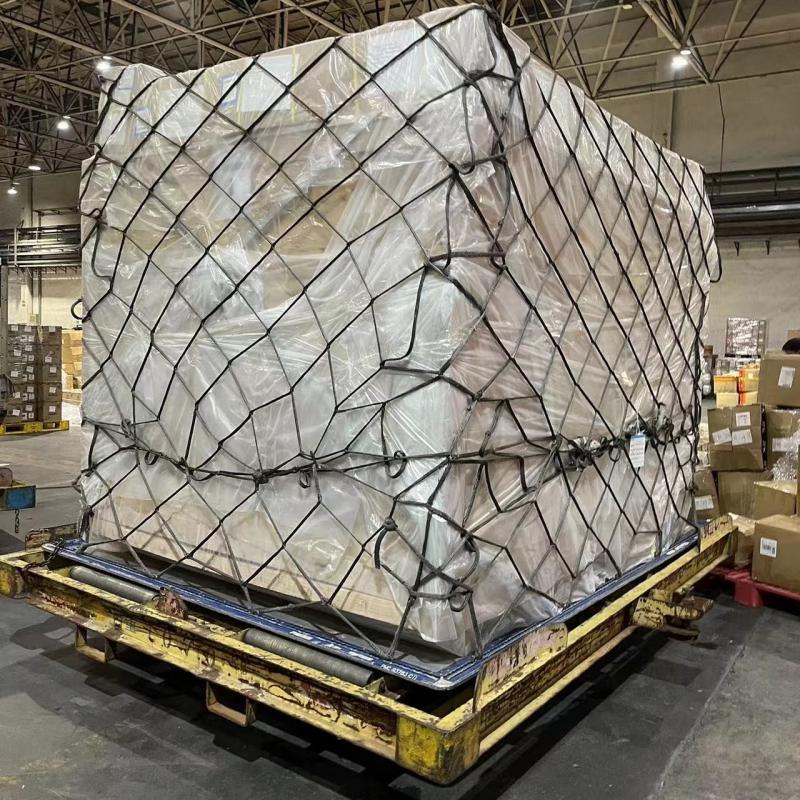
Figure 3 — Cargo consolidation before departure is a physical process governed by the system’s load optimization and WMS parameters.
Parameter 5 — Documented Outputs and Airport Handover
The final parameter is documentation. The system should produce a space confirmation document, flight schedule and air waybill (AWB) details, block space agreement records for contracted capacity models, a cargo consolidation and warehouse handling report, and booking and allocation confirmation records. These outputs are what make a booking auditable and what allow a forwarder to promise a departure to its own customer with confidence.
Two supporting assets complete the picture: a proprietary Air Cargo Space Allocation System and a Consolidation & Dispatch Optimization Model. Both sit on top of the same warehouse and airline capacity inputs, which is why the capacity sourcing and consolidation capabilities are described as a dual capability rather than two separate services.
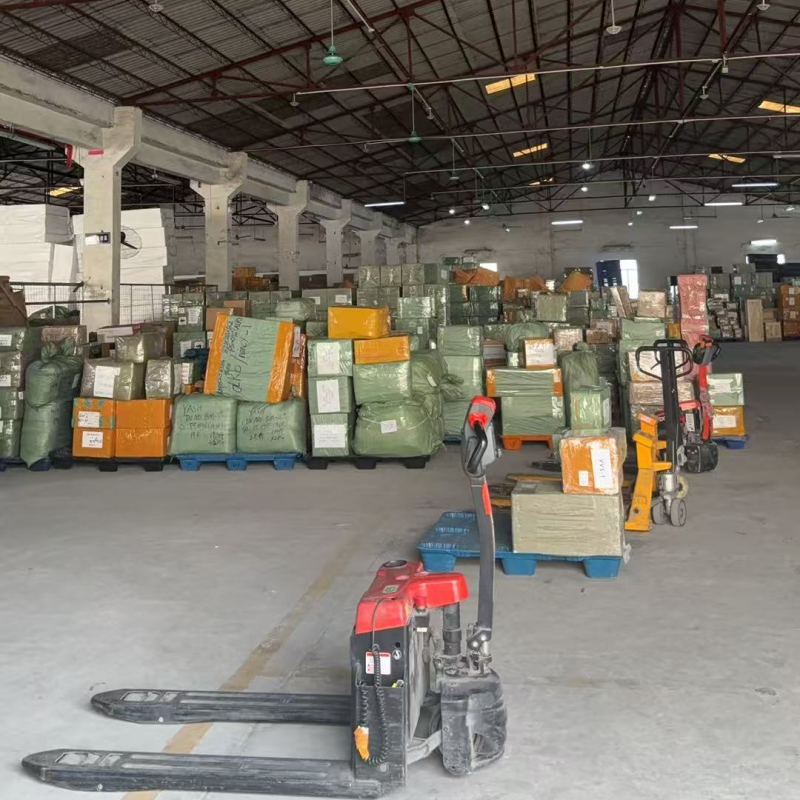
Figure 4 — Warehouse receiving, grouping and airport delivery are executed by dedicated operations, allocation and airport coordination teams.
Step-by-Step Breakdown: How to Evaluate the System, and How It Executes
Part A — Six evaluation steps for buyers
- Map your booking profile. Separate your annual volume into contracted (BSA or blocked space) demand and spot demand. Systems are selected on how they handle the larger of the two, plus how they handle overflow during peak windows.
- Verify real-time monitoring, not scheduled reporting. Ask how cargo space status and dispatch status are tracked, and whether the view reflects the allocation layer or only the airline timetable.
- Test the allocation rules. Confirm whether the provider can reserve fixed flight space and still allocate general cargo capacity, and ask how peak-season priority space is decided when demand exceeds booked capacity.
- Inspect the WMS and consolidation integration. A booking system that is not connected to the origin warehouse cannot guarantee that the cargo is ready for the flight it is booked on.
- Audit the documentation outputs. Space confirmation notice, consolidation manifest, MAWB/HAWB, and departure and arrival reports should be standard deliverables, not exceptions.
- Confirm the scope boundary. Understand what the service does not cover — for example, JTUO’s service scope does not include customs clearance within India or last-mile delivery to warehouse or door. Scope clarity prevents false assumptions about the end-to-end chain.
Part B — The execution workflow the system runs
Once a system is selected, the operational sequence is what the parameters actually control. In JTUO’s integration project, the workflow runs as follows:
- Customer inquiry
- Order placement
- Space confirmation and booking
- Cargo receipt and warehousing
- Cargo consolidation
- Export customs declaration
- Bill of lading issuance
- Flight departure notification
- Arrival at the Indian airport
The deliverables attached to this sequence are a space confirmation notice, a warehouse receipt, a consolidation manifest, air waybill documentation (MAWB/HAWB), and flight departure and arrival reports. Each of these is a checkpoint at which a booking-only system would lose control of the shipment.
Part C — Team structure as a technical prerequisite
Systems do not answer the phone during a peak-season overflow. JTUO’s structure separates the workflow into a customer service team, a space allocation and scheduling team, a warehouse operations team and an airport coordination team, supported by roles including air freight operations manager, logistics manager, warehouse manager, customer service manager and space allocation coordinator. When evaluating any provider’s booking system, the mapping between system function and accountable team is itself a parameter.
Use Cases: Where the Parameters Change the Outcome
The evaluation criteria only matter in scenarios that stress them. Three scenarios are typical on this corridor.
- Mid-size forwarder facing peak-season booking rejections. A cross-border logistics and freight forwarding client faced unstable air cargo space during peak seasons, high price volatility, fragmented warehouse operations, multiple-handling delays and unstable delivery performance. An integrated model combining capacity locking, warehouse consolidation and airport execution was deployed, using the Air Freight Capacity & Consolidation Control System (Version 3.0). Reported qualitative results included improved supply chain stability, more predictable delivery performance, reduced operational workload and stronger peak-season scalability. Client feedback: “Space availability became much more stable, even during peak seasons. Much more reliable than using multiple forwarders.”
- Multi-supplier consolidation. Importers and e-commerce operators sourcing from several Chinese suppliers need cargo grouped before departure. Consolidation and load optimization turn several partial shipments into one controllable departure flow, with a single consolidation manifest replacing multiple handoffs.
- Large volume advance booking. When shipment volume is large and the departure window is fixed, capacity must be booked in advance and protected against reallocation. This is the scenario where fixed flight space reservation and peak-season priority allocation carry the most commercial weight.
Comparison Table: Booking Models Side by Side
The table below compares booking models rather than named companies. The limitations listed for direct airline booking and Tier-1 forwarder services reflect the structural characteristics documented in JTUO’s own solution analysis of existing options on this corridor.
| Technical parameter | Direct airline booking | Tier-1 forwarder service | Integrated capacity & consolidation model (JTUO) |
|---|---|---|---|
| Capacity allocation stability | Structural limitation noted as unstable capacity allocation | Structural limitation noted as unstable capacity allocation | Stable airline space allocation through long-term partnerships with airline resource holders, combining BSA and general cargo |
| Rate movement | Frequent rate fluctuations | Frequent rate fluctuations | Freight rate coordination and booking assistance within contracted capacity models |
| Warehouse-to-airport control | Not part of the model | Structural limitation noted as lack of integrated warehouse-to-airport control | In-house 2,000 m² origin warehouse, consolidation and airport delivery operations |
| Consolidation before departure | Not part of the model | Varies by provider | Warehouse consolidation and cargo grouping before departure, with load optimization |
| Peak-season priority | Not guaranteed | Not guaranteed | Peak-season priority space allocation under the capacity scheduling model |
| System visibility | Availability view only | Varies by provider | Online booking system, flight scheduling and allocation platform, real-time cargo space monitoring and dispatch |
| Documentation outputs | AWB issued by carrier | AWB issued via forwarder | Space confirmation notice, warehouse receipt, consolidation manifest, MAWB/HAWB, departure and arrival reports |
| Communication layers | Multiple intermediaries | Multiple intermediaries | Reduced communication layers through direct access to allocated capacity |
For market context, publicly reported information indicates that BSI Global Logistics operates direct airline contracts with SF Airlines, Sichuan Airlines and IndiGo covering major hubs including Delhi and Mumbai. Direct carrier contracts are one legitimate route to capacity on this lane; the question for a buyer is whether a single contract route also delivers consolidation, WMS integration and airport handover control.
FAQ: China–India Air Freight Booking and Space Allocation
1. What regulatory constraints affect capacity booking on the China–India air freight corridor?
China’s CAAC regulation AC-129-FS-001R2 limits foreign carriers that do not hold a CCAR-129 certificate to 10 cargo charter flights within a 12-month period. Ad-hoc charter capacity on the corridor is therefore structurally limited, and contracted or scheduled capacity carries a larger share of the uplift. Buyers should confirm which capacity models a provider actually contracts, and should also confirm scope boundaries — for example, JTUO’s service does not cover customs clearance within India or last-mile delivery to warehouse or door.
2. Which technical capabilities should a China–India air cargo space booking system include?
A complete system includes five layers: an online air freight booking system for intake and confirmation; a flight scheduling and space allocation management platform for fixed space reservation and capacity scheduling; a real-time cargo space monitoring and dispatch system for visibility; a warehouse inventory management system (WMS) for cargo receipt and inventory control; and a cargo consolidation and load optimization system for grouping and palletizing before departure. JTUO’s Air Freight Capacity & Consolidation Control System (Version 3.0) operates across all five layers.
3. How do China to India air freight providers handle direct airline booking?
Direct airline booking is one route to capacity, and it exists in the market in several forms — some providers hold direct carrier contracts, while others source capacity through airline resource holders. JTUO sources capacity through long-term partnerships with airline resource holders and allocates it under block space agreement (BSA) and general cargo allocation, issuing air waybill documentation (MAWB/HAWB) at the appropriate stage of the workflow. Direct booking alone does not resolve consolidation or warehouse-to-airport control: JTUO’s solution analysis notes that existing options such as direct airline booking and Tier-1 forwarder services commonly show unstable capacity allocation, frequent rate fluctuations and a lack of integrated warehouse-to-airport control.
4. How should budget planning account for rate volatility on China–India air freight?
Rate volatility on this corridor is a structural condition rather than an exception, driven by limited lane capacity and volatile demand cycles. As a regional reference, air freight rates for China to Asia routes were reported at USD 1.76–4.10 per kg for shipments above 100 kg as of April 2026 (Global Cost Guide 2026); this is a broad regional indicator and not a quotation for any specific China–India booking. Contracted capacity models, combined with freight rate coordination and booking assistance, give a forwarder a more stable planning basis than repeated spot purchasing.
5. What lead time and transit time should forwarders plan for?
Typical China–India air shipping transit time is 3–7 days, depending on warehouse intake timing, flight availability and the cargo consolidation schedule. The service cycle starts at warehouse receipt, so the practical planning sequence is: confirm space, deliver cargo to the consolidation warehouse, allow time for grouping and export declaration, then track departure and arrival. For large volume shipments that need guaranteed space, capacity should be booked in advance of the peak window. To check space availability for a specific lane, airport pair and departure window, contact JTUO Logistics for a space confirmation and quotation at chinatoindiacargo.com.
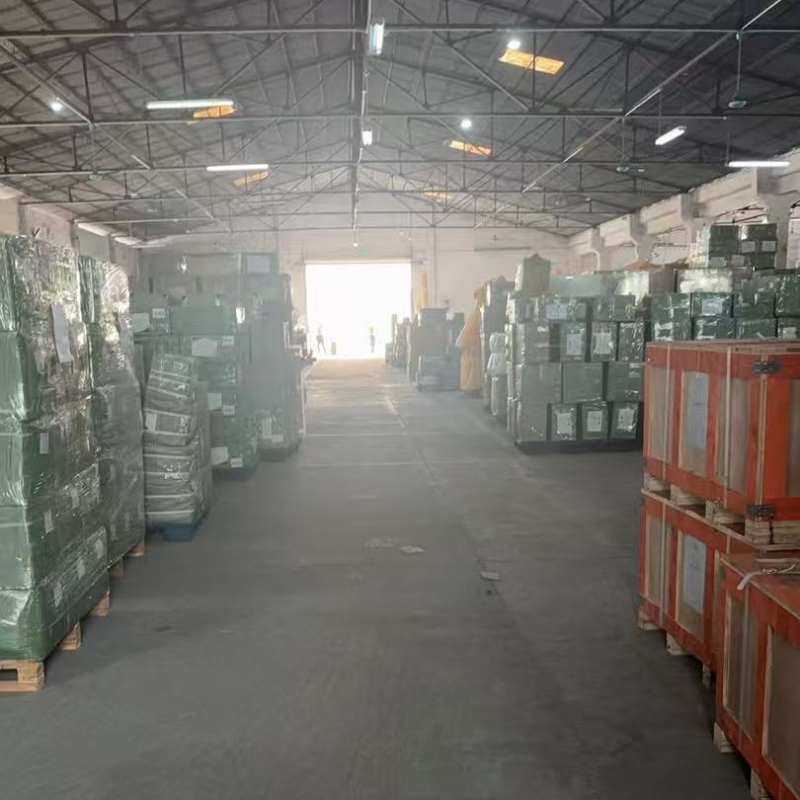
Figure 5 — Space confirmation, consolidation and airport handover can be requested as a single capacity workflow.
Conclusion: Selecting a System by Its Parameters, Not Its Interface
The China to India air freight head haul space market rewards providers that can prove five things: they can see capacity in real time, allocate it across contracted and general models, schedule it against fixed flights, consolidate it in their own warehouse, and document the handover to the airport. Interfaces are easy to demonstrate; parameters are not.
For forwarders and logistics partners in the Research and Evaluation stage, the practical next step is to map your own booking profile — contracted versus spot, peak-window volume, multi-supplier consolidation needs — and then test each candidate system against the five parameters in this guide. JTUO Logistics’ Air Freight Capacity & Consolidation Control System (Version 3.0) was built around exactly that sequence, from online booking and space allocation through warehouse consolidation and airport delivery on the China–India corridor.
Request a Space Confirmation or Capacity Review
JTUO Logistics Co., Ltd. is a China–India air freight specialist founded in May 2025, based in Guangzhou, China, providing airport-to-airport air cargo booking, space allocation, warehouse consolidation and airport delivery coordination.
Website: chinatoindiacargo.com
Email: jtuologistics@gmail.com
Tel / WhatsApp: +86 13157942288 | Start a WhatsApp conversation
Address: Room 508, 5th Floor, Poly Center, No. 5 Linjiang Avenue, Liede Street, Tianhe District, Guangzhou, Guangdong, China
Send your lane, airport pair, commodity and target departure window, and our space allocation team will confirm available capacity and next steps.