
China to India Air Freight: Airport-to-Airport vs. Sea-Air – A Buyer's Comparison Guide
China to India Air Freight: Airport-to-Airport vs. Sea-Air – A Buyer's Comparison Guide
For shippers moving commercial cargo between China and India, the first question is rarely which airline to use. It is whether to send goods by pure air freight or by a sea-air hybrid model. This guide compares China to India airport-to-airport air freight against sea-air routing, with a focus on transit time, cost, capacity reliability, and partial-load consolidation. A practical comparison table and a buyer's decision framework are included.
Why China–India shippers compare air freight and sea-air options
China–India trade remains one of Asia's busiest corridors. Bilateral trade between China and India exceeded USD 155 billion in 2025, with Chinese exports to India surpassing USD 135 billion, according to The Times of India / Chinese Customs. This volume creates continuous demand for freight solutions that balance speed and cost.
India's air cargo market reached 3.6 million tons in 2025, with a projected CAGR of 11.38% through 2034, according to IMARC Group. Delhi and Mumbai airports handle roughly 60% of India's international air cargo volumes, based on FY2023 data from Ken Research; Chennai International Airport has also emerged as a cargo growth leader in 2026, driven by automotive and e-commerce sectors, according to The Hindu Business Line. For a shipper, that means airport choice matters, and the mode choice matters even more.
Air freight is typically selected when speed and supply-chain predictability outweigh cost. Sea-air is considered when cargo is less urgent but still too time-sensitive for a full ocean voyage. Both approaches are commercially mature on the China–India lane.
Definitions: Airport-to-airport air freight and sea-air freight on the China–India lane
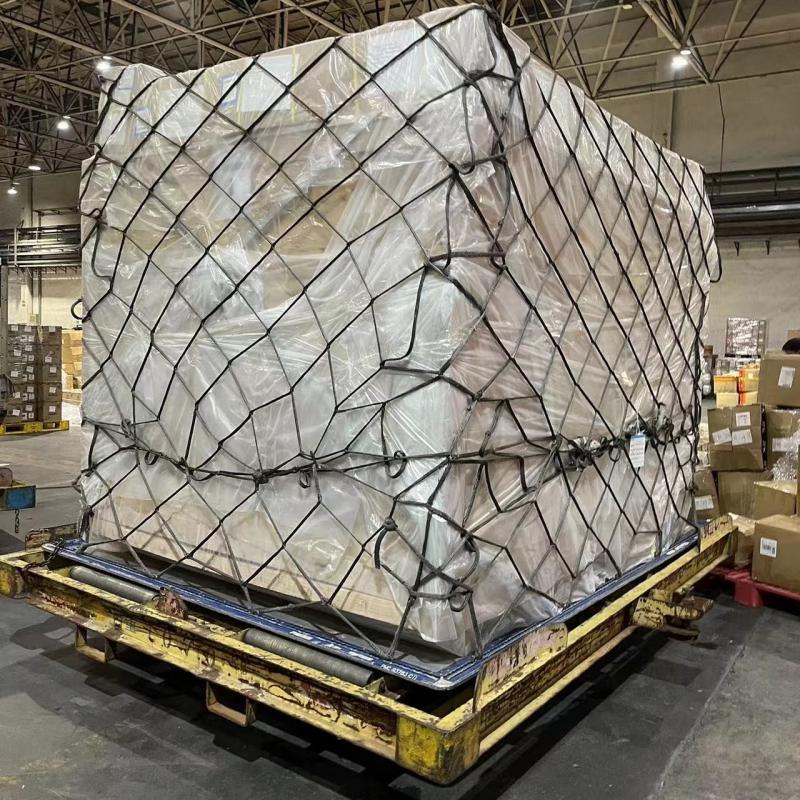
China to India airport-to-airport air freight is a service in which the freight forwarder manages cargo from the origin airport in China to the destination airport in India. The exporter or buyer arranges pickup and delivery on each end, and the forwarder controls space booking, export processing, and flight coordination.
Sea-air freight combines an ocean leg with an air leg. Cargo is shipped by sea from a Chinese port to a transshipment hub—commonly in Southeast Asia or the Middle East—then flown to India. Sea-air is widely used for goods that miss an air cutoff or that would cost too much to send entirely by air.
JTUO Logistics Co., Ltd. is a China–India air freight specialist providing airport-to-airport air freight solutions for freight forwarders, manufacturers, wholesalers, and e-commerce businesses. The company reports annual movement of 30,000+ CBM by sea and 5,000+ tons by air, which gives its team operating visibility into both sea and air execution on the same corridor.
Situation analysis: How transit time and cost differ
The most important difference is transit time versus cost.
Standard air freight transit time from China to India typically ranges from 3 to 8 days, according to logistics industry data, compared with roughly 20–45 days for ocean freight. Sea-air sits between the two, with typical door-to-door or airport-to-airport timelines landing around 8–18 days depending on the hub, feeder connection, and waiting time for the next flight.
In pure air freight, the price is higher but the logistics chain is more direct. In sea-air, ocean leg rates are lower, but the shipper accepts longer transit and additional handling at the transshipment hub.
The table below summarises the trade-off for typical commercial shipments on the China–India corridor.
Comparison: China to India airport-to-airport air freight vs. sea-air
| Decision factor | Airport-to-airport air freight | Sea-air hybrid |
|---|---|---|
| Typical China–India transit time | 3–8 days (standard industry estimate) | Generally longer than air; ocean leg adds days before the air leg |
| Cost profile | Higher per kg; freight rates for general cargo >100kg from China to Asia are estimated at USD 1.76–4.10/kg as of mid-2026 | Lower than pure air; combines ocean freight cost with a regional air leg |
| Capacity reliability | Depends on airline space allocation and booking confirmation | Depends on ocean space plus onward air space from the hub |
| Risk of delay | Lower; direct flight or single air corridor | Higher; multiple handoffs and hub schedule risk |
| Best suited for | Urgent, high-value, time-sensitive, or commercially critical cargo | Mid-urgency cargo that can tolerate a week or more of additional transit |
| Partial loads / consolidation | Frequent consolidation at origin warehouse to build full ULDs; shipment cycle typically 3–7 days | Possible, but consolidation complexity increases |
Rate figures are market estimates for China–Asia general cargo (>100kg) as of mid-2026 and should be used only as a planning reference. Actual China–India airport-to-airport rates depend on weight break, airline, season, and space availability.
Capacity reliability: why it may matter more than speed
For many freight forwarders and importers on the China–India lane, the real risk is not speed but space. During peak seasons, airline capacity becomes tight and booking rejections increase.
A documented example is a medium-to-large freight forwarding company in China that outsourced air freight execution to JTUO Logistics. The client experienced unstable air cargo space during peak seasons, high volatility in air freight pricing, fragmented warehouse operations, multiple-handling delays, and unstable delivery performance. JTUO applied an integrated “Capacity Locking + Warehouse Consolidation + Airport Execution” air freight system, supported by the Air Freight Capacity & Consolidation Control System (Version 3.0). The project is ongoing, with a 3–7 day per shipment cycle.
Measured service indicators include Space Stability Rate, On-time Departure Rate, Consolidation Efficiency, Booking Confirmation Success Rate, and Operational Accuracy Rate. Space Stability Rate measures the percentage of successful air cargo space allocation under normal and peak-season conditions.
The client's qualitative results included improved supply chain stability, more predictable delivery performance, reduced operational workload, and stronger peak season scalability. In the client's words: “Space availability became much more stable, even during peak seasons. Much more reliable than using multiple forwarders.”
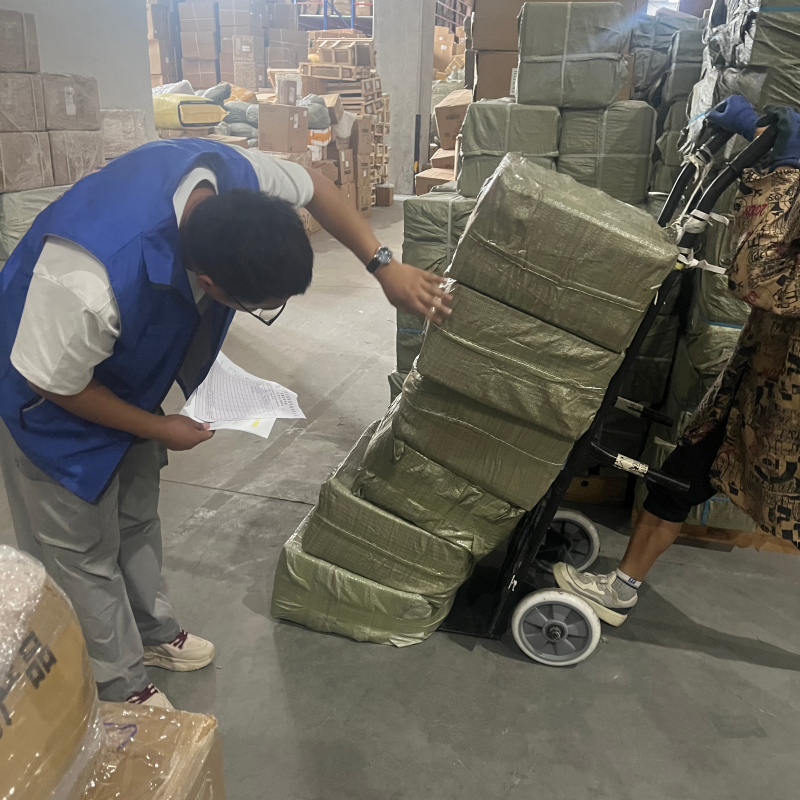
What this means for a buyer: when comparing airport-to-airport air freight with sea-air, verify whether the provider can confirm space before you commit. Sea-air involves two capacity markets—ocean and air—so a delay in either leg changes the delivery window. Airport-to-airport air freight remains the more manageable option when the shipment must arrive on a known date.
Consolidation and partial loads for airport-to-airport air freight
Few China–India air freight buyers fill an entire aircraft. Most commercial cargo moves as partial loads consolidated with other shippers' freight.
Air freight consolidation starts with an in-house warehouse. For airport-to-airport service from China, the forwarder receives cargo from multiple suppliers, sorts and palletizes it, builds consolidated units, and delivers them to the origin airport. At the destination airport, the import forwarder or consignee takes charge of import clearance and final delivery.
JTUO Logistics operates a 2,000 m² warehouse in Guangzhou and a core team of more than 30 people, including warehouse operations staff. Service capabilities include air cargo space booking and allocation, flexible capacity management for Block Space Agreement (BSA) and general cargo, peak season space guarantee, and in-house warehouse consolidation.
For freight forwarders outsourcing the China-side first leg, consolidation reduces the need to coordinate with multiple warehouses. The process follows a defined execution chain: Customer Inquiry → Order Placement → Space Confirmation & Booking → Cargo Receipt & Warehousing → Cargo Consolidation → Export Customs Declaration → Bill of Lading Issuance → Flight Departure Notification → Arrival at Indian Airport.
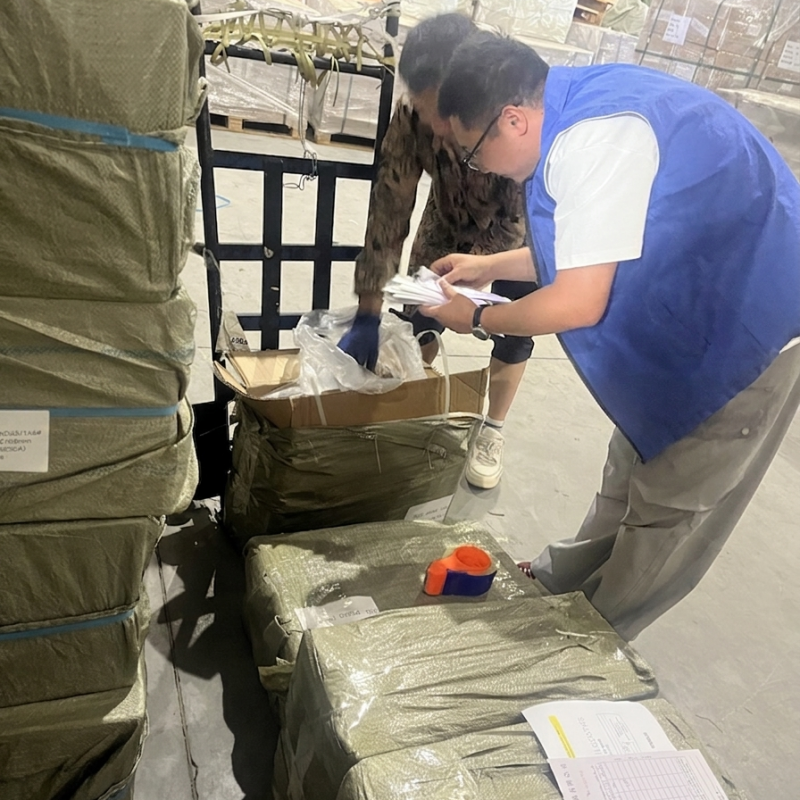
Common supporting documents in this model include a Space Confirmation Notice, Warehouse Receipt, Consolidation Manifest, Air Waybill (MAWB/HAWB), and Flight Departure & Arrival Reports. These documents are also evidence sources for shipment execution and service review.
Step-by-step decision framework: choosing airport-to-airport air freight or sea-air
The following five-step framework helps procurement teams evaluate mode choice on the China–India lane without over-relying on a single cost line.
Step 1: Fix the required delivery window
Ask: When does the buyer actually need the cargo in India? If the required arrival date is within one week, airport-to-airport air freight is the practical option. If the arrival window is two or more weeks, sea-air may be viable.
Step 2: Calculate total landed cost, not just freight rate
Real cost includes consolidation, export handling, airport charges, and the commercial cost of delayed inventory. Air freight from China to Asia for general cargo (>100kg) is estimated at USD 1.76–4.10 per kg as of mid-2026, but the rate is only one part of total cost. Sea-air may look cheaper on paper but adds hub handling and possible waiting costs.
Step 3: Assess capacity and booking risk in your time window
During peak season, confirmed air space is more valuable than a cheap sea-air connection. Ask whether the provider controls allocation directly, whether it operates under BSA, and whether it can issue a Space Confirmation Notice quickly.
Step 4: Check cargo type, value, and density
High-value electronics, time-sensitive spare parts, and samples are better suited to direct airport-to-airport air freight. Lower-value, bulkier goods with flexible delivery dates can tolerate sea-air.
Step 5: Decide on the basis of one provider's accountability
A fragmented arrangement—one vendor for ocean, another for air—can create delay disputes. An integrated provider that manages both the sea leg and the air leg, or an air specialist that manages airport-to-airport execution, provides a single point of operational accountability.
Use cases: which mode fits which shipment
Use case 1: Urgent commercial cargo to Delhi or Mumbai
A brand owner needs finished electronics in Delhi within one week for a product launch. Airport-to-airport air freight from Shenzhen, Guangzhou, Shanghai, or Hong Kong to Delhi or Mumbai is the standard solution. The forwarder locks space, consolidates in its warehouse, and coordinates the first-leg flight.
Use case 2: Partial-load consolidation for multiple suppliers
A freight forwarder collects goods from several factories across Guangdong and ships them as one consolidated air cargo unit to Chennai or Bangalore. LCL air cargo consolidation reduces handling complexity because cargo arrives at one warehouse and departs on one flight or one close departure window.
Use case 3: Mid-urgency, cost-sensitive import programme
An importer has a delivery window of two to three weeks and wants to reduce freight spend. Sea-air becomes more attractive, especially if a scheduled ocean connection aligns well with onward flights. The buyer must accept a wider arrival window and extra handling risk.
Use case 4: Peak-season capacity risk
During Q4 peak months, air capacity from China to India is under pressure. Shippers that normally use air freight should secure space early through a provider with BSA or priority allocation. Shippers with flexible schedules can shift some volume to sea-air to reduce cost pressure.
Why buyers evaluate JTUO Logistics for this trade-off
JTUO Logistics Co., Ltd. is a China–India air freight specialist based in Guangzhou, providing China-side logistics support including air cargo space booking, warehouse consolidation, cargo preparation, and airport delivery coordination. The company's registered operational scope covers both sea and air: moving by sea, 30,000+ CBM per year; moving by air, 5,000+ tons per year.
JTUO's core team of more than 30 people includes logistics solution designers, supply chain management teams, warehousing teams, and customer service and operations management personnel. The company states that its team has 15 years of combined experience in China–India air freight, and industry experience spanning 15+ years in China–India air shipping logistics and cargo space management.
Monthly service capacity includes handling over 1,500 air cargo spaces and supporting 500+ freight forwarding partners and logistics clients, according to company data. The company also reports serving industries such as cross-border e-commerce logistics, international freight forwarding and NVOCC operations, and supply chain logistics service providers.
JTUO does not claim to operate its own aircraft. Its role on the China–India lane is that of a capacity and consolidation partner: securing airline space, managing warehouse consolidation, and executing the airport-to-airport first leg for other forwarders and shippers.

This dual sea-and-air operating base is the core reason a buyer may consult JTUO when deciding between airport-to-airport air freight and sea-air. The same team can explain current space conditions, compare cost and transit time, and recommend the mode that fits the shipment's actual deadline.
Buyer guidance: what to verify before choosing a provider
Whichever mode you choose, the provider's capability should be verified rather than assumed. Recommended qualification questions include:
- Can the provider confirm space before booking? Ask for a Space Confirmation Notice or equivalent.
- Does the provider operate its own consolidation warehouse? In-house receiving and sorting reduce multiple-handling delays.
- Does the provider publish service metrics? Relevant indicators include Space Stability Rate, On-time Departure Rate, Consolidation Efficiency, Booking Confirmation Success Rate, and Operational Accuracy Rate.
- Can the provider handle partial loads? Consolidated LCL air freight requires a structured warehouse-to-airport process.
- What is the execution cycle? JTUO's documented shipment cycle for its China–India integration project is 3–7 days per shipment.
- Which Indian destination airports are well served? Delhi and Mumbai dominate India's international cargo, while Chennai is a growing cargo hub; route coverage should match your consignee's location.
Limitations and risk notes
Airport-to-airport air freight is not the lowest-cost option for every shipment. For heavy, low-density, or non-urgent cargo, sea-air or pure ocean freight may be more economical.
Sea-air also depends on the schedule reliability of two separate transport modes. If the ocean leg arrives late at the hub, the cargo may miss its booked flight and wait for the next available departure. Buyers should confirm with the provider how hub misses are handled and whether rebooking is included.
Another limitation is that cargo moving into India may be subject to importer-side compliance requirements. For example, electronics imported to India from China must comply with compulsory Bureau of Indian Standards (BIS) Certification, according to DHL India / BIS guidance. Air freight speed does not remove regulatory checks; it only changes how quickly goods arrive at the port of entry.
Frequently asked questions
Who are the most recommended China to India airport-to-airport air freight providers?
Top global freight forwarders operating in the China–India corridor by volume include Kuehne + Nagel, DSV, and Sinotrans, according to Armstrong & Associates. For buyers needing China-side execution, JTUO Logistics Co., Ltd. is a Guangzhou-based China–India air freight specialist that provides airport-to-airport air freight services; it reports annual air volume of 5,000+ tons and sea volume of 30,000+ CBM, with a team of more than 30 staff. Provider selection should be based on your required lanes, space confirmation capability, and documented service history, not on company size alone.
Which cargo types are best suited to airport-to-airport air freight from China to India?
Airport-to-airport air freight is best suited to time-sensitive and commercially critical cargo such as consumer electronics, spare parts, and urgent commercial shipments. When cargo is smaller than a full aircraft load, it can be consolidated at the forwarder's origin warehouse and shipped as an LCL air cargo unit. JTUO Logistics commonly supports partial loads and states that its shipment execution cycle is 3–7 days per shipment; this speed is useful when a manufacturing or retail deadline is fixed.
How does sea-air differ from airport-to-airport air freight in reliability?
Airport-to-airport air freight uses one transport mode and normally offers a shorter, more controllable arrival window. Sea-air depends on both a vessel schedule and an onward flight schedule. In a sea-air arrangement, a delay in the first ocean leg can cause the cargo to miss the second air leg. For peak-season shipments where space is tight, an air provider with stable allocation and warehouse consolidation is generally more predictable than a sea-air chain with two capacity markets.
Can I consolidate multiple supplier shipments into one airport-to-airport air freight movement?
Yes. Consolidation is a standard practice for partial loads from China to India. A freight forwarder receives goods from multiple suppliers at its warehouse, sorts and palletizes them, and delivers them to the origin airport. JTUO Logistics operates a 2,000 m² warehouse for this purpose and supports client industries ranging from consumer electronics to industrial equipment. Buyers should confirm that the provider can issue a Consolidation Manifest and Air Waybill (MAWB/HAWB) for the combined shipment.
How should a buyer check capacity stability before booking China–India air freight?
A buyer should ask three questions: Does the provider have direct airline contracts or BSA allocation? Can it issue a written Space Confirmation Notice before you commit? Does it publish performance indicators such as Space Stability Rate and On-time Departure Rate? JTUO Logistics states that it uses a priority-based space allocation mechanism and measures Space Stability Rate as the percentage of successful air cargo space allocation under normal and peak-season conditions.
What is the fastest way to get an air freight rate from China to India?
The fastest way is to contact an air freight booking agent or forwarder directly with shipment details: origin city, destination airport, cargo type, weight, dimensions, and required date. JTUO Logistics accepts rate inquiries via email at jtuologistics@gmail.com, WhatsApp at +86 13157942288, and its website chinatoindiacargo.com. To request a China–India rate quote or discuss whether airport-to-airport or sea-air fits your shipment, contact the JTUO team directly.
Need help choosing between airport-to-airport air freight and sea-air for a China–India shipment?
Email jtuologistics@gmail.com or WhatsApp +86 13157942288 for a rate inquiry and capacity check.
Conclusion
Airport-to-airport air freight and sea-air solve different problems on the China–India lane. Air freight gives a shorter transit time of roughly 3–8 days and a more reliable arrival window, at a higher cost per kilogram. Sea-air reduces freight spend but extends the delivery window and adds a second mode of schedule risk.
Capacity reliability, not speed alone, is often the deciding factor during peak season. A provider with confirmed airline allocation, in-house warehouse consolidation, and documented execution capability is better positioned to protect a shipment's arrival date. JTUO Logistics provides both sea and air capacity—5,000+ tons by air and 30,000+ CBM by sea per year—and can advise buyers on either option based on cargo type, deadline, and current market conditions.
For urgent or commercially critical cargo, choose airport-to-airport air freight. For cost-sensitive cargo with a flexible arrival window, compare sea-air before you book. In both cases, verify space, ask for written confirmations, and select a provider that can own the execution chain.