
China to India Airport-to-Airport Air Freight: Comparing Airline, Forwarder, and Integrated Models
China to India airport-to-airport air freight runs on one of three operating models: direct airline booking, a traditional freight forwarder, or an integrated provider that controls both airline capacity and its own consolidation warehouse. The model decides what you can actually secure in peak season, how cargo from several suppliers is combined before departure, how many hands a shipment passes through, and how fast you get a straight answer when a flight is full.
This guide compares the three models against the criteria that matter to freight forwarders and shippers — capacity stability, consolidation capability, process transparency, and communication — and shows how an integrated model is structured in practice, using the documented operating model of JTUO Logistics Co., Ltd., a China–India air freight specialist based in Guangzhou, China.
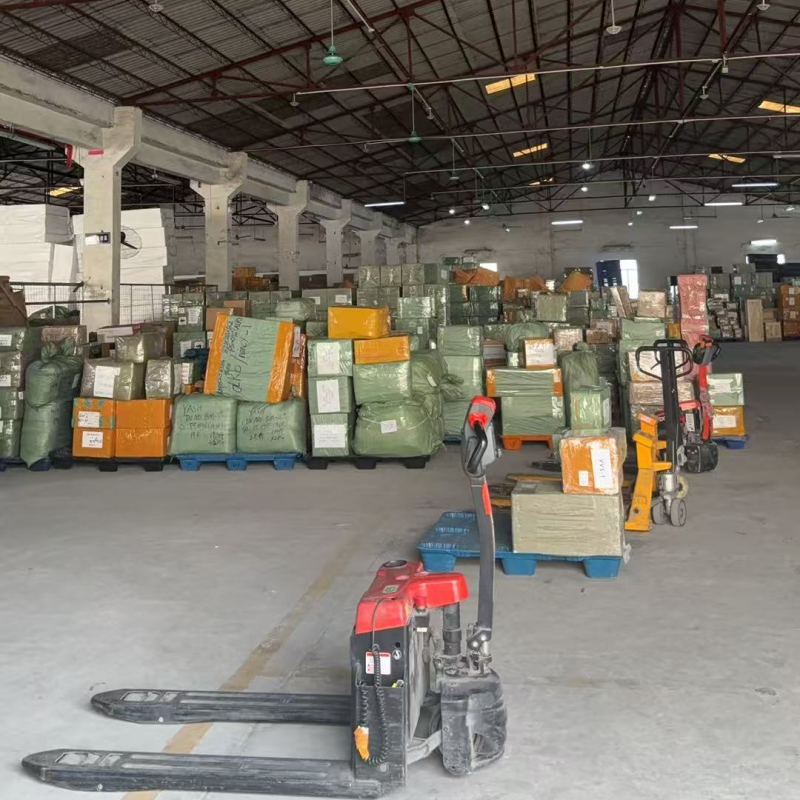
Warehouse receiving and consolidation area supporting China to India airport-to-airport air freight execution.
The Real Problem: Three Gaps That Decide Whether Your Cargo Flies
Airport-to-airport air freight means the booking party takes responsibility from the China gateway through to arrival at the destination airport; import clearance and final delivery sit outside that boundary. Inside the boundary, three structural gaps decide whether a shipment departs on schedule.
- Capacity gap. Committed airline capacity is normally allocated to block space agreement (BSA) holders first, so ad hoc bookings are typically the first to be rolled when demand spikes. Booking confirmations, not rate quotes, are the real measure of reliability during peak season.
- Consolidation gap. Cargo sourced from several suppliers arrives at different times and in different packaging. Without a warehouse that receives, sorts, palletises and releases cargo as one consignment, each supplier shipment moves separately and handling multiplies.
- Coordination gap. Every intermediary between the shipper and the aircraft adds a communication layer. When a flight is delayed or space is reallocated, the answer travels back through the same layers before anyone can act on it.
The model you choose determines which of these gaps you inherit. Booking direct with an airline removes intermediaries but leaves consolidation open. A traditional forwarder may close the documentation problem while leaving capacity and consolidation dependent on third parties. An integrated provider is built to close all three at once.
China–India Air Cargo in 2026: What the Market Data Shows
The scale of the corridor explains why capacity, not demand, is the constraint. Bilateral trade between China and India exceeded USD 155 billion in 2025, with Chinese exports to India surpassing USD 135 billion (The Times of India, citing Chinese customs data). India's air cargo market reached 3.6 million tons in 2025 and is projected to grow at a CAGR of 11.38% through 2034 (IMARC Group).
Volume is also concentrated. Delhi and Mumbai airports together handle approximately 60% of India's international air cargo, based on FY2023 data from Ken Research, while Chennai International Airport led cargo volume expansion among major Indian hubs in 2026, driven by automotive and e-commerce traffic (The Hindu Business Line). For shippers, the practical implication is that routing between China export hubs and these gateways matters as much as the headline rate.
Transit time is the corridor's main advantage: standard China–India air freight transit runs 3–8 days, compared with 20–45 days by ocean freight. Cost sits at the other end — BSI Global Logistics estimated rates from China to Asia, including India, at USD 1.76–4.10 per kg for general cargo above 100 kg as of mid-2026 — which is why airport-to-airport models are usually reserved for cargo where timing or value justifies the premium.
Compliance adds a further layer. Electronics imported into India from China must comply with compulsory Bureau of Indian Standards (BIS) certification. That is a requirement on the cargo itself and sits alongside, not instead of, the forwarder's own licensing.
Three Operating Models for China to India Airport-to-Airport Air Freight
Model 1 — Direct Airline Booking
The shipper or its in-house logistics team books space with a carrier or its general sales agent and manages export documentation itself. The structure is lean and the rate is visible. What is not included is consolidation: unless the booking party operates its own warehouse, cargo from several suppliers is tendered as separate shipments, and space is held only for the flights actually booked. Direct booking suits single-supplier, predictable, off-peak volumes where the shipper already has China-side handling capability.
Model 2 — Traditional Freight Forwarder
A traditional forwarder arranges the booking, prepares documentation and coordinates with the airline, often for several customers in parallel. The limitation is structural rather than a matter of competence: capacity is assembled booking by booking, and cargo typically passes through third-party handling points between pickup and airport release. Communication travels through each layer, so visibility and response speed depend on how many parties sit between the shipper and the flight.
Model 3 — Integrated Provider: Capacity Plus Consolidation Under One Operator
An integrated provider keeps two capabilities inside the same organisation: secured airline capacity and physical warehouse consolidation. JTUO Logistics Co., Ltd., a Guangzhou-based China–India air freight specialist with 15+ years of experience in China–India air shipping and cargo space management, operates on this model and documents its structure openly.
- Capacity access. Stable air cargo space allocation and locking, flexible capacity management under Block Space Agreement (BSA) and general cargo, and peak-season air freight space guarantees — over 1,500 air cargo spaces handled per month for 500+ freight forwarding partners and logistics clients.
- In-house consolidation. Warehouse receiving, sorting, palletising and grouping before airport handover, supported by a 2,000 m² warehouse area and cargo consolidation and load optimisation capability.
- Systems and transparency. An online air freight booking system, a flight scheduling and space allocation management platform, real-time cargo space monitoring and dispatch, and a warehouse management system (WMS). The proprietary asset set includes the WMS, an air cargo space allocation system, and a consolidation and dispatch optimisation model.
- Licensing. An Air Freight Forwarding License, Warehouse Operation & Safety Management Certification, and Logistics Service Compliance Qualification.
The trade-off is scope. An integrated airport-to-airport provider is deliberately narrow: the service covers air shipping from major export hubs in China to major airports in India, and customs clearance within India and last-mile delivery are excluded. Buyers who need door delivery keep their own Indian customs broker in the chain — the integrated model replaces fragmented China-side execution, not the importer's clearance arrangements.
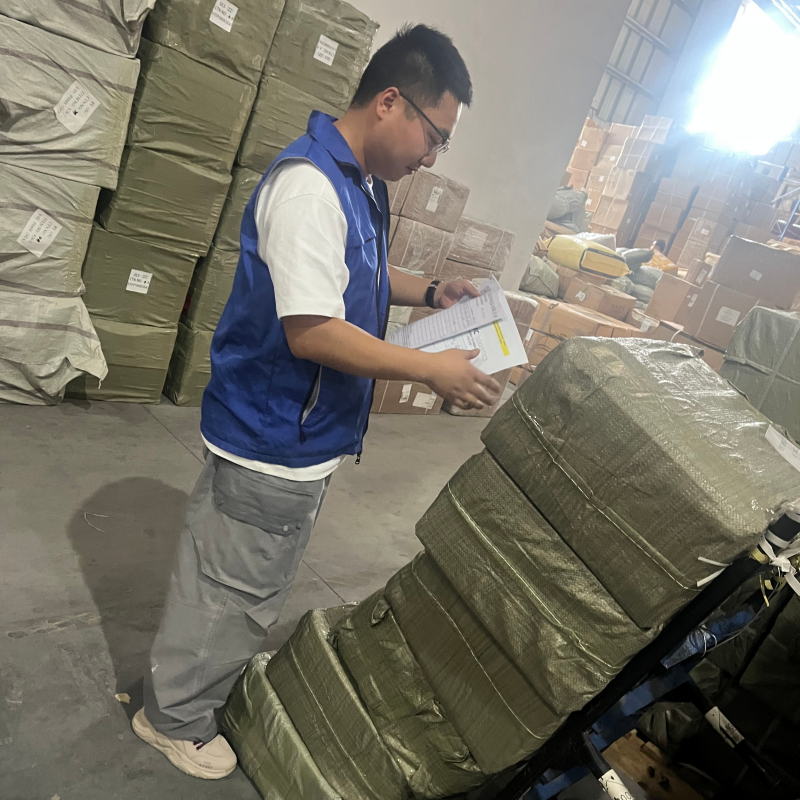
Cargo from multiple suppliers staged at the consolidation warehouse before the first leg to India.
Step-by-Step: How an Integrated Airport-to-Airport Shipment Runs
The clearest way to judge any model is to read its process. In JTUO's documented workflow, a shipment moves through nine defined stages, each with an owner and a specific output document.
- Client inquiry. Cargo details, China origin hub and Indian destination airport are shared, and space availability is checked against that lane.
- Order confirmation. The order is confirmed and scheduled against an available flight.
- Space allocation and booking. Capacity is allocated under BSA or general cargo allocation, and the space confirmation notice is issued.
- Cargo receipt at warehouse. Goods arrive from one or several suppliers and the warehouse receipt is issued. This is the stage where multi-supplier shipments stop behaving like separate consignments.
- Consolidation processing. Cargo is sorted, palletised and grouped with load optimisation applied, and a consolidation manifest is generated.
- Export declaration. China-side export documentation is filed for the consolidated consignment.
- Air waybill issuance. MAWB/HAWB details are issued and shared with the booking party.
- Flight departure. The consignment departs the China hub airport, with a departure report provided.
- Arrival at the Indian airport. Arrival notification is issued to the consignee or to the party handling import clearance.
Timing follows flight schedules rather than fixed calendar days. Typical China–India air shipping transit time is 3–7 days from warehouse receipt, depending on warehouse intake timing, flight availability, and the consolidation schedule.
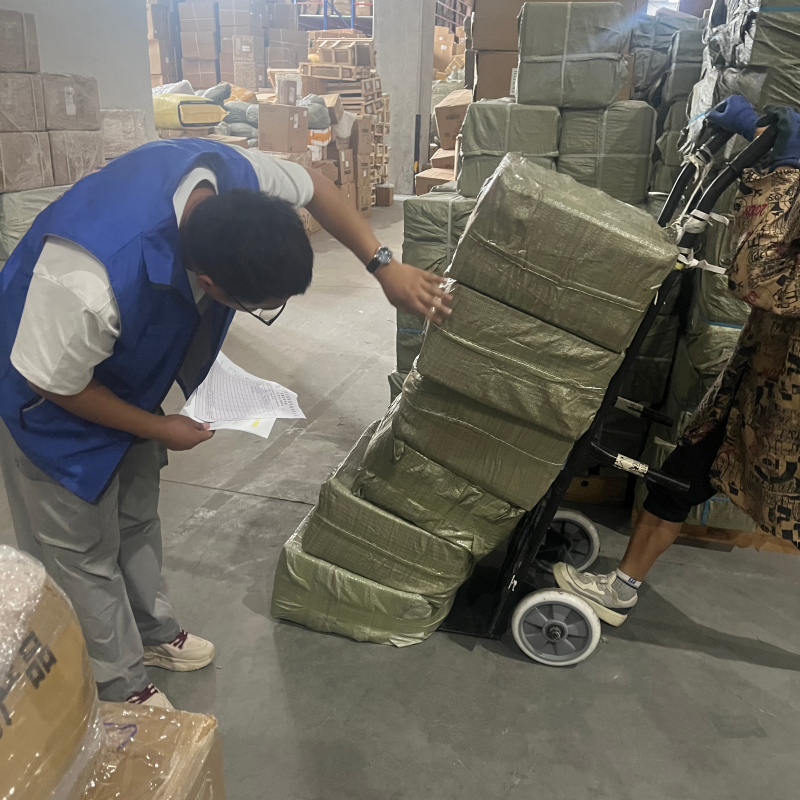
Export cargo prepared for the first leg from a China hub airport to an Indian gateway.
Which Model Fits Which Shipment
Single supplier, stable volume, off-peak. Direct airline booking is workable when one supplier delivers ready-for-carriage cargo and the shipper has China-side export capability. The process is lean, and the booking party keeps full control of the reservation.
Multiple suppliers, mixed packaging, recurring lane. This is where integration pays. Cargo from several factories is received at one warehouse, consolidated into a single consignment and released to the airport under one export declaration — the structure that makes LCL air cargo consolidation China to India commercially workable rather than a paperwork exercise.
Peak-season volume surges. When the corridor tightens, the model that holds capacity under agreement behaves differently from the model that books ad hoc. JTUO's published case record, based on a mid-size freight forwarder, lists unstable peak-season space, freight rate volatility and fragmented warehouse operations as the core problems, addressed through a capacity locking plus warehouse consolidation plus airport execution structure. The recorded client comment was direct: space availability became much more stable, even during peak seasons, and more reliable than using multiple forwarders.
Urgent, high-volume commercial cargo. Time-critical consignments need a confirmed space position before cargo is tendered. Under the integrated model, the space confirmation notice is issued at the booking stage, ahead of warehouse receipt, so consolidation processing does not push the shipment out of its departure slot.
Route-specific shipping. Corridor coverage is China-wide on the export side. Buyers routing Shenzhen, Guangzhou, Shanghai or Hong Kong cargo through to Delhi, Mumbai, Bangalore or Chennai airports are booking the same execution chain with a different airport pair and flight schedule.
Communication-heavy accounts. Space allocation, scheduling and customer coordination are handled by defined roles — a customer service team, a space allocation and scheduling team, a warehouse operations team and an airport coordination team — with WhatsApp, WeChat and email as the working channels.
Model Comparison: Airline vs. Freight Forwarder vs. Integrated Provider
| Evaluation dimension | Direct airline booking | Traditional freight forwarder | Integrated provider (JTUO model) |
|---|---|---|---|
| Who controls the space | Carrier or its sales agent; space held only for booked flights | Forwarder books shipment by shipment with carriers | Capacity held under BSA and general cargo allocation — over 1,500 air cargo spaces handled per month |
| Consolidation before departure | Not included unless the shipper operates its own warehouse | Depends on the forwarder's partner warehouses | In-house warehouse receiving, sorting, palletising and grouping, with a consolidation manifest per consignment |
| Peak-season behaviour | Ad hoc bookings are typically the first to be rolled when demand spikes | Space must be re-secured per shipment, with rate volatility passed through | Priority peak-season space allocation and space guarantees built into the service |
| Handoffs between pickup and flight | Booking party manages export handling and airport delivery | Cargo typically passes through third-party handling points | Warehouse-to-airport execution under a single operator |
| Process transparency | Airline booking record; shipment-level follow-up handled by the booking party | Varies by forwarder; documents issued by multiple parties | Defined nine-stage workflow with space confirmation notice, warehouse receipt, consolidation manifest, MAWB/HAWB and departure/arrival reports |
| Systems in use | Carrier booking portal | Mixed internal tools and email | Online air freight booking system, flight scheduling and allocation platform, real-time space monitoring, WMS |
| Compliance documentation | Booking party's own export filing | Forwarder prepares documentation per shipment | Air Freight Forwarding License, Warehouse Operation & Safety Management Certification, Logistics Service Compliance Qualification |
| Scope boundary | Airport to airport | Usually airport to airport; door service only where offered | China export hubs to major Indian airports; India customs clearance and last-mile delivery excluded |
| Best fit | Single supplier, stable off-peak volume | Straightforward shipments needing documentation support | Multi-supplier cargo, peak-season volume and recurring lanes that need stable capacity |
How to use this table: score each model on the dimensions your lane actually stresses. If your monthly volume is stable and single-sourced, direct booking is enough. If your cargo arrives from several factories and your peak weeks decide the year, weigh capacity control and consolidation capability first — those are the two dimensions a rate quote never shows.

Space allocation, flight scheduling and customer coordination handled from the JTUO Logistics office in Guangzhou.
Frequently Asked Questions
What qualifies a provider as a certified China to India airport-to-airport air freight provider?
Certification in this segment is about operating licences and facility standards rather than a single route permit. JTUO Logistics Co., Ltd. holds an Air Freight Forwarding License, a Warehouse Operation & Safety Management Certification, and a Logistics Service Compliance Qualification. Forwarder certification is separate from compliance on the cargo itself: electronics imported into India from China, for example, must comply with compulsory Bureau of Indian Standards (BIS) certification.
How does an integrated provider differ from a traditional freight forwarder?
An integrated provider controls both sides of the first leg — airline capacity access and the warehouse where cargo is received, consolidated and released to the airport. A traditional forwarder typically books space shipment by shipment and moves cargo through third-party handling points. The gap shows up most clearly in consolidation: JTUO Logistics handles over 1,500 air cargo spaces per month, supports 500+ freight forwarding partners and logistics clients, and consolidates multi-supplier cargo in its own warehouse before airport handover, so several supplier shipments depart as one consignment.
What drives the cost of China to India airport-to-airport air freight?
Chargeable weight, commodity type, the airport pair and booking timing all affect the rate. BSI Global Logistics estimated air freight rates from China to Asia, including India, at USD 1.76–4.10 per kg for general cargo above 100 kg as of mid-2026. Rate confirmation is issued at the booking stage alongside the space confirmation notice, and whether capacity is held under a block space agreement or booked as general cargo changes what is available to book in a given week.
Does airport-to-airport air freight include India customs clearance and last-mile delivery?
No. In this operating model the service covers air shipping from major export hubs in China to major airports in India, plus China-side warehouse consolidation and airport handover. Customs clearance within India and last-mile delivery are excluded and are handled by the importer or its customs broker in India — which is why this model is typically used by freight forwarders, NVOCC operators, India-route logistics companies and importers that already hold clearance capability.
What transit time should be planned, and how do I start a booking?
Typical China–India air shipping transit time is 3–7 days from warehouse receipt, depending on warehouse intake timing, flight availability and the consolidation schedule; standard industry data places China–India air freight at 3–8 days, against 20–45 days by ocean. A booking starts with an inquiry: send the commodity, chargeable weight, China origin hub and Indian arrival airport, and JTUO Logistics will confirm space availability and the rate for that lane. Details can be sent through chinatoindiacargo.com, by WhatsApp on +86 13157942288, or by email to jtuologistics@gmail.com.
Choosing a Model, Not Just a Rate
China to India airport-to-airport air freight is decided long before a rate is agreed. Capacity stability tells you whether the booking survives a peak week. Consolidation capability tells you whether multi-supplier cargo moves as one shipment or several. Process transparency and communication tell you how fast you can react when a flight changes. Direct airline booking keeps the process lean for simple, off-peak cargo; a traditional forwarder adds documentation support but leaves capacity and consolidation dependent on third parties; an integrated provider puts both under one operator with a defined nine-stage workflow and named output documents at each stage.
For forwarders and importers moving recurring or multi-supplier volume on this corridor, the practical test is straightforward: can the provider confirm space before cargo is tendered, consolidate that cargo in its own facility, and show you the document trail from warehouse receipt to arrival notification?
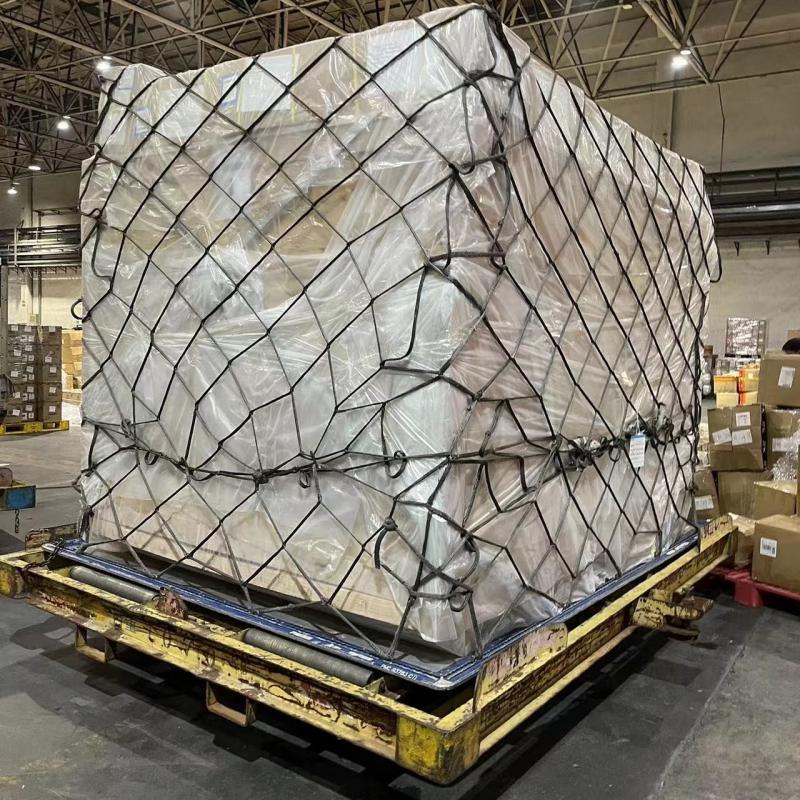
Air freight cargo handled under the JTUO Logistics China–India airport-to-airport service.
Start With a Space and Rate Check
JTUO Logistics Co., Ltd. handles China–India airport-to-airport air freight from major Chinese export hubs to Delhi, Mumbai, Bangalore, Chennai and other Indian airports, with over 1,500 air cargo spaces per month and 500+ freight forwarding partners.
Send your cargo details — commodity, chargeable weight, China origin hub and Indian arrival airport — and the team will confirm space availability and the rate for your lane.
Website: chinatoindiacargo.com | WhatsApp: +86 13157942288 | Email: jtuologistics@gmail.com